News
Macedonian lawmakers approve same-sex marriage ban
Constitutional amendment described as ‘discriminatory and undemocratic’
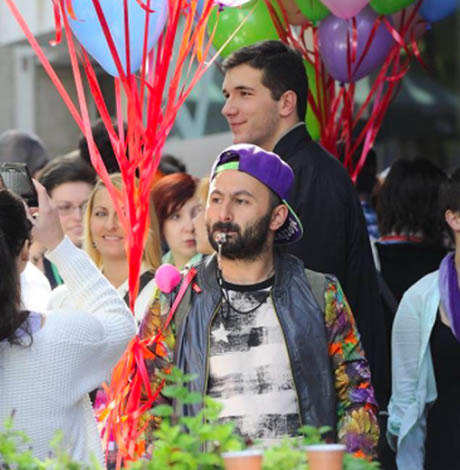
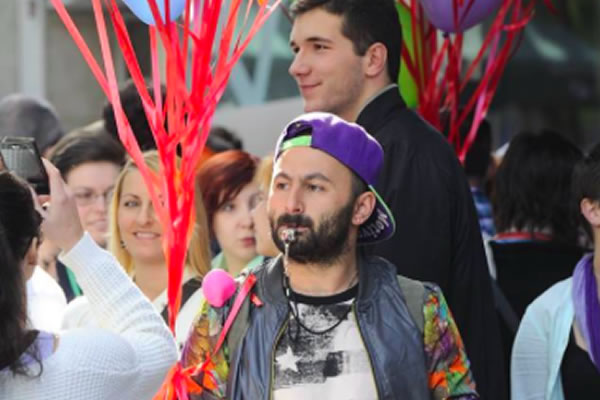
Bekim Asani, chair of LGBT United Macedonia, a Macedonian LGBT advocacy group, is among the advocates that oppose efforts to amend the country’s constitution to ban same-sex marriage. (Photo courtesy of Bekim Asani)
Amendment XXXIII passed in the former Yugoslav republic’s assembly by a 72-4 margin less than a year after Prime Minister Nikola Gruevski’s government introduced the proposal.
“Marriage shall be a life union solely of one woman and one man,” reads the proposed amendment.
Macedonian law already defines marriage as between a man and a woman.
Amendment XXXIII states the country “requires a clear and precise constitutional definition of marriage as a union solely of one woman and one man.”
“Marriage exclusively defined as the union between one woman and one man is an integral part of human history, a constant and centuries-long tradition in this region,” reads the proposed amendment. “Marriage is one of the fundamental pillars of society. Thus, marriage constitutionally defined exclusively as a union between one woman and one man shall contribute to marriage as an institution being further acknowledged and promoted in our society.”
The LGBT Support Center, an advocacy group based in Skopje, the Macedonian capital, is among the organizations in the former Yugoslav republic to criticize the proposed amendment.
“These constitutional changes are not only completely unnecessary and redundant, but discriminatory and undemocratic to their very core,” said the LGBT Support Center in a statement. “The only real effect would be enhancing the negative social stigma on LGBTI people, further marginalizing this already deeply marginalized community and unnecessarily increasing the burden of everyday life of LGBT people in Macedonia.”
Chris Paliare, president of the Macedonian Canadian Lawyers’ Association, in a letter he wrote to Gruevski last October also argued the proposed amendment is unnecessary.
“Constitutionalizing these provisions has no rational legal justification and can only be justified, if at all, for some political gain, something that should never be part of a government program when human rights issues are at stake,” said Paliare.
Macedonia’s LGBT rights record lags far beyond those of most other European countries.
The former Yugoslav republic decriminalized homosexuality in 1996, but the country’s anti-discrimination laws currently do not include sexual orientation or gender identity and expression. Same-sex couples in Macedonia also lack legal protections.
Anti-LGBT discrimination and violence remain commonplace in the country.
The LGBT Support Center in Skopje has experienced at least six attacks since 2013. Two members of the LGBT Association of Macedonia were injured last October when a group of masked men attacked a coffee shop in the country’s capital where they had gathered to celebrate the group’s second anniversary.
Bekim Asani, chair of LGBT United Tetovo Macedonia in the city of Tetovo, told the Washington Blade before lawmakers approved the marriage amendment that he faces discrimination and threats on a daily basis.
“I can’t be who I am,” he said. “It is the same for every other openly LGBT person (in Macedonia.)”
Tanya Domi, an adjunct professor of international and public affairs at Columbia University who is currently writing a book on the LGBT rights movements in several Balkan countries, told the Blade that many Macedonian advocates have been attacked and “forced to seek emergency health care.” She noted many of them have also been evicted from their homes.
“It is a deeply hostile environment for LGBT persons,” said Domi.
Asani told the Blade he feels the proposed amendment will only worsen the situation for LGBT Macedonians.
“Macedonia is democratic country it should be free but when it comes to LGBT in reality it is not like that,” he said. “With the constitutional changes, a bad situation for LGBT people will get even worse.”
Same-sex marriage is legal in Portugal, Spain, France, England, Wales, Scotland, Iceland, Norway, Sweden, Denmark, the Netherlands, Belgium and Luxembourg.
Irish voters in May are scheduled to vote on a referendum that would extend marriage rights to same-sex couples.
Finnish lawmakers in November approved a measure that would allow gays and lesbians to tie the knot in the Scandinavian country. Parliamentarians in Estonia and Malta within the last year have extended civil unions to same-sex couples.
Slovak lawmakers in June 2014 overwhelmingly approved an amendment to their country’s constitution that defines marriage as between a man and a woman.
Croatia, Hungary and Latvia also define marriage as between a man and a woman in their respective countries’ constitutions.





District of Columbia
Campaign launched to elect more LGBTQ candidates to ANC seats
Capital Stonewall Democrats behind Queering ANCs effort

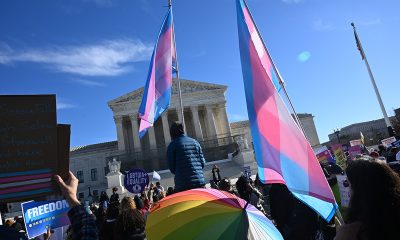
The Capital Stonewall Democrats, D.C.’s largest local LGBTQ political group, announced on July 7 it has launched a campaign to help elect large numbers of LGBTQ candidates to the city’s Advisory Neighborhood Commissions.
The D.C. local government is believed to be unique among U.S. cities in currently having 46 Advisory Neighborhood Commissions consisting of 345 single-member districts in neighborhoods throughout the city in which unpaid Advisory Neighborhood Commissioners are elected for two-year terms.
The commissions are charged with considering a wide range of policies and programs impacting their neighborhoods, including traffic, parking, recreation, street improvements, liquor licenses, zoning, economic development, police protection, sanitation and trash collection, and D.C.’s annual budget, according to the ANC website.
Although the ANCs do not have authority to set or reject policies or proposals, such as applications for liquor licenses, city agencies are required to give “great weight” to ANC recommendations, according to the law creating the ANCs.
Kent Boese, a gay former ANC commissioner, currently serves as executive director of the D.C. Office of ANCs.
“We are launching the most ambitious hyperlocal LGBTQ+ candidate pipeline initiative in the country,” said Stevie McCarty, the Capital Stonewall Democrats president, in a July 7 statement that announced the Queering ANCs campaign.
“As an ANC member, I know firsthand how these seats shape our neighborhoods, from housing and public safety to sanitation,” McCarty says in the statement. “I’m proud to lead this effort to ensure more LGBTQ+ Washingtonians see themselves as leaders in their communities,” he said.
The ANC Rainbow Caucus, which was created by LGBTQ ANC members, shows on its website that there are currently 38 caucus members consisting of elected LGBTQ ANC commissioners serving in the current 2025-2026 two-year term.
The website shows there are LGBTQ commissioners who are caucus members in each of the city’s eight wards, with six in Ward 1, eight in Ward 2, one in Ward 3, six in Ward 4, five in Ward 5, three in Ward 6, eight in Ward 7, and one in Ward 8.
The Washington Blade couldn’t immediately determine how many of them will be running for re-election in D.C.’s general election in November. But McCarty said Capital Stonewall Democrats hopes to recruit many more LGBTQ candidates to run for ANC seats.
The D.C. Board of Elections website shows the deadline for filing 25 required petition signatures to be placed on the ballot is Aug. 5.
A Queering ANCs website launched this week by Capital Stonewall Democrats provides details on how to run for an ANC seat and offers help for those interested in running.
“Think of someone in your building, neighborhood, friend group, community organization, or professional network who cares deeply about D.C. and would make a strong leader,” McCarty says in his statement. “Send them QueeringANCs.org and personally ask them to consider running,” he said.
The website can be accessed at QueeringANCs.org.
Florida
Gay Fla. Democrat Elijah Manley sees opportunity in Trump’s second term
State’s 20th Congressional District’s includes Broward, Palm Beach Counties

Just over two and a half miles from President Donald Trump’s primary residence lies one of Florida’s most reliably Democratic congressional districts. There, a 27-year-old progressive is mounting a campaign centered on resisting what he calls the Trump-Vance administration’s attacks on civil rights, immigrants, and LGBTQ Americans.
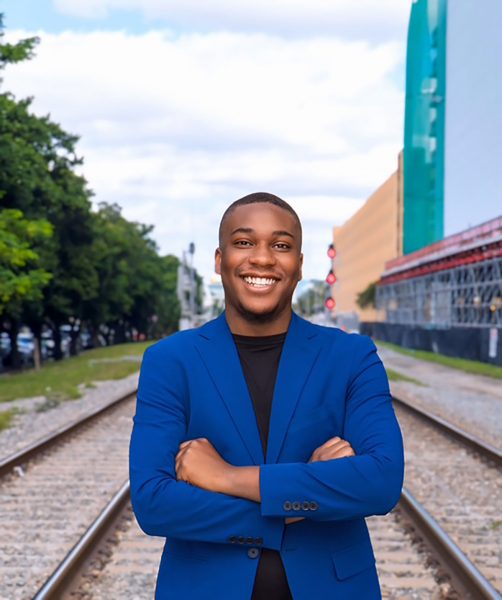
Elijah Manley, an openly gay Democrat, sat down with the Washington Blade to discuss why he is running for Florida’s 20th Congressional District, why he believes this moment calls for a new generation of leadership, and what he hopes to accomplish if elected to Congress.
Born and raised in Fort Lauderdale’s historic Sistrunk neighborhood — the city’s oldest African American community — Manley was raised by a single mother who struggled to make ends meet. His family experienced housing insecurity and, at one point, homelessness, experiences he says continue to shape both his politics and his policy priorities.
For Manley, those experiences are precisely what he believes Congress is missing.
“I think now the country is in need of somebody like me, with my story, my lived experience, the struggles I’ve been through in my life. We’re going through a really dark time in the country with the Trump administration coming for our civil rights and an economy that is not working for everybody. In a time where we have MAGA fascism, we need progressive leadership, and we need people who are really going to do the work of fighting back and resisting and obstructing Donald Trump and MAGA Republicans’ agenda in Congress.”
Manley said his campaign is also about ensuring people from marginalized communities — those without wealth, political connections, or institutional backing — have a voice in Congress.
“I think my story sets me aside from everyone else. I’m the only one in this race who has a story to tell voters that lines up with their lived experiences and their struggles. Growing up in poverty and experiencing homelessness was instrumental in developing my worldview and how I fight for people, and I think that’s something that’s absent on Capitol Hill.”
He argues that lived experience offers a perspective often missing on Capitol Hill.
“There are too many lawyers and people coming from professional and political backgrounds. Then you have somebody like me who is rooted in the story of this district. That’s what sets me apart from everyone else in this race.”
According to his campaign website, Manley’s interest in public service dates back to childhood. He cites the election of President Barack Obama as a defining moment that inspired him to pursue politics.
“He was inspired by Barack Obama’s historic election, igniting his passion for public service. He began writing to elected officials, speaking at school board and city council meetings, and advocating for issues affecting his community,” the website states. It goes on to describe his involvement in criminal justice and law magnet programs, Navy JROTC, and hundreds of hours of volunteer service while in high school.
As an openly gay candidate running during Trump’s second administration, Manley said Congress must take a far more aggressive approach to protecting LGBTQ Americans, particularly as Republican-led states continue passing restrictions targeting transgender people.
“I think we need to bring the hammer down on some of these states. I’m not one of these states’ rights people — Congress has the power to preempt laws that states pass through the Supremacy Clause. There’s never been a more important time in our history when we’re seeing fascism, we’re seeing an administration out of control, and we need Congress to act.”
His campaign has also drawn criticism from both Republicans and establishment Democrats for his positions on Gaza, immigration, and his call to abolish U.S. Immigration and Customs Enforcement.
Manley said abolishing ICE does not mean eliminating immigration enforcement altogether.
“I’m not saying there should be no immigration laws. We want laws around immigration, but we want dignity. We don’t need a hypermilitarized, paramilitary group chasing people through the streets, terrorizing communities, churches, schools, and families.”
His personal experiences also inform his healthcare agenda.
“When we talk about healthcare, my experience growing up on Medicaid is seeing the failure of the government to expand Medicaid here in Florida, and now we’re seeing cuts from the Trump administration. I’m not just looking at statistics or numbers on paper — this is based on lived experience. I know how the people in this district are going to be hurt by these policies because I’ve lived it.”
California Democratic Congressman Ro Khanna, who has generated early buzz as a potential 2028 presidential contender for his “progressive capitalist” approach to governing, has endorsed Manley’s campaign, giving the first-time congressional candidate one of his highest-profile endorsements.
Manley faces six other Democrats in the primary, including U.S. Rep. Debbie Wasserman Schultz and former U.S. Rep. Sheila Cherfilus-McCormick, along with four Republican candidates in the general election field. Cherfilus-McCormick resigned from Congress ahead of a potential expulsion and is running again while facing federal criminal charges.
Despite running as the youngest candidate in the field, Manley said he hopes voters leave the race remembering one thing above all else.
“I want people to remember bold and authentic leadership. I want them to know I’m running because I’ve been through what people are going through right now — and it’s not that I’ve been through it, I’m actually still going through it. We need bold people who are going to fight for everybody and stand up for what’s right, and that’s what I hope voters see when they go to the polls.”
Baltimore
Ron Singer, owner of popular Mount Vernon gay bar Leon’s, dies
66-year-old’s funeral to take place Friday
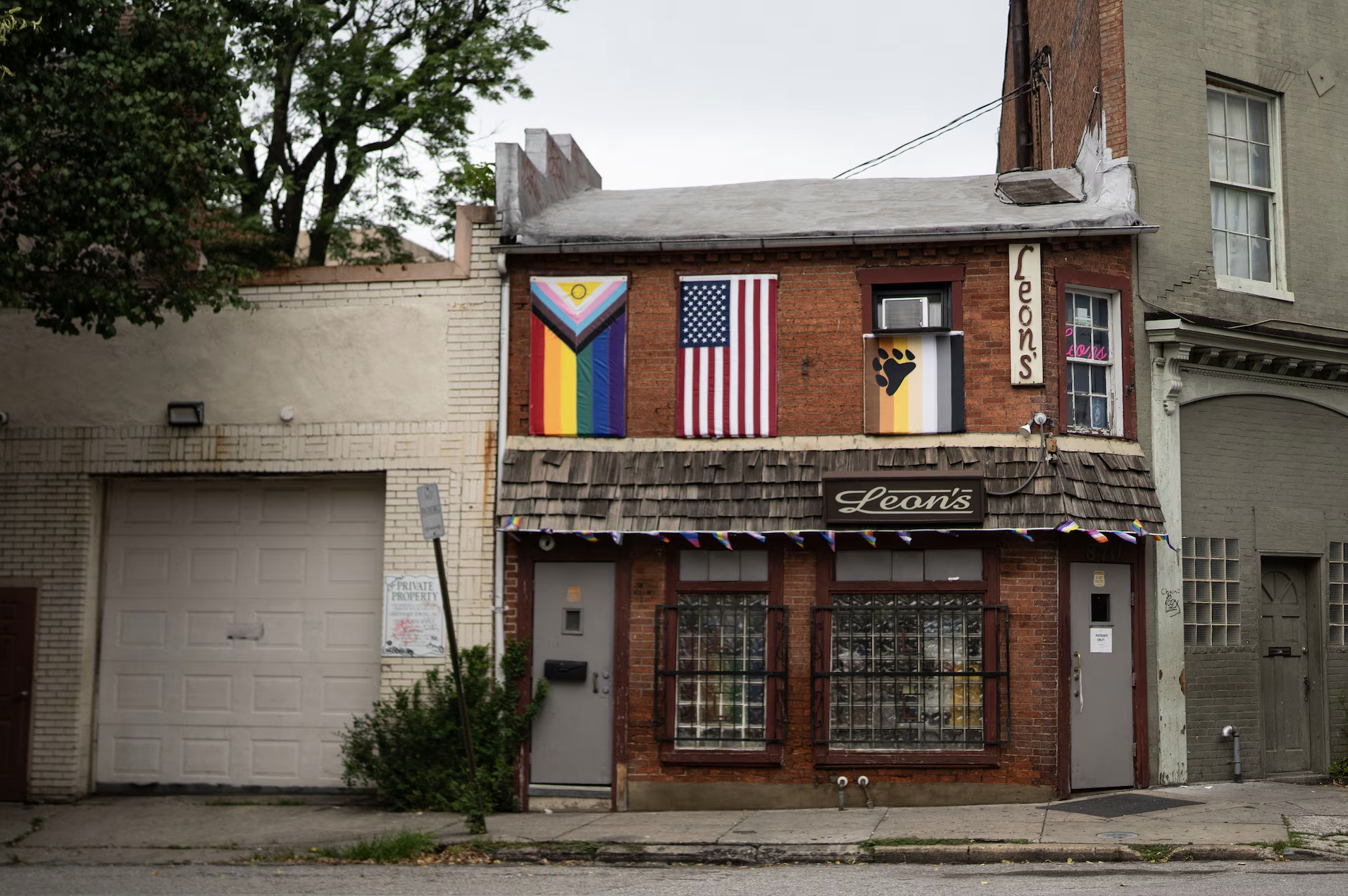
By CAYLA HARRIS | Ron Singer, the owner of Baltimore’s popular gay bar Leon’s Backroom, died Tuesday, the venue announced in a social media post. He was 66.
“For more than 20 years, Ron made Leon’s a place so many people were proud to call home,” the post reads. “He will be deeply missed.”
The Mount Vernon bar, typically open from 4 p.m. to 2 a.m. daily, is still open Thursday, but doors will close at midnight so staff can attend his funeral Friday morning. Services are scheduled to begin at 9:30 a.m. at Sol Levinson’s Chapel.
The rest of this article can be read on the Baltimore Banner’s website.

Campaign launched to elect more LGBTQ candidates to ANC seats

Gay librarian to discuss new novel at Green Lantern

Calendar: July 10-16

Gay Fla. Democrat Elijah Manley sees opportunity in Trump’s second term

Ron Singer, owner of popular Mount Vernon gay bar Leon’s, dies

In Trump’s divided America, Michael Weinstein’s AHF responds

Turkish authorities refuse to allow gay cruise to dock in country

When a church fears the rainbow

PHOTOS: Crush Dance Bar