Sports
The road to Kona
D.C. athlete makes Ironman cut
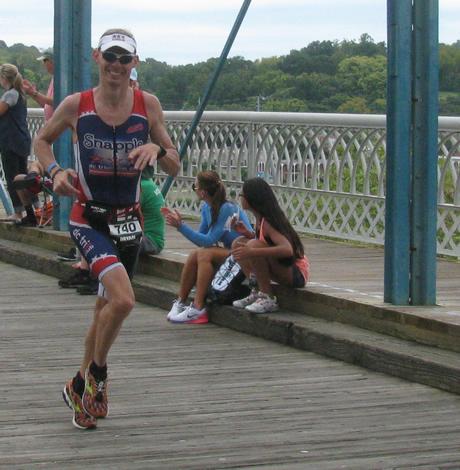
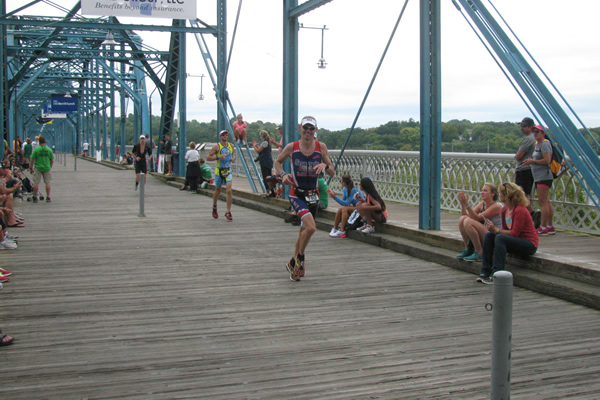
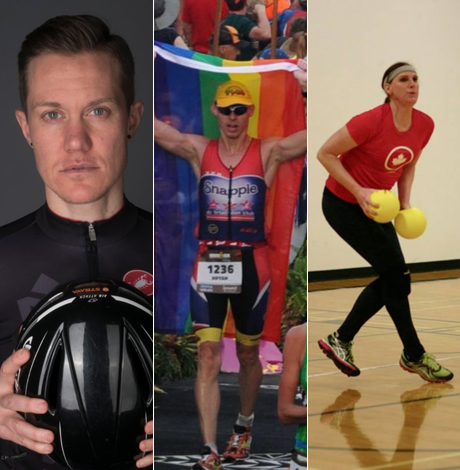
Bryan Frank in action. (Photo by Jay Frank)
It is the middle of the night and triathlete Bryan Frank wakes up to the sound of hissing in his bedroom. Earlier that day he had changed the front tubes on both his road bike and his time-trial bike and one of them had started to go flat.
“When I realized what it was, I was like, ‘What the hell?’ I didn’t even get to ride on that tube,” Frank says. “And despite what people say, I don’t sleep with my bikes, they were just in my bedroom.”
Later that day, when he was 30 miles into his bike ride, the second bike went flat as well. Two flat tires in one day.
The bikes are lucky to find a spot among Frank’s gear as his apartment looks like multiple athletes are in residence with bikes, running shoes, cycling shoes, sports clothing, bibs and caps scattered throughout the place. His favorite running shoe by Mizuno has been discontinued and he has been buying them up on the internet and stashing them in his closet.
They are all necessities on the road that leads to his plans on Oct. 10. Frank will be living the dream that all triathletes dream; he will be competing in the 2015 Ironman World Championships in Kona, Hawaii.
After racing in qualifying Ironman events in Lake Placid in 2011 and Austria in 2013, Frank made the cut at the Chattanooga Ironman in Sept., 2014.
“Kona is the pinnacle of triathlon races and two years ago I never thought I would qualify,” said Frank shortly after the Chattanooga race.
In a race that turned up a dead body in the Tennessee River during the swim and a vandal who tossed oil and tacks on the course during the bike, Frank hung tough during the run to finish between a Russian athlete and a Danish athlete to clinch the fourth place spot.
Shortly after finishing, he headed to the recovery tent and was told that he had qualified for Kona. He scrambled to find his parents who had been cheering him on from the sidelines.
“My body started breaking down during the run and I began to feel my Kona dreams fading,” Frank says. “When I found my parents after the race, I was glad for the rain that was hiding my tears of joy.”
His final time was 9:36:17.
Frank, who works in biological research, is sponsored by Rose Physical Therapy and the Snapple Triathlon Elite Team. He is a Dallas native, has lived in the D.C. area since 2001, is the treasurer of D.C. Triathlon Club and is a member of its LGBT offshoot, TriOUT.
His life for the past 12 months has been pointed directly at the Kona race in two weeks.
Starting back in the early spring, he began a 17-week build with his training peaking at 18 hours per week and ending with a three week taper going into a race alongside his teammates in the Mont-Tremblant Ironman. That race was just last month.
Following that he did a short recovery training period, went back into a build and will taper to peak at the right time.
“My speed on the bike is good, my run pace is good and I feel good in the water,” Frank says.
The Kona course will be standard Ironman fare, a 2.4-mile swim, a 112-mile bike and a 26.2-mile run. However, there will be 45 mph crosswinds, 95 degree temperatures, no shade and an unforgiving course. A little over 2,000 triathletes qualified for the race and roughly 200 more are brought in through a lottery. Ten percent of the athletes will not finish the race.
“It’s definitely not a race where I will be looking for a best time,” Frank says. “I want my friends to cheer me on at the finish line, not from the medical tent.”
In a nod to his sexuality, Frank will be bringing a pride flag to Kona and is planning to have a friend hand it to him when he is a half-mile from his run to the finish line.
“It is all starting to get real and I am really getting nervous. The world championships are a big stage for me to be playing on,” he says. “All the sacrifices have paid off. I have wanted this for a long time.”
The event will be streaming live on Universal Sports on Oct. 10 and the D.C. Triathlon Club will host a Kona viewing party on Nov. 14.



Sports
New IOC policy bans trans women from Olympics
New regulation to be in effect at 2028 summer games in Los Angeles
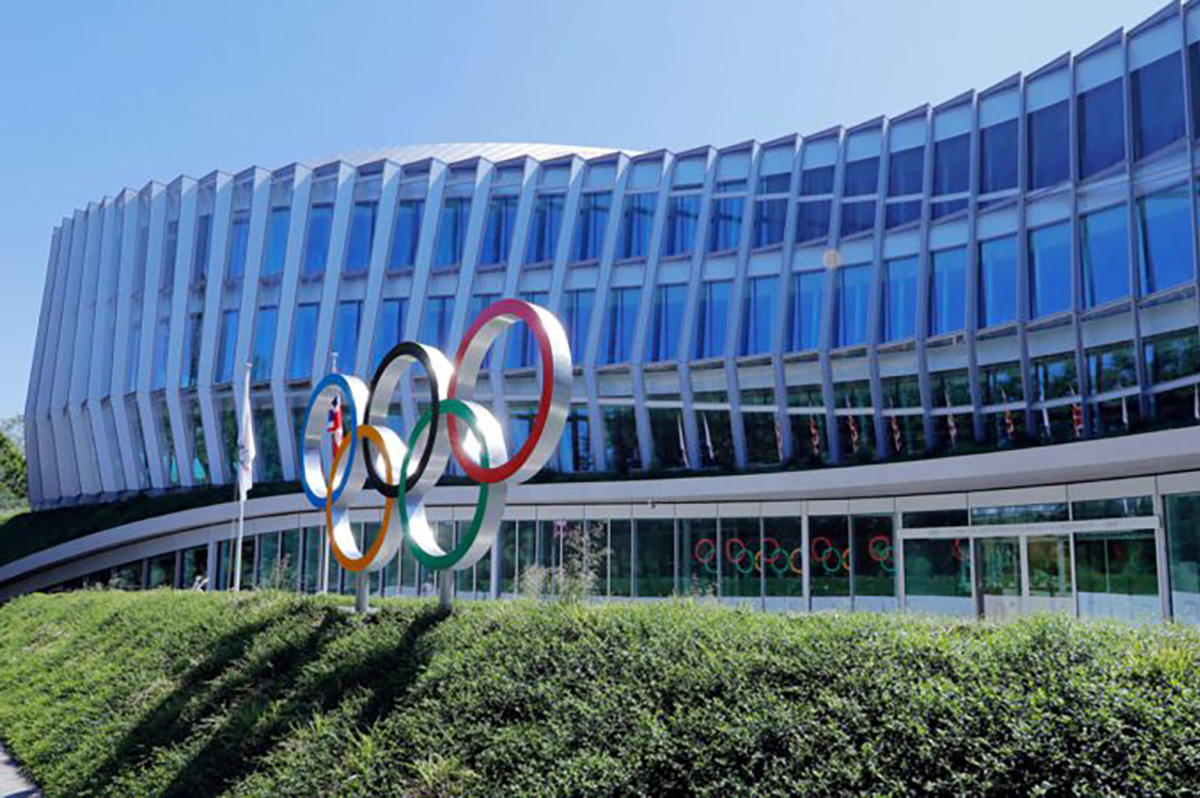
The International Olympic Committee on Thursday announced it will not allow transgender women from competing in female events at the Olympics.
“For all disciplines on the Sports Program of an IOC event, including individual and team sports, eligibility for any Female Category is limited to biological females,” reads the new policy.
The policy states “eligibility for the Female Category is to be determined in the first instance by SRY Gene screening to detect the absence or presence of the SRY Gene.”
“On the basis of the scientific evidence, the IOC considers that the SRY (sex-determining Region Y) Gene is fixed throughout life and represents highly accurate evidence that an athlete has experienced or will experience male sex development,” it reads. “Furthermore, the IOC considers that SRY Gene screening via saliva, cheek swab or blood sample is unintrusive compared to other possible methods. Athletes who screen negative for the SRY gene permanently satisfy this policy’s eligibility criteria for competition in the Female Category.”
The policy states the test “will be a once-in-a-lifetime test” unless “there is reason to believe a negative reading is in error.”
The new regulation will be in place for the 2028 Summer Olympics in Los Angeles.
“I understand that this a very sensitive topic,” said IOC President Kirsty Coventry on Thursday in a video. “As a former athlete, I passionately believe in the rights of all Olympians to take part in fair competition.”
“The policy that we have announced is based on science and it has been led by medical experts with the best interests of athletes at its heart. The scientific evidence is very clear: male chromosomes give performance advances in sport that rely on strength, power, or endurance,” she added. “At the Olympic Games, even the smallest margins can be the difference between victory and defeat. So, it is absolutely clear that it would not be fair for biological males to compete in the female category. In addition, in some sports it would simply not be safe.”
(Video courtesy of the IOC)
Laurel Hubbard, a weightlifter from New Zealand, in 2021 became the first trans woman to compete at the Olympics.
Imane Khelif, an Algerian boxer, won a gold medal at the 2024 Summer Olympics in Paris. Khelif later sued JK Rowling and Elon Musk for cyberstalking after they questioned her gender identity.
Ellis Lundholm, a mogul skier from Sweden, this year became the first openly trans athlete to compete in any Winter Olympics when he participated in Milan Cortina Winter Olympics in Italy.
President Donald Trump in February 2025 issued an executive order that bans trans women and girls from female sports teams in the U.S.
The U.S. Olympic and Paralympic Committee last July banned trans women from competing in female sporting events. Republican lawmakers have demanded the IOC ban trans athletes from women’s athletic competitions.
“I’m grateful the Olympics finally embraced the common sense policy that women’s sports are for women, not for men,” said U.S. Sen. Tom Cotton (R-Ark.) on X.
An IOC spokesperson on Thursday referred the Washington Blade to the press release that announced the new policy.
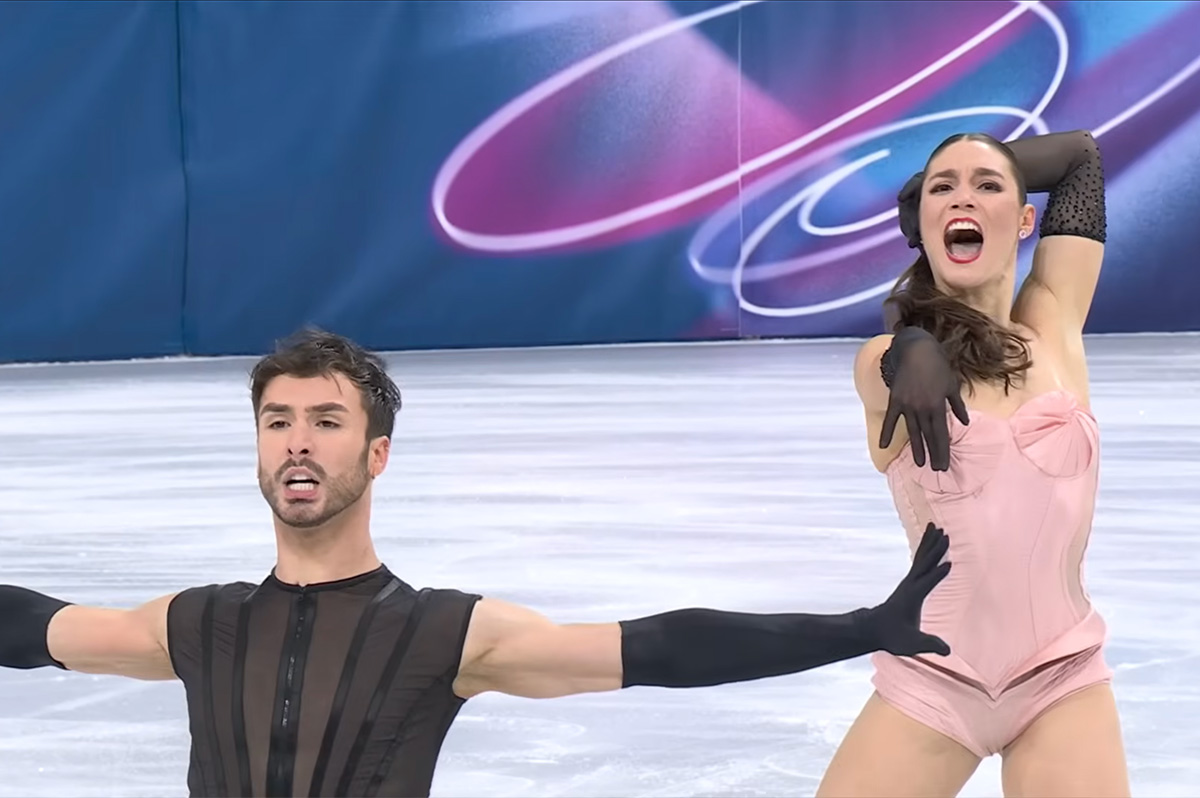
More than a dozen LGBTQ athletes won medals at the Milan Cortina Winter Olympics that ended on Sunday.
Cayla Barnes, Hilary Knight, and Alex Carpenter are LGBTQ members of the U.S. women’s hockey team that won a gold medal after they defeated Canada in overtime. Knight the day before the Feb. 19 match proposed to her girlfriend, Brittany Bowe, an Olympic speed skater.
French ice dancer Guillaume Cizeron, who is gay, and his partner Laurence Fournier Beaudry won gold. American alpine skier Breezy Johnson, who is bisexual, won gold in the women’s downhill. Amber Glenn, who identifies as bisexual and pansexual, was part of the American figure skating team that won gold in the team event.
Swiss freestyle skier Mathilde Gremaud, who is in a relationship with Vali Höll, an Austrian mountain biker, won gold in women’s freeski slopestyle.
Bruce Mouat, who is the captain of the British curling team that won a silver medal, is gay. Six members of the Canadian women’s hockey team — Emily Clark, Erin Ambrose, Emerance Maschmeyer, Brianne Jenner, Laura Stacey, and Marie-Philip Poulin — that won silver are LGBTQ.
Swedish freestyle skier Sandra Naeslund, who is a lesbian, won a bronze medal in ski cross.
Belgian speed skater Tineke den Dulk, who is bisexual, was part of her country’s mixed 2000-meter relay that won bronze. Canadian ice dancer Paul Poirier, who is gay, and his partner, Piper Gilles, won bronze.
Laura Zimmermann, who is queer, is a member of the Swiss women’s hockey team that won bronze when they defeated Sweden.
Outsports.com notes all of the LGBTQ Olympians who competed at the games and who medaled.
Sports
US wins Olympic gold medal in women’s hockey
Team captain Hilary Knight proposed to girlfriend on Wednesday
The U.S. women’s hockey team on Thursday won a gold medal at the Milan Cortina Winter Olympics.
Team USA defeated Canada 2-1 in overtime. The game took place a day after Team USA captain Hilary Knight proposed to her girlfriend, Brittany Bowe, an Olympic speed skater.
Cayla Barnes and Alex Carpenter — Knight’s teammates — are also LGBTQ. They are among the more than 40 openly LGBTQ athletes who are competing in the games.
The Olympics will end on Sunday.

D.C.’s affirming congregations to mark Holy Week, Easter

Trans activists gather on National Mall for Transgender Day of Visibility

The cost of speaking one’s mind

Senegalese president signs bill that further criminalizes homosexuality

Md. lawmakers reaffirm legislative priorities

Celebrate cherry blossoms the drag way

Lorato ke Lorato: marriage equality, democracy, and the unfinished work of justice in Botswana

Japanese Supreme Court to consider marriage equality

The outrage economy is not the LGBTQ community

Trump tells Fox News he won the ‘gay vote’ — but polls tell a different story
-

 Out & About5 days ago
Celebrate cherry blossoms the drag way
-
Botswana5 days ago
Lorato ke Lorato: marriage equality, democracy, and the unfinished work of justice in Botswana
-
Japan5 days ago
Japanese Supreme Court to consider marriage equality
-
Opinions5 days ago
The outrage economy is not the LGBTQ community