Sports
Sports leagues regularly play defense against anti-LGBT measures
Int’l Triathlon Union reversed course after rainbow flag ban backlash
There has been a lot of news recently regarding policy changes on LGBT topics including the transgender military ban, conversion therapy bans and nondiscrimination bills. It has been a reminder that even when policies are put in place that support human rights, they can be reversed at a moment’s notice.
The sports community is experiencing similar reversals and changes to those that have been seen in the political arena.
On Jan. 14, Senate Bill 49 was introduced in South Dakota to overturn a 2015 policy in the state that allows participation for all students regardless of their gender identity or expression.
Its passing would restrict participation in high school activities by birth certificate and could set a precedent for other states to follow. The bill failed to advance past committee on Jan. 24 and the protections for transgender athletes currently remain in place.
It only took a few days for the attack to begin again.
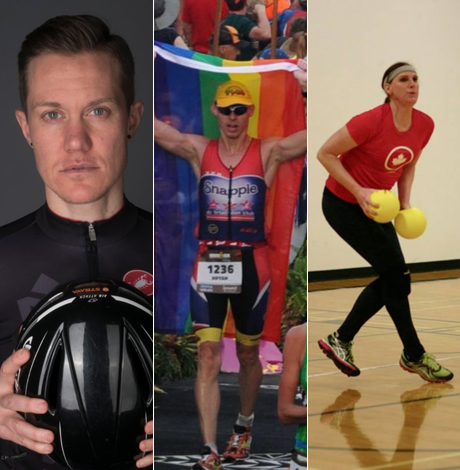
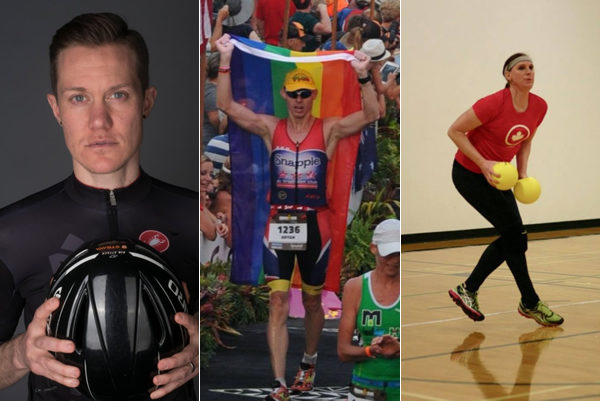
Chris Mosier is the first transgender athlete to compete for Team USA and tracks policies for transgender athletes on TransAthlete.com.
“While SB 49 was shot down, the South Dakota lawmakers introduced House Bill 1225 just a few days later which is the exact same bill targeting transgender high school athletes,” Mosier says. “They are hoping to angle the bill into a ‘friendlier’ committee to get it passed. The attacks against trans youth are still on.”
Supporters can sign an open letter that Mosier created here.
On Jan. 18, the International Triathlon Union banned rainbow flags from all competitions, equating the rainbow flag with unsportsmanlike, disrespectful and dangerous displays. The ruling read as follows:
“Athletes will avoid displaying any kind of demonstration of political, religious, sexual orientation or racial propaganda.”
The sexual orientation part of that was new for 2019 and was designed specifically to eliminate rainbow flags. The public outcry regarding the ruling was immediate and six days later the ruling was reversed. The International Triathlon Union released the following statement:
“The International Triathlon Union has decided to immediately change the rule that stated that ‘Athletes will avoid displaying any kind of demonstration of political, religious, sexual orientation or racial propaganda,’ so that ‘sexual orientation’ will be immediately removed.”
D.C. triathlete Bryan Frank qualified for the 2015 Ironman World Championships in Kona, Hawaii and knew he would be carrying the rainbow flag across the finish line.
When he was a half mile from the finish line, he grabbed a rainbow flag from his entourage of seven supporters who were holding it on the sidelines.
“There is still a stigma that LGBT athletes can’t compete at a top level. Kona is the world championships and I wanted to show that anyone can play on the world stage,” Frank says. “There was another guy running next to me and he stepped aside to let me have my moment at the finish line. I got lots of cheers.”
This past week, the International Powerlifting Federation and USA Powerlifting banned transgender athletes from competing by posting an update to their transgender participation policy on their website.
Originally, the International Powerlifting Federation had adopted rules that followed the International Olympic Committee’s policies on transgender athletes. The rules allow such athletes to compete provided their hormones are within normal ranges.
The new ruling prohibits all female transgender powerlifters and male transgender athletes who use testosterone from competition.
LGBT sports watchdog Athlete Ally issued the following statement regarding the ruling:
“Access to sport is a human right. When (LGBT) people are systematically excluded from sport, they are denied not only an essential component of their physical, mental and emotional well-being, but also access to a community and the social support therein.”
You can sign the Athlete Ally support petition here.
Blocking athletes from competition, whether they are youth athletes or professional athletes, raises concerns on many levels. Participation in sports supports positive mental health and improves social skills along with promoting physical health.
Sin City Classic hosted its annual multisport tournament last month in Las Vegas and the dodgeball tournament boasted 500 athletes from 60 teams. Most of the Team USA men’s and women’s members competed in the co-ed division.
Winning the tournament MVP honors was trans athlete Savannah Burton, a former member of Team Canada’s women’s dodgeball team. Next up she will be competing in the Ontario provincials and hoping to qualify for Canadian Nationals.
“Access to sports participation, in the gender that they identify, should be a right for every transgender athlete,” Burton says. “The values gained from being part of a team or a competition improves self-worth, overall physical health and provides a sense of belonging. The friendships and support I have received from my women’s dodgeball team (Wildlings) has been a game changer for me and I don’t know where I would be without those incredible ladies. When organizations are inclusive, everybody wins.”





Iran and Egypt on Friday faced off during the World Cup’s “Pride Match” in Seattle.
Iran is among the handful of countries in which consensual same-sex sexual relations remain punishable by death. Discrimination and persecution based on sexual orientation and gender identity is commonplace in Egypt.
Friday’s match coincided with Pride weekend in Seattle. The Egyptian Football Association and the Football Federation Islamic Republic of Iran both objected to playing in the “Pride Match.”
Egypt and Iran tied 1-1.
FIFA, for its part, allowed Pride flags inside the stadium during the match.
“The FIFA World Cup 2026 is an inclusive event that welcomes people from all backgrounds,” a FIFA spokesperson told the Washington Blade in a statement. “Fans of all sexual orientations and gender identities are welcome at matches and events. General statements of human rights, including rainbow flags and other flags representing sexual orientation and gender identity, are permitted under the FIFA World Cup 2026™ Stadium Code of Conduct and may be displayed inside stadiums provided they are used in a manner consistent with the code.”
Human Rights Watch welcomed FIFA’s decision to allow Pride flags inside the stadium. Outright International, a global LGBTQ and intersex rights group, distributed Pride flags in Seattle on Friday, which was Pride Match Day.
“Visibility matters,” said Outright International Executive Director Maria Sjödin. “Pride is now being celebrated in more than 100 countries, including this weekend in Seattle. For many LGBTIQ people, seeing a Pride flag in public is a reminder that they are not alone, and that their rights and dignity are recognized.”
FIFA President Gianni Infantino earlier this year told Die Weltwoche, a Swiss magazine, that “there will be no ‘Pride Match’ at the (FIFA) World Cup.”
“There will be a FIFA World Cup match in Seattle, and on the same day, events organized by external organizations will be taking place in the city,” said Infantino. “But that has nothing to do with the match itself.”
Peter Tatchell, a long-time LGBTQ activist from the U.K. who is director of the Peter Tatchell Foundation, was among those who traveled to Seattle for Friday’s match. Tatchell accused FIFA of not vetting World Cup teams — specifically Iran, Egypt, Saudi Arabia, Ghana, Senegal, Qatar, Tunisia, Morocco, Iraq, Uzbekistan, and Algeria — over whether they would allow gay players.
“FIFA is protecting LGBT+ visibility in the stands while failing to protect LGBT+ players on the pitch,” said Tatchell.
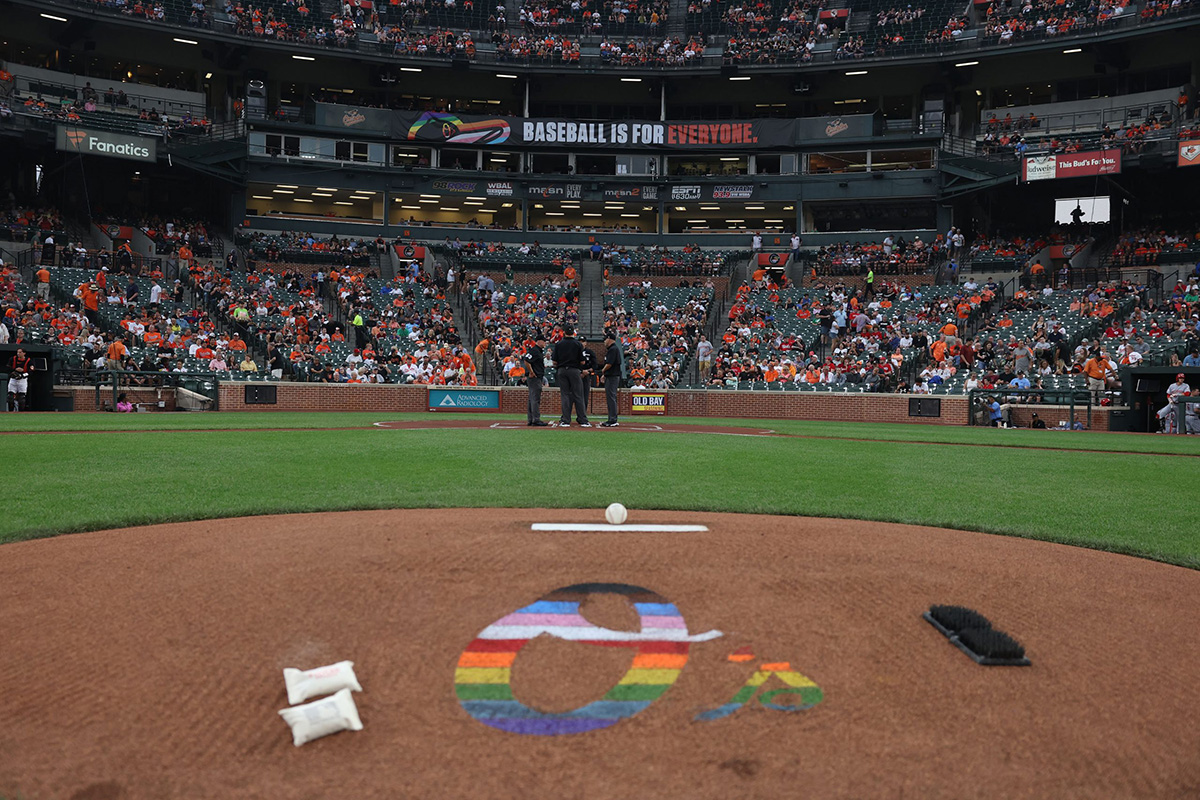
The Baltimore Orioles will take on the Washington Nationals on Friday, June 26 at 7 p.m. for Pride Night at Oriole Park.
The first 15,000 fans will receive an exclusive Pride Night Orioles jersey. The Washington Blade is a media sponsor of this event.
To purchase tickets, visit Orioles.com/Tickets.
Sports
Minor league team in York, Pa., forfeits Pride Night game after some players refuse to wear special jersey
City is roughly 20 miles north of Md. border
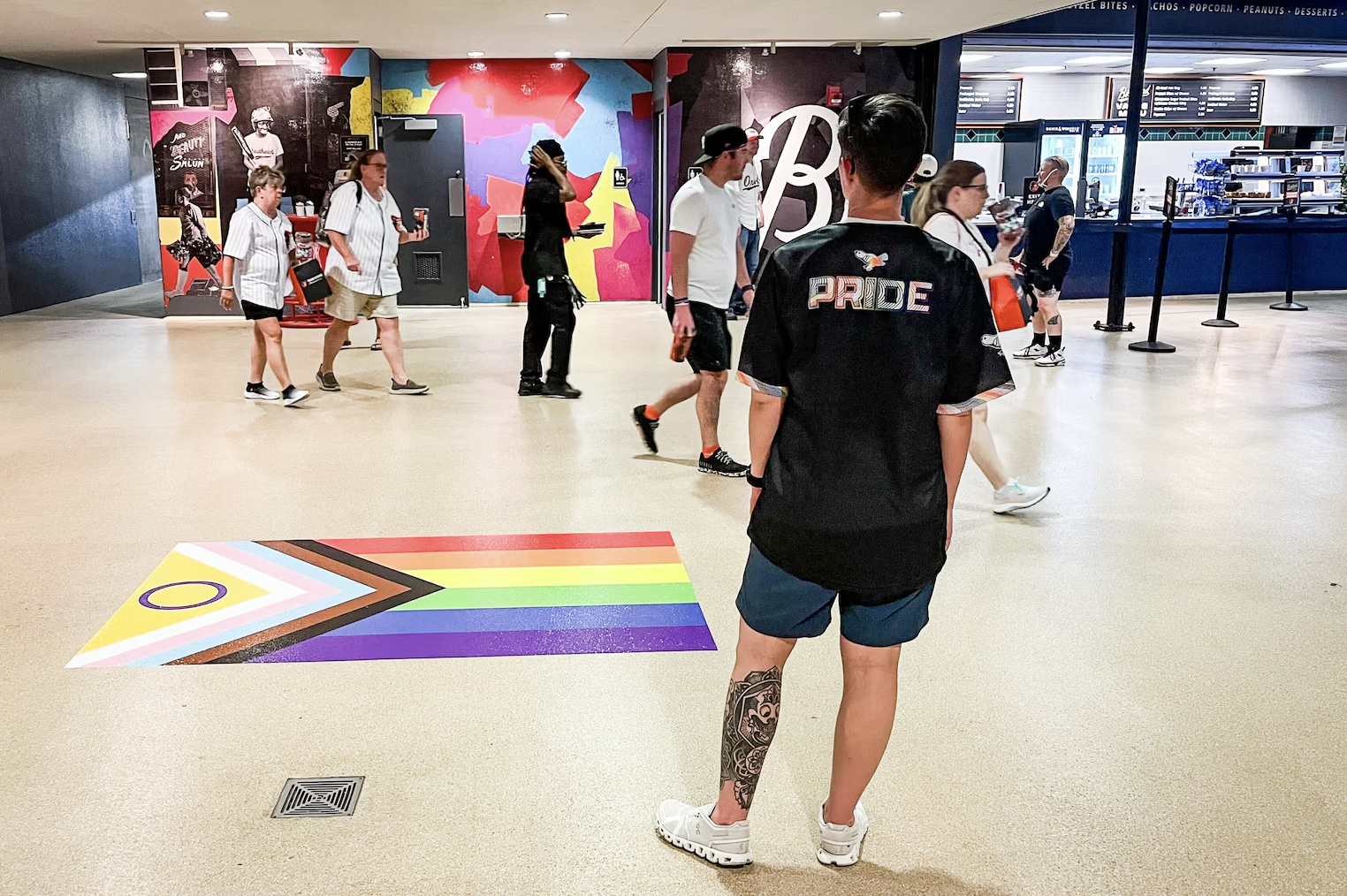
An independent minor league baseball team says it is forfeiting a game because some of its players refused to wear a special Pride Night jersey.
The Atlantic League Pro Baseball’s York Revolution were planning to hold their 11th annual Pride Night event Thursday for a game against the Southern Maryland Blue Crabs.
But the Revolution announced the day of the game that it wouldn’t be played. York is about 20 miles north of the Maryland line. The Blue Crabs play in Waldorf.
The rest of this article can be found on the Baltimore Banner’s website.

When buying a home, it’s decisions, decisions, decisions

Authorities investigate officer-involved shooting outside Asheville gay bar

Popular Mount Vernon gay bar Leon’s to temporarily close after owner’s death

30 years on, ‘The Birdcage’ remains a landmark

Comings & Goings

Mexico’s first openly gay mayor killed

Expected India Supreme Court ruling could shape future LGBTQ rights cases

Celebrate Pride in Rehoboth Beach this weekend

Christa Tichy hopes to preserve LGBTQ representation in Md. House of Delegates

Advocacy groups join Venezuela earthquake relief efforts
-

 Mexico5 days ago
Mexico’s first openly gay mayor killed
-
India4 days ago
Expected India Supreme Court ruling could shape future LGBTQ rights cases
-
Rehoboth Beach4 days ago
Celebrate Pride in Rehoboth Beach this weekend
-
Maryland4 days ago
Christa Tichy hopes to preserve LGBTQ representation in Md. House of Delegates