Books
A passage from India
Math prof, author enjoys diverse life in the U.S.
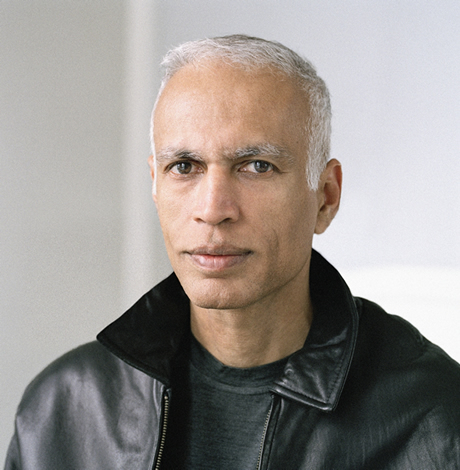
Manil Suri has enjoyed a diverse career in math and writing. (Photo courtesy Suri)
If you think that your math prof would never do a striptease on You Tube, you haven’t met Manil Suri, the gay Indian-American author, University of Maryland, Baltimore County mathematics professor and “New York Times” contributing opinion writer.
Being a tenured prof or a Times contributor would be more than enough on anyone’s plate, yet Suri, 56 has written three acclaimed novels loosely based on the Hindu trinity: “The Death of Vishnu” (2001), “The Age of Shiva” (2008) and “The City of Devi” (2013). “Vishnu” was a Pen/Faulkner Award finalist and “Devi” was a Lambda Literary Award finalist. He lives with his partner in Silver Spring.
Suri was born in Bombay, now known as Mumbai where accommodations are expensive, he says. Middle-class families often rent part of a larger apartment.
In Mumbai, Suri, an only child and his parents shared one room in an apartment with three Muslim families.
“There was one kitchen,” he says. “We shared the toilet. There wasn’t any privacy. The fights were about space, not religion. There was a common entrance to the apartment. It was a cause of great friction.”
His father was a Bollywood music director and his mother was a schoolteacher with a master’s degree in psychology. His parents, now deceased, scrimped and saved so they could sent him to private school.
“Public schools in India aren’t good,” Suri says. “You only go to them if you’re very poor.”
When Suri was young, he wouldn’t have predicted that he would go into math or writing. He was interested in science and also used to paint. His main hobby was collecting Bollywood posters.
Movies had a big impact on him. Years later, he performed a sexy Bollywood dance at the Brooklyn Book Festival in 2008.
“‘Oh, my God, that’s the guy who taught me calculus,’ one of my students commented when he saw me dance on You Tube,” Suri says.
When he was growing up, movies were the main form of entertainment.
“We only started getting TV when I was in fifth or sixth grade,” he says. “It was awful.”
Suri got a poster of “Star Wars” when it came out and says Hollywood movies just started becoming popular in India toward the end of his time there.
When he was about 12, Suri had his first conversation about what it means to be queer with his mother. He was told that, “everyone is supposed to go through a homosexual phase and then go into a heterosexual phase,” he says. “I went through this phase. I didn’t feel any guilt. I just felt it was natural. I felt I’d grow out of it, but I’m still waiting,” he says.
It was a key factor in his decision to come to the U.S. at age 20 to study math. He eventually earned a Ph.D. in applied mathematics from Carnegie-Melon University.
“In Bombay, there was a lack of privacy,” he says. “I didn’t have anyone I could to talk to who was gay.”
He felt no culture shock.
“This place just fit me so much better,” he says. “I loved Hollywood movies. I read Mad magazine. I felt so much at home.”
It’s not that STEM (science, technology, engineering and math) fields are homophobic, Suri says.
“It’s just that personal things don’t get discussed. I worry that in STEM fields there aren’t enough visible LGBT role models as there are in other fields like the theater, the arts,” he says.
For many years, writing was just a hobby for Suri. He’d write short stories, but not put much effort into it. His first published short story, appeared in “an obscure journal in Bulgaria.”
In Provincetown, Mass., at a writers conference in 1997, Michael Cunningham encouraged Suri to finish “The Death of Vishnu,” of which he’d written only a couple of chapters.
“He told me, ‘You are a writer.’ For the first time I wasn’t just a man with a hobby.”



‘La Lucci’
By Susan Lucci with Laura Morton
c.2026, Blackstone Publishing
$29.99/196 pages
They’re among the world’s greatest love stories.
You know them well: Marc Antony and Cleopatra. Abelard and Heloise. Phoebe and Langley. Cliff and Nina. Jesse and Angie, Opal and Palmer, Palmer and Daisy, Tad and Dixie. Now read “La Lucci” by Susan Lucci, with Laura Morton, and you might also think of Susan and Helmut.

When she was a very small girl, Susan Lucci loved to perform. Also when she was young, she learned that words have power. She vowed to use them for good for the rest of her life.
Her parents, she says, were supportive and her family, loving. Because of her Italian heritage, she was “ethnic looking” but Lucci’s mother was careful to point out dark-haired beauties on TV and elsewhere, giving Lucci a foundation of confidence.
That’s just one of the things for which Lucci says she’s grateful. In fact, she says, “Prayers of gratitude are how I begin and end each day.”
She is particularly grateful for becoming a mother to her two adult children, and to the doctors who saved her son’s life when he was a newborn.
Lucci writes about gratitude for her long career. She was a keystone character on TV’s “All My Children,” and she learned a lot from older actors on the show, and from Agnes Nixon, the creator of it. She says she still keeps in touch with many of her former costars.
She is thankful for her mother’s caretakers, who stepped in when dementia struck. Grateful for more doctors, who did heart-saving work when Lucci had a clogged artery. Grateful for friends, opportunities, life, grandchildren, and a career that continues.
And she’s grateful for the love she shared with her husband, Helmut Huber, who died nearly four years ago. Grateful for the chance to grieve, to heal, and to continue.
And yet, she says of her husband: “He was never timid, but I know he was afraid at the end, and that kills me down to my soul.”
“It’s been 15 years since Erica Kane and I parted ways,” says author Susan Lucci (with Laura Morton), and she says that people still approach her to confirm or deny rumors of the show’s resurrection. There’s still no answer to that here (sorry, fans), but what you’ll find inside “La Lucci” is still exceptionally generous.
If this book were just filled with stories, you’d like it just fine. If it was only about Lucci’s faith and her gratitude – words that happen to appear very frequently here – you’d still like reading it. But Lucci tells her stories of family, children and “All My Children,” while also offering help to couples who’ve endured miscarriage, women who’ve had heart problems, and widow(ers) who are spinning and need the kindness of someone who’s lived loss, too.
These are the other things you’ll find in “La Lucci,” in a voice you’ll hear in your head, if you spent your lunch hours glued to the TV back in the day. It’s a comfortable, fun read for fans. It’s a story you’ll love.
The Blade may receive commissions from qualifying purchases made via this post.
Books
Risking it all for love during World War II
New book follows story of Black, gay expat in Paris
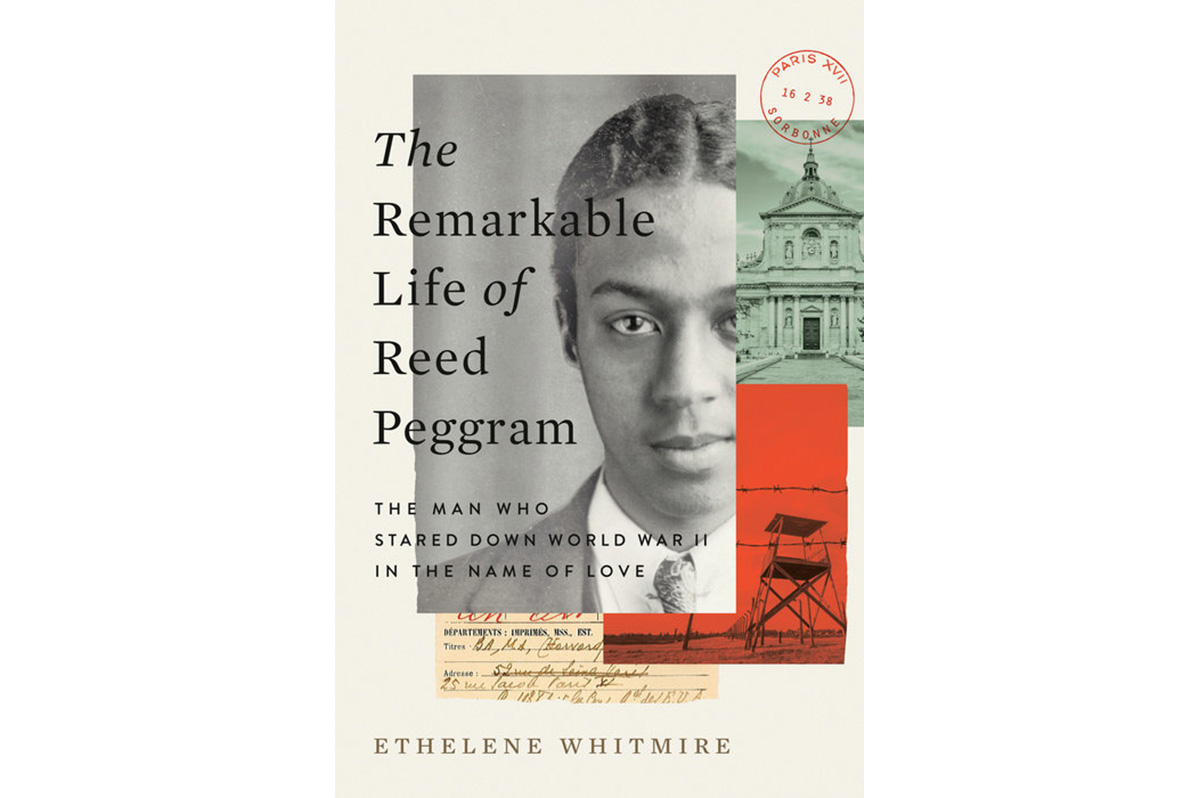
‘The Remarkable Life of Reed Peggram’
By Ethelene Whitmire
c.2026, Viking
$30/308 pages
You couldn’t escape it.
When you fell in love, that was it: you were there for good. Leaving your amour’s side was unthinkable, turning away was impossible. You’d do anything for that person you loved – even, as in the new biography, “The Remarkable Life of Reed Peggram” by Ethelene Whitmire, you’d escape toward danger.
On Aug. 28, 1938, Reed Peggram boarded a ship from Hoboken, N.J., hoping to “become a proper gentleman” and fulfill his dreams. A prolific writer and Harvard scholar of comparative literature, he’d recently been awarded the Rosenwald Fellowship, which put him in the company of literary stars like Du Bois, Hurston, and Hughes.
Both Peggram’s mother and grandmother were then domestic workers, and they had big expectations for him. Reed himself was eager to study abroad, for professional and personal reasons; he was “determined to become a French professor and an accomplished linguist” and “He also hoped to find love.”
What better place to do it than in Paris?
Outgoing and confident, Peggram made friends easily and had no trouble moving “through the world of his white male peers.” Where he faltered was in his lack of funds. He relied on the kindness of his many friends – one of whom introduced Peggram to a “man who would become so pivotal in his life,” a Danish man named Arne.
Peggram and Arne had a lot in common, and they began to enmesh their lives and dreams of living in the United States. But there were complications: homosexuality was largely forbidden, World War II was in its early stages, and it quickly became apparent that it was dangerous to stay in Europe.
And yet, Peggram loved Arne. He refused to leave without him and so, while most visiting Black Americans fled the war in Europe, “Reed was trying to stay.”
There’s so much more to the story inside “The Remarkable Life of Reed Peggram,” so much to know about Reed himself. Problem is, it’s a long haul to get to the good stuff.
In her introduction, author Ethelene Whitmire explains how she came to this tale and yes, it needs telling but probably not with the staggering number of inconsequential details here. Peggram moved homes a lot, and many people were involved in keeping him in Europe. That alone can be overwhelming; add the fact that costs and other monetary issues are mentioned in what seems like nearly every page, and you may wonder if you’ll ever find the reason for the book’s subtitle.
It’s there, nearly halfway through the book, which is when the tale takes a tender, urgent turn — albeit one with determination, rashness, and a dash of faux nonchalance. Also, if you’re expecting an unhappily-ever-after because, after all, it’s a World War II tale, don’t assume anything.
Reading this book will take a certain amount of patience, so skip it if you don’t have that fortitude. If you’re OK with minuscule details and want a heart-pounder, though, “The Remarkable Life of Reed Peggram” might be a good escape.
The Blade may receive commissions from qualifying purchases made via this post.
Books
Laverne Cox, Liza Minnelli among authors with new books
A tome for every taste this reading season
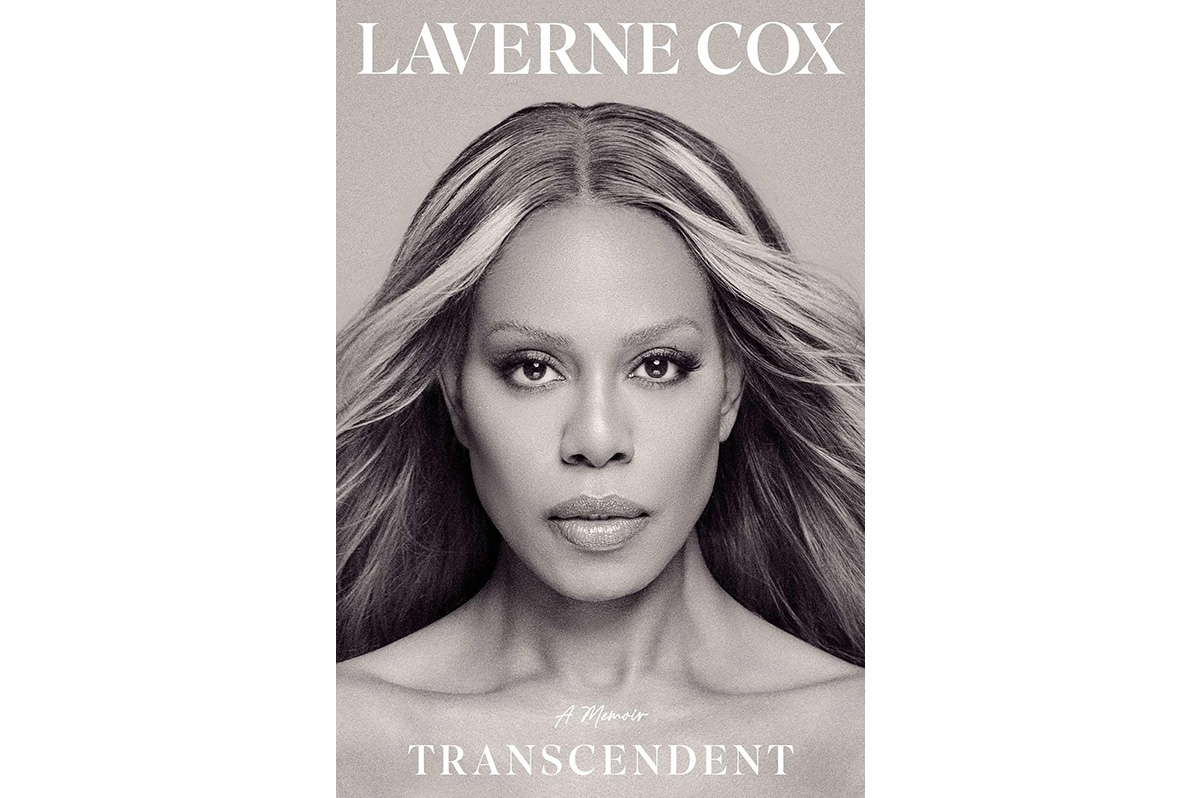
Spring is a great time to think about vacations, spring break, lunch on the patio, or an afternoon in the park. You’ll want to bring one (or all!) of these great new books.
So let’s start here: What are you up for? How about a great new novel?
If you’re a mystery fan, you’ll want to make reservations to visit “Disaster Gay Detective Agency” by Lev AC Rosen (Poisoned Pen Press, June 2). It’s a whodunit featuring a group of gay roommates, one of whom is a swoony romantic. Add a mysterious man who disappears and a murder, of course, and you’ve got the novel you need for the beach.
Don’t discount young adult books, if you want something light to read this spring. “What Happened to Those Girls” by Carlyn Greenwald (Sourcebooks Fire, June 30) is a thriller about mean girls and a camping trip that goes terribly, bloodily wrong. Meant for teens ages 14 and up, young adult books are breezier and lighter fare for the busy grown-up reader.
If you loved “Boyfriend Material” and “Husband Material,” you’ll be eager for the next installment from author Alexis Hall. “Father Material” (Sourcebooks Casablanca, June 2) takes Luc and Oliver to the next step. First was dating. Then was marriage. Is it time for the sound of pitter-patter on the kitchen floor?
Maybe something even lighter? Then how about a book of essays – like “The Terrible, Horrible, No Good, Very Bad Gay” bycomedian and writer Eliot Glazer (Gallery Books, Aug. 11). It’s a book of essays on being gay today, the irritations, the joys, and fitting in. Be aware that these essays may contain a bit of spice – but isn’t that what you want for your reading pleasure anyhow, hmmm?
But okay, let’s say you want something with a little more heft to it. How about a biography?
Look for “Transcendant” by Laverne Cox (Gallery Books, June 9), or “Kids, Wait Till You Hear This” by Liza Minnelli (Grand Central Publishing, March 10), and “Every Inch a Lady” by Audrey Smaltz with Alina Mitchell (Amistad, July 14). Keep your eyes open for “Without Prejudice: My Life as a Gay Judge” by Harvey Brownstone (ECW Press, May 26) or “The Double Dutch Fuss” by Phill Branch (Amistad, June 2).
Then again, maybe you want some history, or something different.
So here: look for “Queer Saints: A Radical Guide to Magic, Miracles, and Modern Intercession” by Antonio Pagliarulo (Weiser, June 1) for a little bit of faith-based gay. Music lovers will want “Mighty Real: A History of LGBTQ Music, 1969-2000” by Barry Walters (Viking, May 12). Activists will want “In the Arms of Mountains: A Memoir of Land, Love, and Queer Resistance in Red America” byformer Idaho state Sen. Cole Nicole LeFavour (Beacon Press, May 26).
And if these books aren’t enough, then be sure to check with your favorite bookseller or librarian. They’ll have exactly what you’re in the mood to read. They’ll find what you need for that patio, beach towel, or easy chair.

Democracy Forward files FOIA request for State Department bathroom policy records

House Republicans push nationwide ‘Don’t Say Gay’ bill

Botswana repeals colonial-era sodomy law

LGBTQ people are leaving Orthodox Judaism behind

Madonna makes rare club appearance in West Hollywood

Adoption under suspicion

Why we need to recognize and celebrate Lesbian Day of Visibility

Calendar: April 24-30

DC Center marks one year at new location