China
Female writers arrested in Chinese crackdown on gay erotic fiction
Pingping Anan Yongfu arrested last month, detailed ordeal on Weibo
On China’s Weibo, a platform akin to a digital town square, a young woman using the handle Pingping Anan Yongfu laid bare a harrowing ordeal. She was arrested and subjected to a humiliating strip search for publishing gay erotic fiction. Her raw and unsparing account exposed a broader clampdown.
Since February, at least 30 other writers — mostly women in their 20s — have shared similar stories of law enforcement raids, their lives upended for crafting “danmei,” a genre of male-male romance often laced with explicit themes, on Haitang Literature City and other platforms.
”I will never forget it — being escorted to the car in full view,” posted Pingping. “Enduring the humiliation of stripping naked for examination in front of strangers, putting on a vest for photos, sitting in the chair, shaking with fear, my heart pounding.”
A wave of legal limbo engulfs the writers, with many released on bail or awaiting trial, their fates uncertain, according to a BBC. Others remain behind bars, their detention a stark reminder of the crackdown’s reach.
Beyond those arrested, a broader net has been cast: scores of contributors to Haitang Literature City have been hauled in for interrogations, their online words now a potential liability under China’s pornography laws for producing and distributing obscene materials.
China’s pornography laws cast a long shadow over writers, with those profiting from their work facing prison terms exceeding a decade for crafting “explicit descriptions of gay sex or other sexual perversions.” Yet, heterosexual erotica often escapes such scrutiny, slipping through the cracks of enforcement. Nobel Laureate Mo Yan, whose novels brim with graphic sexual scenes, and Jia Pingwa, known for vivid depictions in works like “Abandoned Capital,” and other acclaimed writers continue to publish freely, their books lining shelves without fear of raids. This stark disparity underscores a selective crackdown, where gay erotica bears the brunt of official censure.
Beijing’s unease with the online outcry was palpable, as the trending hashtag #HaitangAuthorsArrested, which amassed more than 30 million views on Weibo, vanished abruptly under censorship’s heavy hand. Posts offering legal advice to the embattled writers were scrubbed, and a detailed report on the crackdown by Caixin, a leading Chinese news outlet, was swiftly taken offline. Writers’ accounts, including some of their pseudonymous handles, have also begun to disappear, erased from the digital landscape as authorities tighten their grip.
As her post ricocheted across China’s digital sphere, Pingping abruptly deleted it, replacing it with a brief message expressing gratitude to supporters while conceding she had broken the law. The admission, tinged with resignation, marked her final act on Weibo before she erased her account entirely, vanishing from the platform amid mounting pressure from authorities.
“Danmei,” a vibrant subgenre of Chinese fiction, centers on romantic and often sexually explicit relationships between men, captivating a largely female readership through its blend of emotional depth, fantasy, and forbidden desire. Rooted in Japanese “yaoi” or “boys’ love,” but distinctly shaped by Chinese cultural sensibilities, it flourishes on Haitang Literature City and JJWXC and other platforms where writers craft sprawling tales of historical, fantastical, or modern love that often laced with themes of power and sacrifice.
Despite its popularity — bolstered by blockbuster adaptations like “The Untamed,” which amassed millions of fans — “danmei” faces intense scrutiny in China, where authorities deem its explicit content “obscene” under vague pornography laws. This tension reflects a broader cultural clash: while “danmei” offers a space for exploring queer identities and challenging traditional gender norms, its underground allure draws both devoted fans and the wary eye of censors seeking to uphold conservative values.
A sweeping crackdown in late 2024 saw Chinese authorities prosecute roughly 50 “danmei” writers, ensnaring them in a legal dragnet under the country’s 2004 obscenity laws. Among them, Yuan Shang Bai Yun Jian, a prominent author who earned 1.85 million yuan ($250,874.58) from her work on Haitang Literature City, was sentenced to nearly five years in prison, her success weaponized as evidence of “obscene materials for profit.”
The harsh penalties, which outstrip those for some violent crimes, sparked outrage online, with netizens decrying the disproportionate punishment for crafting stories that, while explicit, harmed no one.
Chinese media regulator banned ‘danmei’ TV dramas in 2022
Humiliation washed over Pingping as law enforcement stormed into her college classroom, recounted a writer using the Weibo handle “Tianxia Ju Da Bingyuan” or “The World Is a Vast Asylum.” Dragged from her lecture under the stunned gazes of her peers, she endured a public spectacle as officers trailed her to her dormitory, rifling through her belongings in a search for evidence of her “danmei” stories, leaving her exposed and her privacy shattered.
“Danmei” novels, centered on male-male romance have spurred numerous Chinese television dramas, but state censorship has sharply reduced their output. A 2021 Sixth Tone report identified more than 60 “danmei”-based dramas in development or slated for release, involving actors who include Chen Feiyu and Fan Chengcheng. Many of them, however, were halted following the 2022 National Radio and Television Administration ban on such adaptations.
MyDramaList records 16 aired series, including “The Untamed” (2019) and “Word of Honor” (2021), each with 30–50 actors, totaling approximately 480–800 performers. Lead actors, including Xiao Zhan and Wang Yibo, earned $1–3 million per series, per The China Project, while others made $50,000–$100,000, though precise figures remain limited due to private contracts. The 2021 “Internet Clean-up Campaign” and continued restrictions have significantly curbed new “danmei” adaptations.

China
China’s top court acknowledges anti-LGBTQ discrimination
Postgraduate student petitioned for legal clarification
China’s Supreme People’s Court on May 8 issued a rare response to a petition involving LGBTQ discrimination.
In a surprising response; it discussed sexual orientation, gender identity, and gender expression. The response also mentioned workplace discrimination, public humiliation, and school bullying, language considered uncommon from China’s legal system.
The response stemmed from a proposal submitted by a postgraduate student in Qingdao through China’s xinfang petition system on March 25, urging the court to establish clearer judicial standards against discrimination based on sexual orientation and gender identity. Six weeks later, the Supreme People’s Court Research Office issued a written reply.
The Research Office is an internal legal and policy body within the Supreme People’s Court. It studies legal issues, drafts judicial guidance, and responds to legal inquiries submitted through official channels. Its responses do not carry the same legal weight as a judicial interpretation or court ruling.
“The opinions and suggestions you raised are of great value,” reads a translated version of the Supreme People’s Court Research Office response. “In order to thoroughly implement the Constitution, Civil Code, Employment Promotion Law and other legal provisions, and effectively protect citizens’ personality rights from infringement, the Supreme People’s Court has guided local courts at all levels to handle a number of related cases, and through typical cases and other forms has clarified adjudication rules.”
The response stated that courts may determine public insults, defamation and, discriminatory conduct targeting sexual orientation, gender identity and gender expression as infringement of personality rights. It also said employers treating individuals differently in hiring, employment, transfer or dismissal based on those characteristics could face employment discrimination claims. Schools could also bear legal responsibility for improper discipline or bullying involving students based on sexual orientation, gender identity and gender expression, according to the response.
“It’s not a systematic change from the authorities recognizing LGBTQ rights,” said Renn Hao, an LGBTQ activist in China. “However, it’s an informal statement from the Supreme Court. According to a scholar researching LGBTQ legal cases in China, courts are recognizing more cases involving LGBTQ discrimination and same-sex partners through their verdicts.”
China decriminalized consensual same-sex sexual relations in 1997 and removed homosexuality from the country’s list of mental disorders four years later. Chinese law, however, does not recognize same-sex relationships.
Public advocacy involving LGBTQ issues also remains tightly controlled. Authorities in recent years have continued restricting community organizing, public events, and online expression involving sexual minorities.
Discussions involving LGBTQ issues are also frequently censored on Chinese social media platforms.
Activists and advocacy groups say Chinese authorities in recent years have removed online content, shut down LGBTQ student group accounts and restricted public discussion involving sexual minority issues. After the Supreme People’s Court response began circulating online, related posts and articles were also removed from some Chinese platforms.
“It may still be too early to fully assess the long-term impact, as this development has only just happened and the situation is still unfolding,” said Xiaogang Wei, a Beijing-based LGBTQ rights activist, filmmaker, and founder of the China Rainbow Collective Foundation. “Although the reply is not legally binding, it represents a rare form of institutional acknowledgment of SOGIE-related discrimination in China. For Chinese LGBTQ people and advocates, this could become a meaningful reference point for future legal advocacy, public communication, and community awareness.”
Wei said the rapid removal of related posts and articles limited the development’s broader public impact and underscored how fragile LGBTQ visibility remains in China.
“This is why we believe it is important to continue sharing verified information and ensuring that this development is not erased from public understanding,” Wei said.
Chinese courts in recent years have also heard a number of LGBTQ-related employment discrimination cases, despite the absence of explicit nationwide protections based on sexual orientation or gender identity. In one notable case, the Supreme People’s Court in 2018 formally recognized “equal employment rights disputes” as a legal cause of action, allowing some discrimination-related cases to proceed through the courts.
Chinese courts have previously handled several LGBTQ-related disputes involving employment discrimination, custody, and so-called conversion therapy. In 2024, a Beijing court drew attention after recognizing visitation rights for a child involving a same sex couple, a decision activists described as a milestone for LGBTQ families in China.
China
Two Chinese men detained over AI-generated picture of pandas engaging in same-sex behavior
Arrests part of increased online surveillance, LGBTQ rights crackdown
Chinese authorities have detained two men after they shared an artificially altered image that linked queer identity with a specific city.
The Washington Post on Jan. 21 reported the men — who are 29 and 33 — circulated an AI-generated picture depicting pandas engaging in same-sex behavior in Chengdu, a major city in southwestern China often referred to as the “panda capital” due to its association with giant panda conservation. Local officials described the sharing of the image as “malicious,” and police in Chengdu took the men into custody.
Authorities also suspended the two men’s social media accounts, accusing them of spreading misinformation presented as legitimate news. According to the Post, the artificially generated image was posted alongside a fabricated headline, giving the appearance of an authentic news report. The image depicted two male pandas mating.
According to an official police report, police said the fabricated image was presented in the format of a legitimate news article and accompanied by a false headline. The caption read, “Chengdu: Two male Sichuan giant pandas successfully mate for the first time without human intervention,” authorities said.
Chinese regulators have in recent years tightened oversight of AI and online content.
Under the Interim Measures for the Administration of Generative Artificial Intelligence Services, issued in 2023, providers and users of generative AI systems are required to comply with existing laws, adhere to social and ethical standards, and refrain from producing or disseminating false or misleading information. Additional rules that took effect on Sept. 1, 2025, require online platforms to clearly label AI-generated content, a measure authorities have said is intended to curb misinformation and maintain order in digital spaces.
Police under Chinese law are permitted to impose administrative detention of up to 15 days for offenses deemed to disrupt public order, a category that includes the fabrication or dissemination of false information online. Such cases are handled outside the criminal court system and do not require formal prosecution.
According to a statement the Chengdu Public Security Bureau’s Chenghua branch released, police opened an investigation after receiving public reports that online accounts were spreading false information about the city. Authorities said officers collected evidence shortly afterward and placed the two individuals under administrative detention.
The detentions are not an isolated case.
The Washington Blade in July 2025 reported a Chinese female writer was arrested and subjected to a strip search after publishing gay erotic fiction online. At least 30 other writers — most of them women in their 20s — in the months that followed publicly described similar encounters with law enforcement, including home raids and questioning related to their online writing.
ShanghaiPRIDE, a Chinese LGBTQ advocacy group that organized annual Pride events in the city, has remained indefinitely suspended since 2021. In the same period, dozens of LGBTQ-focused accounts have been removed from WeChat, China’s largest social media platform, as authorities intensified oversight of online content related to sexual orientation and gender identity.
Authorities in 2021 detained the founder of LGBT Rights Advocacy China. They later released them on the condition that he shut down the organization, which ceased operations shortly afterward.
China decriminalized homosexuality in 1997 when it removed consensual same-sex sexual relations from the country’s criminal code. The Chinese Society of Psychiatry in 2001 formally removed homosexuality from its list of mental disorders. Despite those changes, same-sex relationships remain unrecognized under Chinese law, and there are no legal protections against discrimination based on sexual orientation or gender identity. Public advocacy for LGBTQ rights remains tightly restricted, with authorities continuing to limit community organizing, public events and online expression related to sexual minority issues.
Within China’s LGBTQ community, transgender and gender non-conforming people remain among the most vulnerable. Under current regulations, access to gender-affirming surgery is subject to strict requirements, including being at least 18 years old, unmarried, obtaining parental consent and having no criminal record — procedures that are required in order to legally change one’s gender on official documents.
China’s system of online governance places responsibility on both users and platforms to prevent the spread of prohibited content. Social media companies are required to conduct real-name verification, monitor user activity and remove posts that violate regulations, while individuals can be punished for content authorities determine to have caused public misunderstanding or social disruption.
“Actually, at least three similar incidents have occurred in Chengdu recently, all involving netizens posting on social media linking Chengdu with homosexuality, resulting in legal repercussions. This isn’t just about giant pandas. I think the local police’s reaction was somewhat excessive,” said Renn Hao, a Chinese queer activist. “The content was actually praising Chengdu’s inclusivity, and there was no need to punish them with regulations like ‘maliciously spreading false information.’”
“This situation reflects the strict censorship of LGBT related content in the area,” they added. “This censorship makes LGBT-related content increasingly invisible, and people are even more afraid to post or mention it. This not only impacts the LGBTQ+ community in China but also hinders public understanding and awareness of this group.”
Hong Kong
Hong Kong lawmakers overwhelmingly reject relationship recognition bill
Registered same-sex couples would have been allowed to make medical decisions
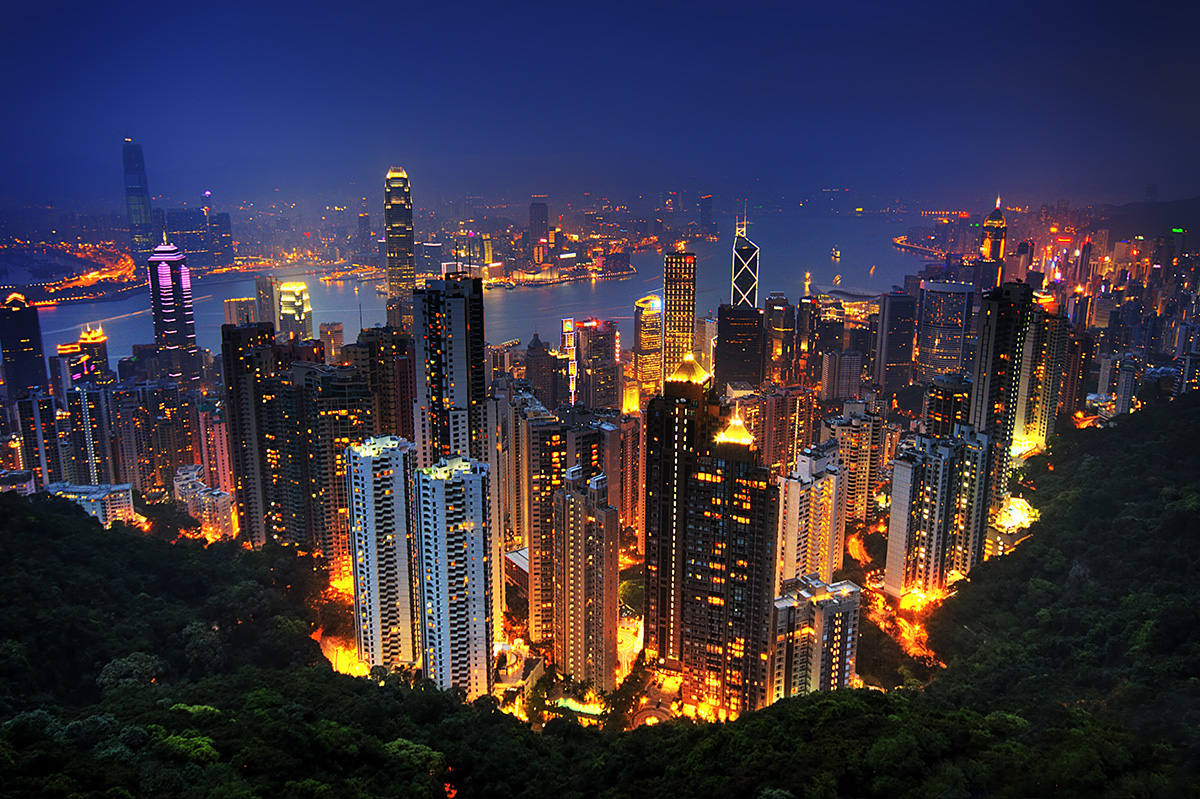
Lawmakers in Hong Kong on Wednesday overwhelmingly rejected a bill that would have extended limited legal rights to same-sex couples.
The New York Times notes 71 of the Legislative Council’s 89 members voted against the measure that would have allowed same-sex couples who either legally married or entered into a civil union overseas to register their partnerships in Hong Kong. The measure, among other things, would have allowed registered same-sex partners to make medical decisions on each other’s behalf.
The Hong Kong Court of Appeal in September 2023 ordered the government to establish a system through which same-sex couples can legally register their partnerships.
The Washington Blade previously reported Jimmy Sham, a pro-democracy activist who married his partner in the U.S. more than a decade ago, challenged Hong Kong’s refusal to recognize his marriage. The Court of Appeal gave the territory’s government an Oct. 27 deadline to act.
An activist with whom the Blade spoke last month said Beijing is “unlikely to interfere.”
Same-sex couples can legally marry in Taiwan, Nepal, and Thailand. Several Japanese courts in recent years have ruled the country’s ban on same-sex marriage is unconstitutional.

Annie Andrews denounces trans athletes after Trump targets her

On Republican Long Island, gay Democrat Chris Gallant bets on public service over politics

Report: LGBTQ exclusion costs Japanese economy billions a year

Center for Black Equity honors leaders, activists at BE. Gala

In ‘The Lost Brontë,’ a complicated lie can lead to danger

U.S. int’l trade negotiator, consultant James Bedore dies at 82

Campaign urges Virginia High School League to reverse stance on trans athletes

Calif. GOP gubernatorial candidate ad ‘disgusting attempt to exploit lesbian intimacy’

Center Arts Gallery celebrates 10 years with reception, auction

Trump, Netanyahu, and Putin are all war criminals
-

 Obituary4 days ago
U.S. int’l trade negotiator, consultant James Bedore dies at 82
-
Virginia4 days ago
Campaign urges Virginia High School League to reverse stance on trans athletes
-
California4 days ago
Calif. GOP gubernatorial candidate ad ‘disgusting attempt to exploit lesbian intimacy’
-
Commentary4 days ago
Center Arts Gallery celebrates 10 years with reception, auction