Sports
YEAR IN REVIEW 2015: Sports (Victories at home and abroad)
Local LGBT sports leagues enjoy banner year
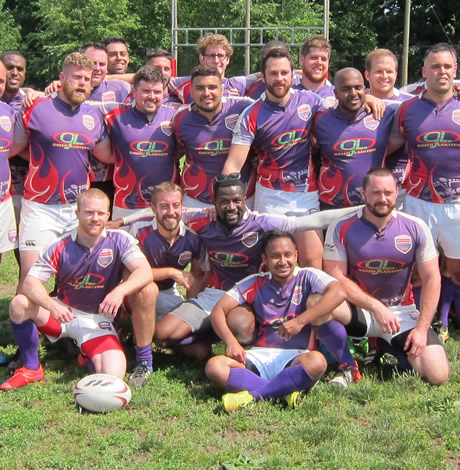
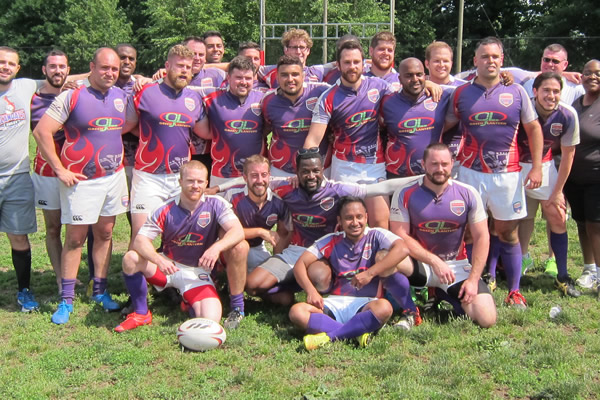
The new year is shaping up to be huge for the Washington Scandals Rugby Team. In May they had to Nashville for the Bingham Cup. (Photo by Kevin Majoros)
It was another stellar year for the LGBT sports teams of Washington. The strength of the sports community can be seen in the performances of the athletes when they travel nationally and internationally to compete. The social aspect of the community continues to expand as many of the teams are sharing mixers and the athletes are crossing over to other sports.
The Washington Scandals Rugby Football Club continued their path of competing in tournaments and arranging matches with other rugby clubs. This fall they traveled to Charleston, S.C.; New York City and Atlanta. In May, the Scandals will go to Nashville for the Bingham Cup.
It was a great first year for D.C. Pride Volleyball League as they completed their first two seasons of their competitive league and hosted open play on Wednesday nights. They also hosted the Rehoboth Beach Open and Presidents Pride Cup tournaments.
The D.C. Gay Flag Football League had another great year wrapping up two more seasons, traveling to tournaments and hosting Beach Bowl in July in Rehoboth Beach, Del. In October they will host Gay Bowl XVI and welcome teams from all over the country.
The District of Columbia Aquatics Club again hosted the Maryland Swim for Life open water race, the Columbus Classic and traveled to the EuroGames in Stockholm, Sweden where they won 125 medals. In August they will travel to Edmonton, Canada for the International Gay & Lesbian Aquatics Championships.
Ski Bums spent 2015 skiing and snowboarding in powder around the United States and other parts of the world. International trips in 2016 include New Zealand, Japan, Italy and British Columbia. National trips to Montana, New York, Vermont, Oregon and Montana are also being booked. This year’s D.C. day trip will be announced soon.
Chesapeake and Potomac Softball sent multiple teams to the Gay Softball World Series in Columbus, Ohio in August where the D.C. Union team took third place. They also continued to provide league play in the open division and women’s division. They hosted their annual MAGIC Tournament and traveled to New Orleans; Fort Lauderdale, Fla.; Providence, R.I.; and Orlando, Fla., for more tournament action.
The D.C. Strokes Rowing Club continued with multiple rowing programs and hosted the 22nd annual Stonewall Regatta bringing about 400 rowers to D.C. The Strokes raced sprints and head races throughout the year and had a great showing at the U.S. Masters Rowing Championships in August in Camden, N.J.
The Capital Tennis Association hosted Capital Classic XXIII and the event was once again live streamed on the CCE Sports Network. The group continues to host 20 leagues across four seasons and players have been traveling to tournaments around the world on the Gay & Lesbian Tennis Alliance World Tour
The Federal Triangles Soccer Club continued to host their annual tournaments, the Women’s Indoor Cup, the Rehoboth Beach Classic and the Turkey Bowl along with the Summer of Freedom soccer league. The squads also traveled to tournaments and in August they sent two teams to the 2015 IGLFA North American Championship II in Verona, Wis., and won in the championship match. This year’s United Night OUT at RFK Stadium, which is co-hosted by the Triangles, drew 500 members from the LGBT community.
Women’s full tackle football with the Washington Prodigy is a part of the Team D.C. Night OUT series. The Prodigy plays in the Independent Women’s Football League and competes against teams along the eastern seaboard.
The D.C. Sentinels continue to host the Washington D.C. Gay Basketball League along with pickup games twice a week. They also traveled to tournaments in Chicago, San Diego and Dallas.
Stonewall Sports offered league play in four different sports, Stonewall Kickball, Stonewall Bocce, Stonewall Darts and Stonewall Dodgeball. Stonewall Kickball traveled to Las Vegas for tournament action and this past July hosted the Stonewall Kickball Summer Tournament.
The Washington Wetskins water polo players hosted the Columbus Day Classic tournament and also traveled to various tournaments throughout the country. They also traveled to the EuroGames in Stockholm, Sweden where they took fifth place in the competitive division.
The D.C. Front Runners hosted the third annual Pride Run 5K drawing about 1,200 runners as part of the Capital Pride events. They continue to offer their walk, run and racing series and several of their runners competed throughout the region in races.
The Capital Area Rainbowlers Association continues to host nine fall/winter leagues along with three summer leagues. Along with hosting their annual Capital Holiday Invitational Tournament, the bowlers traveled the region competing in tournaments.



Sports
New IOC policy bans trans women from Olympics
New regulation to be in effect at 2028 summer games in Los Angeles
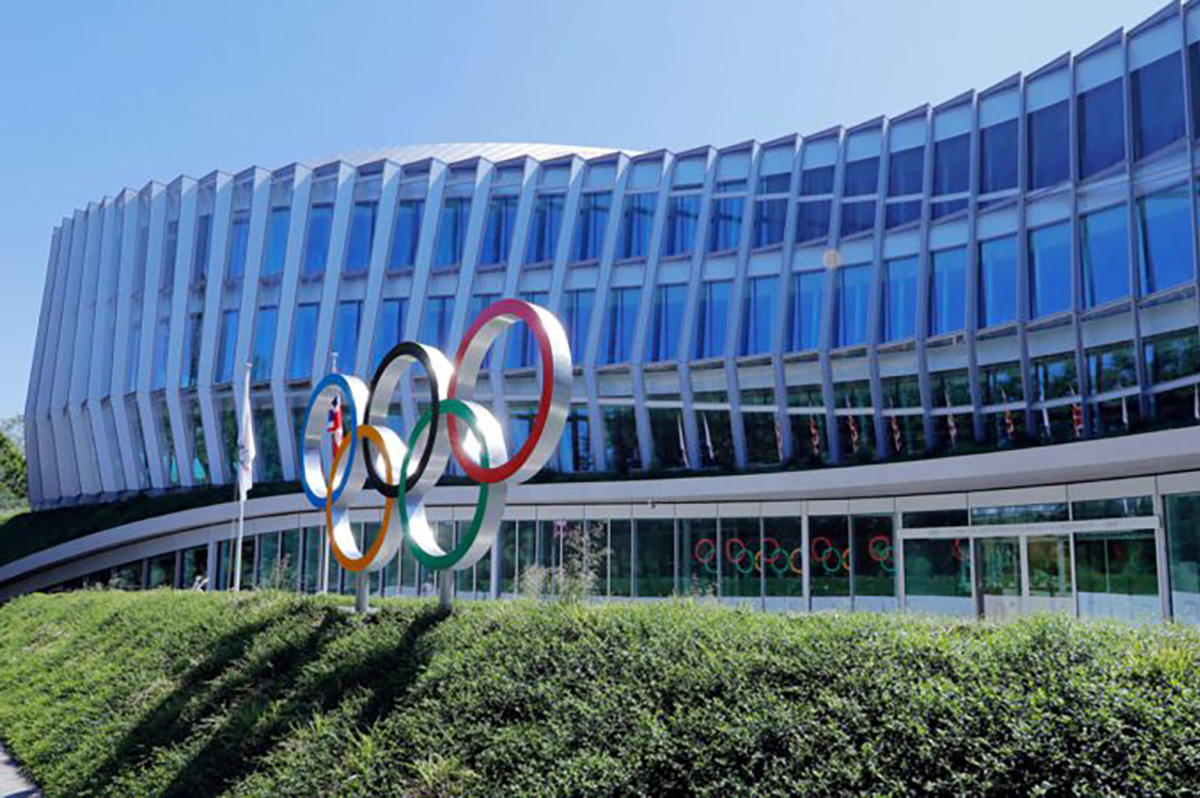
The International Olympic Committee on Thursday announced it will not allow transgender women from competing in female events at the Olympics.
“For all disciplines on the Sports Program of an IOC event, including individual and team sports, eligibility for any Female Category is limited to biological females,” reads the new policy.
The policy states “eligibility for the Female Category is to be determined in the first instance by SRY Gene screening to detect the absence or presence of the SRY Gene.”
“On the basis of the scientific evidence, the IOC considers that the SRY (sex-determining Region Y) Gene is fixed throughout life and represents highly accurate evidence that an athlete has experienced or will experience male sex development,” it reads. “Furthermore, the IOC considers that SRY Gene screening via saliva, cheek swab or blood sample is unintrusive compared to other possible methods. Athletes who screen negative for the SRY gene permanently satisfy this policy’s eligibility criteria for competition in the Female Category.”
The policy states the test “will be a once-in-a-lifetime test” unless “there is reason to believe a negative reading is in error.”
The new regulation will be in place for the 2028 Summer Olympics in Los Angeles.
“I understand that this a very sensitive topic,” said IOC President Kirsty Coventry on Thursday in a video. “As a former athlete, I passionately believe in the rights of all Olympians to take part in fair competition.”
“The policy that we have announced is based on science and it has been led by medical experts with the best interests of athletes at its heart. The scientific evidence is very clear: male chromosomes give performance advances in sport that rely on strength, power, or endurance,” she added. “At the Olympic Games, even the smallest margins can be the difference between victory and defeat. So, it is absolutely clear that it would not be fair for biological males to compete in the female category. In addition, in some sports it would simply not be safe.”
(Video courtesy of the IOC)
Laurel Hubbard, a weightlifter from New Zealand, in 2021 became the first trans woman to compete at the Olympics.
Imane Khelif, an Algerian boxer, won a gold medal at the 2024 Summer Olympics in Paris. Khelif later sued JK Rowling and Elon Musk for cyberstalking after they questioned her gender identity.
Ellis Lundholm, a mogul skier from Sweden, this year became the first openly trans athlete to compete in any Winter Olympics when he participated in Milan Cortina Winter Olympics in Italy.
President Donald Trump in February 2025 issued an executive order that bans trans women and girls from female sports teams in the U.S.
The U.S. Olympic and Paralympic Committee last July banned trans women from competing in female sporting events. Republican lawmakers have demanded the IOC ban trans athletes from women’s athletic competitions.
“I’m grateful the Olympics finally embraced the common sense policy that women’s sports are for women, not for men,” said U.S. Sen. Tom Cotton (R-Ark.) on X.
An IOC spokesperson on Thursday referred the Washington Blade to the press release that announced the new policy.
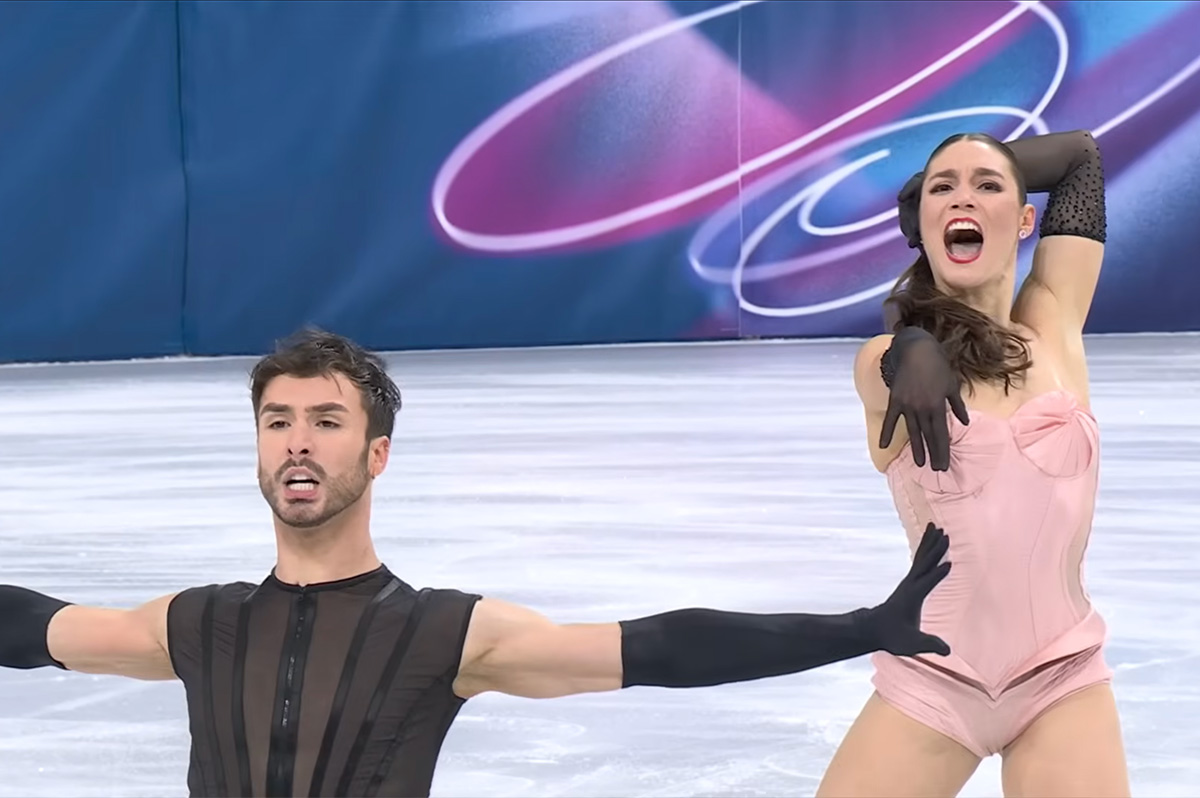
More than a dozen LGBTQ athletes won medals at the Milan Cortina Winter Olympics that ended on Sunday.
Cayla Barnes, Hilary Knight, and Alex Carpenter are LGBTQ members of the U.S. women’s hockey team that won a gold medal after they defeated Canada in overtime. Knight the day before the Feb. 19 match proposed to her girlfriend, Brittany Bowe, an Olympic speed skater.
French ice dancer Guillaume Cizeron, who is gay, and his partner Laurence Fournier Beaudry won gold. American alpine skier Breezy Johnson, who is bisexual, won gold in the women’s downhill. Amber Glenn, who identifies as bisexual and pansexual, was part of the American figure skating team that won gold in the team event.
Swiss freestyle skier Mathilde Gremaud, who is in a relationship with Vali Höll, an Austrian mountain biker, won gold in women’s freeski slopestyle.
Bruce Mouat, who is the captain of the British curling team that won a silver medal, is gay. Six members of the Canadian women’s hockey team — Emily Clark, Erin Ambrose, Emerance Maschmeyer, Brianne Jenner, Laura Stacey, and Marie-Philip Poulin — that won silver are LGBTQ.
Swedish freestyle skier Sandra Naeslund, who is a lesbian, won a bronze medal in ski cross.
Belgian speed skater Tineke den Dulk, who is bisexual, was part of her country’s mixed 2000-meter relay that won bronze. Canadian ice dancer Paul Poirier, who is gay, and his partner, Piper Gilles, won bronze.
Laura Zimmermann, who is queer, is a member of the Swiss women’s hockey team that won bronze when they defeated Sweden.
Outsports.com notes all of the LGBTQ Olympians who competed at the games and who medaled.
Sports
US wins Olympic gold medal in women’s hockey
Team captain Hilary Knight proposed to girlfriend on Wednesday
The U.S. women’s hockey team on Thursday won a gold medal at the Milan Cortina Winter Olympics.
Team USA defeated Canada 2-1 in overtime. The game took place a day after Team USA captain Hilary Knight proposed to her girlfriend, Brittany Bowe, an Olympic speed skater.
Cayla Barnes and Alex Carpenter — Knight’s teammates — are also LGBTQ. They are among the more than 40 openly LGBTQ athletes who are competing in the games.
The Olympics will end on Sunday.

Trans activists gather on National Mall for Transgender Day of Visibility

The cost of speaking one’s mind

Senegalese president signs bill that further criminalizes homosexuality

Md. lawmakers reaffirm legislative priorities

Supreme Court rules against Colo. law banning conversion therapy for minors

Celebrate cherry blossoms the drag way

Lorato ke Lorato: marriage equality, democracy, and the unfinished work of justice in Botswana

Japanese Supreme Court to consider marriage equality

The outrage economy is not the LGBTQ community

Anti-trans visa ruling echoes Nazi regime destroying trans documents
-

 Out & About5 days ago
Celebrate cherry blossoms the drag way
-
Botswana5 days ago
Lorato ke Lorato: marriage equality, democracy, and the unfinished work of justice in Botswana
-
Japan5 days ago
Japanese Supreme Court to consider marriage equality
-
Opinions5 days ago
The outrage economy is not the LGBTQ community