
Arts & Entertainment
Police say gay YouTuber Calum McSwiggan faked homophobic attack
authorities claim there were no ‘visible injuries’
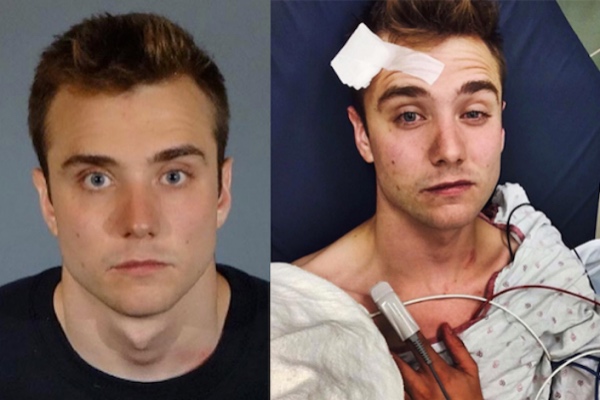

(Left photo via Los Angeles Sheriff’s Department. Right photo via Instagram)
Gay YouTuber Calum McSwiggan claimed he was attacked in a hate crime in Los Angeles on Tuesday night, but police now say those claims are false.
The British vlogger, 26, was visiting Los Angeles to attend VidCon, an online content creator convention. While there, he and his friends went to The Abbey, a popular gay club in West Hollywood. That night, McSwiggan uploaded a photo of himself in the hospital saying he had been attacked outside the club by three men.
He claimed the attack resulted in three broken teeth and six stitches on his forehead. McSwiggan also accused police of not helping and making him feel like a “second class citizen.” His friend, fellow YouTuber Riyadh Khalaf, backed up McSwiggan’s claim tweeting McSwiggan had been attacked after being separated from his friends.
“I’ve never felt so terrified to be a gay man in the public eye,” McSwiggan wrote in the Instagram caption.
Police have responded saying that McSwiggan was arrested for vandalizing a car outside the club. Holly M. Perez, captain of the West Hollywood Station of the Los Angeles County Sheriff’s Department, told The Advocate McSwiggan had no “visible injuries” upon his arrest. His mugshot also shows no apparent injuries.
Perez told The Advocate that McSwiggan was placed in a cell alone where he was “observed injuring himself with the handle and receiver to a payphone inside the cell.” McSwiggan was then taken to the hospital where he uploaded the photo to Instagram.
McSwiggan took to Twitter to defend his claims writing “I’ve been told to say nothing before court tomorrow but staying silent here is killing us. If you’re a friend just DM me for the truth.”
Khalaf also still says the attack happened tweeting “I’m not commenting until tomorrow when we know more and can legally speak. I saw Cal screaming crying after the attack. He didn’t fake it.”
McSwiggan has more than 60,000 subscribers and posts videos about sex and mental health, among other topics.




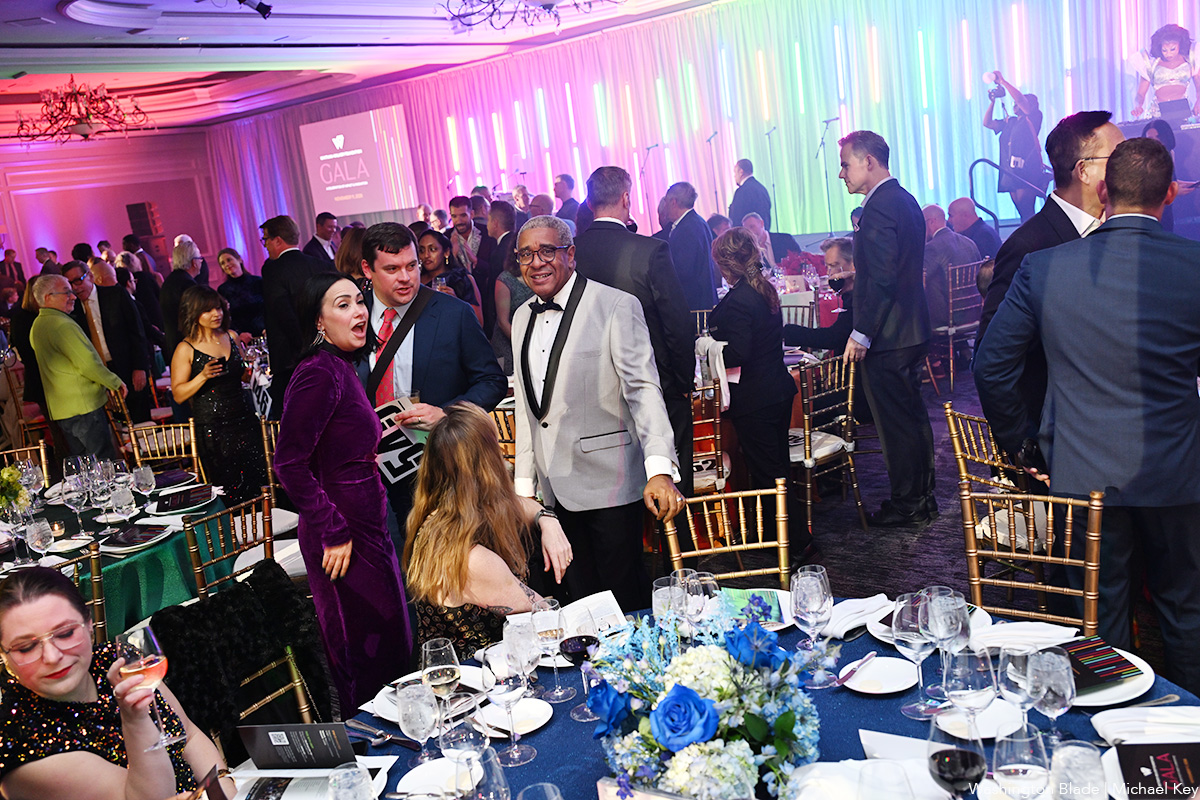
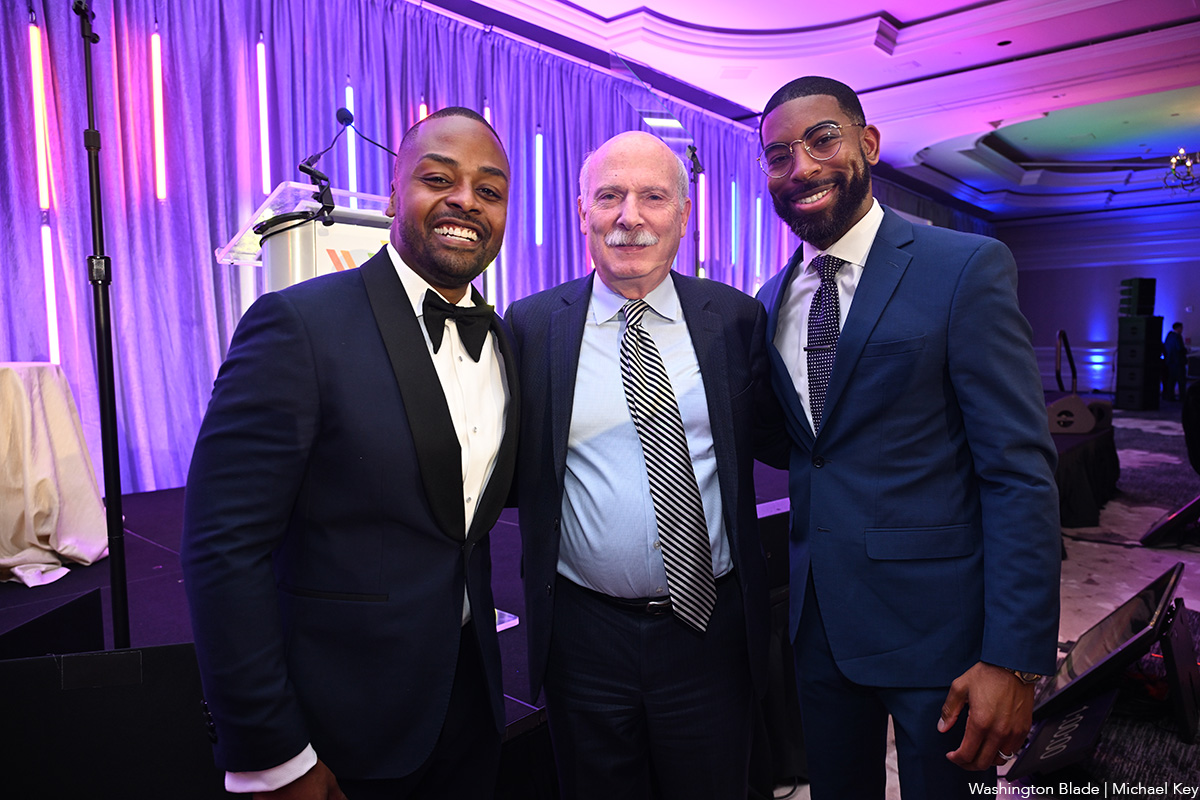
The 2026 Whitman-Walker Gala: A Celebration of Impact & Innovation was held at The Ritz-Carlton, Washington D.C. (1150 22nd St., N.W.) on Wednesday, Nov. 11.
(Washington Blade photos by Michael Key)


Movies
‘You Can See Everything’ confronts an enigma by becoming one itself
One of the most successful documentaries of all time

Documentaries about famous people are typically perceived as being more truthful than a scripted biopic simply because they are, by definition, expected to be non-fiction.
That’s not necessarily the case, obviously; any film, factual or not, must be shaped and edited into something that flows like a narrative, and that process necessitates interpretation on the part of the person who is doing the shaping and editing. Even the most scrupulously neutral documentaries are influenced by interpretation, simply because everything they show us is the result of a creative decision by the people who make them; this doesn’t mean that all the information they contain is untrue or tainted in some way, but the way the information is presented to us inevitably influences the way we perceive it.
When the documentary is made with the participation of a living subject, the situation gets even dicier; this is why profiles of popular entertainers and other cultural figures are often little more than “puff pieces” designed to cast them in a favorable light.
That, in fact, may well have been the intention when Elizabeth Holmes – the now-imprisoned founder of home med-tech developer Theranos, who was found guilty of investor fraud in 2022 for raising $700 million through false claims about her company’s product – and her partner, hotel heir Billy Evans, approached documentarians Nathan Fielder and Lance Oppenheim about a film that would allow her to show the public her “true” nature as a counter to the treatment and portrayal she had received in the media during her notorious trial and conviction. Whatever the reason for her choice to document the last month of her life before surrendering herself to custody at Bryan Federal Prison Camp in Texas for the next 11.25 years, the result is “You Can See Everything,” which has surpassed expectations to become one of the most financially successful documentaries of all time.
Nearly three hours in length and divided into two sections filmed years apart, it documents the home life of Holmes and Evans (along with their two children) at a rented beach house in Del Mar, Calif., with Fielder, Oppenheimer, and their crew present to capture it all on film. Fielder becomes the on-camera face of the team, engaging the couple in conversations and asking questions that are unable to penetrate Holmes’s insistence of innocence; nor can he puncture her claim that she never lied about the defective home blood-testing unit she convinced her Theranos investors to support, but was instead misinterpreted through semantics. At the same time, his interactions with Evans become increasingly charged as the latter attempts to exert control over the narrative being explored in the film. Despite the challenges, he begins to develop a kind of fascination with Holmes, despite the seeming gap between her own self-perception and what most of the rest of the world views as, well, reality.
In the second section, Holmes is incarcerated, and Fielder faces even more discord as Evans – who now controls her social media presence and has been granted power of attorney over her affairs for the duration of her imprisonment – continues to manage his access and stonewall his efforts to communicate directly with her. To resuscitate the stalled project, he connects with actress Amanda Seyfried – who won an Emmy (among other awards) for playing Holmes in the 2022 Hulu miniseries, “The Dropout” – and enlists her to help him by filming “re-enactments” of conversations he had been unable to film. Meanwhile, he begins to question his own objectivity over his growing sympathy for Holmes and his inability to discern whether she truly believes in her own innocence or is simply pretending for the camera. Through it all, both Evans and Holmes continue to focus on getting investors for a new start-up – Haemanthis, launched by Evans – that doubles down on the same discredited technology that destroyed Theranos and turned Holmes into the most despised woman in America.
“You Can See Everything” has become a cultural sensation since its theatrical release in October, and it’s only partly due to the dual enigma that is Elizabeth Holmes and Billy Evans. Holmes’ conversations with Fielder border on the surreal, at times seeming too boldly manipulative to be believed and at others suggesting some kind of cognitive impairment that makes her even more of a tragic figure. In addition, as the film goes on, Evans – already an unpleasantly arrogant personality – exhibits increasingly toxic attitudes and behavior, especially in his barely concealed efforts to dominate Holmes and exert control over the documentary itself. There’s an air of overinflated grandiosity to him that manifests in eyebrow-raising moments all the way through, from that now-famous full-frontal shot as he showers near the beginning of the film to the blatant “gaslighting” he increasingly deploys in his attempts to steer perspectives throughout.
But if his preferred characterization of events never quite seems to convince, neither does Holmes’s implausible innocent act nor her insistence that she’s been misunderstood. Ultimately left on the shoals of uncertainty, Fielder and Oppenheimer never really deliver a moment that can define or unlock the truth behind Holmes and Evans’ carefully-guarded door, instead leaving us mesmerized, haunted, and deeply shook by the psychological hall of mirrors into which they’ve taken us; instead, their film implies a cold recognition that, sometimes, it’s impossible to know the “truth” when the concept of truth itself becomes uncertain.
Yet what makes “You Can See Everything” such an electrifying statement for our era is not so much the question of Holmes’s guilt or innocence as it is the picture it paints of a certain kind of elite class “business” mentality appears to view ethics as optional – in which “getting that fucking money,” no matter what you have to say or do, is the only thing that matters. Whatever may be revealed (or not) about the Theranos scam, the woman who perpetrated it, or even the nebulous nature of truth itself, it’s a movie that underscores the ruthless “greed is good” practices that have thrived over the last decade or so of increasingly unfettered greed and corruption around the top of the financial ladder. You might walk away feeling unexpected sympathy for Elizabeth Holmes, or questioning your own ability to gauge the “truth” in a twisted labyrinth of lies and obfuscations, but what lingers is the film’s awareness of a broken system run amok, in which grift is the game and all it takes to keep the victims lining up is the willingness to lie – even if you have to convince yourself you’re not lying in order to do it.
In a world reeling from the impact of one-percenter corruption, sold to us with the promise of benefits that never arrive, it’s a film that hits harder than we expect it to. Hypnotic, engrossing, and deeply engaging throughout its near three-hour running time, it’s a surprise “movie of the year” you’ll be trying to unpack for days afterward – yet ultimately remains as eerily inscrutable as its subject herself.
Theater
‘Jellicle Ball’ projection designer’s next project is in D.C.
Brittany Bland talks new show at Arena’s Kreeger Theater
‘Are You Now or Have You Ever Been?’
Through Dec. 6
Arena Stage
1101 6th St., S.W.
Arenastage.org
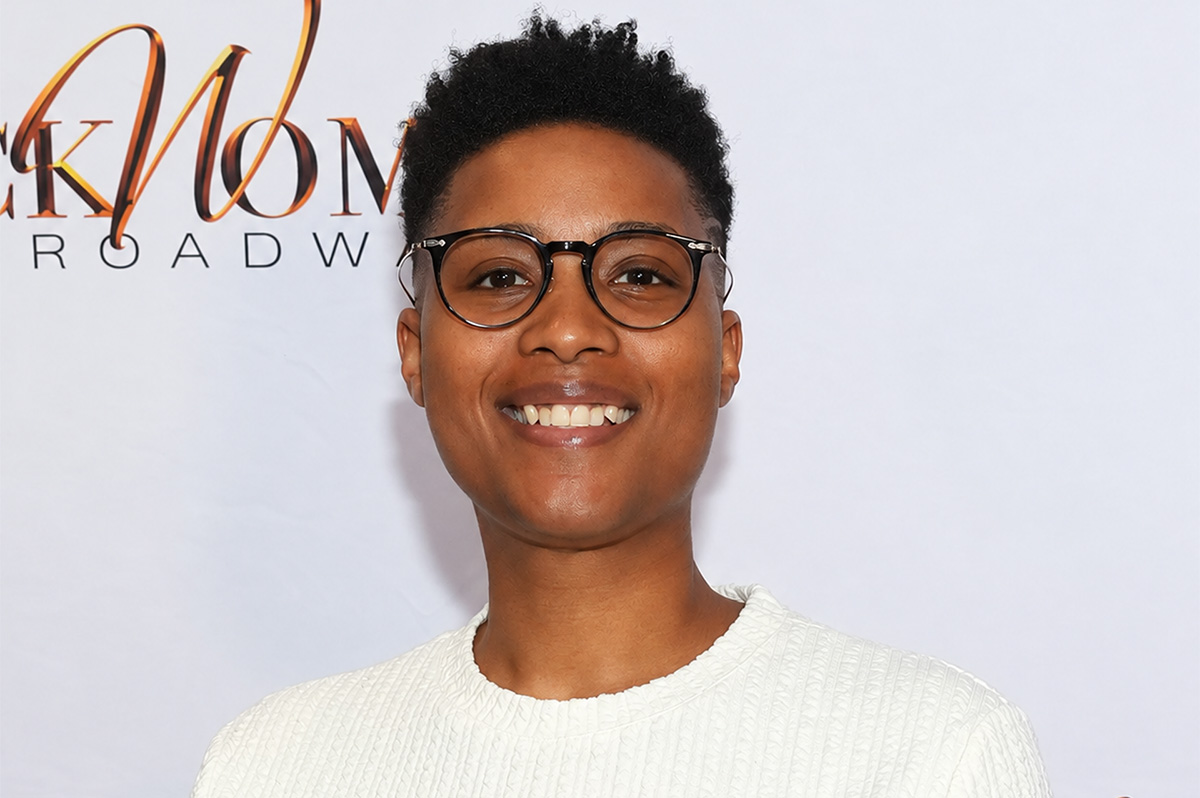
Brittany Bland was the first Black woman projection designer on Broadway; she made history with her work on “Cats: The Jellicle Ball.” She’s also queer.
The show started off-Broadway in 2024 and moved to Broadway in 2026 with Bland garnering great notices along the way. “Cats: The Jellicle Ball” is a take on Andrew Lloyd Webber’s classic musical “Cats,” reimagined through New York’s queer underground Ballroom culture
For her, the show was a joy: “Maybe the most joyous project that I ever worked on. It was fantastic.”
Bland (who’s known for blending storytelling, technology, and design to create immersive experiences) sought projection inspiration from, among other things, the 1990 ballroom flick “Paris is Burning,” focusing on its titles and fonts, “honoring the past while pushing a design into the future. It’s a way to acknowledge what has been before and presenting it in a new way.”
Currently, Bland’s projection work can be experienced at Arena Stage in Eric Bentley’s “Have You Now or Have You Ever Been?” After a hit revival in New York, the play is enjoying a D.C. run at Arena’s Kreeger Theater.
It’s about McCarthyism. This profoundly relevant docudrama (directed by Anna D. Shapiro) explores the House Un-American Activities Committee hearings (spanning roughly from 1947 through 1956), a frightening time when people lost careers for being erstwhile communists or just too left. The cast brings to life the words of iconic and accused artists like Arthur Miller, Jerome Robbins, Paul Robeson, Elia Kazan, and Lillian Hellman.
Bland’s projection research took her to the Library of Congress where she culled newspaper headlines and transcripts of testimony from the stacks; she also was moved by imagery from two particular documentary films.
What’s compelling to Bland about the play is how those in power were so willing to offer up American citizens as fodder for their own political gain, and then move on to newer and higher office. Then they blithely found a new target in the Civil Rights Movement. Today, she remarks, it’s furries or trans people.
“And it’s about how far people will go to demonize a community for their own gain. Seems we forgot. So that’s why shows like this are so good. You can see it unfold on stage before your eyes.”
Bland grew up in Alpharetta, Ga., (part of the Atlanta metropolitan area), and now splits her time between New York and Philadelphia.
She earned a bachelor’s degree in Technical Theater and Production from Catawba College in North Carolina, and an M.F.A. in Design from the Yale School of Drama in 2019.
While on a college trip to the UK, Bland saw “War Horse” at London’s National Theatre. It was a seminal moment for her: “I walked in by myself and was stunned. I hadn’t seen a lot of Broadway shows by then. ‘War Horse’ had video, iconic puppetry, and set design, all working together in the most beautiful way.”
Over the years, projection has become increasingly widespread. In fact, most Broadway shows have video: “Maybe Happy Ending,” “Sunset Boulevard,” “Oedipus.” And more recently, “Are You Now or Have You Ever Been?” “Ragtime,” and more.
While the changes in projection involve financial decisions, a larger part is that tech has become easier to do, she explains. It wasn’t that long ago that you had to have a huge projector that filled an entire room and was prone to overheating.
When Wendell K. Harrington – “the godmother of projection”– began her career in the late 1970s, says Bland, “she had to create and project big slides. It was physical work. She’s still around. Throughout her career, things have shifted incredibly.
“Tech has improved exponentially, and audiences are culturally more in tune with screens. Nowadays, having a robot play a character in a Broadway show is readily acceptable.”
For her next big gig, she revisits familiar territory with “XTRAVAGANZA,” an original musical that explores the birth of voguing and the New York ballroom scene at Baltimore’s Center Stage.
Does being queer affect Bland’s work?
“In hiring,” she says without hesitation. “As a queer person I hire diverse teams. I like to ensure representation, especially with shows that have queer content.
“When you’re someone who’s had to consider what it means to be ostracized from society and you’re doing a show about that, you’re starting with a different point of view and bring a certain way of thinking. It helps and it can be important.”

Gay man named Venezuelan foreign minister

Let the subpoenas fly! Impeach Hegseth, Blanche!

PHOTOS: Whitman-Walker Gala

The midterms are over. What does that mean for D.C.’s housing market?

‘You Can See Everything’ confronts an enigma by becoming one itself

BREAKING NEWS: One dead, four injured in shooting at VIDA Fitness in Logan Circle

Andrew Scott talks ‘Elsinore,’ Hamlet, and AIDS
Authorities identify VIDA Fitness shooter

US funding cuts leave LGBTQ Indonesians with HIV more vulnerable

Quinnie Pérez becomes first openly transgender person elected in Fla.
-

 District of Columbia4 days ago
BREAKING NEWS: One dead, four injured in shooting at VIDA Fitness in Logan Circle
-
a&e features4 days ago
Andrew Scott talks ‘Elsinore,’ Hamlet, and AIDS
-
District of Columbia4 days ago
Authorities identify VIDA Fitness shooter
-
Indonesia5 days ago
US funding cuts leave LGBTQ Indonesians with HIV more vulnerable