News
White House: End to trans military ban ‘updates outdated policy’
Earnest declines to say whether change underscores risk to LGBT rights in election

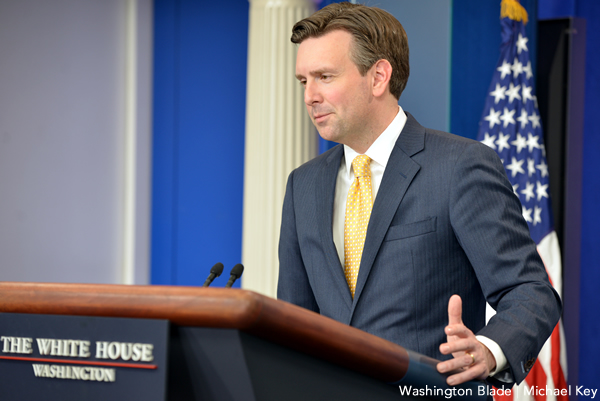
White House Press Secretary Josh Earnest said ending the trans military ban “updates outdated policy.”(Washington Blade photo by Michael Key)
Earnest made the remarks under questioning from the Washington Blade on whether the White House had a hand in encouraging Defense Secretary Ashton Carter to move forward Thursday with implementing openly transgender military service.
“This is something Secretary of Defense Carter wanted to review,” Earnest said. “He announced a few months he wanted to take a look at this policy. At that point, he had described the policy as outdated. So he conducted this review consistent with the priority that he has placed on making sure that our Department of Defense and our armed forces are ready and well-prepared to defend the country, and he’s come to the conclusion that the best way to do that is to update this outdated policy.”
Earnest added Carter made the decision on his own, but the result is “certainly one that is supported by the commander-in-chief.”
Asked if that meant the Pentagon made the decision without input from the White House, Earnest said President Obama and Carter “had an opportunity to discuss” the policy change before it was made.
“The secretary of defense had the responsibility and assumed the responsibility to conduct this review,” Earnest said. “Obviously, the president and the secretary of defense have had an opportunity to discuss it, but this is a review that was conducted by the secretary of defense and he did so focused on the priority that he places on military readiness and he made an observation that is consistent with the president’s view, which is our country and our military is best served when everybody who’s most qualified to serve in our military has the opportunity to do so.”
The change is regulatory and a future administration hostile to openly transgender service could put the ban back in place, but Earnest declined to say whether that underscores the potential risk to LGBT rights in the upcoming election.
“I’ll let individual voters make their own determinations about this,” Earnest said. “The president and the secretary of defense agree on this principle and both men certainly belief that it enhances our national security to live up to this principle, so frankly this is not a decision that’s rooted in politics. This is rooted in something more important, which is the national security of the United States.”
Also on Thursday, a federal judge issued an injunction blocking the enforcement of a recently enacted “religious freedom” law in Mississippi seen to enable sweeping anti-LGBT discrimination.
As first reported by the Blade, the Obama administration has been reviewing the law and Mississippi could potentially lose federal funds as a result of the statute. Asked if that review is now on hold after the ruling, Earnest said he’s limited in his comments because of ongoing litigation against the law.
“What I can just say in general is that these types of laws raise a number of difficult legal and policy questions and what happens in the courts in these cases will inform of our assessment of these laws and their implications,” Earnest said.
More generally, Earnest said Obama has said numerous times he “strongly disagrees with laws that are focused on taking away the rights of law-abiding Americans.”
“And the truth is, we should be a little more focused on protecting the rights and expanding the rights and enhancing the rights of law-abiding Americans, and that is principle the president has abided by and been guided by during his tenure in public service,” Earnest added. “It’s also been a principle that has guided his assessment of laws that are passed at the state and local level as well.”
Another anti-LGBT law was recently enacted in North Carolina, where President Obama intends to travel on Tuesday to campaign on behalf of presumptive Democratic presidential nominee Hillary Clinton.
The controversial law nullified pro-LGBT non-discrimination city ordinances in North Carolina and prohibits transgender people from using public restrooms in schools and government buildings consistent with their gender identity.
Along with the Mississippi law, Obama said during a news conference in April the North Carolina statute is “wrong and should be overturned.”
Asked if Obama during his visit to North Carolina would remind voters about his opposition to the law as they head to the polls, Earnest said isn’t aware of the totality of president’s remarks, but the focus will be on Clinton.
“I don’t have detailed remarks to preview for you at this point, but I can tell you that the focus on the president’s remarks will be on Secretary Clinton and his view that she has the character, the toughness, skills and experience to succeed him as president of the United States,” Earnest said.


Hungary
New Hungarian prime minister takes office
Péter Magyar’s party defeated anti-LGBTQ Viktor Orbán last month

Hungarian Prime Minister Péter Magyar took office on Saturday.
Magyar’s center-right Tisza party on April 12 defeated then-Prime Minister Viktor Orbán’s Fidesz-KDNP coalition. Vice President JD Vance less than a week before the election traveled to Budapest, the Hungarian capital, and urged Hungarians to support Orbán.
Orbán had been in office since 2010. He and his government faced widespread criticism over its anti-LGBTQ crackdown.
The European Commission in 2022 sued Hungary, which is a member of the EU, over the country’s anti-LGBTQ propaganda law. The European Union’s top court, the EU Court of Justice, on April 21 struck down the statute.
The EU while Orbán was office withheld upwards of €35 billion ($41.26) in funds to Hungary in response to concerns over corruption, rule of law, and other issues.
Hungarian lawmakers in March 2025 passed a bill that banned Pride events and allowed authorities to use facial recognition technology to identify those who participate in them. MPs later amended the Hungarian constitution to ban public LGBTQ events.
Upwards of 100,000 people last June defied the ban and marched in Budapest’s annual Pride parade.
“Congratulations to [Péter Magyar] on becoming prime minister of Hungary,” said European Commission President Ursula von der Leyen on X.
“This Europe Day, our hearts are in Budapest,” she added. “The hope and promise of renewal is a powerful signal in these challenging times.”
“We have important work ahead of us,” noted von der Leyen. “For Hungary and for Europe, we are moving forward together.”
The Comings & Goings column is about sharing the professional successes of our community. We want to recognize those landing new jobs, new clients for their business, joining boards of organizations and other achievements. Please share your successes with us at [email protected].
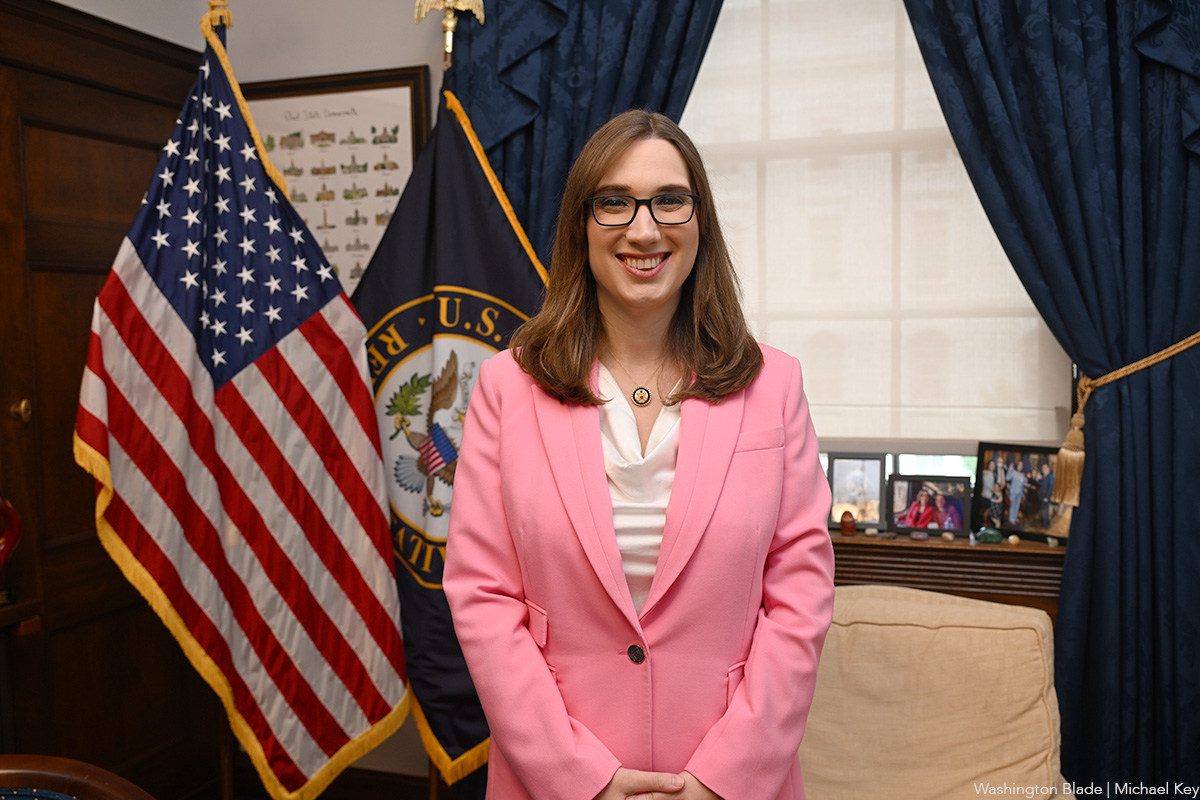
Congratulations to Congresswoman Sarah McBride (D-Del.) on being honored with this year’s Stonewall Award from Whitman-Walker Health. Amy Nelson, senior director of Legal Services, said, “Congresswoman Sarah McBride is working to make healthcare accessible to all, and this award recognizes her support of healthcare as a human right. Our legal program supports families facing unprecedented challenges to stay healthy and safe – families that Congresswoman McBride champions with a deep understanding of the issues they face and the legislative expertise of how to support them.”
McBride, in a press release, said, “I am honored to accept this year’s Stonewall Award from Whitman-Walker Health — an organization that has spent 40 years doing vital work to ensure every person can access the dignity of care. In the wealthiest and most developed nation on earth, the ability to receive care should not be a matter of luck—it should be the law of the land. I am proud to be recognized as a partner in this work and to support Whitman-Walker Health in their mission to build a healthier society for all.”
Congratulations also to Wes Drummond who will join Clear Space Theatre Company in Rehoboth Beach, Del., as its third artistic director. Managing Director Joe Gfaller said, “This is an exciting moment of growth for Clear Space as we welcome Wes to join our remarkable team. I am confident he will be an excellent partner as we work with our entire staff, board, and committed team of volunteers, to ensure Clear Space can achieve its full potential in pursuit of our mission to unite and enrich our community through every production on stage, and every arts-based learning program we offer throughout our community.”
On accepting the position Drummond said, “I’m honored to join Clear Space Theatre Company as artistic director, and beyond excited for what we’re about to create together. Clear Space has established itself as a vital and vibrant part of the cultural life of coastal Delaware, and I feel incredibly fortunate to step into this next chapter alongside such a passionate and dedicated team. Rehoboth Beach is a place defined by creativity and community, and I look forward to listening, learning, and building meaningful relationships across the region in the months ahead. My vision is to help Clear Space continue to grow as a bold, forward-thinking, cultural force, that champions fearless storytelling.”

Drummond served in leadership roles at Duluth Playhouse in Duluth, Minn., from 2021 to 2026, including four years as executive director followed by one year as executive producing artistic director, guiding the organization through a period of significant transformation and stability in the wake of the COVID-19 pandemic. As a director, he has worked extensively in New York City, Chicago, and at regional theaters across the country, directing both musical theater and plays with a focus on storytelling that bridges classical works with contemporary perspectives. He has collaborated with leading figures in the industry, including Tony Award-winning director Matthew Warchus, and Tony-nominated director Michael Greif. He is an associate member of the Stage Directors and Choreographers Society.
Wes earned his MFA in directing, Penn State University, where he studied under Tony-nominated director, Susan H. Schulman.
Virginia
Va. Supreme Court invalidates Democrat-backed redistricting plan
Voters narrowly approved new congressional districts last month
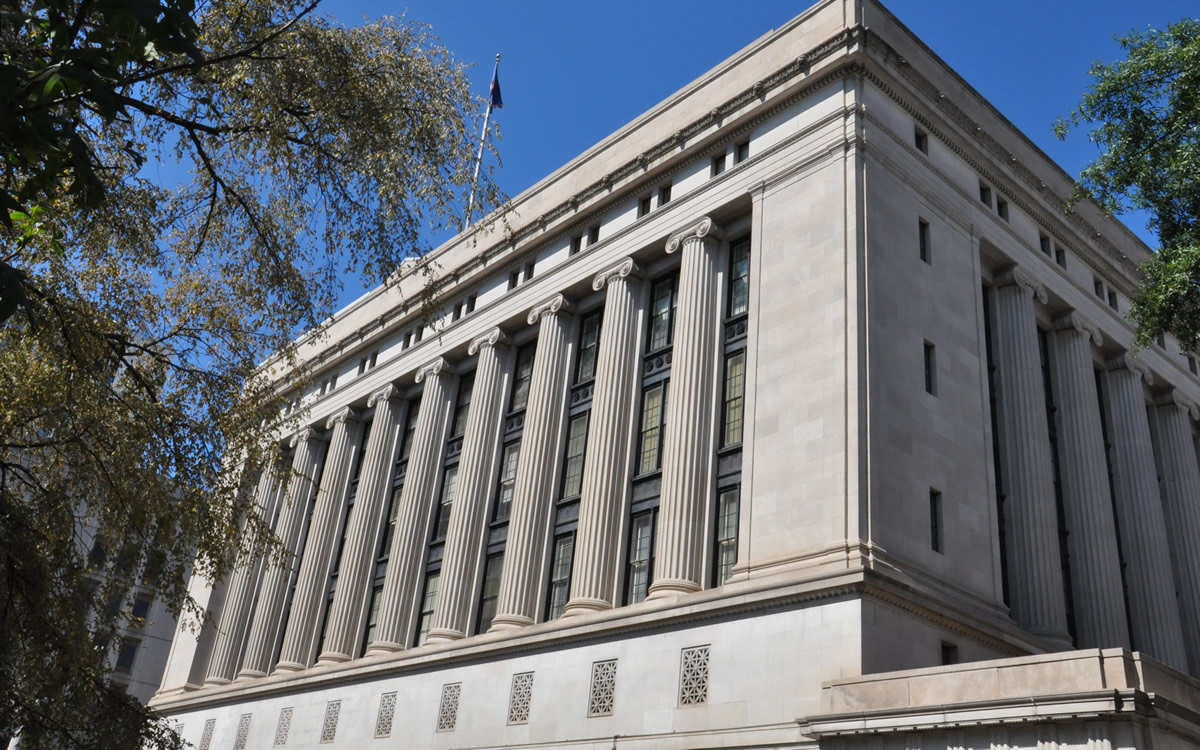
The Virginia Supreme Court on Friday struck down a Democrat-backed redistricting plan that voters approved last month.
Ten of 11 of Virginia’s congressional districts favor Democrats in the plan that passed by a 51-48 vote margin in last month’s referendum.
The Human Rights Campaign PAC is among the groups that support it. The court by a 4-3 majority invalidated the referendum results.

New Hungarian prime minister takes office

Comings & Goings

Learn more about queer love

Calendar: May 8-14

Va. Supreme Court invalidates Democrat-backed redistricting plan

A reign defined by commitment and human impact

Ukrainian MPs advance new Civil Code without protections for same-sex couples

DOE investigates Smith College’s trans-inclusive policy

Key West Pride’s state funding pulled

PHOTOS: Miss Gay Western Maryland
-

 Arts & Entertainment4 days ago
A reign defined by commitment and human impact
-
Ukraine4 days ago
Ukrainian MPs advance new Civil Code without protections for same-sex couples
-
Federal Government4 days ago
DOE investigates Smith College’s trans-inclusive policy
-
Florida4 days ago
Key West Pride’s state funding pulled