Sports
Eric Lueshen’s journey to sports advocacy
After career-ending surgery, a new role
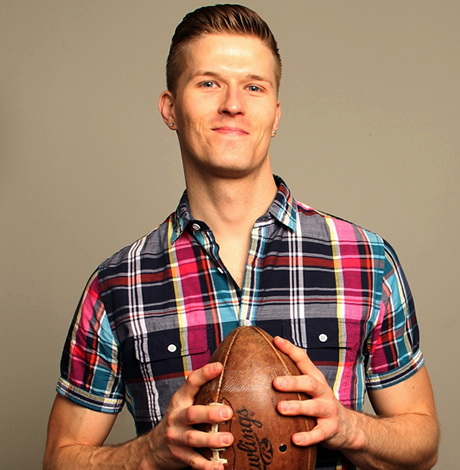
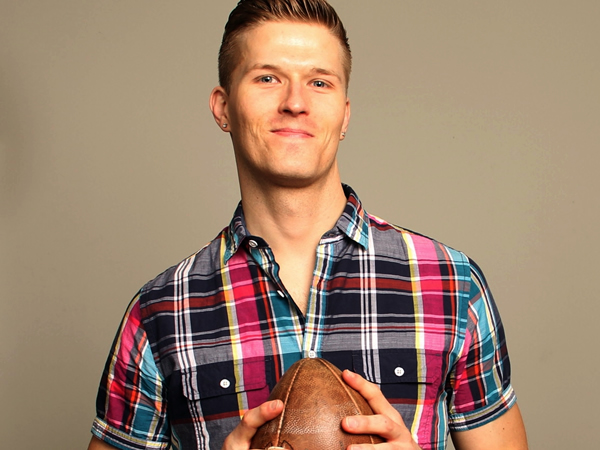
Eric Lueshen was an openly gay, NCAA Division I place kicker at the University of Nebraska-Lincoln from 2003-2006. (Photo courtesy Leushen)
There has been a steady flow of college athletes coming out of the closet over the last 10 years who have shared their life experiences. Their journeys have been widely documented and their stories will always remain as an inspiration for LGBT youth who are looking for role models.
A surprisingly small number of those same athletes have become athletes that advocate for social change. Not everyone is cut out for that kind of work and sometimes it takes a spark to realize the impact that a story could have on creating awareness.
Eight years after a career-ending spinal fusion knocked Eric Lueshen out of his sports career, he was close to wrapping up his Ph.D. in Biomedical Engineering at the University of Illinois at Chicago. Because his sports story was a “what could have been” story, Lueshen faded from the sports scene and avoided athletes and sports news for years.
In 2014, another athlete’s coming out story lit a spark that prompted Lueshen to share his own experiences. Earning his Ph.D. was postponed and a new journey began – one that came from the heart.
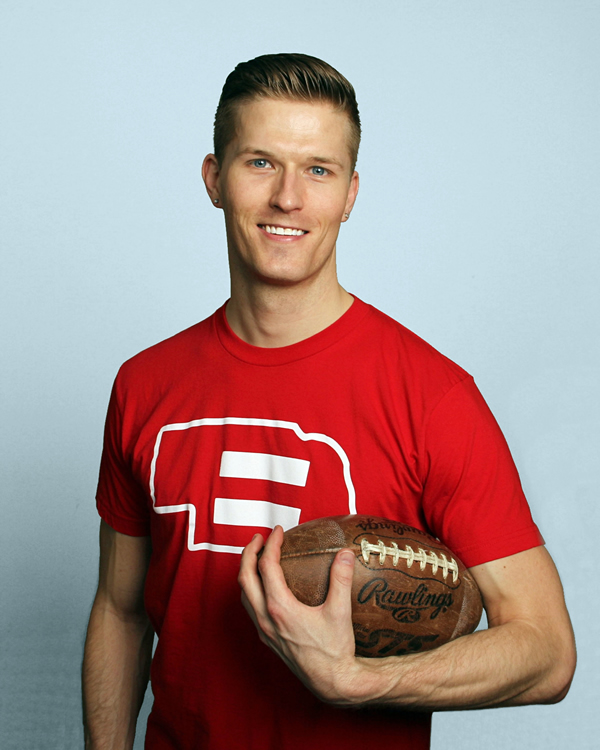
Eric Lueshen was an openly gay, NCAA Division I place kicker at the University of Nebraska-Lincoln from 2003-2006. His life up until that point had been defined by sports.
Born in Pierce, Neb., sports were always his solace. Gifted at football, baseball, basketball, soccer, track and wrestling, he was well known throughout the small farm communities in his area. He spent seven years on an Olympic development team for soccer and there wasn’t anywhere to hide in an area where everyone knows everyone – Lueshen came out in his junior year of high school.
“The bullying I received wasn’t in sports and I felt safe playing. I had the talent and ability to shut it down,” says Lueshen. “When I was recruited by Nebraska, I didn’t know of any other gay athletes. I put my body through a lot because I couldn’t show weakness to anyone.”
He felt the flickering of what it felt like to “give back” during his sports years at Nebraska through his interactions as a gay athlete – touching the hearts and minds of people who had never interacted with a member of the LGBT community.
“After I could no longer play sports, I started visiting hospitals and afterschool programs,” Lueshen says. “That filled a place in my heart where I didn’t even know there was a void.”
After his story went viral in 2014, Lueshen made the decision to put his education on hold and begun advocating for the LGBT sports community. His decision was reinforced by a visit to Heartland Pride where he was approached by youth that had been touched by his story. His father was there that day and after witnessing the exchanges said, “you need to do this.”
“I really felt like I needed to pursue what the universe was telling me to do,” says Lueshen. “I realized that my purpose on this planet is to serve and help others and that I am supposed to be doing this.”
Lueshen began motivational speaking and diversity consulting on multiple topics such as LGBTQ inclusion, sports, authentic living, anti-bullying and masculinity. He completed his Ph.D. in 2015 and the following year he co-founded LGBT SportSafe with Nevin Caple.
LGBT SportSafe creates an infrastructure for athletic administrators, coaches, recreational sports leaders and professional sports leagues and teams to support LGBTQ inclusion. The program uses a new benchmarking algorithm, the 3-Peat Model, to help athletic leadership address the importance of inclusive programming, policies and public awareness initiatives while offering incentives to institutions and professional sports leagues and teams that reach inclusion goals.
They launched with three universities on board – Nebraska, Northwestern and Oregon. They now have more than 30 full members in the program.
“We are examining what the needs are around LGBT inclusion in sports,” Lueshen says, “and trying to find out what’s missing in the current programming. It’s important to translate the fears of the older generation into acceptance.”
Lueshen’s return to the sports community raises the question of what has become of his own competitive urges. After suffering from chronic back pain for years, he found ways to stay physically active with help from a low inflammation diet and controlling his stress levels.
“I am a competitive athlete and I want to compete,” says Lueshen. “It took me a while to realize I can do these things. I just have to do them differently.”
He started with a 5K run and has since added both indoor and outdoor volleyball at a high level. He has hopes of competing at the Gay Games in Paris in 2018.
As for LGBT SportSafe, an upcoming goal is for expansion beyond collegiate, professional and recreational sports to include high school and municipal sports.
“The future is bright and it all starts with a conversation,” Lueshen says. “I hope to be driven out of a job at some point.”

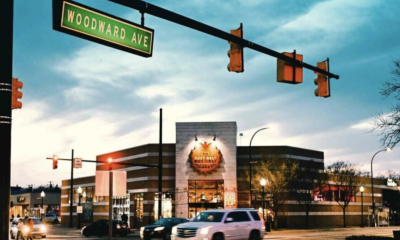

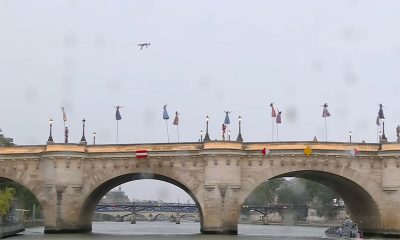


Iran and Egypt on Friday faced off during the World Cup’s “Pride Match” in Seattle.
Iran is among the handful of countries in which consensual same-sex sexual relations remain punishable by death. Discrimination and persecution based on sexual orientation and gender identity is commonplace in Egypt.
Friday’s match coincided with Pride weekend in Seattle. The Egyptian Football Association and the Football Federation Islamic Republic of Iran both objected to playing in the “Pride Match.”
Egypt and Iran tied 1-1.
FIFA, for its part, allowed Pride flags inside the stadium during the match.
“The FIFA World Cup 2026 is an inclusive event that welcomes people from all backgrounds,” a FIFA spokesperson told the Washington Blade in a statement. “Fans of all sexual orientations and gender identities are welcome at matches and events. General statements of human rights, including rainbow flags and other flags representing sexual orientation and gender identity, are permitted under the FIFA World Cup 2026™ Stadium Code of Conduct and may be displayed inside stadiums provided they are used in a manner consistent with the code.”
Human Rights Watch welcomed FIFA’s decision to allow Pride flags inside the stadium. Outright International, a global LGBTQ and intersex rights group, distributed Pride flags in Seattle on Friday, which was Pride Match Day.
“Visibility matters,” said Outright International Executive Director Maria Sjödin. “Pride is now being celebrated in more than 100 countries, including this weekend in Seattle. For many LGBTIQ people, seeing a Pride flag in public is a reminder that they are not alone, and that their rights and dignity are recognized.”
FIFA President Gianni Infantino earlier this year told Die Weltwoche, a Swiss magazine, that “there will be no ‘Pride Match’ at the (FIFA) World Cup.”
“There will be a FIFA World Cup match in Seattle, and on the same day, events organized by external organizations will be taking place in the city,” said Infantino. “But that has nothing to do with the match itself.”
Peter Tatchell, a long-time LGBTQ activist from the U.K. who is director of the Peter Tatchell Foundation, was among those who traveled to Seattle for Friday’s match. Tatchell accused FIFA of not vetting World Cup teams — specifically Iran, Egypt, Saudi Arabia, Ghana, Senegal, Qatar, Tunisia, Morocco, Iraq, Uzbekistan, and Algeria — over whether they would allow gay players.
“FIFA is protecting LGBT+ visibility in the stands while failing to protect LGBT+ players on the pitch,” said Tatchell.
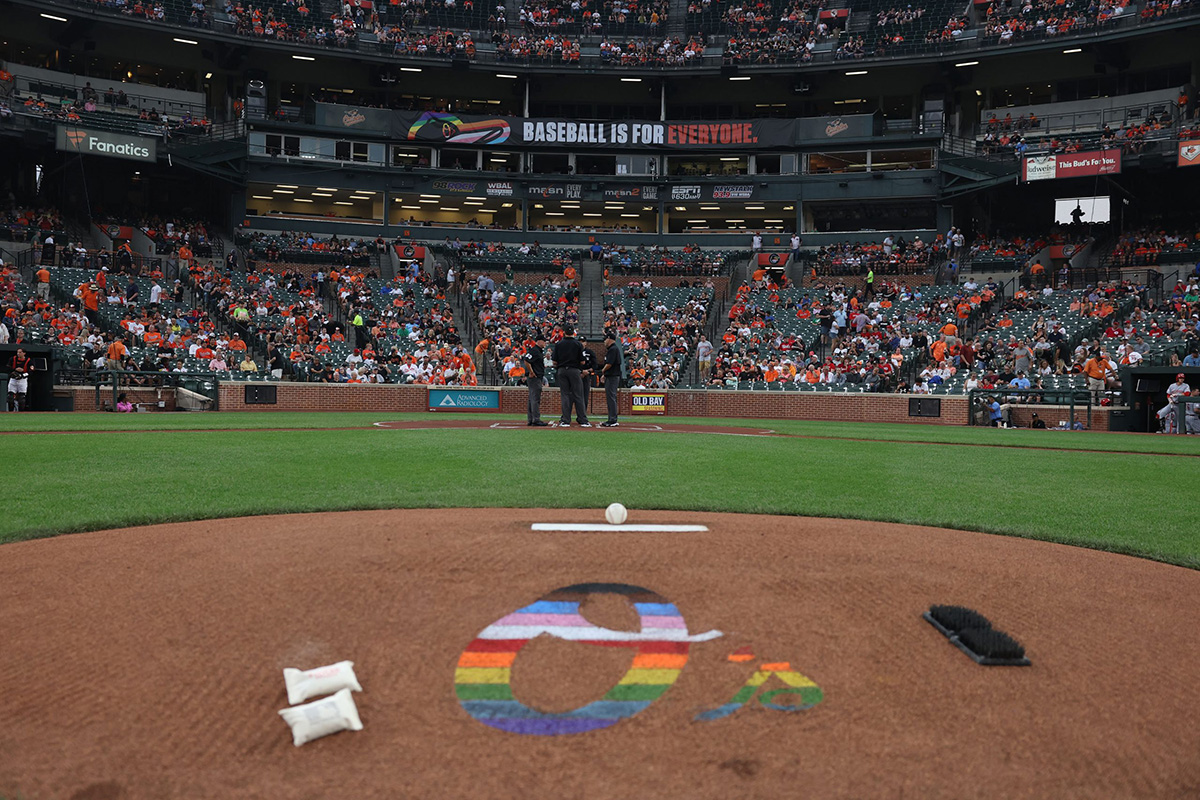
The Baltimore Orioles will take on the Washington Nationals on Friday, June 26 at 7 p.m. for Pride Night at Oriole Park.
The first 15,000 fans will receive an exclusive Pride Night Orioles jersey. The Washington Blade is a media sponsor of this event.
To purchase tickets, visit Orioles.com/Tickets.
Sports
Minor league team in York, Pa., forfeits Pride Night game after some players refuse to wear special jersey
City is roughly 20 miles north of Md. border
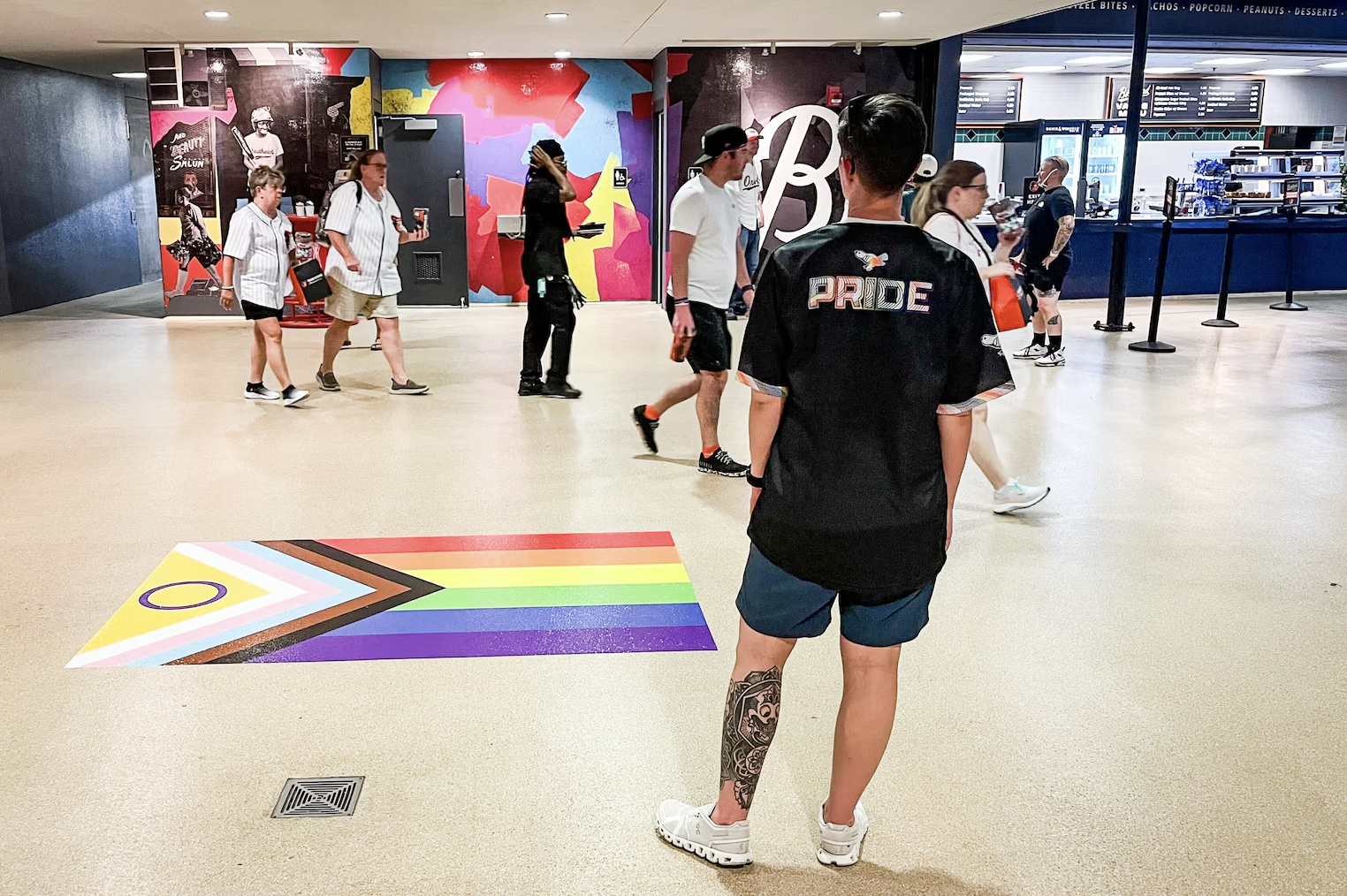
An independent minor league baseball team says it is forfeiting a game because some of its players refused to wear a special Pride Night jersey.
The Atlantic League Pro Baseball’s York Revolution were planning to hold their 11th annual Pride Night event Thursday for a game against the Southern Maryland Blue Crabs.
But the Revolution announced the day of the game that it wouldn’t be played. York is about 20 miles north of the Maryland line. The Blue Crabs play in Waldorf.
The rest of this article can be found on the Baltimore Banner’s website.

Gay librarian to discuss new novel at Green Lantern

Calendar: July 10-16

Gay Fla. Democrat Elijah Manley sees opportunity in Trump’s second term

Ron Singer, owner of popular Mount Vernon gay bar Leon’s, dies

Egyptian authorities refuse to allow gay cruise to dock in country

‘My Favorite Sociopath’ debuts at Shepherdstown’s CATF

Under-the-radar Delaware beach towns smart buyers are targeting

In Trump’s divided America, Michael Weinstein’s AHF responds

Turkish authorities refuse to allow gay cruise to dock in country

When a church fears the rainbow
-

 Theater5 days ago
‘My Favorite Sociopath’ debuts at Shepherdstown’s CATF
-
Real Estate5 days ago
Under-the-radar Delaware beach towns smart buyers are targeting
-
Politics4 days ago
In Trump’s divided America, Michael Weinstein’s AHF responds
-
Turkey4 days ago
Turkish authorities refuse to allow gay cruise to dock in country