News
White House invokes ‘religious freedom’ to defend anti-gay nominee
Appeals judge opposes same-sex marriage


Sarah Huckabee Sanders invokes religious freedom to defend an anti-gay nominee. (Screenshot via CSPAN)
White House Press Secretary Sarah Huckabee Sanders invoked “religious freedom” on Monday to defend one of President Trump’s judicial nominees who has faced criticism for her views, including opposition to same-sex marriage.
Sanders made the remarks in response to a question from The Heritage Foundation’s Daily Signal, which asked if the White House is concerned about criticism in Congress and the media over Amy Barrett. Trump nominated her for a seat on the U.S. Seventh Circuit Court of Appeals.
“We certainly support religious freedom and would ask that Congress also support that as well,” Sanders said succinctly.
Although Sanders was responding to a question about Barrett in particular, her response could have applied to any number of Trump nominees with anti-LGBT records. Among them is Jeff Mateer, whom Trump nominated for a federal judgeship in Texas. A CNN report revealed 2015 comments in which Mateer endorsed widely discredited “ex-gay” conversion therapy, opposed same-sex marriage and called transgender kids part of “Satan’s plan.”
The White House briefing room exchange follows a New York Times article published last week about concerns over ties Barrett has to a Christian group called People of Praise, which teaches husbands are the heads of their wives and should take authority over the family.
As noted in the article, Barrett faced intense questioning over her religious views from Democrats during her confirmation hearing. Sen. Dianne Feinstein (D-Calif.) said, “When you read your speeches, the conclusion one draws is that the dogma lives loudly within you.” Social conservatives have interpreted that line as an attack on Barrett’s faith.
Barrett has voiced anti-LGBT views on at least one occasion that would be consistent with Catholic Church dogma. In 2015, Barrett co-signed a letter by the Ethics & Public Policy Center for Catholic Women stating opposition to same-sex marriage just months after the U.S. Supreme Court ruled for marriage equality nationwide.
“We give witness that the Church’s teachings — on the dignity of the human person and the value of human life from conception to natural death; on the meaning of human sexuality, the significance of sexual difference and the complementarity of men and women; on openness to life and the gift of motherhood; and on marriage and family founded on the indissoluble commitment of a man and a woman — provide a sure guide to the Christian life, promote women’s flourishing, and serve to protect the poor and most vulnerable among us,” the letter says.
Barrett also has invoked the ire of progressive groups by saying abortion is “always immoral,” coming out against the contraception mandate under the Affordable Care Act and criticizing U.S. Chief Justice John Roberts for allowing the individual mandate in Obamacare to stand as a tax. Also at issue is an article in which she argued Catholic judges must recuse themselves in death penalty cases because their religious faith conflicts with the law.
Among the groups that have called for the rejection of Barrett’s nomination is the Leadership Conference on Civil & Human Rights.
Shin Inouye, a Leadership Conference spokesperson, said Barrett’s record speaks for itself on why she shouldn’t be allowed on the bench.
“Professor Barrett’s past statements and writings reveal a strong bias against reproductive freedom and LGBT rights,” Inouye said. “Her record shows a dangerous lack of deference to long-standing legal precedent and judicial restraint. She has shown she has a lack of demonstrated commitment to the rule of law and to the Constitution’s protections.”


Netherlands
Amsterdam Pride Canal Parade draws hundreds of thousands
Gay Dutch Prime Minister Rob Jetten among participants

Editor’s note: International News Editor Michael K. Lavers and Photo Editor Michael Key are on assignment in the Netherlands through Aug. 10.
AMSTERDAM — Hundreds of thousands of people lined Amsterdam’s canals on Saturday for the city’s annual Amsterdam Pride Canal Parade.
Dutch Prime Minister Rob Jetten, who is openly gay, is among those who participated in the parade that featured more than 80 boats. Participants held signs and posters that, among other things, read “proud to be intersex” and “lesbians love you and a free Palestine.”
The Washington Blade saw at least two attendees holding fans that read “fuck Trump.” One of the boats also compared President Donald Trump and Russian President Vladimir Putin as “the kissing couple.”

(Washington Blade video by Michael K. Lavers)
(Washington Blade video by Michael K. Lavers)
The parade took place a week after a terrorist attack at Berlin’s Christopher Street Day left one person dead and more than two dozen others injured.
It passed the Homomonument, a memorial to gays and lesbians who have suffered persecution. The Homomonument has been transformed into a makeshift memorial to the victims of the July 25 terrorist attack in the German capital.
View on Threads
The Canal Parade took place during World Pride, which will end in Amsterdam on Aug. 9.
European Union
Poland’s top court rejects recognition of same-sex marriages from other EU countries
Ruling sets up potential clash with bloc

Poland’s top court this week rejected the recognition of same-sex marriages legally performed in other EU countries.
The EU Court of Justice in Luxembourg last November ruled in favor of a same-sex couple who challenged Poland’s refusal to recognize their German marriage. Poland’s Supreme Administrative Court in March reaffirmed the decision.
The couple, who lives in Poland, brought their case to Polish courts in 2019. The Supreme Administrative Court referred it to the EU Court of Justice.
The Polish government in May announced it will recognize same-sex marriages legally performed in other EU countries. Polish President Karol Nawrocki on July 17 vetoed bills that would have extended rights to same-sex couples.
The Constitutional Tribunal ruling, which it issued on July 28, was unanimous and final. It also sets up a potential clash between it and the EU Court of Justice.
Taiwan
Taiwan’s government has failed to update process to change gender markers on ID documents
Interior Ministry’s 2008 directive remains in place
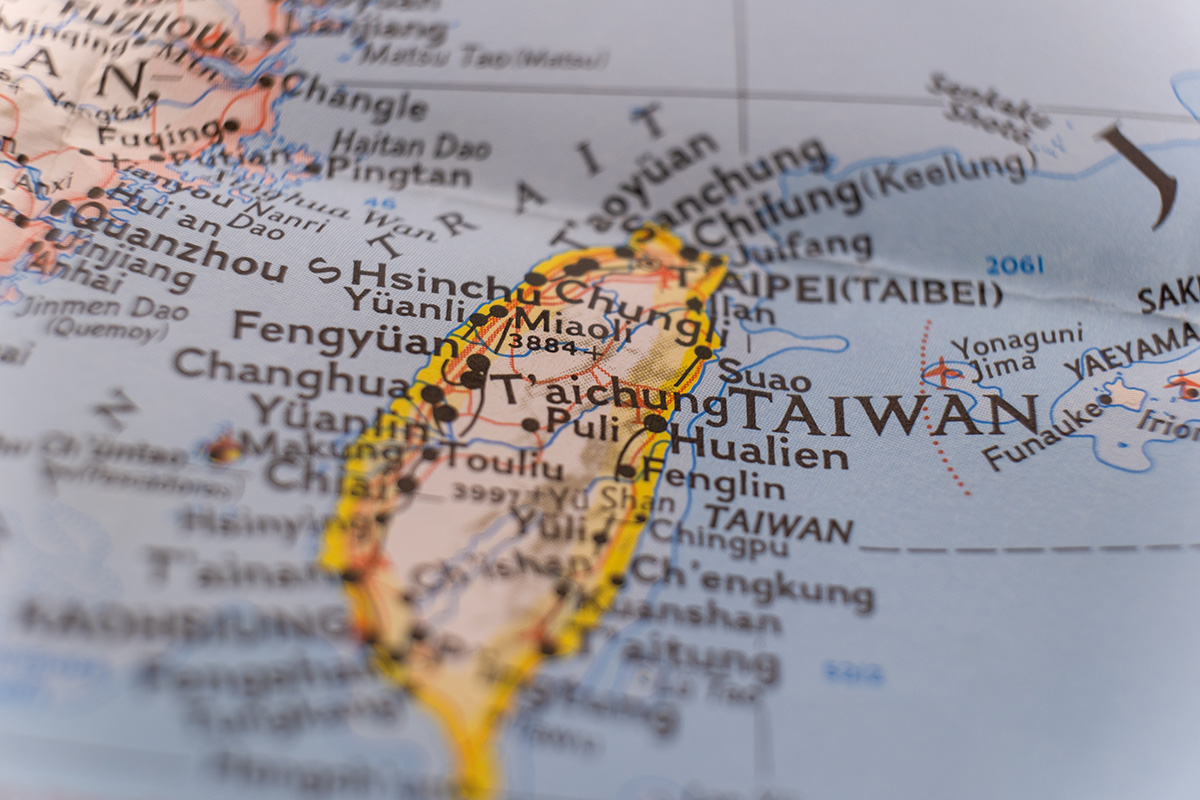
More than four years after Taiwan began formally studying legislation to overhaul its legal gender recognition system, and despite repeated recommendations from international human rights experts, the government has yet to introduce a bill that would replace decades-old administrative rules governing how transgender people can change the gender marker on official documents.
On May 15, an independent international review committee examining Taiwan’s implementation of the International Covenant on Civil and Political Rights and the International Covenant on Economic, Social and Cultural Rights urged the government to enact legislation governing legal gender recognition. The committee said Taiwan’s continued reliance on an administrative order, despite a 2023 Supreme Administrative Court ruling that mandatory gender-affirming surgery violates constitutional rights, has created legal uncertainty for transgender people, administrative authorities and judges.
In Taiwan, legal gender recognition has long been governed by a 2008 Interior Ministry administrative directive rather than legislation.
Under the directive, applicants seeking to change the gender marker on their national identification documents are generally required to provide diagnoses of gender dysphoria from two psychiatrists and proof that they have undergone gender-affirming surgery. For trans men, this typically involves the removal of the breasts, uterus, and ovaries, while trans women generally must undergo the removal of the penis and testicles. Because these requirements are established through an administrative directive rather than a law enacted by the legislature, trans rights activists and human rights organizations have argued they violate human rights.
Although Taiwanese courts have increasingly allowed trans people to change the gender marker on their official documents without undergoing gender-affirming surgery, the Interior Ministry’s 2008 directive requiring surgery remains in force. As a result, Taiwan’s administrative rules and judicial decisions are no longer fully aligned.
In a landmark ruling in May 2024, the Taipei High Administrative Court ordered a household registration office to approve a trans man’s application to change the gender marker on his household registration without requiring gender-affirming surgery. The court held that the Interior Ministry’s 2008 administrative directive, which requires applicants to submit proof of surgery, cannot be treated as an absolute prerequisite for legal gender recognition. Instead, it found that the applicant had provided sufficient medical evidence of a stable and long-standing gender identity and that denying the application solely because he had not undergone surgery was unlawful.
The Executive Yuan began work on legislation in April 2020, when it decided to commission an academic study examining international legal gender recognition systems rather than immediately drafting a law.
The government subsequently commissioned Shih Hsin University to prepare a report reviewing foreign legal models and developing legislative recommendations, including a bill. Since 2022, the Executive Yuan has held a series of inter-agency meetings involving multiple ministries to consider the study’s recommendations and legislation governing legal gender recognition, though no bill has yet been enacted.
In September 2023, Taiwan’s Supreme Administrative Court set aside a lower court ruling that had upheld the Interior Ministry’s refusal to change a trans person’s legal gender without proof of surgery and ordered the case to be reheard.
The court held that the ministry’s 2008 administrative directive requiring surgery could not be treated as the controlling legal standard because it lacked a clear statutory basis and implicated constitutional protections, including bodily autonomy and personality rights. Rather than treating surgery as an automatic prerequisite, the court instructed the lower court to determine whether the applicant had established a stable gender identity based on the evidence presented.
“From our perspective, the primary goal should be lowering the barriers to legal gender recognition, particularly by abolishing the mandatory surgery requirement,” the Taiwan Tongzhi (LGBTQ+) Hotline Association, a nonprofit LGBTQ advocacy and support organization founded in 1998, said in an email to the Washington Blade.
The Taiwan Tongzhi (LGBTQ+) Hotline Association said several factors have stalled progress toward comprehensive legislation.
The organization told the Blade the complexity of the issue and the lack of constructive dialogue are among the primary obstacles. It said legal gender recognition requires extensive discussion, with views differing even within the trans community itself. The Taiwan Tongzhi (LGBTQ+) Hotline Association added that opinions also vary widely within the legislature and across Taiwanese society, while effective channels for dialogue remain lacking.
The Taiwan Tongzhi (LGBTQ+) Hotline Association also attributed the lack of progress to what it described as a lack of political will and an over reliance on “social consensus.”
According to the organization, the executive branch lacks the political momentum to advance legal gender recognition reforms. The Taiwan Tongzhi (LGBTQ+) Hotline Association said the Interior Ministry and other relevant agencies have often adopted a passive approach in the face of opposition from conservative groups, delaying progress by arguing that there is no social consensus or that further discussion is needed.
The Taiwan Tongzhi (LGBTQ+) Hotline Association also said progress has been hindered by what it described as a backlash following the legalization of same-sex marriage. According to the organization, groups opposed to gender equality and trans rights, including some conservative religious and anti-trans organizations, shifted their focus to trans issues after marriage equality became law. The Taiwan Tongzhi (LGBTQ+) Hotline Association said these groups have promoted fear-based narratives, including concerns about safety in public restrooms, leading many politicians to view trans rights as a politically risky issue and reducing momentum for legislative action.
“The existing system makes changing one’s legal gender marker extremely difficult. Forced surgical removal of reproductive organs imposes a heavy financial burden since it must be paid out-of-pocket, and not every trans person can afford, desires, or is medically advised to undergo organ removal,” the Taiwan Tongzhi (LGBTQ+) Hotline Association said. “Additionally, requiring psychiatric evaluations is problematic because specialized medical resources are scarce and concentrated in major cities. These obstacles severely impact transgender individuals in their daily lives.”
The Taiwan Tongzhi (LGBTQ+) Hotline Association said the continued reliance on an administrative directive rather than legislation has created systemic uncertainty for trans people. The organization said the absence of a statutory framework allows executive agencies to alter requirements without legislative oversight, leaving trans people uncertain whether future policies will become more restrictive or more permissive. The Taiwan Tongzhi (LGBTQ+) Hotline Association added that while several trans people have secured favorable court rulings since 2023, those decisions apply only to the individual cases before the courts and do not guarantee similar outcomes for others. The group also said pursuing litigation requires significant time, financial resources, and emotional investment, making it an inaccessible path for many trans people seeking legal recognition.
The Executive Yuan and the Interior Ministry did not respond to the Blade’s requests for comment.

PHOTOS: Petal Release Party

Madonna headlines World Pride Music Festival in Amsterdam

Reggie White relishing first season as artistic director of Woolly Mammoth

PHOTOS: Amsterdam Pride Canal Parade

Amsterdam Pride Canal Parade draws hundreds of thousands

White House orders warning signs at Smithsonian over gender identity exhibits

Rainbows in Revolt on a mission to make LGBTQ artists’ voices heard

Matthew Rosenstein in ‘Make Me French’ a hit at Clear Space Theatre

‘Heartstopper Forever’ delivers satisfying conclusion

Madonna to perform at World Pride in Amsterdam
-

 National5 days ago
White House orders warning signs at Smithsonian over gender identity exhibits
-
a&e features5 days ago
Rainbows in Revolt on a mission to make LGBTQ artists’ voices heard
-
Opinions5 days ago
Matthew Rosenstein in ‘Make Me French’ a hit at Clear Space Theatre
-
Movies5 days ago
‘Heartstopper Forever’ delivers satisfying conclusion