Real Estate
There goes the gayborhood
Where are the gays? Everywhere!
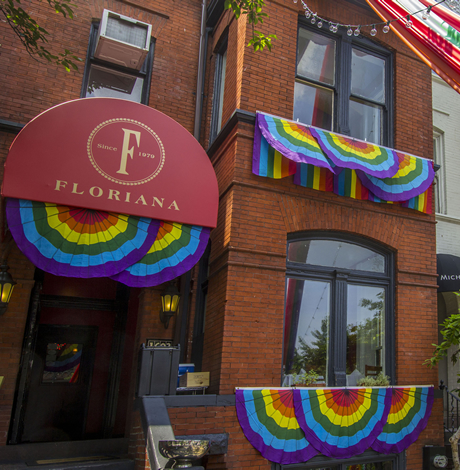
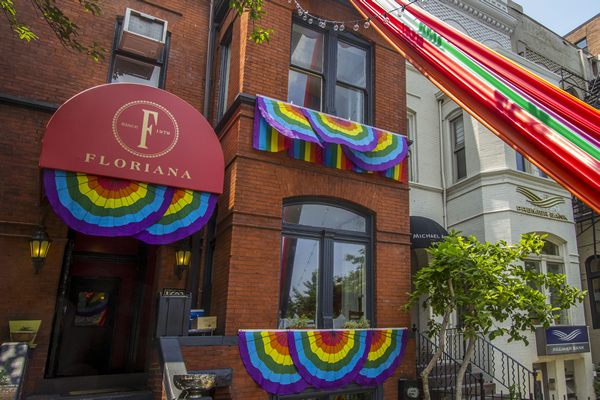
We will always have Dupont Circle as ‘our’ neighborhood even if it isn’t truly ‘the’ gayborhood anymore. (Photo courtesy Gaich)
Is there still a gayborhood? It’s a question that many folks ask me, whether a visitor or a resident of Washington. There was once a defined gay area in Dupont Circle to call our own, and it seems different now. What happened to it?
For generations now, Dupont Circle has been the hub of gay nightlife; JR.’s, Cobalt, Larry’s Lounge, Duplex Diner, the Fireplace, Dupont Italian Kitchen and other establishments anchored the area as the gayborhood, even while Remingtons, Bachelor’s Mill, Tracks, Nation, Phase One and other hotspots were established in other parts of the city.
In 1974, we got a bookstore: a symbol of our right to exist in the bright sunlight and not just behind closed doors and in private clubs:
“We are proud of the history of gay culture and of the struggle for political and social equality. We want the shop to be a showcase for the wide variety of happy, healthy gay lifestyles found among the quarter of a million gay men and women in Washington Metropolitan area.”
With this announcement, Deacon Maccubbin opened the first LGBT bookstore in Dupont Circle, Lambda Rising. It started as a quaint 300-square-foot space, but the size didn’t matter as much as what it symbolized. It finally gave gays and lesbians in D.C. a visible, positive presence in the nation’s capital.
Whitman-Walker Clinic, named for the famous (assumed gay) poet and Mary Edwards Walker, a Civil War-era physician who shattered norms by achieving a medical degree and wearing men’s clothing (along with two pistols by her side in the operating room!), has had a long presence in the gayborhood as well. Its first location at 2335 18th St., N.W., was opened in 1980 and was an indispensable institution, saving lives during the height of the AIDS epidemic. It continues today with a half dozen offices in the region, and while it serves all clients, regardless of identity, it maintains its commitment to LGBT-oriented care.
With the vibrant bar scene, plus these two pillars of the community in Dupont Circle, the neighborhood was clearly a safe haven for the LGBT community in the area. Along with The Castro in San Francisco, Hillcrest in San Diego, Greenwich Village in NYC, Boystown in Chicago, and West Hollywood in Los Angeles, Dupont Circle is viewed as historic in American gay identity.
But these days, gays are branching out all across the city. One sports bar that identifies as gay seems to be predominantly heterosexual (and female) on most nights. There doesn’t seem to be a “gayborhood” the way it used to be. Is that a bad thing, though?
A few years ago, a gay buyer might have been attracted to the convenience and the feeling of comfort and security offered by a gay enclave like Dupont Circle. Conversely, there were probably a good number of straight buyers who might have shied away from the area because of their discomfort with our presence. But these days, it seems just the opposite; many of my clients who are not LGBT want to know where gays are living because they want to live among us. They might appreciate our lively, vibrant culture and fun traditions that can add a little spice to their city life—but they may also be after the bump in property values a neighborhood might experience after it gets a “gay makeover.” In fact, it is that bump in property values, both in rents and sale prices, that are pushing new D.C. residents, most often very young and with lower incomes, to areas that are less developed. Young gay buyers can no longer afford expensive Dupont prices.
Neighborhoods that might have felt unsafe to some a few years ago are now the most competitive neighborhoods to buy in. In some cases, people are fighting over the shell of a home that needs a complete remodel from top to bottom. Home values are skyrocketing in areas such as Shaw, Bloomingdale, Trinidad, Brookland, and even farther east of the city. These areas have blossomed with new apartment buildings, condos, retail space, restaurants, and endless coffee shops to support the gentrification of these neighborhoods.
But what about the neighborhood that once was the only part of town that LGBT lived and played in? Have we forgotten our roots in the city? Have we abandoned the area just because it’s not predominantly LGBT?
The truth is that we will always have Dupont Circle as “our” neighborhood even if it isn’t truly “the” gayborhood anymore. The most honest answer I can give when asked “Where are the gays?” is quite simple: “We are everywhere.” Not just in Dupont, not just in D.C., but all over the country. We are seeing more acceptance, which in turn makes us more comfortable, giving us more freedom to choose where we want to live and not where we have to. It means that while places like Dupont are still in our hearts, they no longer exist in the same reality. Even though D.C. may not have a defined gayborhood, we have certainly have a Gay City.
Stephen Gaich is a Realtor with Bediz Group, LLC at KWCP, winner of Washington Blade’s Best of Gay DC for Real Estate Group in 2015 and 2017. He can be reached at [email protected] or 202 304 9932.







Are you prepared to meet the changing expectations of tenants? Tenant priorities are continuously shifting. As professional property managers, my team has witnessed firsthand the evolving demands of tenants over the last few years.
Frankly, today’s D.C. residents have high standards. Many have shifted to remote work, and they are placing a growing emphasis on sustainability. And these expectations are poised to evolve even further, with factors like affordability, technology integration, and community-driven amenities taking center stage.
Understanding these changes and adapting your rental to meet the growing demands of tenants and their evolving preferences will not only help you attract high-quality residents but also settle into long-term success in a competitive market. Let’s look at key tenant trends for 2026 in Washington, D.C. by providing practical strategies that help owners and investors navigate this shifting landscape, ensuring your property remains desirable and profitable in an increasingly growing rental market.
According to Buildium’s 2025 Industry Report, tenant retention is rising, and that’s due to a number of factors. It’s expensive to move, so if residents are enjoying a peaceful and pleasant rental experience and they appreciate where they live, it’s unlikely they will spend more money to live somewhere else.
The “2026 State of the Property Management Industry Report” also noted the rise of “Resident Benefit Packages,” which has contributed to retaining good residents. When landlords and property managers offer benefits such as protection against late payment fees, online conveniences, credit monitoring, air filter drop shipments, preventative maintenance services, and even concierge amenities, they increase tenant satisfaction and retention.
By investing in resident benefits, you can increase the likelihood of keeping your tenants satisfied. They’re more likely to renew their lease agreements and contribute to the care and upkeep of their home.
Provide smart home tech
According to data gathered by Nasdaq, Washington, D.C., is one of the top 10 U.S. cities where remote work is most popular, with more than one-third of the population working from home at least part of the time. Even with the federal government calling many people back into the office over the last year, remote work continues to be normalized. Tenants are working and studying from home, and they need their home to support that lifestyle shift.
They’re looking for technology, and that factor provides you the opportunity for you to attract remote workers as residents. While smart home technology was once a fairly niche amenity, it’s now becoming the standard. It’s an expectation of most tenants in Washington, D.C., that at the very least they’ll be able to:
- Connect to fast Wi-Fi at their home
- Enjoy online rental payment platforms that are secure and convenient.
- Make routine maintenance requests through resident portals
It was also recommended considering installing keyless entry systems, offering upgraded security such as video doorbells, investing in smart thermostats, and making it as easy as possible for tenants to integrate their own digital platforms and apps into their home life, whether that’s Alexa or Siri or their own personal AI-driven digital assistant.
Community-Driven Amenities in Washington, D.C., Rentals
Are you renting out units in a multi-family building or an apartment? Washington, D.C., tenants are focused on community and social connection, and so the demand for community-driven amenities is on the rise.
In 2026, renters are looking beyond traditional features like gyms or pools, seeking spaces that allow for interaction, well-being, and a sense of belonging. Co-working spaces, communal kitchens, and rooftop gardens are now more popular in buildings that are working to attract tenants who prioritize shared experiences. A recent report from Ronco Construction reports that these are the emerging trends in multi-family housing amenities:
- Rooftop decks
- Outdoor lounges
- Community gardens
- Fitness studios
- Dog parks and pet spas
- Co-working space
Know your tenant pool
If you rent out single-family homes, you’re dealing with tenants who prefer privacy and space. In those multi-family buildings and condo communities, however, tenants are likely looking for opportunities to connect with their neighbors and make friends. We have seen tenants drawn to properties that offer event programming, such as fitness classes, happy hours, or cultural gatherings, helping create a sense of community in a neighborhood atmosphere.
As an owner, investing in these types of amenities can increase tenant satisfaction, encourage long-term leases, and set your property apart in a competitive market where residents crave more than just a place to live, but also a place to connect.
‘Green Renting’ in D.C.
Tenants want to save money on energy and utilities. Most of them would also rather do whatever they can to be more conscious of their effect on the planet. The city of Washington, D.C., actively encourages this. According to Building Innovation Hub, Washington, D.C., wants to cut greenhouse gas emissions in half by 2032. More efficient building standards and energy incentives are making that possible.
Rental property owners can meet tenant expectations around sustainable living and environmental-friendly features by providing LED lighting, energy-efficient appliances, low-flow plumbing fixtures, and modern programs for managing waste and recycling.
Every tenant in Washington, D.C., is different of course, but there are common expectations that come with residents when they’re looking for a new home. Those highlighted here are even more important to tenants in 2026.
Find out how to make your Washington, D.C., rental property more competitive on the market. Engage a professional property manager for the advice you need.
Scott Bloom is owner and senior property manager of Columbia Property Management.
Real Estate
Surviving spring cleaning
Create a space that feels comfortable, welcoming, and easy to maintain

Whether or not you are getting ready to sell your home, spring is finally upon us — you know, the time of year when you can open the windows to a warm breeze and commit to decluttering and thoroughly cleaning your home.
While decluttering, you will be faced with the challenge of what to keep and what to discard. Mysterious items may appear: the missing charger, the set of keys that open nothing, or, with any luck, that one important document you know you put “in a safe place.” The journey often turns into an archaeological dig through the layers of your daily life. Along the way, you will likely encounter objects that have been misplaced or are no longer needed, and you’ll wonder why you kept them in the first place.
The kitchen junk drawer, for example, is a universal catch-all that defies categorization. You might open it looking for a rubber band and instead discover a lone screw of unknown origin, a tube of hardened Super Glue, and at least four pens that no longer work.
Closets offer another layer of surprises, where you can find things that don’t seem to belong at all: cash in a coat pocket, a single glove, a book you meant to read, or a box filled with cables for devices you no longer own.
It’s guaranteed that if you only have one of a pair of something, its mate will appear shortly after you have thrown away the one you had. And, if you were intentionally searching for an item, it will turn up in the last place you look, simply because once you found it, you stopped looking.
Linen closets and bathroom cabinets can also harbor oddities. Now is the time to discard half-used or duplicate products you don’t remember buying, travel-sized toiletries from trips long past, or expired medications.
Under furniture is where things get truly mysterious. Reaching beneath a couch or bed in search of a dropped item often yields a collection of the unexpected: assorted coins, dust-covered pet toys, a missing sock, and perhaps something that makes you pause, like a long-lost piece of jewelry or an object you were convinced had disappeared forever.
Organizing garages and basements takes the experience to another level, where consolidating tools or seasonal decorations stored there can quickly turn into an encounter with objects that defy explanation. Why is there a box of tiles from a renovation that happened a decade ago? Do you really need the instruction manuals for appliances you no longer own? What could possibly be in the box that hasn’t been opened since you moved in?
Even searches within a home office – looking through files, drawers of old electronics, or stacks of paperwork—can yield similarly strange results. I recently found several flash drives with client files from 2014, a cache of notebooks containing names and phone numbers of prospects who left the area 15 years ago, and Turbo Tax installation CDs from as far back as 1997.
If decluttering hasn’t defeated you, then thoroughly cleaning your house may not be as overwhelming as you might think. Breaking it into manageable steps makes the process far simpler and even satisfying. A consistent method is the key to success.
Before you reach for cleaning supplies, take one last walk through each room and gather items that belong elsewhere for return to their proper place. Put away clothing and take out trash. This step instantly makes your home look better and clears the way for more effective cleaning. Working from top to bottom, dust ceiling fans, light fixtures, shelves, and blinds first so that any debris falls to the floor for addressing later. Use a microfiber cloth or handheld Swiffer to trap dust rather than spreading it around. Don’t forget overlooked areas like the tops of door frames, windowsills, and baseboards.
Move on to surfaces. Wipe down countertops and furniture with appropriate cleaners. Squeegee windows to let the sun shine in. Pay special attention to kitchen appliances. Stovetops, microwaves, and refrigerator handles tend to collect grime quickly, as do the tops of upper cabinets. In bathrooms, disinfect sinks, toilets, tubs, and showers.
Lastly, vacuum carpets, rugs, draperies, and upholstered surfaces thoroughly, including along edges and under furniture where dust accumulates. For hard floors, sweep first, then mop using a cleaner suitable for the surface type. This final step pulls the whole cleaning effort together and leaves your home feeling and smelling fresh.
Ultimately, cleaning your house doesn’t have to be a daunting chore. With a clear plan and a little consistency, you can create a space that feels comfortable, welcoming, and easy to maintain – at least until this time next year.
Valerie M. Blake is a licensed Associate Broker in D.C., Maryland, and Virginia with RLAH @properties. Call or text her at 202-246-8602, email her at [email protected] or follow her on Facebook at TheRealst8ofAffairs.

In September 2024, I wrote about the District’s Lead-Free D.C. initiative, an ambitious effort to remove lead pipes and make drinking water safer for every resident in our city. Since that original article, a number of important developments have taken shape that affect everyone living in the District. Key drivers in the legal landscape surrounding this issue such as disclosure, testing, and infrastructure planning have been sharpened. The city’s sweeping pipe replacement efforts are continuing to evolve against the backdrop of broader federal drinking-water rules and funding changes.
What was once largely public health conversation for the future is now a practical reality for many property owners and renters. The water service line replacement project has moved from planning and is presently underway throughout the city.
Elevated levels of lead in drinking water is a perplexing challenge in many U.S cities. Researchers documented elevated lead levels in D.C.’s water system more than two decades ago, spotlighting how old infrastructure can pose a hidden health risk even in one of America’s wealthiest cities. Local leaders responded with pipe replacement plans that have continued in the years since.
The Lead-Free D.C. initiative remains the central effort to reduce that risk by replacing water supply lines. These are the pipes that carry water to your home or rental property from the street. D.C. Water estimates that tens of thousands of lead or galvanized service lines still exist in the city and must be systematically replaced to eliminate this exposure.
What Has Changed Since September 2024
Over the past 18 months, several shifts have rippled through policy, practice, and the daily experience of both landlords and tenants:
- Local Disclosure and Tenant Rights: The city has strengthened disclosure requirements. Today, property owners are expected to provide clear written disclosures about known lead service lines, any testing that has been done, and records of past replacements. Tenants also have the right to request lead testing of their tap water, and landlords are responsible for ordering and passing along the test kit, and are required by law to share results with tenants when requested.This reflects an ongoing push toward transparency and an informed occupancy.
- Pipeline Replacement Planning: D.C. Water and the District Government are continuing to roll out their block-by-block lead service line replacement work, with construction schedules publicly available through a Lead-Free D.C. construction dashboard. The goal is to remove by 2030 all lead service lines on both the public and private side, though timelines and funding mechanisms are still being refined as the work continues. D.C.’s Lead-Free DC initiative stipulates that DC Water is responsible to replace the public portion of a lead service line at no cost to the property owners. This is the section running from the water main under the street to the property owner’s lot line. When DC Water is already replacing the public side as part of a scheduled infrastructure project, it will also offer to replace the private-side service line (into the building) at no cost to the owner, as long as the owner grants access and signs a right-of-entry agreement. In these cases, DC Water pays the contractor directly, and the entire lead service line is removed in one coordinated effort.
When no public-side project is scheduled, owners may still qualify for full private-side replacement coverage through the District’s Lead Pipe Replacement Assistance Program (LPRAP). If approved, the program covers the cost of replacing the private-side lead pipe, with funds paid directly to the contractor. Property owners are typically responsible for selecting the contractor, coordinating the work, and covering any costs outside the approved scope of work. Funding is subject to availability, and eligible applicants may be placed on a waiting list depending on annual program budgets.
- Implementation Best Practices: To avoid challenges and misunderstandings regarding the responsibilities during such a significant undertaking, fully investigating the program and how it works is a good first start as is regular and clear communications.
It’s helpful for both property owners and residents to have a clear understanding of what D.C. Water and construction crews will be doing during a lead service line replacement and what follow-up work may remain once the project is complete. Like any major infrastructure upgrade, the process can involve temporary water shutoffs, excavation around the building, and some restoration afterward, such as repairing landscaping or sections of sidewalk. While these short-term disruptions can be inconvenient, they’re a normal and necessary part of modernizing the city’s water system and ensuring safer drinking water for the long term.
- Federal Drinking Water Rules: On the national stage, the U.S. Environmental Protection Agency (EPA) finalized in October 2024 the Lead and Copper Rule Improvements (LCRI). The LCRI requires public water systems across the country to inventory and plan to replace lead service lines, and to remove all lead pipes within about a decade. It also strengthens testing, monitoring, and public notification requirements and lowers the action level for lead exposure, building on earlier revisions to the Lead and Copper Rule.
While these federal changes do not rewrite Washington, D.C.’s specific legal requirements for landlords and tenants, they do help shape funding opportunities, compliance expectations, and the broader national push to eliminate lead plumbing, which can affect utilities, state programs, and local infrastructure planning.
Federal drinking water regulations are subject to administrative review, litigation, and potential revisions as presidential administrations change. While the EPA’s 2024 Lead and Copper Rule Improvements remain in effect as of this writing, aspects of implementation, enforcement timelines, or funding mechanisms may evolve through future rulemaking, court decisions, or congressional action. These federal rules do not override Washington, D.C.’s independent authority to adopt and enforce its own public health, housing, and water safety requirements, which continue to govern landlord and tenant obligations within the District regardless of federal regulatory shifts.
What Landlords Should Know
For landlords in D.C., these evolving expectations matter in 3 key ways:
- Disclosure Is Now a Must: You are expected to provide prospective tenants with upfront information about lead service lines, known test results, and replacement history before lease signing. Existing tenants must also be informed if you learn anything new about the plumbing system.
- Testing Should Be Welcomed, Not Avoided: When tenants request a lead water test, you’re now required to provide D.C. Water’s approved kit and cooperate with the process. The test results give both sides clear information about water quality and whether additional remediation is advisable.
- Capital Investment May Be Unavoidable: Even if much of the public-side work is funded by D.C. Water, private-side service line replacement costs and restoration work may still fall to the property owner if the home still has lead service lines. Planning for both the expense and the logistics is key to be able to take advantage of this program being offered to D.C. homeowners.
What This Means for Tenants
For renters, the changes bring clearer rights and fewer unknowns. Tenants no longer have to guess whether lead pipes serve their home; they can request testing, receive timely results, and rely on official disclosures when deciding where to live and how to protect their health.
Transparent communication with the landlord, responsiveness to testing requests, and participation in replacement programs turn regulatory requirements into real-world safeguards. In that way, landlord action directly shapes tenant trust, housing stability, and long-term public health outcomes.
At a moment when the District is investing heavily in its infrastructure, landlords who plan ahead and participate help to ensure that these public resources translate into safer housing, stronger neighborhoods, and a city better equipped for the future.
Why This Still Matters
Lead-free water shouldn’t be a luxury. Continued investment by federal and local governments in Washington, D.C.’s water infrastructure reflects a shared commitment to the city’s long-term health and livability. Modernizing service lines helps ensure that people can raise families here, age in place, and remain part of their communities without the added health concerns associated with lead exposure.
Landlords who take the time now to understand, disclose, and plan for lead service line replacement not only comply with evolving expectations, but they also strengthen the long-term value and marketability of their properties.
Scott Bloom is owner and senior property manager of Columbia Property Management.

Australia lifts additional restrictions on LGBTQ blood donors

Top EU court strikes down Hungary’s anti-LGBTQ propaganda law

Tennessee’s Charlie Kirk Act is harmful

Victory Fund brunch draws top LGBTQ officials, 2028 hopeful Andy Beshear

Inside the lonely world of MAGA gay men

Calendar: April 17-23

Team DC’s annual gala set for this weekend

The latest Supreme Court case erasing LGBTQ identity

Judge rescinds stay-away order in Capital Pride anti-stalking case