Sports
All stars spotlight: Stonewall Dodgeball
Local player finds career parallels in recreational league
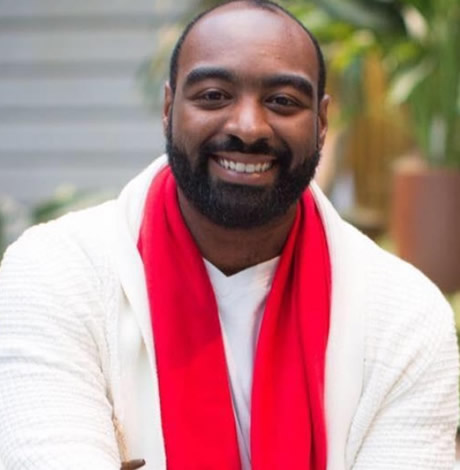
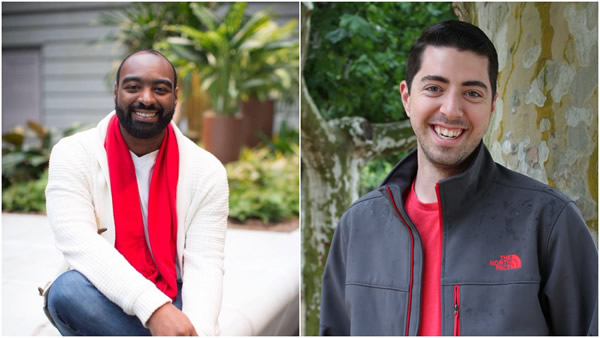
Mark Covington, left, and Derek Jansante. (Photos courtesy the subjects)
This week in the ongoing All-Star series on the LGBT sports community, we meet two long-time Stonewall Dodgeball players.
Stonewall Dodgeball launched in the spring of 2014 and is currently running multiple seasons of its league at the Washington D.C. Jewish Community Center. Its winter season will kick-off Jan. 21 and this weekend members will field teams at the Sin City Classic in Las Vegas.
Mark Covington didn’t play sports growing up in Winston-Salem, N.C. He says he was a big musical theater nerd all the way through receiving his first degree at Wake Forest University. He moved to D.C. in 2014 and a friend suggested he give dodgeball a try.
“Dodgeball can be a tough space and it takes a lot of courage for a black LGBT man to maneuver through it. Even though I am one of a very few, I have found acceptance and have learned a lot about the community,” Covington says. “I come from a small town and it feels great to be out and proud in this space. It normalizes everything.”
Covington received his graduate degree from George Washington and is working in mental health counseling. After four years of playing dodgeball he has found a correlation between his profession and his sport.
“Dodgeball is very fast and it keeps you on your toes. You always have to know where the ball is, and which way people are moving,” Covington says. “I develop awareness with my clients, so it fits in with my work and forces me to be present.”
He is currently working on his Ph.D. at George Washington University and often leans on his fellow players as a source of support.
“I have met a lot of new friends and developed friendships that help me get through life,” Covington says. “I am still learning how to be comfortable in my own skin.”
Derek Jansante had a decision to make when facing his college path. He had an opportunity to play college baseball as a pitcher at a Division III university, but was uncertain that he would be accepted in a rural setting as a gay athlete. Jansante decided instead to attend Stetson University with the hope of being himself.
Growing up in Bentleyville, Pa., Jansante played sports year round including baseball, basketball and golf in high school. While he was at Stetson, he served as student body president and played intramural volleyball, dodgeball and baseball.
He moved to D.C. in 2011 to work with the Victory Fund and joined Stonewall Dodgeball in its first season as a free agent. Along the way he has also played with Stonewall Kickball and the D.C. Gay Flag Football League.
“Throwing hard in a small space is one of the skills I acquired from being a baseball pitcher,” Jansante says. “Playing dodgeball allows me to tap into that skillset.”
Jansante is now working as an academic advisor at American University and wrapped up his graduate work at George Washington University in 2016. His love for his sport almost interrupted that path.
“I love dodgeball so much, that I almost took a semester off grad school to play,” Jansante says. “There is broad acceptance and an incredible community aspect. My dodgeball teammates are my best friends.”




Sports
New IOC policy bans trans women from Olympics
New regulation to be in effect at 2028 summer games in Los Angeles
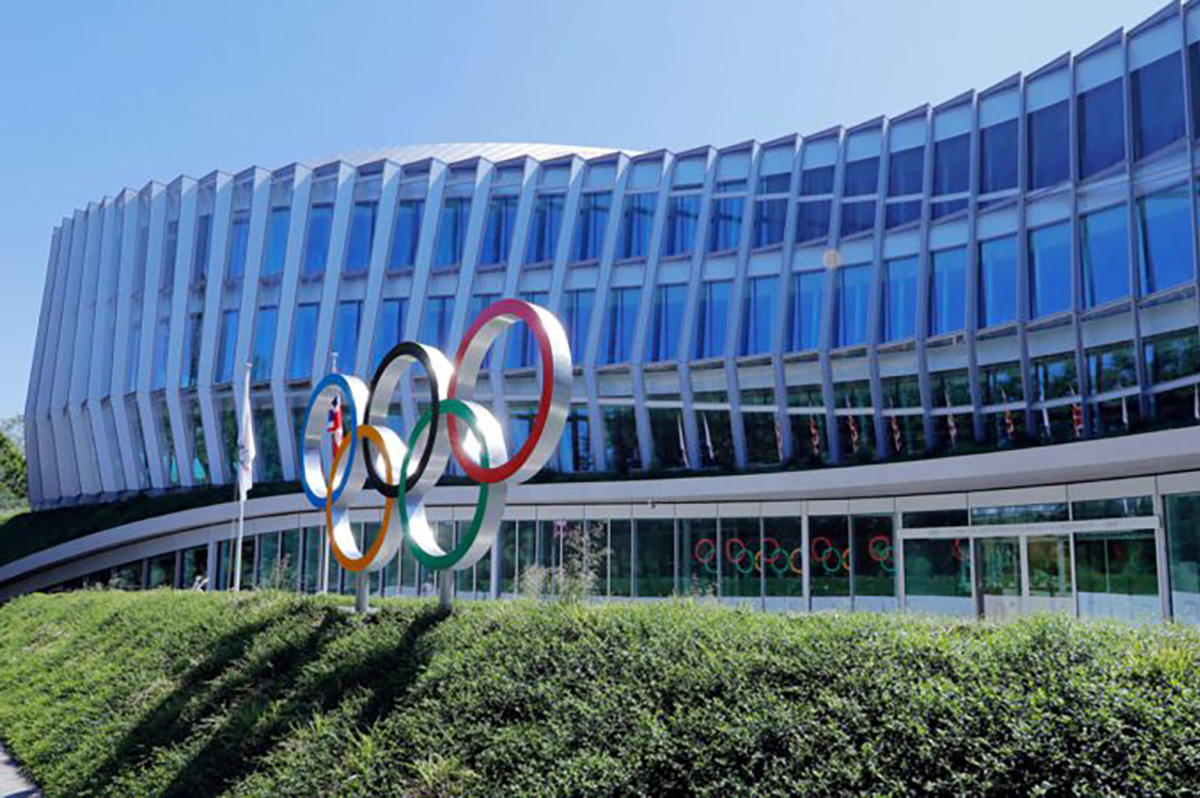
The International Olympic Committee on Thursday announced it will not allow transgender women from competing in female events at the Olympics.
“For all disciplines on the Sports Program of an IOC event, including individual and team sports, eligibility for any Female Category is limited to biological females,” reads the new policy.
The policy states “eligibility for the Female Category is to be determined in the first instance by SRY Gene screening to detect the absence or presence of the SRY Gene.”
“On the basis of the scientific evidence, the IOC considers that the SRY (sex-determining Region Y) Gene is fixed throughout life and represents highly accurate evidence that an athlete has experienced or will experience male sex development,” it reads. “Furthermore, the IOC considers that SRY Gene screening via saliva, cheek swab or blood sample is unintrusive compared to other possible methods. Athletes who screen negative for the SRY gene permanently satisfy this policy’s eligibility criteria for competition in the Female Category.”
The policy states the test “will be a once-in-a-lifetime test” unless “there is reason to believe a negative reading is in error.”
The new regulation will be in place for the 2028 Summer Olympics in Los Angeles.
“I understand that this a very sensitive topic,” said IOC President Kirsty Coventry on Thursday in a video. “As a former athlete, I passionately believe in the rights of all Olympians to take part in fair competition.”
“The policy that we have announced is based on science and it has been led by medical experts with the best interests of athletes at its heart. The scientific evidence is very clear: male chromosomes give performance advances in sport that rely on strength, power, or endurance,” she added. “At the Olympic Games, even the smallest margins can be the difference between victory and defeat. So, it is absolutely clear that it would not be fair for biological males to compete in the female category. In addition, in some sports it would simply not be safe.”
(Video courtesy of the IOC)
Laurel Hubbard, a weightlifter from New Zealand, in 2021 became the first trans woman to compete at the Olympics.
Imane Khelif, an Algerian boxer, won a gold medal at the 2024 Summer Olympics in Paris. Khelif later sued JK Rowling and Elon Musk for cyberstalking after they questioned her gender identity.
Ellis Lundholm, a mogul skier from Sweden, this year became the first openly trans athlete to compete in any Winter Olympics when he participated in Milan Cortina Winter Olympics in Italy.
President Donald Trump in February 2025 issued an executive order that bans trans women and girls from female sports teams in the U.S.
The U.S. Olympic and Paralympic Committee last July banned trans women from competing in female sporting events. Republican lawmakers have demanded the IOC ban trans athletes from women’s athletic competitions.
“I’m grateful the Olympics finally embraced the common sense policy that women’s sports are for women, not for men,” said U.S. Sen. Tom Cotton (R-Ark.) on X.
An IOC spokesperson on Thursday referred the Washington Blade to the press release that announced the new policy.
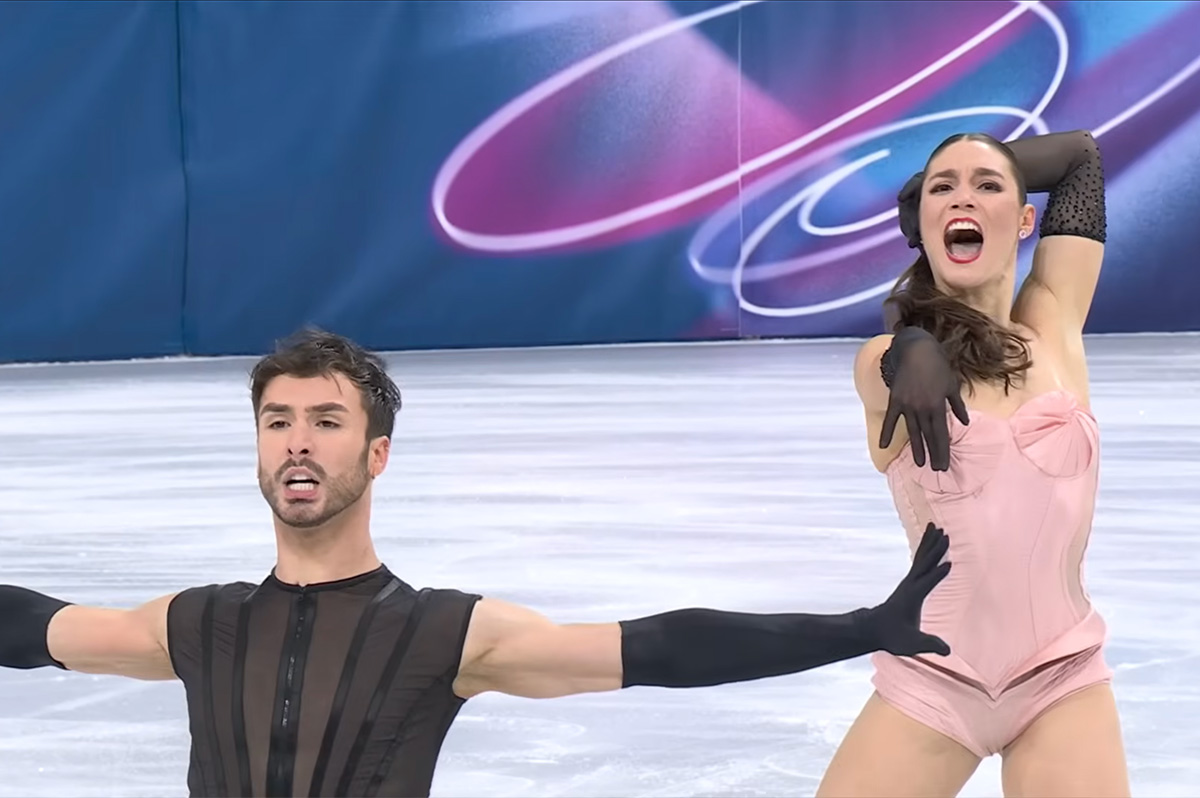
More than a dozen LGBTQ athletes won medals at the Milan Cortina Winter Olympics that ended on Sunday.
Cayla Barnes, Hilary Knight, and Alex Carpenter are LGBTQ members of the U.S. women’s hockey team that won a gold medal after they defeated Canada in overtime. Knight the day before the Feb. 19 match proposed to her girlfriend, Brittany Bowe, an Olympic speed skater.
French ice dancer Guillaume Cizeron, who is gay, and his partner Laurence Fournier Beaudry won gold. American alpine skier Breezy Johnson, who is bisexual, won gold in the women’s downhill. Amber Glenn, who identifies as bisexual and pansexual, was part of the American figure skating team that won gold in the team event.
Swiss freestyle skier Mathilde Gremaud, who is in a relationship with Vali Höll, an Austrian mountain biker, won gold in women’s freeski slopestyle.
Bruce Mouat, who is the captain of the British curling team that won a silver medal, is gay. Six members of the Canadian women’s hockey team — Emily Clark, Erin Ambrose, Emerance Maschmeyer, Brianne Jenner, Laura Stacey, and Marie-Philip Poulin — that won silver are LGBTQ.
Swedish freestyle skier Sandra Naeslund, who is a lesbian, won a bronze medal in ski cross.
Belgian speed skater Tineke den Dulk, who is bisexual, was part of her country’s mixed 2000-meter relay that won bronze. Canadian ice dancer Paul Poirier, who is gay, and his partner, Piper Gilles, won bronze.
Laura Zimmermann, who is queer, is a member of the Swiss women’s hockey team that won bronze when they defeated Sweden.
Outsports.com notes all of the LGBTQ Olympians who competed at the games and who medaled.
Sports
US wins Olympic gold medal in women’s hockey
Team captain Hilary Knight proposed to girlfriend on Wednesday
The U.S. women’s hockey team on Thursday won a gold medal at the Milan Cortina Winter Olympics.
Team USA defeated Canada 2-1 in overtime. The game took place a day after Team USA captain Hilary Knight proposed to her girlfriend, Brittany Bowe, an Olympic speed skater.
Cayla Barnes and Alex Carpenter — Knight’s teammates — are also LGBTQ. They are among the more than 40 openly LGBTQ athletes who are competing in the games.
The Olympics will end on Sunday.

LGBTQ Catholic groups slam Trump over pope criticism

Grindr to host first-ever White House Correspondents’ Dinner party

Charlie Kirk Act advances in Tenn.

Belarusian president signs bill to allow LGBTQ rights crackdown

‘The Pitt’ stars discuss what season two gets right about queer representation

Trump budget targets ‘gender extremism’

Viktor Orbán ousted in Hungarian elections

How to navigate shifting tenant expectations

Court orders Pride flag to return to Stonewall