Tennessee
Charlie Kirk Act advances in Tenn.
Bill would limit protests, protects speakers opposing ‘transgender’ identities

The Tennessee legislature has passed Senate Bill 1741 / House Bill 1476, dubbed the “Charlie Kirk Act,” which, if signed by Republican Gov. Bill Lee, would reshape how public colleges and universities regulate speech on campus.
The measure targets all public higher education institutions and requires them to adopt a “free expression” policy modeled on the University of Chicago’s framework. That framework emphasizes that universities should not shield students from controversial or offensive ideas and requires state schools to formally embrace institutional neutrality — meaning they do not publicly take a stance on political or social issues.
Under the legislation, publicly funded schools cannot disinvite or cancel invited speakers based on their viewpoints or in response to protests from students or faculty. Student organizations, however — like Turning Point USA, an American nonprofit that advocates for conservative politics on high school, college, and university campuses, founded by Charlie Kirk, and often lack widely represented liberal counterparts — would retain broad authority to bring speakers to campus regardless of controversy.
The law includes broad protections for individuals and organizations expressing religious or ideological beliefs, including opposition to abortion, homosexuality, or transgender identity, regardless of whether those views are rooted in religious or secular beliefs. It further prohibits public institutions from retaliating against faculty for protected speech or scholarly work.
The bill, which has been hailed by supporters as an effort to “preserve campus free speech,” ironically also limits protest activity. Shouting down speakers, blocking sightlines, staging disruptive walkouts, or physically preventing entry to events are now considered “substantial interference” under the legislation, making those who engage in such actions subject to discipline.
Some of those disciplinary consequences include probation, suspension, and even expulsion for students, while faculty who protest in ways deemed to violate the policy could face unpaid suspensions and termination after repeated violations.
Supporters of the bill argue it strengthens free expression on campus. State Rep. Gino Bulso (R-Brentwood), the bill’s sponsor, said it reinforces a commitment to “civil and robust” debate at public universities.
“The Charlie Kirk Act creates critical safeguards for students and faculty and renews the idea that our higher education institutions should be centers of intellectual debate,” Bulso told Fox 17. “This legislation honors the legacy of Charlie Kirk by promoting thoughtful engagement and defending religious freedom.”
Critics, including Democratic lawmakers, have raised concerns that the legislation effectively elevates certain ideological viewpoints — particularly those tied to religious objections to LGBTQ identities — while exposing students and faculty to punishment for protest or dissent.
“It’s ironic that this body is talking about free speech when we had professors in Tennessee schools expelled and suspended when they did not mourn the death of Charlie Kirk — when they said that his statements were problematic and that the way he died did not redeem the way he lived,” state Rep. Justin Jones (D-Nashville) told WKRN.
Kirk, the right-wing activist and founder of Turning Point USA, for whom the bill is named, was assassinated in September 2025 at a public event at Utah Valley University. His legacy and rhetoric remain deeply polarizing, particularly among LGBTQ advocates, who have cited his history of anti-LGBTQ statements in opposing his campus appearances.
The bill now heads to Lee’s desk for his signature.




Congress
Ogles faces bipartisan backlash over anti-gay social media post
Tenn. congressman blamed the comment on staffer
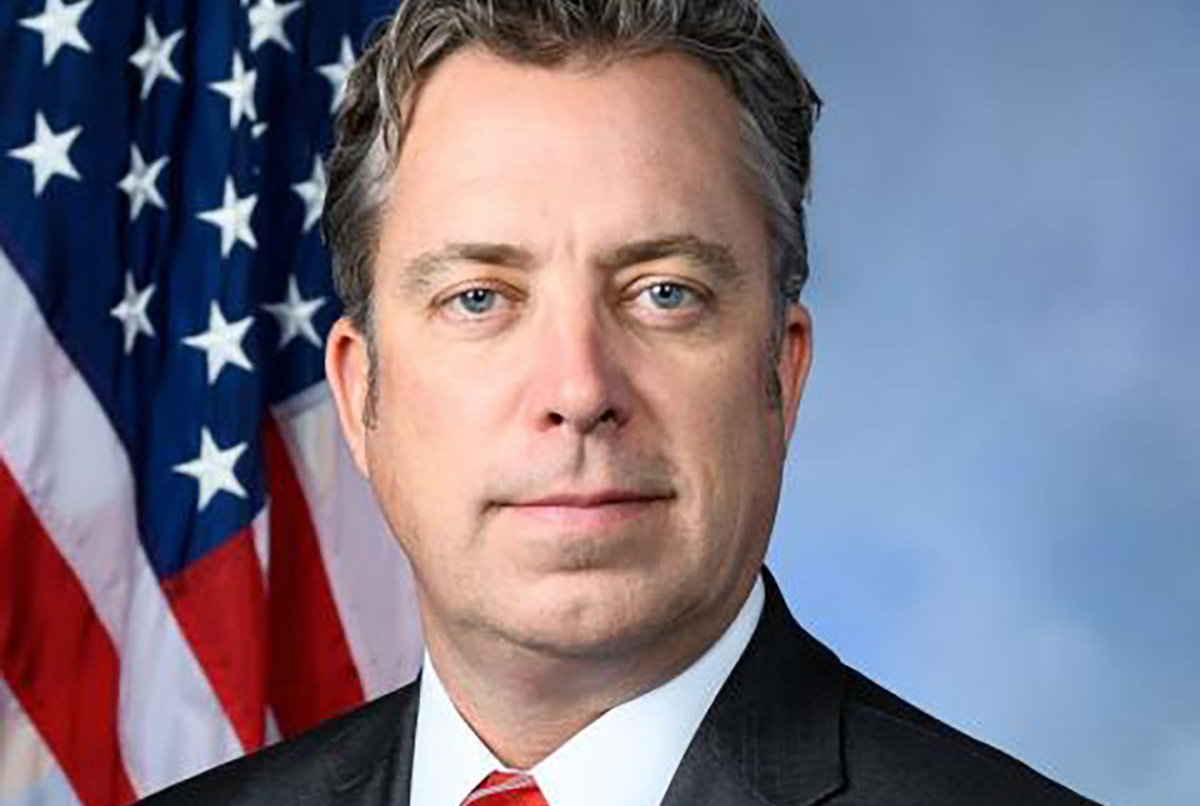
U.S. Rep. Andy Ogles (R-Tenn.), who represents Tennessee’s 5th Congressional District, is facing backlash from LGBTQ advocates and fellow Republicans after a social media post declared that “homosexuality has no place in America.”
“Homosexuality has no place in America. Happy Nuclear Family Month,” the congressman wrote in a post on X that was later deleted.
According to the Williams Institute at UCLA School of Law, an estimated 6.3 percent of U.S. adults identify as LGBTQ.
Following widespread criticism, Ogles removed the post and blamed it on a staff member.
“The post was stupid, hurtful and a complete distraction from my America First focus. The employee has been reprimanded,” Ogles said in a statement.
The Washington Blade reached out to Ogles’s office for comment but did not receive a response by press time.
Among those condemning the message was U.S. Rep. Mike Lawler (R-N.Y.), who called it “absolutely idiotic” in a social media post.
“Homosexuality exists. In America,” Lawler wrote on X. “In fact, Andy, you have family, friends, neighbors, colleagues, and constituents who are gay and lesbian. It doesn’t make them less than or somehow unworthy of being an American.”
U.S. Sen. Ted Cruz (R-Texas) also criticized Ogles’s remarks.
“For all of recorded history, homosexuals have been a part of humanity,” Cruz told TMZ DC. “I think the behavior of consenting adults is their business.”
Chris Sanders, the executive director for the Tennessee Equality Project and Tennessee Equality Project Foundation provided a statement to the Blade about Ogles’s comment.
“The Tennessee Nuclear Family Month resolution has really backfired on conservatives by ensnaring Congressman Ogles in scandal. He used the resolution as a pretext to say that our community doesn’t belong in America, resulting in incredible backlash from across the partisan divide,” Sanders said. “It is a good opportunity for him to pause and reflect on whether it’s time for him to resign. Fighting one’s own constituents is not the purpose of serving in Congress.”
Human Rights Campaign Senior Press Secretary Jarred Keller provided a statement to the Blade regarding Ogles’s comments.
“LGBTQ+ people are woven into the fabric of America, and any politician who questions that is severely out of touch with reality. When so many people are worried about whether they can afford gas to get to work or groceries for their families, the last thing we need is right-wing Republicans targeting marginalized communities with hateful attacks,” Keller said. “Representative Ogles should spend less time attacking LGBTQ+ people and start addressing the issues that actually matter, because last I checked, our community isn’t the reason families are struggling to make ends meet.”
The controversy comes as Tennessee continues to advance legislation affecting LGBTQ residents. The state already has several laws on the books that LGBTQ advocates have criticized, including the Adult Entertainment Act, enacted in 2023, which restricts certain “adult cabaret performances.”
Lawmakers have also introduced additional measures this legislative session, including the “No Pride Flag or Month Act,” which would prohibit state employees, volunteers, and agents from displaying Pride flags or participating in Pride observances while acting in an official capacity.
Another proposal, the “Banning Bostock Act” would seek to limit the application of state anti-discrimination protections based on the U.S. Supreme Court’s decision in Bostock v. Clayton County. Tennessee lawmakers have also passed other measures restricting LGBTQ rights and access to gender-affirming health care.
Tennessee
Tenn. lawmakers pass transgender “watch list” bill
State Senate to consider measure on Wednesday
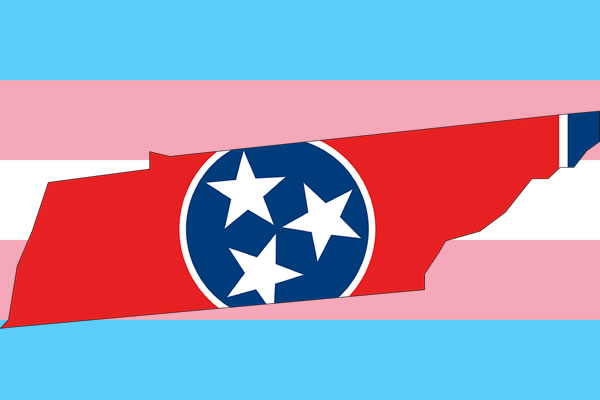
The Tennessee House of Representatives passed a bill last week to create a transgender “watch list” that also pushes detransition medical treatment. The state Senate will consider it on Wednesday.
House Bill 754/State Bill 676 has been deemed “ugly” by LGBTQ advocates and criticized by healthcare information litigators as a major privacy concern.
The bill would require “gender clinics accepting funds from this state to perform gender transition procedures to also perform detransition procedures; requires insurance entities providing coverage of gender transition procedures to also cover detransition procedures; requires certain gender clinics and insurance entities to report information regarding detransition procedures to the department of health.”
It would require that any gender-affirming care-providing clinics share the date, age, and sex of patients; any drugs prescribed (dosage, frequency, duration, and method administered); the state and county; the name, contact information, and medical specialty of the healthcare professional who prescribed the treatment; and any past medical history related to “neurological, behavioral, or mental health conditions.” It would also mandate additional information if surgical intervention is prescribed, including details on which healthcare professional made a referral and when.
HB 0754 would also require the state to produce a “comprehensive annual statistical report,” with all collected data shared with the heads of the legislature and the legislative librarian, and eventually published online for public access.
The bill also reframes detransitioning as a major focus of gender-affirming healthcare — despite studies showing that the number of trans people who detransition is statistically quite low, around 13 percent, and is often the result of external pressures (such as discrimination or family) rather than an issue with their gender identity.
This legislation stands in sharp contrast to federal protections restricting what healthcare information can be shared. In 1996, Congress passed the Health Insurance Portability and Accountability Act, or HIPAA, requiring protections for all “individually identifiable health information,” including medical records, conversations, billing information, and other patient data.
Margaret Riley, professor of law, public health sciences, and public policy at the University of Virginia, has written about similar efforts at the federal level, noting the Trump-Vance administration’s push to subpoena multiple hospitals’ records of gender-affirming care for trans patients despite no claims — or proof — that a crime was committed.
It has “sown fear and concern, both among people whose information is sought and among the doctors and other providers who offer such care. Some health providers have reportedly decided to no longer provide gender-affirming care to minors as a result of the inquiries, even in states where that care is legal.” She wrote in an article on the Conversation, where she goes further, pointing out that the push, mostly from conservative members of the government, are pushing extracting this private information “while giving no inkling of any alleged crimes that may have been committed.”
State Rep. Jeremy Faison (R-Cosby), the bill’s sponsor, said in a press conference two weeks ago that he has met dozens of individuals who sought to transition genders and ultimately detransitioned. In committee, an individual testified in support of the bill, claiming that while insurance paid for gender-affirming care, detransition care was not covered.
“I believe that we as a society are going to look back on this time that really burst out in 2014 and think, ‘Dear God, What were we thinking? This was as dumb as frontal lobotomies,’” Faison said of gender-affirming care. “I think we’re going to look back on society one day and think that.”
Jennifer Levi, GLAD Law’s senior director of Transgender and Queer Rights, shared with PBS last year that legislation like this changes the entire concept of HIPAA rights for trans Americans in ways that are invasive and unnecessary.
“It turns doctor-patient confidentiality into government surveillance,” Levi said, later emphasizing this will cause fewer people to seek out the care that they need. “It’s chilling.”
The Washington Blade reached out to the American Civil Liberties Union of Tennessee, which shared this statement from Executive Director Miriam Nemeth:
“HB 754/SB 676 continues the ugly legacy of Tennessee legislators’ attacks on the lives of transgender Tennesseans. Most Tennesseans, regardless of political views, oppose government databases tracking medical decisions made between patients and their doctors. The same should be true here. The state does not threaten to end the livelihood of doctors and fine them $150,000 for safeguarding the sensitive information of people with diabetes, depression, cancer, or other conditions. Trans people and intersex people deserve the same safety, privacy, and equal treatment under the law as everyone else.”
Tennessee
Olivia Hill elected as first openly transgender official in Tenn.
Nashville native is U.S. Navy veteran

Voters in Nashville and surrounding Davidson County made history Thursday as Olivia Hill won an at-large seat on the Metro Council, making her the first openly transgender official elected to public office in the Volunteer State.
The Tennessean reported that Hill secured one of the council’s five at-large seats in Thursday’s runoff election with 12.9 percent of the vote, as of 10 p.m. Thursday night. She joins a historic number of women elected to the council. All five at-large members will be women, as well as 17 district councilmembers. That adds up to 22 women — a majority of the 40-member council.
“I want to say that I am elated,” Hill told the Tennessean after the historic win. A Nashville native, Hill graduated from Hillwood High School in 1983. She then served in the U.S. Navy from 1986-1995 and saw combat overseas during Desert Storm.
LGBTQ+ Victory Fund CEO Annise Parker released the following statement after Hill was elected:
“Nashville voters clearly reject the hateful rhetoric that has grown louder in Tennessee politics lately. Olivia’s victory proves that transgender people belong everywhere decisions about them are being made, including local office. I know Olivia is well-prepared to take her seat on the Metro Council and work to make Nashville and Davidson County a more welcoming place for all.”
The Metropolitan Council (officially the Metropolitan Council of Nashville and Davidson County) is the legislative body of the consolidated city-county government of Nashville and Davidson County.

Annapolis Pride arrives this weekend

Calendar: October 2-8

Renee Good’s family files two federal lawsuits

House Democrats urge White House to confront Turkish government over anti-LGBTQ crackdown

988 restores crisis services for LGBTQ youth

HRC National Dinner 2026: A night of music, activism, LGBTQ history

Lesbian Bar Project co-founder: purity politics could destroy our remaining spaces

529 openly LGBTQ candidates running in Brazilian election

HRC report: LGBTQ students face ‘far greater challenges’ in non-supportive states

Meet the LGBTQ candidates running for U.S. House, Senate
-

 LGBTQ Non-Profit Organizations4 days ago
HRC National Dinner 2026: A night of music, activism, LGBTQ history
-
Bars & Parties4 days ago
Lesbian Bar Project co-founder: purity politics could destroy our remaining spaces
-
Brazil4 days ago
529 openly LGBTQ candidates running in Brazilian election
-
National4 days ago
HRC report: LGBTQ students face ‘far greater challenges’ in non-supportive states