Movies
Film fests blooming in Washington
‘Something Like Summer’ is gay coming-of-age love story


A scene from ‘Something Like Summer,’ which screens tonight in Washington. (Photo courtesy Reel Affirmations)
Spring is coming, which means the D.C. film festivals are starting to bloom.
One of the oldest is the D.C. International Film Festival, which runs through Monday at a variety of venues around the city. The festival’s Executive Director Deirdre Evans-Pritchard says its mission is straight-forward: “We are a competitive festival with the mission of forwarding the careers of emerging and established filmmakers of exceptional talent who work locally, nationally and internationally.”
She this approach to festival programming can be nerve-wracking.
“We honestly do not know the lineup of the festival until a couple of months beforehand. It is a surprise for us ourselves, how the programming lines up each year.”
Some of the highlights of the weekend’s screenings include the High School Film Competition; the high school thriller “The Rainbow Experiment” (with director and cast numbers in attendance); “Killing Diaz” about a hook-up gone horribly wrong; and, and a late night panel of Chills and Thrills Late Night Shorts.
The programming on President’s Day starts with an amazing panel of animated shorts. Mind-Blowing Animation includes the Oscar-nominated film “Negative Space.” Created by the Baltimore-based team of Max Porter and Ru Kuwuhata, the stop-action film offers a nostalgic look at the complicated relationship between a father and son as the father, a traveling businessman, teaches his son about the art of efficiently packing a suitcase.
The festival closes with “Andover.” Directed by Scott Perlman and starring Jonathan Silverman (“Weekend at Bernie’s” and “Brighton Beach Memoirs”), it’s a fascinating parable about the limits of science and the power of love. Silverman plays a brilliant genetics professor who is devastated by the sudden death of his wife (played by Silverman’s real-life wife Jennifer Finnegan). The cast also includes Jonathan Lipnicki (the kid from “Jerry Maguire”). Beth Grant (“Sordid Lives”) and Richard Kind (“Gotham” and “Mad About You”).
Another of D.C.’s popular film festivals is also offering great programming this weekend. Reel Affirmations, D.C.’s local LGBT fest, is screening “Something Like Summer.”
Based on the popular book by Jay Bell (adapted by Carlos Pedraza), “Something Like Summer” features original music by John Patrick and original artwork by Kyle Joseph Johnson. The movie traces the complicated relationship between Benjamin Bentley (Grant Davis) and Tim Wyman (Davi Santos).
Painter and aspiring singer Ben thinks he’s the only gay kid in town until he (literally) runs into the handsome athlete. The two begin a passionate secret affair until the fear of exposure drives them apart.
Years later, Ben and Tim are reunited. Tim wants to resume their relationship, but Ben is dating Jace Holden (Ben Baur). Both Tim and Jace pursue Ben, who has to learn how to follow his own heart.
“Something Like Summer” will screen at the HRC Screening Room (1620 Rhode Island Ave., N.W.) tonight (Friday, Feb. 16) at 7 p.m. After the movie, Rayceen Pendarvis (one of the Washington Blade’s Most Eligible Singles) will lead a discussion with producer Tom Ly and actor Ben Baur.





Movies
‘Wicker’ delivers a delicious dish of macabre irony
Shrewd messaging under guise of fantasy makes us willing to believe
What if there were magic in the world, and it could give us the power to attain the things we long for in this life?
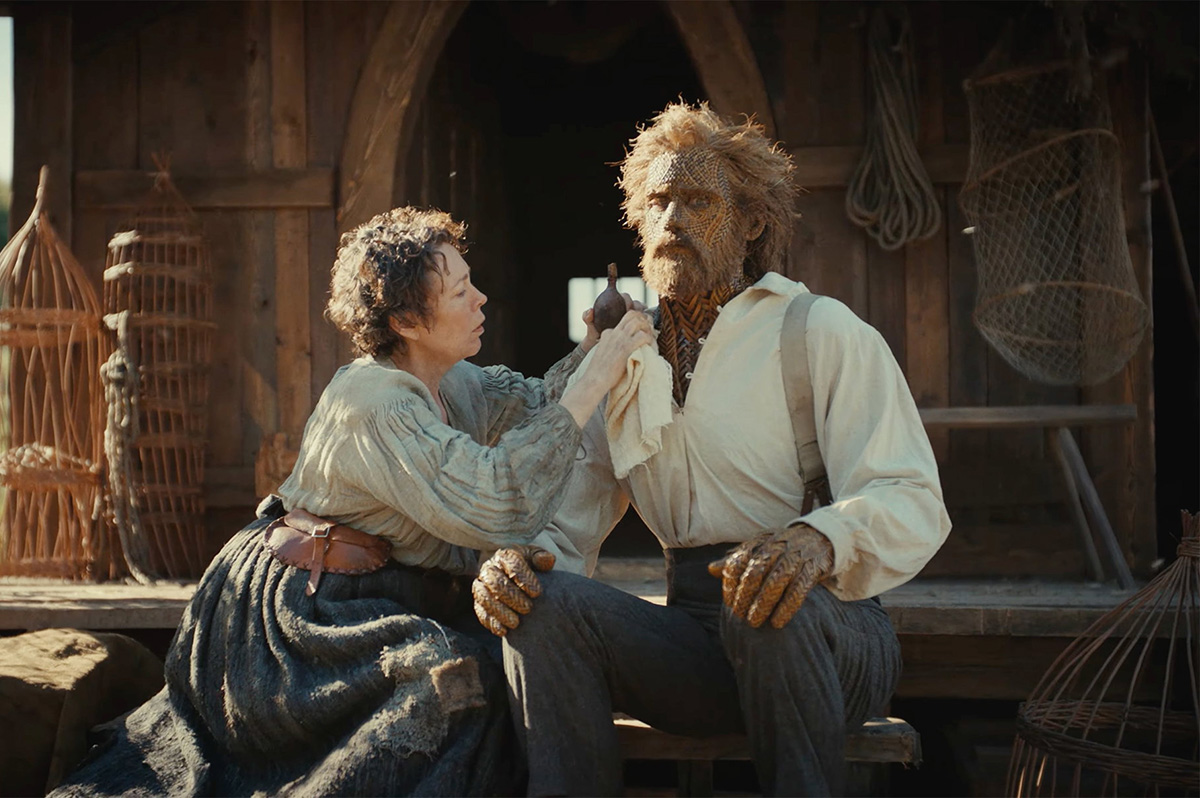
That’s the question we are asked to contemplate in “Wicker,” the new film from co-writer/directors Alex Huston Fischer and Eleanor Wilson, which adapts Ursula Witts’ short story “The Wicker Husband” into a feature-length fable; transporting us to the timeless “olden days” of fairy tales and fantasies, it’s a tale of longing, love, and the power of intention, set in a small village on the edge of the forest where an aging Fisherwoman (Olivia Colman) sells her daily catch to the townsfolk who ostracize her for her lowly trade and the fishy odors that go along with it.
Tired of her lonely existence, the Fisherwoman goes to the town’s Basket Maker (Peter Dinklage) — another community outsider, known for his skill and for a certain “witchy” ability to endow his creations with purpose — and pays him to make her a husband. He delivers on the deal, providing her with a man made of wicker (Alexander Skarsgård) who claims that he exists solely to love her. The arrangement quickly turns out to be better than she imagined, bringing not just companionship but comfort and joy into her once-isolated life. When the townspeople meet the Wicker Husband, however, they are unsettled by his presence; his care and devotion to the Fisherwoman allows her to blossom, and their happiness begins to spark jealousy and dissatisfaction among the other wives and husbands in the town. Unhappy with the change in the status quo, the Tailor’s Wife (Elizabeth Debicki), the de facto keeper of the town’s social order, sets out to eliminate the problem as she is herself unhappy with her domestic situation. She sets about to correct the imbalance by sowing the seeds of mistrust.
Shot in a lush and evocative style by cinematographer Lol Crawley, “Wicker” succeeds in capturing the primal mysticism of nature that pervades in so many of the folk tales and forest myths of the pagan past, as well as satisfying more “sophisticated” modern tastes with a sense of self-aware irony — and a considerable amount of whimsical-yet-bawdy imagination. Yet the “weird” ways of a bygone age are granted new potency by tapping into contemporary awareness of gender and social inequality, while a subtle focus on the real-life “magical” power of words implies their ability to alter our perceptions and influence our actions.
Indeed, words (or rather, the power of words) are a key element in the story’s darkly humorous parable. Language — and the intention with which it is used — takes on a decidedly important role in the story; from the simple sincerity of the Wicker Husband’s stolid declarations of adoration toward his wife to the tactical deployment of misinformation in an effort to assert power over non-conformity, and even to the subtle conveyance of nuance between the lines to reveal key elements that otherwise go unspoken. Spoiler alert: queer audiences can score bonus points by counting the spoken clues that Dinklage’s Basket Maker — who, with his occult knowledge and mysterious talents, serves as the architect of the entire narrative — is gay.
None of which is to say that “Wicker” comes off as being “talky” or depends merely on words to convey its story; on the contrary, Fischer and Wilson provide an immersive, fully-realized world for the setting of their Brothers Grimm-ish fantasy, along with a strong sense of visual storytelling that conveys a great deal without relying on words at all. Sometimes, it’s an economy of language that makes the strongest impact, understatement that delivers the deepest meaning, and silence that speaks volumes, and this is a film that knows how to utilize all those approaches; more than that, it knows how to employ understatement, letting a “less is more” simplicity govern the proceedings and relying on the skills of the performers to convey volumes within dialogue that feels deceptively simple.
In fact, it could be argued that the greatest strength of “Wicker” comes from its cast, who from bottom to top capture the rarified combination of tones — the inscrutable wisdom, the fantastical whimsy, the earthy humor, and the observational candor — in its presentation of human social mechanisms, even through its fairy-tale lens, to provide a smart, winning, and unexpectedly profound piece of entertaining cinematic myth-making. Colman is, as always, endearing in her down-to-earth willingness to fully inhabit her character, giving the Fisherwoman’s transformation from curmudgeonly misanthrope to fully-actualized woman in command of her own power a tangibly authentic ring; Skarsgård, his hunky, handsome form coming through despite being obscured through the remarkably well-realized cinema magic that weaves it under a wooden skin, has never been more effective, nor more romantically appealing; Dinklage manifests the charming trickster with a kind of noble integrity as the Basket Weaver, and the rest of the cast and the remainder of the cast embody the frailty and foibles of the various townspeople with as much compassion as possible in a story that is ultimately about the tendency of human society to conform with — and enforce — an unbalanced social “norm” over its own better nature.
In the end, “Wicker” resolves with the kind of darkly ironic “comeuppance” that feels apropos of the Halloween season, with trickster magic balancing the scales and the townsfolk getting exactly what they deserve in a deliciously ironic — and wickedly macabre — reversal of fortune dictated by karma itself (with a little help from the Basket Maker), making it a cautionary tale in exactly the spirit of esoteric irony that defines all the classic fables we know while adding a kind of modern savvy to the mix that somehow drives the point home even more obviously and effectively.
It’s smart, infused with the kind of magic that feels natural instead of supernatural, and it reminds us that human society is never to be entirely trusted. For us, that makes “Wicker” one of the most delicious surprises of the film year so far, and earns it a hearty recommendation for anyone who enjoys a little Wiccan magic with their romantic fantasies, if only for the sake of feeling that there is an order to things that keeps us all in balance.
Whether or not that’s actually true, it’s the belief itself that makes it feel that way —- and “Wicker,” with all its shrewd-and-subtle messaging under the guise of pure fantasy, makes us willing to believe.
Movies
With exquisite 4K restoration, ‘The Devils’ finally gets its due
The only devils are those who want to ‘Make France Catholic Again’
It’s rare for a movie that was made over a half-century before to somehow become one of the most anticipated film releases of the year, but thanks to Ken Russell’s “The Devils,” we know that it does happen.
It’s true that Russell’s legendarily controversial 1971 period horror drama might not be a familiar title to most mainstream movie-goers these days, but to the cinephile crowd, it’s something approaching the Holy Grail. The dramatization of a real-life 1634 incident that took place in the French city of Loudun, it crossed boundaries and broke taboos with its depictions of grotesque violence, unfettered nudity, and “blasphemous” imagery – so much so that objections from UK censors led Warner Bros. (which had financed the British production of the film) to remove several of its most provocative scenes before release. Though Russell was riding the wave of a successful career that had resulted in worldwide renown, he was given no say in the matter, and the edited version – which was still widely banned in parts of the UK and other countries, and released in the U.S. with even further cuts – was lambasted by most critics as over-the-top, sensationalized, or even “obscene.”
Even so, there were many critics and viewers alike who recognized the daring vision behind all that on-screen depravity; through the years, calls for the un-edited “director’s cut” of the film began to grow as various other truncated versions continued to circulate, gaining new fans with each new generation of movie buffs. Russell himself, before his death in 2011, created a restored print of the version he had intended, but Warner Bros. refused to allow its distribution.
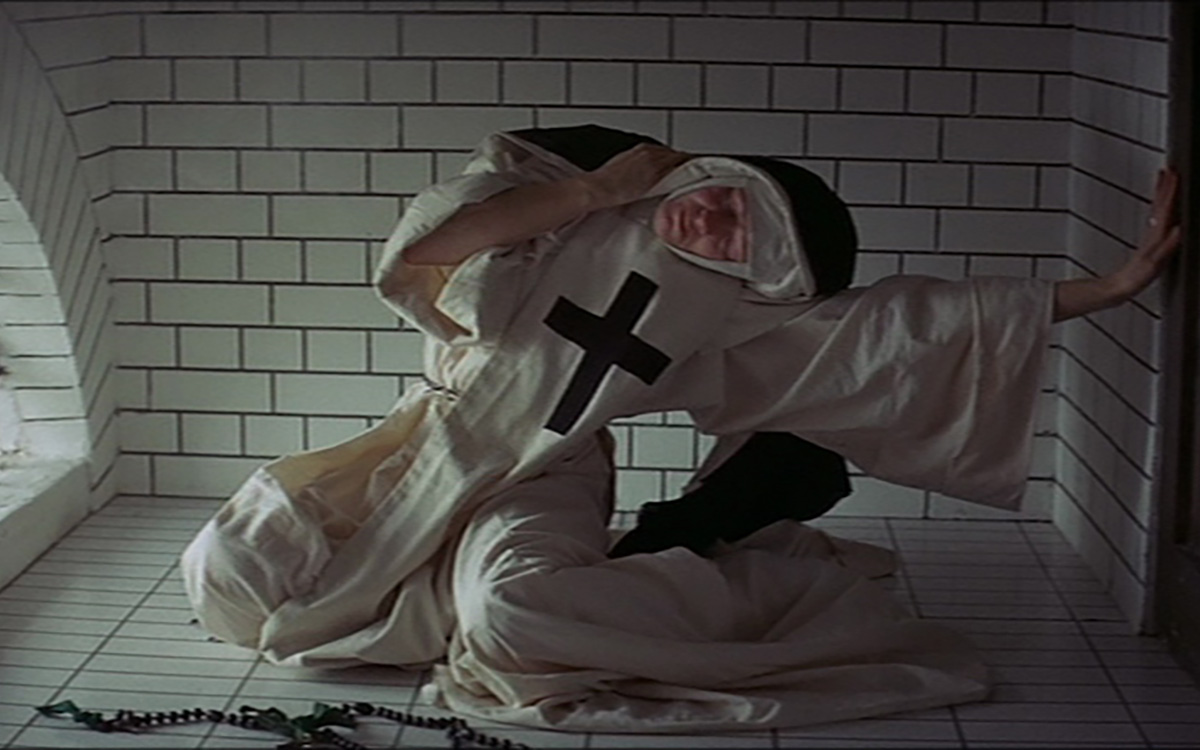
Now, the seemingly repentant studio – under the auspices of its newly branded Warner Clockwork label – has finally come around, and “The Devils” has returned with a newly restored 4K cut (created directly from the film’s original camera negatives) that not only rejuvenates its visuals – such as the brilliance of the visual design, dominated by the oppressively white architecture of Loudun as designed by future pioneering queer filmmaker Derek Jarman – but restores the material that was cut; it reveals the brilliance of a film that had, until now, felt disjointed despite its obvious promise – and the timing could not be more perfect, because it’s also a film that feels perfect for our time.
Full of superb performances and an immersive sense of period oppression, it tells the story of Urbain Grandier (played by Oliver Reed, here at the peak of his brooding-but-charismatic appeal after a series of high-profile hits), a high-ranking local priest who, as de facto leader of his town, stood up against the French government – then controlled by an alliance between aristocratic royalty and the powerful church – in its ongoing effort to purge the kingdom of Protestants and restore Catholic rule over France during the Huguenot Wars of the 17th century. Proud, rational, and heretical in his beliefs (especially around sex), Grandier is widely known for his affairs with noblewomen of the town, and rumors of his beauty and sexual prowess spread even into the cloistered halls of the town’s convent, where the Mother Superior, hunchbacked Sister Jeanne (Vanessa Redgrave), is overwhelmed with lustful thoughts about him. Consumed by jealousy when she learns of his secret (and technically illegal) marriage to another woman, she accuses him of making a pact with the Devil and causing the demonic possession of herself and many of her nuns – a claim which puts him in the crosshairs of his political enemies in the larger world, where ambitious Cardinal Richelieu (Christopher Logue) has dreams of imposing Catholic rule over France by consolidating the church with the government of frivolous King Louis XIII (Graham Armitage). Determined to stand firm with his conscience against the accusations against him, Grandier endures a “show trial” that becomes more public spectacle than justice, with the supposedly possessed nuns (and other opportunistic denizens of the town) indulging in orgiastic demonstrations of their afflictions before the court. Ultimately convicted and sentenced to be burned at the stake, he becomes (spoiler alert) a martyr for enlightenment in the most horrific way imaginable, and his young bride (Gemma Jones) is left to wander the macabre no-man’s land wrought by Theocratic Nationalism on her own as the final credits role.
It’s a pretty bleak picture, and that bleakness has nothing to do with the excesses we’ve seen before it — the performative histrionics of the possessed nuns or the feverish sexually repressed fantasies of Sister Jeanne, or even the callous brutality of the ruling authority – personified not only by Armitage’s brilliantly vapid Louis XIII, a fey and foppish hedonist who opens the film with a macabrely campy ballet depicting the birth of Venus (played by himself), but by the “enforcers” tasked with carrying out his will, like Dudley Sutton’s callously officious Baron de Laubardemont and Michael Gothard’s gleefully sadistic chief “witch hunter,” Father Pierre Barre, who might easily be a popular conservative influencer on TikTok today.
Nor does the film’s sense of ominous dread come from the trappings of excess and occultism that surround Grandier’s ordeal. Yes, the imagery is outrageous, and aggressively in-your-face; there are scenes of explicit nudity, and orgiastic sex, of rape, torture, the ravages of disease and sickening violence, all delivered with a blood-drenched relish that feels shocking even today, and it all culminates in a horrific finale that’s sure to leave you with nightmares for at least a few days afterward; the real horror comes from recognizing the patterns at work as Grandier attempts to protect his town and preserve its independence from the forces of theocratic autocracy, because at this point they have become all too shockingly familiar.
It’s a frank depiction of political corruption, a candid examination of the tactics of fascism (yes, THAT word) in a true story that takes place centuries before the term was ever coined. It explores the ease with which mass hysteria can be created among the ignorant, brainwashed, and attention-starved, and the cruelty of mankind upon itself under the flimsy pretense of ideology, all in the bald-faced pursuit of power and control. In 2026, all of that feels much more disturbing than any of the supposed “supernatural” horrors of which Grandier is accused. In the end, the only devils in “The Devils” are the human ones who want to “Make France Catholic Again.”
Movies
Essential queer horror classics for Halloween
‘Bride of Frankenstein,’ Bowie in ‘The Hunger,’ and more
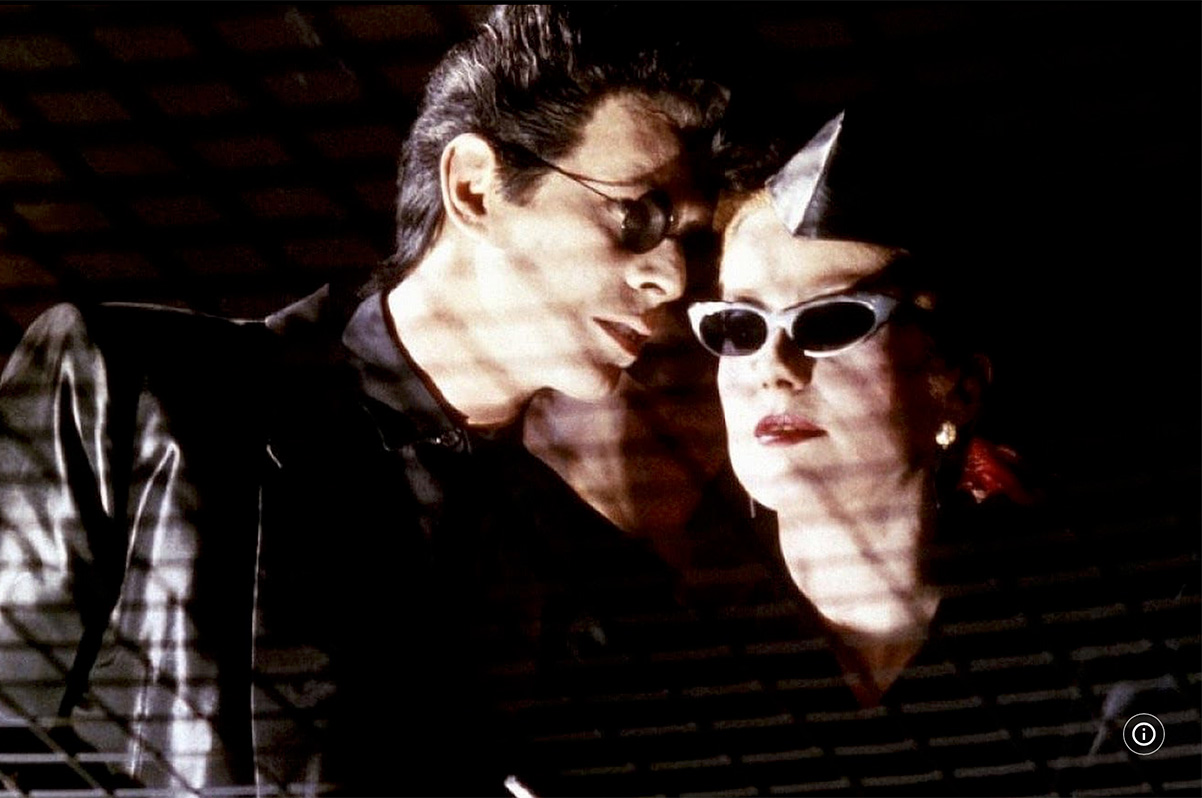
Sure, this spooky season has blessed us with a lot of new horror on TV and at the movies, but when it comes to Halloween, you can never have too much horror to watch. With that in mind, we’ve put together a list of celebrated queer chillers that queer horror fans may know about but might not have seen, especially if you’re part of a younger generation of movie buffs looking to expand your experience with the genre beyond the contemporary crop that has turned the early 2000s into a renaissance of horror cinema.
Bride of Frankenstein (1935)
Yes, we know subtextualized queerness in horror feels like a cop-out in this day and age, but in the early days of Hollywood, it was the only way to sneak it past the censors – and that’s exactly what English expat director James Whale did as a defining force behind the success of Universal Studios’s classic horror “franchise” of the 1930s. More-or-less openly gay with a background in theater, he put those sensibilities to good use on film, and reached his queer pinnacle with “Bride of Frankenstein,” a sequel that expanded on the original with a wicked sense of humor and a “lavender” touch that was obvious to anyone who was in the know.
Skewering “monster movie” tropes and satirizing the conventional mentality of all those angry villagers, Whale also delivered a story of two men – Doctors Frankenstein and Pretorius (Colin Clive and Ernest Thesiger, respectively) – whose clandestine efforts to create a mate for Boris Karloff’s lonely monster read like a gay couple drawn together by “unnatural” obsessions. Thesiger’s unapologetically queer persona would likely dominate the entire film if not for Elsa Lanchester’s turn as the hissing, electrified title character, but the film’s true greatness lies in transforming Karloff’s “monster” into a full-fledged tragic hero, a primal avatar for “otherness” that emerges as the most sympathetic figure on the screen; and while it might not be that “scary” by modern standards, as one of the most boldly transgressive films of the Hollywood “golden era” it still packs a wickedly savage punch.
The Haunting (1963)
Based on Shirley Jackson’s novel of the same name and helmed by veteran director Robert Wise in the wake of his Oscar-winning screen adaptation of “West Side Story,” “The Haunting” is a film that looms large in the history of queer representation in American cinema, simply for the fact that it included an openly lesbian character during a time when anything beyond a subtle implication of non-heterosexual alignment was still very much considered taboo.
The character in question is a psychic named Theodora (Claire Bloom), one of a group of individuals invited by a paranormal researcher (Richard Johnson) to investigate an old New England house, which is reputed to be haunted in the wake of a long string of tragedies that have befallen the family that owns it. Although she’s something of a thorny personality, she’s framed as neither villain not victim, but her presence provides queer overtones that impact the rest of the story, particularly through the growing psychological agitation of its painfully repressed central character (Julie Harris) and the history of the house itself.
A classic “old, dark house” ghost story that deliberately avoids depicting anything definitively supernatural, it focuses instead on psychological tension and the power of suggestion to ramp up scares, which it does quite effectively, utilizing innovative camera and sound techniques to suggest, but never reveal, the dark forces that drive the story. Audiences of the time wanted more concrete thrills, so it was not a major hit; nevertheless, it has been consistently ranked as one of the best horror films of all time – and while it might not offer the blood-curdling terror modern viewers expect, its moody sense of dread and doom is enough to keep you on edge for the duration.
The Hunger (1983)
It’s hard to think of a horror film as openly sexy as this classic from director Tony Scott, which turns Whitley Streiber’s book about an ancient vampire (Catherine Deneuve) in modern New York, who grooms a scientist (Susan Sarandon) to be her new sexual companion for the ages as the old one (David Bowie) begins to rapidly age and decline. Dripping with 1980s cool (it opens with Bauhaus singing “Bela Lugosi’s Dead” in a nightclub) and leaning hard into the open eroticism of a more sexually permissive era, it doesn’t hide its sapphic supernatural love story in the subtext; instead, it gives us one of the steamiest love scenes between two women ever put on film. Critics of the time praised it for its style and its mood, but lamented what they perceived as an ultimately shallow story – but in retrospect, its pervading air of melancholy doom despite the glamorous elegance of its presentation serves as a fitting reminder that an eternal life of meaningless beauty and pleasure might not be as great an idea as we think it is.
Stranger by the Lake (2013)
French filmmaker Alan Giraudie delivers one of the sexiest – and scariest – gay thrillers – of all time – in this tale of a young man (Pierre Deladonchamps) who frequents a lakeside nude beach, which is a popular hook-up spot despite a recent series of unsolved killings in the area. He becomes infatuated with an attractive man (Christophe Paou) he meets there and they connect; later, he witnesses an incident that makes him suspect his new flame might be the murderer – but that doesn’t stop him from continuing to pursue their relationship, despite an increasing likelihood that he might end up as the next victim. It’s an obvious essay on the power of lust to pull us into danger, but it doesn’t moralize; instead it entices us deeper with scenes of graphic un-simulated sex and sparks nostalgic fantasies of a pre-Grindr era when the threat of encountering a serial killer was never enough to keep us away from our favorite cruising spot. Transgressive? Yes, and also terrifying.
We’re All Going to the World’s Fair (2021)
If you’re a horror fan in 2026, it’s likely you’ve already seen trans filmmaker Jane Schoenbrun’s critically lauded “I Saw the TV Glow,” as well as “Teenage Sex and Death and Camp Miasma,” which has emerged as one of the year’s most acclaimed movies so far. You might not, however, be familiar with their first feature film, in which a teenage girl (Anna Cobb), living an isolated life with an abusive single father, finds escape and connection on the internet; she participates in a “viral challenge” that requires her to post a video of herself performing a ritual chant, and then follow up with updates documenting the transformation she goes through as a result. Inspired by Schoenbrun’s own experience navigating the online world while struggling with gender dysphoria and other issues around their identity, it’s an unsettling and disorienting ride that keeps us wondering what will happen next – but the real horror comes from its observations about the way living our lives online can transform us all.

Escritora trans venezolana reivindica una fe sin exclusiones ante la visita del papa a Sudamérica

Baltimore lawmaker’s ex-treasurer charged with theft of $87K in campaign cash

LGBTQ elected officials, activists around the world welcome U.S. election results

PHOTOS: Halloween at Crush

There’s no one way to be trans

Meet the talented makeup artist behind Broadway’s ‘Rocky Horror’

Spanberger campaigns in support of Question 2

Remembering a gay Revolutionary War hero amid today’s political battles

LGBTQ+ History Month reminds us: the future we imagine can become reality

Australia’s first gay state governor takes office
-

 a&e features3 days ago
Meet the talented makeup artist behind Broadway’s ‘Rocky Horror’
-
Virginia5 days ago
Spanberger campaigns in support of Question 2
-
History4 days ago
Remembering a gay Revolutionary War hero amid today’s political battles
-
Commentary4 days ago
LGBTQ+ History Month reminds us: the future we imagine can become reality