Sports
D.C. All Stars profile: D.C. Strokes Rowing Club
Members appreciate low-impact, all-body workout sport offers
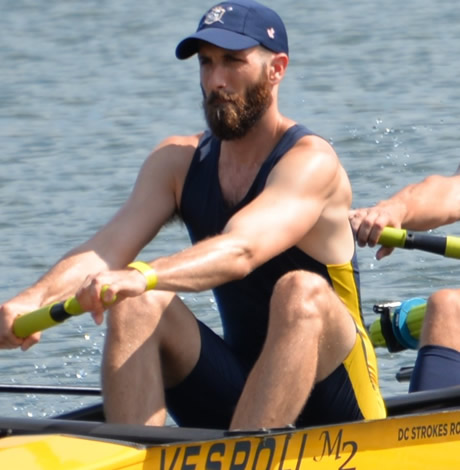
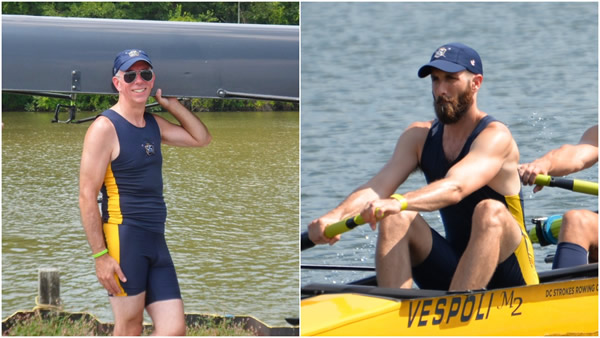
Paul Heaton, left, and Austin Blakeslee are passionate about D.C. Strokes. (Photos courtesy the subjects)
The spring rowing season is in full swing for the LGBT-based D.C. Strokes Rowing Club with its competitive and club programs already practicing on the Anacostia River. Its learn to row program will start on April 28 followed by their novice program in June. On June 3, members will host the 25th annual Stonewall Regatta.
This week in the Washington Blade All Star series, we meet two gay rowers who found their way back to the sport and are thriving.
After moving to D.C. in 2011, Paul Heaton noticed dragon boats on the Anacostia River. While he was researching them online, he discovered the local LGBT rowing club. Many years earlier, he had completed a learn to row program in Ithaca, N.Y. and decided to join the D.C. Strokes novice program.
“I fell in love with the team and the sport and bonded with other people who were also just coming into the club,” Heaton says. “My closest friends today are those same people who were in that novice class with me.”
Growing up in Elkhart, Ind., Heaton was a self-described geeky nerd type who was involved in theater and orchestra. While completing his journalism degree at Indiana University, he spent most of his time in the office of the school’s newspaper.
After completing the Strokes’ novice program, Heaton advanced to the club program and began competing for the first time in his life. Heaton rows 4s and 8s and there were certain aspects of the new experience that left him wanting more.
“Everyone on the team is always supportive and trying to help each other get better. When I walked down the dock carrying the boat with my teammates for my first race, there were other teammates cheering us on. I got a little verklempt,” Heaton says. “In 4s and 8s rowing, you are always looking to match your teammates for that perfect stroke — the swing of the boat. Once you get a hint of it, you want it again.”
Heaton, who works in educational fundraising and marketing for a nonprofit, went on to win gold, silver and bronze at the 2014 Cleveland Gay Games. This summer he’ll join his team at the 2018 Paris Gay Games. He has also competed with the Strokes throughout the Mid-Atlantic region in both sprint and head races.
Fully immersed in the club, Heaton is in his second year as race director for the Stonewall Regatta and volunteers as a coxswain for beginner classes. He remains on the club team instead of the competitive team because he enjoys their nighttime practices.
“I love being involved with the new people who join the club every year. Their enthusiasm is infectious,” Heaton says. “Rowing at night is so beautiful and peaceful and melts away any stress from the workday. It’s the perfect way to end the day.”
Austin Blakeslee started rowing the summer after seventh grade and continued through his years at T.C. Williams High School in Alexandria in its fall, winter and spring programs. Even though he didn’t consider himself to have an innate athletic ability, he felt comfortable in the sport and did well.
He joined the club rowing program at Tulane University, but his experience was interrupted when he studied abroad and when Hurricane Katrina hit the area. He stayed at Tulane through law school and moved to D.C. proper in 2016.
He had sculled periodically in years prior to coming to D.C. and was ready to return to the sport.
“I knew about D.C. Strokes and I sought them out specifically because they are LGBT-based. There is a level of comfort when there is no elephant in the room,” Blakeslee says. “The people have been friendly and accepting and I like having the structure of a planned workout.”
Blakeslee, who works as an intellectual property attorney, joined the morning competitive team and rows 4s and 8s. At 6 feet, 4 inches tall, his height is considered an advantage in the sport.
“My first race with the Strokes was the 2016 Stonewall Regatta,” Blakeslee says. “It was exciting to remember and embrace the feelings that come along with racing.”
He has since competed throughout the region with his teammates including at the prestigious Head of the Charles in Boston.
He is also serving as the program director for the Strokes which includes running the aforementioned programs along with the youth program and the adaptive rowing program, Athletes Without Limits. He had some tips tucked under his belt which have helped him in the position.
“My mom was the crew boosters president at T.C. Williams, so I had knowledge on the mechanics of running a boathouse, trailering for regattas and other aspects,” Blakeslee says. “Listening to her all those years gave me perspective on how much goes on behind the scenes.”
Blakeslee points to the great core group that rows with the Strokes and adds that everyone has the opportunity to make it into a competitive boat. He says the goal is to have fun and win some medals along the way.
“This is a low-impact sport that offers a great overall body workout,” Blakeslee says. “For anyone that is coming back from an injury, rowing is an opportunity to find a new sport.”

Sports
New IOC policy bans trans women from Olympics
New regulation to be in effect at 2028 summer games in Los Angeles
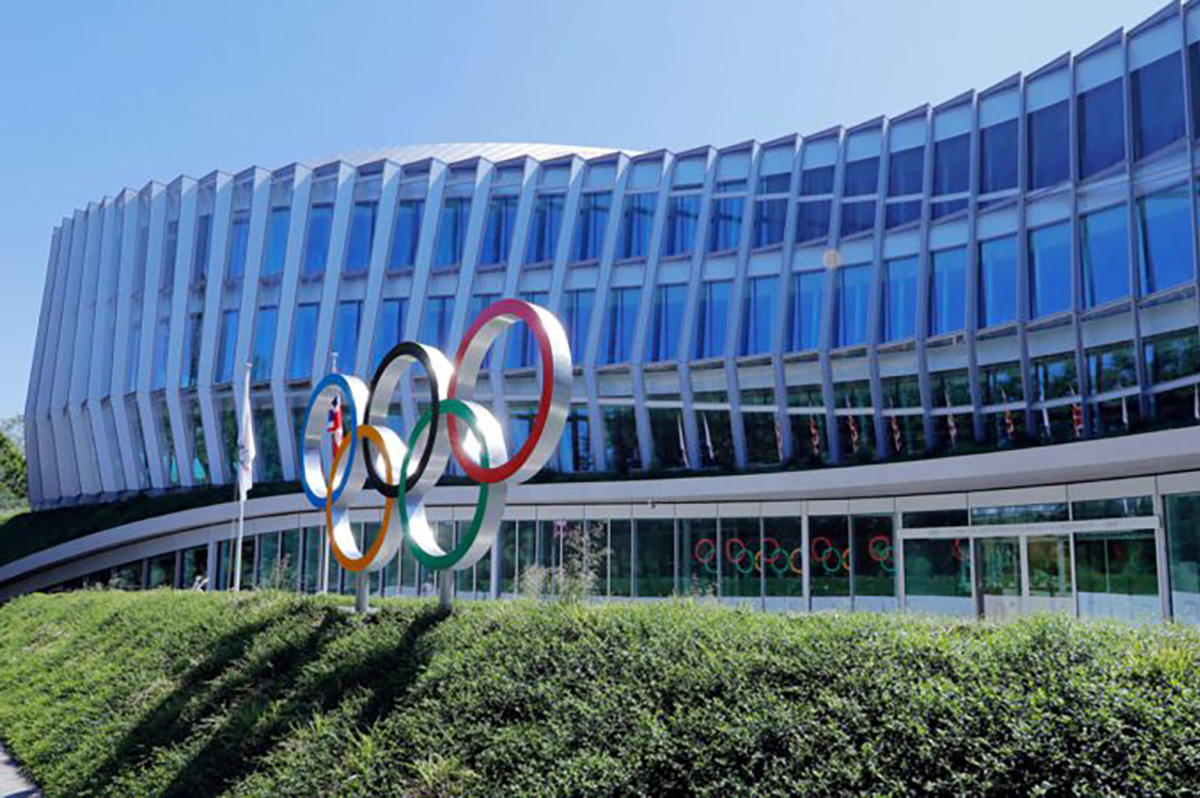
The International Olympic Committee on Thursday announced it will not allow transgender women from competing in female events at the Olympics.
“For all disciplines on the Sports Program of an IOC event, including individual and team sports, eligibility for any Female Category is limited to biological females,” reads the new policy.
The policy states “eligibility for the Female Category is to be determined in the first instance by SRY Gene screening to detect the absence or presence of the SRY Gene.”
“On the basis of the scientific evidence, the IOC considers that the SRY (sex-determining Region Y) Gene is fixed throughout life and represents highly accurate evidence that an athlete has experienced or will experience male sex development,” it reads. “Furthermore, the IOC considers that SRY Gene screening via saliva, cheek swab or blood sample is unintrusive compared to other possible methods. Athletes who screen negative for the SRY gene permanently satisfy this policy’s eligibility criteria for competition in the Female Category.”
The policy states the test “will be a once-in-a-lifetime test” unless “there is reason to believe a negative reading is in error.”
The new regulation will be in place for the 2028 Summer Olympics in Los Angeles.
“I understand that this a very sensitive topic,” said IOC President Kirsty Coventry on Thursday in a video. “As a former athlete, I passionately believe in the rights of all Olympians to take part in fair competition.”
“The policy that we have announced is based on science and it has been led by medical experts with the best interests of athletes at its heart. The scientific evidence is very clear: male chromosomes give performance advances in sport that rely on strength, power, or endurance,” she added. “At the Olympic Games, even the smallest margins can be the difference between victory and defeat. So, it is absolutely clear that it would not be fair for biological males to compete in the female category. In addition, in some sports it would simply not be safe.”
(Video courtesy of the IOC)
Laurel Hubbard, a weightlifter from New Zealand, in 2021 became the first trans woman to compete at the Olympics.
Imane Khelif, an Algerian boxer, won a gold medal at the 2024 Summer Olympics in Paris. Khelif later sued JK Rowling and Elon Musk for cyberstalking after they questioned her gender identity.
Ellis Lundholm, a mogul skier from Sweden, this year became the first openly trans athlete to compete in any Winter Olympics when he participated in Milan Cortina Winter Olympics in Italy.
President Donald Trump in February 2025 issued an executive order that bans trans women and girls from female sports teams in the U.S.
The U.S. Olympic and Paralympic Committee last July banned trans women from competing in female sporting events. Republican lawmakers have demanded the IOC ban trans athletes from women’s athletic competitions.
“I’m grateful the Olympics finally embraced the common sense policy that women’s sports are for women, not for men,” said U.S. Sen. Tom Cotton (R-Ark.) on X.
An IOC spokesperson on Thursday referred the Washington Blade to the press release that announced the new policy.

More than a dozen LGBTQ athletes won medals at the Milan Cortina Winter Olympics that ended on Sunday.
Cayla Barnes, Hilary Knight, and Alex Carpenter are LGBTQ members of the U.S. women’s hockey team that won a gold medal after they defeated Canada in overtime. Knight the day before the Feb. 19 match proposed to her girlfriend, Brittany Bowe, an Olympic speed skater.
French ice dancer Guillaume Cizeron, who is gay, and his partner Laurence Fournier Beaudry won gold. American alpine skier Breezy Johnson, who is bisexual, won gold in the women’s downhill. Amber Glenn, who identifies as bisexual and pansexual, was part of the American figure skating team that won gold in the team event.
Swiss freestyle skier Mathilde Gremaud, who is in a relationship with Vali Höll, an Austrian mountain biker, won gold in women’s freeski slopestyle.
Bruce Mouat, who is the captain of the British curling team that won a silver medal, is gay. Six members of the Canadian women’s hockey team — Emily Clark, Erin Ambrose, Emerance Maschmeyer, Brianne Jenner, Laura Stacey, and Marie-Philip Poulin — that won silver are LGBTQ.
Swedish freestyle skier Sandra Naeslund, who is a lesbian, won a bronze medal in ski cross.
Belgian speed skater Tineke den Dulk, who is bisexual, was part of her country’s mixed 2000-meter relay that won bronze. Canadian ice dancer Paul Poirier, who is gay, and his partner, Piper Gilles, won bronze.
Laura Zimmermann, who is queer, is a member of the Swiss women’s hockey team that won bronze when they defeated Sweden.
Outsports.com notes all of the LGBTQ Olympians who competed at the games and who medaled.
Sports
US wins Olympic gold medal in women’s hockey
Team captain Hilary Knight proposed to girlfriend on Wednesday

The U.S. women’s hockey team on Thursday won a gold medal at the Milan Cortina Winter Olympics.
Team USA defeated Canada 2-1 in overtime. The game took place a day after Team USA captain Hilary Knight proposed to her girlfriend, Brittany Bowe, an Olympic speed skater.
Cayla Barnes and Alex Carpenter — Knight’s teammates — are also LGBTQ. They are among the more than 40 openly LGBTQ athletes who are competing in the games.
The Olympics will end on Sunday.

Amendments to India’s transgender rights law criticized

Cuba under pressure and without answers

Police mental health struggles gain growing attention

Man faces first S.C. ‘hate intimidation’ charge

Trump budget would codify expanded global gag rule

JD Vance to travel to Hungary next week

Mayor Bowser signs bill requiring insurers to cover PrEP

Belarusian lawmakers approve bill to crackdown on LGBTQ rights

How new barriers to health care coverage are hitting D.C.

Kenyan advocacy groups launch LGBTQ voter mobilization campaign
-

 Hungary5 days ago
JD Vance to travel to Hungary next week
-
District of Columbia5 days ago
Mayor Bowser signs bill requiring insurers to cover PrEP
-
Belarus4 days ago
Belarusian lawmakers approve bill to crackdown on LGBTQ rights
-
District of Columbia4 days ago
How new barriers to health care coverage are hitting D.C.