
Arts & Entertainment
‘RuPaul’s Drag Race’ renewed for season 11
‘Untucked’ will also return
(Screenshot courtesy of Twitter)
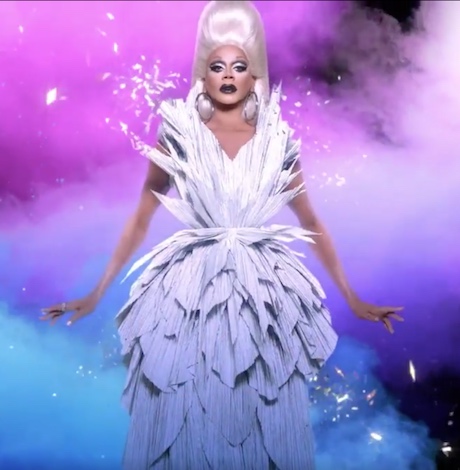
“RuPaul’s Drag Race” and its aftershow “RuPaul’s Drag Race: Untucked” have been renewed by VH1 for another season.
“RuPaul’s Drag Race” will return for the 11th season following its most successful season in the show’s history. Deadline reports the 10th season pulled in 794,000 viewers 18-49 and 1.2 million total viewers in Live+7.
The reality show competition has also received 10 Emmy nominations and secured four Emmy wins. RuPaul has won outstanding reality host in 2016 and 2017.
The “RuPaul’s Drag Race” season 10 finale airs on Thursday, June 28.





Arts & Entertainment
New ‘Carrie’ attempts to reinvent a classic for new generation
A tone that’s less horror than social commentary
The books of Stephen King have had a rocky relationship with the movies.
Adaptations of the horror icon’s work have had an impressive track record on both big screen and small, earning success and critical acclaim across five decades. Some films based on his work – like “Misery,” “Stand by Me,” “The Shawshank Redemption,” and this year’s earlier “The Long Walk” – have reached the level of “prestige” cinema, earning award glory and finding their way onto critics’ “Best of the Year” lists. Many others, though, have landed at the opposite end of the spectrum, like “Children of the Corn,” “Maximum Overdrive,” and “The Dark Tower,” all of which are frequently featured in “Worst of All Time” lists instead.
There’s also King’s own vocal criticism of adaptations he doesn’t like, most famously around Stanley Kubrick’s 1980 film of “The Shining,” which has come to be hailed as a cinematic masterpiece but continues to be a sore spot for the author himself over the alterations Kubrick made to his book; his dissatisfaction with that project led directly to his own creation of a miniseries of the novel, which remained faithful to his original storyline. In the years since, other King novels have made it to television; some, like “The Stand,” have benefitted from the nuance made possible by long-form storytelling; others have suffered from a lack of it.
Despite the hit-or-miss history of Stephen King on the screen, however, he has always remained popular, and is now arguably more so than ever. This is why we have a new adaptation of his debut novel – “Carrie,” published in 1974 – streaming on Amazon Prime; and though King himself served as one of its executive producers, his fans may not entirely love what has been done with it.
Developed and spearheaded by Mike Flanagan – himself a popular horror creator, responsible not only for previous King adaptations (“Gerald’s Game,” “Doctor Sleep,” and “The Life of Chuck,” among others) and a string of successful Netflix series (“The Haunting of Hill House,” “The Haunting of Bly Manor,” and “Midnight Mass”), it updates and expands the original novel considerably. It’s still centered on its title character, whose reclusive upbringing combines with her growing telekinetic abilities (along with the torments she endures from her domineering mother and her schoolmates) to trigger a horrific catastrophe at her high school prom, but it allows the scope to widen for a deeper look into the “backstories” of other characters, as well as invoking themes around certain social issues – online bullying, dysfunctional family relationships, school violence, conspiracy theories, exploitation of tragedy by the media, which have become exacerbated in the 50 years since King wrote the book.
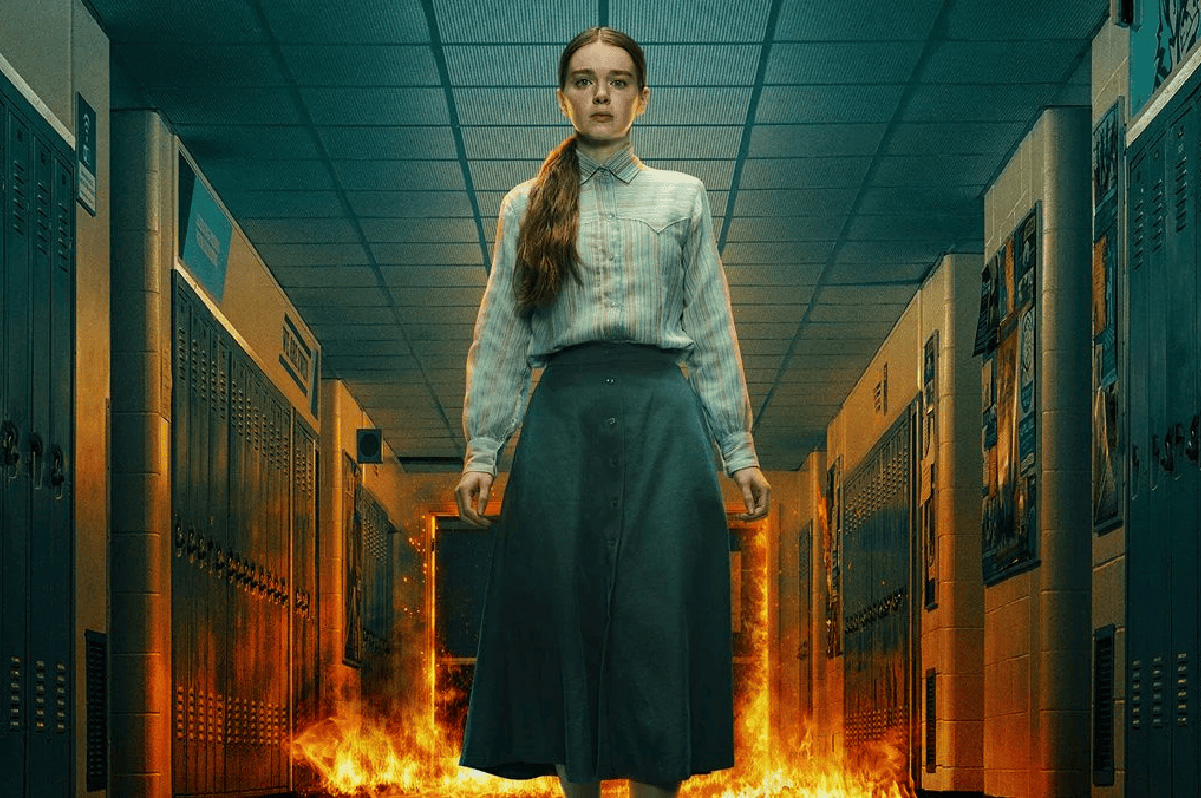
In this re-crafted version, Carrie White (Summer H. Howell) and her mother Margaret (Samantha Sloyan) have been secluded from the outside world for years, their existence kept secret until the “accidental” death of her father (Tahmoh Pennikett) leads to their discovery. Forced to participate in society, Carrie is enrolled in the local high school, while Margaret takes a job at the local big-box store. For her part, Carrie is eager enough to explore beyond the confines of home, but she quickly becomes the target of a “mean girl” ringleader Chris (Alison Thornton) who seems bent on making her life miserable. There are others who offer more sympathetic treatment – new friend Sue (Siena Agudong) and her boyfriend Tommy (Joel Oulette), gym teacher Rita (Amber Midthunder), guidance counselor Mr. Moron (Tim Bagley), and others – but her struggle to fit in is not made any easier by her mother’s continued interference in her school life.
Of course, we all know what happens. Even for those who never read the original book, Brian DePalma’s 1976 screen version, starring Sissy Spacek as Carrie and Piper Laurie as her monstrous mother, is a pop culture touchstone for anyone who grew up with it, and it remains one of the few King screen adaptations to remain controversy-free in terms of appreciation by fans and critics alike. There’s no need to worry about spoiling the ending – even Flanagan’s series opens with news coverage of the “Black Prom’s” aftermath, so the story is essentially a flashback from the very beginning.
Yet “Carrie” is, as King originally wrote it, a streamlined and compelling tale that expertly and relentlessly builds suspense through the single-minded simplicity of its narrative. It’s an exercise in watching the dominos lined up methodically before the climax of seeing them all fall down in a spectacular catharsis of gore, devastation, and yes, horror. That’s the whole point – and that’s also why Flanagan’s expanded framework becomes a bit of a problem by the series’ midpoint.
In weaving new storylines around the oppressively isolated narrative of Carrie’s experience – extended explorations of toxic teen behavior, romantic relationships between various other characters, and even the inclusion of a subplot involving witch-hunters and a cult – this new vision of the story offers a depth that is absent from the original book and movie, giving us insight that humanizes and even invites sympathy for figures we would not otherwise have felt deserve it; it incorporates larger themes about society, politics, and all the other divisive issues that trickle down into the way we treat each other in private. These things might make this “Carrie” feel like a bigger story, but they make for a tone that’s less “horror” than social commentary; and frankly, with the out-of-control behavior of high schoolers dominating so much screentime, it sometimes feels like we’ve accidentally tuned into an episode of “Euphoria” by mistake.
That’s not to say Flanagan’s “Carrie” isn’t a worthwhile watch. He brings to it the same inclusive, compassionate generosity of spirit – highlighting feminist themes, incorporating queer characters, honing in on the power of kindness in a world of cruelty – that he brought to his previous adaptations of vintage horror tales. He even gives Margaret White, so hateful in King’s book and so operatically deranged in DePalma’s film, the benefit of the doubt, focusing on the motherly love and protection that drives her abusive behavior to help us understand that this is her tragedy, too.
Many viewers will surely appreciate these efforts; many others, who might prefer the operatically deranged Margaret White of the original to the softened version offered here, will not. For those who go in hoping to relive the thrills of the original, who both want and need the over-the-top American gothic horror they know, Flanagan’s changes might be a few steps too far – and while the original story’s terse and streamlined narrative doesn’t give us time to examine the fine points, keeping us locked with Carrie into her private hell, this one gives us room to reflect, diffusing the tension and denying us the satisfaction of the clear-cut horror fantasy we expect.
Even so, with excellent performances and production values all around, it’s a grade-A binge-watch that makes us appreciate the high-tone camp of DePalma’s version – and King’s original novel – with renewed fondness. Besides, it’s Halloween, so how can you resist?
Theater
Dawn Huggins reflects on year-long reign as Miss Adams Morgan
38th annual pageant set for Halloween night
38th Annual Miss Adams Morgan Pageant
Saturday, Oct. 31
Washington Hilton
1919 Connecticut Ave., N.W.
thedupontsocialclub.com
On Halloween night at the Washington Hilton, the annual Miss Adams Morgan Pageant, D.C.’s largest and longest-running amateur drag competition, turns 38.
It also marks the end of HRH Dawn Huggins’s year-long reign as Miss Adams Morgan.
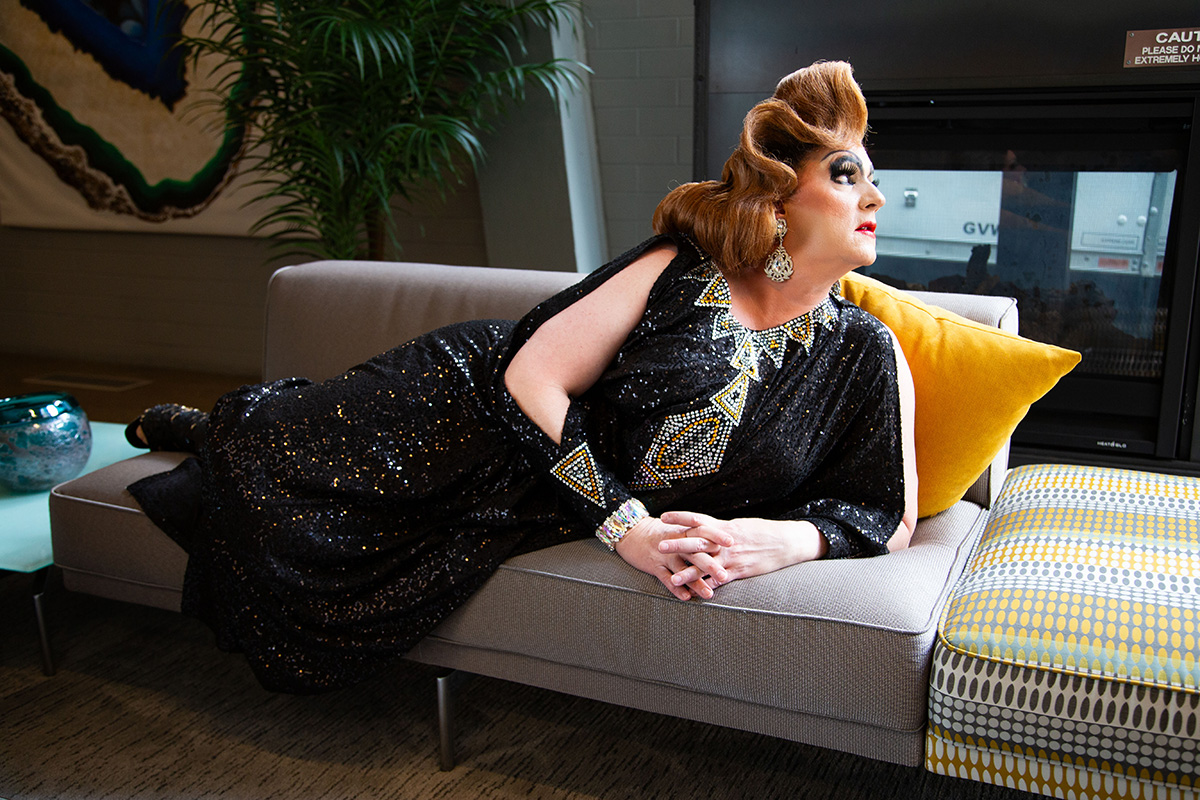
Joe Kuehne, the transformative performer who brings Dawn Huggins to life on stage, reviews the reign philosophically: “It’s funny, like most of life, the time flew by, and sometimes it didn’t. As a contestant, the preparation and planning can be a slog and then it’s all over before you know it.”
But, he adds, the time has been filled with creativity, community involvement, and innovation.
This year’s pageant is promised to run at a fast pace. The show kicks off with a mashup number starring Dawn Huggins along with several former queens. Dawn’s bit is a tribute to “The Shining.” Her carefully planned look is “haunted.”
Next, the seven contestants vying for the big title participate in the Parade of States (and U.S. territories). Their bios are read as they walk (doing whatever they wish with props of their choosing). The second half is performance (lip sync, comedic skits, etc.) and after several hours, a winner is selected by a panel of judges and the audience.
Prior to Dawn Huggins snatching the crown in October 2025, Kuehne wore numerous other pageant hats including “drag-wearing” attendee, contestant, and house videographer.
In 2006, Kuehne’s documentary short “Relative Freedom” (about his family’s reaction to his queerness) was screened at Reel Affirmations film festival. It caught the attention of that year’s reigning Miss Adams Morgan. She invited Kuehne to partner in adding video to the pageant. He accepted and had kept with it for two decades.
Inspired by the competitors and fun, he decided to give the pageant a shot. So, Dawn Huggins (“I’m a hugger, so the name fit.”) began competing, and won the title on her fifth try.
Putting on a dress and entertaining a ballroom full of people was never too much of a stretch for Kuehne. Prior to competing, he’d been a part of the audience in drag, and as a kid did community theater.
Over the years, Dawn has lip-synced (Brandi Carlile, Tory, Whitney, Mariah) and wooed the festive though not always easy-to-please throng with her clever comedy and camp. Last year for her winning number and skit, she did songs from “Wicked,” replacing the evil Wizard with Trump. “Not a huge leap,” she adds.
By day, Kuehne does marketing for tech companies: “In that role some of what I do is video production. The drag aspect doesn’t come up very often,” he deadpans. “But yes, the skillsets do overlap.”
Kuehne never thought of Dawn Huggins as a beautiful or polished queen; she was never meant to be that. He says, “I do my best to pull it together. But my goal is pure entertainment.”
Occasionally Dawn includes a message in what she does: “I try not to be too heavy handed about it. The second-year’s number was inspired by a person who, troubled by their sexuality, took their own life. Some of the audience members were moved, and that’s meaningful to me.”
Started in 1988 by a group of friends getting in drag and celebrating Halloween at Annie’s Paramount Steak House, the Miss Adams Morgan Pageant quickly ballooned into a storied tradition requiring a board and oversight.
Also in 1988, the Dupont Social Club was founded to not only encourage community but also help the pageant run things. Currently, Kuehne serves as the club’s V.P. of Social Events. Responsibilities include planning events, tracking attendance, and keeping things lively.
As both Queen and V.P., Kuehne is in a unique position to make things happen. During Dawn’s reign, the club created Sloppy Saturdays at Her Diner in Adams Morgan, a monthly happy hour fundraising event with performance tips and event donations going to support local LGBTQ+ nonprofits.
And now, as outgoing queen, HRH Dawn Huggins is charged with selecting the pageant’s charitable beneficiary.
She’s wisely chosen Whitman-Walker Legal Services. which provides free, comprehensive civil legal assistance to people living with HIV/AIDS, patients of Whitman-Walker Health, and members of the LGBTQ+ community across the greater Washington, D.C. region.
“With all that has and is going on, this feels like the right time to make that choice.”
Because the pageant has almost always taken place in October, it’s loosely tied to Halloween.
This year the show (themed “Something Wicked This Way Comes”) lands on Oct. 31, ticking all the boxes for pageant, drag show, and huge costume party.
On and offstage, you’re likely to see sequined gowns, ginormous hair, ermine robes alongside conceptual creations and comedic to dead serious style homages.
“What the contestants bring to the stage is pretty incredible, but sometimes that extraordinary creativity is surpassed by the audience members filling the ballroom, and we love that.”
a&e features
How Orville Peck healed his inner child through ‘Street Fighter (2026)’
Famous singer discusses this new role, what it means as LGBTQ artist

When asked to think about Orville Peck, most people would immediately remember the man’s music, his time on Broadway, his many scintillating photoshoots or, of course, the ornate masks he wears throughout it all.
Most wouldn’t, at least before a few months ago, think about the long-lasting video game franchise, “Street Fighter.”
This historic fighting game doesn’t instantly mesh with the image that Orville has spent years developing. The country singer has garnered national acclaim through his four albums, sultry and often somber affairs that have earned him numerous awards and thousands of fans. Along with his voice, new listeners are intrigued by his masks; Peck always wears a face covering to protect his privacy and embody a distinctly queer flair in his work. These are only removed for very special occasions — such as his renowned turn as the Emcee in a Broadway revival of “Cabaret” — with even his recent centerfold in the sexy magazine Playgirl seeing Orville bare everything except his face.
The musician does all of this while being proudly gay, serving as one of the most notable queer celebrities we have today. This, combined with his dynamic career, has earned Peck legions of supporters, each one excited about whatever new project he decides to do next. And they were all completely shocked in early 2026 when Orville announced just what that project would be: starring in Kitao Sakurai’s live-action adaptation of the classic video game, “Street Fighter.”
“They didn’t know I grew up playing this game, so it was so cool!” Peck raved as he discussed the film with the Los Angeles Blade. For the less digitally-minded of us, “Street Fighter” is an immensely popular gaming franchise, with this decades-spanning series offering dozens of games filled with colorful characters players can fight as. The cast for this latest adaptation dropped earlier this year and included stars like Jason Momoa, David Dastmalchian, Callina Liang — and, of course, Orville Peck.
“Fighting games probably draw a lot of queer people in [because] you can choose which character speaks to you, and they belong there,” Orville explained. “They don’t have to prove themselves…they belong, and you can connect in that way, since maybe you didn’t belong or [feel] included,” Orville admitted that it’s a connection he’s experienced himself; the man spent many hours of his childhood playing “Street Fighter” with his brothers. And one of his favorite characters was Vega, the bullfighting, gorgeous assassin obsessed with his own appearance (and slashing his opponents to ribbons).
It’s why there was no question Orville would take on the role when it was first offered to him. This may seem like an easy choice for many viewers — both Peck and Vega wear a mask — but the singer stressed that his link to the character went far beyond just the physical. “Vega did carry this kind of queer-coded energy that queer fans of “Street Fighter” have always picked up on and related to. And I was encouraged to not stray away from that — they wanted that to be included.”
Vega serves as the loyal henchman of “Street Fighter”’s main villain, M. Bison, with the claw-wielding fighter filling his screen time with snarky humor, great action scenes, and a distaste for wearing a shirt. But Vega also serves as a vital contrast in the film by punctuating the hypermasculinity of the men around him. He shows that queerness and strength can go hand-in-hand, with Orville finding it so affirming to bring out that universal truth through his performance.
It was something that he enjoyed not only for his adult self, but for the younger version who loved nothing more than playing “Street Fighter” with his brothers, saying, “Being a little queer kid … I definitely did not feel at times that I was going to be welcomed into some things in life, right? Getting to be the only openly gay man in this film with a bunch of very heterosexual gentlemen running around, and then having my place next to them? I think that would be really encouraging and healing to little Orville, for sure.”
Orville went on about his amazing co-stars — he warmly referred to Callina Liang, who plays Chun-Li in the film, as ‘my sister’ — and the countless joys this role brought him. When asked whether he would return for a possible sequel, he emphasized, “We’re all so close as a cast now. Everybody loves and supports each other so much. I would 100% do it again, of course.” It’s a promising message for many queer viewers absolutely loving his turn as Vega, and it signals an uplifting development for the man himself.
Orville Peck’s entire career is dedicated to utmost authenticity, showing your truest self in a way that feels genuine and recognizing what that truth brings to yourself and others. In a movie filled with nonstop fighting and campy chaos, he still managed to channel that into every second of his time onscreen. And whether it be as Vega or whatever role he decides to take next, it’s a vital message that this musician — and, he will remind you now, actor — will always work hard to make the center of his work.

New ‘Carrie’ attempts to reinvent a classic for new generation

Dawn Huggins reflects on year-long reign as Miss Adams Morgan

How Orville Peck healed his inner child through ‘Street Fighter (2026)’

DC Center celebrates a decade of its art gallery

Calendar: October 16-22

‘Governments that attack LGBTQ+ rights learn from each other’
Center Arts Gallery celebration, auction to take place on Oct. 17

Horror genre has evolved into space to explore queer identity

Comings & Goings

‘Hidden in Plain Sight:’ The story of Odessa Madre
-

 Turkey5 days ago
‘Governments that attack LGBTQ+ rights learn from each other’
-
District of Columbia4 days ago
Center Arts Gallery celebration, auction to take place on Oct. 17
-
Arts & Entertainment5 days ago
Horror genre has evolved into space to explore queer identity
-
Local4 days ago
Comings & Goings