Sports
Tel Aviv Games for gay athletes slated for late March
Founder inspired by 2014 trip to Gay Games in Cleveland
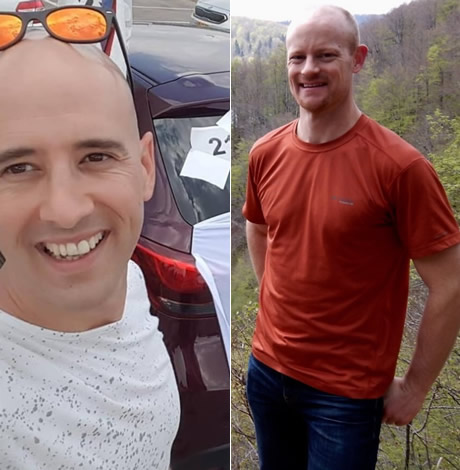
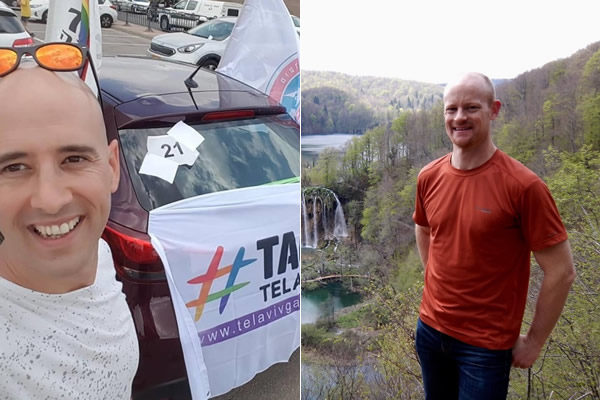
A singular experience can sometimes change your life path. One lone swimmer from Israel traveled to Cleveland, Ohio, to compete in the 2014 Gay Games. He was part of a group of eight Israeli athletes who made the trip halfway around the world to participate.
Exhilarated and wanting to share his experience, he returned to Tel Aviv and became involved in creating an organized LGBT sports community. When the Washington Blade caught up with Sagi Krispin in 2016, the TLV LGBT Sports Club was already a thriving entity.
Krispin wasn’t done though. In 2017, the Tel Aviv Games launched as a multisport biennial LGBT sports tournament. The first iteration included basketball, soccer, swimming and tennis.
The LGBT sports community in Tel Aviv has continued to grow and at the 2018 Paris Gay Games, 52 Israeli athletes competed in six sports including 22 participants in swimming.
The second edition of the Tel Aviv Games will be held from March 27-30 with road running, volleyball and same-sex dance being added to the previous roster of sports.
“This year’s TAG will be bigger, more visible and prouder,” says Krispin, head of the organizing committee. “There will also be more involvement from the local community outside of the sports community.”
With that in mind, they added venues around town and a Pride Run 5K/10K that will be open to anyone. Proceeds from the Pride Run will benefit a Tel Aviv youth organization, Israel Gay Youth.
“The people here are very committed to TAG,” Krispin says. “We have partnered with City Hall and will be hosting events there.”
Europe has a series of LGBT multisport events that are held in cities such as Vienna, Prague and Stuttgart. Most of the participants at the first Tel Aviv Games came from European countries.
“This time we are also expecting athletes from North America, Australia and Asia,” Krispin says. “We have a selling point that isn’t found in the other host cities. Europe will still be recovering from winter, but you can go to the beach in Tel Aviv in March. We are excited to welcome everyone.”
Never one to pass up an opportunity for sports and travel, the District of Columbia Aquatics Club is sending five swimmers to compete in the Tel Aviv Games.
John Tustin joined D.C. Aquatics in 2009 and has traveled extensively with the team. The competition in Tel Aviv will be a segue to stops in Jordan, Jerusalem and the Dead Sea.
“I have always wanted to go to these places as a tourist and it is nice to have a structured activity to go along with travel,” Tustin says. “The competition along with the events and parties gives you the opportunity to eat and hangout with locals. It makes it much easier to experience how they live.”
Tustin will be stopping in Jordan on his own before the competition and then will be joined by his teammates for the trips to Jerusalem and the Dead Sea.
“I am fine traveling independent, but it is nice combining travel with friends and teammates,” Tustin says. “Our common interest in swimming will enrich the experience of my vacation. I am excited to see the history of the area along with modern Israel.”


Sports
New IOC policy bans trans women from Olympics
New regulation to be in effect at 2028 summer games in Los Angeles
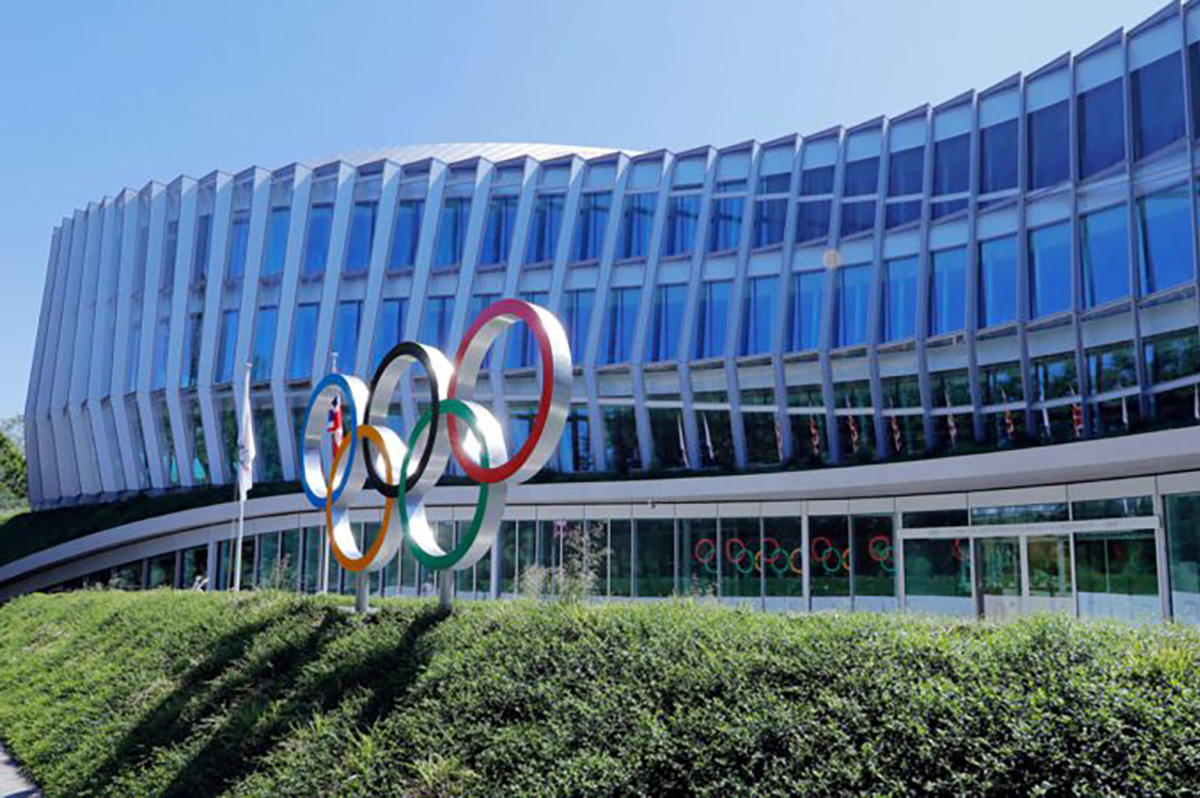
The International Olympic Committee on Thursday announced it will not allow transgender women from competing in female events at the Olympics.
“For all disciplines on the Sports Program of an IOC event, including individual and team sports, eligibility for any Female Category is limited to biological females,” reads the new policy.
The policy states “eligibility for the Female Category is to be determined in the first instance by SRY Gene screening to detect the absence or presence of the SRY Gene.”
“On the basis of the scientific evidence, the IOC considers that the SRY (sex-determining Region Y) Gene is fixed throughout life and represents highly accurate evidence that an athlete has experienced or will experience male sex development,” it reads. “Furthermore, the IOC considers that SRY Gene screening via saliva, cheek swab or blood sample is unintrusive compared to other possible methods. Athletes who screen negative for the SRY gene permanently satisfy this policy’s eligibility criteria for competition in the Female Category.”
The policy states the test “will be a once-in-a-lifetime test” unless “there is reason to believe a negative reading is in error.”
The new regulation will be in place for the 2028 Summer Olympics in Los Angeles.
“I understand that this a very sensitive topic,” said IOC President Kirsty Coventry on Thursday in a video. “As a former athlete, I passionately believe in the rights of all Olympians to take part in fair competition.”
“The policy that we have announced is based on science and it has been led by medical experts with the best interests of athletes at its heart. The scientific evidence is very clear: male chromosomes give performance advances in sport that rely on strength, power, or endurance,” she added. “At the Olympic Games, even the smallest margins can be the difference between victory and defeat. So, it is absolutely clear that it would not be fair for biological males to compete in the female category. In addition, in some sports it would simply not be safe.”
(Video courtesy of the IOC)
Laurel Hubbard, a weightlifter from New Zealand, in 2021 became the first trans woman to compete at the Olympics.
Imane Khelif, an Algerian boxer, won a gold medal at the 2024 Summer Olympics in Paris. Khelif later sued JK Rowling and Elon Musk for cyberstalking after they questioned her gender identity.
Ellis Lundholm, a mogul skier from Sweden, this year became the first openly trans athlete to compete in any Winter Olympics when he participated in Milan Cortina Winter Olympics in Italy.
President Donald Trump in February 2025 issued an executive order that bans trans women and girls from female sports teams in the U.S.
The U.S. Olympic and Paralympic Committee last July banned trans women from competing in female sporting events. Republican lawmakers have demanded the IOC ban trans athletes from women’s athletic competitions.
“I’m grateful the Olympics finally embraced the common sense policy that women’s sports are for women, not for men,” said U.S. Sen. Tom Cotton (R-Ark.) on X.
An IOC spokesperson on Thursday referred the Washington Blade to the press release that announced the new policy.

More than a dozen LGBTQ athletes won medals at the Milan Cortina Winter Olympics that ended on Sunday.
Cayla Barnes, Hilary Knight, and Alex Carpenter are LGBTQ members of the U.S. women’s hockey team that won a gold medal after they defeated Canada in overtime. Knight the day before the Feb. 19 match proposed to her girlfriend, Brittany Bowe, an Olympic speed skater.
French ice dancer Guillaume Cizeron, who is gay, and his partner Laurence Fournier Beaudry won gold. American alpine skier Breezy Johnson, who is bisexual, won gold in the women’s downhill. Amber Glenn, who identifies as bisexual and pansexual, was part of the American figure skating team that won gold in the team event.
Swiss freestyle skier Mathilde Gremaud, who is in a relationship with Vali Höll, an Austrian mountain biker, won gold in women’s freeski slopestyle.
Bruce Mouat, who is the captain of the British curling team that won a silver medal, is gay. Six members of the Canadian women’s hockey team — Emily Clark, Erin Ambrose, Emerance Maschmeyer, Brianne Jenner, Laura Stacey, and Marie-Philip Poulin — that won silver are LGBTQ.
Swedish freestyle skier Sandra Naeslund, who is a lesbian, won a bronze medal in ski cross.
Belgian speed skater Tineke den Dulk, who is bisexual, was part of her country’s mixed 2000-meter relay that won bronze. Canadian ice dancer Paul Poirier, who is gay, and his partner, Piper Gilles, won bronze.
Laura Zimmermann, who is queer, is a member of the Swiss women’s hockey team that won bronze when they defeated Sweden.
Outsports.com notes all of the LGBTQ Olympians who competed at the games and who medaled.
Sports
US wins Olympic gold medal in women’s hockey
Team captain Hilary Knight proposed to girlfriend on Wednesday

The U.S. women’s hockey team on Thursday won a gold medal at the Milan Cortina Winter Olympics.
Team USA defeated Canada 2-1 in overtime. The game took place a day after Team USA captain Hilary Knight proposed to her girlfriend, Brittany Bowe, an Olympic speed skater.
Cayla Barnes and Alex Carpenter — Knight’s teammates — are also LGBTQ. They are among the more than 40 openly LGBTQ athletes who are competing in the games.
The Olympics will end on Sunday.

‘No Kings’ protests set for D.C.

Border to border: modern slavery and human trafficking in refugee movements across East Africa

New IOC policy bans trans women from Olympics

Introducing the Torchbearers Awards honoring queer, trans women and nonbinary people

Pa. House passes bill to codify marriage equality in state law

PHOTOS: Capital Stonewall Democrats 50th anniversary

‘Inherit the Wind’ isn’t about science vs. religion, but the right to think

Small is beautiful: subcompact SUVs

Polish court rules country must recognize same-sex marriages from EU states

Capital Stonewall Democrats 50th anniversary gala draws sold out crowd
-

 Photos3 days ago
PHOTOS: Capital Stonewall Democrats 50th anniversary
-
Autos4 days ago
Small is beautiful: subcompact SUVs
-
Theater4 days ago
‘Inherit the Wind’ isn’t about science vs. religion, but the right to think
-
Poland3 days ago
Polish court rules country must recognize same-sex marriages from EU states