Sports
Game Changers: D.C. Gaymers
Video games popular among D.C.-area queer residents
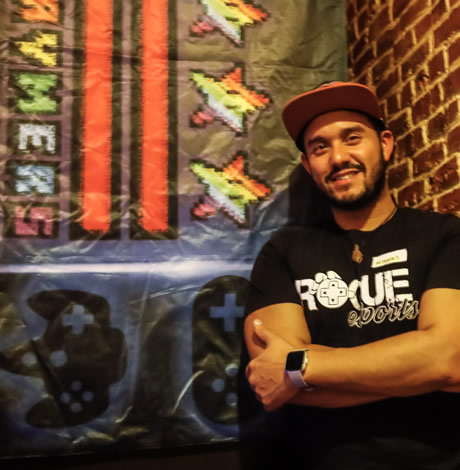
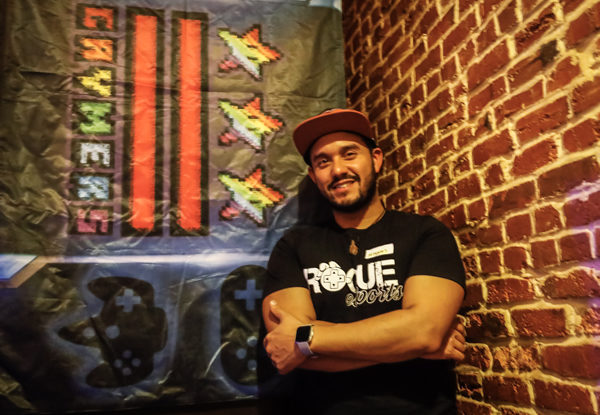
The LGBTQ gaming community in Washington has grown to a point where the need arose to distinguish between casual gamers and hardcore gamers.
This week in the Blade’s Game Changers series, we meet the leader of D.C. Gaymers and the newly minted Rogue eSports.
D.C. Gaymers began as a Meetup group back in 2016 and they were meeting every three months at someone’s house to play video games.
Miguel Miranda took over their leadership in 2017 and moved the group to Cobalt where he created an LGBTQ-focused gaming venture that met once a month on Tuesday nights.
Their numbers grew quickly to 80 people and they switched to a biweekly schedule to accommodate the growing interest. They began offering more events and systems including PlayStation, Wii, GameCube, Xbox, handheld games on iPads, board games and card games.
“Gamers are self-labeled as introverts, people who avoid crowds and people who stay behind the scenes,” Miranda says. “Over time I discovered that there are a lot of gamers who share my desire to make real-life connections and friendships.”
Miranda was born in the Dominican Republic and grew up in Providence, R.I. He received his environmental engineering degrees from University of New Hampshire and Virginia Tech. He followed his husband Oscar to the D.C. area and is employed as an engineer at a wastewater treatment plant.
“I grew up in a very religious household and video games were an escape from reality for me. I was my happiest when I was behind the screen,” Miranda says. “I get a different enjoyment from them now because I have recognized that there is a need for this gaming community. My husband isn’t a gamer, but he supports my addiction.”
Miranda says many players have told him they feel nervous telling other adults they’re gamers because there’s still a stigma that gaming isn’t socially acceptable for adults.
“People want a safe space where they can be nerds and be themselves,” Miranda says. “It’s been rewarding to watch people step in as greeters, come out of their shells and connect to other like-minded individuals. It can often be one step at a time.”
Miranda noticed that the hardcore gamers weren’t coming as often to the casual Tuesday game nights. To keep them engaged, D.C. Gaymers introduced Super Smash Bros. and Mario Bros. on Saturdays once a month.
“Two different personalities emerged — casual and competitive,” Miranda says. “With the closing of Cobalt, we moved over to Uproar in February and decided to create a second group.”
Rogue eSports will launch March 17 as a 10-week competitive league that plays bi-weekly on Tuesday nights at Uproar. Their list of games include Overwatch, Super Smash Bros., Hearthstone and Mortal Kombat.
As this new venture plays out for local LGBTQ gamers, Miranda already has an eye on reaching another part of the community. He has doing outreach at events such as Awesome Con, MAGFest and Blerdcon and can visualize another direction.
“I eventually want to find a space for LGBTQ gamers who are under 21. Gaming can be a powerful tool for teenagers coping with hardships,” Miranda says. “I am hoping to build a community where young gamers can feel safe and make human connections.”



Sports
New IOC policy bans trans women from Olympics
New regulation to be in effect at 2028 summer games in Los Angeles
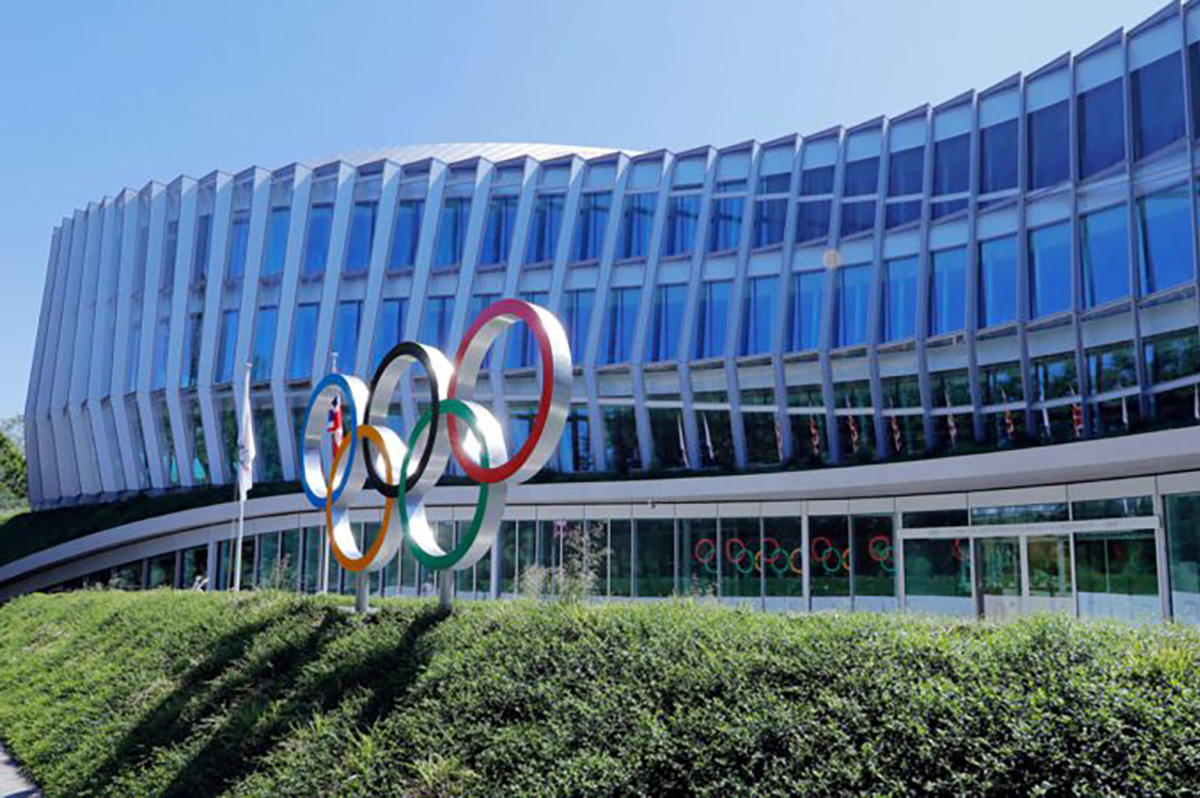
The International Olympic Committee on Thursday announced it will not allow transgender women from competing in female events at the Olympics.
“For all disciplines on the Sports Program of an IOC event, including individual and team sports, eligibility for any Female Category is limited to biological females,” reads the new policy.
The policy states “eligibility for the Female Category is to be determined in the first instance by SRY Gene screening to detect the absence or presence of the SRY Gene.”
“On the basis of the scientific evidence, the IOC considers that the SRY (sex-determining Region Y) Gene is fixed throughout life and represents highly accurate evidence that an athlete has experienced or will experience male sex development,” it reads. “Furthermore, the IOC considers that SRY Gene screening via saliva, cheek swab or blood sample is unintrusive compared to other possible methods. Athletes who screen negative for the SRY gene permanently satisfy this policy’s eligibility criteria for competition in the Female Category.”
The policy states the test “will be a once-in-a-lifetime test” unless “there is reason to believe a negative reading is in error.”
The new regulation will be in place for the 2028 Summer Olympics in Los Angeles.
“I understand that this a very sensitive topic,” said IOC President Kirsty Coventry on Thursday in a video. “As a former athlete, I passionately believe in the rights of all Olympians to take part in fair competition.”
“The policy that we have announced is based on science and it has been led by medical experts with the best interests of athletes at its heart. The scientific evidence is very clear: male chromosomes give performance advances in sport that rely on strength, power, or endurance,” she added. “At the Olympic Games, even the smallest margins can be the difference between victory and defeat. So, it is absolutely clear that it would not be fair for biological males to compete in the female category. In addition, in some sports it would simply not be safe.”
(Video courtesy of the IOC)
Laurel Hubbard, a weightlifter from New Zealand, in 2021 became the first trans woman to compete at the Olympics.
Imane Khelif, an Algerian boxer, won a gold medal at the 2024 Summer Olympics in Paris. Khelif later sued JK Rowling and Elon Musk for cyberstalking after they questioned her gender identity.
Ellis Lundholm, a mogul skier from Sweden, this year became the first openly trans athlete to compete in any Winter Olympics when he participated in Milan Cortina Winter Olympics in Italy.
President Donald Trump in February 2025 issued an executive order that bans trans women and girls from female sports teams in the U.S.
The U.S. Olympic and Paralympic Committee last July banned trans women from competing in female sporting events. Republican lawmakers have demanded the IOC ban trans athletes from women’s athletic competitions.
“I’m grateful the Olympics finally embraced the common sense policy that women’s sports are for women, not for men,” said U.S. Sen. Tom Cotton (R-Ark.) on X.
An IOC spokesperson on Thursday referred the Washington Blade to the press release that announced the new policy.

More than a dozen LGBTQ athletes won medals at the Milan Cortina Winter Olympics that ended on Sunday.
Cayla Barnes, Hilary Knight, and Alex Carpenter are LGBTQ members of the U.S. women’s hockey team that won a gold medal after they defeated Canada in overtime. Knight the day before the Feb. 19 match proposed to her girlfriend, Brittany Bowe, an Olympic speed skater.
French ice dancer Guillaume Cizeron, who is gay, and his partner Laurence Fournier Beaudry won gold. American alpine skier Breezy Johnson, who is bisexual, won gold in the women’s downhill. Amber Glenn, who identifies as bisexual and pansexual, was part of the American figure skating team that won gold in the team event.
Swiss freestyle skier Mathilde Gremaud, who is in a relationship with Vali Höll, an Austrian mountain biker, won gold in women’s freeski slopestyle.
Bruce Mouat, who is the captain of the British curling team that won a silver medal, is gay. Six members of the Canadian women’s hockey team — Emily Clark, Erin Ambrose, Emerance Maschmeyer, Brianne Jenner, Laura Stacey, and Marie-Philip Poulin — that won silver are LGBTQ.
Swedish freestyle skier Sandra Naeslund, who is a lesbian, won a bronze medal in ski cross.
Belgian speed skater Tineke den Dulk, who is bisexual, was part of her country’s mixed 2000-meter relay that won bronze. Canadian ice dancer Paul Poirier, who is gay, and his partner, Piper Gilles, won bronze.
Laura Zimmermann, who is queer, is a member of the Swiss women’s hockey team that won bronze when they defeated Sweden.
Outsports.com notes all of the LGBTQ Olympians who competed at the games and who medaled.
Sports
US wins Olympic gold medal in women’s hockey
Team captain Hilary Knight proposed to girlfriend on Wednesday

The U.S. women’s hockey team on Thursday won a gold medal at the Milan Cortina Winter Olympics.
Team USA defeated Canada 2-1 in overtime. The game took place a day after Team USA captain Hilary Knight proposed to her girlfriend, Brittany Bowe, an Olympic speed skater.
Cayla Barnes and Alex Carpenter — Knight’s teammates — are also LGBTQ. They are among the more than 40 openly LGBTQ athletes who are competing in the games.
The Olympics will end on Sunday.

Trans activists gather on National Mall for Transgender Day of Visibility

The cost of speaking one’s mind

Senegalese president signs bill that further criminalizes homosexuality

Md. lawmakers reaffirm legislative priorities

Supreme Court rules against Colo. law banning conversion therapy for minors

Celebrate cherry blossoms the drag way

Lorato ke Lorato: marriage equality, democracy, and the unfinished work of justice in Botswana

Japanese Supreme Court to consider marriage equality

The outrage economy is not the LGBTQ community

Trump tells Fox News he won the ‘gay vote’ — but polls tell a different story
-

 Out & About5 days ago
Celebrate cherry blossoms the drag way
-
Botswana5 days ago
Lorato ke Lorato: marriage equality, democracy, and the unfinished work of justice in Botswana
-
Japan5 days ago
Japanese Supreme Court to consider marriage equality
-
Opinions5 days ago
The outrage economy is not the LGBTQ community