World
Blinken says Biden raised Russia’s LGBTQ rights record with Putin
Geneva summit between two presidents took place on June 16
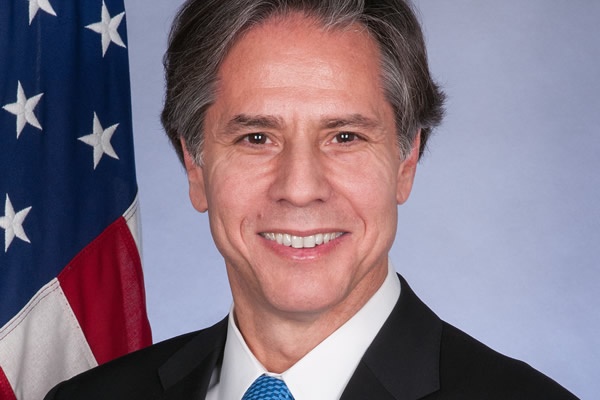
Secretary of State Antony Blinken on Monday said President Biden raised the Kremlin’s LGBTQ rights record with Russian President Vladimir Putin during their recent summit.
“The president pushed human rights — including LGBTQI rights — with President Putin,” Blinken told Washington Post columnist, “PBS NewsHour” contributor and host of MSNBC’s “The Sunday Show” Jonathan Capehart during a virtual Pride month discussion the Atlantic Council hosted.
Biden met with Putin on June 16 in Geneva. Blinken was among those who participated in the summit.
The White House did not say whether Biden specifically raised Russia’s LGBTQ rights record with Putin. Biden told reporters after the summit that he stressed to Putin “that no president of the United States could keep faith with the American people if they did not speak out to defend our democratic values, to stand up for the universal rights and fundamental freedoms that all men and women have, in our view.”
“What he told President Putin is that as an American president — where for all of our challenges, many of which are manifest in recent months and recent years — this is something that is basically stamped in to our DNA and he would be abdicating his responsibility as president, as an American president, not to raise these issues,” Blinken told Capehart.
Capehart specifically asked Blinken about the case of two Chechen brothers who were arrested in Russia in February and returned to their homeland, even though they had fled Chechnya’s anti-LGBTQ crackdown.
“We didn’t get into specific cases in that meeting, but he made very clear to President Putin that this is fundamentally who we and who he is and what we’ll do and will continue to do going forward,” said Blinken.
Blinken also did not say how Putin specifically responded to Biden’s decision to raise his country’s LGBTQ rights record with him. Blinken, however, did say “there was at least an acknowledgment” the U.S. will raise human rights in such meetings.
“This is what an American president should do,” said Blinken. “This is who we are and this is what we represent to the world.”
TUNE IN for a LIVE #ACFrontPage event: @SecBlinken discusses the role of the US State Department in advancing LGBTQI equality at home and around the world with @CapehartJ https://t.co/zoIQmk49mG
— Atlantic Council (@AtlanticCouncil) June 21, 2021





Senegal
Senegalese president signs bill that further criminalizes homosexuality
Measure passed in National Assembly with near unanimous support
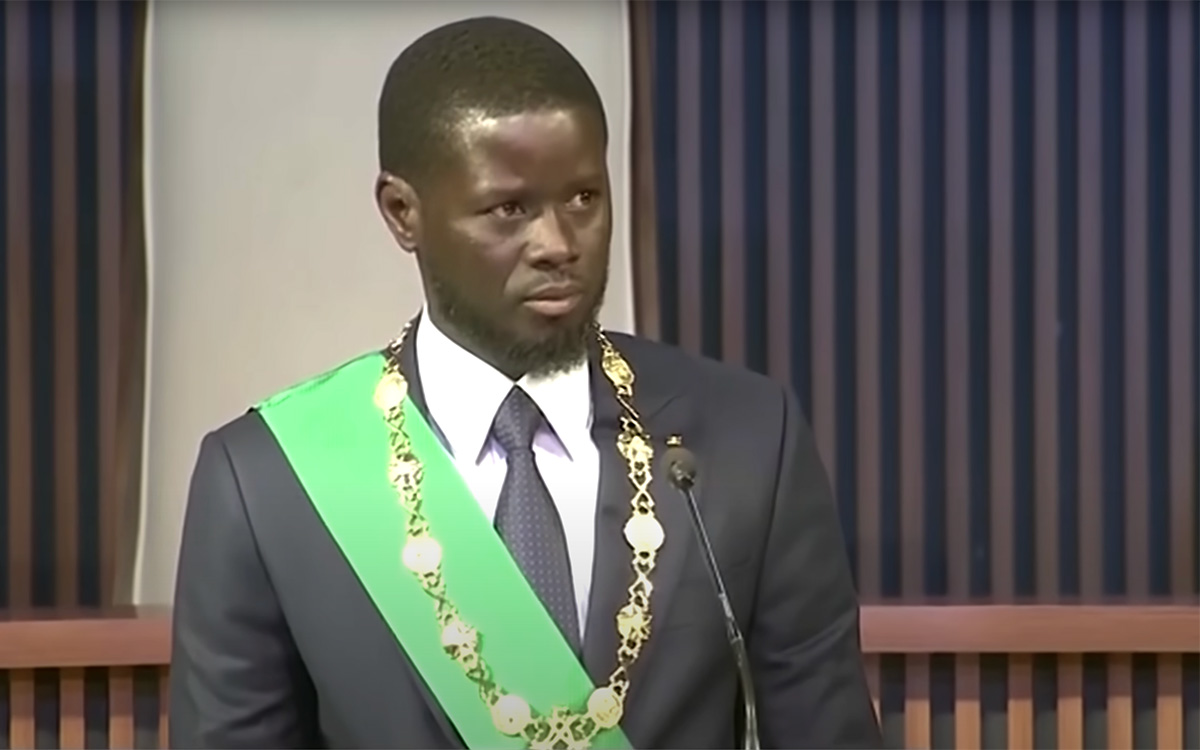
Senegalese President Bassirou Diomaye Faye on Tuesday signed into law a bill that further criminalizes consensual same-sex sexual relations in the country.
Lawmakers in the African country on March 11 nearly unanimously passed the measure that increases the penalty for anyone convicted of engaging in consensual same-sex sexual relations from one to five years in prison to five to 10 years. The bill that Prime Minister Ousmane Sonko introduced also prohibits the “promotion” or “financing” of homosexuality in Senegal.
Reuters on March 16 reported MassResistance, an anti-LGBTQ group based in the U.S., worked with Senegalese groups that support the bill. Volker Türk, the U.N. high commissioner for human rights, is among those who urged Faye not to sign it.
The Senegalese National Assembly in 2021 rejected a bill that would have further criminalized homosexuality in the country.
Police in February arrested a dozen men and charged them with committing “unnatural acts.”
Ghana
Ghanaian president welcomed to Philadelphia amid backlash over anti-LGBTQ bill
Lincoln University cancelled event with John Mahama

Ghanaian President John Dramani Mahama, known for making anti-LGBTQ legislative promises, was scheduled to appear at two local colleges this week — but plans have changed. Although Mahama will still attend a community dialogue at Temple University, he will no longer be honored at Lincoln University — a Chester County HBCU. He will, however, be presented with an award by the World Affairs Council of Philadelphia. The cancellation of the Lincoln event came shortly after LGBTQ activists spoke out about his appearances.
“Due to unforeseen circumstances, the university is cancelling the visit from President John Dramani Mahama,” Athena Griffith-Howard, associate vice president of marketing and communications at Lincoln University, told PGN.
According to a press release about the scheduled event, Mahama was set to receive an honorary doctorate from Lincoln University on Thursday, March 26, “in recognition of his outstanding contributions to public service, democratic governance, peaceful international and inter-African relationships, and global advocacy for justice, equality, and education.”
Although Griffith-Howard did not respond to additional questions about the matter, Joy News — an independent news organization that markets itself as the “most credible” journalism in Ghana — reports that the university has rescinded his honorary degree and cancelled the visit due to Mahama’s anti-LGBTQ stance.
“It is both surprising and regrettable that, just hours ago, the Embassy received a communication from the university indicating that concerns had been raised by a group regarding President Mahama’s perceived position on Ghana’s Human Sexual Rights and Family Values Bill,” a statement released by the Ghana Embassy on March 24 reads.
Mahama has repeatedly vowed to sign the Human Sexual Rights and Family Values Bill into law if it passes out of parliament. He has also made statements against queer and transgender people.
“The position of my government [is that] marriage is between a man and a woman. A person’s gender is determined at birth. And then also, that the family is the foundation of our nation. That is our position,” Mahama said in a speech on Nov. 18, 2025.
Intimacy laws — which criminalize LGBTQ sex and the use of sex toys — already hold a three-year prison sentence under Ghana law, stemming from legal frameworks that previously governed the country when it was controlled by the British government. Ghana became the first African country to gain independence from European colonization in 1957 — but rather than repeal the antiquated law, leaders chose to incorporate it into their own penal code in 1960. The country’s supreme court upheld the law in 2024.
The Human Sexual Rights and Family Values Bill — often simply referred to as “the anti-LGBTQ+ bill” — would further criminalize LGBTQ people and expression and add new risks for allyship. If passed, the punishment for intimacy violations would increase to a possible five-year prison sentence. LGBTQ people could also be punished for simply identifying as LGBTQ with a new three-year prison sentence.
The proposal would also ban LGBTQ serving organizations, even those that only partly serve LGBTQ people. Violations would include up to five years in prison. Allies could face 10 years in prison for supporting LGBTQ people or promoting LGBTQ rights online, in newspapers, or through other verbal or written communications. Journalists who report on LGBTQ topics are also at risk.
The bill would force families and community members to report those found in violation of the statute to local law enforcement.
“If the parliament of the people of Ghana endorse the bill and vote on it and pass it and it comes to me as president, I will sign it,” Mahama said during his November speech.
Since the Human Sexual Rights and Family Values Bill was introduced in 2021, LGBTQ Ghanaians and allies have experienced widespread discrimination and physical violence — including harassment and arrests, raids on LGBTQ centers (which have led to at least one closure), as well as a hostile media landscape. When the bill was first passed by parliament in 2024, anti-LGBTQ incidents more than doubled.
The proposal was not signed into law by the former President Nana Akufo-Addo, who characterized the proposal as a backsliding of human rights. At the time, Ghana’s finance ministry also warned that signing the bill would place several billions of dollars in funding in jeopardy as a similar anti-LGBTQ bill in Uganda led the World Bank to suspend new funding to that country.
This threat would be especially difficult for Ghana to bear given recent funding cuts made by the Trump administration, which have been especially problematic for some African countries.
Ghana previously relied on USAID funding for social programs and health services, but Trump’s funding cuts led to a $156 million loss — including approximately $78 million that previously funded malaria prevention, maternal and child health, family planning, reproductive health, nutrition, and the fight against HIV/AIDS.
Despite the funding cuts, anti-LGBTQ leaders — including those in Ghana — have been emboldened and empowered by the Trump administration’s own anti-LGBTQ efforts, citing that they no longer fear economic sanctions if their own anti-LGBTQ bill passes.
According to activists, Mahama urged parliament to reintroduce the bill after he took office in January 2025 — around the same time Trump began issuing executive orders, which have negatively impacted LGBTQ Americans.
Mahama is currently in the U.S. to lead a delegation at the United Nations to advocate for reparatory justice for the Transatlantic Slave Trade. He will present a landmark resolution to the United Nations General Assembly in New York City on March 25 — seeking a formal declaration of the Transatlantic Slave Trade as a crime against humanity. The visit also includes a wreath-laying ceremony to honor the lives of enslaved Africans who perished in the U.S.
LGBTQ rights advocates keenly understand the importance of holding the U.S. accountable as direct drivers of the Transatlantic Slave Trade and for the atrocities that occurred to African people on American soil as the country built its economic and social power off of their oppression.
In a press release about Mahama’s visit to Philadelphia, a growing coalition of Philadelphia’s LGBTQ and allied leaders — including Philly Pride 365, GALAEI and ACT UP Philadelphia — called the invitation to speak at Temple University “even more concerning” given the human rights focus of the delegation.
“You cannot come to a global stage calling for justice, repair and recognition of historical harm while simultaneously supporting or advancing policies that criminalize and endanger another marginalized group,” said Tyrell Brown of Philly Pride 365 in the joint statement. “That contradiction is not just political. It reflects a fundamental failure to understand intersectionality and the interconnected nature of oppression.”
“Justice is not selective. Human rights are not conditional,” Brown continued. “If we are serious about repair, it must extend to all people — especially those currently being targeted by state-sanctioned harm.”
There is a colonialist link between the continued oppression of LGBTQ Africans with harmful rhetoric and money coming from the U.S. At least 20 US-based conservative Christian groups, which have spent over $54 million since 2007 on anti-LGBTQ efforts in Africa, are linked to anti-LGBTQ bills and laws across the continent.
“We support the reparations resolution. The argument it rests on is morally sound,” reads a press release issued by JustRight Ghana — a Ghana-based human rights organization. “The transatlantic slave trade classified human beings as property based on what they were born as. It said that certain categories of people, by virtue of their birth, had no rights, no dignity, and no protection from the power of the state.”
“That is the same logic that runs through every clause of the Human Sexual Rights and Family Values Bill 2025. Section 3 says that being born with a particular sexual orientation makes you a criminal,” the press release goes on to state. “The moral architecture is identical. The only thing that has changed is who the target is.”
The World Affairs Council of Philadelphia still intends to present Mahama with its International Statesperson Award on March 27.
A blurb about the award on the institution’s website reads, “The International Statesperson Award of the World Affairs Council of Philadelphia is the highest honor the Council bestows — a tribute for global leadership. It is presented periodically and awarded to distinguished international figures and world leaders whose work has advanced the twin goals of peace and freedom and resulted in a significant positive impact on world affairs.”
Mahama is also still invited to participate in a community dialogue event that will be held at Temple University on the evening of March 26. The event is advertised as celebrating Ghanaian music and artistic culture, comedy, and heritage — featuring celebratory performances as well as a dialogue with Mahama and other national leaders.
“Attendees will have the opportunity to hear firsthand from the president on Ghana’s vision and emerging opportunities, engage in conversations that help shape diaspora partnerships, and explore business, investment, and cultural collaboration opportunities,” reads an Instagram post about the event. “The evening also marks a historic moment as part of the president’s first official visit to Philadelphia.”
The event was planned before Lincoln University canceled its conferment and according to a press release, Mahama intends to convene with people of the Ghanaian diaspora during the Temple University visit.
“This conversation reflects something bigger than a single event,” reads an Instagram post published by Temple University Black Alumni Alliance about the event. “It represents connection across the diaspora, leadership across borders, and the importance of creating spaces where global perspectives and lived experiences can meet.”
In response to PGN’s request for comments and answers to questions, Steve Orbanek, Temple University’s executive director of communications and media relations, emailed the following statement:
“Temple University unequivocally opposes the exclusion of or discrimination against members of the LGBTQIA+ community. Temple takes pride in providing an inclusive and welcoming environment for all students, faculty, staff, alumni, neighbors and friends regardless of their race, nationality, religion, gender, sexual orientation or identity.
“President Mahama will be in the United States to attend the United Nations General Assembly during the International Day of Remembrance of the Victims of Slavery and the Transatlantic Slave Trade. The US-Ghana Chamber of Commerce invited him to participate in a community event and approached Temple about using a venue on campus.
“As a public university, Temple regularly provides space for speakers as part of our ongoing commitment to academic inquiry, open dialogue and public service. We have made venues available for third-party organizations, including political parties or campaigns, regardless of their political viewpoint or stance. The presence of any speaker on campus is not an endorsement by Temple University of the speaker or their views.
The Human Sexual Rights and Family Values Bill that has been recently reintroduced in Ghana’s Parliament is deeply troubling and runs counter to the mission and values of Temple University. Temple’s strength is its people, and every member of our community adds to the cultural richness of our institution. We are committed to cultivating an educational environment founded on respect, open-mindedness, and the appreciation of others.”
The Philadelphia coalition of LGBTQ leaders rejects the idea that hosting a speaker does not reflect the views of the host institution and underlined that platforming political leaders with ties to problematic policies still produces harm.
“Providing a platform to a leader advancing policies that endanger LGBTQ lives and undermine HIV prevention is deeply irresponsible. Institutions of higher education should not normalize or legitimize harm under the guise of dialogue,” said Sam Sitrin of ACT UP Philadelphia in the joint statement.
“Universities should be spaces that uphold human rights and evidence-based public health,” added Jose Demarco of ACT UP Philadelphia. “Hosting leaders associated with policies that criminalize LGBTQ people and undermine HIV prevention sends the wrong message at a time when lives are at stake.”
Temple’s Center for Anti-Racism — an initiative of Temple’s Office of Institutional Diversity, Equity, Advocacy, and Leadership (IDEAL) — which is promoted on flyers and social media as hosting the event, has not responded to PGN’s questions or requests for comments. The event, which was previously included on the university’s events listings, is no longer visible but has not been canceled as of Wednesday, March 25. It is unclear if the university is taking any steps to protect or uplift LGBTQ students during the event.
The Philadelphia coalition of LGBTQ leaders called the decision to host the event in light of the local community’s response “harmful and careless.” They also raised concerns about Temple University’s process to repair wounds and are pressuring Temple to cancel the event and formally apologize to Philadelphia’s LGBTQ community.
“According to organizers, the university had knowledge of the concerns surrounding President Mahama’s [anti-LGBTQ] record as early as Thursday [March 19] but did not conduct meaningful outreach to community partners, nonprofits, or local leaders most impacted by the issue,” the coalition’s press release reads.
“When institutions fail to proactively engage communities on issues of this magnitude, it reveals a disconnect between stated values and actual practice.”
Coalition members joined additional Philadelphia-based leaders in sending a letter to Temple University’s IDEAL initiative and Center for Anti-Racism — noting their concern for the event but also openness to dialoguing directly with the event’s organizers to seek intentionality and transparency.
“This is not an abstract policy discussion. It is about the safety, dignity, and survival of LGBTQ people globally. For many in our communities, including African and Caribbean diaspora members here in Philadelphia, these policies have direct emotional, familial, and cultural impact,” the letter reads. “Hosting this dialogue without intentional accountability risks legitimizing rhetoric and policies that endanger lives.”
Those who signed the letter described themselves as leaders who are Black and Brown, LGBTQ, representatives of HIV/AIDS organizations, and individuals working in government, civil society and DEI spheres in Philadelphia. They include activists of ACT UP Philadelphia, representatives from SMUG International and Bebashi, Ronda Goldfein of the AIDS Law Project of Pennsylvania, Jacen Bowman of Philadelphia Black Pride, Andre Ford of The COLOURS Organization, Sappho Fulton of Womxn Beyond Borders, Hazel Edwards of GALAEI, Simon Trowell of Mazzoni Center, José Benitez of Philadelphia FIGHT, Tyrell Brown of Philly Pride 365, Darius McLean of William Way LGBT Community Center, state Rep. Andre Carroll, state Rep. Malcolm Kenyatta, Philadelphia Councilmember Kendra Brooks, and Philadelphia Councilmember Rue Landau.
They underline that proceeding without addressing concerns would risk harm to the very students and communities IDEAL purports to support.
“As Black and Brown and African LGBTQ leaders, with the support of our allies, we are requesting that the organizers of this event include questions about this truly dangerous legislation and highlight the real world impact on Ghanaian LGBTQ people, their families and their communities,” the letter insists. “Though we believe in autonomy for all nations, and that Americans should not dictate the policy of other nations, we also believe that these deadly policies should not go unquestioned or unchallenged, especially since this event is sponsored by IDEAL, which has a strong commitment to the BIPOC, LGBTQ, and Ghanaian students at Temple.”
They underlined that questions about the matter should come directly from the event’s organizers rather than become the responsibility of the community during a Q&A. The signed leaders hope to receive a response by Wednesday evening — and PGN will follow up with continued reporting when more information about the university and community’s plans are known.
“Silence, in this moment, is not neutrality: it is complicity,” the letter emphasizes.
Japan
Japanese Supreme Court to consider marriage equality
Japan only G7 country that does not legally recognize same-sex couples
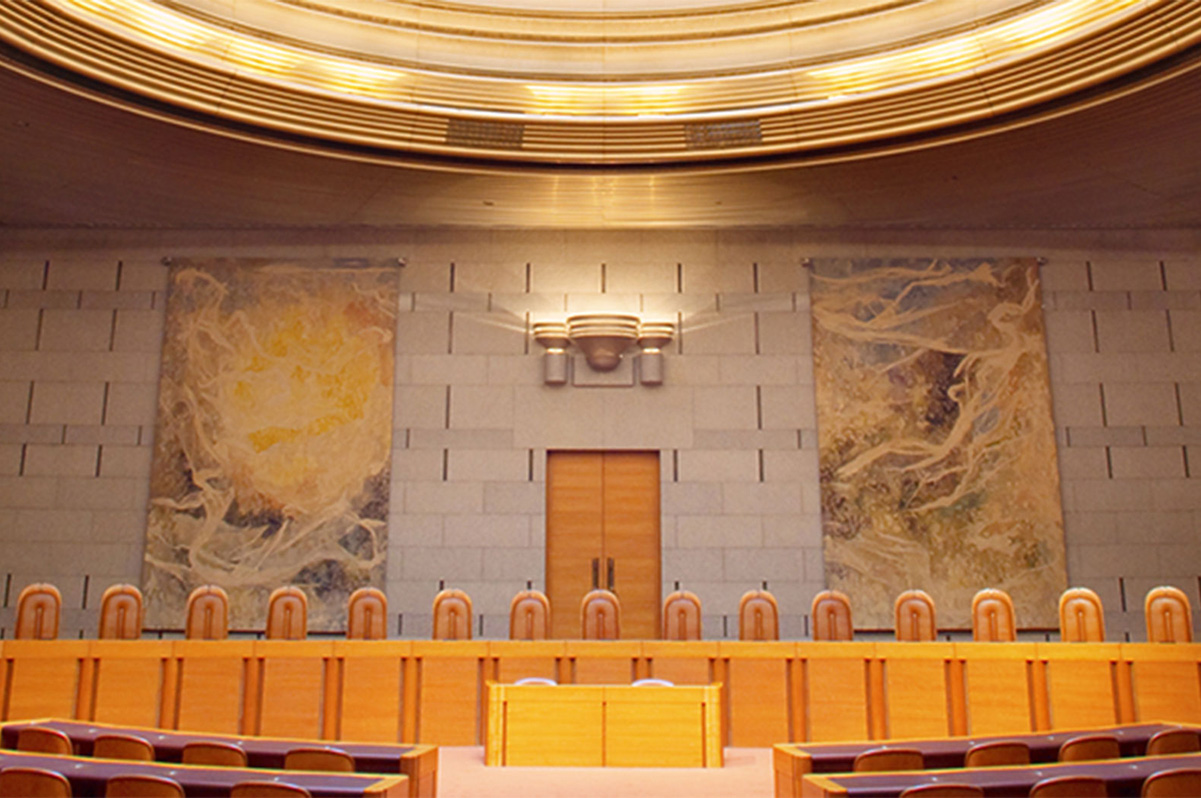
The Japanese Supreme Court on Wednesday said it will consider six marriage equality lawsuits.
NHK, the country’s public broadcaster, noted all 15 of the court’s justices will consider the case.
Japan is the only G7 country that does not legally recognize same-sex couples, despite several court rulings in recent years that found the denial of marriage benefits to gays and lesbians unconstitutional.
Tokyo High Court Judge Ayumi Higashi last November upheld Japan’s legal definition of a family as a man and a woman and their children.
Prime Minister Sanae Takaichi, who became the country’s first female head of government last October, opposes marriage rights for same-sex couples. She has also reiterated the constitution’s assertion that the family is an institution based around “the equal rights of husband and wife.”
Same-sex couples can legally marry in Taiwan, Nepal, and Thailand.
NHK reported the Supreme Court is expected to issue its ruling in early 2027.

Trans activists gather on National Mall for Transgender Day of Visibility

The cost of speaking one’s mind

Senegalese president signs bill that further criminalizes homosexuality

Md. lawmakers reaffirm legislative priorities

Supreme Court rules against Colo. law banning conversion therapy for minors

Celebrate cherry blossoms the drag way

Lorato ke Lorato: marriage equality, democracy, and the unfinished work of justice in Botswana

Japanese Supreme Court to consider marriage equality

The outrage economy is not the LGBTQ community

Trump tells Fox News he won the ‘gay vote’ — but polls tell a different story
-

 Out & About5 days ago
Celebrate cherry blossoms the drag way
-
Botswana5 days ago
Lorato ke Lorato: marriage equality, democracy, and the unfinished work of justice in Botswana
-
Japan5 days ago
Japanese Supreme Court to consider marriage equality
-
Opinions5 days ago
The outrage economy is not the LGBTQ community