News
HHS awards more than $48 million to HRSA centers in effort to beat HIV/AIDS
Biden campaigned on beating epidemic by 2025
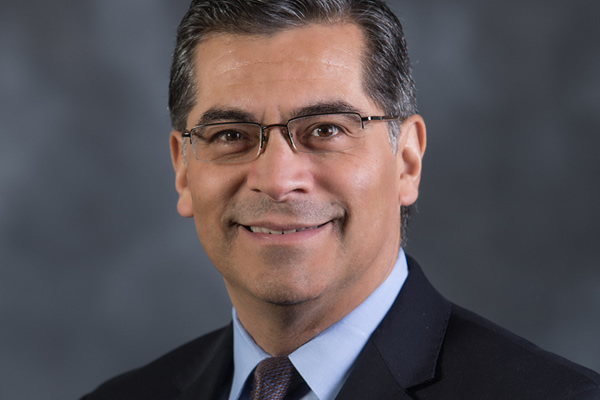
The Biden administration has awarded more than $48 million to medical centers under Health Resources & Services Administration in localities with high incidents of HIV infection as part of the initiative to beat the disease, the Washington Blade has learned exclusively.
Xavier Becerra, secretary of health and human services, said in a statement the contributions are key component of the initiative, which is called “Ending the HIV Epidemic in the U.S.” and seeks to reduce new infections by 90 percent by 2030.
“HHS-supported community health centers are often a key point of entry to HIV prevention and treatment services, especially for underserved populations,” Becerra said in a statement. “I am proud of the role they play in providing critical services to 1.2 million Americans living with HIV. Today’s awards will ensure equitable access to services free from stigma and discrimination, while advancing the Biden-Harris administration’s efforts to ending the HIV/AIDS epidemic by 2025.”
The $48 million contribution went to HRSA centers 271 HRSA-supported health centers across 26 states, Puerto Rico and D.C. — areas identified with the highest rates of HIV infections — to expand HIV prevention and treatment services, including access to pre-exposure prophylaxis (PrEP) as well as outreach and care coordination, according to HHS.
The Ending the HIV Epidemic was set up under the Trump administration, which made PrEP a generic drug after an accelerated effort and set a goal of beating HIV by 2030. Biden has continued the project, after campaigning on beating HIV a full five years earlier in 2025. Observers, however, are skeptical he can meet that goal.
Diana Espinosa, acting HRSA administrator, said in a statement the $48 million will go a long way in reaching goals to beat HIV/AIDS.
“We know our Health Center Program award recipients are well-positioned to advance the Ending the HIV Epidemic in the U.S. initiative, with a particular focus on facilitating access to PrEP, because of their integrated service delivery model,” Espinosa said. “By integrating HIV services into primary care, and providing essential enabling services like language access or case management, HRSA-supported health centers increase access to care and improve health outcomes for patients living with HIV.”
District of Columbia
Center Arts Gallery celebration, auction to take place on Oct. 17
D.C. LGBTQ+ Community Center to mark event’s 10th anniversary

The D.C. LGBTQ+ Community Center is hosting its 10th anniversary celebration of the opening of its Center Arts Gallery on Saturday, Oct. 17, at the Center’s offices at 1827 Wiltberger St., N.W., from 6 – 9 p.m.
“For 10 years, the D.C. LGBTQ+ Community Center’s Arts Gallery has been more than a place where art is displayed,” a statement released by the center says.
“It has been a space where LGBTQ+ artists are seen, celebrated, and connected to community, and where their work has given expression to the stories of joy, resistance, grief, beauty, survival, courage, and imagination,” the statement adds.
It says those attending the event would have an opportunity to bid on donated artwork in an auction and to meet and interact with “the artists whose creativity has helped bring Center Arts Gallery to life, enjoy wonderful food and music, and celebrate a decade of LGBTQ+ artistic expression.”
But the statement posted on the LGBTQ+ Community Center’s website says free general admission tickets may have been sold out, with $75 VIP tickets still available. It says the proceeds from ticket sales will be used to help support the LGBTQ+ Community Center’s operations.
Attendees and others were also invited to an event after party at the LGBTQ bar and cafe Spark Social from 9-11 p.m. at 2009 14th St., N.W.

The Comings & Goings column is about sharing the professional successes of our community. We want to recognize those landing new jobs, new clients for their business, joining boards of organizations and other achievements. Please share your successes with us at [email protected].
Congratulations to Richard Garrett on being honored by Delaware Gov. Matt Meyer with the Order of the First State. Garrett is executive director of the Children’s Beach House, in Lewes, Del. Upon accepting the honor he said, “I am deeply honored to be recognized by Governor Meyer with the Order of the First State, but I hope this occasion also shines a light on children who are struggling in some of the same ways I struggled as a child and teenager. Perseverance, connection, patience, and the presence of caring adults made all the difference in my life. For 24 years, my greatest privilege has been helping Children’s Beach House create that same sense of belonging and possibility for children and families across Delaware. They are strong, smart, resilient, and resourceful—and they deserve every opportunity to discover just how much they are capable of becoming.”
He told the Blade, “In many ways, my own childhood helps explain why this work has been so deeply personal to me. I grew up in a family that struggled financially, and I had a speech impediment so severe that, as a young child, I often could not be understood without one of my siblings acting as an interpreter. Thankfully, I had strong parents and a mother who was an educator. She spent countless hours helping me practice consonant blends and trying to master the “R” and “S” sounds. Just as importantly, she understood that being around other children my own age would teach me things that no adult could. What made a difference in my life were competent, caring adults who built relationships with me and gave me the sense of safety and belonging I needed. People like Sister Kathleen Swan, OSF; Father Gerald M. Dunne, OSFS, Dr. Susan Cassidy and her husband, John Bronson, to name a few! In many respects, my story mirrors the work we do every day at Children’s Beach House. The children and families we serve are strong, smart, resilient, and resourceful. Sometimes what they need most is for someone to recognize those strengths, stand beside them, and give them the relationships and opportunities they need to flourish.”
Over the years Garrett has grown the Children’s Beach House’s annual budget from approximately $650,000 in 2003 to $4.5 million while strengthening impact, visibility, and organizational infrastructure. He raised $2.5 million in Delaware foundation capital grants, and established a $7 million endowment for the Margaret H. Rollins Center, a $1 million capital endowment, and increased the general operating endowment to $6 million.
In addition to all that Garrett is the founder and owner of Midway Motion and Fitness. He is also looking forward to the groundbreaking of Midway Pickleball in 2027. He is treasurer of the Community Foundation Board of Kiwanis Club of Coastal Delaware. He began his career as executive director of the Delaware County Children’s CAMP, Media, Pa.; and was director of Student Affairs for the Williamson Free School of Mechanical Trades, Media, Pa.
Garrett earned his bachelor’s degree in psychology from Neumann University, Aston, Pa.; and did his graduate studies in vocational education, Temple University.
Turkey
‘Governments that attack LGBTQ+ rights learn from each other’
Turkish authorities on Sept. 12 launched anti-LGBTQ ‘My Family Is Safe’ campaign
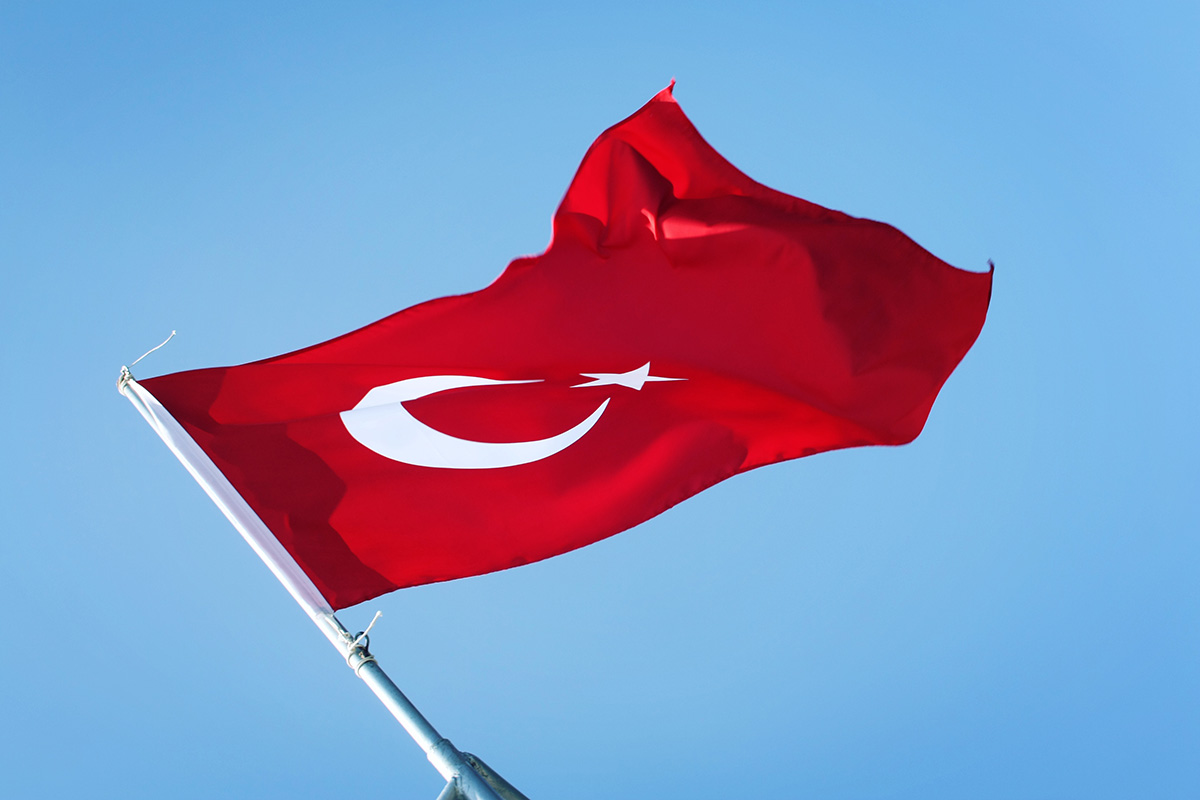
Sept. 12 is a solemn day for the people of Turkey. It is the anniversary of the 1980 coup d’état — when members of the National Security Council, along with the armed forces, dissolved the Turkish parliament, arrested hundreds of thousands of people, and entered a three-year period of martial law.
On Sept 12, the 46th anniversary of the 1980 coup, the country faced another wave of arrests; this time they targeted the LGBTQ community. The government launched the national “My Family Is Safe” campaign, which triggered mass raids and arrests of LGBTQ organization leaders, advocates, academics, and sexual health treatment centers for people with HIV. (These include EU-funded organizations launched by the Turkish government in 2005.) Since the nation has seen a decline in birthrate and a swelling economic crisis, this has allowed authoritarian President Recep Tayyip Erdoğan and conservatives in Turkey to use the LGBTQ community as the ideal scapegoat.
“This is the cruelest part. It was Erdoğan’s own party that made it easier to found NGOs in 2005 as an EU accession process, and that is how many LGBTI+ groups came to be officially registered.” Ali Yildiz, a linguistics graduate student at the University of Cologne in Germany, told the Washington Blade. “Everything was legal, transparent and official. Now those same registrations are being used as arrest lists. The state is basically punishing those who trusted it. It sounds very much like the Nazis. They also used member lists of associations to persecute them later.”
Yildiz has witnessed the oppression of the Turkish government firsthand: in 2024, he moved to Germany. As one of the board members of a grassroots NGO that focuses on sexual health, Yildiz was at risk of arrest and prosecution.
As part of the “My Family Is Safe” operation on Sept. 12, police raided Yildiz’s family’s former home to find him.
In the aftermath of these raids in Turkey’s major cities, protestors have gathered at Turkish embassies across Europe and the U.S.
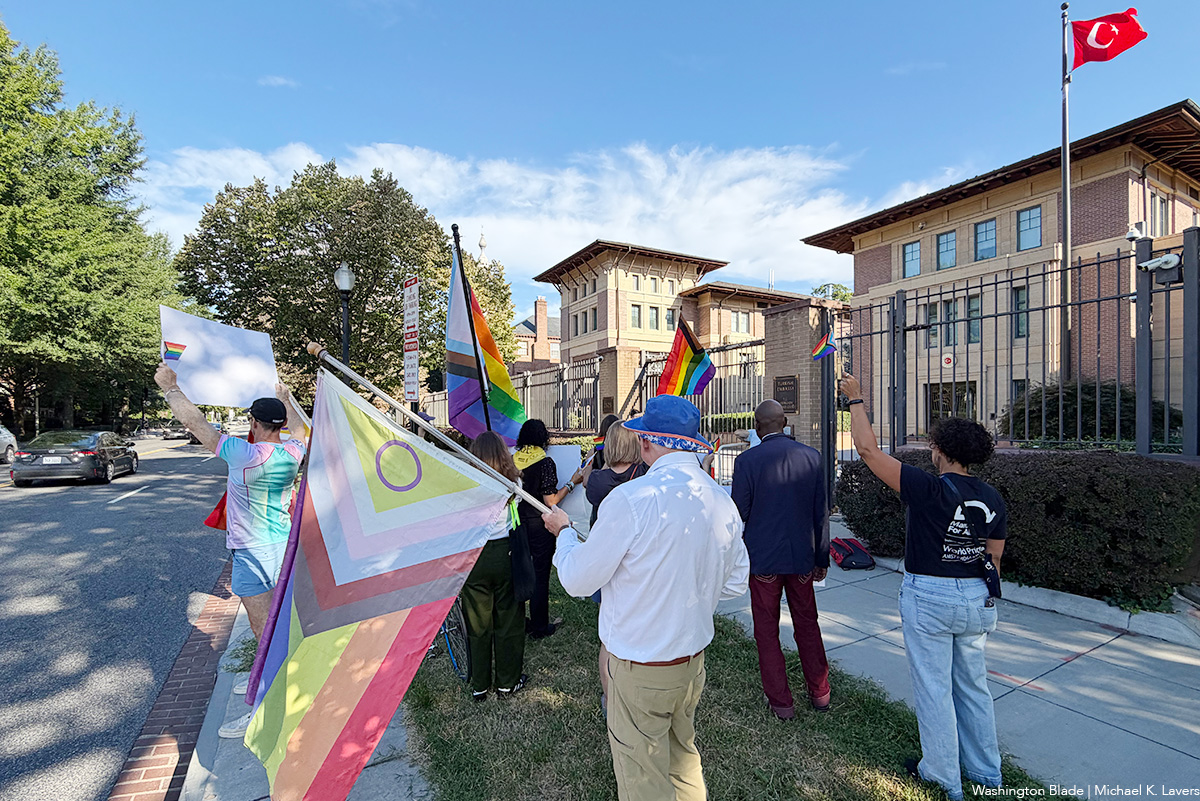
A critical discourse has also emerged as a response to the crackdown across international queer media: how should the West cover oppressive regimes abroad?
“From what I see, the Western reading of Turkey’s crackdown on LGBTI+ people usually goes: it’s a conservative, Muslim country, so this is what you’d expect. I believe that framing is incomplete, and it lets the people responsible off the hook. The Erdoğan regime is also heavily relying on this contextualization,” said Yildiz. “The government is not simply reacting to existing conservatism but is actively shaping it. Look at how operations are presented: raids on LGBTI+ organizations and activists come packaged with claims about drugs, obscenity, sex work, or organized crime on other groups in the news. The evil strategy is to link LGBTI+ people with criminality in the public mind.”
The LGBTQ community is not the only group that has been under the weight of oppression. Political opponents and descendants whom Erdoğan deems criminals are also charged with treason.
Istanbul Mayor Ekrem İmamoğlu, who is the leading candidate for the upcoming 2028 presidential elections for the opposition center-left Republican People’s Party, was arrested on terrorism charges in 2024. On the same day, he was nominated as the CHP’s presidential candidate.
For a while, X served as a platform to express discontent with the government, but that changed recently when Elon Musk blocked nearly 500 accounts in Turkey. The Turkish government also banned Grok after the AI system responded to a user’s question about Erdoğan, which government leaders found offensive.
The visibility of these pages has decreased. With a VPN, citizens can still access the pages because they were banned only in Turkey, not internationally.
Discontent with the government is increasing, but so is government oppression.
Not only have LGBTQ pages been shut down, but many journalists and academics have also had their pages banned.
The Blade spoke to an anonymous academic living in Ankara, the Turkish capital, who said Erdoğan, U.S. President Donald Trump, and other authoritarian leaders are constantly learning from each other.
“These anti LGBTQ+ policies are being created in the name of preserving traditional family values and are not only a threat to Türkiye,” they said. “It is also a global issue that threatens people everywhere. It should be perceived as an international problem. That is why we LGBTQ+ people need to act in solidarity internationally.”
Because of the compounding human rights crisis happening simultaneously around the globe, visibility has been advocates in Turkey’s main challenge.
Since 2022 there have been a series of crackdowns against opposition parties, academics, labor unions, student organizations, journalist and advocates. Another anonymous academic in Istanbul told the Blade that after the 2022 crackdown, “people were intimidated, and most people did not feel encouraged to organize.”
In the weeks following this recent crackdown, discontent with the Erdoğan government has increased along with inflation and unemployment, not helped by the war in Iran.
“Our leaders do not say anything about the financial crisis,” said the Istanbul academic.
High inflation, high unemployment rates, many factories, and businesses have left Türkiye and transferred their businesses to other countries. And because of the timing of these recent crackdowns, during this financial crisis, many people haven’t been paying attention.
Though for many queer and transgender Turks, post-Sept. 12 life has been radically different.
“I stopped doing drag in order to protect myself, and many queer performance artist friends of mine have also given up this part of their lives,” said one source who asked the Blade to remain anonymous.
“Everybody is not scared, but they simply bring their fear with them to the march and march courageously, because they believe they are on the right side of history,” they added. “However, I think it is important that people in Turkey are not represented only through their experiences of victimization. There should also be spaces where artists, activists, journalists, and other queer people can express themselves in their own words.”
The justification for this crackdown has been preserving “traditional family and conservative values.” The Turkish government has persecuted these offenses with raids, trials, and arrests that have gone beyond just the LGBTQ community. It targeted last year musicians, performers, and artists whom they deemed obscene or offensive.
In September 2025, the K-pop-inspired girl band Manifest was investigated for three months. Footage from their shows was banned from the internet, and the remainder of their tour was canceled. All seven members of the group faced 3 1/2 months prison sentences before the charges were ultimately dropped.
“I believe there is no pride for only some of us. Governments that attack LGBTQ+ rights learn from each other.” Yildiz tells the Blade, “Erdoğan borrows from Putin’s playbook, and parts of the Western right eagerly adopt the same rhetoric. This is a call for our community to see how important international solidarity is. People show up every single year for the Pride March, even though they know the police are going to attack. What I see in our community is pure courage.”

Center Arts Gallery celebration, auction to take place on Oct. 17

Comings & Goings

‘Hidden in Plain Sight:’ The story of Odessa Madre

‘Governments that attack LGBTQ+ rights learn from each other’

Horror genre has evolved into space to explore queer identity

ICC unseals arrest warrants for Taliban officials accused of persecuting LGBTQ people, women

Physician: addiction doesn’t always look the way you think it does

Calendar: October 9-15

Solidarity beyond the parade: the actual cost of Pride

Essential queer horror classics for Halloween
-

 Afghanistan4 days ago
ICC unseals arrest warrants for Taliban officials accused of persecuting LGBTQ people, women
-
District of Columbia4 days ago
Physician: addiction doesn’t always look the way you think it does
-
Calendar4 days ago
Calendar: October 9-15
-
Opinions3 days ago
Solidarity beyond the parade: the actual cost of Pride