National
Trans candidate concedes in Erie county exec race
Democrat was attacked over out-of-state campaign funds

UPDATE: Tyler Titus conceded the race for Erie County Executive on Wednesday. They issued the following statement: “Since launching my campaign, I’ve talked with so many people who found a home in our campaign, who found light and inspiration in our shared vision for an inclusive future. I’ve talked with countless transgender youth in Erie County and across the country who told me our campaign inspired them to strive for greater heights, defy expectations, and feel hope for a safer, brighter future.”
Erie, Pa., school board president Tyler Titus was behind by more than 4,000 votes shortly before midnight on Tuesday in their bid to become the nation’s first openly transgender and nonbinary person to win election as a county executive.
Titus, a Democrat, had 28,253 votes, or 45.9 percent, compared to their Republican rival Brenton Davis, who had 32,786 votes, or 53.3 percent, with 147 of the county’s 149 precincts counted, according to the latest available returns on Tuesday night from the Erie County election board.
The Erie Times-News reported that Davis declared victory in the hotly contested county executive race shortly before midnight, claiming that the “math” from the vote count made it no longer possible for Titus to win.
It could not immediately be determined how many mail-in ballots were uncounted on Tuesday night, but the LGBTQ Victory Fund, which endorsed Titus and raised over $283,000 for their campaign, said it heard from sources that as many as 4,000 mail-in ballots had yet to be counted.
Josh Rosenbaum, Titus’s campaign manager, said election officials would resume counting ballots at 9 a.m. Wednesday. He said Titus would make a statement sometime on Wednesday.
“The [Titus] campaign is going to review everything in the morning and make sure everything is in before they make a final decision one way or another,” Victory Fund spokesperson Elliot Imse told the Washington Blade.
Political observers said Titus ran an aggressive, well-funded campaign against Davis, who Titus supporters say appealed to anti-transgender and anti-LGBTQ sentiment among some voters by accusing Titus of planning to impose an “unknown agenda” on Erie County.
Davis also criticized Titus for raising most of Titus’s campaign funds from donors who live outside of the county and outside of Pennsylvania. The Titus campaign raised just over $541,000 as of Nov. 1, more than double the amount raised by the Davis campaign. A significant percentage of the funds raised by the Titus campaign came through the fundraising effort of the LGBTQ Victory Fund, the national group that raises funds for LGBTQ candidates running for public office throughout the country.
“Tyler Titus is continuing the sale of Erie County government to out-of-region donors who have pumped huge dollars into what is supposed to be a local political race,” the Davis campaign said in an Oct. 25 statement. “When somebody outside Erie County invests this kind of money in a county-level election, you can bet it’s not about improving the lives of people here,” the statement said. “It’s about imposing an unknown agenda with mystery dollars.”
The Titus campaign and its supporters called the Davis campaign’s claims about out-of-town donors with a hidden agenda an unfounded ruse aimed at diverting voters’ attention from the issues that Titus raised to improve the lives of Erie County residents.
During the campaign, Rosenbaum, Titus’s campaign manager, called Titus’s ability to raise money from supporters outside the county a sign that their ideas and positions on the issues enjoy widespread support.
“It’s exciting to us that there are people from all across Erie County, across Pennsylvania and some across the country who believe in Tyler’s message and Tyler’s ability to lead Erie County into a future that’s healthy, safe and prosperous for all of us,” Rosenbaum told the Erie Times-News. “It shows that Tyler is inspiring to so many people.”
Titus became the first out transgender person to win election to public office in Pennsylvania in 2017 when Titus won election to the Erie City school board. Fellow school board members later elected Titus to serve as president of the board.
In May of this year Titus won an upset victory in the Erie County Democratic primary in a four-candidate race to capture the nomination for the County Executive post. Most Democratic Party leaders in the county supported County Councilor Carl Anderson, whom Titus beat in the primary by a margin of just 218 votes. Following the primary, the Erie County Democratic Party and the Pennsylvania Democratic Party endorsed Titus and actively supported Titus’s campaign.
However, Democratic candidate Rita Bishop, who finished in fourth place in the primary and who identifies as a lesbian, announced she was breaking ranks with her party to endorse and actively support Republican Davis in the November election.
In a controversial Facebook message on Oct. 25, Bishop posted five photos of Titus, in one of which Titus was wearing female clothes that was taken before Titus fully transitioned to their status as a transgender and nonbinary person.
“Who is the real Tyler Titus?” Bishop stated in her posting. “He doesn’t know.”
The posting drew an immediate flurry of more than two-dozen postings by Facebook users denouncing Bishop for what they called a hurtful and hateful attempt to attack a transgender candidate.
Titus’s supporters said they were hopeful that what they considered an attempt by Bishop and GOP candidate Davis to use the trans issue to distract voters’ attention from Titus’s positions on how the Erie County government can be improved would be unsuccessful.
But some of Titus’s supporters said the anti-trans attacks by Davis supporters could be successful in alienating voters who otherwise might have supported the Democratic candidate for county executive.
Titus has a master’s degree in community counseling and a doctorate degree in social work. Titus has worked in recent years as a licensed professional counselor operating a private counseling practice
Titus’s campaign website says Titus is married to Shraddha Prabhu, an assistant professor at Pennsylvania’s Edinboro University, “and the proud parent of two phenomenal children.”
Political observers have pointed out that Erie County is considered an election bellwether for the nation as well as for Pennsylvania, which they say could be predictive of whether Democrats or Republicans come out ahead in the 2022 congressional midterm elections. Donald Trump narrowly won Erie County in the 2016 presidential election and President Joe Biden won in the county by a close margin in 2020.
But in addition to Titus’s status as a transgender and nonbinary candidate, the Titus campaign stressed that Titus was a progressive who ran to the left of their Democratic primary rivals.
“The campaign is anchored by the belief that progressive policies are popular, and that when you speak directly to the values of the voter, you can win anywhere,” an Oct. 18 statement from the Titus campaign said.






New York
Grace Meng sharply criticizes DOJ over hospital settlements
N.Y. congresswoman spoke with the Blade this week
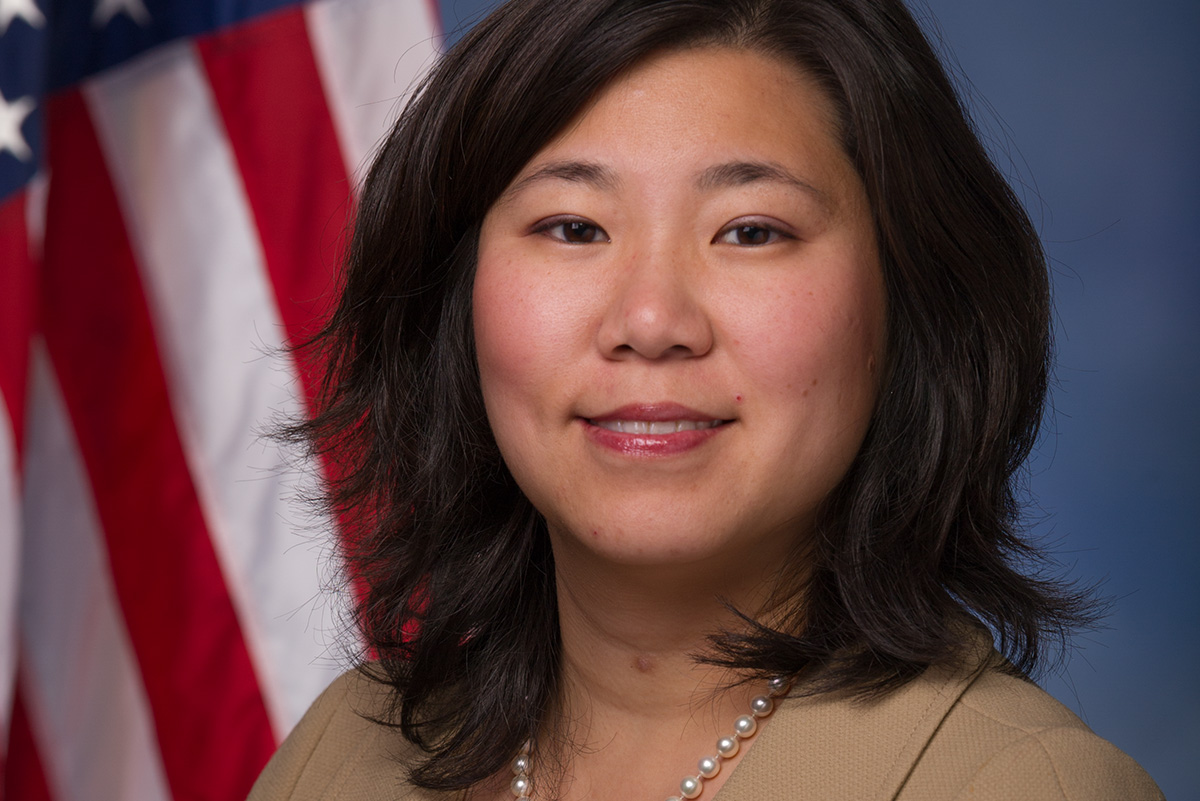
Few things have riled up Republicans in power like the ongoing fight to restrict gender-affirming care for minors.
The Trump-Vance administration has been clear in making the fight against transgender rights, healthcare, and visibility a priority as they enter their “lame duck” phase of the presidency.
With the midterms looming, they are hoping scapegoating trans children — as they did in 2020, only for it to grow into a core national party strategy in the following elections — will save them from a less-than-secure control of the federal government like they’ve had since Trump took office.
In the past year, numerous deals have been struck between hospitals that have provided gender-affirming care to minors and the Justice Department to halt any further care.
While Republican pundits and conservative voices continue to accuse these hospitals — like NYU Langone and Mount Sinai Health System — of committing what they contend are atrocities against these children, large portions of gender-affirming care for minors involve social transitions and puberty blockers, which are reversible.
The Washington Blade spoke with Congresswoman Grace Meng, who represents New York’s Sixth Congressional District and is the ranking member of the House Appropriations Subcommittee on Commerce, Justice, Science, and Related Agencies, to discuss whether these ongoing settlements between hospitals and the Trump-run Justice Department are legal.
In her role as the ranking member of the House Appropriations Subcommittee on Commerce, Justice, Science, and Related Agencies, Meng oversees funding for Justice Department and a slew of other federal agencies. The position gives her the power to look behind the coercion, examine how things are being done, and question the policies and actions of these federal powers in a way many other members of Congress cannot.
Meng said the Justice Department’s actions against hospitals providing gender-affirming care are part of what she sees as a broader pattern of institutions — under the control of this president — targeting LGBTQ people.
“Unfortunately this is not the first time that the DOJ is weaponizing the agency to target our communities, and our LGBTQ+ community, especially our young people, are unfortunately yet another victim of that,” Meng told the Blade. “The real victims are the actual patients and families who are losing a trusted provider.”
She argued that one prong of this ongoing situation is the way the DOJ is going about these “wins” — through pressure rather than through going to court to find actual wrongdoings.
“This DOJ knows that they can’t win in the courts based on the merit of these types of actions, so they are just working by bullying and using coercion to cheat their way through getting what they want,” she said.
She pointed to the use of litigation, subpoenas, and reputational damage against the hospitals as part of that pressure campaign.
“They know that they can’t prove any wrongdoing in court, so they’re just using the threat of prolonged litigation, subpoenas for patients’ records and trying to damage reputations of these institutions as they’ve been cutting funding for them.”
The hospitals involved so far include NYU Langone Hospitals in New York, University of Pittsburgh Medical Center in Pennsylvania, the Mount Sinai Health System in New York, the Cleveland Clinic Foundation in Ohio, Connecticut Children’s Hospital in Connecticut, and Texas Children’s Hospital in Texas.
Meng said the settlements are part of a broader strategy by the Justice Department.
“This is a part of their larger deliberate strategy across the country. They’ve obviously gone after NYU Langone. They’ve gone after Mount Sinai in my state, and they’re doing this in other states as well.”
When asked about the agreements being reached between the Justice Department and hospitals, Meng was direct.
“I think these are forced settlements. Absolutely,” Meng said.
Meng described the federal government’s involvement in individual trans healthcare decisions as an intrusion into private medical decisions.
“This is cruel. It’s a cruel form of coercion. It’s a form of cheating,” she went on, comparing this to the ongoing fight for reproductive freedom in the country. “Just like when we’re talking about reproductive rights, right? It’s an invasion of privacy. These are confidential patient records.”
Meng said the federal government should not be involved in decisions between families and their doctors.
“President Trump and the federal government do not belong in a hospital, helping to make decisions that are very personal and sensitive to every single family. They should not be involved in these decisions.”
She said the settlements could leave families without access to healthcare they need.
“Their way of forcing these settlements and leaving so many without the healthcare that they really need is really just devastating.”
Meng said the impact is already being felt by families in her district and across New York.
“The human impact, the impact on our families, on our constituents here in Queens and throughout New York, is really hurtful.”
Meng framed the issue as part of what she described as a larger pattern within the Trump-Vance administration of attacking the most vulnerable.
“If you ask me to sum up this administration in one word, it would be cruelty,” she said. “They feel like they have a right to decide who is American enough in this country, and who is good enough, and who is deserving enough.”
She went further, saying Trump is “literally acting as a dictator.”
She contrasted his leadership with that of a traditional public servant.
“Most public servants wake up every day thinking of ways that they can make people’s lives better, how they can help people. This administration and this action is no different. It wakes up and thinks of a new way to target a different community every day.”
As the ranking member of the House Appropriations Subcommittee on Commerce, Justice, Science, and Related Agencies, Meng said Congress has tools available to examine how the Justice Department operates and spends federal money.
“The purpose of our 12 subcommittees is to have direct oversight and leverage as Congress members, as the third branch of government, over how the Department of Justice spends our taxpayers’ money.”
One crucial thing Meng pointed out about being on this committee is the fact that much of the work of appropriations is bipartisan and is entirely within the power of Congress via the Constitution.
“We need the White House to respect the constitutional process that the Appropriations Committee goes through,” she said. “We write the Appropriations Law. It’s between Republican and Democratic Congress members.”
When asked about the funding from the settlements — and the continued funding for an increasingly looked-down-upon DOJ — she said she is seeking greater transparency into how federal money is being spent.
“I think that both sides will end up wanting more transparency into the money, how the money is spent.”
Meng said Congress has the legal authority to place requirements on the Justice Department through appropriations legislation.
“We have the legal authority to include language that helps write the DOJ and other agencies, but the DOJ’s budget, and so we will certainly exercise that authority whether or not we’re in the majority.”
She also pointed to the possibility of Democrats taking control of the U.S. House of Representatives after the midterms.
“Hopefully, as we’re in the majority after November, we will be able to have more teeth and more ability to apply that pressure and to write the bill in a way that is transparent and doesn’t harm our families.”
Despite the growing public agitation and disappointment over these settlements, Meng said there is not yet a specific schedule for congressional hearings on the issue, but that it may come after the midterms.
“We don’t have a timeline of hearings and specific topics, but CJS is everything under Commerce, Justice, and Science-related agencies,” she said. “Hopefully, when House Democrats control the House and maybe even the Senate, that we’ll be able to claw back some of their overreach.”
Meng also criticized what she described as a Justice Department operating outside the traditional boundaries of the agency.
“They can’t operate as a rogue agency or as a personal law firm of this president, in the way that they’re doing now. Using subpoenas, threatening prosecutions, these settlements — they are tools that are being used, I believe, unethically and illegally.”
Meng said trans children and their families could continue to face the consequences of the administration’s actions as the Justice Department expands its efforts.
“These are maybe low-hanging fruit or easy targets for the administration, but I can see them going after institutions in other states as they started to do as well.”
She said members of Congress have a responsibility to reassure affected families that they are not alone.
“Our job, whether it’s a representative for my Queens families, but for families across America too, is to let them know that I and my colleagues, many of my colleagues, are standing with them.”
“We are still with them, especially with the patients and the families affected by the NYU Langone deal, but any of these institutions and how they’re hurting them.”
Meng said she wants to achieve that through partnerships outside of government.
“We’re gonna do our best to expand partnership with organizations on the ground to make sure that they’re getting the support and the care that they need.”
While talking to the Blade, Meng also raised broader concerns about the relationship between Congress and the executive branch.
“This administration has definitely not followed the Constitution, and I know that there are pending lawsuits,” she said.
Just this week, the Trump-Vance administration was taken to court over what CNN, POLITICO and MS NOW alleged were violations of their First Amendment rights.
Meng said the administration has not treated Congress as an independent branch of government.
“They [the president] do not act as if Congress is a third branch of government. They think and act like Congress works for them, like they’re a part of their agencies that they’re weaponizing.”
Meng said she believes the public has become more aware of the administration’s actions, but that there is still work to do in explaining how those actions unfold.
“I think that the American people’s eyes have been opened a little more under this administration than in past ones … There’s definitely more room to continue to educate the public as to what this administration is doing.”
For Meng, the debate over trans healthcare ultimately comes down to the families affected by the decisions being made in Washington.
“What’s most important is not just the legalese that everyone’s debating these days when news like this comes out. We have to remember that there are real human beings, real families that are being impacted,” she said. “There are people crying behind closed doors in their homes, and they don’t know literally what they can do or where they will call next to get the care that they need and that they want.”
Meng said lawmakers have a responsibility to address the issue legislatively while also supporting families in their communities.
“It’s our job in Washington, in the capital, to fight these fights legislatively. But in our home districts and in our communities, it’s our job to reassure these families that we’re there for them, and that we’re going to be creative, and we’re going to find new partnerships and expand existing ones to make sure that our families have a path forward.”
She said local and state governments are also being forced to find ways to respond — and, in many cases, end up being some of the only places where protections can happen.
“Our local legislators and many of our communities, on the city level, municipal level, and the state level, they’re looking for more funding options, and a lot of them, including in New York, have had to step up in major ways.”
“Everyone has to step up in newer and more creative ways.”
Ultimately, Meng said the focus should remain on the families affected by the decisions.
“But at the end of the day, it’s the families that are impacted that we’re doing this for,” she said.
The Human Rights Campaign, the largest LGBTQ advocacy group in the U.S., issued a statement this week following the announcement of more settlements.
“This is nothing less than a crisis for families and transgender youth. Since day one, Trump and his callous administration have used the full force of the federal government to come after transgender young people, their families and their doctors — and far too many hospitals are complying and abandoning their patients. Now, even in states with policies that protect transgender people, the options for parents to get their children best-practice, and potentially life-saving healthcare, are dwindling day by day,” HRC President Kelley Robinson said.
“This is the exact outcome Trump wants to see — and this cruelty shouldn’t be lost on anyone who has ever had to make difficult decisions about how to safeguard their child’s health and well-being. Our thoughts are with the countless families across the country who feel scared and under siege. We will not stop fighting until everyone can have access to the healthcare they need.”
While the Blade had her, they also asked about House Speaker Mike Johnson (R-La.), and his decision to send members of Congress home rather than hold a vote on impeaching Defense Secretary Pete Hegseth, in part over his trans military ban, which has left thousands of highly skilled, ready and able workers sitting on the sidelines awaiting the courts to tell them if they are guaranteed the right to fight on behalf of the country.
“I can’t take credit for this, but someone called it the Hegseth holiday,” Meng said. “This speaker, every time there’s a tough vote, instead of acting as a leader and a speaker, he just calls it quits and he sends us home.”
“I believe — and I’m sure he does — that we had enough votes to impeach Hegseth, and he didn’t want to do it. So off we go.”
National
Philadelphia event to launch 2026 LGBT History Month
Dr. Fauci to be honored as 31 LGBT ‘Icons’ are announced

Equality Forum, the Philadelphia-based group that organizes the nation’s annual LGBT History Month in October, is scheduled to launch the 2026 LGBT History Month at a VIP Reception on Sept. 27.
The event, to be held at Philadelphia’s Independence Visitor Center, will honor Dr. Anthony Fauci, the former director of the U.S. National Institute of Allergies and Infectious Diseases who is credited with playing a leading role in the fight against HIV/AIDS and COVID-19. Equality Forum was to present Fauci with its International Role Model Award.
The Equality Forum, which operates programs focusing on LGBT history and the people who play a leading role in historic undertakings, will also present its Frank Kameny Award to Erica Deuso, who in 2025 won election as the first openly transgender mayor in the state of Pennsylvania as mayor of the town of Downington, Pa.
A statement released by the Equality Forum points out that LGBT History Month, held each year, celebrates the achievements of 31 lesbian, gay, bisexual, or transgender icons throughout the month of October. “Each day in October, a new LGBT icon is featured with a video, bio, bibliography, downloadable images, and other resources,” the statement says.
Although the statement releases the name and a short background description of each of this year’s 31 LGBT icons, the icons were scheduled to be officially announced and honored at the Sept. 27 event.
“The LGBT community is the only community worldwide that is not taught its history at home, in public schools or in religious institutions,” the statement says. “LGBT History Month provides role models, builds community and makes the civil rights statement about our extraordinary national and international contributions,” it says.
This year’s Icons include designer Calvin Klein, media mogul Barry Diller, U.S. Senate hopeful Chris Pappas, and perhaps most notably President Abe Lincoln.
Additional information about the event and a list of the 2026 LGBT Icons can be accessed at lgbthistorymonth.com.
Netherlands
Dutch prime minister visits Stonewall Inn
Rob Jetten is the Netherlands’ first openly gay prime minister

Dutch Prime Minister Rob Jetten on Monday visited the Stonewall Inn in New York.
“The Stonewall Inn is not just a gay bar in New York, but the place where in 1969 riots took place as a reaction to years of discrimination and police violence,” wrote Jetten on X. “This is seen as the starting point of the global LGBTIQ+ emancipation and activism. Nowadays, the bar is a national monument, dedicated to the LGBTIQ+ rights movement.”
“For me, it is impressive and moving to be here tonight. And also fitting, because the defense of human rights is an important part of our foreign policy,” he added. “The Netherlands stands alongside the Stonewall Inn community when it comes to everyone’s right to live openly, safely, and with pride, no matter who you are or who you love.”
De Stonewall Inn is niet zomaar een gay bar in New York, maar de plaats waar in 1969 rellen plaatsvonden als reactie op jarenlange discriminatie en geweld van de politie. Dit wordt gezien als startpunt van de wereldwijde lhbtiq+-emancipatie en activisme. Tegenwoordig is de bar… pic.twitter.com/hJmFYjF91Z
— Rob Jetten (@MinPres) September 23, 2026
Jetten in February became the Netherlands’s first openly gay prime minister.
He opened last month’s World Pride Human Rights Conference in Amsterdam. Jetten also participated in a panel with former Irish Prime Minister Leo Varadkar, former San Marino Captain Regent Paolo Rondelli, and other current and former heads of government who are gay or lesbian.
Jetten is scheduled to speak to the U.N. General Assembly on Thursday.
(Editor’s note: Jetten visited New York’s LGBT Community Center with New York City Mayor Zohran Mamdani before he left the city.)

Factors to consider when hiring an interior designer

PHOTOS: HRC National Dinner

The LGBTQ real estate map is being redrawn

I’m 66, he’s 27. Is it love or am I being played?

What’s frightening is also funny in ‘Venus’

Washington Blade responds to concerns over White House pool duties

Gov. Whitmer to serve as keynote speaker for Saturday’s HRC National Dinner

Spike in HIV cases prompts Fiji to declare national emergency

Caso Karlina: Una sentencia histórica contra las terapias de «conversión»

Capital Pride chair resigns from board after just 10 months
-

 Commentary4 days ago
Washington Blade responds to concerns over White House pool duties
-
LGBTQ Non-Profit Organizations4 days ago
Gov. Whitmer to serve as keynote speaker for Saturday’s HRC National Dinner
-
Fiji4 days ago
Spike in HIV cases prompts Fiji to declare national emergency
-
District of Columbia4 days ago
Capital Pride chair resigns from board after just 10 months