World
Canada reaffirms it will resettle LGBTQ Afghans
Taliban regained control of Afghanistan last August
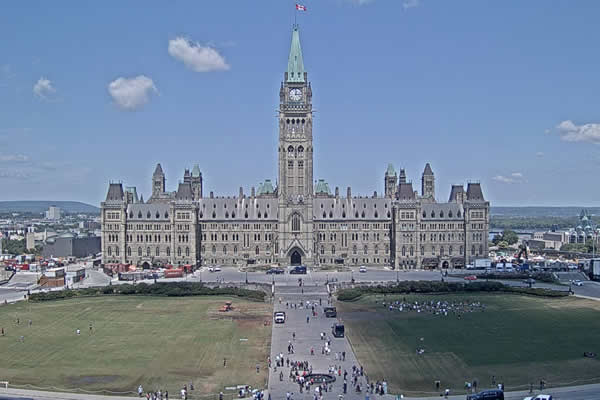
The Canadian government on Dec. 31 once again said it will resettle LGBTQ Afghans in the country.
Reuters reported a spokesperson for Immigration, Refugees and Citizenship Minister Sean Fraser did not say how many LGBTQ Afghans will be resettled in Canada, but said they would have “been referred by a third-party aid organization.”
The spokesperson also told Reuters the Canadian government will allow upwards of 230 female judges and their relatives who fled Afghanistan after the Taliban regained control of the country to settle in Canada. They are expected to arrive in Canada this year, but the spokesperson did not provide a specific timeline.
The Taliban regained control of Afghanistan on Aug. 15 after it entered Kabul, the country’s capital.
A Taliban judge in July said the group would once again execute people if it were to return to power in Afghanistan.
The Canadian government previously said it would offer refuge to LGBTQ Afghans.
Two groups of LGBTQ Afghans who Rainbow Railroad, a Canada-based group, helped evacuate from Afghanistan arrived in the U.K. last fall. Some of the 50 Afghan human rights activists who Taylor Hirschberg, a researcher at the Columbia Mailman School of Public Health who is also a Hearst Foundation scholar, has been able to help leave the country since the Taliban regained control of it are LGBTQ.
Rainbow Railroad is one of the many advocacy groups that has urged the Biden administration to do more to help LGBTQ Afghans who remain in the country.

India
Trans students not included in new India University Grants Commission equity rules
Supreme Court on Jan. 29 delayed implementation
The University Grants Commission is a regulatory body under India’s Education Ministry that is responsible for coordinating and maintaining standards in higher education. The University Grants Commission Equity Regulations, 2026, aim to address discrimination and promote the inclusion of lower castes, tribes, people with disabilities, those who are economically disadvantaged, and other marginalized groups in higher education.
The regulations quickly triggered controversy.
Students, faculty and civil society groups criticized them, largely around concerns about potential discrimination against students and the absence of certain procedural safeguards. Yet, even as the debate intensified, there was little public discussion about the lack of explicit mention of transgender students in the framework. The omission, though not central to the overall controversy, raised questions among some advocates about the scope of the regulations and who they ultimately protect.
According to the All India Survey on Higher Education, trans student enrollment in universities and colleges rose from 302 in the 2020-2021 academic year to 1,448 in the 2022-2023 academic year, reflecting a sharp increase but still representing a very small share of India’s overall higher education population.
The Supreme Court in its 2024 National Legal Services Authority v. Union of India affirmed trans people are entitled to full constitutional protection, including equality, dignity and access to education, and directed governments to treat them as a socially and educationally disadvantaged group eligible for quota-based protections in education and public employment. The ruling recognized gender identity as integral to personal autonomy and held that discrimination on this ground violates fundamental rights under Articles 14, 15, 16, and 21.
Against this legal backdrop, the regulations do not explicitly reference trans students, an omission that has drawn attention in discussions on how constitutional protections are implemented within higher education institutions.
In the Indian constitutional framework, Articles 14, 15, 16, and 21 collectively form the foundation of equality and personal liberty.
Article 14 guarantees equality before the law and equal protection of laws; Article 15 prohibits discrimination on grounds such as religion, race, caste, sex or place of birth; Article 16 ensures equality of opportunity in public employment; and Article 21 protects the right to life and personal liberty, which courts have interpreted to include dignity, autonomy, and access to education. These provisions underpin judicial recognition of protections for marginalized communities, including trans people, within public institutions.
Judicial and policy frameworks in India have increasingly recognized the need for institutional support for trans students, underscoring the contrast with the absence of explicit mention in the University Grants Commission Equity Regulations, 2026, regulations.
The Madras High Court has directed educational institutions to implement measures such as gender-neutral restrooms, mechanisms to update name and gender in official records, inclusion of trans identities in application forms and the appointment of LGBTQ-inclusive counselors for grievance redressal alongside enforcement of the Transgender Persons (Protection of Rights) Act and its Rules.
Policy instruments have echoed similar priorities.
The National Youth Policy 2014 acknowledged trans youth as a group facing social stigma and called for targeted interventions, while the National Education Policy 2020 emphasized reducing dropout rates and ensuring equitable access to education. The University Grants Commission itself has previously indicated that universities should adopt affirmative steps and institution-specific plans to support trans people, making their absence from the current regulatory text more pronounced.
Research and policy analyses have consistently documented structural barriers faced by trans students in India’s education system. The Center for Development Policy and Practices and other academic studies note that discrimination, bullying, and the absence of gender-sensitive infrastructure contribute to high dropout risks among trans students in both school and higher education. Census data underscore this disparity.
The 2011 Census recorded a literacy rate of about 56.1 percent among trans people, significantly lower than the national average of roughly 74 percent, reflecting long-standing barriers to access and retention in formal education.
The controversy intensified after the Supreme Court on Jan. 29 stayed the implementation of the University Grants Commission Equity Regulations, 2026, and agreed to examine their constitutional validity.
A bench led by Chief Justice Surya Kant observed the regulations raised serious legal questions, including concerns that some provisions appeared vague and potentially open to misuse, and sought responses from the federal government and the University Grants Commission. The court directed that the earlier 2012 anti-discrimination framework would remain in force in the interim and listed the matter for further hearing, signalling the need for detailed judicial scrutiny.
Public and political reactions followed, with student groups, academics, and political actors divided over the stay and the broader policy direction. The federal government, led by Prime Minister Narendra Modi, maintained the regulations were intended to address caste-based discrimination and strengthen accountability within higher education institutions even as debate intensified nationally.
The regulations go beyond paperwork. They require universities to create on-campus equity monitoring teams and designated officers responsible for identifying incidents of discrimination, receiving complaints and reporting them to institutional committees for action. However, while the framework spells out protections for certain caste and social categories, it does not explicitly include trans students within this structure. In practice, that absence could leave uncertainty about whether routine monitoring, reporting and grievance mechanisms would extend to them with the same clarity, particularly in campuses where implementation already varies widely.
The regulations also prescribe penalties for faculty and staff found responsible for discrimination, including suspension, withholding of promotions, or termination of service following institutional inquiry. For students, disciplinary action may range from warnings to suspension depending on the severity of the misconduct. Where an incident amounts to a violation of existing statutory or criminal law, institutions are required to refer the matter to law enforcement authorities, placing responsibility on universities to escalate cases beyond internal mechanisms when warranted.
The regulations do not create new criminal offences but require institutions to escalate cases to law enforcement when conduct violates existing statutes. These may include the Scheduled Castes and Scheduled Tribes (Prevention of Atrocities) Act, relevant provisions of the country’s penal code, such as criminal intimidation, assault or sexual harassment, disability rights protections, workplace harassment laws, and statutes addressing campus hazing. The framework is therefore stringent: campus inquiries can lead to disciplinary action, and, where legal thresholds are met, mandatory reporting to police. In the absence of explicit mention of trans students within the framework, questions remain about how individuals from the community would navigate complaint systems, interact with authorities, and access consistent institutional protections under these processes.
The Scheduled Castes and Scheduled Tribes (Prevention of Atrocities) Act, 1989 is among India’s strictest anti-discrimination criminal laws and applies to students, staff and any individual accused of caste-based offences. It criminalizes acts such as intentional insults or humiliation, social exclusion, threats, physical assault and other forms of harassment directed at members of specific castes or tribes. Offenses under the law can lead to arrest, non-bailable charges in several categories, and imprisonment that may extend from months to years depending on the severity of the conduct, along with fines. The law also restricts anticipatory bail in many cases and mandates prompt registration of complaints, which is why it is often viewed as a powerful legal safeguard for marginalized communities while also being regarded by some as carrying serious legal consequences once invoked.
Nishikant Dubey, a member of India’s ruling Bharatiya Jana Party, welcomed the Supreme Court’s decision to stay the regulations, stating the judges had acted appropriately and that the matter required careful legal scrutiny. Indrani Chakraborty, an LGBTQ rights activist and mother of a trans woman, told the Washington Blade the University Grants Commission Equity Regulations, 2026, is a welcome step toward supporting vulnerable students.
“The saddest part is that the transgender community is excluded which is very unfair,” said Chakraborty. “Presently, the transgender community is the most vulnerable and not mentioning the community is the act. I regard it as the biggest discrimination and will never help in changing the scenario of the transgender students.”
Chakraborty told the Blade the trans community, as a minority facing persistent social stigma and taboo, is often overlooked and must repeatedly advocate even for basic rights.
“I believe that grouping of individuals under caste, religion, gender, etc., is the base of discrimination. Personally, I disagree with naming and tagging any individual. Equity over quality is the need now for the most vulnerable. And the transgender community faces discrimination the most. Discrimination against any individual in educational institutions needs immediate attention and preventive measures should be necessarily implemented.”
Chakraborty said the absence of explicit inclusion of trans students amounts to discrimination, undermining equality in education and violating human dignity.
Ankit Bhupatani, a global diversity, equity and inclusion leader and LGBTQ activist, told the Blade that debate around the University Grants Commission Equity Regulations, 2026, has largely centered on concerns raised by relatively privileged students, particularly those in the unreserved category, while communities with limited visibility in higher education have received far less attention. Bhupatani also referenced the All India Survey on Higher Education statistics.
“According to Queerbeat, more than half of these 1,448 students are clustered in a few states and several large states still report almost no transgender students at all. Any serious equity regime has to guard every individual, including upper-caste students who are unfairly targeted or stereotyped , but the public conversation cannot pretend this tiny, highly vulnerable group does not exist,” said Bhupatani. “When outrage dominates headlines and the most marginalized are barely mentioned, the word ‘equity’ starts to lose meaning.”
Bhupatani told the Blade that the University Grants Commission Equity Regulations, 2026, define gender to include the “third gender” and prohibit discrimination on that basis, but then repeatedly identify lower castes, tribes, economically disadvantaged groups, people with disabilities, and women as specific groups, while trans students and teachers are not explicitly listed. Bhupatani said that for a young trans person reading the regulations, the message can feel indirect — that others are clearly recognized while their protections depend on interpretation. He added that explicitly naming trans people as a protected group would not dilute safeguards for others, but would instead ensure those already facing stigma are not left to seek recognition case by case.
“Transgender people sit at the intersection of legal vulnerability and social prejudice, so if they are not named and centered in large regulatory exercises, they quickly disappear from view,” said Bhupatani. “Campus rules need to start with a simple moral intuition. No one, whether Dalit or Brahmin, trans or cis, rich or poor, should be harassed, excluded or denied opportunity because of who they are. The University Grants Commission (Promotion of Equity in Higher Education Institutions) Regulations, 2026 already move in this direction by defining discrimination broadly for all students and staff and by listing grounds such as caste, gender, religion, disability, and place of birth. That universal shift is essential.”
Bhupatani said a fair equity framework should operate on two levels. First, it must guarantee that any individual, regardless of background, can seek redress if treated unfairly. Second, it should explicitly identify groups that face entrenched barriers — including lower castes and tribes, people with disabilities, and trans people — and build specific safeguards for them. He added that concerns about misuse could be addressed through clearer definitions, transparent procedures, trained inquiry committees, representation from diverse groups, and meaningful penalties for false or malicious complaints.
Kalki Subramaniam, a trans activist and artist, told the Blade that trans students face layered vulnerabilities — including social stigma, harassment, and systemic neglect — that often go unaddressed on campuses. When policies do not explicitly name them, she said, it signals that their struggles are not seen as warranting recognition, reinforcing isolation, and undermining their ability to access safe and dignified education.
“I have faced this and I really do not want this generation of transgender students to go through the same kind of exclusion and treatment,” said Subramaniam. “If the government truly believes in inclusive education, transgender students must be explicitly recognised in every policy conversation. Otherwise, we remain erased from the very spaces that claim to be suitable. We will certainly urge the government to ease and prioritise education for transgender community students.”
Subramaniam said limiting protections primarily to caste categories reflects a narrow approach to justice, noting that discrimination on campuses can also be shaped by gender, class, disability, and sexuality. She said a more expansive framework would protect any student facing discrimination, regardless of identity, and emphasized that equity must operate universally for campuses to function as spaces of learning rather than exclusion.
Canada
Shooter who killed 7 people inside Canada school was transgender
Advocacy groups have condemned efforts to link trans people to mass shootings
Canadian authorities on Wednesday said the person who killed seven people and injured more than two dozen others at a school in Tumbler Ridge, British Columbia, the day before was transgender.
Dwayne McDonald, the deputy commissioner for the Royal Canadian Mounted Police in British Columbia, during a press conference said Jesse Van Rootselaar, 18, “was born as a biological male who approximately … six years ago began to transition as female and identified as female both socially and publicly.” McDonald added it is “too early to say whether” the shooter’s gender identity “has any correlation in this investigation.”
The shooter died by suicide, and authorities found her body inside the school.
“We have a history of police attendance at the family residence,” said McDonald. “Some of those calls were related to mental health issues.”
Egale Canada, the country’s LGBTQ and intersex rights group, on Wednesday said it is “heartbroken by the horrific shooting in Tumbler Ridge.”
“Our deepest condolences are with the victims, their families, and the entire community as they navigate unimaginable grief,” said the group in a statement. “We unequivocally condemn this act of violence. There is no place for violence in our schools or in our communities. At this profoundly difficult time, we hold the people of Tumbler Ridge in our thoughts and stand in solidarity with all those affected.”
Mass shootings are relatively rare in Canada, unlike in the U.S.
GLAAD notes statistics from the Gun Violence Archive that indicate trans people carried out less than 0.1 percent of the 5,748 mass shootings in the U.S. between Jan. 1, 2013, and Sept. 15, 2025. The Human Rights Campaign, the National LGBTQ Task Force, and other advocacy groups last August condemned efforts to scapegoat the community after a trans woman shot and killed two children and injured 17 others inside the Annunciation Catholic School in Minneapolis.
Russia
Russia’s anti-LGBTQ crackdown takes absurd turn
Authorities targeted one of the country’s largest bookstore chains last month
While MAGA continues to attack LGBTQ rights in the U.S. — including erasing queer history and removing children’s books with LGBTQ characters from libraries and pushing an ever‑broader censorship agenda — and as the UK faces MAGA‑inspired campaigns demanding the removal of LGBT literature from public libraries, Russia’s assault on LGBTQ‑related media has taken an extreme and frankly absurd turn. It is a cautionary tale for Western countries of just how far censorship can go once it becomes normalized. From books to anime, TV shows, and even academia, queer existence is being systematically erased.
In January, one of Russia’s largest private bookstore chains, Chitai‑Gorod-Bukvoed, faced the risk of being shut down over alleged “LGBT propaganda” under a law that prohibits any positive mention of LGBTQ content and equates LGBTQ material with pornography and pedophilia.
Among the books targeted were “Beartown,” “Us Against You,”and “The Winners”by Fredrik Backman, “The Left Hand of Darkness” by Ursula K. Le Guin, and “The Heart’s Invisible Furies” by John Boyne.
According to Chitai‑Gorod-Bukvoed CEO Alexander Brychkin, once it became known in mid‑December that law enforcement agencies had launched inspections, the Chitai‑Gorod–Bukvoed network immediately removed these titles from sale nationwide. In a comment to Kommersant, Brychkin stressed that the chain “operates strictly within the legal framework,” noting that the books were not listed in any official register of banned materials at the time the inspections began and had been on sale for several years.
Previously, two of the biggest online film distribution companies were charged as well under the “LGBT Propaganda law.”
Private businesses had no more right to speak up than writers or artists who are persecuted for their work. This is a nightmare scenario for many Americans who believe the free market itself can protect freedom of expression. This is the reality of modern‑day Russia.
A censored version of the anime “Steins;Gate” has also been released on Russia’s most prominent streaming platform, “Kinopoisk,” in which the storyline of one of the main characters was altered due to the ban on so‑called “LGBT propaganda,” as reported by opposition outlets Verstka and Dozhd, as well as fans on Reddit.
In the original series, the character Ruka Urushibara is a young person with an androgynous appearance who struggles to accept themself in a male body — an obvious indication that Ruka is a transgender girl. Ruka wears women’s clothing and dreams of becoming a girl. In episode eight, Ruka is given the chance to intervene in the past by sending a message to their mother in order to be born female.
In the Kinopoisk version, released in late 2025, Ruka is instead portrayed as a girl living with HIV — something entirely absent from the original anime and invented in translation. The storyline and dialogue were rewritten accordingly, completely distorting the original meaning: in this version, Ruka attempts to change the past in order to be born “healthy,” without HIV, rather than to be born a girl. This is not only absurd, but deeply offensive to the LGBTQ community, which has long been stigmatized in relation to HIV.
A similar distortion appears in “Amediateka”’s translation — or, better to say, rewriting — of the new AMC series “Interview with the Vampire.” Translators rewrote dialogue in ways that fundamentally misrepresented the plot, downplaying the openly queer nature of the characters to the point that romantic partners were translated merely as “friends” or “pals,” rendering entire scenes meaningless. At the same time, even brief critical references to Russian or Soviet politics were removed.
As for queer romance, such as the popular Canadian TV show “Heated Rivalry,”it has no official Russian translation at all and circulates only through fan translations. The show remains popular among millennials and Gen Z, and Russian social media platforms like X (Twitter) and Instagram are full of positive reviews. Yet, in theory, promoting such a show could put someone at risk under the law. People still watch it, still love it, still build fan communities, but it all exists quietly, pushed under the carpet.
The prohibition is not total, but it is a grotesque situation when even such a nice and harmless show is stigmatized.
Books suffer even more. Some classics fall under bans, and books are physically destroyed. In other cases, the outcome is worse: texts are rewritten and censored, as with “Steins;Gate.” This affects not only fiction but also nonfiction. For example, in “Deep Color” by Keith Recker, an American researcher of visual arts, all mentions of queer, feminism or BDSM culture were erased in the Russian edition. Even historically necessary references were removed, including mentions of the pink triangle used by the Nazis.
In the Russian edition of Skye Cleary’s “The Thirst for Authenticity: How Simone de Beauvoir’s Ideas Help You Become Yourself,” dozens of paragraphs were blacked out. Passages discussing the fluidity of gender and a person’s right to define themselves outside the rigid male–female binary were removed. Sections on contraception and abortion, critiques of biological reductionism and social pressure on women, details of Simone de Beauvoir’s intimate life and her relationships with women, as well as reflections on non‑monogamous relationships, were all excised. Even footnotes referencing quotes about gender identity were hidden.
Those two books are one of the many examples of the fate of Russian-translated nonfiction. Actually, even books about animal reproduction were demanded to be censored because of the “LGBT propaganda law”. Apparently, the authorities couldn’t accept a neutral scientific description of same-sex behavior and reproductive diversity in animals.
The authorities know what they are doing. Most people are less likely to read dense nonfiction or search actual studies about animal sexual behavior than to watch a popular TV show about queer hockey players, which makes visual media easier to censor quietly and effectively. So they really could show LGBTQ as something negative and absolutely unnatural for most of the Russian population.
And this is the core of the problem. This is not just censorship of content — it is the rewriting of history, even the narrative around biology. It is the deliberate marginalization of queer existence, the systematic erasure of queer people’s ability to see themselves reflected in culture, literature, and art.
The U.S. still retains independence in academia, publishing, and private business when it comes to queer voices. Russia does not. History shows where this path leads: Nazi Germany burned books; the Taliban destroyed cultural and historical materials. This is always one of the first steps toward genocide — not immediate, perhaps, but inevitable once dehumanization becomes official policy. It never stops with just one group. In Russia, immigrants, people from the North Caucasus and Central Asia, Ukrainians, and even disabled citizens face daily dehumanization — it’s all part of the same system.
And now, alarmingly, the U.S. seems to be following in Russia’s footsteps — the same path that enabled war in Ukraine and the thriving of authoritarianism.