Africa
Rape, murder of lesbian in Kenya sparks outrage across Africa
Sheila Lumumba was killed inside her home
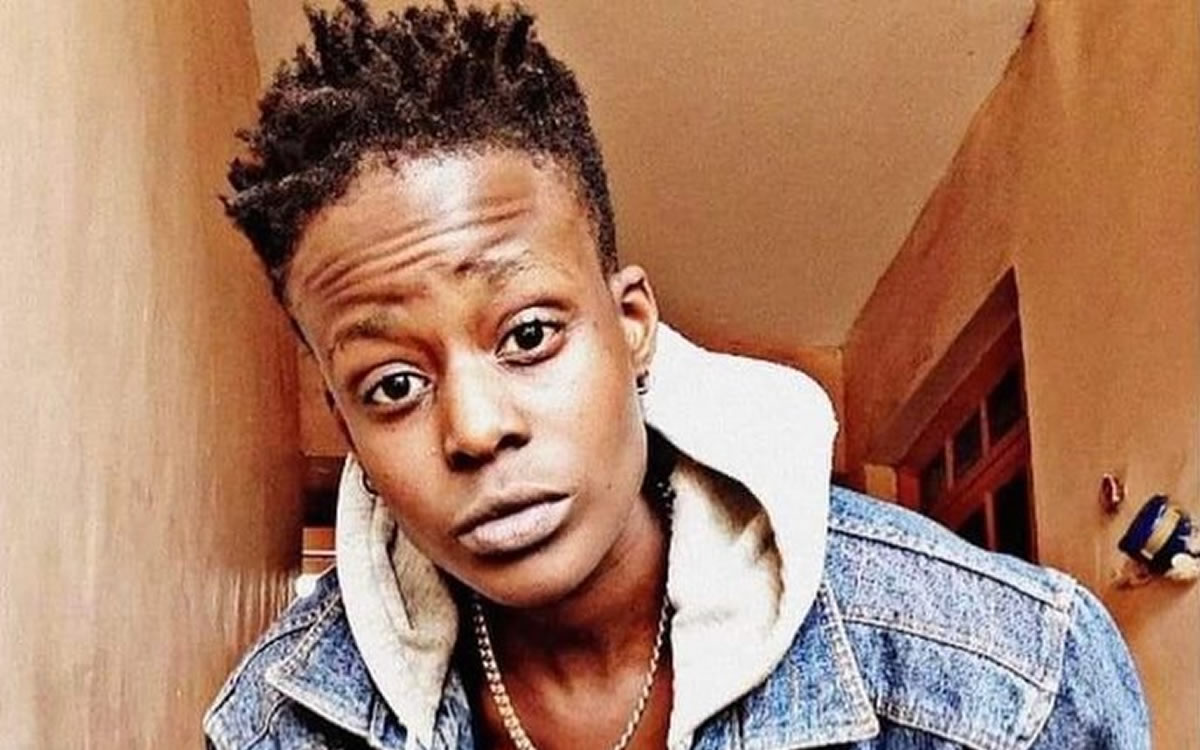
The brutal murder of a lesbian woman in Kenya has sparked renewed concerns about the safety of LGBTQ people across Africa.
Kenyan authorities say the six men who raped and murdered Sheila Lumumba on April 19 in her home in Karatina, a town in Nyeri County, targeted her because of her sexual orientation.
Apart from South Africa, many African countries still don’t protect the LGBTQ community, despite some of them having legalized same-sex relations. Members of the LGBTQ community continue to face torture, rape, social isolation and murder.
Various African human rights groups have sought to address these issues, but incidents like Lumumba’s brutal murder continue to take place.
“Queer people’s right to live is not hinged on anyone’s beliefs. Some of those opinions are dangerous and biased. Homophobia in the name of appeasing your beliefs gets people killed,” said Njeri wa Migwi, a Kenyan human rights activist. “Sheila is not the first. We have Erica and Wawira; names people will soon forget, like their lives didn’t matter.”
“No one is killing you for existing or for your sexuality. If it was so simple why would anyone want to be queer where your very existence is hated, dreaded and can lead to your death. You don’t have to love, like or support queer people just respect their right to life, the same way they do with your lives,” added wa Migwi.
Like wa Migwi, Happy Family Youth Uganda Executive Director Iga Isma said a lot of LGBTQ people do not have a sense of belonging because they have been rejected and sidelined by their loved ones.
“Today, hundreds of 2SLGBTQIA+ people have no place to call home as they are kicked out by their homophobic and transphobic conservative communities as well as family members due to stigma and a lot of 2SLGBTQIA+ persons continue to live in the shadows and do not come out due to fear of rejection from their families, colleagues and members of their communities,” noted Isma. “However, we as 2SLGBTQIA+ organizations are trying to educate members of the community, government and all stakeholders about the 2SLGBTQIA+ community because that is the only way we can do away with the repugnant attitude towards the 2SLGBTQIA+ community. Though it is difficult due to the homophobic and transphobic communities within our midst, we are trying to change the narrative.”
For Keke Petrova, director of LGBT_Angola, an Angolan LGBTQ rights group, a lot of LGBTQ people, even in those African countries where same sex relations have been legalized, are still stigmatized.
“To be honest, I fear for our safety. Most news related to the 2SLGBTQIA+ community is often silenced, through deaths, rapes and assaults,” said Petrova. “However, besides that, the legalization of the 2SLGBTQIA+ community in various African countries has brought more awareness to the people. We keep on fighting through dialogue as well as conversations and we reach out and talk about 2SLGBTQIA+ issues to all that want to learn.”
Despite the many difficulties that Africa’s LGBTQ community continues to face, Ruth Maseko of the Triangle Project, a South African advocacy group, said progress remains possible as long as stakeholders are willing to work together to end the scourge of homophobia.
“Africa needs more awareness, people need to be educated and taught that there is nothing wrong about same gender love, a man can love a man and a woman can love a woman and in terms of parents who later on find out that their child is gay or lesbian we need to have parents support groups because some parents end up in shock when they get to figure out that their child is gay or a lesbian so parents need to be sat down with and be educated too,” said Maseko.



Botswana
Lorato ke Lorato: marriage equality, democracy, and the unfinished work of justice in Botswana
High Court considering marriage equality case

As Botswana prepares for the resumption of a landmark marriage equality case before the High Court on July 14–15, the country finds itself at a critical constitutional crossroads.
At first glance, the matter may appear to be about whether two women, Bonolo Selelelo and Tsholofelo Kumile, can have their love legally recognized. At its core however, this case is about something far more profound: the dismantling of patriarchy, the decolonization of law, and the integrity of Botswana’s constitutional democracy.
Beyond marriage: a question of power
Marriage, as a legal institution, has never been neutral. It has historically functioned as a mechanism for regulating women’s bodies, sexuality, and social roles within a patriarchal order. To deny LBQ (lesbian, bisexual, and queer) women access to marriage is not merely to exclude them from a legal benefit, it is to reinforce a hierarchy of relationships, where heterosexual unions are deemed legitimate and all others invisible. This case therefore challenges the very foundations of who gets to love, who gets to belong, and who gets to be protected under the law.
As feminist scholars have long argued, patriarchy is sustained through institutions that appear ordinary but are deeply political. The law is one such institution. And it is precisely here that this case intervenes: by asking whether Botswana’s legal system will continue to uphold exclusion, or evolve to reflect the constitutional promise of equality.
A constitutional journey: Botswana’s courts and human dignity
This is not the first time Botswana’s courts have been called upon to affirm the dignity of LGBTQI+ persons. Over the past decade, the judiciary has built a progressive body of jurisprudence grounded in equality, nondiscrimination, and human dignity.
In Attorney General v. Rammoge and Others (Court of Appeal Civil Appeal No. CACGB 128-14, 2016), the Court of Appeal upheld the right of LEGABIBO to register as an organization. The court affirmed that:
“The refusal to register the appellant society was not only unlawful, but a violation of the respondents’ fundamental rights to freedom of association.”
This was followed by the ND v. Attorney General of Botswana (MAHGB-000449-15, 2017) case, where the High Court recognized the right of a transgender man to change his gender marker. The court held:
“Gender identity is an integral part of a person’s identity … and any interference with that identity is a violation of dignity.”
In Letsweletse Motshidiemang v. Attorney General (MAHGB-000591-16, 2019), the High Court decriminalized same-sex activity, declaring sections of the Penal Code unconstitutional. Justice Leburu powerfully stated:
“Human dignity is harmed when minority groups are marginalized.”
This decision was affirmed by the Court of Appeal in Attorney General v. Motshidiemang (CACGB-157-19, 2021), where the court emphasized:
“The Constitution is a dynamic instrument … it must be interpreted in a manner that gives effect to the values of dignity, liberty, and equality.”
These cases collectively establish a clear principle: the Constitution of Botswana protects all persons, not just the majority.
The marriage equality case now asks a logical next question: If LGBTQI+ persons are entitled to dignity, identity, and freedom from criminalization, why are their relationships still denied recognition?
Decolonizing the law: What is truly ‘UnAfrican’?
Opponents of marriage equality often argue that homosexuality is “unAfrican.” This claim, while politically powerful, is historically inaccurate. Same-sex relationships and diverse gender identities have existed across African societies long before colonial rule. What is foreign, however, are the laws that criminalize these identities.
Botswana’s anti-sodomy laws were inherited from British colonial legal systems, not from indigenous Tswana culture. As scholars of African history have demonstrated, colonial administrations imposed rigid Victorian moral codes that erased and suppressed existing sexual diversity. To claim that homosexuality is unAfrican, while defending colonial-era laws, is therefore a contradiction.
A truly decolonial approach to the law requires us to ask: Whose morality are we upholding? And whose history are we erasing?
Marriage equality, in this sense, is not a Western imposition: it is part of a broader project of reclaiming African dignity, plurality, and humanity.
Democracy on trial: the question of separation of powers
This case also raises important questions about the health of Botswana’s democracy.
Following the 2021 Court of Appeal decision affirming the decriminalization of same-sex relations, Botswana witnessed public demonstrations, including marches led by groups such as the Evangelical Fellowship of Botswana (EFB), opposing the judgment and calling for the retention of discriminatory laws.
While public participation is a cornerstone of democracy, these events raise deeper concerns about the separation of powers. Courts are constitutionally mandated to interpret the law and protect fundamental rights, even when such decisions are unpopular. When judicial decisions grounded in constitutional principles are publicly resisted on moral or religious grounds, it risks undermining the authority of the courts and the rule of law itself.
Democracy is not simply about majority opinion: it is about the protection of minority rights within a constitutional framework.
Botswana is not a theocracy
It is also important to clarify a recurring misconception: Botswana is not a Christian nation.
Botswana is a secular constitutional democracy and more accurately, a pluralistic society that recognizes and respects diversity of belief, culture, and identity. The Constitution does not elevate one religion above others, nor does it permit religious doctrine to dictate legal rights. The law must serve all citizens equally, regardless of faith.
To frame marriage equality as a threat to Christianity is therefore misplaced. The question before the courts is not theological, but constitutional: Does the exclusion of same-sex couples from marriage violate the rights to equality and nondiscrimination?
Love, equality, and the future of justice
At its heart, this case is about love, but it is also about power, history, and justice. It asks whether Botswana is prepared to move beyond colonial legal frameworks and patriarchal norms, and to embrace a future grounded in equality, dignity, and inclusion.
It asks whether the Constitution will continue to be interpreted as a living document, one that evolves with society, or remain constrained by outdated moral assumptions. Ultimately, it asks whether Botswana’s democracy can hold true to its founding promise: that all persons are equal before the law.
As the High Court prepares to hear this case in July 2026, the nation has an opportunity to affirm not only the rights of two individuals, but the broader principle that love, in all its diversity, deserves recognition, and protection.
Lorato ke lorato.
Love is love.
Justice, if it is to mean anything at all, must make space for it.
Nozizwe is the CEO of LEGABIBO (Lesbians, Gays and Bisexuals of Botswana)
State Department
Report: US to withhold HIV aid to Zambia unless mineral access expanded
New York Times obtained Secretary of State Marco Rubio memo
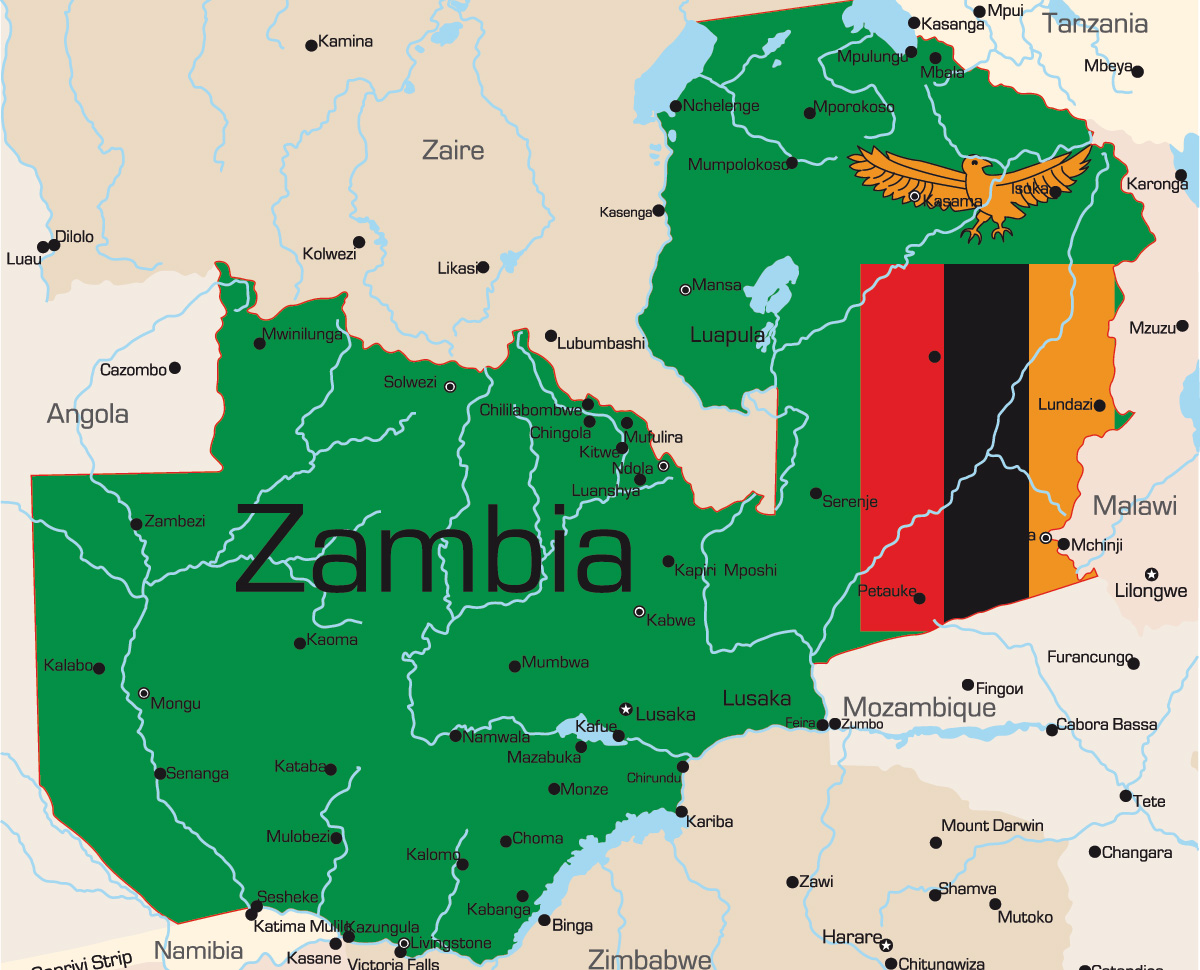
The State Department is reportedly considering withholding assistance for Zambians with HIV unless the country’s government allows the U.S. to access more of its minerals.
The New York Times on Monday reported Secretary of State Marco Rubio in a memo to State Department’s Bureau of African Affairs staffers wrote the U.S. “will only secure our priorities by demonstrating willingness to publicly take support away from Zambia on a massive scale.” The newspaper said it obtained a copy of the letter.
Zambia is a country in southern Africa that borders Tanzania, Malawi, Mozambique, Zimbabwe, Botswana, Namibia, Angola, and the Democratic Republic of Congo.
The Times notes upwards of 1.3 million Zambians receive daily HIV medications through PEPFAR. The newspaper reported Rubio in his memo said the Trump-Vance administration could “significantly cut assistance” as soon as May.
“Reports of (the) State Department withholding lifesaving HIV treatment in return for mining concessions in Zambia does not make us safer, stronger, or more prosperous,” said U.S. Sen. Jeanne Shaheen (D-N.H.), the ranking member of the Senate Foreign Relations Committee, on Tuesday. “Monetizing innocent people’s lives further undermines U.S. global leadership and is just plain wrong.”
The Washington Blade has reached out to the State Department for comment.
Zambia received breakthrough HIV prevention drug through PEPFAR
Rubio on Jan. 28, 2025, issued a waiver that allowed PEPFAR and other “life-saving humanitarian assistance” programs to continue to operate during a freeze on nearly all U.S. foreign aid spending. HIV/AIDS service providers around the world with whom the Blade has spoken say PEPFAR cuts and the loss of funding from the U.S. Agency for International Development, which officially closed on July 1, 2025, has severely impacted their work.
The State Department last September announced PEPFAR will distribute lenacapavir in countries with high prevalence rates. Zambia two months later received the first doses of the breakthrough HIV prevention drug.
Kenya and Uganda are among the African countries have signed health agreements with the U.S. since the Trump-Vance administration took office.
The Times notes the countries that signed these agreements pledged to increase health spending. The Blade last month reported LGBTQ rights groups have questioned whether these agreements will lead to further exclusion and government-sanctioned discrimination based on sexual orientation and gender identity.
Botswana
The rule of law, not the rule of religion
Bonolo Selelo and Tsholofelo Kumile are challenging the Botswana Marriage Act
Botswana was in a whole frenzy as religious and traditional fundamentalists kept mixing religion and constitutional law as if it were harmless. It is not. One is a private matter of belief between you and God, while the other is the framework that protects and governs us all. When these two systems get fused, the result is rarely justice. It results in discrimination.
The ongoing case brought by Bonolo Selelo and Tsholofelo Kumile challenging provisions of the Botswana Marriage Act has reignited a familiar debate in Botswana. Some commentators insist that marriage equality violates religious values and therefore should not be recognized by law. It is a predictable argument. It is also fundamentally incompatible with constitutional governance.
Botswana is not a Christian state. It is a constitutional democracy governed by the Constitution of Botswana. That distinction matters. In a constitutional democracy, laws are interpreted in accordance with constitutional principles such as equality, dignity, protection, inclusion and the rule of law, rather than the doctrinal beliefs of any particular religion.
Religion has no place in constitutional law and democracy
The central problem with religious arguments in constitutional disputes is simple in that they divide, they other, they contest equality and they are personal. Constitutional law by contrast, must apply equally to everyone.
Botswana’s Constitution guarantees fundamental rights and freedoms under Sections 3 and 15, including protection from discrimination and the right to equal protection of the law. These provisions are not conditional on religious approval. They exist precisely to protect minorities from the preferences or prejudices of the majority.
Legal experts, such as Anneke Meerkotter, in her policy brief in Defense of Constitutional Morality, point out that constitutional rights function as a safeguard against majoritarian morality. If rights depended on whether the majority approved of a minority’s identity or relationships, they would not be rights at all. They would merely be privileges.
This principle has already been affirmed in Botswana’s jurisprudence. In the landmark decision of Letsweletse Motshidiemang v Attorney General, the High Court held that criminalizing consensual same-sex relations violated constitutional protections of liberty, dignity, privacy, and equality. This judgment noted that constitutional interpretation must evolve with society and must be guided by human dignity and equality. The court emphasized that the Constitution protects all citizens, including those whose identities, expressions or relationships may be unpopular. That ruling was later upheld by the Court of Appeal of Botswana in 2021, reinforcing the principle that constitutional rights cannot be restricted on grounds of moral disapproval alone. These decisions were not theological pronouncements. They were legal determinations grounded in constitutional principles.
The danger of religious majoritarianism
When religion is used to justify legal restrictions, the result is what constitutional scholars call “majoritarian moralism.” It allows the dominant religious interpretation in society to dictate the rights of everyone else. That approach is fundamentally incompatible with constitutional democracy. Botswana is religiously diverse. While Christianity is the majority faith, there are also Muslims, Hindus, traditional spiritual communities, Sikh and people who practice no religion at all. If the law were to follow the doctrines of one religious group, which interpretation would it adopt? Christianity alone contains dozens of denominations with different views on love, equality, marriage, sexuality, and gender. The moment the state begins to legislate on the basis of religious doctrine, it implicitly privileges one belief system over others. That undermines both religious freedom and constitutional equality. Ironically, keeping religion separate from constitutional law is what protects religious freedom in the first place.
Judicial independence is the cornerstone of Botswana’s governance system
The current case involving Bonolo Selelo and Tsholofelo Kumile is before the judiciary, where it belongs. Courts exist to interpret the Constitution and determine whether legislation complies with constitutional rights. Political and religious lobbying, as well as public outrage, must not influence that process.
Judicial independence is the cornerstone of Botswana’s governance system. According to the International Commission of Jurists, judicial independence ensures that courts can make decisions based on law and evidence rather than political or social pressure.
When governments, political, religious, or traditional actors attempt to interfere in constitutional litigation, they weaken the rule of law. Botswana has historically prided itself on having one of the most stable constitutional systems in Africa. The judiciary has played a critical role in safeguarding rights and maintaining legal certainty. The decriminalization case demonstrated this. Despite strong public debate and political sensitivity, the courts assessed the law according to constitutional principles rather than moral panic. The same standard must apply in the current marriage equality case.
This article was first published in the Botswana Gazette, Midweek Sun, and Botswana Guardian newspapers and has been edited for the Washington Blade.
Bradley Fortuin is a consultant at the Southern Africa Litigation Center and a social justice activist.

Trump tells Fox News he won the ‘gay vote’ — but polls tell a different story

Anti-trans visa ruling echoes Nazi regime destroying trans documents

Japanese Supreme Court to consider marriage equality

The outrage economy is not the LGBTQ community

Calendar: March 27-April 2

PHOTOS: Capital Stonewall Democrats 50th anniversary

Polish court rules country must recognize same-sex marriages from EU states

Capital Stonewall Democrats 50th anniversary gala draws sold out crowd

Trans Day of Visibility events planned

Virginia General Assembly’s 2026 legislative session ends
-

 Photos5 days ago
PHOTOS: Capital Stonewall Democrats 50th anniversary
-
Poland5 days ago
Polish court rules country must recognize same-sex marriages from EU states
-
District of Columbia5 days ago
Capital Stonewall Democrats 50th anniversary gala draws sold out crowd
-
District of Columbia4 days ago
Trans Day of Visibility events planned