Asia
Out K-pop star attacked in ‘hate crime’
Holland said incident took place on Wednesday in Seoul nightlife district

Out K-pop star Holland, real name Go Tae-seob, was brutally attacked Wednesday in the Itaewon commercial district of the South Korean capital city of Seoul. A spokesperson for the Seoul Metropolitan Police Agency confirmed that the singer had been attacked.
The Itaewon district is known for its cosmopolitan dining and nightlife, with Korean barbecue restaurants and upscale bistros, as well as low-key kebab shops catering to a late-night crowd. Casual beer bars and gay pubs sit alongside hip dance clubs where DJs spin hip-hop and house music.
In a tweet about the incident, the out gay pop star wrote; “Last night, I was walking around Itaewon with my manager and a friend. Suddenly, a stranger man approached me and hit me on the face twice, calling me ‘a dirty gay.’ Now I have a scar on my face and I’m going to the hospital soon.”


Holland also noted; “This is obviously a hate crime. The fact that my sexuality as gay is public should never expose myself to this kind of violence. Nor any other LGBT+ and all elders, women and minorities in this world. This happening in 2022 shows the sad reality of LGBT+ human rights.”
This is obviously a hate crime. The fact that my sexuality as gay is public should never expose myself to this kind of violence. Nor any other LGBT+ and all elders, women and minorities in this world. This happening in 2022 shows the sad reality of LGBT+ human rights.
— HOLLAND (@HOLLAND_vvv) May 5, 2022
At the end of March earlier this year, the singer revealed during a live stream with fans that he is currently seeing a special someone, but he didn’t give many details about his new partner.
PinkNewsUK reported that the K-pop singer was questioned by fans in the chat during the live stream about his relationship and does indeed “have a boyfriend now.” Holland repeated the happy news while smiling, adding “damn” cheekily at the end.
“He’s very handsome and kind, tall,” Holland said, describing his boyfriend to fans.
so.. i have a boyfriend pic.twitter.com/K3HS62vvqQ
— HOLLAND (@HOLLAND_vvv) March 24, 2022
In an interview published by Daily Mirror journalist Zahna Eklund, she noted that being an LGBTQ celebrity in South Korea isn’t always easy. The subject is still very taboo and same-sex marriage is yet to be legalized. So when Holland, burst onto the K-pop scene in 2018 as the industry’s only openly gay star, he had to fight tooth and nail to get recognized.
Holland first told his friends about his sexuality when he was a teenager, but admitted he didn’t tell his parents until he debuted as an idol in 2018. The 24-year-old singer has also said that he was bullied in school because of his sexuality, Eklund wrote.
In its annual Global Human Rights Report for 2022, Human Rights Watch reported;
“The Republic of Korea (South Korea) is an established democracy that largely respects civil, political, economic, social, and cultural rights, although significant human rights concerns remain.
Discrimination against women is pervasive, as well as discrimination against lesbian, gay, bisexual, and transgender (LGBT) people, racial and ethnic minorities, and foreign migrants and refugees.
The LGBT rights movement in South Korea is growing but continues to face hostility and severe discrimination, especially in the armed forces. In October, a South Korean court ruled that the military unlawfully discriminated against Byun Hee-su, the country’s first openly transgender soldier, when it discharged her after she underwent a gender affirming surgery in 2019. The court ordered her reinstatement, but Byun died by suicide in March.
In schools, LGBTQ+ children and young people experience severe isolation and mistreatment including bullying and harassment, a lack of confidential mental health support, exclusion from school curricula, and gender identity discrimination.
Activists and progressive legislators have actively advocated for the National Assembly to develop and pass a broad-based national anti-discrimination law protecting LGBTQ+ persons as well as women, children, people with disabilities, older people, and foreigners. But the government did not make meaningful progress on such a law, citing a vocal Christian conservative group’s anti-LGBTQ+ opposition.
Evangelical Korean churches and religious organizations also continue their efforts to attempt to effectively erase LGBTQ+ Koreans by marginalizing and demonizing them.”





Japan
Japanese Supreme Court to consider marriage equality
Japan only G7 country that does not legally recognize same-sex couples
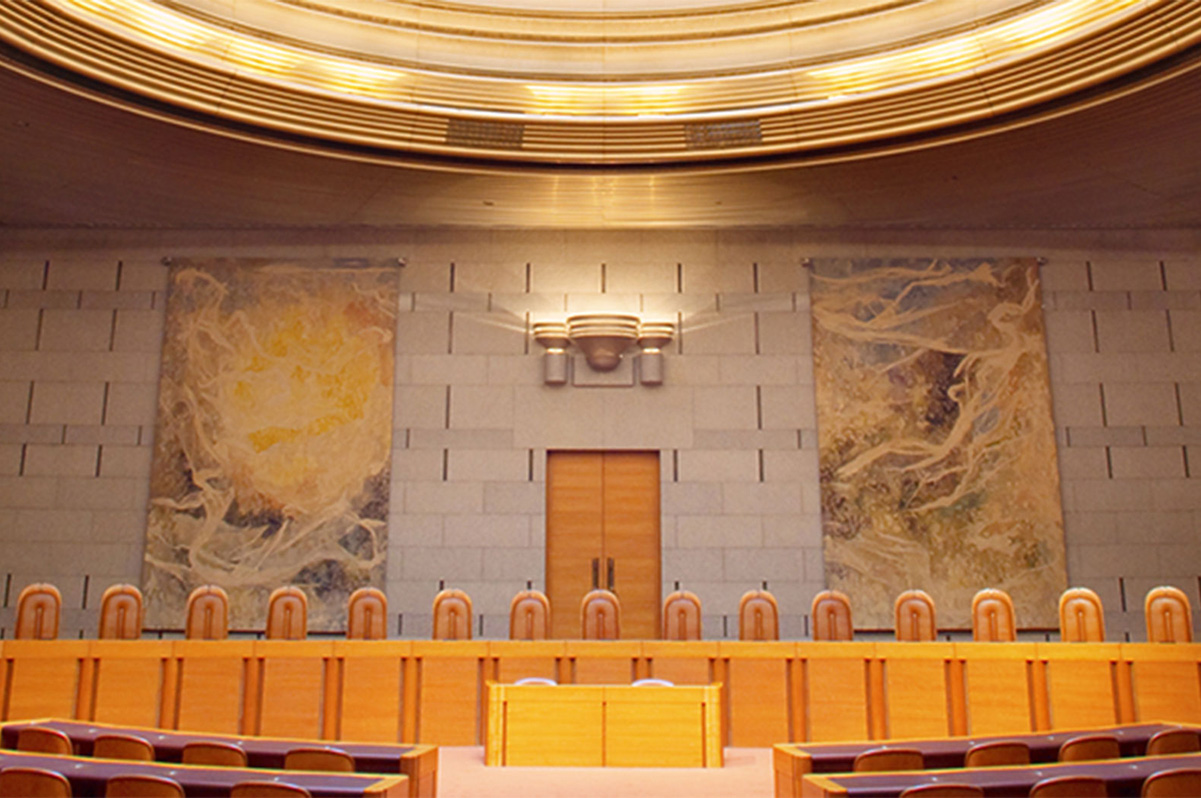
The Japanese Supreme Court on Wednesday said it will consider six marriage equality lawsuits.
NHK, the country’s public broadcaster, noted all 15 of the court’s justices will consider the case.
Japan is the only G7 country that does not legally recognize same-sex couples, despite several court rulings in recent years that found the denial of marriage benefits to gays and lesbians unconstitutional.
Tokyo High Court Judge Ayumi Higashi last November upheld Japan’s legal definition of a family as a man and a woman and their children.
Prime Minister Sanae Takaichi, who became the country’s first female head of government last October, opposes marriage rights for same-sex couples. She has also reiterated the constitution’s assertion that the family is an institution based around “the equal rights of husband and wife.”
Same-sex couples can legally marry in Taiwan, Nepal, and Thailand.
NHK reported the Supreme Court is expected to issue its ruling in early 2027.
India
Menaka Guruswamy celebrated as India’s first openly LGBTQ MP
Constitutional lawyer elected to Rajya Sabha on March 9
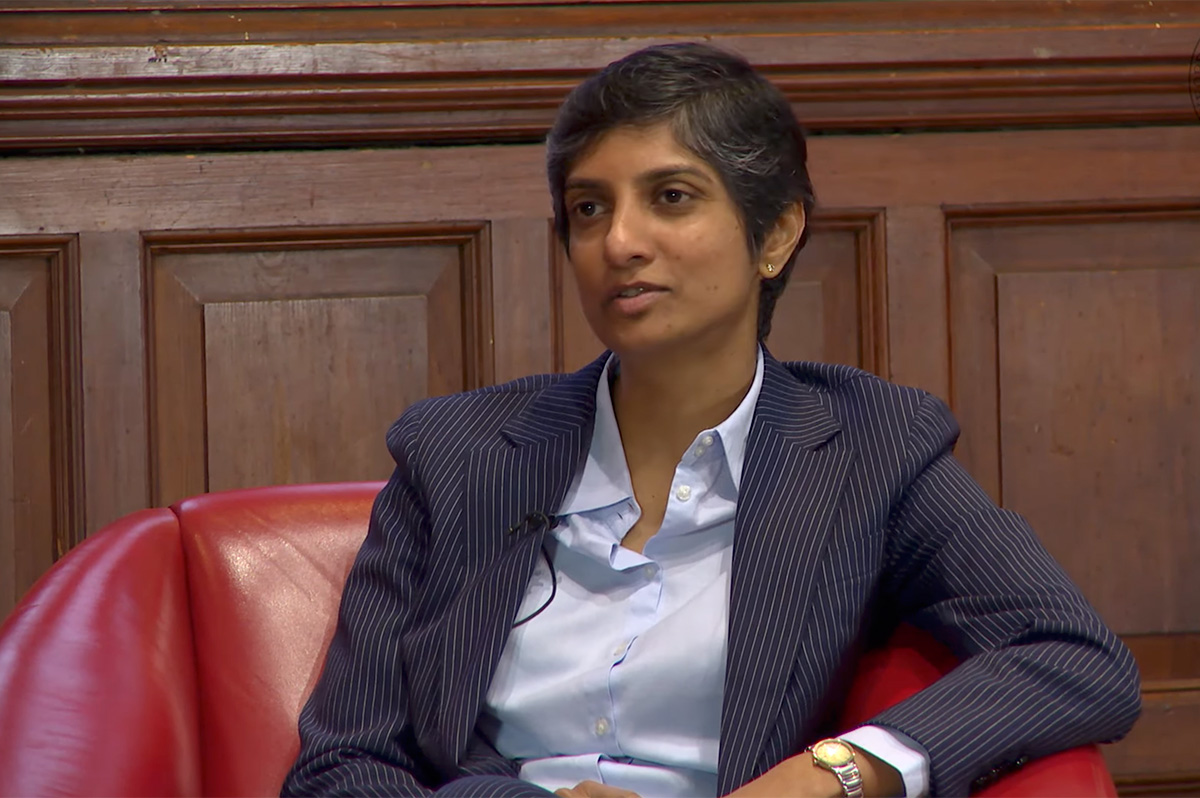
India’s LGBTQ community has found renewed hope in the election of Menaka Guruswamy, a lawyer who has argued before the Supreme Court, as the country’s first openly LGBTQ MP.
Guruswamy was declared elected unopposed to the Rajya Sabha, the upper house of Parliament, on March 9, representing West Bengal. The All India Trinamool Congress, the regional party that governs the state, nominated her.
Guruswamy is a constitutional lawyer who studied at Oxford University, Harvard Law School, and the National Law School of India University. She has argued several significant cases before the Supreme Court and is widely known for her work on constitutional law, civil liberties, and LGBTQ rights.
Guruswamy was part of the legal team that successfully challenged Section 377 of the Indian Penal Code, a colonial-era law that criminalized consensual same-sex sexual relations, which the Supreme Court struck down in 2018. She has also written and spoken extensively on issues of democracy, rights and institutional accountability.
Ankit Bhupatani, a global diversity, equity and inclusion leader and LGBTQ activist, welcomed Guruswamy’s election.
“This is significant not because Parliament needed a queer person, but because a queer person needed Parliament,” Bhupatani told the Washington Blade.
India has seen LGBTQ representation in elected office at the state and local levels, though it has remained limited.
In 1998, Shabnam Mausi was elected to the Madhya Pradesh Legislative Assembly from the Sohagpur constituency, becoming one of the first openly transgender people to hold public office in India. Mausi’s election marked a rare moment of visibility for trans people in the country’s political system, where representation has historically been sparse. Since then, a small number of openly trans candidates have contested and, in some cases, won local and state elections, but no openly LGBTQ person had been elected to Parliament before Guruswamy.
Guruswamy and her partner, Arundhati Katju, who is also a lawyer, were part of the legal team that played a central role in the Section 377 decision.
Representing one of the plaintiffs, the two lawyers helped frame the case around constitutional guarantees of equality, dignity, and privacy. The Navtej Singh Johar v. Union of India ruling marked a watershed moment for LGBTQ rights in India.
“For too long, we have fought our battles only in courtrooms and on streets. Now, there is a seat at the table where laws are written,” said Bhupatani. “Whether that seat produces change depends entirely on how it is used. Representation without substance is decoration. But as a beginning, yes. This matters.”
Guruswamy later represented the plaintiffs in the Supreme Court’s 2023 marriage equality case, Supriyo v. Union of India, which a 5-judge panel heard in the spring of 2023.
Along with other lawyers representing same-sex couples, she advanced arguments rooted in constitutional guarantees of equality, dignity, and personal liberty. The Supreme Court in a 3-2 decision on Oct. 17, 2023, declined to recognize same-sex marriage — holding that such a change falls within Parliament’s domain — but did acknowledge LGBTQ people face discrimination. The Blade previously reported the ruling underscored the court’s view that it could interpret the law, but could not create a new legal framework for marriage rights.
Bhupatani said Guruswamy’s election should not be seen as an immediate shift toward legislative action on LGBTQ rights, cautioning that such expectations may not align with political realities. He said her presence in Parliament could help sustain the issue in a way it has not been before, even as broader legal change is likely to take time.
“What she can do is keep the question alive inside Parliament in a way that it hasn’t been before,” Bhupatani said. “Legislative change in India on social questions usually takes longer than advocates want and shorter than skeptics predict. The 377 decriminalization seemed impossible until it wasn’t. Partnership rights will follow the same pattern eventually.”
Bhupatani added that while Guruswamy’s election may influence the pace of change, it does not, on its own, constitute a broader political movement.
“One person in Parliament, however extraordinary, is not a movement. She is an opening,” he said. “The 2023 ruling created a responsibility. Guruswamy’s election creates an opportunity to fulfill it from inside. Whether opportunity becomes outcome is entirely a question of human will.”
Guruswamy has served as a visiting faculty member at leading American institutions that include Yale Law School, Columbia Law School, and New York University School of Law. She has also worked with international organizations, advising the U.N. Development Fund for Women in New York and the U.N. Children’s Fund in both New York and South Sudan.
According to her professional profile, Guruswamy has been involved in a range of significant cases before the Indian Supreme Court that include matters related to bureaucratic reform and accountability.
One case is connected to the AgustaWestland helicopter deal, an investigation into alleged bribery in a multimillion-dollar defense procurement contract; litigation arising from the Salwa Judum case, in which the court examined the state-backed use of civilian militias in counterinsurgency operations in central India; and cases involving the implementation of the Right to Education Act, a law guaranteeing free and compulsory education for children between the ages of six and 14.
More recently, Guruswamy represented the All India Trinamool Congress in legal proceedings challenging searches conducted by India’s Enforcement Directorate, a federal agency responsible for investigating financial crimes, including money laundering and violations of foreign exchange laws. The searches were carried out at the offices of the Indian Political Action Committee, or I-PAC, a political consulting firm that provides data-driven campaign strategy and election management services to political parties. The case raised questions about the scope of investigative powers and the use of federal agencies in politically sensitive matters.
Guruswamy’s engagement with LGBTQ rights has extended beyond courtroom advocacy into public constitutional discourse.
On July 11, 2018, during hearings in the Section 377 case, she argued the criminalization law could not be justified on the basis of “social morality,” describing it as subjective and incompatible with constitutional guarantees, and framing the case as one fundamentally about “our humanity.” The Thomas Jefferson Foundation Medal in Law at the University of Virginia in February 2023 recognized Guruswamy and Katju for their work on LGBTQ rights.
Guruswamy has not responded to the Blade’s multiple requests for comment about her election.
Malaysia
Malaysia blocks access to Grindr, other gay dating websites
Restrictions part of continued anti-LGBTQ crackdown
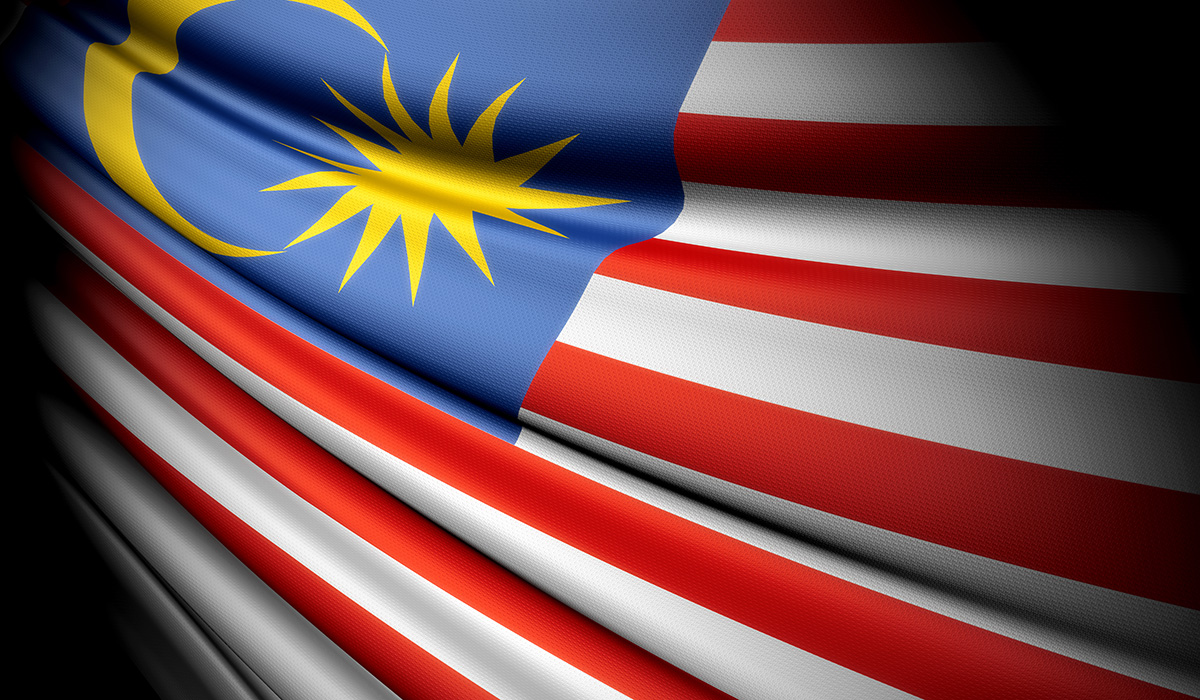
Malaysia has blocked access to Grindr, Blued, and other gay dating websites, and is now considering further steps to restrict their mobile application.
Communications Minister Fahmi Fadzil on Feb. 25 said the government is pursuing legal measures to curb the availability of LGBTQ dating apps on Google’s Play Store and Apple’s App Store.
Fadzil, in a written parliamentary reply, said the Malaysian Communications and Multimedia Commission has not received any requests to remove the mobile versions of Grindr and Blued from app stores, noting the challenges of regulating platforms owned by foreign companies.
“Control over applications on platforms such as Google Play and Apple Store is subject to regulations and policies set by the said platform providers, since both applications are owned by foreign companies operating outside of Malaysia,” Fadzil said. “This includes those that spread lewd or immoral content, exploitation, abuse, scams, exploiting children or threats towards public safety.”
Fadzil was responding to a question about whether the Malaysian Communications and Multimedia Commission had worked with app store providers to block downloads of such apps.
The Washington Blade reached out to Google and Apple multiple times for comment but did not receive a response.
Malaysia has stepped up digital restrictions targeting the LGBTQ community as part of a broader crackdown on what authorities describe as “deviant” or immoral content. Consensual same-sex sexual relations remain criminalized in the country under both civil and Sharia law.
Malaysia has proposed a Cyber Crime Bill that would expand the government’s legal powers to address the misuse of digital platforms, including the promotion of same-sex dating applications, Deputy Prime Minister Ahmad Zahid Hamidi said. The bill would replace the Computer Crimes Act of 1997.
“We are disappointed in the decision to block access to Grindr in Malaysia and believe that online platform regulation should be proportionate and consistent with international human rights law,” a Grindr spokesperson told the Blade in an email.
“At Grindr, our mission is to help make a world where the lives of our global community are free, equal, and just,” added the spokesperson. “For many of our users, Grindr is often the primary way for them to connect, express themselves, and discover the world around them. In addition to serving as an important source of information, Grindr is committed to advancing the health and well-being of the community around the world and through our social impact initiative, Grindr for Equality, we partner with hundreds of advocates, community-based organizations, and public health agencies to support the global LGBTQ+ community.”
Grindr, based in California, is popular around the world. Blued, a China-based app that BlueCity operates, is one of the world’s largest social networking and dating platforms for gay men.
Blued did not respond to the Blade’s request for comment.
Online platforms ‘critical for LGBTQ people’
Malaysian authorities in May 2023 raided Swatch stores at shopping malls across the country and confiscated more than 160 rainbow-colored watches from the company’s Pride collection, saying the designs carried “LGBT connotations.” The raids, which the Home Affairs Ministry carried out, were widely criticized by advocacy groups.
Police last June opened an investigation into a closed-door LGBTQ sexual health workshop.
Selangor police chief Hussein Omar Khan said authorities were examining the event under the Penal Code for allegedly causing “disharmony or ill will” on religious grounds, as well as under the Communications and Multimedia Act, a law frequently used to police online speech. Critics said the investigation reflected growing government overreach and warned against the criminalization of public health initiatives aimed at marginalized communities. Activists cited this case as another example of Prime Minister Anwar Ibrahim’s crackdown on LGBTQ rights.
The Home Affairs Ministry in November 2020 banned the book “Gay Is OK! A Christian Perspective,” written by Pastor Oyoung and published by Gerakbudaya in 2013, saying it was likely to be “prejudicial to public order, morality and the public interest.” The Kuala Lumpur High Court later overturned the ban and ordered the respondents — then-Home Affairs Minister Hamzah Zainudin and the Malaysian government — to pay costs of 5,000 Malaysian ringgit ($1,276.81.)
A 2014 Human Rights Watch report documented widespread discrimination and abuse against transgender women in the country.
The report found that trans people face arrests under laws that effectively criminalize “cross-dressing,” along with harassment and abuse by police and religious authorities. It also described systemic discrimination in employment, health care, and education, leaving many trans women marginalized and vulnerable to violence and exploitation.
Thilaga Sulathireh, a founding member of Justice for Sisters, a Malaysian trans rights group, said restrictions on LGBTQ people’s freedom of expression through censorship have been an ongoing trend in Malaysia over the past decade.
Sulathireh said there have been increasing calls to curb what critics describe as “LGBT normalization” in films, books, and social media, which activists link to what they say is a harmful and inaccurate perception that LGBTQ people are immoral. Sulathireh added Grindr had been blocked in Malaysia for several years and that, as of last weekend, the app was no longer available on Google Play and the Apple App Store. Sulathireh said Justice for Sisters views the move as a serious violation of LGBTQ people’s rights to nondiscrimination, dignity, privacy, and freedom of expression.
“The blocking of LGBTQ related apps is part of the on-going and increasing trend of state sponsored discrimination against LGBTQ people in Malaysia,” Sulathireh told the Blade in an email. “In late February, the deputy minister in the prime minister’s (Religious Affairs) Department announced that the government is opting to replace references to LGBT persons with the term “budaya songsang” (deviant culture) and encouraged others to do the same to avoid LGBT normalization in all spaces, including social media. At the same time, called on members of the public to immediately report ‘suspicious activities, events or content.’”
Sulathireh told the Blade a deputy minister recently outlined a range of government-led initiatives targeting LGBTQ people in Malaysia.
According to Sulathireh, these include so-called “spiritual guidance camps.” Sulathireh said some participants, including those who identify as “ex-LGBT” or part of the “hijrah” community, have been encouraged to act as peer educators to reach other LGBTQ people.
Additional initiatives the deputy minister listed include academic Islamic conferences, state-level sermons coordinated by the state Islamic councils, and mosque-level programs. Sulathireh told the Blade the government presented a paper to the Council of Rulers outlining what officials described as the negative implications of legal gender recognition. Sulathireh said authorities have also established a multiagency committee to address issues involving Muslim LGBTQ people, promoted what they call “psychospiritual therapy,” and worked with police and the Communications and Multimedia Commission to monitor the promotion of LGBTQ-related activities online.
“The blocking of these apps and websites severely impacts all areas of LGBTQ people’s lives,” said Sulathireh. “These platforms have proven critical for LGBTQ people to find support, communities, access life-saving resources, information and services, love and intimacy. I think being able to find love, intimacy and connections is critical for LGBTQ’s self-acceptance, self-worth, health, and well-being.”
“The blocking makes it even more challenging for people to connect safely online and offline,” added Sulathireh. “People will become more isolated and all of these have a severe impact on LGBTQ’s mental health and well-being, which is already poor.”
Sulathireh said Justice for Sisters research and observations indicate many LGBTQ people in Malaysia already experience social media and digital spaces as hostile environments. As a result, many limit their use of these platforms and adopt higher levels of self-censorship. Sulathireh added the recent bans targeting LGBTQ visibility on digital platforms are also unfolding alongside a broader policy push to restrict social media access for children under 16.
“The state sponsored LGBTQ discrimination over the years has resulted in increasing discrimination by non-state actors and anti-rights groups with impunity,” Sulathireh said. “This ban will further entrench the culture of impunity against LGBTQ people.”
Nalini Elumalai, senior Malaysia program officer at ARTICLE 19, an international freedom of expression organization, said the blocking of dating apps is not occurring in isolation but is happening under the guise of public morality, digital censorship, and the enforcement of laws that undermine the rights of LGBTQ individuals in Malaysia.
Elumalai noted that Deputy Religious Affairs Minister Marhamah Rosli recently urged the public to refrain from using the term “LGBT” and instead describe it as “deviant culture” in an effort to combat normalization and reduce LGBTQ-related content on social media. Elumalai said blocking Grindr and Blued represents an ongoing attack on the LGBTQ community, particularly their rights to freedom of expression, access to information, and to be treated equally before the law without discrimination — protections guaranteed under Articles 8 and 10 of Malaysia’s Federal Constitution.
“The blocking of LGBTQI+ dating platforms appears to reflect a broader pattern in Malaysia where LGBTQI+-related expression and activities face heightened scrutiny and repression, particularly when they become visible online,” said Elumalai in a statement to the Blade.
Elumalai noted JEJAKA, a community-based organization had to cancel their “Glamping with Pride” event that was to have taken place on Jan. 17-18 because of safety concerns after it received death threats on social media.
“Ongoing repression of LGBTQI+ expression will further entrench systemic discrimination against marginalized groups, normalise inequality, and perpetuate division and hostility among the people in Malaysia,” said Elumalai. “Further, when one group is punished or prevented from expressing themselves freely online, others, including various online platforms, may also self-censor out of fear that they too could face scrutiny or penalties, even for legitimate expressions.”
The Malaysian Communications and Multimedia Commission has not responded to the Blade’s request for comment.

Mayor Bowser signs bill requiring insurers to cover PrEP

JD Vance to travel to Hungary next week

Pam Bondi ousted as attorney general

VIDEO: Gay journalist detained for booing Trumps at ‘Chicago’ opening night

Idaho Gov. signs harshest anti-trans bathroom bill in the country

‘Out for McDuffie’ event held at D.C. gay bar

‘Jonah’ an undeniably compelling but unusual memory play

The Oscar-losing performance that’s too good to miss

Thousands attend ‘No Kings’ protests in D.C.