State Department
Blinken speaks at U.N. LGBTI Core Group event
Gathering took place on eve of U.N. General Assembly
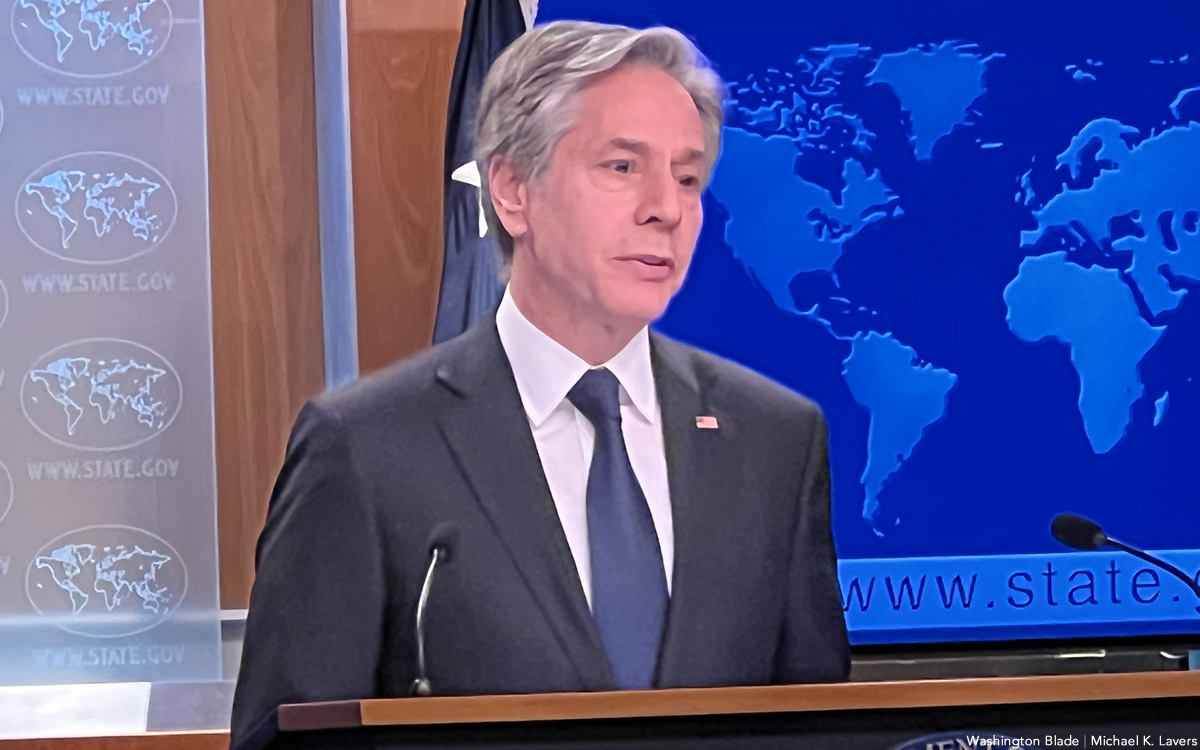
Secretary of State Antony Blinken on Monday spoke at an LGBTQ and intersex rights event that took place on the eve of the U.N. General Assembly.
Blinken in his remarks at the LGBTI Core Group, a group of U.N. countries that have pledged to support LGBTQ and intersex rights, noted the meeting took place at “a time when the movement for equality is showing some encouraging momentum.”
He pointed to the decriminalization of consensual same-sex sexual acts over the summer in St. Kitts and Nevis and Antigua and Barbuda. Blinken also noted the Vietnamese Health Ministry’s announcement last month that it no longer considers LGBTQ people to be sick.
“At the same time, for that progress, which is real and which is worth underscoring, we know that people worldwide continue to experience alarming levels of violence, discrimination, isolation,” said Blinken. “Risks are the highest for people with disabilities, people of color, refugees and LGBTQI+ women. Transgender people are often denied access to legal identity documents that reflect their names and gender markers. Intersex people, including minors, continue to be subjected to unnecessary surgeries without their consent.”
Blinken further stressed that members of the U.N. LGBTI Core Group and countries around the world “have work to do to ensure that LGBTQI+ people have the same rights, the same protections as all other people.”
“Defending these rights is central to the health of our democracies,” he said. “Any system where some groups are treated as ‘less than’ simply because of who they are is fundamentally flawed.”
President Joe Biden in February 2021 signed a memo that committed the U.S. to promoting LGBTQ and intersex rights abroad as part of his administration’s overall foreign policy. The White House four months later appointed Jessica Stern as its special envoy for the promotion of LGBTQ and intersex rights overseas.
The State Department in April began to issue passports with “X” gender markers. The White House’s efforts in support of LGBTQ and intersex rights abroad now includes marriage equality in countries where activists say such a thing is possible through legislation or the judicial process.
Blinken in his speech noted Biden in June issued a sweeping executive order that, among other things, prohibits the use of federal funds to support so-called conversion therapy. The ceremony, which occurred during the White House’s annual Pride reception, took place against the backdrop of the passage of Florida’s “Don’t Say Gay” law and efforts in several other states across the country to curtail the rights of transgender students.
“Standing up for LGBTQI+ people is a top priority for our administration,” said Blinken.
Blinken also referenced the 1969 Stonewall riots.
“Everything we’re doing builds on the work of literally generations of advocates who have — and still are — risking so much to put LGBTQI+ people and their rights on the map,” he said. “And I have to say, as I read the history, learn the history, hear of experiences, I’m quite in awe of generations of advocates who have done so much to put us where we are today. The work we’re doing is only possible because of the work they did — but not only the work they did, the courage that they showed.”
“The 1969 protest at the Stonewall Inn marked a turning point in our nation’s struggle for LGBTQI+ rights and helped galvanize the global movement,” added Blinken. “This is something that is seared into the memories, seared into the consciousness of so many of us. And particularly for me as a native New Yorker, it’s something that I have seen and been inspired by for many, many years.”
Blinken further noted “Stonewall is also a stark reminder of all the places worldwide where people are still subject to abuse simply for being themselves.”
State Department spokesperson Ned Price, Icelandic Prime Minister Katrín Jakobsdóttir; Permanent Brazilian Representative to the U.N. João Genésio de Almeida Filho, Peruvian Foreign Minister Cesar Landa Arroyo, Norwegian Foreign Minister Anniken Huitfeldt and OutRight Action International Executive Director Maria Sjödin are among those who attended the event alongside Stern and Victor Madrigal-Borloz, the independent U.N. expert on LGBTQ and intersex issues.






State Department
Report: US to withhold HIV aid to Zambia unless mineral access expanded
New York Times obtained Secretary of State Marco Rubio memo
The State Department is reportedly considering withholding assistance for Zambians with HIV unless the country’s government allows the U.S. to access more of its minerals.
The New York Times on Monday reported Secretary of State Marco Rubio in a memo to State Department’s Bureau of African Affairs staffers wrote the U.S. “will only secure our priorities by demonstrating willingness to publicly take support away from Zambia on a massive scale.” The newspaper said it obtained a copy of the letter.
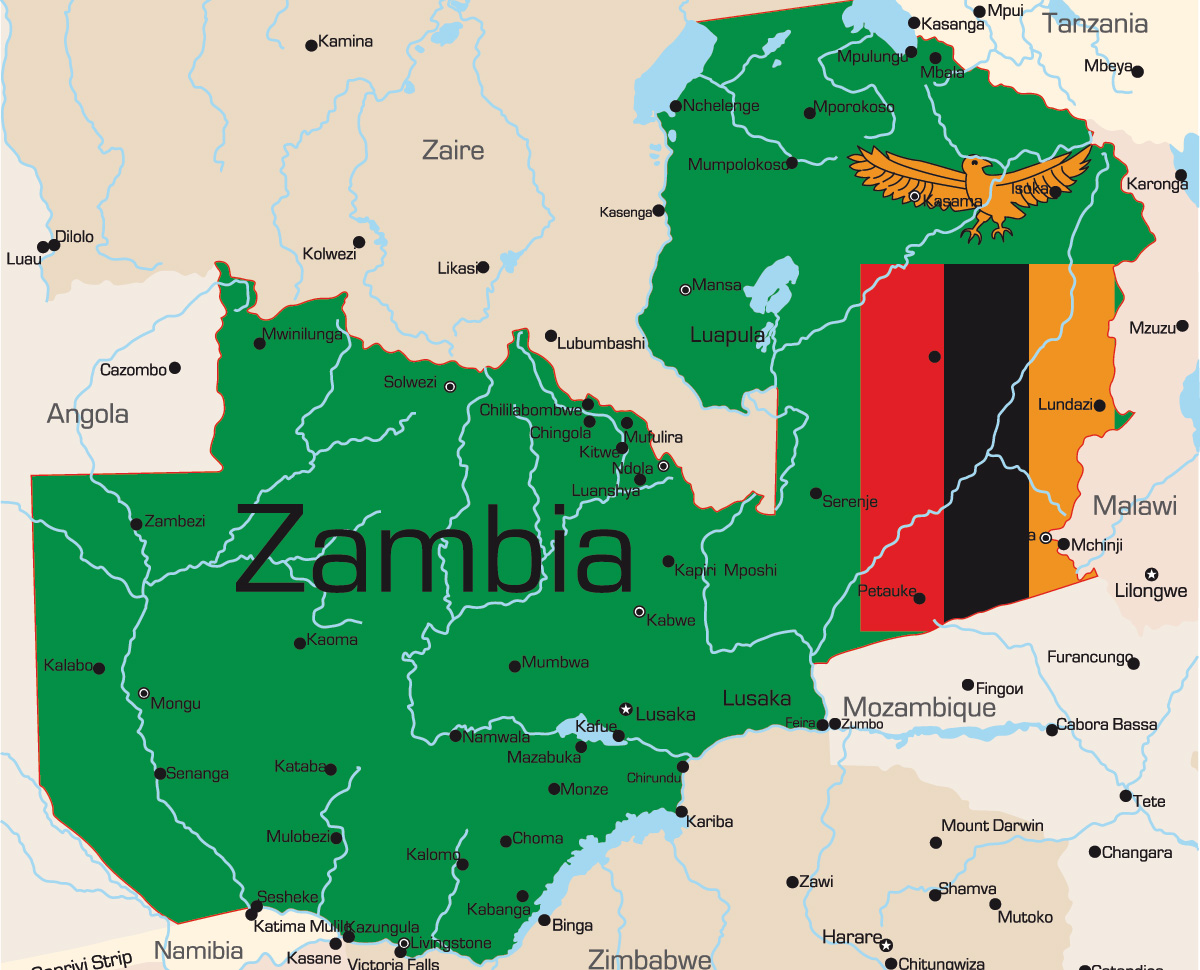
Zambia is a country in southern Africa that borders Tanzania, Malawi, Mozambique, Zimbabwe, Botswana, Namibia, Angola, and the Democratic Republic of Congo.
The Times notes upwards of 1.3 million Zambians receive daily HIV medications through PEPFAR. The newspaper reported Rubio in his memo said the Trump-Vance administration could “significantly cut assistance” as soon as May.
“Reports of (the) State Department withholding lifesaving HIV treatment in return for mining concessions in Zambia does not make us safer, stronger, or more prosperous,” said U.S. Sen. Jeanne Shaheen (D-N.H.), the ranking member of the Senate Foreign Relations Committee, on Tuesday. “Monetizing innocent people’s lives further undermines U.S. global leadership and is just plain wrong.”
The Washington Blade has reached out to the State Department for comment.
Zambia received breakthrough HIV prevention drug through PEPFAR
Rubio on Jan. 28, 2025, issued a waiver that allowed PEPFAR and other “life-saving humanitarian assistance” programs to continue to operate during a freeze on nearly all U.S. foreign aid spending. HIV/AIDS service providers around the world with whom the Blade has spoken say PEPFAR cuts and the loss of funding from the U.S. Agency for International Development, which officially closed on July 1, 2025, has severely impacted their work.
The State Department last September announced PEPFAR will distribute lenacapavir in countries with high prevalence rates. Zambia two months later received the first doses of the breakthrough HIV prevention drug.
Kenya and Uganda are among the African countries have signed health agreements with the U.S. since the Trump-Vance administration took office.
The Times notes the countries that signed these agreements pledged to increase health spending. The Blade last month reported LGBTQ rights groups have questioned whether these agreements will lead to further exclusion and government-sanctioned discrimination based on sexual orientation and gender identity.
State Department
FOIA lawsuit filed against State Department for PEPFAR records
Council for Global Equality, Physicians for Human Rights seeking data, documents

The Council for Global Equality and Physicians for Human Rights have filed a Freedom of Information Act lawsuit against the State Department for PEPFAR-related data and documents.
The groups, which Democracy Forward represents, filed the lawsuit in U.S. District Court for the Southern District of New York on Wednesday.
Then-President George W. Bush in 2003 signed legislation that created PEPFAR. UNAIDS Executive Director Winnie Byanyima last March said PEPFAR has saved 26 million lives around the world.
The Trump-Vance administration in January 2025 froze nearly all U.S. foreign aid spending for at least 90 days. Secretary of State Marco Rubio later issued a waiver that allowed PEPFAR and other “life-saving humanitarian assistance” programs to continue to operate during the freeze.
The Washington Blade has previously reported PEPFAR-funded programs in Kenya and other African countries have been forced to suspend services and even shut down because of gaps in U.S. funding. HIV/AIDS activists have also sharply criticized the Trump-Vance administration over reported plans it will not fully fund PEPFAR in the current fiscal year.
The lawsuit notes the Council for Global Equality and Physicians for Human Rights have “filed several FOIA requests” with the State Department for PEPFAR-related data and documents. The groups filed their most recent request on Jan. 30.
“On Jan. 30, 2026, plaintiffs, through counsel, sent State a letter asking it to commit to prompt production of the requested records,” reads the lawsuit. “State responded that the request was being processed but did not commit to any timeline for production.”
“Plaintiffs have received no subsequent communication from State regarding this FOIA request,” it notes.
“Transparency and inclusion have been hallmarks of PEPFAR’s success in the last decade,” said Beirne Roose-Snyder, a senior policy fellow at the Council for Global Equality, in a press release that announced the lawsuit. “This unprecedented withholding of data, and concurrent ideological misdirection of foreign assistance to exclude LGBTQI+ people and others who need inclusive programming, has potentially devastating and asymmetrical impacts on already marginalized communities.”
“This data is vital to understanding who’s getting access to care and who’s being left behind,” added Roose-Snyder.
“We filed this lawsuit to seek transparency: the administration’s PEPFAR data blackout withholds information the public, health providers, and affected communities need to track the HIV epidemic and prevent avoidable illness and death, obscuring the true human cost of these policy decisions,” said Physicians for Human Rights Research, Legal, and Advocacy Director Payal Shah.
The State Department has yet to respond to the Blade’s request for comment on the lawsuit.
Eswatini
PEPFAR delivers first doses of groundbreaking HIV prevention drug to two African countries
Lenacapavir now available in Eswatini and Zambia.
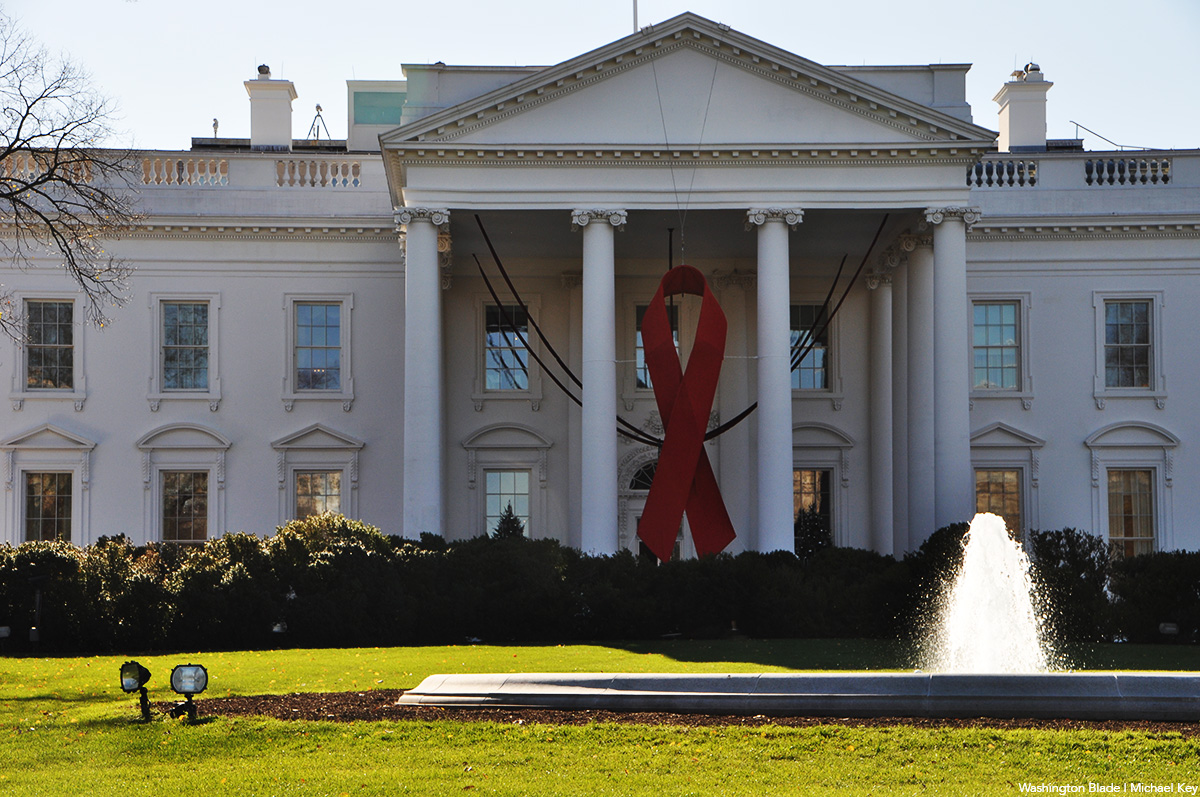
The State Department on Tuesday announced PEPFAR has delivered the first doses of a groundbreaking HIV prevention drug to two African countries.
The lenacapavir doses arrived in Eswatini and Zambia.
The State Department in September unveiled an initiative with Gilead Sciences to bring lenacapavir “to market in high-burden HIV countries.”
Lenacapavir users inject the drug twice a year.
The State Department in its September announcement noted everyone who participated in Gilead’s clinical trials remained HIV negative. It also said lenacapavir “has the potential to be particularly helpful for pregnant and breastfeeding mothers, as it safely protects them during and after pregnancy to prevent mother-to-child transmission.”
“In our new America First Global Health Strategy, the Department of State is establishing a first-of-its-kind innovation fund to support American-led research, market-shaping, and other dynamic advancements in global health,” said PEPFAR on Tuesday in a press release.
“The arrivals of the first doses of lenacapavir in Eswatini and Zambia mark an important milestone in HIV prevention and reflect our commitment to supporting communities with the greatest need,” added Gilead CEO Daniel O’Day. “For the first time, a new HIV medicine is reaching communities in sub-Saharan Africa in the same year as its U.S. approval.”
The September announcement came against the backdrop of widespread criticism over the Trump-Vance administration’s reported plans to not fully fund PEPFAR and to cut domestic HIV/AIDS funding. The Washington Blade has previously reported PEPFAR-funded programs in Kenya and other African countries have been forced to curtail services or even close because of U.S. funding cuts.

Trump tells Fox News he won the ‘gay vote’ — but polls tell a different story

Anti-trans visa ruling echoes Nazi regime destroying trans documents

Japanese Supreme Court to consider marriage equality

The outrage economy is not the LGBTQ community

Calendar: March 27-April 2

PHOTOS: Capital Stonewall Democrats 50th anniversary

Polish court rules country must recognize same-sex marriages from EU states

Capital Stonewall Democrats 50th anniversary gala draws sold out crowd

Trans Day of Visibility events planned

Virginia General Assembly’s 2026 legislative session ends
-

 Photos5 days ago
PHOTOS: Capital Stonewall Democrats 50th anniversary
-
Poland5 days ago
Polish court rules country must recognize same-sex marriages from EU states
-
District of Columbia5 days ago
Capital Stonewall Democrats 50th anniversary gala draws sold out crowd
-
District of Columbia4 days ago
Trans Day of Visibility events planned