Maryland
Md. statewide candidates make final pitches ahead of Election Day
Wes Moore said he will make state ‘inclusive’ as governor
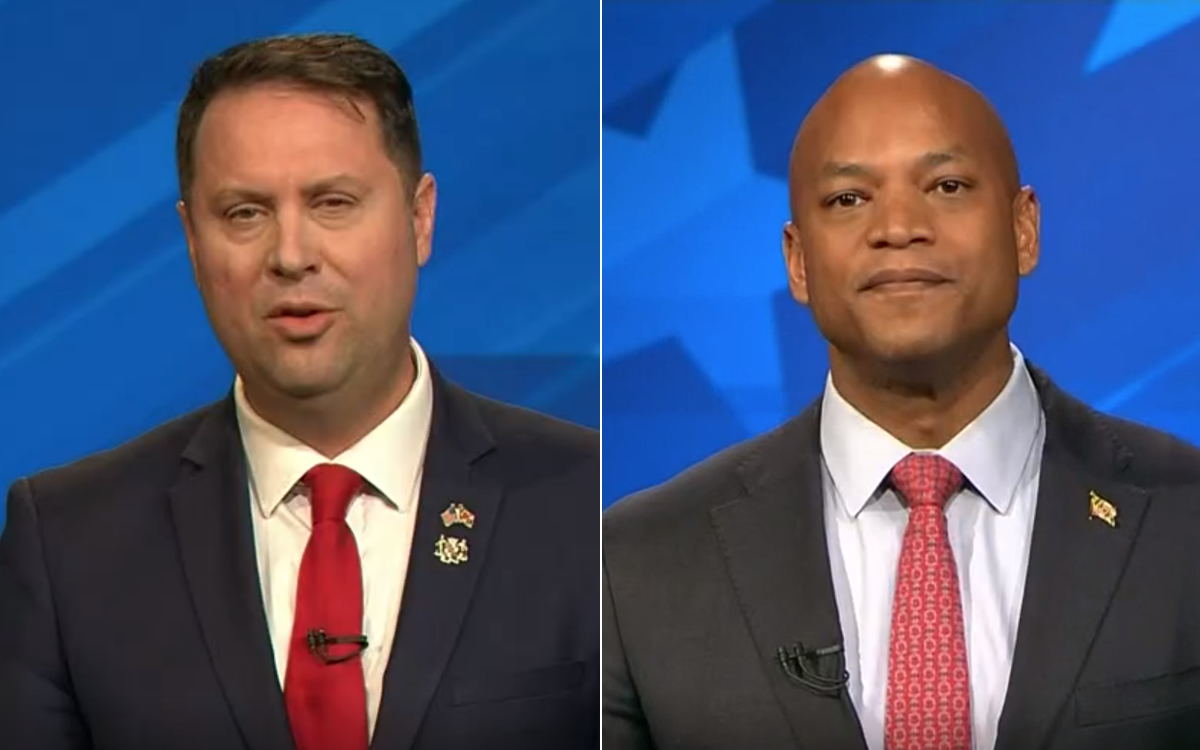
Candidates in races for statewide offices in Maryland are making their final pitches to voters ahead of next week’s highly anticipated midterm elections.
Approaching Election Day, each of the three races for governor, attorney general and comptroller have offered their own dichotomies between candidates on the ballot.
Governor
Maryland’s gubernatorial race has pitted Democratic former CEO and U.S. Army veteran Wes Moore against state Del. Dan Cox (R-Frederick County). The seat is seen as one of the most likely Democratic gubernatorial pickups in what is expected to be a difficult year for the party to maintain its majorities in Washington.
As part of his campaign, Moore has sought to draw stark contrast from his opponent when it comes to matters involving LGBTQ rights and diversity.
“So, we are going to make sure that Maryland is going to be an inclusive state, a state where people feel welcome and a state where we’re asking people to be comfortable with who they are,” Moore said in an Oct. 17 interview with the Washington Blade. “And to know that you’re going to have a state that ultimately enforces it.”
In the state legislature, Cox has endorsed efforts to restrict LGBTQ rights and topics in the state’s education system, referring to such as “classroom indoctrination.”
The latest polling in the race has shown Moore leading Cox by more than 30 points in a seat currently held by popular Republican Governor Larry Hogan.
“And people are saying, ‘Why are you going [to conservative areas] if there are not a lot of Democrats out there?’ My answer is simple: It’s because there’s a lot of Marylanders, and I’m planning on being their governor too,” Moore told the Blade. “You know, when I was in the Army and leading soldiers into combat, one question I never wanted to ask my soldiers is, ‘What’s your political party?’ It didn’t matter. We had one goal and one job and one mission.”
Attorney general
Vying for the state attorney general’s office, Democratic Congressman Anthony Brown and former Republican Anne Arundel County Councilman Michael Peroutka have sought to counter each other in the race for the top law enforcement post in Maryland.
Aiming to succeed current Democratic Attorney General Brian Frosh, Brown told the Blade that his campaign hoped to address issues brought forth by constituents on the campaign trail.
“This cycle, more people are raising the question about violence in the community, hate crimes, guns on the street more than any other time in the 20-plus years I’ve been doing this,” Brown said. “And that’s consistent with what a lot of national and Maryland polling shows as well.”
When it came to matters of diversity and legal equity for LGBTQ Marylanders and other communities, Brown said that he believed such matters to be paramount to the duties of the office he seeks and would work to ensure such was a reality.
“I think an important role of the attorney general is protecting the rights and the privileges and the interests of all Marylanders, regardless of race, ethnicity, gender, gender identification, geography — ensuring that we have systems of justice whether its criminal or civil that ensures equity and equality and fair treatment of all,” Brown said.
Such legal representation and protections, Brown elaborated, cover a number of areas currently being debate across the country.
“So that’s true whether you’re talking about the right of a woman to make decisions about her reproductive health and whether she wants to bring a pregnancy to term or whether it’s addressing the troubling rise that we see in violence against transgender Marylanders,” Brown said. “As attorney general, these are going to be top issues for me and I’m going to use the office to partner with local, federal officials to make sure we’re protecting the rights of all Marylanders.”
Peroutka did not immediately respond to the Blade’s request for an interview but has asserted his position on the campaign trail that, if elected to the post, his priorities would include opposing the expansion of abortion access in the state and investigating potential election fraud that he believes may cast doubt on the legitimacy of the 2020 election results as well as future elections in the state if not addressed.
Comptroller
In the race for comptroller, Democratic state Del. Brooke Lierman (D-Baltimore City) and Republican Harford County Executive Barry Glassman are aiming to become the state’s next top financial officer.
The next comptroller would take on the responsibilities of maintaining the state’s financial bookkeeping and collection of residents’ taxes. The office also participates as part of powerful state entities including having membership on the state’s Board of Public Works tasked with approving all state contracts of less than $200,000 in value.
Lierman told the Blade that, given issues in the state including racial wealth divide and the need for equity projects, her comptrollership would seek to hone in on issues of diversity should she take office.
“There’s a broad mandate in our state constitution to oversee the general superintendence of the fiscal affairs of the state but we can’t have a strong economy if we are not building in an inclusive way,” Lierman said. “If we are leaving segments of the population behind, then it means that our economy isn’t working as well as it could.”
Ensuring that minority communities including communities of color and LGBTQ Marylanders can be assured equal access to succeed in the state’s economic landscape, Lierman said, has been a top priority of her campaign.
“It means making sure that, if you’re an LGBTQ Black woman from Cheverly, from Prince George’s County who’s a great architect, we want you to be able to compete and win on contracts because we want to build a space where we have more competition, where more people are competing,” Lierman said. “And we want to make sure we’re meeting and exceeding our minority business enterprise goals because it means that we’re building an economy that is growing the entire state and we’re using our contract dollars to build a larger state economy overall.”
Glassman told the Blade that, while equity in the economic system is something that must be ensured, he would take what he characterized as a “more traditional view” of the duties of the office.
“I wouldn’t necessarily weigh in on programs — it doesn’t have to be partisan — but for the most part, programs and policy in Maryland are dictated by the executive branch and the legislative branch,” Glassman said. “As comptroller, you’re there to carry out the law [and] to make sure that contracts are awarded fairly and so forth. I think where [Lierman and I] agree, I think on our role on that Board of Public Works that lets out so much contracting and revenue that we make sure that those bids get out to all our communities to make sure they can capitalize or participate in the contracts that are put out by the state.”
Although aiming to achieve a multitude of initiatives, Lierman affirmed that she would aim to do so while agreeing with Glassman’s position against advocating for new taxes to fund them. Instead, she said she would aim to achieve such through holding wealthy taxpayers and entities accountable for paying taxes.
“We have a $1.2 billion surplus right now and we need to make sure first and foremost that we are collecting all the taxes owed especially from big companies or people who are seeking to evade their tax obligations,” Lierman said. “I will make sure that we’re cracking down on tax evasion and that we’re combatting fraud in our tax system by modernizing our systems and ensuring that Marylanders who can afford to pay their taxes are paying their taxes.”
While Lierman has sought to craft a platform that highlights such goals of development and diversity, Glassman has run a campaign anchored in the goal of fiscal responsibility, partisan balance and a record of staunch opposition to the creation of any new taxes during his time in government.
Overall, however, Glassman said, placing a focus on the day-to-day operations of the office and its connections with Marylanders and Maryland businesses is a prime concern of his campaign rooted in the concerns brought to him by his potential constituents.
“A lot of taxpayers would complain to me about phones not being answered, having trouble getting their estimated small business tax and even some businesses saying they were waiting three and four months to have their checks cashed, their payments actually cashed and posted,” Glassman said. “So, I think the office probably most likely needs a kind of digital review from the top to the bottom, it needs a digital infrastructure upgrade to be able to do a lot more services online.”
In addition to liaising directly with businesses and entities that connect to the office Glassman said that he wanted to stress to voters what he sees as the importance of serving as the taxpayers’ representative in fiscal matters and as a check on unified Democratic power in the state.
“I think having someone there with my temperament would bring a balance. I do think for government to operate effectively, you do need a check and balance and someone with that temperament,” said Glassman. “One party government is usually not the most effective and usually can be more expensive.”
The race may prove to be more dynamic than other statewide races, with Glassman’s more traditionally Republican stance and separation from other Republican candidates for statewide office earning him the endorsement of popular local figures and entities including the Washington Post and Hogan.
Hogan has declined to publicly support the Republican candidates for governor and attorney general.




Maryland
Md. groups receive state grants to fight hate crimes
Pride Center of Maryland among recipients
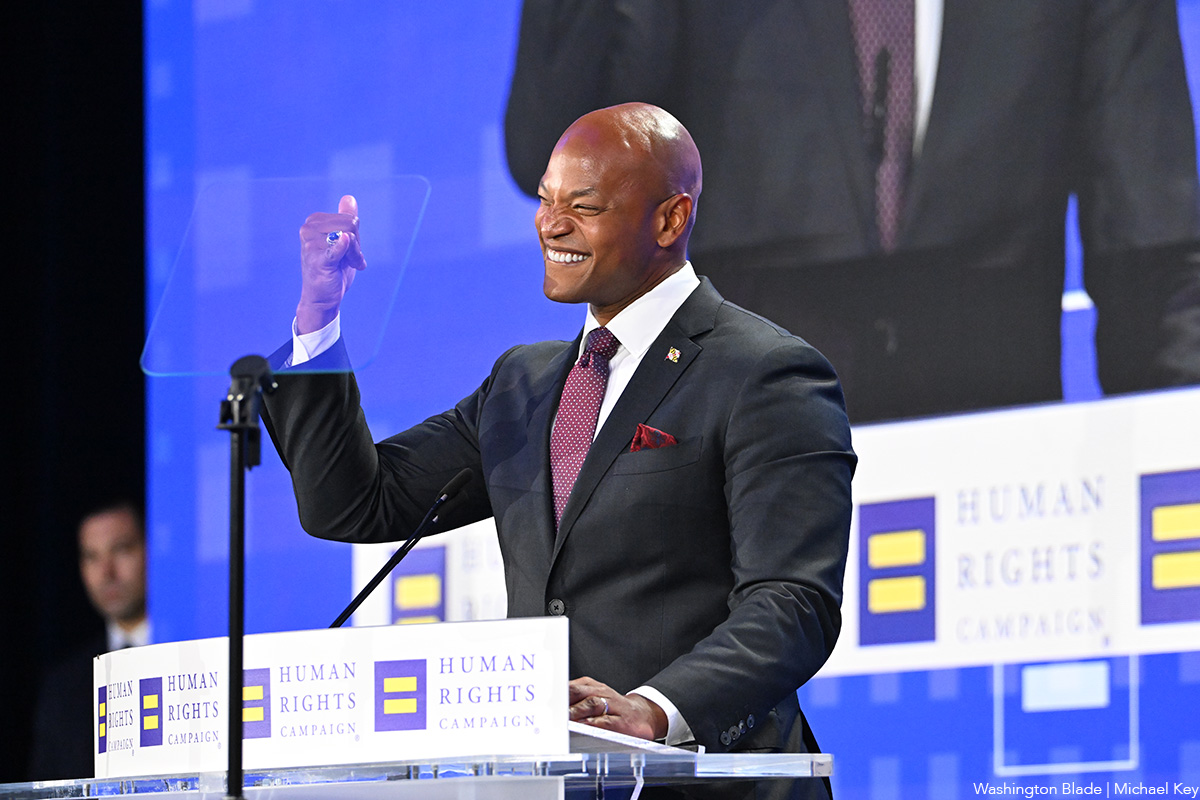
Maryland Gov. Wes Moore and the Governor’s Office of Crime Prevention and Policy are awarding a total of $10 million in grants in the 2027 fiscal year to nonprofit organizations that work to prevent hate crimes in the state.
The funds will be used to support those who feel targeted or discriminated against because of their race, religion, sexual orientation, gender identity, or disability status.
The Pride Center of Maryland is among the recipients. Churches, synagogues, mosques, and LGBTQ organizations are all eligible to receive grants
“The safety and security of all Marylanders is my top priority, so we are drawing a hard line because we have no tolerance for hate,” said Moore, according to media reports. “We are committed to protecting and ensuring safe and sacred spaces stay that way by investing in non-profit organizations, houses of worship, and community centers to protect and honor every community that makes our state so diverse and special.”
“Protection Against Hate Crime funding has strengthened the Pride Center of Maryland’s ability to protect, educate, and support the communities we serve … at a time of heightened concern associated with the Trump administration’s anti-LGBTQ/SGL (same-gender-loving) policies and pressures,” Pride Center of Maryland CEO Cleo Manago said. “PAHC funding helps us do more than improve physical security — it strengthens our community’s knowledge, preparedness, connection to resources, and ability to respond to hate with greater awareness and support.”
Maryland’s hate crimes law includes both sexual orientation and gender identity. The state’s nondiscrimination statute is also LGBTQ-inclusive.
Maryland
Anne Arundel schools now need parent permission to call trans students by preferred names
Conservative groups challenged system’s policy
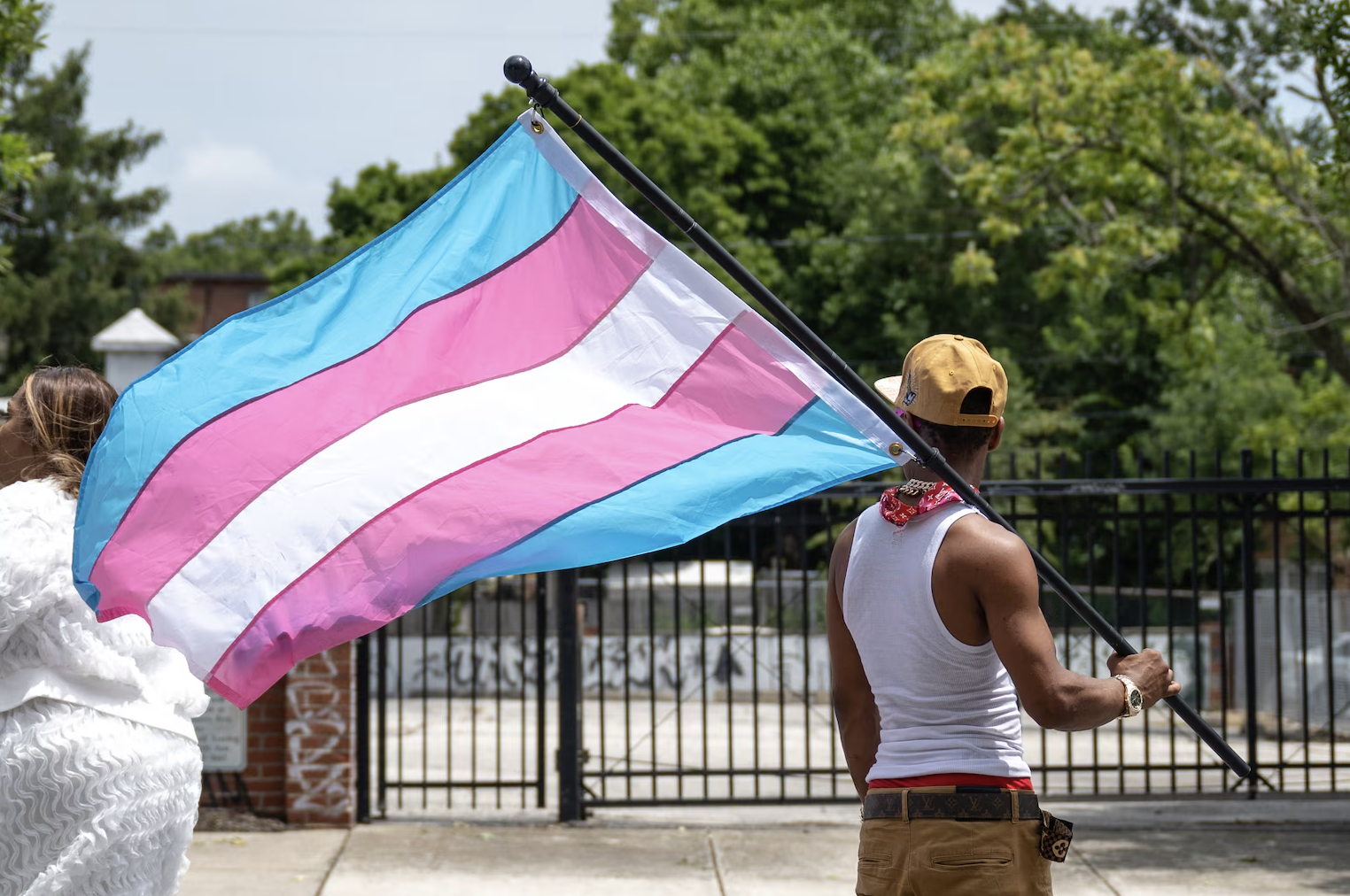
By JESSICA CALEFATI | Anne Arundel County Public Schools staff cannot use transgender students’ preferred names if their parents oppose it, according to an internal document reviewed by the Banner, a change that comes after conservative groups challenged the school system’s approach to gender identity.
Teachers union president Kristina Korona told members in an Aug. 20 email that the new guidance undermines district policy on acceptance and inclusivity and “will begin harming affected students immediately.”
Previously, the district didn’t require parental permission to use a high school student’s chosen name and pronouns corresponding to their gender identity, the internal document says. Now it does. The change comes as parents challenge the suburban school system’s gender identity policy and regulation in court and the Trump-Vance administration threatens the district’s funding.
The rest of this article can be found on the Baltimore Banner’s website.
Maryland
Girlfriends charged with Silver Spring murder to go on trial in 2027
Prosecutors charged both women with killing mother of one of them

Two women identified as a couple who are charged with the May 22, 2026, murder of the mother one of them in her Silver Spring home and who were arrested three weeks later in Ohio are scheduled to go on trial for murder April 19, 2027.
According to online records filed with Montgomery County Circuit Court in Rockville, Vanessa Tjongarero-Henderson, 29, of Clarksburg, Md., and Samantha Raebel, 36, of Phoenix are being held without bond in the Montgomery County Correctional Facility until the time of their trial.
Statements from Montgomery County police show the two women were arrested June 10 in Genoa, Ohio, after fleeing from the scene of the murder in Silver Spring. Police statements and court records show they were extradited back to Maryland in July, where prosecutors with the Montgomery County State’s Attorney’s Office obtained indictments against them for murder.
Earlier statements from Montgomery County police say their investigation into the murder led to their decision to initially charge the two women with first-degree murder for the death of Hilde Henderson, 67, who was Tjongarero-Henderson’s mother.
“Through the course of the investigation, detectives identified Henderson’s daughter, Vanessa Tjongarero-Henderson, and Vanessa’s girlfriend, Raebel, as the suspects,” one of the police statements says. It says police obtained arrest warrants for both women and launched a nationwide search seeking help from the public in in locating them.
One of the police statements says an autopsy determined the cause of Hilde Henderson’s death was blunt-force trauma injuries brought about by a murder. Police and the State’s Attorney’s Office, which is prosecuting the case, have yet to disclose whether they have determined a motive for the murder.
Court records show that prior to the start of the April 19, 2027, trial a “motion” hearing was scheduled for Oct. 30, 2026, a pre-trail conference was scheduled for Feb. 12, 2027, and another motion hearing and a status hearing were scheduled for March 12, 2027.
Court records also show that Tjongarero-Henderson is being represented by attorneys with the Montgomery County court system’s public defender service. The records show that Raebel initially had been represented by a public defender service attorney, but updated records show Aug. 14 is listed as the “removal date” for that attorney.
The docket shows that on Aug. 20, two new attorneys with the prominent D.C. law firm of Covington & Burling made their official appearance as her attorneys in the murder case. One of them, Daniel Solomon, told the Washington Blade in response to an inquiry that the defense has no comment at this time on the case.
He confirmed that Covington & Burling is representing Raebel on a no-cost, pro bono bass.
The office of the Montgomery County public defender service didn’t immediately respond to a phone message from the Blade asking for a comment on the Tjongarero-Henderson case.

Solidarity beyond the parade: the actual cost of Pride

Physician: addiction doesn’t always look the way you think it does

Calendar: October 9-15

ICC unseals arrest warrants for Taliban officials accused of persecuting LGBTQ people, women

Bet Mishpachah participates in D.C. Oct. 7 commemoration ceremony

Alianza para la Inclusión fortalece la defensa de derechos LGBTQ en Centroamérica

The facts about Victory Fund’s investigation and the path forward

In Ga., 2 trans candidates believe voters are ready for them

Bessent says Trump chose him for his qualifications, not his sexuality

‘Some Like It Hot’ a wild ride at renovated Bernard Family Theatre
-

 Central America4 days ago
Alianza para la Inclusión fortalece la defensa de derechos LGBTQ en Centroamérica
-
Opinions4 days ago
The facts about Victory Fund’s investigation and the path forward
-
Georgia4 days ago
In Ga., 2 trans candidates believe voters are ready for them
-
Federal Government4 days ago
Bessent says Trump chose him for his qualifications, not his sexuality