European Union
Poland’s highest court rules same-sex marriages are not banned
Ruling issued on Nov. 3
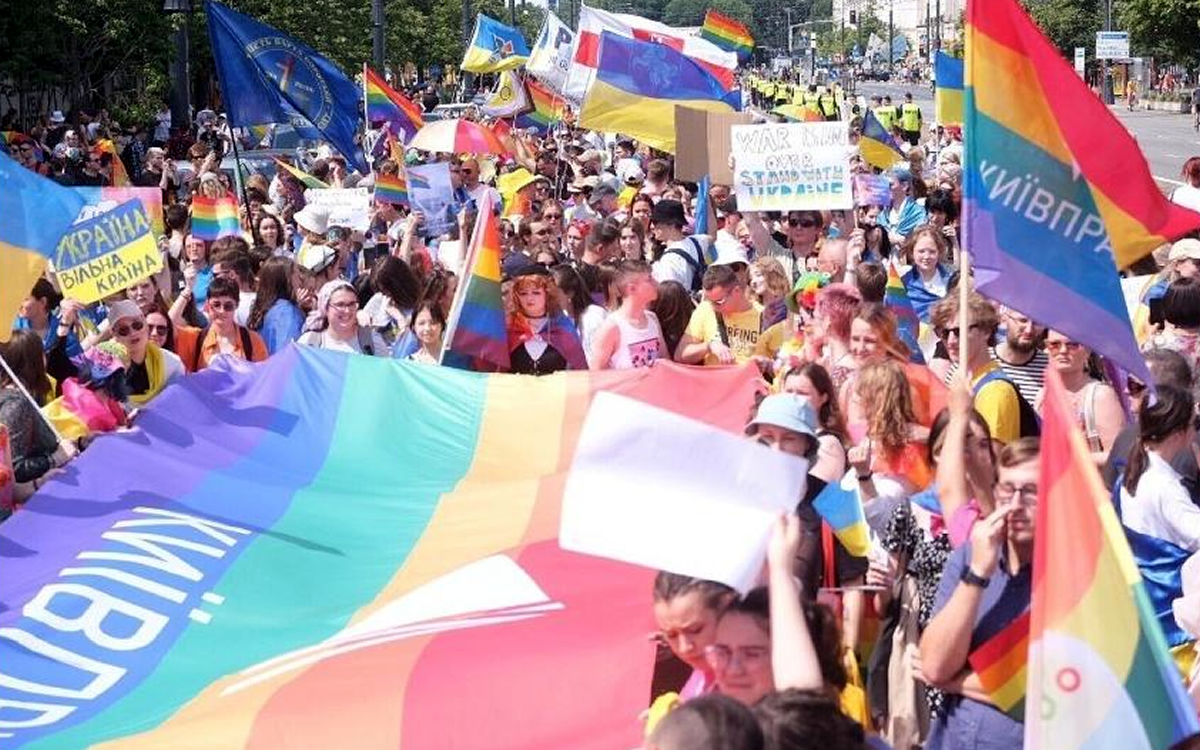
The Supreme Administrative Court of the Republic of Poland (Naczelny Sąd Administracyjny, NSA) issued a ruling on Nov. 3 that same-sex marriages of Polish citizens legally married in other countries were not expressly forbidden under the country’s constitution.
Article 18 of the constitution states: “marriage as a union of a man and a woman, family, motherhood and parenthood are under the protection and care of the republic of Poland.”
“Article 18 of the constitution cannot in itself constitute an obstacle to transcribing a foreign marriage certificate if the institution of marriage as a union of persons of the same sex was provided for in the domestic [legal] order,” the court ruled.
“The provision of the constitution in question does not prohibit the statutory regulation of same-sex unions,” said the court, adding that it was simply the case that “at present the Polish legislature has not decided to introduce such solutions” into Polish law.
The suit had been brought by Jakub Kwieciński and Dawid Mycek, a gay couple who are popular vloggers and social media celebrities who had legally married in Portugal. The case was litigated in the lower courts after the governor of the Polish province of Mazovia refused to acknowledge that their nuptials were legal.
Ordo Iuris, a Polish ultraconservative legal group that has campaigned against what it labels “LGBT ideology,” tweeted that the decision was “fake news.”
LGBTQ rights have become a hotly contested issue in Poland in recent years that has been met by a conservative backlash in this heavily Catholic nation.
The majority of Polish people support LGBTQ rights surrounding marriage and family, according to research by Miłość Nie Wyklucza (Love Does Not Exclude.)
The survey found 56 percent of respondents believe same-sex marriage should be legal to ensure the safety of their children. Even more, 65 percent, said they felt “a biological parent raising a child with a same-sex partner” fits the definition of family. And 58 percent of people said a same-sex couple is a family even without children.
According to Polish newspaper Gazeta Wyborcza, Poland is one of only six EU member states where same-sex couples cannot marry or register a civil partnership.
The survey reveals a stark difference between the Polish government and public opinion on LGBTQ rights.
As a result of anti-LGBTQ rhetoric, and the continued limits on LGBTQ rights in Poland, the country has for the last three years been ranked as the worst in the EU for LGBTQ people by ILGA-Europe, a Brussels-based NGO.
Poland has also drawn condemnations from the EU for its discriminatory laws surrounding LGBTQ people.
In September, the European Commission threatened to withhold pandemic relief funds, totaling over 126 million euros ($150 million,) in Polish jurisdictions that passed measures forming “LGBTQ Free Zones.”
Some regions have since repealed the anti-LGBTQ resolution.
In 2020, Poland narrowly re-elected President Andrzej Duda, who ran a campaign that regularly attacked the LGBTQ community, according to Pink News.
Polish LGBTQ advocates are also pushing back against a proposed law that would ban the so-called “promotion” of LGBTQ lifestyles. It would also make Pride parades illegal.






Bulgaria
Top EU court issues landmark transgender rights ruling
Member states must allow name, gender changes on ID documents
The European Union’s highest court on Thursday ruled member states must allow transgender people to legally change their name and gender on ID documents.
The EU Court of Justice in Luxembourg issued the ruling in the case of “Shipova,” a trans woman from Bulgaria who moved to Italy.
“Shipova” had tried to change her gender and name on her Bulgarian ID documents, but courts denied her requests for nearly a decade.
A ruling the Bulgarian Supreme Court of Cassation issued in 2023 essentially banned trans people from legally changing their name and gender on ID documents. Two Bulgarian LGBTQ and intersex rights groups — the Bilitis Foundation and Deystvie — and ILGA-Europe and TGEU – Trans Europe and Central Asia supported the plaintiff and her lawyers.
“Because her life in Italy also depended on her Bulgarian documents, the lack of documents reflecting her lived gender creates an obstacle to her right to move and reside within EU member states,” said the groups in a press release. “This mismatch between her gender identity and expression and her gender marker in her official documents leads to discrimination in all areas of life where official documents are required. This includes everyday activities such as going to the doctor and paying for groceries by card, finding employment, enrolling in education, or obtaining housing.”
Denitsa Lyubenova, a lawyer with Desytvie, in the press release said the case “concerns the dignity, equality, and legal certainty of trans people in Bulgaria.” TGEU Senior Policy Officer Richard Köhler also praised the ruling.
“Today, the EU Court of Justice has taken an important step towards a right to legal gender recognition in the EU,” said Köhler. “Member states must allow their nationals living in another member state to change their gender data in public registries and identity cards to ensure they can fully enjoy their freedom of movement. National laws or courts cannot stand in their way.”
“Thousands of trans people in the EU are breathing a sigh of relief today,” added Köhler.
European Union
European Parliament resolution backs ‘full recognition of trans women as women’
Non-binding document outlines UN Commission on the Status of Women priorities
The European Parliament on Feb. 11 adopted a transgender-inclusive resolution ahead of next month’s U.N. Commission on the Status of Women meeting.
The resolution, which details the European Union’s priorities ahead of the meeting, specifically calls for “the full recognition of trans women as women.”
“Their inclusion is essential for the effectiveness of any gender-equality and anti-violence policies; call for recognition of and equal access for trans women to protection and support services,” reads the resolution that Erin in the Morning details.
The resolution, which is non-binding, passed by a 340-141 vote margin. Sixty-eight MPs abstained.
The commission will meet in New York from March 10-21.
A sweeping executive order that President Donald Trump signed shortly after he took office for a second time on Jan. 20, 2025, said the federal government’s “official policy” is “there are only two genders, male and female.” The Trump-Vance administration has withdrawn the U.S. from the U.N. LGBTI Core Group, a group of U.N. member states that have pledged to support LGBTQ and intersex rights, and dozens of other U.N. entities.
European Union
Top EU court: Poland must recognize same-sex marriage from other European countries
Activists celebrate landmark decision
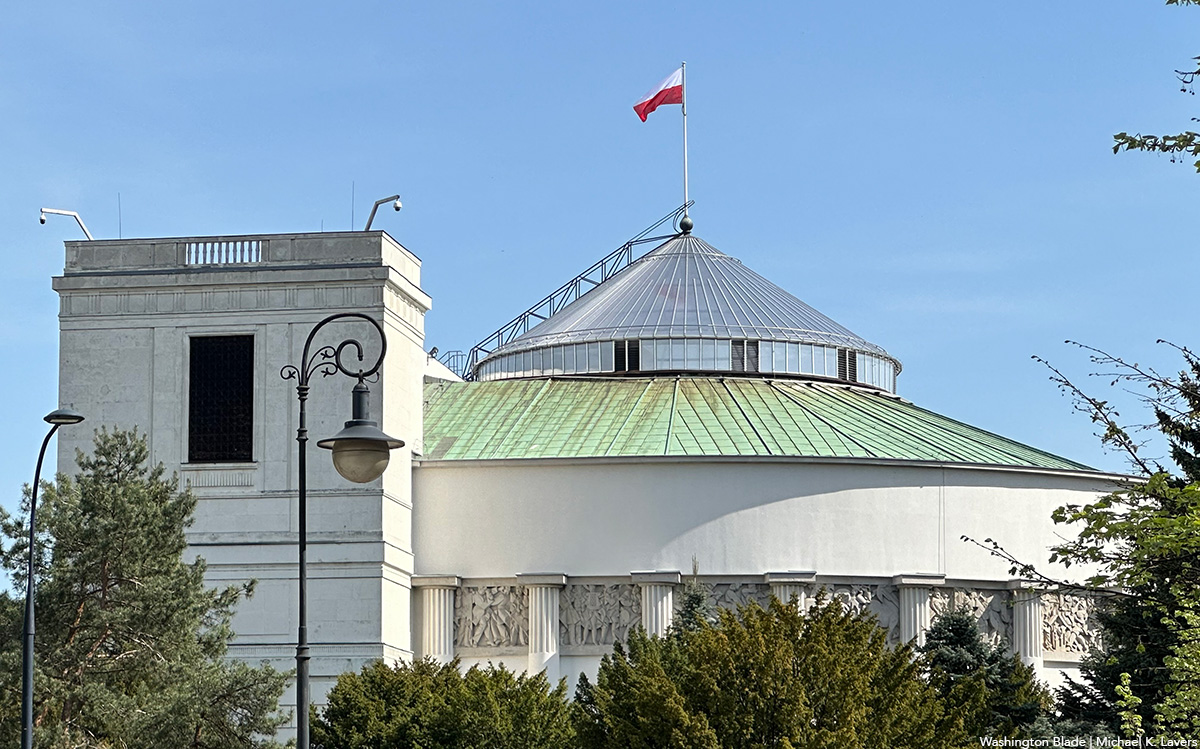
The European Union’s top court on Tuesday ruled member states must recognize same-sex marriages legally performed in other member states.
The EU Court of Justice in Luxembourg ruled in favor of a couple who challenged Poland’s refusal to recognize their German marriage.
ILGA-Europe notes Polish authorities refused “to transcribe into the civil register a certificate of same-sex marriage concluded” in Germany “between a Polish citizen and a Polish-German citizen … on the grounds that Polish law does not allow same-sex marriage.”
The couple who lives in Poland brought their case to Polish courts. The Polish Supreme Administrative Court referred it to the EU Court of Justice.
“Today’s ruling of the Court of Justice of the EU is of key importance not only for the couple involved in the case, but also for the entire LGBT+ community in Poland,” said the Campaign Against Homophobia, a Polish LGBTQ and intersex rights group, in response to the decision. “It clearly states that refusing to transcribe a marriage concluded abroad is incompatible with EU law. Therefore, regardless of the absence of registered partnerships and marriage equality, Poland must ensure the possibility of effective transcription.”
“With this judgment, the CJEU clearly states that the recognition of marriage status is key to enjoying EU citizens’ fundamental right to freedom of movement across the EU,” added ILGA-Europe Advocacy Director Katrin Hugendubel. “The EC now needs to ensure that this judgment is implemented quickly by the Polish state and across the EU.”
Sixteen EU countries — Ireland, Portugal, Spain, France, Luxembourg, Belgium, the Netherlands, Germany, Denmark, Austria, Slovenia, Malta, Greece, Sweden, Finland, and Estonia — have extended full marriage rights to same-sex couples. Poland, Romania, Bulgaria, and Slovakia are the EU countries with no legal recognition of same-sex couples.

How Pepper the courthouse dog helps victims of abuse

Women’s FEST returns to Rehoboth Beach next week

Belarusian lawmakers approve bill to crackdown on LGBTQ rights

Calendar: April 3-9

How new barriers to health care coverage are hitting D.C.

‘Out for McDuffie’ event held at D.C. gay bar

Thousands attend ‘No Kings’ protests in D.C.

Ghanaian president welcomed to Philadelphia amid backlash over anti-LGBTQ bill

PHOTOS: ‘No Kings’ rally and march