National
Remembering those we lost in 2022
Pioneering artists, designers, actors, and more
The acclaimed LGBTQ people and allies who died in 2022 include:
Jorge Diaz-Johnston, 54, died on Jan. 8. He and his husband were plaintiffs in a lawsuit that led to the legalization of same-sex marriage in Miami-Dade County, the Blade reported.
Andre Leon Talley, 73, the groundbreaking fashion editor, curator, and television personality died on Jan. 18 at a White Plains, N.Y., hospital.
Arnie Kantrowitz, 81, a founding member of the Gay and Lesbian Alliance Against Defamation (now known as GLAAD), died on Jan. 21 at a New York City rehabilitation center from complications of COVID-19.
Spiritual fitness leader Patricia Moreno, 57, died on Jan. 22 at her home in Los Angeles from cervical cancer.
Alan A. Stone, 92, died on Jan. 23 at his Cambridge, Mass., home from laryngeal cancer. When he was president of the American Psychiatric Association, homosexuality was removed from the list of mental disorders.
Genre-busting French designer Thierry Mugler, 73, died on Jan. 23 in his Vincennes home outside Paris.
James Bidgood, 88, an acclaimed gay photographer and filmmaker who anonymously directed the 1971 cult classic “Pink Narcissus,” died on Jan. 31 in Manhattan from complications of COVID-19.
Isabel Torres, 52, the actress best known for her portrayal of Cristina Ortiz Rodriguez, the transgender singer on the series “Veneno” on HBO Max, died on Feb. 11.
Joe Tom Easley, 81, an LGBTQ advocate who played a key role in the effort to repeal ‘Don’t Ask, Don’t Tell,’ died on Feb. 13 at a hospital near his Miami Beach home from complications of lung disease.
Leo Bersani, 90, a scholar of French literature whose work at the height of the AIDS crisis influenced debates about queer identity, died on Feb. 20 at a Peoria, Ariz., assisted-living facility.
Rusty Mae Moore, 80, a transgender educator and activist died on Feb. 23 at her home in Pine Hill, N.Y. from cardiovascular complications.
Richard Lipez, 83, who under the pen name Richard Stevenson wrote a groundbreaking series of novels featuring the out gay detective Donald Strachey, died on March 16 of pancreatic cancer at his home in Becket, Mass.
Ashton Hawkins, 84, executive vice president and counsel to the trustees of the Metropolitan Museum of Art, died on March 27 at a White Plains, N.Y., assisted living facility from complications of Alzheimer’s disease.
Richard Howard, 92, a Pulitzer Prize-winning poet, died on March 31 in Manhattan from complications of dementia.
Eric Little, owner of the iconic 17th Street bar JR.’s and the closed gay bar Cobalt died on May 1 in his sleep at his Hollywood, Md., home of unknown causes.
Margot Heuman, 94, a rare Holocaust survivor who spoke of her same-sex relationship in the concentration camps, died on May 11 at a hospital in Green Valley, Ariz.
Urvashi Vaid, 63, leader of the National Gay and Lesbian Task Force during the AIDS crisis who founded a super PAC to promote LGBTQ women in politics, died on May 14 from cancer at a hospital in Manhattan.
Kristine Gebbie, 78, the first U.S. AIDS czar, died from cancer in Adelaide, Australia on May 17.
Jeffrey Escoffier, 79, a renowned scholar who wrote about gay identity and as a New York City public health official directed campaigns on HIV and other issues, died on May 20 from complications from a fall.
Paul Gunther, 65, a champion of art and architecture in New York nonprofit preservation organizations, died on May 29 in a Manhattan hospital from injuries, which authorities said were sustained due to an attempted suicide, The New York Times reported.
Ronni Solbert, 96, a children’s illustrator most known for her illustrations for “The Pushcart War” written by her partner Jean Merrill, died on June 9 at her Randolph, Vt., home.
Gloria Allen, 76, a transgender activist whose work with at-risk transgender Chicago youth inspired the documentary “Mama Gloria” and the play “Charm,” died on June 13 at her home from respiratory failure.
Clela Rorex, 78, who, in 1975, as a groundbreaking Boulder County, Colo., clerk issued a marriage license to a same-sex couple, died on June 19 from complications of an infection at a Longmont, Colo. hospice.
David Pichette, an ordained Roman Catholic priest who for many years was involved with the LGBTQ Catholic organizations Dignity Washington and Dignity Northern Virginia, died on June 27 from complications of pancreatic cancer at a Boynton Beach, Fla. hospice.
Poet and writer of opera librettos and musicals Kenward Elmslie, 93, died on June 29 at his New York City home.
Gay journalist Chuck Colbert, 67, who covered the Catholic clergy sexual abuse scandal died on June 30.
Noah Vincent, lesbian, journalist and author of the well-regarded book “Self-Made Man” about passing as a man died on July 6 at a clinic in Switzerland. Her death was medically assisted (a voluntarily assisted death).
Computer programmer and art collector John Camp, 77, died on July 12 at an Arlington, Va. hospital from complications of prostate cancer.
Pat Carroll, 95, the game show and sit-com star who reinvented herself in a one-woman show on Gertrude Stein, died on July 31 at her Cape Cod, Mass. home from pneumonia.
Author, poet and activist Elana Dykewomon, 72, died on Aug. 7 at her Oakland, Calif. home from esophageal cancer.
Queer ally, pop singer and “Grease” star Olivia Newton-John, 73, died on Aug. 8 at her Southern California ranch. No cause of death was given. She had lived with breast cancer since 1992.
Actress Anne Heche, 53, died on Aug. 14 from injuries sustained in a car accident.
Stephen Peter Gorman, 69, who once served as chair of the D. C. Mayor’s Committee on Persons with Disabilities, died on Aug. 19 in Washington, D.C.
Founder of the Chelsea Theater Center Robert Kalfin, 89, died on Sept. 20 at a Southampton, N.Y. hospice from myeloid leukemia.
D.C. LGBTQ rights advocate and events promoter Jacob Pring, 47, died on Sept. 26 at his Springfield, Va. home.
Celebrated D.C. LGBTQ activist Kathleen Joan DeBold, 66, died suddenly on Oct. 9 in Ocean City, Md.
Queer icon and legendary star of stage, screen, and TV Angela Lansbury, 96, died on Oct. 10.
Max Woodward, 76, who retired in 2016 as Kennedy Center vice president of theater programming, died on Oct. 14 at a Washington, D.C. care facility from complications from Alzheimer’s disease.
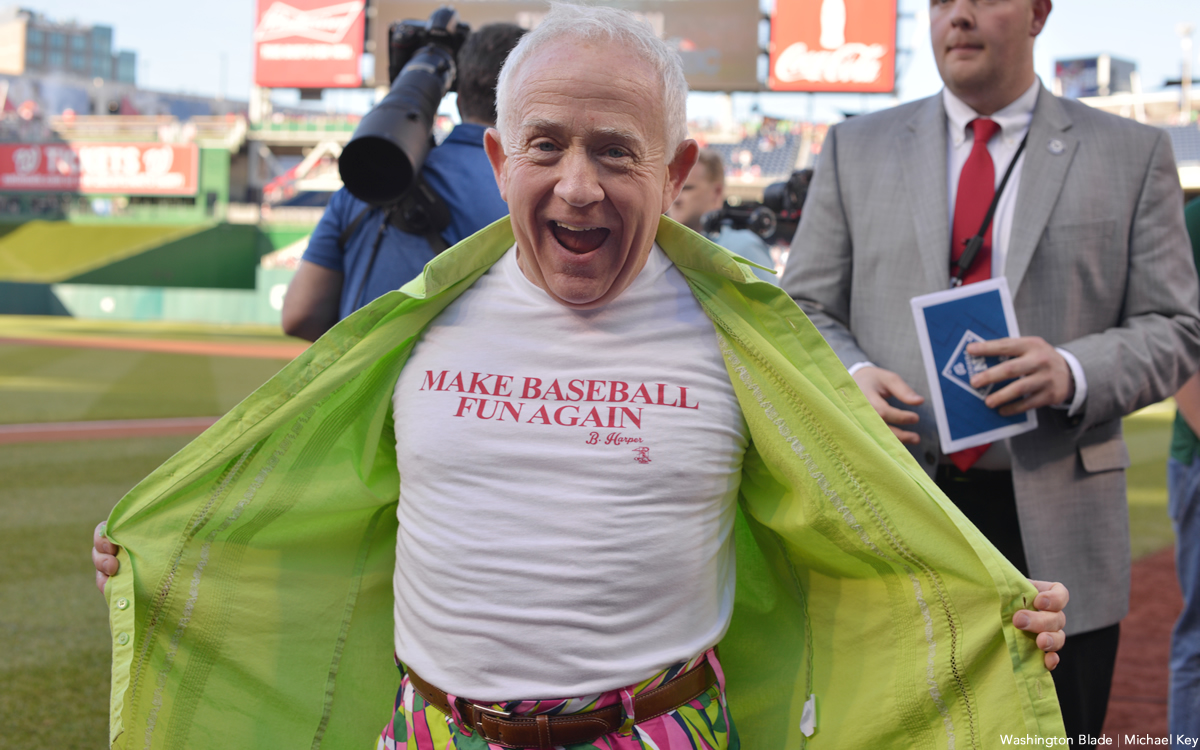
Leslie Jordan, 67, an actor known for his work on “Will & Grace” whose pandemic Instagram postings went viral, died on Oct. 24 in Los Angeles after a car accident.
Gay country music pioneer Patrick Haggerty, 78, died on Oct. 31 at his home in Bremerton, Wash. He had suffered a stroke on a flight after a show on Sept. 30.
Harry Bates, 95, an acclaimed architect who designed houses on Fire Island and the Hamptons, died on Nov. 1 at a hospital in Fernandina Beach, Fla.
Doris Grumbach, 104, acclaimed author who wrote about the plight of women, died on Nov. 4 at a retirement community in Kennett Square, Pa.
Kevin Conroy, 66, the voice of Batman for three decades, died on Nov. 10 from intestinal cancer.
Frederick Swann, 91, a renowned master of the pipe organ died from cancer at his home in Palm Desert, Calif. on Nov. 13
Barbara Love, 85, a feminist and gay rights activist, died on Nov. 13 in the Bronx, N.Y. from complications of leukemia and Parkinson’s disease.
Don Luce, 88, an activist who helped to end the Vietnam War, died on Nov. 17 at a Niagara Falls, N.Y. hospital after suffering a sudden cardiac ischemia.
Ned Rorem, 99, renowned composer of music and diary writer, died on Nov. 18 at his home in Manhattan.
Marijane Meaker, 95, the lesbian author whose 1952 novel “Spring Fire” brought lesbian pulp fiction into the mainstream, died on Nov. 21 at her East Hampton, N.Y. home from cardiopulmonary arrest.
Irene Cara, 63, queer icon, singer and star of “Fame” and “Flashdance,” died on Nov. 26 at her Largo, Fla. home.
Former Republican Congressman James (Jim) Kolbe, 80, who represented Southern Arizona in Congress for 22 years, died on Dec. 3 from a stroke. He was the first openly gay Republican member of the House of Representatives.



Wyoming
U.S. attorney nominee confirmed despite anti-LGBTQ history, no trial experience
Nine felony grand jury indictments tied to Darin Smith dismissed last week
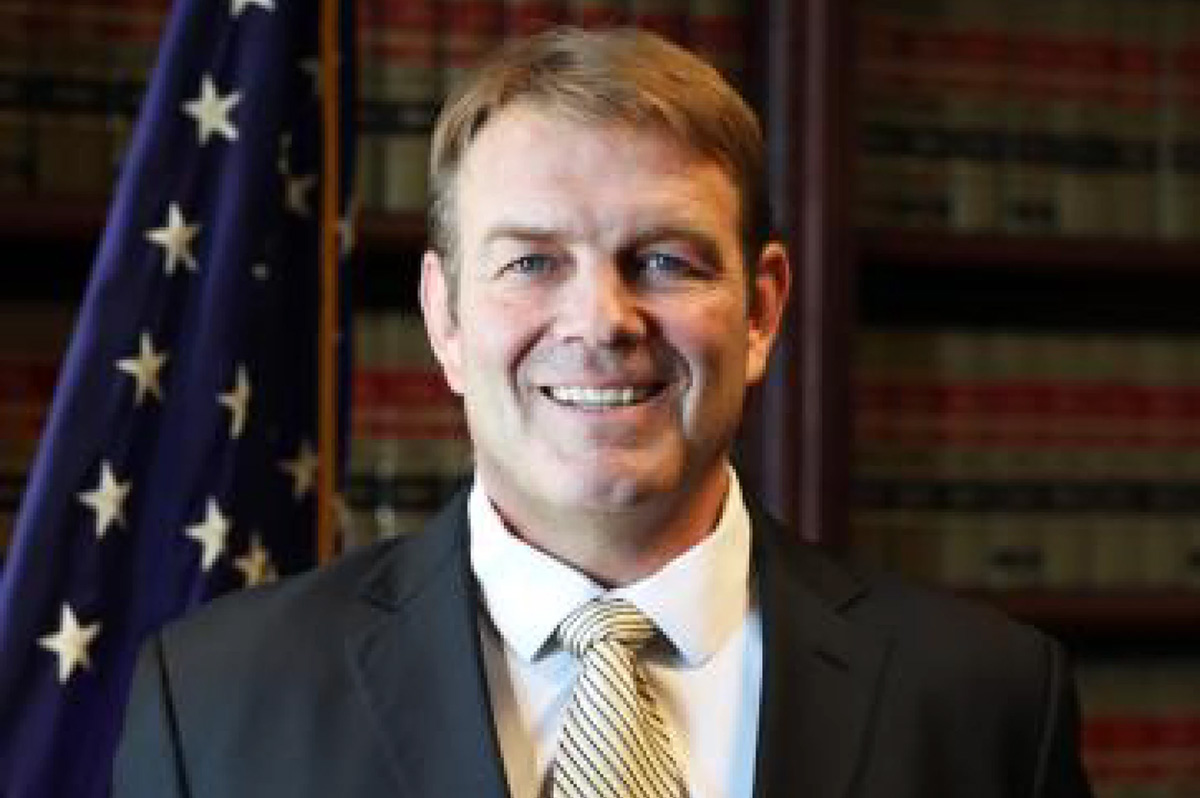
Republicans confirmed Darin Smith as U.S. Attorney for the District of Wyoming on Monday, regardless of his history as interim U.S. Attorney for Wyoming and a state senator.
While serving as interim U.S. Attorney for Wyoming — after being appointed by President Donald Trump last July despite never trying a case outside of his time as a law student intern — former state Sen. Darin Smith likely prejudiced jurors during grand jury proceedings.
Nine felony grand jury indictments tied to Smith’s tenure were dismissed last week.
Judges dismissed felony indictments against Cheyenne Swett, Richard Allen, Michael Scott Hopper, Brian Joseph Johnson, Dennison Jay Antelope, Matthew Christopher Jacoby, Matthew Miller Jr., Wolf Elkins Duran, and Jose Benito Ocon. The now-dismissed charges included felony firearm possession, drug distribution, and possession of child pornography, among other allegations.
Smith allegedly told the grand jury that the defendants were “bad guys,” described them as “murderers,” and said deliberations “won’t take long.”
Even the U.S. Attorney’s Office for the District of Wyoming acknowledged that Smith’s comments were “ill-advised.”
Smith has a history of aligning with Trump over the Constitution and supporting anti-LGBTQ legislation.
In 2025, Smith co-sponsored House Bill 0194, titled “Obscenity amendments,” which, among other provisions, would have criminalized drag shows. The bill also would have repealed exemptions for public and school librarians from the crime of “promoting obscenity” to minors. The wording of the bill was so vague that Republican state Rep. Lee Filer said, “We will end up having to arrest somebody for allowing a child to read the Holy Bible.”
Smith also co-sponsored SF0062, a bill requiring public school students to use restrooms, sex-designated changing facilities, and sleeping quarters that align with their sex assigned at birth. In March 2025, the Wyoming governor signed the bill into law, along with its House companion.
He also attended the Jan. 6 Capitol riot alongside thousands of other Trump supporters.
“Smith was on the Capitol grounds on Jan. 6 … and made the reprehensible claim … that the hundreds of Capitol Police officers who risked their lives that day were guilty of ‘massive incompetence.’ Smith blames the police for what happened on Jan. 6. Without evidence, he claimed that rioters who breached the Capitol were victims of entrapment,” U.S. Sen. Dick Durbin (D-Ill.) said. “Moreover, Smith is not remotely qualified to be a U.S. Attorney. He’s going to be in the package — take it or leave it. Prior to becoming the interim U.S. Attorney, he had no courtroom or litigation experience whatsoever. None. And Smith’s lack of experience has had real-world consequences.”
Prior to his work in the Wyoming state legislature, Smith worked as Director of Planned Giving for the Family Research Council, an organization that describes homosexuality as “harmful” to society with “negative physical and psychological health effects.”
The organization also believes that sexual orientation “should [not] be included as a protected category in nondiscrimination laws or policies, as it is not comparable to inborn, immutable characteristics such as race or sex.”
During questioning before the U.S. Senate, he denied that his work with the organization shows he has loss of impartiality when it comes to matters of LGBTQ rights.
Also questioning, Smith was asked about a now-deleted Facebook post in which he appeared to express support for Kim Davis, the Kentucky county clerk who was found to be unconstitutional in her refusal to issue same-sex marriage licenses, despite Obergefell v. Hodges.
“Perhaps Hillary and Obama can share the cell with Kim Davis for refusing to uphold the Defense of Marriage Act,” the post said.
When asked why he posted it, Smith told Durbin: “I do not recall.”
Josh Sorbe, spokesperson for the Senate Judiciary Committee Democrats and Durbin, said:
“Anti-LGBTQ+ extremist Darin Smith has no business serving as a top law enforcement officer in any state — let alone a state with as much history of queer importance as Wyoming. He’s an unqualified insurrectionist with no experience litigating criminal or federal matters, and his bigotry puts into serious question his commitment to upholding the law for all Americans.”
Human Rights Campaign Vice President of Government Affairs David Stacy also condemned Smith’s confirmation to the U.S. Attorney’s office.
“The justice system in America is supposed to be about ensuring the law is applied fairly and equally. But Darin Smith has spent his career obsessed with making life worse for LGBTQ+ people, opposing marriage equality, cosponsoring state legislation targeting transgender youth, and smearing LGBTQ+ people in public statements,” Stacy said. “Just over two decades after Matthew Shepard was brutally murdered in that same state, Wyoming deserves better than tired anti-LGBTQ+ hate at the helm of federal law enforcement. The Senate should reject Darin Smith and demand a nominee who will put the people — and justice — first.”
Vermont
Vt. lawmaker equates transgender identity with bestiality
Vermont Democrats condemned comments, demanded apology
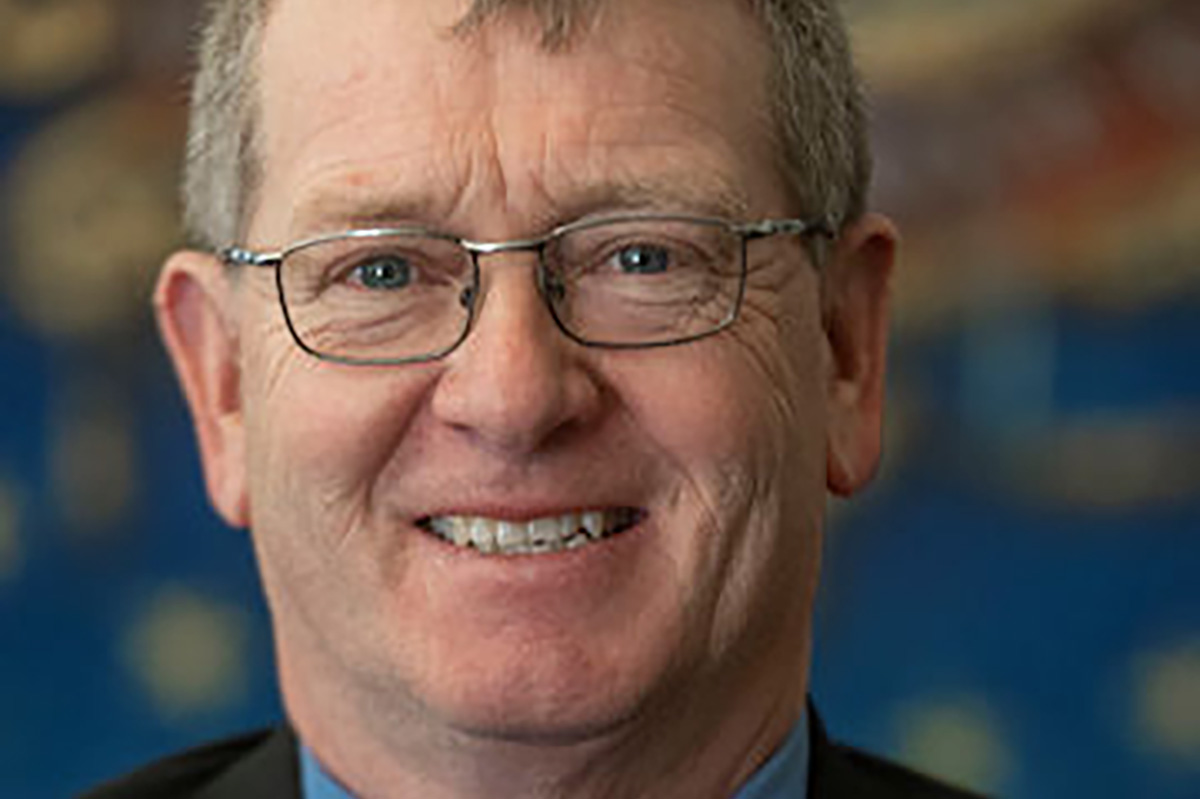
State Sen. Steven Heffernan (R-Addison) equated transgender people to bestiality on the Vermont Senate floor on May 15 while debating an animal cruelty bill.
Heffernan, who was elected in 2024 to the state Senate, constructed a scenario in which a trans person is indistinguishable from someone committing bestiality.
“In these crazy times, what happens if the individual identifies as an animal having intercourse with an animal? How is the courts going to handle that?” the former member of the Vermont Air National Guard said while debating House Bill 578. “Being that we voted through Prop Four, and if it does make it through this state, and I have a gender identity that I identify as a dog and had sex with my dog, is this law going to affect me?”
State Sen. Tanya Vyhovsky (D-Chittenden Central), who presented H. 578 responded professionally.
“The bill that we are putting forward in the current law is quite clear that any act between a person and an animal that involves contact with the mouth, sex organ, or anus of the person, and the mouth, sex organ, or anus of the animal, without a bona fide veterinary purpose, will be a crime.”
In the video, Heffernan continued to ask inappropriate questions — questions that Vyhovsky answered.
“If I identify as that animal, will this be able to … It says a person. I’m not a person. I’m identifying as this animal I’m having intercourse with,” he said. “We are identifying genders, of whatever gender we decide we want to be, and I think I like this bill. I’m going to vote for this bill, but I want to make this chamber aware of what’s coming.”
Vyhovsky made a statement saying this was a planned move in an attempt to “other” trans Vermonters instead of protecting them.
“Senator Heffernan knew exactly what he was doing,” said Vyhovsky. “Sen. Heffernan is using the same dehumanizing playbook that has been used against LGBTQ+ people for generations — the false, ugly suggestion that queer and trans identity is synonymous with deviance and harm. It was wrong then and it is wrong now.”
This derogatory action at the expense of trans people appears to be part of a pattern of behavior from Heffernan in his official capacity.
In March, Heffernan left the floor right before lawmakers voted on Proposal 4, conveniently missing the bill vote. PR 4, if passed by the state’s voters in the fall, would amend the state constitution to enshrine protections against unjust treatment, including discrimination based on a “person’s race, ethnicity, sex, religion, disability, sexual orientation, gender identity, gender expression, or national origin.”
Heffernan told VTDigger at the time that he left because his stomach was feeling “agitated” and he needed to use the restroom. He said he had not made up his mind on how to vote on the amendment, largely because he’d heard from constituents urging him both to vote for and against it.
“My pizza hit at the right time, I guess,” he said, calling the timing “convenient.”
Despite his leaving — and being the only lawmaker to do so — the state Senate voted to pass it 29-0, with Heffernan marked “absent.” This came after the state House of Representatives voted to pass it 128-14 last week.
Vermont Senate Democrats condemned the statement and used the opportunity to emphasize the need for the state to pass PR 4 on Nov. 4.
“In the wake of Sen. Heffernan’s comments, the stakes of this election couldn’t be more clear,” the statement provided to the Washington Blade read. “Transgender and nonbinary Vermonters are our neighbors, our friends, and our family members. On Friday, Sen. Heffernan used his platform as an elected official representing the people of Vermont to dehumanize them. Senate Democrats will never stop fighting for dignity for all Vermonters. We demand Senator Heffernan apologize to those he has harmed with his words and actions.”
State Sen. Kesha Ram Hinsdale (D-Chittenden Southeast), speaking in her capacity as chair of the Senate Ethics Panel, responded to similar transphobic comments made by President Donald Trump in a White House counterterrorism strategy document last week, in which he said those with “extreme transgender ideologies” should know “we will find you and we will kill you,” stating:
“A lot of people are living in fear in this country because of what somebody with the power of the pen and the power of the military is saying every day,” Hinsdale said. “Just because [speech] is protected does not mean it is worthy of this institution, and does not mean it is worthy of the office we hold and the power that we wield in the lives of Vermonters.”
The Blade reached out to Heffernan for comment but has not heard back.
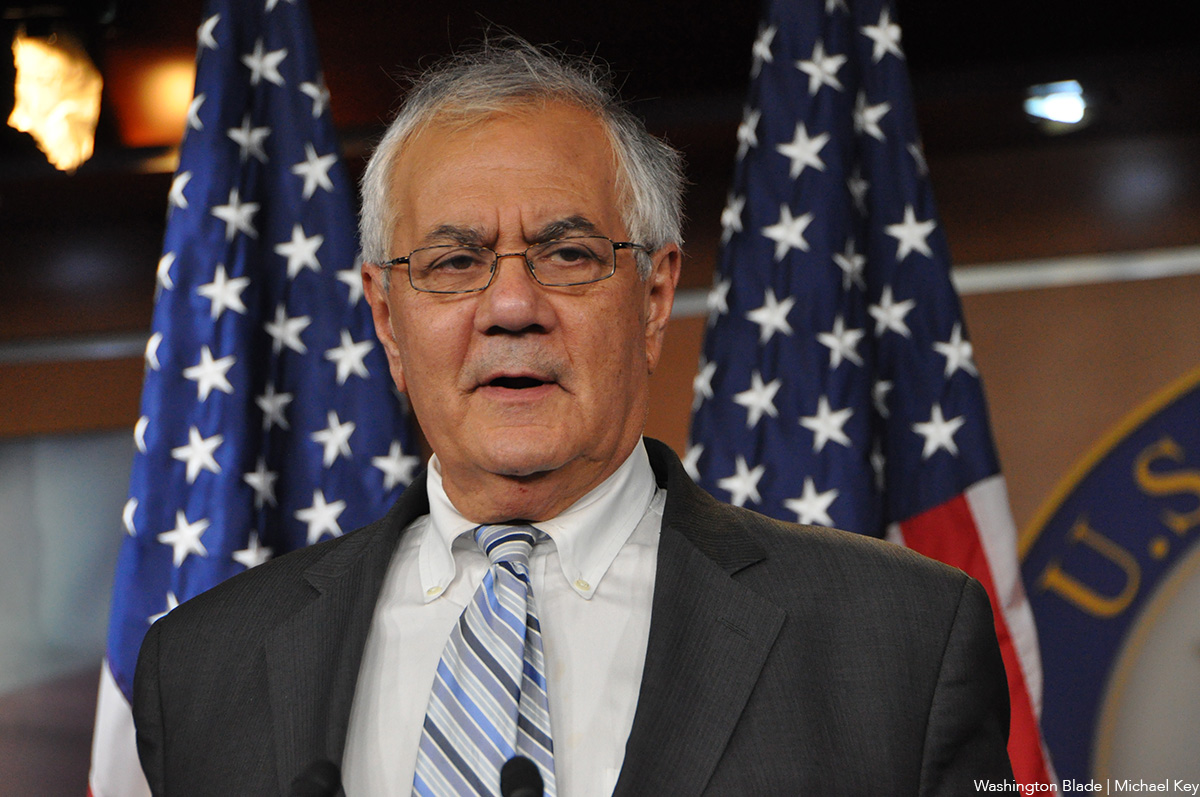
Former U.S. Rep. Barney Frank (D-Mass.) died on Tuesday. He was 86.
The Massachusetts Democrat served in the U.S. House of Representatives from 1981-2013. Frank in 1987 became the first member of Congress to voluntarily come out as gay.
The Washington Blade earlier this month interviewed Frank after he entered hospice care at his Ogunquit, Maine, home where he lived with his husband, Jim Ready, since 2013. The former congressman, among other things, talked about his new book, “The Hard Path to Unity: Why We Must Reform the Left to Rescue Democracy.”
The book is scheduled for release on Sept. 15.
NBC Boston reported Frank’s sister, Ann Lewis, and a close family friend confirmed his death.
The Blade will update this article.

Iran war causes condom shortage in India

U.S. attorney nominee confirmed despite anti-LGBTQ history, no trial experience

Vt. lawmaker equates transgender identity with bestiality

Gay Men’s Chorus celebrates 45 years at annual gala

BREAKING NEWS: Barney Frank dies at 86

Disillusioned about democracy? Think of it as a community garden

Honey, have we been priced out of gay paradise?

IDAHOBiT a reminder we all must stand up against transphobia

PHOTOS: Blade Summer Kickoff Party