U.S. Federal Courts
Federal judge rules Tenn. drag ban is unconstitutional
Law was to have taken effect April 1
U. S. District Court Judge Thomas L. Parker of the U. S. District Court for the Western District of Tennessee declared Tennessee’s anti-drag Adult Entertainment Act to be unconstitutional.
Parker’s ruling comes after a two-day trial last month. A Shelby County-based LGBTQ theatre company, Friends of George’s, had sued the state of Tennessee, claiming the law unconstitutional under the First Amendment.
Parker ordered a temporary injunction halting the just enacted Tennessee law that criminalizes some drag performances, hours before it was set to take effect April 1. In his 15 page ruling ordering the temporary injunction Parker wrote:
“If Tennessee wishes to exercise its police power in restricting speech it considers obscene, it must do so within the constraints and framework of the United States Constitution. […] The court finds that, as it stands, the record here suggests that when the legislature passed this statute, it missed the mark.”
Attorneys for the theatre company had argued that drag performances were an artform and protected speech under the first amendment.
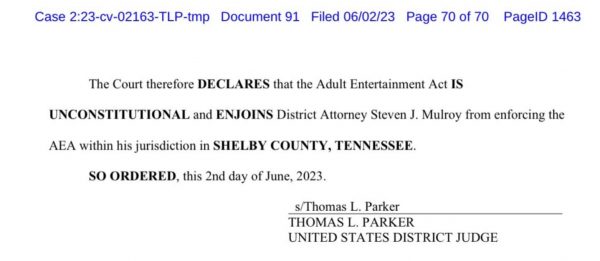
In his 70 page ruling Friday, Parker wrote:
“After considering the briefs and evidence presented at trial, the court finds that — despite
Tennessee’s compelling interest in protecting the psychological and physical wellbeing of
children — the Adult Entertainment Act (“AEA”) is an UNCONSTITUTIONAL restriction on
the freedom of speech.”
“The court concludes that the AEA is both unconstitutionally vague and substantially
overbroad. The AEA’s ‘harmful to minors’ standard applies to minors of all ages, so it fails to
provide fair notice of what is prohibited, and it encourages discriminatory enforcement. The
AEA is substantially overbroad because it applies to public property or ‘anywhere’ a minor
could be present.”
Read the entire ruling:
Related:





Maryland
4th Circuit dismisses lawsuit against Montgomery County schools’ pronoun policy
Substitute teacher Kimberly Polk challenged regulation in 2024

A federal appeals court has ruled Montgomery County Public Schools did not violate a substitute teacher’s constitutional rights when it required her to use students’ preferred pronouns in the classroom.
The 4th U.S. Circuit Court of Appeals in a 2-1 decision it released on Jan. 28 ruled against Kimberly Polk.
The policy states that “all students have the right to be referred to by their identified name and/or pronoun.”
“School staff members should address students by the name and pronoun corresponding to the gender identity that is consistently asserted at school,” it reads. “Students are not required to change their permanent student records as described in the next section (e.g., obtain a court-ordered name and/or new birth certificate) as a prerequisite to being addressed by the name and pronoun that corresponds to their identified name. To the extent possible, and consistent with these guidelines, school personnel will make efforts to maintain the confidentiality of the student’s transgender status.”
The Washington Post reported Polk, who became a substitute teacher in Montgomery County in 2021, in November 2022 requested a “religious accommodation, claiming that the policy went against her ‘sincerely held religious beliefs,’ which are ‘based on her understanding of her Christian religion and the Holy Bible.’”
U.S. District Judge Deborah Boardman in January 2025 dismissed Polk’s lawsuit that she filed in federal court in Beltsville. Polk appealed the decision to the 4th Circuit.
U.S. Federal Courts
Federal judge in Md. rules against White House passport policy
Lambda Legal represents transgender, nonbinary people in lawsuit
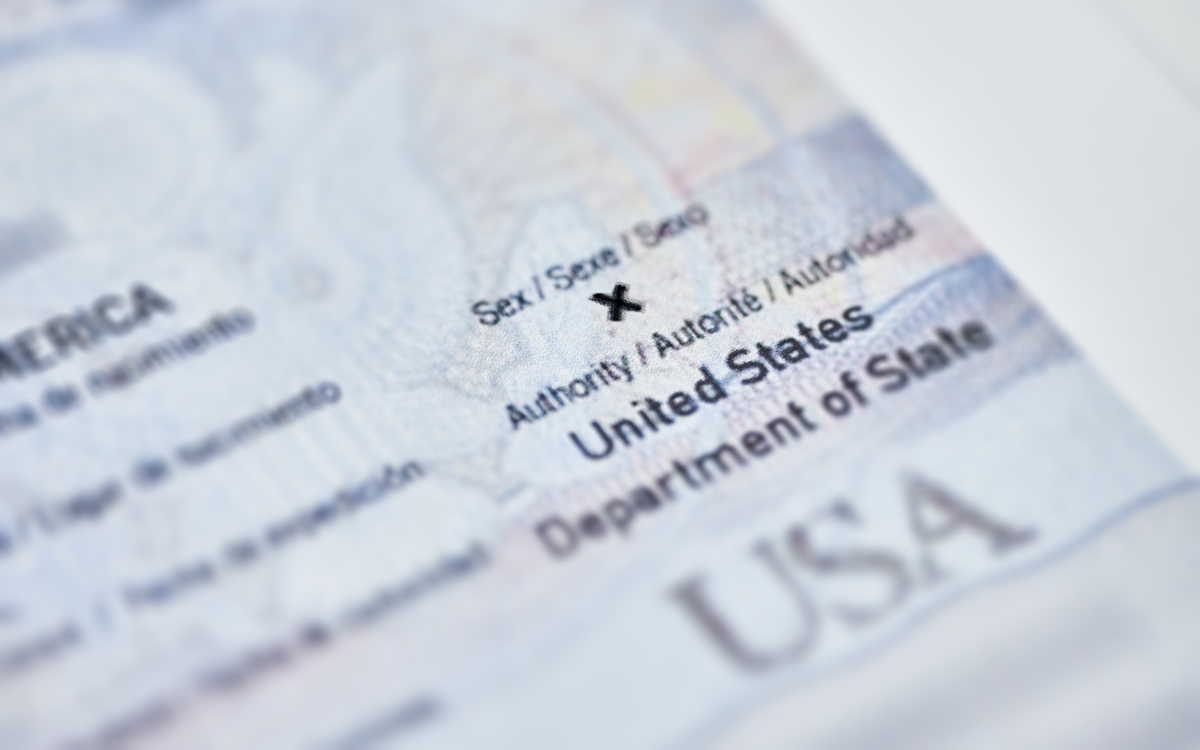
A federal judge in Maryland on Tuesday ruled in favor of six transgender people who are challenging the Trump-Vance administration’s passport policy.
President Donald Trump once he took office signed an executive order that banned the State Department from issuing passports with “X” gender markers. A memo the Washington Blade obtained directed State Department personnel to “suspend any application where the applicant is seeking to change their sex marker from that defined in the executive order
pending further guidance.”
The Trump-Vance administration only recognizes two genders: male and female.
The lawsuit that Lambda Legal filed in U.S. District Court for the District of Maryland in Baltimore in April alleges the policy “has caused and is causing grave and immediate harm to transgender people like plaintiffs, in violation of their constitutional rights to equal protection.”
Seven trans people — Zander Schlacter, Jill Tran, Lia Hepler-Mackey, David Doe, Robert Roe, Peter Poe, and Kris Koe — filed the lawsuit.
Roe is a U.S. Foreign Service Officer who currently lives in Europe. Lambda Legal, who represents him and the six other plaintiffs, notes Chief Judge George L. Russell III dismissed Roe’s case because the State Department has yet to deny him “an accurate passport.”
“Like every other court that has considered this executive order, the court finds its stated purpose does not serve an important governmental interest that is exceedingly persuasive; further, the discriminatory means employed are not substantially related to the achievement of those objectives,” said Russell in his ruling.
Lambda Legal Counsel Carl Charles described Russell’s decision as “a crucial victory for our clients and transgender people nationwide who have been trapped by this administration’s cruel and discriminatory policy.”
“The court recognized that forcing inaccurate identity documents on transgender Americans causes immediate and irreparable harm,” said Charles in a press release. “Our clients can now travel with dignity and safety while we continue fighting to overturn this discriminatory policy entirely.”
The American Civil Liberties Union earlier this year filed a separate lawsuit against the passport directive on behalf of seven trans and nonbinary people.
A federal judge in Boston in April issued a preliminary junction against it. A three-judge panel on the 1st U.S. Circuit Court of Appeals last week ruled against the Trump-Vance administration’s motion to delay the move.
U.S. Federal Courts
AGs sue White House over push to restrict gender-affirming care in blue states
14 states, DC joined the lawsuit filed Friday
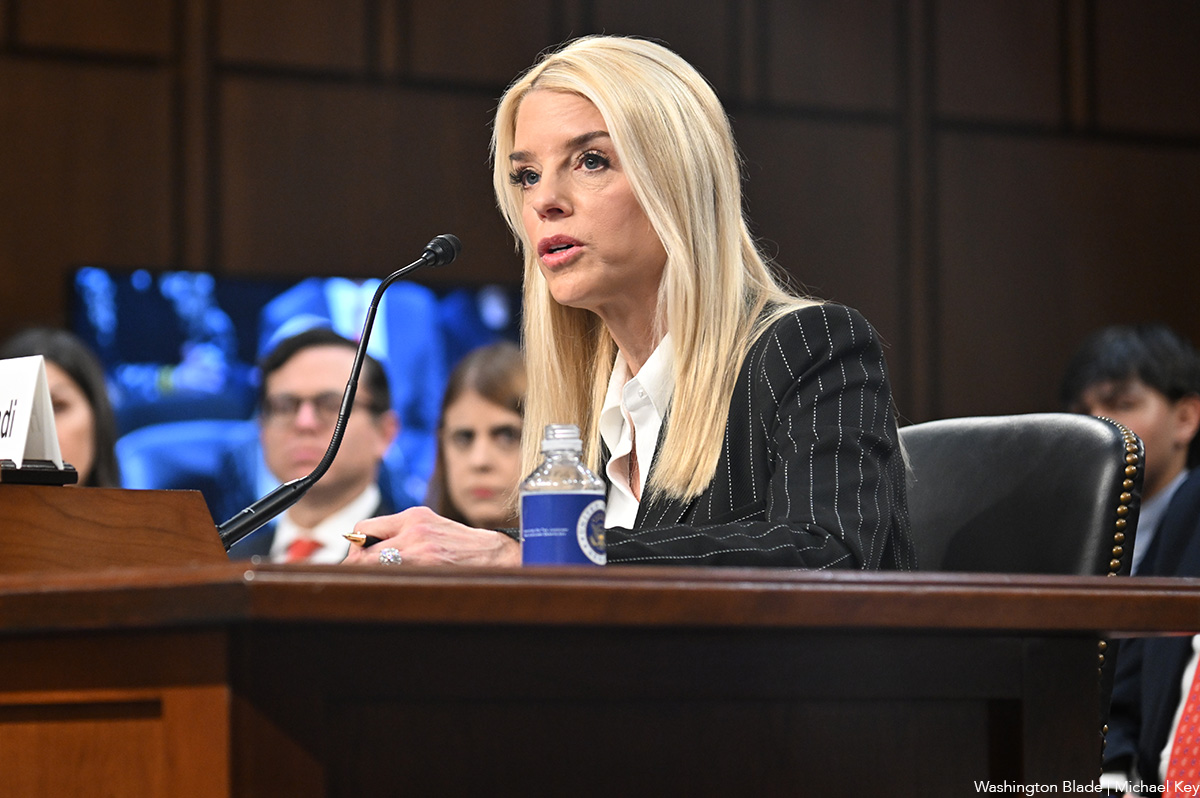
A group of 15 Democratic attorneys general and Pennsylvania Gov. Josh Shapiro (D) have accused the Trump-Vance administration of unlawfully pressuring health providers to withhold access to gender-affirming medicine for minors in places where these treatments remain legal.
In a complaint filed in the U.S. District Court for the District of Massachusetts on Friday, the attorneys general outlined multiple ways in which, they claim, the administration has overstepped its authority to restrict care that is protected under state law, such as by threatening providers with meritless lawsuits and federal investigations.
On the first day of his second term, President Donald Trump directed the Justice Department to pursue enforcement actions to proscribe medically necessary gender related interventions, which were characterized in his executive order as “chemical and surgical mutilation.”
Thereafter, the DOJ has issued subpoenas, demanded private patient data, and suggested that criminal charges might be coming — actions that have no legal basis, and instead constitute efforts to strong-arm Democratic states into alignment with the administration’s position on gender-affirming care for minors, according to the complaint.
As a result of these pressures, the attorneys general argue, providers have reduced or eliminated services while patients have reported cancelled appointments and uncertainty over whether they can continue receiving treatment.
Their lawsuit asks the court to block the administration’s actions and halt the enforcement of the executive order along with another that prohibits the federal government from recognizing transgender people or acknowledging that gender identity does not always correspond with one’s sex at birth.
The 15 attorneys general are from Massachusetts, California, New York, Connecticut, Illinois, Delaware, D.C., Hawaii, Maine, Maryland, Michigan, Nevada, New Jersey, New Mexico, Rhode Island, and Wisconsin.

‘Out for McDuffie’ event held at D.C. gay bar

‘Jonah’ an undeniably compelling but unusual memory play

The Oscar-losing performance that’s too good to miss

Trump tells Fox News he won the ‘gay vote’ — but polls tell a different story

Anti-trans visa ruling echoes Nazi regime destroying trans documents

Menaka Guruswamy celebrated as India’s first openly LGBTQ MP

UPDATED: Trans-led HIV clinic in Portsmouth struggles amid funding cuts

DeSantis signs emergency bill that restores Fla. ADAP funding

Pa. House passes bill to codify marriage equality in state law

Introducing the Torchbearers Awards honoring queer, trans women and nonbinary people
-

 India5 days ago
Menaka Guruswamy celebrated as India’s first openly LGBTQ MP
-
Health5 days ago
UPDATED: Trans-led HIV clinic in Portsmouth struggles amid funding cuts
-
Florida5 days ago
DeSantis signs emergency bill that restores Fla. ADAP funding
-
Pennsylvania4 days ago
Pa. House passes bill to codify marriage equality in state law