Russia
Transgender and gender diverse rights in Russia deteriorating rapidly
Lawmakers on Tuesday expected to give final approval to gender transition ban bill
In a scene eerily reminiscent of a 1960’s cold war era novel, the young woman sat nervously at the outside table of the café not far from the museum district and main railroad station in St. Petersburg, chain smoking French Gitanes and toying with the food on her plate in front of her. She kept nervously glancing around as if she expected to suddenly be swept up in a secret police raid.
The primary cause of her anxiety and discomfiture she explained to the journalist sitting across the table from her, was that as a transgender woman, she felt threatened and afraid. Unable to continue to live in her native region in the Sverdlovsk Oblast, [region] in the Ural mountains she had moved first to the Russian capital of Moscow. Then as tensions rose over the treatment of LGBTQ Russians she fled to St. Petersburg.
“There is no safety anymore, soon they will openly hunt us like swine, we no right to exist they say,” she told Russian freelance journalist Sergei Dimitrov.
The young woman who only identified herself to Dimitrov by the name Elena said that since the latest passage of laws including expansion of the Russia’s “gay propaganda” law to include adults last December, coupled with the crackdown by the Russian Federal Service for Supervision of Communications, Information Technology and Mass Media, abbreviated as Roskomnadzor, on any websites and on popular phone apps that cater to LGBTQ people, she has now begun efforts in earnest to leave the country.
Last week the lower house of the Russian Parliament, colloquially referred to as the State Duma, passed on its final reading a bill that would outlaw gender transitioning procedures in Russia. The measure now heads to the Federation Council, or upper House where it is expected to pass in the scheduled vote on Tuesday and then transmitted to Russian President Vladimir Putin for his approval and signature which is expected.
State Duma [Parliament] Deputy Speaker Pytor Tolstoy, a co-sponsor of the legislation, pointed out that banning the “practice of transgenderism” was in the interest of national security.
The diagnosis of “transsexualism,” he added, refers to gender identity disorders and is the basis for recognizing a citizen as unfit for military service. In addition, “we must not forget that by changing the sex of one of the partners, a homosexual couple gets the right to adopt a child. Unfortunately, there are already such cases in Russia,” he said.
The proposed law would bar Russians from changing their gender on official government identity documents including internal and external passports, driver’s licenses, and birth certificates, although gender marker changes had been legal for 26 years since 1997.
Medical healthcare providers would be banned from “performing medical interventions designed to change the sex of a person,” including surgery and prescribing hormone therapy.
In a floor speech prior to the vote last month after the measure’s first reading, Tolstoy blamed the West for what he deemed a profitable medical industry:
“The Western transgender industry is trying in this way to seep into our country, to break through a window for its multi-billion dollar business,” Tolstoy said. Then he claimed there is already a developed network of clinics in Russia, “it includes trans-friendly doctors and psychologists, and all this operates with the active support of LGBT organizations. However, in the past six months they have changed their names to more, perhaps harmless ones,” he said inferring that the recent expansion of the country’s law banning LGBTQ propaganda was somehow responsible for those changes.
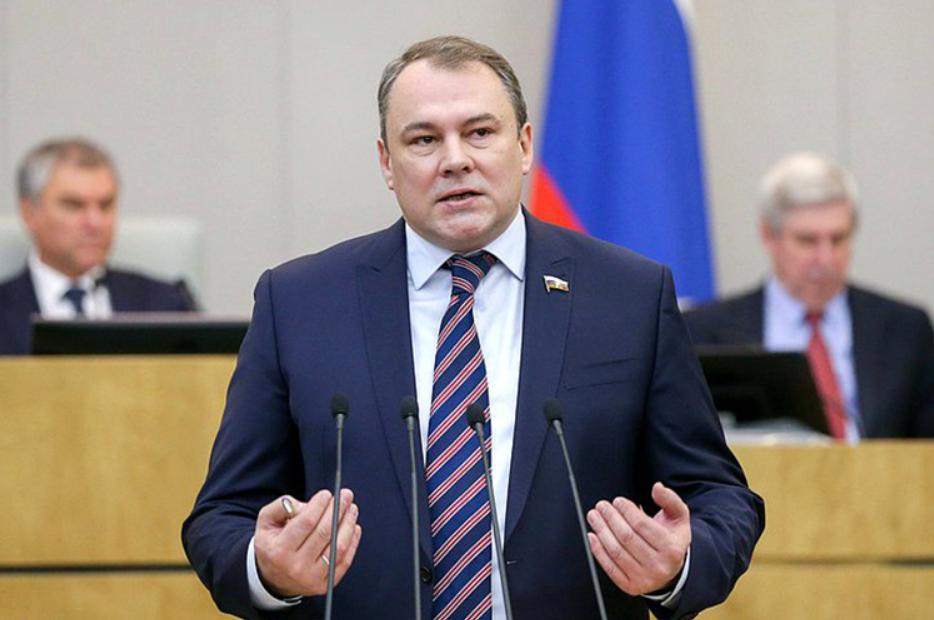
According to Tolstoy, gender reassignment surgery is “a very profitable area of medical services. And it’s understandable why a number of doctors defend this area so fiercely, hiding behind academic knowledge, including those obtained abroad while studying in the United States and other countries,” he said, “running into” Western medical education.
Provisions to the bill in its second reading, approved on Thursday, also ban trans people from adopting or fostering children, and force them to annul their marriages if one of the couple subsequently changes gender.
LGBTQ and human rights organization ILGA-Europe issued a statement condemning the actions of the Russian Duma and offered support and solidarity with the Russian trans and queer communities.
“We firmly assert that such legislation flagrantly violates fundamental human rights standards and principles.
ILGA-Europe firmly believe in the inherent dignity and equal rights of all individuals, regardless of their gender identity or expression. International human rights standards, including the Universal Declaration of Human Rights, emphasize that everyone has the right to self-determination, privacy, and the highest attainable standard of physical and mental health. Denying trans and gender diverse individuals access to trans-specific healthcare and legal gender recognition blatantly disregards the international human rights framework,” ILGA-Europe wrote.
Sympathetic physicians and trans rights advocates have warned that the ban is poised to create a black market for hormone substitutes, some of which likely will be dangerous and lead to an increase in attempted suicides among trans youth unable to access medical care.
ILGA-Europe’s statement also warned: “Furthermore, the bill invalidates all certificates of legal gender recognition for individuals who have undergone transition-related surgery but not yet changed the gender marker in their passport. This is a violation of their right to privacy, places trans people in legal limbo, and creates unnecessary burdens on trans people, forcing them to disclose their private and medical history and exposing them to discrimination, harassment and violence.”
According to Dimitrov, that particular provision of the legislation is specifically applicable to Elena, who while having completed transition-related surgery has been unable to get the gender marker changed on her documents, which with the current war in Ukraine has further complicated her life.
She told Dimitrov that demands for her to present herself for required military service, under her former name and gender, was yet another reason she had fled. Now she says, she is trapped and unable to legally leave, entertaining the option of illegally entering the EU and asking for asylum, most likely to neighboring Latvia, or Estonia.
Independent news outlet Mediazona reported in February 2023 that the number of passports issued due to “gender change” has more than doubled in 2022 compared with two years earlier — from 428 in 2020 to 936 last year, according to Russia’s Interior Ministry.
In justifying the provision, lawmakers cited concerns that men are using the relatively simple procedure of changing gender in official documents to dodge the military draft.
Another point was raised by a lawmaker who asked what to do with 3,000-plus trans people who have already managed to change their gender and documents. Tolstoy responded noted that the law does not have retroactive effect.
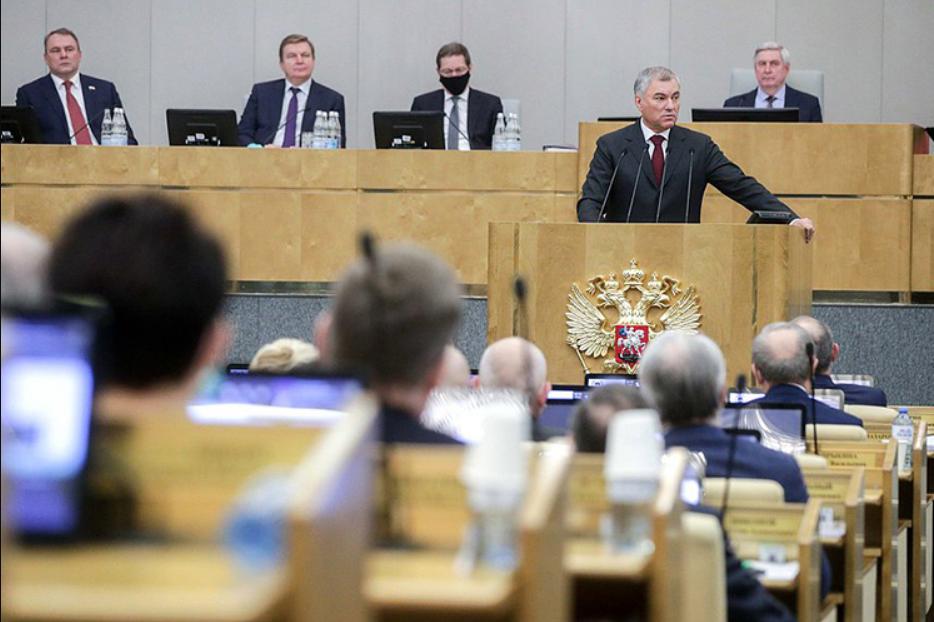
State Duma Speaker Vyacheslav Volodin called gender transitioning “pure satanism.”
Akram Kubanychbekov, a senior advocacy officer for ILGA-Europe, this past week sent out a “dear colleagues” request for assistance detailing specific needs and actions that will be crucial to assisting trans and gender diverse Russians.
Kubanychbekov wrote:
“Discrimination, violence and the enactment of oppressive laws have made it increasingly unsafe for trans people to live their lives authentically and without fear. In light of these circumstances, we have reached out local trans organizations to ask them of support trans community need at the moment.”
“To address the urgent needs of trans people who wish to leave Russia, there is a need in facilitating support for broadening the criteria for humanitarian visas. By expanding the eligibility criteria, we can ensure that those facing persecution and threats to their safety have a viable pathway to seek refuge in other countries. It is crucial to work together to advocate for this change with governments at the national level to extend our support to trans people seeking a safer environment in safer countries.”
“In addition to humanitarian visas, trans organizations [inside Russia] asked to assist in securing multi-entry, long-term (preferably Schengen) visas for activists, who will continue their important work within Russia but may need to swiftly leave in case of escalating danger. By facilitating the necessary visa support, activists are enabled to carry out their vital work with the knowledge that they have an emergency exit if required.”
“We would like to encourage you to stand in solidarity with the local trans organizations in Russia and support their requests.”
Political fallout
Yulia Alyoshina, the country’s first trans politician, had made plans this past year to run for governor of Russia’s Altay region, an area bordering the former Soviet republic and now independent nation of Kazakhstan.
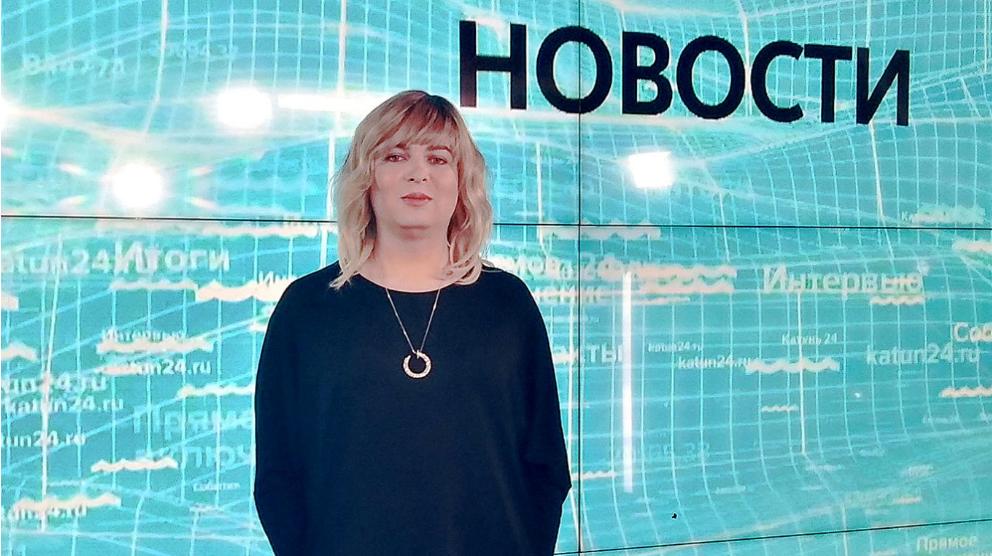
Alyoshina, who had been the head of the regional Civic Initiative party, resigned her post after Putin signed the expanded anti-LGBTQ law last December. With gubernatorial elections set for this September in the Altay region, party officials had urged her to consider running.
Alyoshina says she didn’t expect anyone in the Civic Initiative party to suggest that she run in the gubernatorial elections. But she figured “well, why not” and agreed. “I’m sure that the fact that I was born in a different body is not as important to voters as my honesty, integrity, and sincere desire to make my native land better,” she told Russian media outlet Novaya Gazeta Europe.
On the topic of Russian society’s relationship to trans people, Alyoshina told Novaya Gazeta Europe the current political climate is quite bad. She described losing supporters after the Duma passed and Putin signed the anti-LGBTQ laws last December. She thinks people have been influenced by the authorities’ rhetoric on “LGBT propaganda.”
In another interview with Russian language media outlet, Meduza, which the Putin government banned in January 2023, Alyoshina reflected on the effects of the bill. She told Meduza that her medical transition took about a year and a half. There were no private clinics in her region where should could go for gender care services, so she was seen at a state psychiatric hospital. It took another year and a half after she was first seen to get a certificate for changing gender markers [on legal documents.]
In a phone interview with the Moscow Times just prior to the Duma’s impending vote, Alyoshina confirmed the post she had made on her Telegram channel that she had abandoned her effort to campaign as a gubernatorial candidate.
“I was told by municipal deputies and village heads that the [gender reassignment ban] bill was being considered and that they couldn’t give me their signatures,” Alyoshina told The Moscow Times.
“They told me: ’How can we publicly support a transgender person if the State Duma prohibits transgender people in Russia?” she said.
“By putting our signatures in your support, we will go against the country’s policy, and we have families and children, we don’t want to fall under repression,” Alyoshina quoted the deputies as telling her.
Alyoshina said she was weighing “various options” for her future, but said she would wait for the passing of the gender reassignment law.
“I’m not ready to dive into [my future plans] until the legislation is passed,” she said.




Russia
Russian LGBTQ rights group to shut down
Russian LGBT Network in April declared ‘extremist’ organization
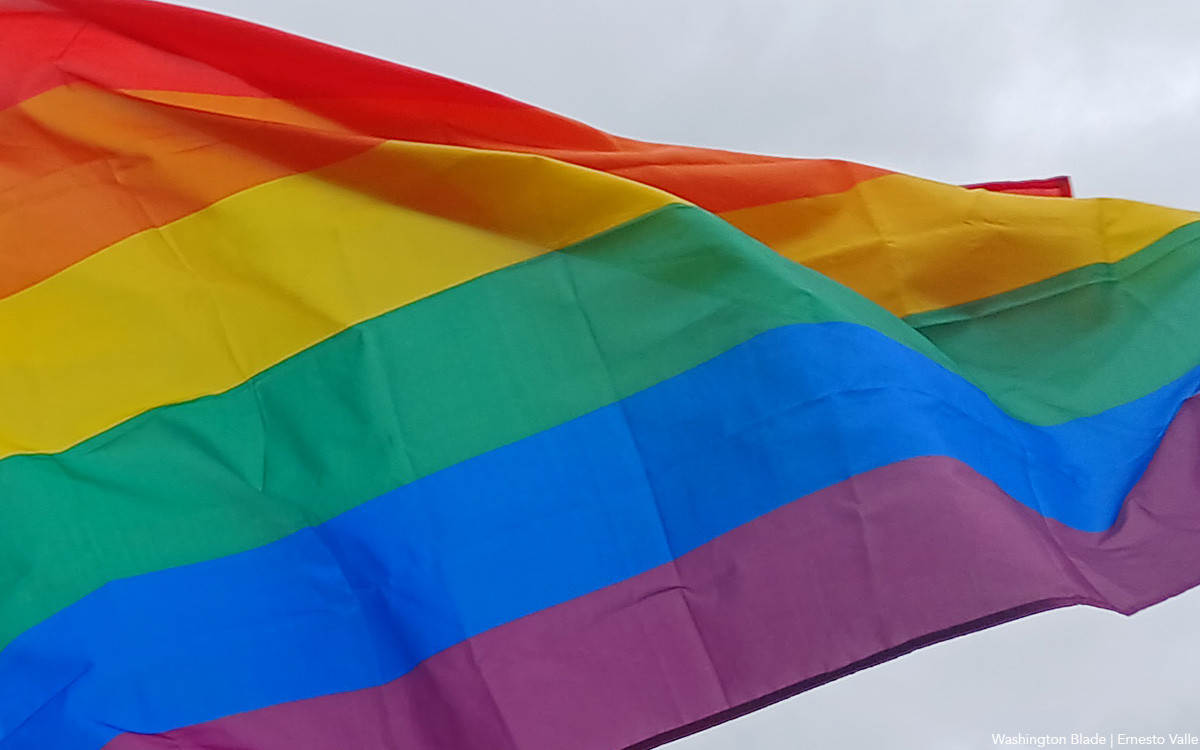
A Russian LGBTQ advocacy group on Monday announced it will shut down after a court declared it an “extremist” organization.
A St. Petersburg court in April in response to a Russian Justice Ministry lawsuit made the declaration against the Russian LGBT Network.
“For many years, Russian LGBT Network brought together initiatives and activists and supported queer people across the country,” said the advocacy group on its Facebook page. ” However, its ‘extremist’ status has made the previous public format of its work impossible: any connection to the organization may create additional risks for the people we seek to support and protect.”
The Russian LGBT Network formed in 2006.
The group on its Facebook page said it “made this decision” to close “after a thorough assessment of the risks.”
“Continuing our public activities could have put at risk those who took part in the organization’s work, supported it, or received assistance,” said the Russian LGBT Network. “We cannot control the repressive environment, but we can do everything possible to avoid creating additional risks for people. People’s safety comes first.”
The Kremlin over the last decade has faced global criticism over its crackdown on LGBTQ rights.
The Russian Supreme Court in 2023 ruled the “international LGBT movement” is an extremist organization and banned it.
Russia in January designated ILGA World, a global LGBTQ and intersex rights group, as an “undesirable” organization. ILGA World in response to the designation noted Russians who are found guilty of engaging with “undesirable” groups face up to six years in prison.
Human Rights Watch in May noted the Russian LGBT Network is one of nine LGBTQ groups that Russia this year has banned after authorities deemed them “extremist.”
“Russian LGBT Network may close; but dignity, solidarity, and people’s right to be themselves cannot be destroyed,” said the Russian LGBT Network in its statement. “Take care of yourselves.”
Russia
Nine Russian LGBTQ groups deemed ‘extremist’ banned
Human Rights Watch: authorities ‘intensifying their criminalization’ of queer people
Nine LGBTQ groups in Russia have been banned so far this year after authorities deemed them as “extremist.”
Human Rights Watch on Thursday noted courts in seven regions between March and May banned Coming Out, the LGBT Resource Center, Parni Plus, the Moscow Community Center for LGBT+ Initiatives, Irida, the Russian LGBT Network, the Kallisto movement, T9 NSK, and Center T. Human Rights Watch also pointed out a lawsuit has been filed against the Alliance of Straights and LGBT for Equality.
Parni Plus is an LGBTQ media outlet.
“Russian authorities are intensifying their criminalization of those who provide critical support to the very LGBT people they have systematically persecuted,” said Human Rights Watch Europe and Central Asia Director Hugh Williamson in a press release. “Authorities should vacate all court decisions and criminal convictions based on these spurious ‘extremism’ charges.”
The Kremlin over the last decade has faced global criticism over its crackdown on LGBTQ rights.
The Russian Supreme Court in 2023 ruled the “international LGBT movement” is an extremist organization and banned it.
The country in January designated ILGA World, a global LGBTQ and intersex rights group, as an “undesirable” organization. ILGA World in response to the designation noted Russians who are found guilty of engaging with “undesirable” groups face up to six years in prison.
Russia
Under new extremism laws, LGBTQ Russians must fight to survive
Designation of ‘international LGBT movement’ as extremist is blueprint for other countries
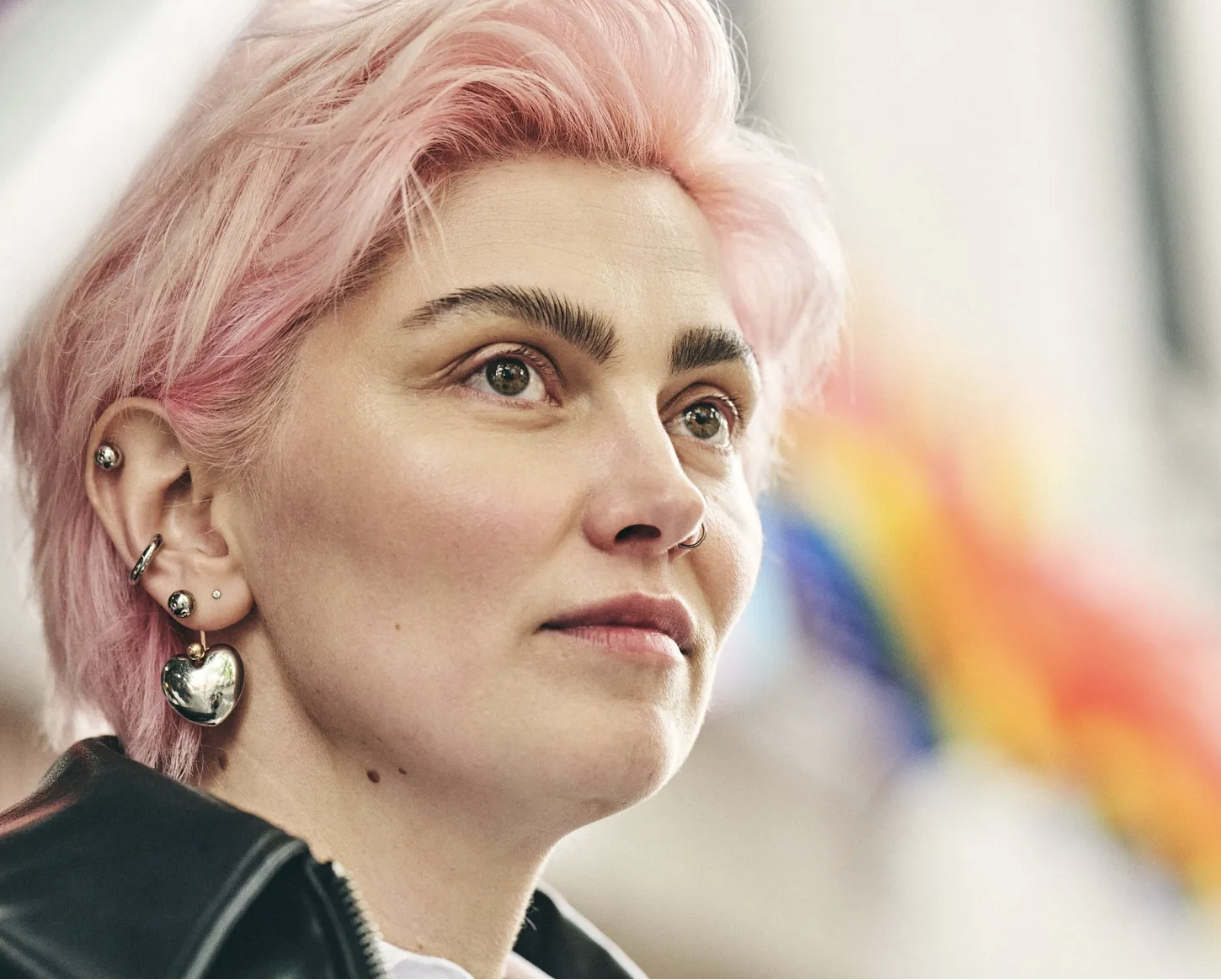
Uncloseted Media published this article on May 2.
By HOPE PISONI | Natalia Soloviova always knew she was putting herself at risk. As the chair of the Russian LGBT Network, the largest queer advocacy group in the country, she had spent years preparing detailed security protocols for what she would do if the government came after her.
But it was still a nasty shock when she had to use them. In November 2023, almost two weeks before Russia’s supreme court would designate the “international LGBT movement” as an extremist organization, Soloviova’s heart sank when she watched Channel One, a state-funded TV network, air a report about her organization. They flashed her and her colleagues’ names on screen while accusing the organization of “extremist” activities, including spreading propaganda to minors and trying to destroy “traditional family values.”
“It was so disturbing, and it made me physically sick,” Soloviova told Uncloseted Media.
She knew she had to get out. The following days blurred together as she checked off the steps in her security protocol: she called her lawyers, told her mom and wife she was leaving, and boarded a plane to another country. Over the next few years, she would move between several countries before settling in New York City.
It all happened so fast that she didn’t process her emotions until a month later, when she was scrolling Instagram and saw a video of her hometown, Novosibirsk.
“I start just crying … because my previous life was lost,” she says. “I started to feel anger for the government, for the situation itself, because it was absolutely horrific and absolutely unfair.”
While U.S. intelligence agencies under the Trump administration have indicated an interest in targeting trans people, Russia’s extremism designation has allowed for a whole other level of persecution. Because the designation targets the entire LGBTQ movement, the court’s ruling allows the government to impose broad crackdowns on the community.
As of June 2025, Human Rights Watch had identified 101 people convicted on LGBTQ extremism charges, with punishments ranging from fines to 12-year prison sentences. Since late last year, the government has also taken eight Russian LGBTQ advocacy organizations to court, aiming to label them as extremist groups.
These cases are ongoing — Soloviova’s organization was just declared as extremist on April 27.
“I woke up at home with my wife, and the first thing I saw were messages from our lawyers,” Soloviova says about the news. “Honestly, I was furious. But as usual, there was no time to be angry. My first thought was my colleagues still in Russia. I spent the entire morning in bed, messaging back and forth about emergency evacuations, security measures and our next steps.”
People have been jailed for posting photos of pride flags in an 11-person Telegram chat and for wearing rainbow-colored earrings. In response, LGBTQ advocates have gone underground, finding new ways to support a terrified community. Despite everything, Soloviova says that “most organizations” have continued to do their work.
“They can ban us on paper, but they cannot erase us,” Soloviova says. “We will not abandon our values, because human life, safety and dignity matter more than any repressive labels.”
How did Russia get here?
The Russian government began targeting the LGBTQ community in 2013, when they passed a law banning the spread of “propaganda” of “non-traditional sexual orientation” to minors. The next year, Russia’s military occupied Crimea, leading to condemnation from the U.S. and other world powers.
Sasha Kazantseva, queer sex educator and author of “The Conservative Web: Russia’s Worldwide War on LGBTQ+ Rights,” says that in order to combat the backlash, Russian President Vladimir Putin leaned into “traditional values ideology” to build support among more conservative countries.
“[Putin says] ‘Western ideology is about making your kids trans and gay, and we can save your kids and your traditional families,’” Kazantseva told Uncloseted Media. “LGBTQ people are very important for this traditional values conservative ideology as an image of some internal enemy.”
After invading Ukraine in 2022, Putin’s government escalated their attacks on Russia’s LGBTQ community. They expanded their anti-propaganda law to include adults, and in 2023 they banned trans people of all ages from medically transitioning or changing their legal gender. On Nov. 30, 2023, they issued the extremism ruling.
“[In] 2022, they see again that people are not happy with the war, and they start to play the same game as 10 years ago,” Kazantseva says. “Nobody cared [about trans people], and out of nowhere, Putin starts to mention trans people in every speech.”
Since then, things have escalated. Last November, the Justice Ministry began a court case to declare Irida, a small LGBTQ advocacy group, as an extremist organization. Eight advocacy groups, including ComingOut and the Russian LGBT Network, both of which provide services including psychological support and legal consultation to LGBTQ Russians, have had similar cases against them.
Crackdowns under the extremism ruling
Maks Olenichev, a European Union-based lawyer who supports Russian LGBTQ defendants in court, says there are two types of charges for violating extremism laws.
First, displaying the symbols of an extremist group — often the rainbow pride flag in this case — is considered an administrative offense. Of the 101 individuals HRW identified, 81 were convicted for displaying symbols. First-time offenders face fines or short jail sentences, while repeat offenders can receive up to four years in prison.
Second, participation in the international LGBT movement is a criminal offense punishable by up to 12 years in prison. HRW identified at least 20 people facing these charges.
Participation in the movement can seemingly include any public activities related to the LGBTQ community. Authorities arrested several employees at Eksmo, Russia’s largest publishing house, for extremism because some of their books contained LGBTQ themes. And last year, a Moscow court posthumously found Andrey Kotov, the leader of a Russian gay travel agency, guilty of extremism after he died in a pretrial detention center.
“If [Kotov] had asked me whether he could do it, I would say, ‘Yes you could do it, it’s legal.’ And then he goes to jail and dies there,” says Ksenia, who works outside of Russia as legal assistance program coordinator for ComingOut. “I have 20 years’ experience in law. What can we expect from people who are not experienced lawyers?”
Olenichev agrees: “There’s no 100 percent foolproof way to not being charged with anything.”
Alise Sever learned this the hard way in 2024, when her Halloween weekend celebrations were interrupted by masked police officers banging down the doors. Sever was partying at Black Clover, an LGBTQ-friendly club she had opened just over a year earlier in Kirov, Russia.
At 2 a.m., militarized special forces burst in to raid the club and immediately hauled Sever off to the precinct while they pinned several patrons against the wall, arrested them and confiscated what came out to be roughly 1 million rubles, or $10,000, worth of music equipment, alcohol, and other club property a price so steep that the business would need to shut down.
“I knew that something [like this] could happen,” Sever, 28, told Uncloseted Media. “But I was sad. I was grieving a loss of money, a loss of the time and work that I have put into this.”
Sever and five other people who were arrested that night — including the club’s co-founder and multiple queer artists — were charged with extremism. As part of the court proceedings, Russian police revealed that they had been monitoring Sever and her girlfriend for almost a year and had amassed thousands of pages of documents containing information about her and her business as well as transcripts of intercepted messages and phone calls.
“They apply these laws very randomly, and they do it not to show that this person is the most brutal criminal you can imagine, they do it to show that anyone can be targeted by this law,” Kazantseva says. “So you live in permanent tension, in permanent self-censorship. And that’s how they control people.”
Kazantseva, who has published zines, blogs, and books about LGBTQ issues, has also experienced this firsthand. Despite having fled the country for Lithuania in 2023 due to crackdowns on anti-war advocacy, Russia’s financial monitoring system added her to their list of “terrorists and extremists” last October. This bans her from accessing Russian bank accounts, essentially locking her out of any financial activities in the country. The federal government has also placed her on their “wanted” list, and a court has ordered “arrest in absentia” of Kazantseva, meaning that she will be detained if she enters Russia or one of its allied countries.
Russian authorities have also threatened charges to pressure LGBTQ people into enlisting to fight in the war. In 2024, the government issued a new policy allowing defendants to be exempted from criminal liability if they join the army.
Ksenia, who requested that Uncloseted Media omit her surname for fear of not being allowed to return to the country, says she knew a boy who was part of a group chat for LGBTQ teenagers. When federal authorities discovered the chat, they threatened him with criminal convictions, and after significant pressure, he abandoned his plans to go to university and signed up to fight in Ukraine shortly after his 18th birthday.
“I know I should feel outrage at how defenseless he is facing the state machine,” Ksenia says. “But at this point, [I’m] just numb.”
These legal crackdowns have caused many LGBTQ people to withdraw from public life. In a 2025 study of 1,683 queer women by Olenichev and other Russian scholars, more than half of the respondents said extremism laws had made them afraid to contact law enforcement, 36.5 percent had gone back into the closet, and many have “severely restricted their circle of friends.”
Sometimes, taking these precautions isn’t enough. Sever’s club, which hosted drag performances, only allowed people who had not publicly come out as queer online to perform, and had to issue rules that performers could not touch or interact with the audience or mention the terms “LGBTQ” or “Ukraine.” They also had to remove wall paintings of humanoid cats wearing shibari rope and lingerie after getting fined by police in early 2024 under the propaganda law. None of that, though, was enough to save them from being raided.
How are advocates responding?
Zhenya, a Russian trans emigrant to Canada who asked to use a pseudonym because they still visit their home country, got hands-on experience with the new normal for queer activism when they signed up to volunteer for ComingOut.
Ksenia says the organization now relies almost entirely on workers outside of Russia like Zhenya. In order to start volunteering for the group, Zhenya had to go through a round of interviews designed to weed out infiltrators. And once they joined, they learned that all their coworkers’ identities would be hidden.
“Partially why they do interviews is because it’s known sometimes that police agents will try to insert themselves in the group to get names,” Zhenya told Uncloseted Media. “They never ask you for your passport info, they don’t ask you for your real name.”
Ksenia says ComingOut now has its security measures down to a science and “almost nothing” needed to change when they were declared an extremist organization. Because of that, they now offer security consultation to other organizations.
Another initiative that has needed to adapt to this new reality is Centre T, a trans and nonbinary support organization that will likely be declared an extremist group at a trial set for May 4. Sasha, the group’s media coordinator, says volunteers must use a VPN and communicate through encrypted messaging apps. Initially, this would often be Telegram, but with the Russian legislature weighing a ban on the app, they’re considering moving to other platforms like Matrix.
Even with these precautions, Centre T had to cut some programs: They no longer host online chats or dating programs, and they’ve mostly had to stop sharing personal stories in order to protect people’s identities. Still, their most crucial programs, which include assisting trans people in leaving the country and connecting them to medical specialists that aid them with transition under the table, are still operating.
Fleeing the country
Like with ComingOut, most of Centre T’s workers and volunteers have left Russia. Olenichev says this is generally the safest option. In many extremism cases, he says lawyers focus less on actually winning and more on fighting for lighter sentences and using stall tactics, like requesting extra documentation, to buy time for defendants to flee.
“It’s impossible to win those cases since [they] usually are political and not legal,” Olenichev says.
Sever is a success story for this strategy. After her arrest, she spent two months alone in a jail cell, isolated from her friends and family as they were scared that sending her letters would lead the government to target them. After she was released, she spent 11 months on house arrest, trapped at home with her “very religious” mother who tried to convince her to accept the charges and abandon her pansexuality.
“There were moments when my friends were visiting me while I was on house arrest, and they were later on [interrogated], so that led for them to stop. … It took a toll on me.”
As Olenichev and other advocates fought to prolong her case, she concocted a scheme to flee the country despite being under house arrest. When she came down with a disease, she was allowed to call an ambulance to the hospital, where her friends were waiting to help smuggle her over the border.
“I ended up in a safe place where I’m awaiting a visa to go to Europe, now,” says Sever, who did not reveal her location due to concerns about violence from local anti-LGBTQ groups.
Centre T is currently operating a temporary shelter in Armenia for trans people leaving Russia, providing food, housing and psychological and medical support. While they say they’ve recently lost U.S. grants and the ability to fundraise in Russia, the shelter remains open because of crowdfunding through Patreon and Buy Me a Coffee.
“We are funded by our community,” Sasha says. “It’s been really amazing, honestly … because it’s very difficult to find funding for direct service projects like a shelter.”
How do queer people continue to live in Russia?
Zhenya visited St. Petersburg for the first time since the extremism designation in the summer of 2024. Surprisingly, they still managed to find communities of queer people.
“I don’t think there’s anything official, it’s all where gay people just go, and you just know,” they say. “I went to one [such] place and that went just fine. I know a couple trans people who still live in St. Petersburg, and there’s still events and things happening, but it’s just way more lowkey.”
Zhenya says it’s easier to do this in bigger cities where they say people are relatively accepting and less likely to report LGBTQ people to the police.
Sasha believes that the community’s future lies in whisper networks like those Zhenya describes.
“It’s time for some decentralized, horizontal activities and initiatives,” she says. “Because it’s more safe right now to make a group only for friends, for people that you know.”
Sasha says it’s critical that queer Russians take precautions and strongly recommends ensuring no LGBTQ content is saved on your phone in case it gets hacked or confiscated.
In such dangerous conditions, Natalia Soloviova says every step is important. Seemingly simple actions, like opening up about your queer identity to trusted loved ones, covertly spreading information among other queer people, or simply allowing yourself to rest and recover are necessary to make it through.
“You’re keeping community alive,” she says. “If you’re supporting your friends, even with drinking mimosas on a Sunday after a really hard week, it’s keeping community safe, it’s spreading the words of community. Better to do something than not to do something.”
For herself, life goes on in New York. While she still misses Novosibirsk, she says she will continue to fight from abroad and is grateful that there are still so many queer Russians fighting to live safely.
“This urge of people who want to improve the life of our community can be unstoppable.”

Factors to consider when hiring an interior designer

PHOTOS: HRC National Dinner

The LGBTQ real estate map is being redrawn

I’m 66, he’s 27. Is it love or am I being played?

What’s frightening is also funny in ‘Venus’

Washington Blade responds to concerns over White House pool duties

Gov. Whitmer to serve as keynote speaker for Saturday’s HRC National Dinner

Spike in HIV cases prompts Fiji to declare national emergency

Capital Pride chair resigns from board after just 10 months

Clavicular charged in alleged rape of teenage influencer
-

 Commentary4 days ago
Washington Blade responds to concerns over White House pool duties
-
LGBTQ Non-Profit Organizations4 days ago
Gov. Whitmer to serve as keynote speaker for Saturday’s HRC National Dinner
-
Fiji4 days ago
Spike in HIV cases prompts Fiji to declare national emergency
-
Online Culture4 days ago
Clavicular charged in alleged rape of teenage influencer