United Kingdom
Anti-LGBTQ UK Cabinet minister fired
Advocacy groups frequently criticized Suella Braverman
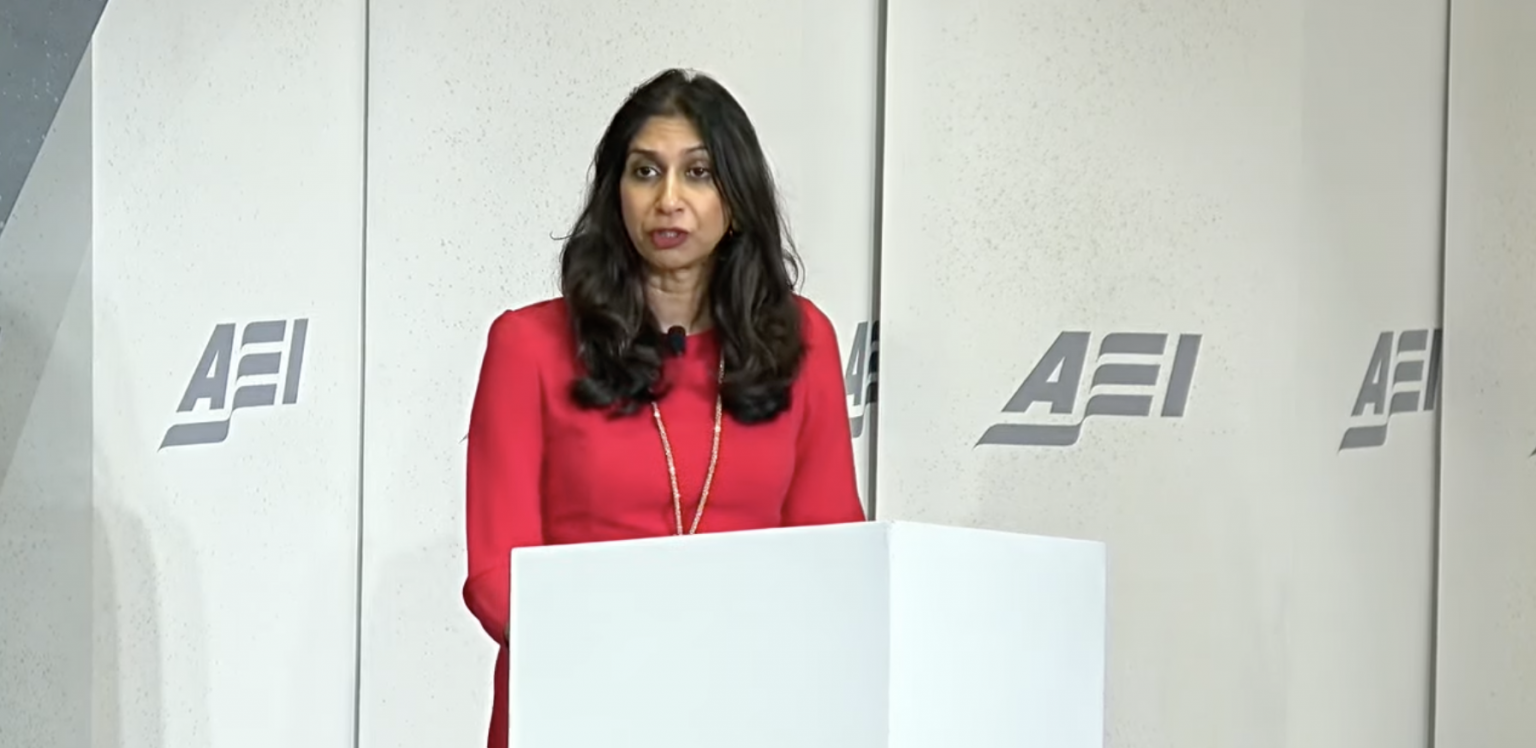
Suella Braverman, the controversial British Home Secretary who was fired by Prime Minister Rishi Sunak in a phone call Monday, fired back publicly Tuesday releasing a scathing three page resignation letter accusing Sunak of “not having a plan” and failing to deliver promises made to the British people on among other items, hot button immigration and crime prevention issues.
Braverman took office in October 2022 as home secretary while Sunak formed a new government after former British Prime Minister Liz Truss stepped down on her 50th day in office amid a government crisis, making her the shortest-serving prime minister in British history.
The former home secretary was known for her far-right conservative views and in the past year had made a series of public comments in speeches and in the press that derided LGBTQ people, asylum seekers and illegal immigrants. Her remarks disparaging transgender British females oft times echoes similar sentiments stated publicly by the prime minister.
This past June at a Conservative Party conference, the prime minster was caught on a video clearly mocking trans females.
The prime minster makes reference to an opposition leader, although that person is not clearly identified. Sunak then took aim at Edward Jonathan Davey, a British politician who has served as leader of the Liberal Democrats since 2020.
“Over the same period of time, you might have noticed Ed Davey has been very busy,” Sunak says. “Like me, you can probably see that he was trying to convince everybody that women clearly had penises. You’ll all know that I’m a big fan of everybody studying maths to 18, but it turns out that we need to focus on biology.”
A recent YouGov UK international online research data and analytics technology group poll conducted earlier this month found that 49 percent of British voters wanted Braverman sacked.
PinkNewsUK reported calls for Sunak to fire Braverman have gotten louder over the course of last week, after she hit out at peaceful pro-Palestine protesters labeling their marches in London as “hate marches” and she also accused the Metropolitan Police of bias, which officers have said sparked far-right attacks on members of the force.
On issues over LGBTQ Britons, the former home secretary in October said that trans women should not be treated in female hospital wards. In an interview with Sky News, she said: “Trans women have no place in women’s wards or, indeed, any safe space relating to biological women.”
“The health secretary’s [Steve Barclay] absolutely right to clarify and make it clear that biological men should not have treatment in the same wards and in the same safe spaces as biological women,” she said. “This is about protecting women’s dignity, safety and privacy and that’s why I’m incredibly supportive.”
In September, in her speech to the American Enterprise Institute, a right wing think-tank in D.C., Braverman on the subject of political asylum remarked: “Where individuals are being persecuted, it is right that we offer sanctuary. But we will not be able to sustain an asylum system if, in effect, simply being gay or a woman, and fearful of discrimination in your country of origin, is sufficient to qualify for protection.”
In an interview with PinkNewsUK after her speech in D.C., Sebastian Rocca, the founder and chief executive of LGBTQ asylum charity Micro Rainbow, believes Braverman is trying to scapegoat migrants.
“The comments made by the home secretary are deeply disturbing,” he said. “LGBTQI people often face death, imprisonment and violence. When they come to the UK to seek safety, they have to go through an asylum system that is re-traumatizing and dehumanizing. In addition, the standard of proof is very high.”
“The system, as it is, is incredibly difficult. These comments seek to scapegoats migrants and LGBTQI people for political gain once again,” he added.
A new dynamic in attitude towards the UK’s LGBTQ community?
In addition to sacking Braverman, the prime minster radically overhauled his team in the Cabinet reshuffle including adding former Prime Minister David Cameron as the new British foreign secretary.
James Cleverly, whose job Cameron took over, was named as home secretary. His positions on most LGBTQ issues is in line with the Tory Party generally, however PinkNewsUK noted that while Cleverly has never voted on same-sex marriage, he expressed his support for equality in a blog post first published in 2005 titled “I like marriage.”
“Gay ‘marriage’ takes nothing away from heterosexual marriage and while there will be some civil partnerships which are done for the wrong reasons the same can be said of straight marriage. Best of luck I say,” he wrote.
He has also expressed support for LGBTQ inclusive education and for LGBTQ people in the military, but he did face some criticism when he said gay football fans would have to be “respectful” when traveling to Qatar for the World Cup.
Overall the British LGBTQ publication reported, is that the new home secretary is “an obvious step up from Braverman.”
Cameron’s record on LGBTQ rights, especially while serving as prime minister, PinkNewsUK reported has been favorable. He voted in favor of civil partnerships in 2004 and in favor of the Equality Act in 2007, and later voted in favor of same-sex marriage.
Former Health Secretary Steve Barclay’s departure is a relief for some LGBTQ Brits, especially in light of his recent campaign against trans people in the British healthcare system.
In a speech at the Conservative Party conference in October, Barclay spoke out about his plans to introduce “sex-specific” language throughout the health service when referring to treatments and advice for menopause and some types of cancer. In the same speech, he announced plans to ban trans people from single-sex wards.
However Barclay’s replacement has had a troubling record on transgender healthcare issues. In 2018, Atkins, who was then minister for women, was criticized when she called for “caution” before treating young trans people in an interview with the Telegraph.
“The treatments are so serious and life-changing. I’m a little cautious of the use of those treatments because of the potential for the rest of their lives,” she said.
The prime minster is also facing renewed calls and anger over the omission of announcing a ban on conversion therapy in the King’s Speech. The Equality and Human Rights Commission has been urging Sunak to uphold a pledge to enact a ban on the discredited practice.
The BBC reported that earlier this year the EHRC wrote to the government to urge them to include the legislation in the speech, which sets out the government’s priorities for the coming years.
A spokesperson for EHRC told the BBC: “We have long supported proposals to end these practices. Conversion practices, aimed at changing someone’s sexual orientation or personal understanding of their own gender, can be incredibly harmful to people with the protected characteristics of sexual orientation and gender reassignment.
We will continue to stand ready to provide expert advice and hope the government will uphold its commitment to ban harmful conversion practices.”
Its lack of inclusion in the King’s Speech is thought to be over disagreements within the Conservative Party the BBC noted regarding what form a ban should take, and concerns over how it could impact freedom of expression around issues such as gender identity, as well as any potential impact on religious freedoms.
Robbie de Santos, director of external affairs at Stonewall UK, told the BBC: “[The government] has given the green light for the abuse against LGBTQ+ people to continue unchecked. Rather than getting mired in a cynical cultural war, it should be making decisions based on what the evidence and expertise said.”






United Kingdom
Grindr settles UK lawsuit over claims it shared users’ personal information
Plaintiffs allege gay hookup company disclosed HIV status to third parties

Grindr has agreed to pay £26 million ($35.24 million) to settle a lawsuit in the UK over allegations it shared users’ HIV status and other personal information with third parties.
The BBC on Monday reported a lawsuit was filed in the High Court of England and Wales in 2024. A class action lawsuit with more than 11,000 plaintiffs was later filed in the U.S.
Grindr in a U.S. Security and Exchange Commission filing notes the California-headquartered company as part of the settlement it reached on Sept. 2 will pay £13.0 million ($17.62 million) “to the counterparties” by Dec. 31, 2026, and another £13.0 million ($17.62 million) by March 31, 2027.
“As previously disclosed, in April 2025, Grindr Inc. and Grindr LLC, its indirect and wholly-owned operating subsidiary (collectively, ‘Grindr’), were served with proceedings in the High Court of England and Wales, which proceedings were originally issued in April 2024, brought on behalf of UK Grindr users from a period up to early 2020 alleging violations of UK privacy laws,” reads the U.S. Security and Exchange Commission filing.
“On Sept. 2, 2026, Grindr resolved the above-described UK group action related to historical data practices before 2020, when Grindr was owned and controlled by the Chinese conglomerate Kunlun,” it continues. “The settlement includes no findings or admission of liability. While Grindr disputes the allegations, it recognizes and acknowledges the distress and loss of trust expressed by some of its UK users regarding that pre-2020 period.”
The filing further notes Grindr in 2020 “was sold to new owners and appointed new management” and in 2022 became a publicly listed company on the New York Stock Exchange.
“Since 2020 Grindr has overhauled its privacy program with a keen focus on the unique needs of its community,” reads the filing. “Grindr is and remains a safe space for users, committed to transparency, user control, and responsible data practices.”
A Grindr spokesperson in the UK on Tuesday referred the Washington Blade to the filing for comment on the settlement.
United Kingdom
Queen Camilla meets with JK Rowling
Edinburgh meeting took place on last day of Pride month

Queen Camilla on Tuesday met with JK Rowling.
The Royal Family on X said the meeting took place at Palace of Holyroodhouse in Edinburgh. The post included a picture of Camilla and Rowling together.
“With a shared passion for books and a deep commitment to children reading for pleasure, The queen and author JK Rowling have met at the Palace of Holyroodhouse in Edinburgh,” it reads. “Her Majesty and Ms. Rowling discussed the importance of ensuring that young people have access to books and the vital part reading plays in opening doors for future generations.”
📕 With a shared passion for books and a deep commitment to children reading for pleasure, The Queen and author J.K. Rowling have met at the Palace of Holyroodhouse in Edinburgh.
Her Majesty and Ms Rowling discussed the importance of ensuring that young people have access to… pic.twitter.com/Yx1Xy6olqC
— The Royal Family (@RoyalFamily) June 30, 2026
Rowling over the last decade has emerged as a vocal opponent of transgender rights. Her meeting with Camilla took place on the last day of Pride month.
United Kingdom
British Prime Minister Keir Starmer to resign
Announcement comes after Labour Party election loses, ambassador scandal
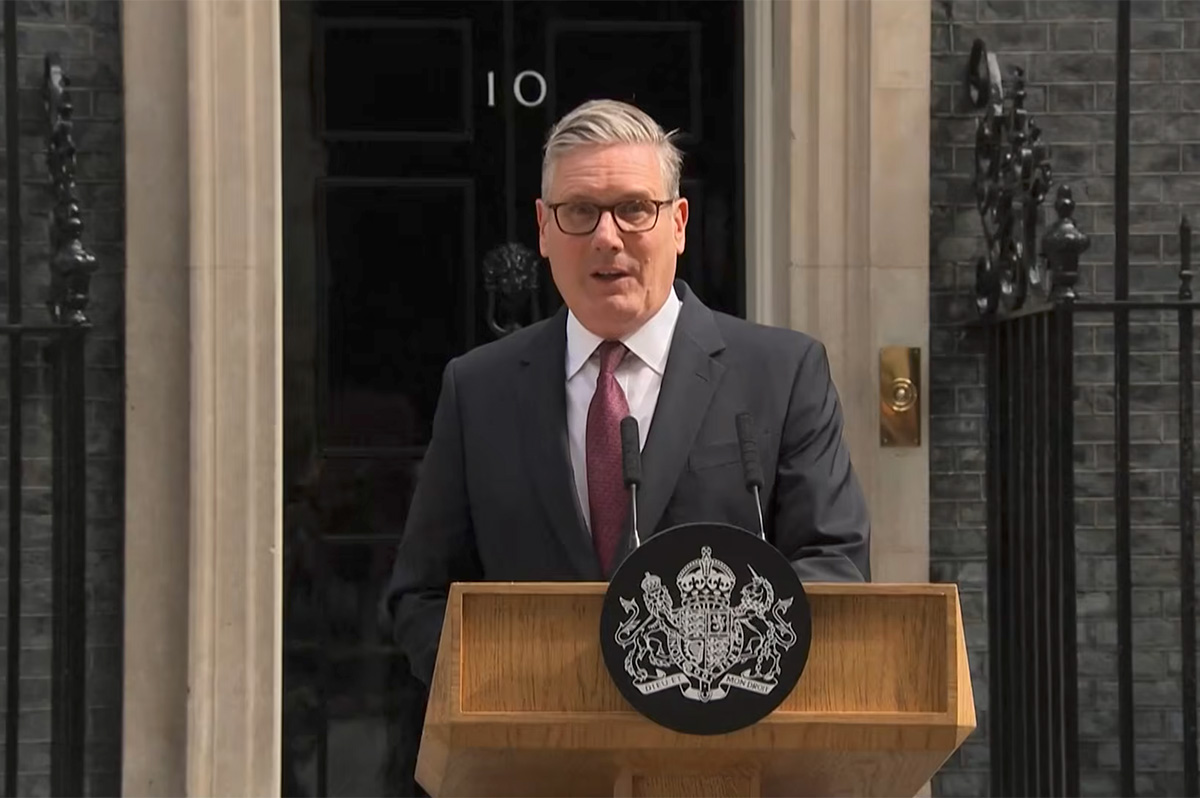
British Prime Minister Keir Starmer on Monday announced he will step down once his party chooses his successor.
Starmer succeeded Rishi Sunak of the Conservative Party in No. 10 Downing St. in 2024.
The Labour Party included a ban on so-called conversion therapy in England and Wales in its elections manifesto. King Charles III in last month’s King Speech that he delivered in the British House of Lords said a transgender-inclusive ban is among the British government’s legislative priorities.
Charles delivered his King’s Speech days after the Labour lost more than 1,000 council seats in local and regional elections. The May 7 vote took place against the backdrop of widespread criticism over Starmer’s decision to appoint Peter Mandelson as ambassador to the U.S., despite his ties to Jeffrey Epstein.
Former Greater Manchester Mayor Andy Burnham is seen as the frontrunner to become Labour’s new leader — and the UK’s next prime minister. Burnham was sworn in as an MP in the House of Commons hours after Starmer announced his resignation.
Starmer in his resignation announcement said he expects his successor will be in place before MPs return from their summer recess on Sept. 1.

Essential queer horror classics for Halloween

Solidarity beyond the parade: the actual cost of Pride

Physician: addiction doesn’t always look the way you think it does

Calendar: October 9-15

ICC unseals arrest warrants for Taliban officials accused of persecuting LGBTQ people, women

Alianza para la Inclusión fortalece la defensa de derechos LGBTQ en Centroamérica

The facts about Victory Fund’s investigation and the path forward

In Ga., 2 trans candidates believe voters are ready for them

Bessent says Trump chose him for his qualifications, not his sexuality

‘Some Like It Hot’ a wild ride at renovated Bernard Family Theatre
-

 Central America4 days ago
Alianza para la Inclusión fortalece la defensa de derechos LGBTQ en Centroamérica
-
Opinions4 days ago
The facts about Victory Fund’s investigation and the path forward
-
Georgia4 days ago
In Ga., 2 trans candidates believe voters are ready for them
-
Federal Government4 days ago
Bessent says Trump chose him for his qualifications, not his sexuality