United Kingdom
UK lifts travel ban on Ugandan opposition leader over anti-gay song lyrics
Bobi Wine had been prohibited from country since 2014
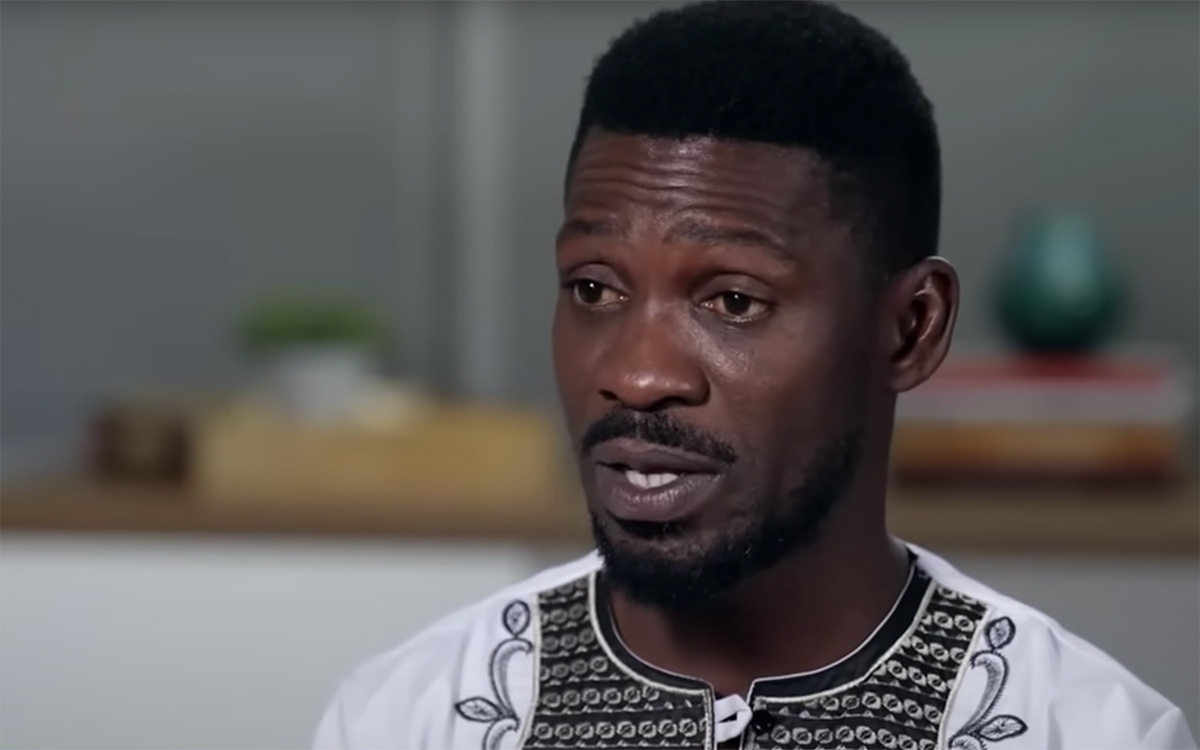
The U.K. has lifted a travel ban on Robert Kyagulanyi, a renowned Ugandan rapper known as Bobi Wine who has become the leader of the country’s opposition, over a 2014 song with homophobic lyrics.
Wine on Sunday confirmed the British government’s decision after about 10 years of being banned from his controversial anti-gay lyrics perceived to incite homophobic attacks against individuals he referred to as “battymen.”
“I am very glad to inform you that the ban against me from entering the U.K. has finally been overturned, and I will soon be visiting the U.K. after more than 10 years,” he said.
The homophobic lyrics the LGBTQ rights groups cited in petitioning the British government to ban him from traveling to the U.K. were: “Fire will burn the batty man. Burn all the batty man. All Ugandans get behind me and fight the batty man.”
LGBTQ rights activists in a petition they launched in July 2014 on Change.org demanded the British Home Office “immediately” deny Wine’s entry into the country and cancel his concerts in London and Birmingham.
The petitioners accused Wine of writing “blatant homophobic lyrics (that) call for gay people to be attacked or killed” and cited the U.K.’s 2008 Criminal Justice and Immigration Act that criminalizes the incitement of hatred based on sexual orientation. The activists said that allowing Wine to proceed with his two concerts in August of the same year would “raise tensions” and prove “unacceptable” to the U.K., which “prides itself on tolerance and understanding.”
The petitioners not only wanted Wine banned from performing in the U.K., but also in the Netherlands, France, Sweden, Denmark and other European countries.
Wine at the time was unremorseful and stressed he would not be coerced into backing homosexuality by the cancellation of his performances to support the Ebonies, a Ugandan drama and music group.
“I am a Ugandan and not a Londoner and I’m following the Ugandan constitution,” Wine told a Ugandan media outlet. “I did not make the laws, I follow them.”
He also claimed his strong anti-gay position was a reflection of “99 percent of Ugandans” and mocked so-called proponents of homosexuality for priding themselves in “their liberalism and support for human rights.” He demanded they allow “me my right of expression,” even if they were not comfortable with his homophobic opinion.
Wine’s controversial anti-gay stand also included criticism of then-U.S. President Barack Obama over his support of LGBTQ rights in response to Uganda’s 2014 Anti-Homosexuality Act that imposed a life sentence for gay people. The country’s Constitutional Court overturned it.
Wine in 2017 entered politics and won a seat in the Ugandan Parliament. He ran against incumbent President Yoweri Museveni, who rules the country with an iron first, in 2021.
Wine, who is a member of the National Unity Platform, is currently Uganda’s opposition leader. He has been vocal in demanding the international community hold Museveni accountable for his government’s widespread human rights violations.
While acknowledging the British government’s move to lift his travel ban, Wine applauded his lawyers in England for the “relentless fight” and his political supporters, including those in the diaspora, for “constantly raising our voice through protests” and petitioning higher offices.
“Their main argument has been that it is unfair to open their doors for Gen. Museveni, a world-renowned tyrant, and yet continue to shut the door for me who, together with many others are trying to build a free and democratic country,” he said.
His sentiments are in response to Museveni’s democracy and human rights record, particularly his signing of the Anti-Homosexuality Act 2023 into law in May.
Several Western nations have imposed sanctions on Uganda and several government officials behind the punitive law. The Biden-Harris administration last week announced plans to remove Kampala a program that allows sub-Saharan African countries to trade duty-free with the U.S.
The U.S. announcement came after increased pressure on Museveni to reverse the implementation of the law and meeting with several Ugandan human rights activists and exiled dissidents.
Kakwenza Rukirabashaija, an award-winning Ugandan author who is exiled in Germany, has written books that are critical of Museveni’s governance. He applauded the U.S. decision and noted his and other activists’ visit to the State Department earlier this year.
“We, a few months ago visited the Department of State in the USA and explained how Uganda as a beneficiary of AGOA (African Growth and Opportunity Act) would violate the American foreign policy on human rights,” said Rukirabashaija on his X account. “I’m glad that they listened. May you continue to listen to the cries of Ugandans.”




United Kingdom
Grindr settles UK lawsuit over claims it shared users’ personal information
Plaintiffs allege gay hookup company disclosed HIV status to third parties
Grindr has agreed to pay £26 million ($35.24 million) to settle a lawsuit in the UK over allegations it shared users’ HIV status and other personal information with third parties.
The BBC on Monday reported a lawsuit was filed in the High Court of England and Wales in 2024. A class action lawsuit with more than 11,000 plaintiffs was later filed in the U.S.
Grindr in a U.S. Security and Exchange Commission filing notes the California-headquartered company as part of the settlement it reached on Sept. 2 will pay £13.0 million ($17.62 million) “to the counterparties” by Dec. 31, 2026, and another £13.0 million ($17.62 million) by March 31, 2027.
“As previously disclosed, in April 2025, Grindr Inc. and Grindr LLC, its indirect and wholly-owned operating subsidiary (collectively, ‘Grindr’), were served with proceedings in the High Court of England and Wales, which proceedings were originally issued in April 2024, brought on behalf of UK Grindr users from a period up to early 2020 alleging violations of UK privacy laws,” reads the U.S. Security and Exchange Commission filing.
“On Sept. 2, 2026, Grindr resolved the above-described UK group action related to historical data practices before 2020, when Grindr was owned and controlled by the Chinese conglomerate Kunlun,” it continues. “The settlement includes no findings or admission of liability. While Grindr disputes the allegations, it recognizes and acknowledges the distress and loss of trust expressed by some of its UK users regarding that pre-2020 period.”
The filing further notes Grindr in 2020 “was sold to new owners and appointed new management” and in 2022 became a publicly listed company on the New York Stock Exchange.
“Since 2020 Grindr has overhauled its privacy program with a keen focus on the unique needs of its community,” reads the filing. “Grindr is and remains a safe space for users, committed to transparency, user control, and responsible data practices.”
A Grindr spokesperson in the UK on Tuesday referred the Washington Blade to the filing for comment on the settlement.
United Kingdom
Queen Camilla meets with JK Rowling
Edinburgh meeting took place on last day of Pride month

Queen Camilla on Tuesday met with JK Rowling.
The Royal Family on X said the meeting took place at Palace of Holyroodhouse in Edinburgh. The post included a picture of Camilla and Rowling together.
“With a shared passion for books and a deep commitment to children reading for pleasure, The queen and author JK Rowling have met at the Palace of Holyroodhouse in Edinburgh,” it reads. “Her Majesty and Ms. Rowling discussed the importance of ensuring that young people have access to books and the vital part reading plays in opening doors for future generations.”
📕 With a shared passion for books and a deep commitment to children reading for pleasure, The Queen and author J.K. Rowling have met at the Palace of Holyroodhouse in Edinburgh.
Her Majesty and Ms Rowling discussed the importance of ensuring that young people have access to… pic.twitter.com/Yx1Xy6olqC
— The Royal Family (@RoyalFamily) June 30, 2026
Rowling over the last decade has emerged as a vocal opponent of transgender rights. Her meeting with Camilla took place on the last day of Pride month.
United Kingdom
British Prime Minister Keir Starmer to resign
Announcement comes after Labour Party election loses, ambassador scandal
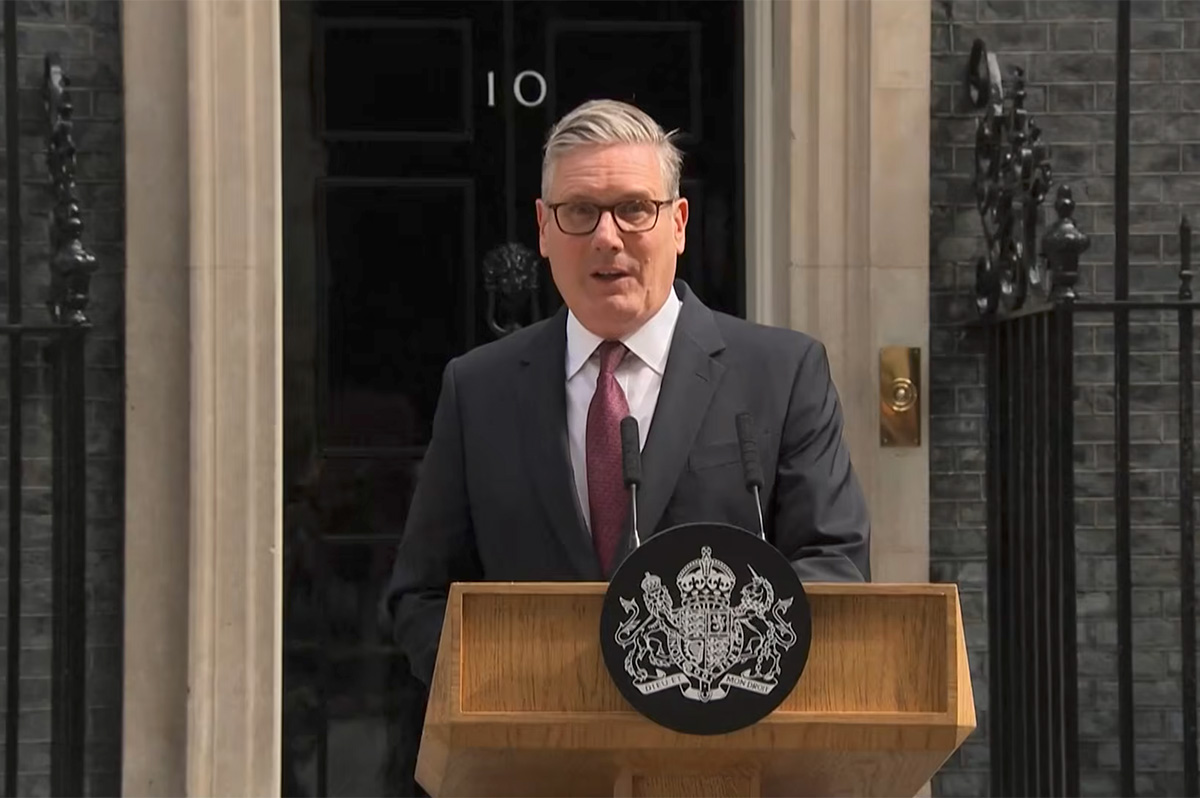
British Prime Minister Keir Starmer on Monday announced he will step down once his party chooses his successor.
Starmer succeeded Rishi Sunak of the Conservative Party in No. 10 Downing St. in 2024.
The Labour Party included a ban on so-called conversion therapy in England and Wales in its elections manifesto. King Charles III in last month’s King Speech that he delivered in the British House of Lords said a transgender-inclusive ban is among the British government’s legislative priorities.
Charles delivered his King’s Speech days after the Labour lost more than 1,000 council seats in local and regional elections. The May 7 vote took place against the backdrop of widespread criticism over Starmer’s decision to appoint Peter Mandelson as ambassador to the U.S., despite his ties to Jeffrey Epstein.
Former Greater Manchester Mayor Andy Burnham is seen as the frontrunner to become Labour’s new leader — and the UK’s next prime minister. Burnham was sworn in as an MP in the House of Commons hours after Starmer announced his resignation.
Starmer in his resignation announcement said he expects his successor will be in place before MPs return from their summer recess on Sept. 1.

Center for Black Equity honors leaders, activists at BE. Gala

In ‘The Lost Brontë,’ a complicated lie can lead to danger

CAMP Rehoboth Block Party returns Oct. 18

Essential queer horror classics for Halloween

Solidarity beyond the parade: the actual cost of Pride

Trump uses anti-trans slur against Democratic Senate candidate

U.S. int’l trade negotiator, consultant James Bedore dies at 82

Calif. GOP gubernatorial candidate ad ‘disgusting attempt to exploit lesbian intimacy’

Campaign urges Virginia High School League to reverse stance on trans athletes

Center Arts Gallery celebrates 10 years with reception, auction
-

 2026 Midterm Elections5 days ago
Trump uses anti-trans slur against Democratic Senate candidate
-
Obituary4 days ago
U.S. int’l trade negotiator, consultant James Bedore dies at 82
-
California4 days ago
Calif. GOP gubernatorial candidate ad ‘disgusting attempt to exploit lesbian intimacy’
-
Virginia4 days ago
Campaign urges Virginia High School League to reverse stance on trans athletes