Michigan
Progressives score victory as El-Sayed wins Mich. Senate primary
Democratic newcomer will face Rogers in November
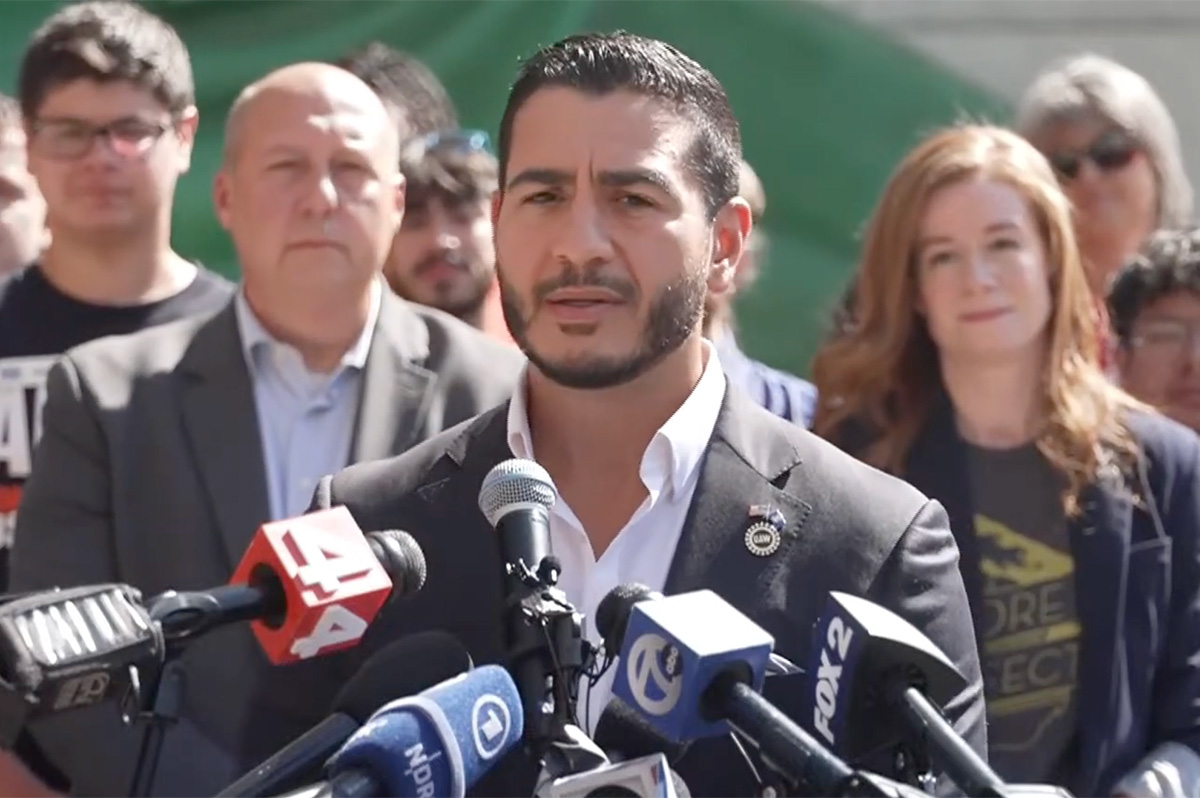
Michigan held its primary on Tuesday, allowing the two major political parties to select their nominees to go head-to-head for the state’s U.S. Senate seat.
NBC News called the Democratic race early, giving the victory to physician Abdul El-Sayed over incumbent U.S. Rep. Haley Stevens (D-Mich.) in an extremely close primary. El-Sayed won 48.5 percent of the primary vote, with Stevens trailing by just one percentage point at 47.5 percent.
Both candidates have campagined on supporting the LGBTQ community through different avenues— for El-Sayed he focused on his past promoting HIV and PrEP funding and research. Stevens focused on her legislative history working to support transgender rights in the state.
This is a major win for progressive Democrats, who have been bearing the brunt of political attacks from President Donald Trump, the Republican Party, and centrist Democrats.
El-Sayed, a former health director in Detroit, ran his campaign largely on making life in the Great Lakes State more affordable amid rising costs. His policies include promoting “Medicare for All,” pushing health policy that targets the regressive efforts of the Trump-Vance administration that rolls back funding for both Women and LGBTQ people, minimizing the growing amount of money in politics, and he was very vocal in his criticism of Stevens for supporting aid to Israel. He was endorsed by two major progressives — U.S. Sen. Bernie Sanders (I-Vt.) and U.S. Rep. Alexandria Ocasio Cortez (D-N.Y.).
Stevens, the four-term congresswoman, is much closer to establishment Democrats on policy than El-Sayed.
During her time in the federal government, she has consistently supported the Equality Act, which would add sexual orientation and gender identity as protected classes under the Civil Rights Act of 1964. She has also emphasized supporting local manufacturing and lowering housing costs in the state.
She was named to Advocates for Trans Equality’s 118th Congressional Champions list for her pro-trans policies and was endorsed by establishment heavy hitters Michigan Gov. Gretchen Whitmer and Senate Minority Leader Chuck Schumer (D-N.Y.).
The contentious race boiled down not only to Michigan affairs but also extended to international conflicts — namely Palestine. (South Africa has filed a case in the International Court of Justice in The Hague that accuses Israel of committing genocide in the Gaza Strip after Oct. 7.) This primary also acted as one of the first major races that pushed back against AIPAC, a lobbying group that works to promote pro-Israel candidates in U.S. elections. The group has been involved in domestic politics since 1954.
AIPAC devoted a massive amount of money to this race.
The Associated Press reported that the pro-Israel lobbying group spent more than $30 million on ads against El-Sayed because of his vocal denunciation of Israel and his continued criticism of its policies towards Palestine.
Michigan has a large Muslim and Arab American population, which could, in part, explain how El-Sayed was able to win.
The Republican side was far less competitive. Former U.S. Rep. Mike Rogers (R-Mich.) ran unopposed and clinched the GOP nomination. He has consistently held anti-LGBTQ positions, going as far as voting multiple times for a federal constitutional amendment to ban same-sex marriage, voting against repealing the military’s “Don’t Ask, Don’t Tell” policy, and supporting efforts to directly target the attempted expansion of Title IX protections to include trans people.
El-Sayed will face off against Rogers in November for Michigan’s Senate seat — one that could have lasting impacts not only on the state’s politics but also on the Republicans’ narrow Senate majority and Trump’s political agenda.





Michigan
FBI thwarts Halloween terror plot targeting Mich. LGBTQ bars
Two suspects arrested with arsenal of weapons and tactical gear
By SARAH BRICKER HUNT | Two men are facing federal terrorism charges after allegedly planning a Halloween attack on LGBTQ+ bars in Ferndale, according to criminal complaints unsealed in federal court Nov. 3.
Momed Ali and Majed Mahmoud were arrested Oct. 31 by the FBI Joint Terrorism Task Force, which seized tactical gear, AR-15-style rifles, ammunition and other evidence from a Dearborn home and an Inkster storage unit. The 72-page complaint says the men, along with other co-conspirators including a minor, were inspired by Islamic State extremism and had scouted LGBTQ+ venues in Ferndale.
According to the New York Post, the suspects discussed copying the November 2015 coordinated ISIS attacks in Paris that killed 130 people. Surveillance footage from gun ranges shows Ali and Mahmoud practicing shooting with firearms, the Post reports.
The Paris attacks involved gunmen and suicide bombers who launched coordinated assaults on multiple locations throughout the French capital, including the Bataclan concert hall, the Stade de France stadium and several restaurants and cafes. The Bataclan attack was the deadliest, with attackers opening fire on concertgoers and taking hostages.
Multiple media outlets are reporting that the suspects discussed doing “the same thing as France” in reference to the Paris attacks, and mentioned potential attacks at clubs or discos similar to the 2016 Pulse nightclub shooting in Orlando that killed 49 people. Investigators discovered the suspects repeatedly referred to “pumpkins” in their conversations, which authorities identified as code for a Halloween-themed attack.
Ali purchased a shotgun, an AR-15-style rifle and a forced reset trigger that increases the rate of fire in semiautomatic weapons, according to federal documents. Mahmoud purchased an AR-15-style rifle and more than 1,600 rounds of ammunition.
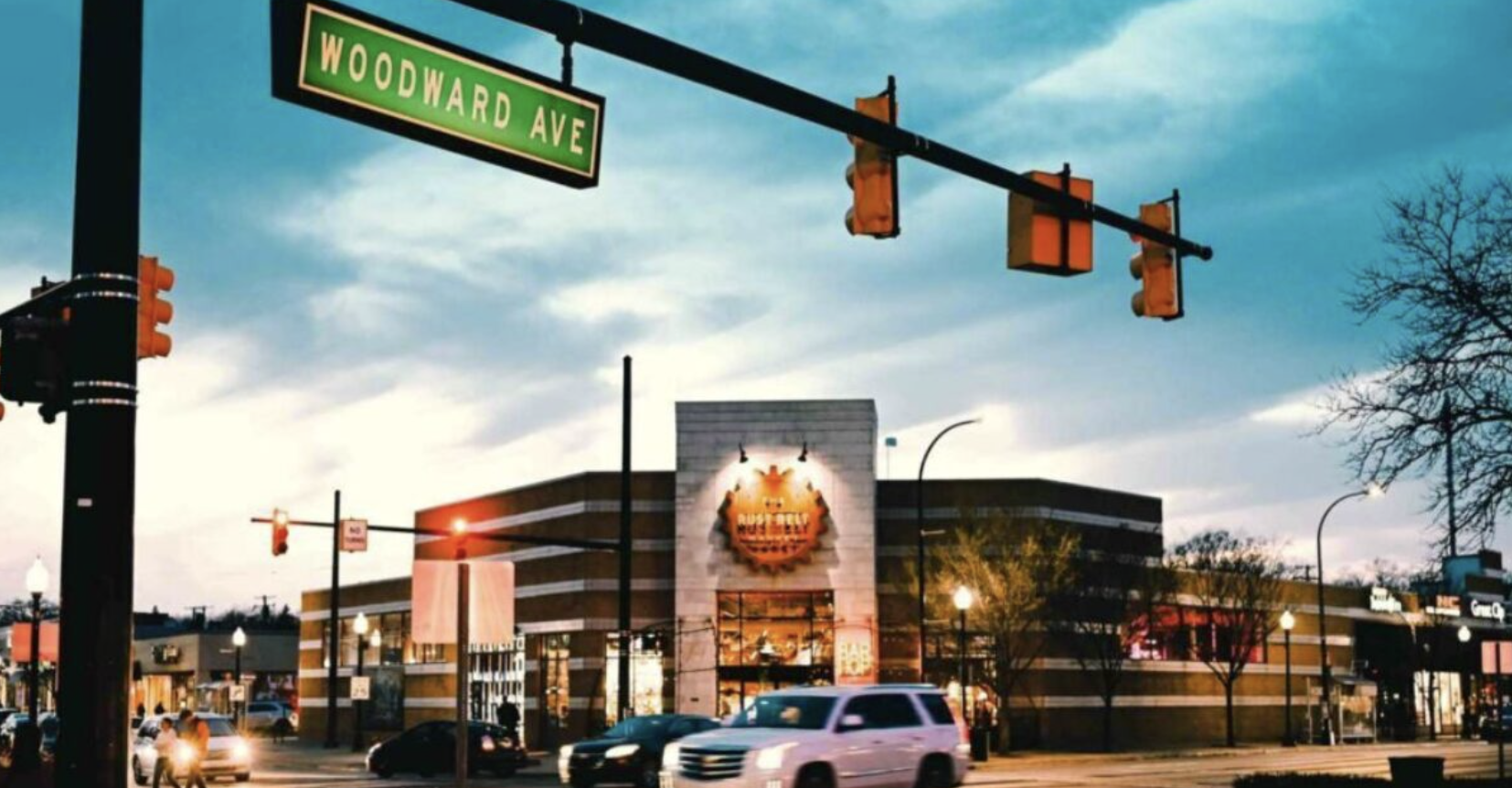
In September, Ali, Mahmoud and the minor made multiple trips to Ferndale, traveling to an area on Woodward Avenue near East Nine Mile that includes numerous clubs and bars that attract members of the LGBTQ+ community, according to the FBI.
“Our American heroes prevented a terror attack,” U.S. Attorney General Pam Bondi said on X following the arrests.
Both men have been charged with receiving and transferring guns and ammunition for terrorism and appeared in court Nov. 3. One defense attorney declined to comment, while another dismissed the allegations over the weekend as “hysteria” and “fearmongering.”
Popular Ferndale LGBTQ+ bar Soho posted to Facebook following news of the arrests.
“Soho is aware of recent reports concerning a potential threat directed toward businesses in our area. While it appears we were not targeted directly, we commend and deeply appreciate the swift and thorough response of local and federal law enforcement agencies in addressing the matter and ensuring the safety of our community,” the statement read.
The bar emphasized its confidence in local law enforcement. “We have always felt safe in the Ferndale community thanks to our close relationship with local law enforcement and their ongoing diligence and support.”
Soho’s statement also condemned targeting the LGBTQ+ community: “It is abhorrent that the LGBTQ+ community would ever be targeted — a community that stands for tolerance, unity, and peace.”
The bar confirmed its operations continue as normal and expressed gratitude for community support.
Meanwhile, Oakland County Executive Dave Coulter posted to Facebook, “Learning that Ferndale and the LGBTQ+ community were among the potential targets of a terrorist attack is disturbing. The pain of the Pulse Nightclub tragedy in Orlando nine years ago while I was serving as mayor of Ferndale is still deeply felt in the community. I’m grateful for the FBI, Oakland County Sheriff’s Office and other law enforcement for their diligence in seeking out and preventing what could have been another mass tragedy.”
Michigan
Mich. lawmaker introduces resolution asking SCOTUS to overturn Obergefell
Far-right lawmaker stripped from committee assignments for extreme rhetoric
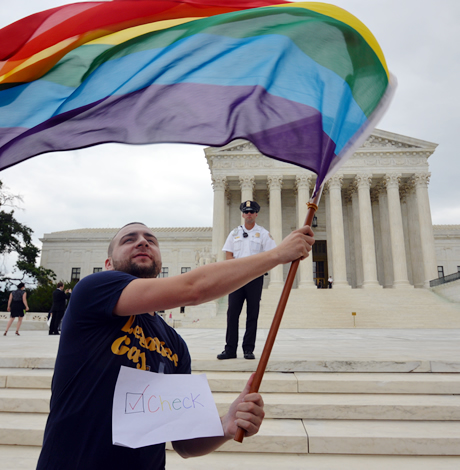
Republican Michigan state Rep. Josh Schriver introduced a resolution Tuesday asking the U.S. Supreme Court to overturn the 2015 Obergefell v. Hodges ruling, which established the nationwide right to same-sex marriage.
The lawmaker announced the move in a post on X, having previously shared a press release announcing plans to file the resolution, which argues that same-sex marriage is “at odds with the sanctity of marriage, the Michigan constitution, and principles upon which the country was established.”
The Resolution to Restore Marriage
— Rep. Josh Schriver (@JoshuaSchriver) February 25, 2025
✅ Introduced pic.twitter.com/UrX1zSdmUf
Schriver’s resolution has 12 co-sponsors, and similar measures have been introduced in other states including Idaho, Iowa, Montana, North Dakota, and South Dakota.
Responding to one of his posts advocating for the overturning of Obergefell in December, Michigan Gov. Gretchen Whitmer, a Democrat, said “any attempt to strip away gay marriage is wrong.”
Last month, the far-right politician was heard telling colleagues in leaked audio that gender affirming healthcare should be banned for minors as well as adults: “If we are going to stop this for anyone under 18, why not apply it for anyone over 18? It’s harmful across the board and that’s something we need to take into consideration in terms of the endgame.”
Earlier this month, he proposed banning birth control and reposted a message promoting the white nationalist Great Replacement conspiracy theory, the latter leading to Michigan House Minority Leader Matt Hall’s (R) decision to remove Schriver from his committee assignments.
Michigan
Mich. Democrats spar over LGBTQ-inclusive hate crimes law
Lawmakers disagree on just what kind of statute to pass

Michigan could soon become the latest state to pass an LGBTQ-inclusive hate crime law, but the state’s Democratic lawmakers disagree on just what kind of law they should pass.
Currently, Michigan’s Ethnic Intimidation Act only offers limited protections to victims of crime motivated by their “race, color, religion, gender, or national origin.” Bills proposed by Democratic lawmakers expand the list to include “actual or perceived race, color, religion, gender, sexual orientation, gender identity or expression, ethnicity, physical or mental disability, age, national origin, or association or affiliation with any such individuals.”
Democratic Gov. Gretchen Whitmer and Attorney General Dana Nessel have both advocated for a hate crime law, but house and senate Democrats have each passed different hate crimes packages, and Nessel has blasted both as being too weak.
Under the house proposal that passed last year (House Bill 4474), a first offense would be punishable with a $2,000 fine, up to two years in prison, or both. Penalties double for a second offense, and if a gun or other dangerous weapons is involved, the maximum penalty is six years in prison and a fine of $7,500.
But that proposal stalled when it reached the senate, after far-right news outlets and Fox News reported misinformation that the bill only protected LGBTQ people and would make misgendering a trans person a crime. State Rep. Noah Arbit, the bill’s sponsor, was also made the subject of a recall effort, which ultimately failed.
Arbit submitted a new version of the bill (House Bill 5288) that added sections clarifying that misgendering a person, “intentionally or unintentionally” is not a hate crime, although the latest version (House Bill 5400) of the bill omits this language.
That bill has since stalled in a house committee, in part because the Democrats lost their house majority last November, when two Democratic representatives resigned after being elected mayors. The Democrats regained their house majority last night by winning two special elections.
Meanwhile, the senate passed a different package of hate crime bills sponsored by state Sen. Sylvia Santana (Senate Bill 600) in March that includes much lighter sentences, as well as a clause ensuring that misgendering a person is not a hate crime.
Under the senate bill, if the first offense is only a threat, it would be a misdemeanor punishable by one year in prison and up to $1,000 fine. A subsequent offense or first violent hate crime, including stalking, would be a felony that attracts double the punishment.
Multiple calls and emails from the Washington Blade to both Arbit and Santana requesting comment on the bills for this story went unanswered.
The attorney general’s office sent a statement to the Blade supporting stronger hate crime legislation.
“As a career prosecutor, [Nessel] has seen firsthand how the state’s weak Ethnic Intimidation Act (not updated since the late 1980’s) does not allow for meaningful law enforcement and court intervention before threats become violent and deadly, nor does it consider significant bases for bias. It is our hope that the legislature will pass robust, much-needed updates to this statute,” the statement says.
But Nessel, who has herself been the victim of racially motivated threats, has also blasted all of the bills presented by Democrats as not going far enough.
“Two years is nothing … Why not just give them a parking ticket?” Nessel told Bridge Michigan.
Nessel blames a bizarre alliance far-right and far-left forces that have doomed tougher laws.
“You have this confluence of forces on the far right … this insistence that the First Amendment protects this language, or that the Second Amendment protects the ability to possess firearms under almost any and all circumstances,” Nessel said. “But then you also have the far left that argues basically no one should go to jail or prison for any offense ever.”
The legislature did manage to pass an “institutional desecration” law last year that penalizes hate-motivated vandalism to churches, schools, museums, and community centers, and is LGBTQ-inclusive.
According to data from the U.S. Department of Justice, reported hate crime incidents have been skyrocketing, with attacks motivated by sexual orientation surging by 70 percent from 2020 to 2022, the last year for which data is available.
Twenty-two states, D.C., Puerto Rico, and the U.S. Virgin Islands have passed LGBTQ-inclusive hate crime laws. Another 11 states have hate crime laws that include protections for “sexual orientation” but not “gender identity.”
Michigan Democrats have advanced several key LGBTQ rights priorities since they took unified control of the legislature in 2023. A long-stalled comprehensive anti-discrimination law was passed last year, as did a conversion therapy ban. Last month the legislature updated family law to make surrogacy easier for all couples, including same-sex couples.
A bill to ban the “gay panic” defense has passed the state house and was due for a Senate committee hearing on Wednesday.

Bowser, Office of LGBTQ Affairs announce LGBTQ+ History Month events

PHOTOS: Winchester Pride

Evan Low is not the leader the Victory Fund needs at this moment

Transgender woman elected to Brazilian Chamber of Deputies

Lula, Flávio Bolsonaro to face off in second round of Brazilian presidential election

Gay Va. couple hopeful voters will enshrine marriage equality in state constitution

LGBTQ community must vote in big numbers

Victory Fund board investigates former staffers’ allegations against CEO Evan Low

The right to be an ordinary transgender man

Calif. governor signs 6 pro-LGBTQ bills, vetoes 1
-

 Virginia5 days ago
Gay Va. couple hopeful voters will enshrine marriage equality in state constitution
-
Opinions5 days ago
LGBTQ community must vote in big numbers
-
LGBTQ Non-Profit Organizations5 days ago
Victory Fund board investigates former staffers’ allegations against CEO Evan Low
-
Opinions5 days ago
The right to be an ordinary transgender man