Maryland
Gay former College Park mayor sentenced to 30 years in child porn case
Family, friends testify at emotional sentencing hearing in P.G. County
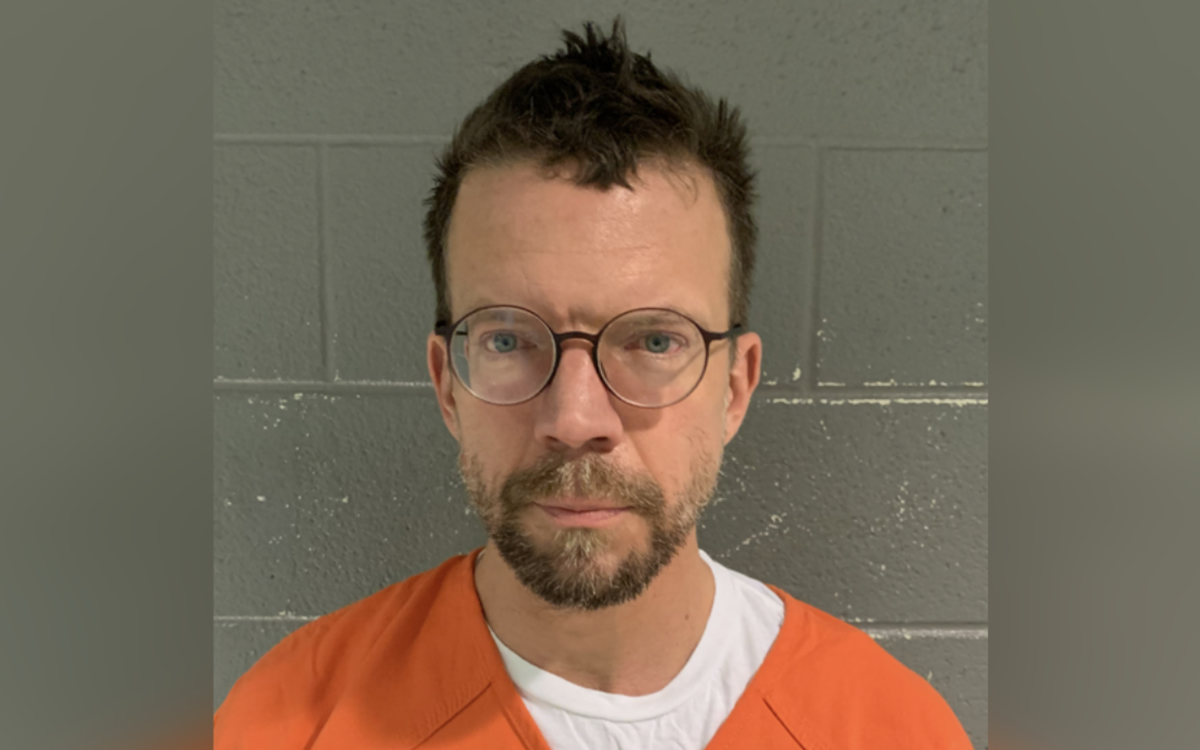
A Prince George’s County Circuit Court judge on Monday, Nov. 20, sentenced gay former College Park Mayor Patrick Wojahn to 30 years of incarceration at an emotional three-and-a-half-hour long sentencing hearing that took place more than three months after Wojahn pleaded guilty to 140 counts of child pornography-related charges as part of a plea agreement with prosecutors.
In agreeing to carry out the plea agreement, Judge Karen Mason sentenced Wojahn to 150 years in prison, with 120 years suspended, requiring that he serve 30 years.
The judge and prosecutors pointed out that under Maryland’s sentencing rules Wojahn will be eligible to apply for release on parole after serving 25 percent of the 30-year sentence, which could result in his release after seven and a half years.
The sentencing followed news that surfaced in March of this year, which shocked Wojahn’s friends and longtime political supporters, that he had been arrested after police raided his College Park home and confiscated multiple cell phones, a tablet, computer, and a storage device containing video and still images, leading to two indictments alleging possession and distribution of child pornography.
The 140 counts to which he pleaded guilty include 60 counts of distribution of child porn, 40 counts of possession of child porn, and 40 counts of possession of child pornography with intent to distribute it.
He announced his resignation as mayor, a position he held since 2015, shortly before his arrest.
Wojahn’s husband, mother, sister, and 13 friends testified at the sentencing hearing. Most told the judge they understood the seriousness of the charges against their loved one and friend but called on the judge to take into consideration the good that Wojahn has done as a family member, friend, and elected official over his lifetime. Several of the friends said mental health issues and an addiction problem had played a role in Wojahn’s actions and urged the judge to arrange for him to receive mental health related services.
Among those who testified were Sister Jeannine Gramick, a Roman Catholic nun who co-founded the LGBT Catholic support organization New Ways Ministry, and Francis DeBernardo, the current executive director of New Ways Ministry. Also testifying was Thomas Bower, an official with the LGBT Catholic organization Dignity Washington, of which Wojahn has been a participant.
Judge Mason said she would refer Wojahn, who has been held without bond since the time of his arrest in March of this year, to the Patuxent Institution, a maximum-security correctional facility located in Jessup, Md., that specializes in providing mental health services for its male and female inmates.
Mason also included in her sentencing a requirement that Wojahn serve five years of supervised probation upon his release from incarceration, register as a sex offender, and have no unsupervised contact with minors.
The testimony from family members and friends came after P.G. County Assistant State’s Attorneys Jessica Garth and Monica Meyers argued that those who possess and distribute child pornography are responsible for the suffering of victims of child sex abuse who are forced to take part in the production of child porn video and still images, even though, as in Wojahn’s case, the perpetrators do not produce the images and don’t directly come into contact with the children depicted in the images.
Police and prosecutors have alleged in charging documents that Wojahn had uploaded and/or shared dozens of videos or still images on the social media app Kik depicting explicit sexual acts between adult men and prepubescent boys, depicting prepubescent boys engaging in sex with each other, or engaging in masturbation.
In a development that surprised some attending the sentencing hearing, the two prosecutors disclosed that with the help of law enforcement officials and the National Center for Missing and Exploited Children, they identified 52 of the juveniles who were depicted in the video or still photo images that police had confiscated from Wojahn’s home. At a press conference following the sentencing hearing, prosecutor Meyers said the 52 then children who were identified, most of whom are now adults, were from the U.S., Canada, Mexico, and several European countries, including Germany, Russia, Portugal, and the United Kingdom.
Through information obtained from law enforcement officials in the U.S. and internationally, the two P.G. County prosecutors said they obtained statements from or case reports for about 42 of the individuals listed as victims and presented those statements at the sentencing hearing by projecting them on two large screens in the courtroom. Meyers read each of the statements as they were projected, with most of the victims saying they suffered long-lasting harmful effects from being forced as children to take part in the production of pornographic images.
Meyers said while prosecutors presented victim impact statements for about 40 of the juveniles who were identified in the porn videos and still images, Wojahn had possession and helped to distribute images of “hundreds more on his devices” who were not identified.
In an effort to highlight the large numbers of sexually abused juveniles in the videos or still images in Wojahn’s possession, Meyers pointed to a photo that the prosecutors displayed on the large video screen in the courtroom during Monday’s sentencing hearing of a junior high school in College Park located near where Wojahn lived.
“That his own elementary school a half a mile from his house has less than 500 students who attended, he had more victims than that on his telephone,” Meyers said at the press conference. “And on his device, he had memorialized more than 500 victims who were sexually abused, raped, and tortured,” she said.
“These are not victimless crimes, even though the victim is separated from the person who’s abusing them by a computer screen,” Assistant State’s Attorney Garth said at the press conference. “They are real people. They experience real damage, psychological and physical damage,” she said. “And they have to live with what happened to them for the rest of their lives.”
P.G. County State’s Attorney Aisha Braveboy, who called the press conference, thanked the team of prosecutors and police investigators who worked on the Wojahn case.
“No child deserves to be sexually abused,” Braveboy said. “No child deserves their images to be displayed on the internet or any platform for hundreds of thousands and possibly millions of people to view,” she said. “And so, in accepting this plea agreement, we are satisfied that Mayor Wojahn understood the seriousness of his actions and wanted to take responsibility.”
Wojahn, who was dressed in an orange prison jumpsuit, was the last to speak at the hearing before Mason issued her sentence. Due to the fact that Wojahn and many of the others who spoke at the hearing were not using microphones, much of what was said could not be heard clearly.
“I want to give an apology,” he could be heard saying. “I don’t know what happened. I can’t explain what changed me,” he continued, weeping while speaking. “I want to apologize to all my friends. I apologize to my family,” he said. He then turned to look at his husband, Dave Kolesar, and expressed his love for his husband. Both were crying as Wojahn spoke.
“I hope what I went through will help others who need help, get help,” he said. “I do hope I will be able to recover fully myself. I hope others will know recovery is possible.”
Wojahn’s attorney, David Moyse, pointed out that Wojahn had cooperated fully with the investigation into his actions as soon as P.G. County police entered his house with a search warrant in March. Much of what Moyse said couldn’t be heard due to the faulty sound system in the courtroom, but he urged the judge to take into consideration all the positive aspects of Wojahn’s life.




Maryland
Md. groups receive state grants to fight hate crimes
Pride Center of Maryland among recipients
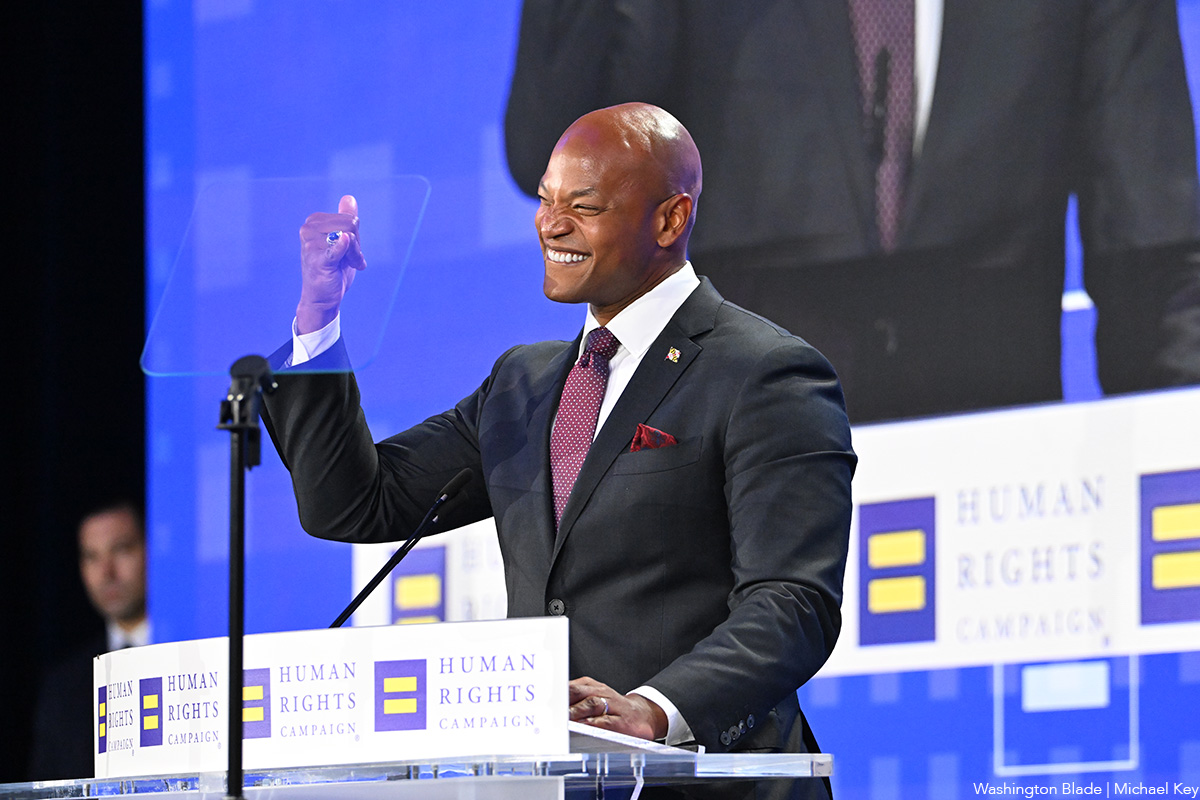
Maryland Gov. Wes Moore and the Governor’s Office of Crime Prevention and Policy are awarding a total of $10 million in grants in the 2027 fiscal year to nonprofit organizations that work to prevent hate crimes in the state.
The funds will be used to support those who feel targeted or discriminated against because of their race, religion, sexual orientation, gender identity, or disability status.
The Pride Center of Maryland is among the recipients. Churches, synagogues, mosques, and LGBTQ organizations are all eligible to receive grants
“The safety and security of all Marylanders is my top priority, so we are drawing a hard line because we have no tolerance for hate,” said Moore, according to media reports. “We are committed to protecting and ensuring safe and sacred spaces stay that way by investing in non-profit organizations, houses of worship, and community centers to protect and honor every community that makes our state so diverse and special.”
“Protection Against Hate Crime funding has strengthened the Pride Center of Maryland’s ability to protect, educate, and support the communities we serve … at a time of heightened concern associated with the Trump administration’s anti-LGBTQ/SGL (same-gender-loving) policies and pressures,” Pride Center of Maryland CEO Cleo Manago said. “PAHC funding helps us do more than improve physical security — it strengthens our community’s knowledge, preparedness, connection to resources, and ability to respond to hate with greater awareness and support.”
Maryland’s hate crimes law includes both sexual orientation and gender identity. The state’s nondiscrimination statute is also LGBTQ-inclusive.
Maryland
Anne Arundel schools now need parent permission to call trans students by preferred names
Conservative groups challenged system’s policy
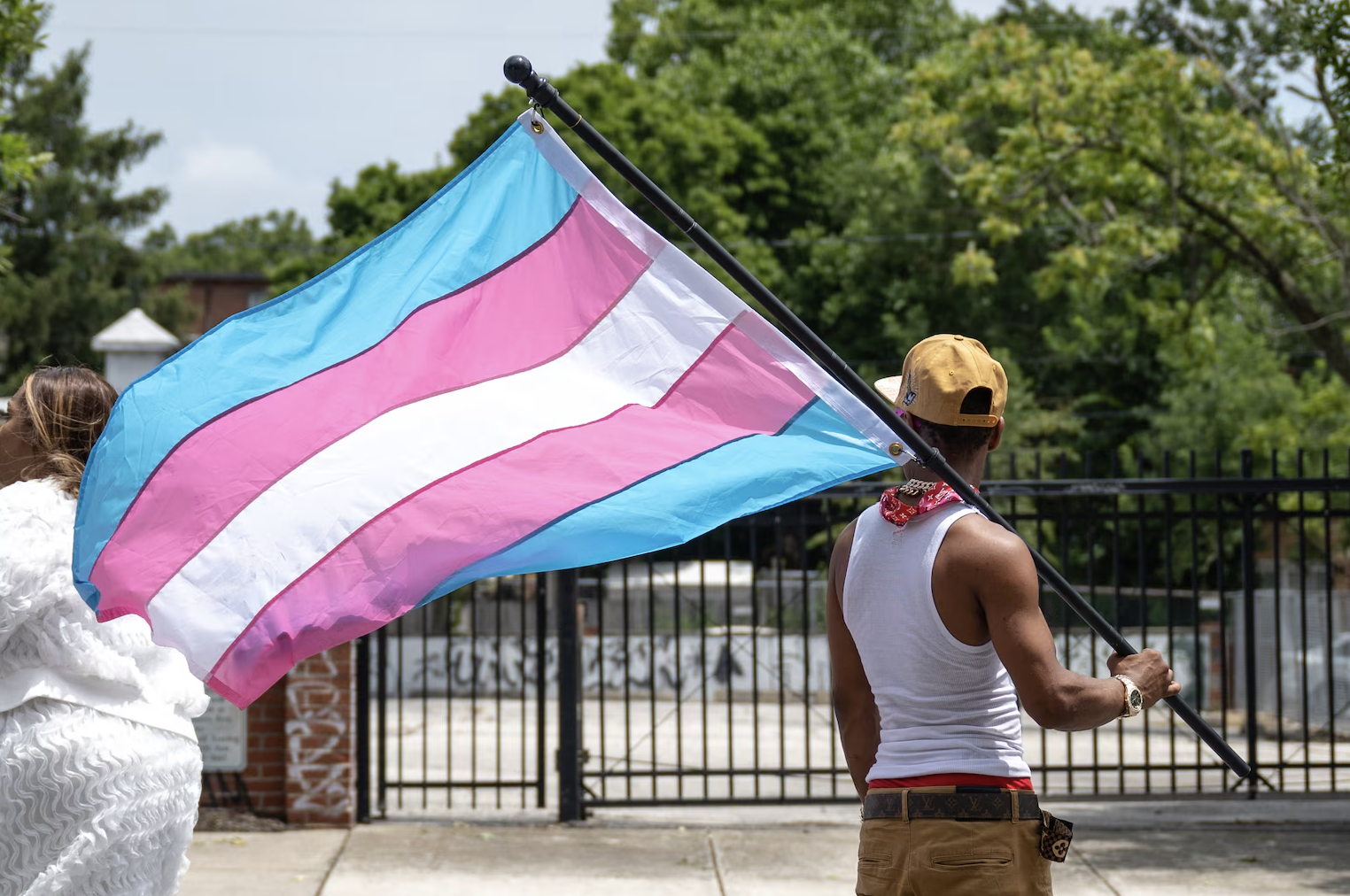
By JESSICA CALEFATI | Anne Arundel County Public Schools staff cannot use transgender students’ preferred names if their parents oppose it, according to an internal document reviewed by the Banner, a change that comes after conservative groups challenged the school system’s approach to gender identity.
Teachers union president Kristina Korona told members in an Aug. 20 email that the new guidance undermines district policy on acceptance and inclusivity and “will begin harming affected students immediately.”
Previously, the district didn’t require parental permission to use a high school student’s chosen name and pronouns corresponding to their gender identity, the internal document says. Now it does. The change comes as parents challenge the suburban school system’s gender identity policy and regulation in court and the Trump-Vance administration threatens the district’s funding.
The rest of this article can be found on the Baltimore Banner’s website.
Maryland
Girlfriends charged with Silver Spring murder to go on trial in 2027
Prosecutors charged both women with killing mother of one of them

Two women identified as a couple who are charged with the May 22, 2026, murder of the mother one of them in her Silver Spring home and who were arrested three weeks later in Ohio are scheduled to go on trial for murder April 19, 2027.
According to online records filed with Montgomery County Circuit Court in Rockville, Vanessa Tjongarero-Henderson, 29, of Clarksburg, Md., and Samantha Raebel, 36, of Phoenix are being held without bond in the Montgomery County Correctional Facility until the time of their trial.
Statements from Montgomery County police show the two women were arrested June 10 in Genoa, Ohio, after fleeing from the scene of the murder in Silver Spring. Police statements and court records show they were extradited back to Maryland in July, where prosecutors with the Montgomery County State’s Attorney’s Office obtained indictments against them for murder.
Earlier statements from Montgomery County police say their investigation into the murder led to their decision to initially charge the two women with first-degree murder for the death of Hilde Henderson, 67, who was Tjongarero-Henderson’s mother.
“Through the course of the investigation, detectives identified Henderson’s daughter, Vanessa Tjongarero-Henderson, and Vanessa’s girlfriend, Raebel, as the suspects,” one of the police statements says. It says police obtained arrest warrants for both women and launched a nationwide search seeking help from the public in in locating them.
One of the police statements says an autopsy determined the cause of Hilde Henderson’s death was blunt-force trauma injuries brought about by a murder. Police and the State’s Attorney’s Office, which is prosecuting the case, have yet to disclose whether they have determined a motive for the murder.
Court records show that prior to the start of the April 19, 2027, trial a “motion” hearing was scheduled for Oct. 30, 2026, a pre-trail conference was scheduled for Feb. 12, 2027, and another motion hearing and a status hearing were scheduled for March 12, 2027.
Court records also show that Tjongarero-Henderson is being represented by attorneys with the Montgomery County court system’s public defender service. The records show that Raebel initially had been represented by a public defender service attorney, but updated records show Aug. 14 is listed as the “removal date” for that attorney.
The docket shows that on Aug. 20, two new attorneys with the prominent D.C. law firm of Covington & Burling made their official appearance as her attorneys in the murder case. One of them, Daniel Solomon, told the Washington Blade in response to an inquiry that the defense has no comment at this time on the case.
He confirmed that Covington & Burling is representing Raebel on a no-cost, pro bono bass.
The office of the Montgomery County public defender service didn’t immediately respond to a phone message from the Blade asking for a comment on the Tjongarero-Henderson case.

Center for Black Equity honors leaders, activists at BE. Gala

In ‘The Lost Brontë,’ a complicated lie can lead to danger

CAMP Rehoboth Block Party returns Oct. 18

Essential queer horror classics for Halloween

Solidarity beyond the parade: the actual cost of Pride

Trump uses anti-trans slur against Democratic Senate candidate

U.S. int’l trade negotiator, consultant James Bedore dies at 82

Calif. GOP gubernatorial candidate ad ‘disgusting attempt to exploit lesbian intimacy’

Campaign urges Virginia High School League to reverse stance on trans athletes

Center Arts Gallery celebrates 10 years with reception, auction
-

 2026 Midterm Elections5 days ago
Trump uses anti-trans slur against Democratic Senate candidate
-
Obituary4 days ago
U.S. int’l trade negotiator, consultant James Bedore dies at 82
-
California4 days ago
Calif. GOP gubernatorial candidate ad ‘disgusting attempt to exploit lesbian intimacy’
-
Virginia4 days ago
Campaign urges Virginia High School League to reverse stance on trans athletes