Maryland
New College Park mayor has mixed record on LGBTQ issues
Fazlul Kabir voted against measure to ban discrimination
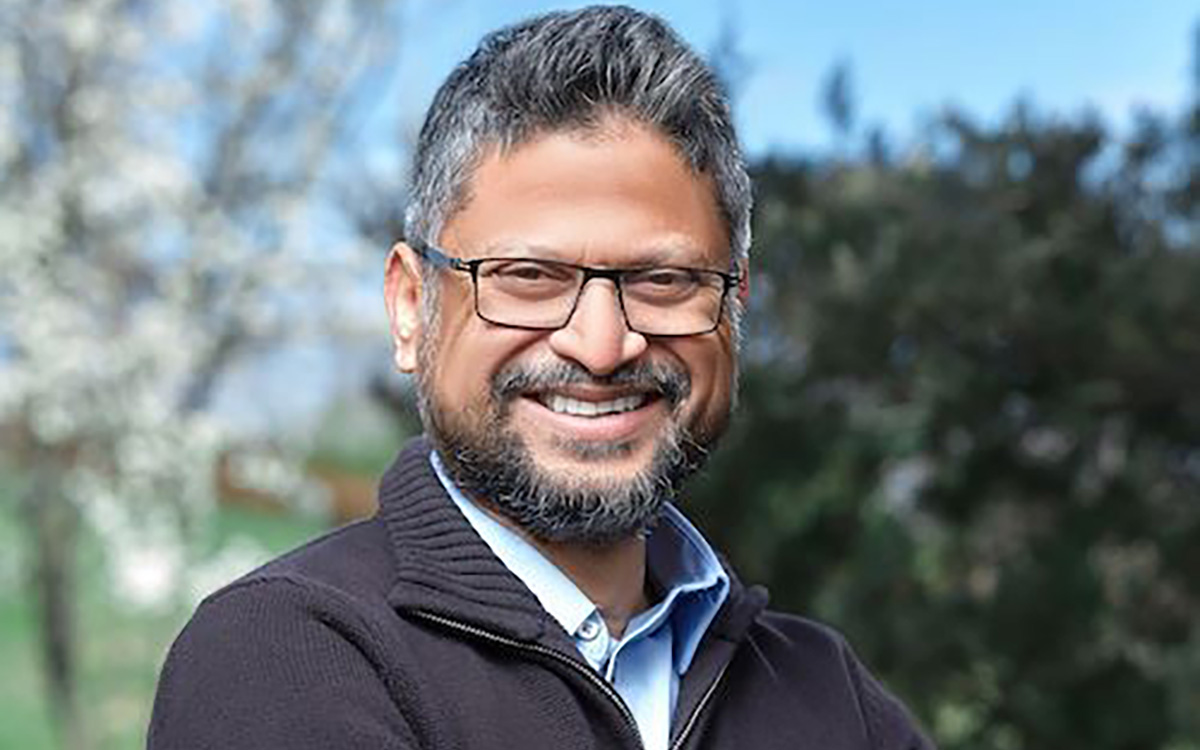
S.M. Fazlul Kabir, a native of Bangladesh who received a doctorate degree in electrical engineering in the United Kingdom before moving to College Park, Md., in 2003, won re-election as College Park mayor on Nov. 5.
He has served on the College Park City Council since 2011 and first won election as mayor in May of this year in a special election held shortly after the resignation of gay College Park Mayor Patrick Wojahn. Wojahn abruptly left office at the time of his arrest in March of this year on multiple counts of possession and distribution of child pornography.
Wojahn has been held without bond since the time of his arrest. He pleaded guilty to most of the charges against him in a plea bargain deal with prosecutors at a Prince George’s County Circuit Court hearing on Aug. 2. He is scheduled to be sentenced on Nov. 20.
Kabir came in first place with 54 percent of the vote in a four-candidate race in the May special election. He succeeded Denise Mitchell, a Council member who became acting mayor at the time of Wojahn’s resignation until the time of the special election, in which she ran and lost to Kabir.
Kabir ran unopposed for a full term in office on Nov. 5 in College Park’s regularly scheduled mayoral election, reaffirming his longstanding reputation as a consensus builder and strong supporter of advancing College Park as a diverse suburban community and home to the University of Maryland, according to political observers.
“Dr. Kabir is believed to be the first College Park mayor of South Asian descent and the first of Muslim faith,” a statement on the College Park website says. “Dr. Kabir has lived in College Park with his wife and two sons for more than two decades,” the statement says.
The statement says he taught cybersecurity at the University of Maryland for eight years before beginning his current job as an information architect for the federal government.
Kabir, while expressing support for the LGBTQ community, has voted against two pro-LGBTQ bills as a member of the College Park City Council, one in 2014 and the other in 2020, according to Council records.
The 2014 measure, which the eight-member Council passed by a vote of 6-2, with Kabir voting no, amended the city charter to ban discrimination in employment, housing, and public accommodations based on a wide range of categories, including race, religion, sexual orientation, and gender identity.
The 2020 measure called for College Park to sign on to an amicus brief to be filed with the U.S. Supreme Court in support of the city of Philadelphia, which was being sued by a Catholic social services organization that had a contract with Philadelphia to place children with foster parents. Philadelphia terminated the contract after the organization, Catholic Social Services (CSS), refused to place children with same-sex foster parents based on its religious beliefs, an action that violated Philadelphia’s non-discrimination law.
The College Park Council voted 5-3, with Kabir and two other Council members voting no, to sign on to the amicus brief, which Council supporters said would affirm College Park’s support for Philadelphia’s effort to uphold its nondiscrimination policies impacting LGBTQ foster parents.
City Council records show Kabir abstained from voting on a third measure in May of 2016 that called for the flying of the LGBTQ Pride flag over College Park City Hall during LGBTQ Pride week in June of that year.
When contacted by the Washington Blade for comment on his LGBTQ voting record, Kabir pointed to his statements during the Council meetings at the time the three votes were taken, in which he expressed general support for LGBTQ rights.
The Blade watched and listened to his statements on each of the three measures in question as well as the statements by other Council members on video recordings of each of the three separate Council meetings that are available for viewing on the Council’s website.
“In none of these votes I used my faith as the reason for the way I voted,” Kabir told the Blade in a statement. “Being a member of several minority groups, I value the dignity of every resident of our College Park community, including the members of our LGBTQ+ community,” he said.
“I much appreciate the contributions of the LGBTQ+ community to making College Park a better place for all our residents,” he said in his statement.
At the time of the May 2014 meeting in which the Council voted to approve the nondiscrimination charter amendment, Kabir argued that the proposed amendment was unnecessary because the Maryland state non-discrimination law covered the identical provisions of the proposed College Park charter amendment.
“Discrimination is nothing new,” he said as shown in the Council’s video recording of the Nov. 25, 2014 meeting. “And discrimination happens all the time and we should not accept it,” he said. “But we never had a clause, a general clause in the city charter in the 70-year history,” he added, noting that the College Park charter never included this type of language that’s now included in state law.
Kabir told his Council colleagues during that Council session that he had further concerns over the proposed non-discrimination charter amendment’s provision on public accommodations. He called that “kind of very controversial because it includes the bathroom and the restroom.” Kabir added, “We want our transgender population to feel comfortable going to either restrooms or bathrooms, but many of our heterosexual residents, they don’t feel comfortable with this term.”
He also points out, however, that the Council approved a second nondiscrimination measure during that same Council session that applied to the College Park city government’s own internal employment policies, and which also included sexual orientation and gender identity protections. He voted for that measure, which passed the Council unanimously.
On the Council’s vote on Aug. 11, 2020, in support of joining the Supreme Court amicus brief in the Philadelphia case, Kabir said he did not believe the Catholic Social Services Group was engaging in discrimination. He noted that while the group did not take on same-sex couples as clients, it readily referred any same-sex couples it came in contact with to other organizations under city contract that would help them become foster parents.
“College Park is a diverse and pluralistic community,” he told his fellow Council members during the discussion over the amicus brief question. “And both the LGBTQ and the faith groups are very, very important and very strong parts of our community,” he said. “We all want all groups to live together here in peace and with respect and dignity. Taking a side, one side over the other, will only divide us instead of uniting us,” he said in explaining why he would vote against College Park joining the amicus brief.
The measure passed the Council by a vote of 5-3, with Kabir and two others voting no. Among those voting yes was then gay Council member P.J. Brennan. Then Mayor Wojahn expressed strong support for the measure.
Kabir told the Blade in his written statement that while he voted against the Philadelphia amicus brief, he voted one year earlier in favor of College Park signing on to an amicus brief for another LGBTQ-related Supreme Court case known as Bostock v. Clayton County. The amicus brief supported the gay plaintiff in that case, for whom the Supreme Court issued its landmark ruling that LGBT people are protected from discrimination under the U.S. Civil Rights Act of 1964.
Regarding his decision to abstain on the Council’s May 24, 2016, vote to hang the Pride flag as a banner on the front of the City Hall building for one week, Kabir did not give a reason for abstaining. Instead, he introduced a substitute motion calling for establishing a city policy for approving banners to be hung on an outside wall of the City Hall building with the mayor given authority to approve them.
“The banner may include a flag,” Kabir told fellow Council members. “The mayor shall consider the applications and approve those that are appropriate and support city goals, values and objectives,” he said.
The Council then voted 5-3 against Kabir’s motion and voted 5-0 with three abstentions, including Kabir’s abstention, to approve the original motion to display the Pride flag on the City Hall building from June 6-13, 2016.
About a month later, at the Council’s June 14, 2016 meeting, Kabir joined his fellow Council members in voting yes in a unanimous vote to extend the display of the Pride flag at City Hall for one more week in honor of the victims of the Pulse nightclub shooting in Orlando, Fla., in which 49 mostly LGBTQ patrons lost their lives at the hands of a lone gunman.
Then College Park Mayor Wojahn introduced the motion to extend the flag display for the extra week.
Kabir, meanwhile, told the Blade that during his second month as mayor this year he issued a mayoral proclamation declaring June 2023 as Pride Month in College Park.
PJ Brennan, who’s gay and served on the College Park Council alongside Kabir for seven years before retiring from the Council, points out that under the College Park municipal government, a city manager runs the day-to-day operations of the city government. The mayor can propose legislation and presides over Council meetings, but he doesn’t have a vote on the Council except to break a tie.
“I think he might wrestle with legislation that is overtly pro-LGBTQ, but I think that’s true with anybody that comes from a religious community where LGBTQ rights are not necessarily supported,” he said.
“But I’ll tell you this,” Brennan told the Blade. “His character is really nothing but loving. He’s always been very kind to me. He’s always been very kind to my family,” said Brennan, who has a husband and two kids. “If he does have any negative feelings, I don’t see him pursuing legislation that is anti-LGBTQ.”
Jeffrey Slavin, the gay mayor of the town of Somerset, Md., which is located in Montgomery County just across the Northwest D.C. border, had a less supportive view of his fellow mayor.
“I find his explanations for voting against or abstaining on fundamental policies for LGBTQ+ rights to be ludicrous and the type of reasoning that Trumpers make,” Slavin told the Blade. “College Park deserves a different type of leader — someone authentic and engaged on our issues — not someone trying to pretend to be something he’s not.”




Maryland
Md. groups receive state grants to fight hate crimes
Pride Center of Maryland among recipients
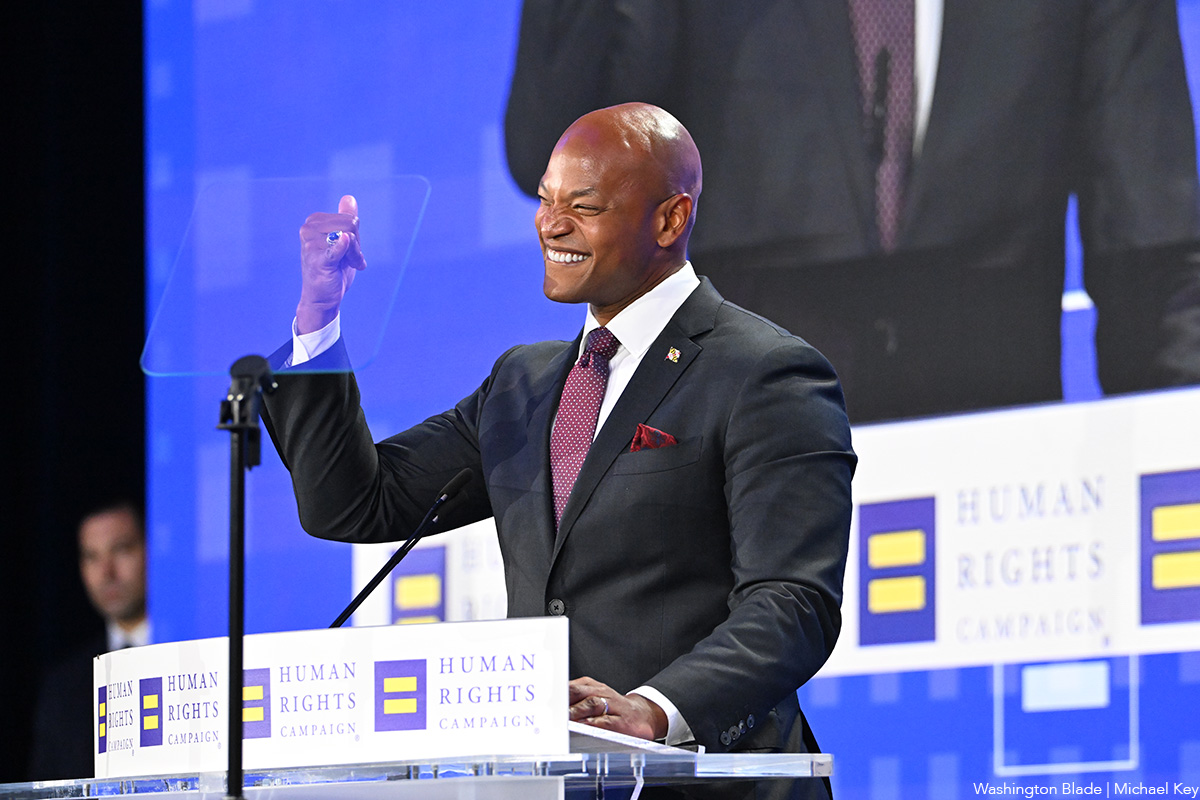
Maryland Gov. Wes Moore and the Governor’s Office of Crime Prevention and Policy are awarding a total of $10 million in grants in the 2027 fiscal year to nonprofit organizations that work to prevent hate crimes in the state.
The funds will be used to support those who feel targeted or discriminated against because of their race, religion, sexual orientation, gender identity, or disability status.
The Pride Center of Maryland is among the recipients. Churches, synagogues, mosques, and LGBTQ organizations are all eligible to receive grants
“The safety and security of all Marylanders is my top priority, so we are drawing a hard line because we have no tolerance for hate,” said Moore, according to media reports. “We are committed to protecting and ensuring safe and sacred spaces stay that way by investing in non-profit organizations, houses of worship, and community centers to protect and honor every community that makes our state so diverse and special.”
“Protection Against Hate Crime funding has strengthened the Pride Center of Maryland’s ability to protect, educate, and support the communities we serve … at a time of heightened concern associated with the Trump administration’s anti-LGBTQ/SGL (same-gender-loving) policies and pressures,” Pride Center of Maryland CEO Cleo Manago said. “PAHC funding helps us do more than improve physical security — it strengthens our community’s knowledge, preparedness, connection to resources, and ability to respond to hate with greater awareness and support.”
Maryland’s hate crimes law includes both sexual orientation and gender identity. The state’s nondiscrimination statute is also LGBTQ-inclusive.
Maryland
Anne Arundel schools now need parent permission to call trans students by preferred names
Conservative groups challenged system’s policy
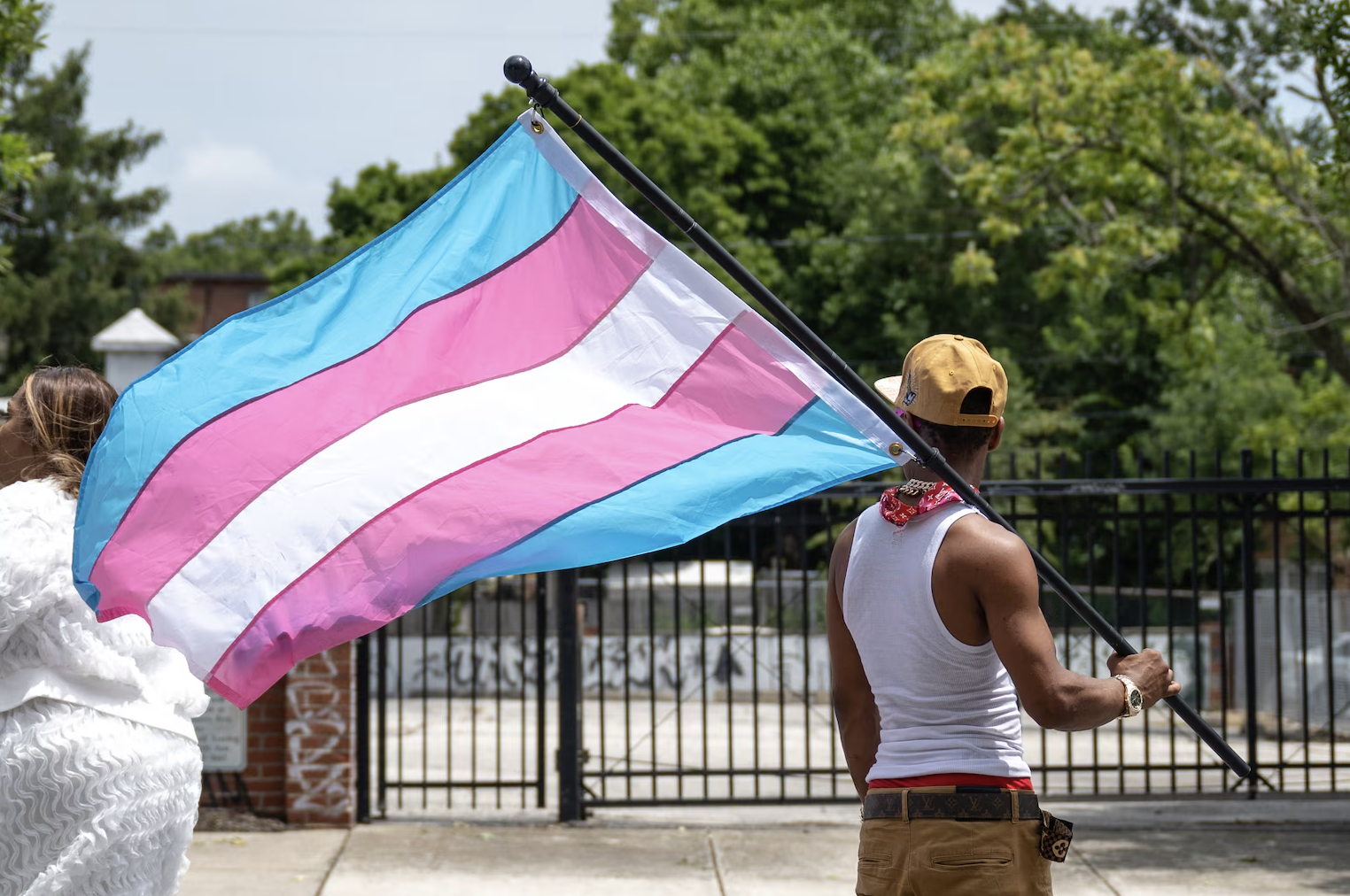
By JESSICA CALEFATI | Anne Arundel County Public Schools staff cannot use transgender students’ preferred names if their parents oppose it, according to an internal document reviewed by the Banner, a change that comes after conservative groups challenged the school system’s approach to gender identity.
Teachers union president Kristina Korona told members in an Aug. 20 email that the new guidance undermines district policy on acceptance and inclusivity and “will begin harming affected students immediately.”
Previously, the district didn’t require parental permission to use a high school student’s chosen name and pronouns corresponding to their gender identity, the internal document says. Now it does. The change comes as parents challenge the suburban school system’s gender identity policy and regulation in court and the Trump-Vance administration threatens the district’s funding.
The rest of this article can be found on the Baltimore Banner’s website.
Maryland
Girlfriends charged with Silver Spring murder to go on trial in 2027
Prosecutors charged both women with killing mother of one of them
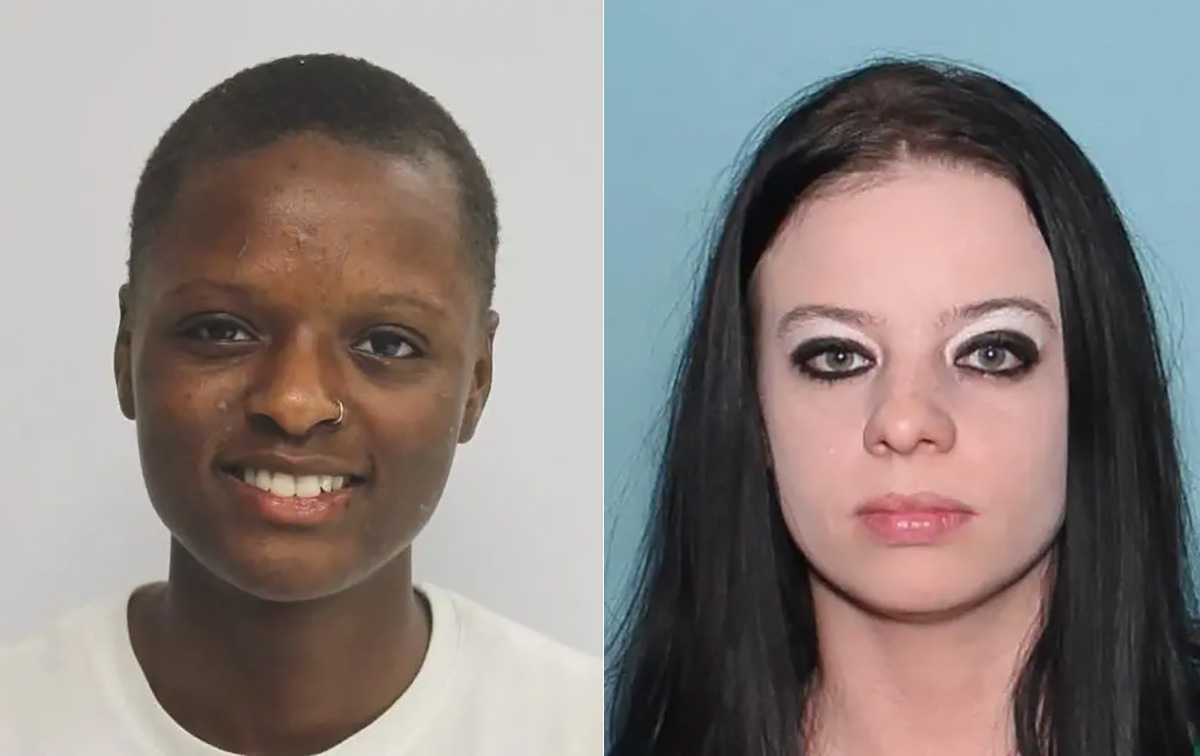
Two women identified as a couple who are charged with the May 22, 2026, murder of the mother one of them in her Silver Spring home and who were arrested three weeks later in Ohio are scheduled to go on trial for murder April 19, 2027.
According to online records filed with Montgomery County Circuit Court in Rockville, Vanessa Tjongarero-Henderson, 29, of Clarksburg, Md., and Samantha Raebel, 36, of Phoenix are being held without bond in the Montgomery County Correctional Facility until the time of their trial.
Statements from Montgomery County police show the two women were arrested June 10 in Genoa, Ohio, after fleeing from the scene of the murder in Silver Spring. Police statements and court records show they were extradited back to Maryland in July, where prosecutors with the Montgomery County State’s Attorney’s Office obtained indictments against them for murder.
Earlier statements from Montgomery County police say their investigation into the murder led to their decision to initially charge the two women with first-degree murder for the death of Hilde Henderson, 67, who was Tjongarero-Henderson’s mother.
“Through the course of the investigation, detectives identified Henderson’s daughter, Vanessa Tjongarero-Henderson, and Vanessa’s girlfriend, Raebel, as the suspects,” one of the police statements says. It says police obtained arrest warrants for both women and launched a nationwide search seeking help from the public in in locating them.
One of the police statements says an autopsy determined the cause of Hilde Henderson’s death was blunt-force trauma injuries brought about by a murder. Police and the State’s Attorney’s Office, which is prosecuting the case, have yet to disclose whether they have determined a motive for the murder.
Court records show that prior to the start of the April 19, 2027, trial a “motion” hearing was scheduled for Oct. 30, 2026, a pre-trail conference was scheduled for Feb. 12, 2027, and another motion hearing and a status hearing were scheduled for March 12, 2027.
Court records also show that Tjongarero-Henderson is being represented by attorneys with the Montgomery County court system’s public defender service. The records show that Raebel initially had been represented by a public defender service attorney, but updated records show Aug. 14 is listed as the “removal date” for that attorney.
The docket shows that on Aug. 20, two new attorneys with the prominent D.C. law firm of Covington & Burling made their official appearance as her attorneys in the murder case. One of them, Daniel Solomon, told the Washington Blade in response to an inquiry that the defense has no comment at this time on the case.
He confirmed that Covington & Burling is representing Raebel on a no-cost, pro bono bass.
The office of the Montgomery County public defender service didn’t immediately respond to a phone message from the Blade asking for a comment on the Tjongarero-Henderson case.

988 restores crisis services for LGBTQ youth

To school to homeschool to school again

Ryan Murphy’s ‘Monster’ vilifies the lesbian

The right to be an ordinary transgender man

LGBTQ community must vote in big numbers

PHOTOS: HRC National Dinner

What’s frightening is also funny in ‘Venus’

I’m 66, he’s 27. Is it love or am I being played?

The LGBTQ real estate map is being redrawn