Television
‘Fellow Travelers’ mixes queer love, politics for sexy history lesson
A relationship enduring across the years despite resistance and betrayal
In a time when every streaming platform is falling over itself to present the newest “must binge” series, the phrase “Event TV” really has no meaning.
Yet once upon a time – just a few decades ago, in fact, when three major networks and a handful of cable companies highlighted every season with “hot topic of the day” shows from “Roots” to “The Band Played On” – it was something television viewers expected, a standard part of the small-screen line-up that inevitably generated ratings and provided a cultural touchstone (or at least, a good topic of discussion in the break room at work) for millions of people. If that era were still going on today, “Fellow Travelers” would be a perfect fit for the category.
Adapted from Thomas Mallon’s 2007 novel of the same name, Showtime’s sweeping eight-episode historical romance, which premiered with its provocative first episode on Oct. 27, checks off all the necessary boxes to pique the zeitgeist of our time. Presenting a fictionalized-but-authentic narrative that weaves real-life history into an intensely intimate love story spanning decades, it touches on issues of hotbed importance to our modern world while spinning an irresistible tale of forbidden romance – tempered by hard reality – that both blends into and epitomizes the lived reality of a generation.
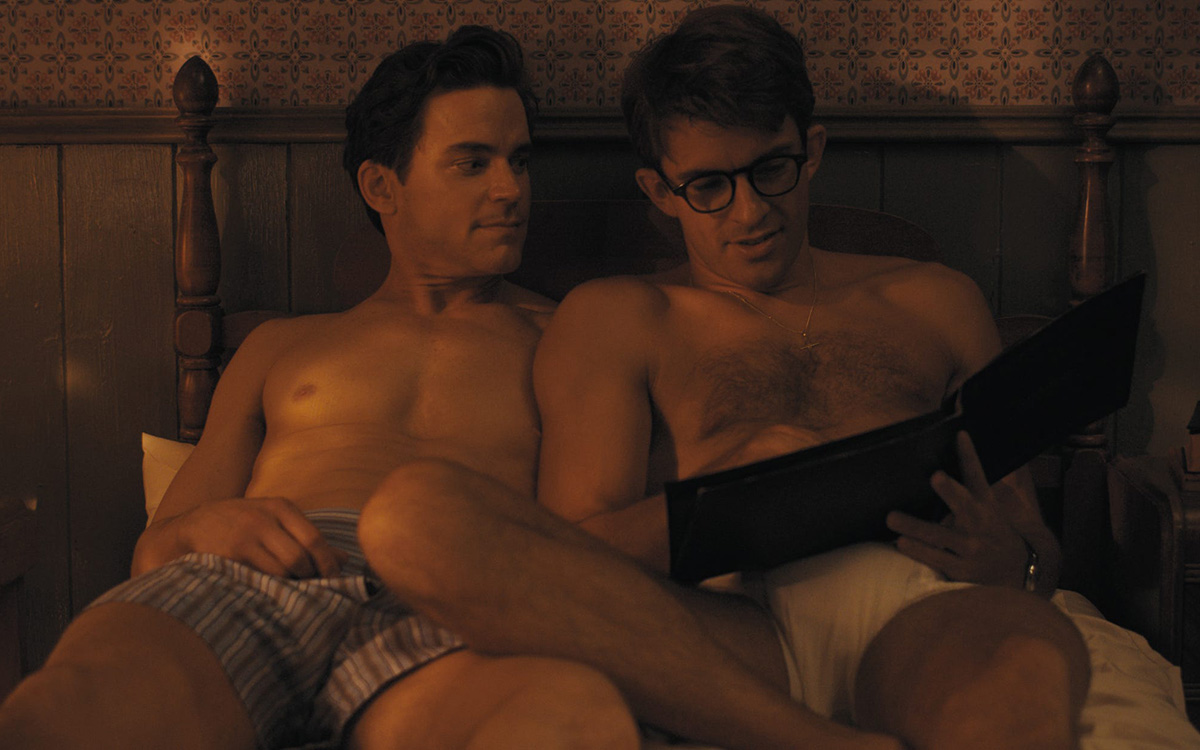
To cement its status as a show that is not to be missed, it casts gay heartthrobs Matt Bomer (“Magic Mike,” “The Normal Heart,” and any number of Ryan Murphy projects) and Jonathan Bailey (“Bridgerton”) as the star-crossed couple at its center, whose love plays out across a period of queer American political experience that spans from the deeply closeted pre-Stonewall era of 1950s America to the cultural trauma of the AIDS epidemic.
Simultaneously telling both the beginning and the end of its story, “Travelers” moves back and forth through time as it follows the love affair between two gay men – war hero turned government man Hawkins “Hawk” Fuller (Bomer) and political idealist Tim Laughlin (Bailey) – through three-and-a-half decades of American history. Juxtaposing the story of their increasingly enmeshed relationship – alongside that of a queer couple of color, a Black journalist (Jelani Alladin) and a gender-bending nightclub performer (Noah J. Ricketts) – with the years-later saga of their reconnection after a devastating betrayal has torn them apart, its dominant throughline is tied to the underreported (though irrefutably documented) history of homophobic discrimination by the U.S. government that began with the McCarthy “Red Scare” era purge of known-or-suspected homosexuals employed within government service. Perpetrated under excuse of the presumed security risk associated with anyone participating in a “deviant” lifestyle, it was a targeted propoganda campaign that would eventually culminate in the debacle of the nation’s indifference to AIDS and the rising death toll that was taking place in plain sight.
It’s not the first show to tackle this subject matter; America’s response to AIDS, and the deeply ingrained cultural homophobia that laid unabashedly behind it, has been explored so much that it has become almost a thematic trope. As to the topic of queer life in an environment where “passing” as straight is purely a matter of survival, it’s a subject as relevant to queer existence in much of the world today as it has ever been, which we’ve rightly seen reiterated time and again. But given the current push in American politics to erode the hard-won advancements of the LGBTQ community toward acceptance and equality, it’s hard to complain about a show that wants to explore it on our screens yet again.
Even so, it’s also hard not to go into “Fellow Travelers” without noting the common ground it shares with other dramatic narratives covering the same ground – especially, perhaps, playwright Tony Kushner’s seminal and now-iconic Pulitzer-winning “Angels in America,” with which it invites comparison by virtue of its inclusion of real-life poster boy for internalized homophobia Roy Cohn (played here by Will Brill) and its focus on closeted characters working within the U.S. political establishment – and wondering if it will have anything new or noteworthy to say.
Based solely on its first episode, you might be prodded toward even more skepticism; establishing itself with a broad strokes and a glossy tone, it feels a bit like an old-school tearjerker, evoking the Douglas Sirk-ish social melodramas of its (predominantly) vintage setting even as it moves from past to future and back again. It’s stylish, even lovely, but seems built on a distancing artifice. And its romantic leads, the characters to which we are supposed to attach ourselves, might be hard to swallow – for some viewers, at least – simply because they are gay men seemingly content to live their real lives under cover while working for a governmental system that facilitates their oppression. To put it simply, it all feels a little too “Hollywood.”
Yet despite this, or perhaps because of it, the show draws us in. Though at first we might think it tends toward the shallow, drawing on familiar formulas and offering up two thinly drawn protagonists in hopes we’ll accept them simply because they are played by a pair of impossibly handsome leading men, the ideas it presents are important and the history it documents illuminates a past that has remained obscured for far too long, so we’re willing to jump on board. Besides, those leading men are not only very handsome, they have a winning chemistry together, and the authenticity of the casting pays off by delivering a queer screen couple that feels genuine – and that’s not just because of their unapologetically sexy love scenes. Even if their story doesn’t quite make sense to us yet, we want to see more of them.
That’s a very good thing, because as the series moves along, the tone changes drastically. Though the world of episode one is full of blithe denial and resignation to a status quo that might make our hindsight bristle, it’s a world that quickly changes as things progress, a point driven home by the show’s time-jumping framework. The oppression gets worse, the danger gets real, and the effect those things have on the lives of these two men – one a seemingly amoral pragmatist who has accepted and embraced a closeted life as a condition for success and the other a passionate “true believer” naïve enough to fall under the spell of a right-wing political ideology – has an impact. They change, they make choices and suffer consequences; in other words, they deepen, and as they do, the show does too.
That’s because show creator Ron Nyswaner, despite making some changes from the novel, understood the throughline at its core and held tight to it in building the series. Ultimately, “Fellow Travelers” is not a story about politics, or social causes, or any of the other weighty issues that shape its trajectory. It’s a story about love, enduring across the years despite resistance, opposition, and betrayal; whether it ends happily or not – and you won’t get any spoilers here – it is lived passionately. Because of that, we care, and because we care, those big ideas land even more soundly.




Television
Engrossing ‘Tip Toe’ delivers tension and an ominous warning
A chilling reminder that violent homophobia is on the rise

Whenever a new project comes from queer Welsh screenwriter and producer Russell T Davies – who created the original “Queer As Folk” in 1999 before spearheading the revival of the classic BBC sci-fi series “Dr. Who” as head writer and showrunner in the mid-2000s – it generally leaps to the top of every queer “must watch” list, and with good reason.
A genuinely versatile creative force who can move easily between genres without losing the core of humanity that keeps us engaged, he’s particularly known for his unequivocal, unsentimental, and always fearlessly candid narratives about queer life, set within a social context that’s barely tolerant, at best. He has a knack for capturing both the transient beauty and persistent hardships that seem to define our beleaguered community. His most recent such endeavor, 2021’s “It’s a Sin,” took us back to the harrowing years of the AIDS epidemic, following a group of gay young Londoners as the disease – and the societal homophobia that surrounded it – wreaked its merciless havoc, even as they began to break free from their closets and embrace their queer identities; and while it may have broken our hearts, it was also somehow empowering, a tale that reminded us not just of what we lost, but of what we have survived.
His latest miniseries, however, takes place in the here and now, and it offers a markedly bleaker assessment of the state of things.
“Tip Toe,” which appeared on the UK’s Channel 4 last summer, debuts on U.S. screens via the Starz streaming service on Oct. 2, and it lets us know from its first few minutes that things are not going to end well; that’s not a spoiler – it’s a warning, because if you’re looking for a happy ending, you’re not going to find it here.
A tale of resurgent and emboldened homophobia in a modern-day Britain where open hate for the queer community has surged at an alarming rate, it’s the story of two men whose intertwining destinies feel almost like a tragic accident of fate. Leo (Alan Cumming) is a Gen-X AIDS survivor who has become a beloved figure in Manchester’s queer community, the owner of a popular gay bar that has always been a safe space for the queer, trans, and questioning souls who are struggling toward self-acceptance; his next-door neighbor, Clive (David Morrissey), is a working-class electrician with a floundering marriage and two sons who live secret lives he knows nothing about. He’s an old-school “macho man” whose ingrained misogyny and homophobia have grown increasingly unfiltered with the rise of online “culture war” rhetoric; and while there’s a kind of forced “neighborly” friendship between himself and Leo, there’s also a clear-cut line of judgement – on both sides – that gives their interactions a sense of barely concealed hostility.
When Leo is locked out of his apartment after a messy hook-up gone wrong, Clive comes to his rescue, but uses the opportunity to impose himself on Leo’s privacy. He levies the situation into an opportunity for work – an electrical revamp of Leo’s bar, where he makes no secret of his disdain for the queer “lifestyle” – and the tension between them continues to build despite Leo’s best efforts at being polite. The escalation reaches a boiling point when the secrets and lies in his own household lead Clive to suspect Leo of being a sexual predator, turning their precarious relationship into a minefield of hostility and inevitably pushing both men into a confrontation that will end in a shocking act of violence.
It might go without saying that “Tip Toe” is not the kind of show most of us would watch “for fun.” Russell’s script starts the relationship between its two antagonists at the threshold between a simmer and a boil, and shows us the outcome before either of them has even said a word, so it’s mostly impossible to avoid the sense of dread that hangs over everything that comes after. This is not a weakness; instead, aided by Peter Hoar’s masterful direction, it gives the show’s five episodes a slow build of tension that keeps us watching with morbid fascination, like the scene of a horrible road accident we’re forced to drive past in slow motion. We’re allowed to feel some hope along the way – after all, we’ve only had a glimpse of what is to happen, and there are other characters with storylines in which we can become invested along the way – but it’s a kind of grim hope, and it perfectly captures the fearful cultural zeitgeist-of-the-moment that the series is ultimately about.
The characters, too, are richly drawn and layered enough to avoid a simplistic “good guy/bad guy” dynamic. Clive is a brute – arrogant, uncivil, and forcefully antagonistic with a hair trigger that responds to anything or anyone that doesn’t meet his approval – but there’s enough broken humanity underneath all that to allow us to see a glimmer of potential for redemption. Likewise, Leo is mostly good-natured and likable, but he has an arrogance of his own, as well as some bitter resentments (most of them related to his ex-husband Curtis played by Charlie Condou), who left him for a woman), which – more than occasionally – surface to provide him with some ugly moments.
There are others, too; Melba (Paul Rhys), Leo’s gender-bending longtime bestie, who sees the growing danger in the world around them and voices it with the resigned stoicism of a reluctant Cassandra; Steph (Elizabeth Barrington), Leo’s straight friend who is not afraid to let him know when he’s too full of himself; Saul (Joseph Evans), Clive’s 20-something son who has evolved a more tolerant and easy-going outlook than his father, and teenaged George (Jackson Connor), Clive’s other son, whose struggles with his own identity take him on a roller-coaster ride of conflicted emotions; Marie (Pookie Quesnel), the wife who despises Clive but is unable to escape her unhappy existence with him; and Zee (Iz Hekseth), Leo’s employee who is trying to choose a name for herself after coming out as trans – along with a variety of other young, queer supporting players who have found refuge at the bar. All of them are written with depth and nuance, even those who remain more or less in the background, and brought to life through excellent, measured performances.
It is, however, Cumming and Morrissey who give the show its irresistible pull, their complex, bristling characters endowed with a palpable authenticity that makes us forget they are merely actors playing roles. They fully inhabit these two thorny men, creating a dynamic between them that feels like a force of nature, and it’s they who provide the terrible power that keeps us from looking away, no matter how much we might occasionally want to.
That’s a good thing, because “Tip Toe” is less a television event than it is a grim reminder that being “out” may no longer be as safe as we were finally beginning to think it was – and just because the alarm bell is coming from the UK, that doesn’t mean we shouldn’t heed its warning on our side of the Atlantic, too.
Television
All the queer things to watch this fall
Andrew Scott, a new ‘Traitors,’ and plenty of horror
The fall season is barely upon us, and already the “must-see” queer movies and shows are leaping out of the gate. The next two months offer a hearty lineup of big screen and streaming options, with something for every taste. Whether you’re a fan of prestige drama, campy horror, “reality” TV, or just a fan of culturally relevant entertainment in general, you’ll definitely find some titles to pick from in our annual rundown below; and if you don’t want to choose, don’t worry: We won’t judge you if you watch them all.
Monster: The Lizzie Borden Story (Netflix, 9/17) Ryan Murphy starts the countdown to Halloween a little early with a new installment of his always-disturbing (but oh-so-entertaining) anthology series about notorious real-life murderers, and this time he takes us back to one of the most notorious of all. Ella Beatty plays the legendary 19th-century woman who (allegedly) “took an axe” and whacked her mother and father to death with it. Lesbian rumors have long been part of the subtext around the case, so expect a focus there — especially given that it’s the series’ first time centered on a woman, and that show creator Ian Brennan includes side-trips into the stories of famous sapphic serial killers both before and after Lizzie’s day. Vicky Krieps, Charlie Hunnam, Jessica Barden, Billie Lourd, and Sarah Paulson also star.
The Traitors: New Blood (NBC/Peacock, 9/17) The popular reality competition show, in which actor (and queer icon) Alan Cumming presides over a cutthroat game of intrigue and elimination in a Scottish castle, makes its return – but this time, in a new iteration that features non-celebrity contestants, Otherwise, it promises to offer more of the same delicious deception and Machiavellian manipulation that fans have come to love.
Black Church Bay (Theaters, 9/25) “Heartstopper” star Joe Locke is set to make a splash on the big screen opposite Tom Cullen in this brooding mystery thriller as a gay student whose disappearance stirs up long-buried secrets in a small Welsh coastal village. First-time writer/director Rhys Marc Jones says it “explores the lengths some people will go to in order to hide their true self,” so be ready for a dark tale of secrets and lies.
American Horror Story: 13 (FX/Hulu, 9/25) Ryan Murphy is ready, as usual, to hit the fall season with a “one-two” punch, and the second punch is the 13th season of his venerable, campy, and extremely queer horror anthology, which brings back beloved alumni from seasons past (yes, even Jessica Lange) in the roles they originally played. Since a good number of those characters were dead the last we knew of them, seeing how the show manages to bring them all back is itself enough reason to make this landmark installment – which also features Sarah Paulson, Angela Bassett, Kathy Bates, Evan Peters, Emma Roberts, Billie Lourd, and even the Pope of Trash, John Waters himself – required viewing for a whole legion of queer pop culturistas with a taste for the macabre.
East of Eden (Netflix, 10/1) Fans of the late bisexual heartthrob James Dean clearly remember the 1955 film version of John Steinbeck’s classic novel, but that movie only told the second half of the story. This new limited series adaptation (from Zoe Kazan, granddaughter of Elia Kazan, director of the original film) takes advantage of a seven-episode running time to take on the entire novel from the beginning. The saga of a broken family in the Salinas Valley, it sprawls over the first two decades of the 20th century to document the struggles of a wealthy landowner whose wife abandons him to become a brothel madam after giving birth to his twin sons; following the boys as they grow up and apart, it mirrors the Biblical story of Cain and Abel, exploring the dynamics of a family haunted by the shadow of an “original sin” – and whether or not they are doomed to be defined by it. No directly queer content here, perhaps, but the direct family tie to a cinema classic (plus the presence of queer fan favorite Florence Pugh as Cathy, the story’s fabulously monstrous mother) gives it an appeal that feels like must-see TV, anyway.
Tip Toe (STARZ, 10/2) This taut UK miniseries from “Queer As Folk” creator Russell T. Davies has already been a critically lauded sensation in its home country, making its U.S. premiere an event worth putting on your calendar. Alan Cumming stars as a gay bar owner who is forced to face the shifting cultural tide when online homophobia begins to turn his once-friendly neighbor (David Morrissey) into a deadly enemy. A grim psychological thriller for an increasingly unsettling time, it’s bound to strike a chord with queer viewers who remember an era when “the closet” was the safest place to be – and with those who fear its return.
Street Fighter (Theaters, 10/6) It might seem as if a movie based on a 1980s video game would have limited appeal for anyone that isn’t a Gen-X “gaymer” who remembers when it cost 25 cents a pop to be one – but this reboot of the film franchise that sprung from it in 1994 is also the screen debut of gay country-western heartthrob Orville Peck, who appropriately takes on the role of Vega, a fighter who always wears his mask. It also stars Noah Centineo, David Dastmalchian, and Jason Momoa, among others.
Carrie (Prime Video, 10/7) Horror fans may have mixed feelings about this new eight-part miniseries based on Stephen King’s much-adored seminal novel, given that the popular 1976 film adaption has endured as the definitive version – something that proved a factor when filmmaker Kimberly Pierce’s 2013 remake failed to win over fans. Even so, this retelling (featuring Summer H. Howell as the troubled teen title character and Samantha Soyen as her overbearing and increasingly unhinged mom) comes from horror maestro Mike Flanagan (“Oculus,” “The Haunting of Hill House,” “Midnight Mass,” “Dr. Sleep”), who has already proven himself as a director of King’s work and comes to the project with a considerable fanbase of his own. Either way, given its release less than a month before Halloween, we know all you horror fans – queer and otherwise – will be binge-watching it honor of the holiday.
It Gets Worse (UK Channel 4, 10/14) American audiences might have to wait a few months – unless they have access to Britain’s “public access” network Channel 4 – but we’re putting it on our list anyway, mostly because of the presence of premier gay thespian Andrew Scott, whose role as a therapist has already sparked frenzy over a line in the trailer about his patient being “just a hole for daddy.” Consider all of us intrigued, to say the least.
Sense and Sensibility (Theaters, 10/16) The material itself may not be particularly queer, but this new screen adaptation of the classic Jane Austen novel – like anything related to Jane Austen – has queer appeal, anyway. That’s especially true when it comes from lesbian filmmaker Georgia Oakley (“Blue Jean”), who will surely highlight all the reasons why Austen (or any other source for this kind of lush period costume romance) has queer appeal, no matter what. Stars include Daisy Edgar-Jones, Catriona Balfe, George MacKay, and Fiona Shaw.
Klara and the Sun (Theaters, 10/23) Adapted from the 2021 novel by Kazuo Ishiguro, this dystopian fantasy from New Zealand filmmaker Taika Waititi (“What We Do in the Shadows,” “JoJo Rabbit”) may not be directly queer-centric, but its story of an “artificial friend” (Jenna Ortega of “Wednesday” fame) who strives to save the sickly child for whom she has been purchased will surely resonate with queer audiences, evoking themes of otherness, societal disconnection, and simple empathy that transcends the imposed boundaries of what it means to be a conscious being in a world to which you can never truly belong. Amy Adams, Steve Buscemi, and Natasha Lyonne also star.
Club Kid (Theaters, 11/6) A new big-screen offering from gay actor/creator/personality Jordan Firstman (“Rotting in the Sun,” “The English Teacher”), who makes his feature directing debut with this comedy-drama about a washed-up party promoter whose career woes suddenly take a back seat when he is charged with the care of a 10-year-old son (Reggie Absolom) he never knew he had. This one premiered in the “Un Certain Regard” session at this year’s Cannes Film Festival, where it received a glowing response, and has won praise for its candid and non-judgmental depiction of underground queer nightlife and the people who find community there. Also starring Cara Delevingne, Kirby Howell-Baptiste, Colleen Camp, Vicki Pepperdine, Nigil Whyte, Eldar Isgandarov, Saturn Risin9, Miss Benny, Alaska Riley, and Diego Calva.
Yellowjackets, Season 4 (Showtime, 11/22) The fourth (and final) season of this acclaimed Ashley Lyle/Bart Nickerson-created series (the second-most-streamed in Showtime’s history) is on its way into your living rooms, bringing to a close its tangled saga of a group of teen girls forced to survive in the wilderness after a plane crash, and their struggle to repair their damaged lives as adults 25 years later. It’s been a tale full of mysteries, secrets, shocks, and twists, so if you’re a fan, you’re probably eager to get some answers – but don’t be surprised if this devilish show throws a few more curves your way before it finally delivers them! Melanie Lynskey, Tawny Cypress, Christina Ricci, Sophie Nélisse, Jasmin Savoy Brown, Sophie Thatcher. Sammi Hanratty, and Warren Kole all return, with Hillary Swank, Elijah Wood, June Squibb, and Molly Ringwald along for the ride in recurring roles.
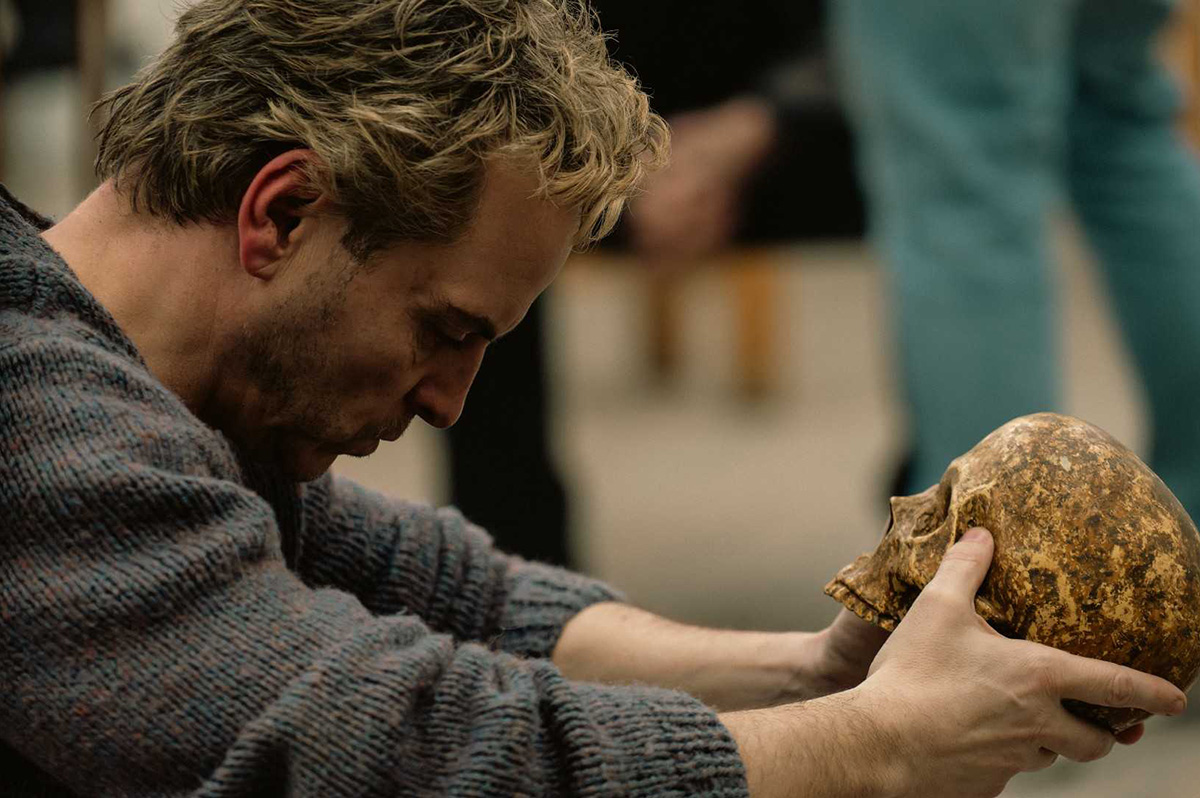
Elsinore (Theaters, 11/20) Andrew Scott reappears on our list as the star of what seems to be the most-anticipated movie of the season, a biographical drama about the last days of gay British actor Ian Charleson (“Chariots of Fire”), as he prepares for the lead role in a National Theatre production of “Hamlet” while secretly dying of AIDS. Scott’s performance as Charleson has been showered with raves, and so has that of Olivia Colman as the doctor who helps him get through the ordeal of rehearsing theater’s most demanding role while suffering from the symptoms of his disease. Director Simon Stone collaborated closely with both Scott and screenwriter Stephen Beresford in developing what was for them a deeply personal project, which explores the challenges of being queer but closeted in the public eye while emphasizing the ability of art and self-expression to empower us “against the slings and arrows of outrageous fortune” even unto the very end. Yes, it sounds like a downer, but the reports from those who saw its premiere at the Telluride Film Festival earlier this month assure us otherwise. The ensemble supporting cast includes Billie Piper, Johnny Flynn, Juliet Stevenson, Joe Locke, Peter Mullan, Georgie Glen, and David Dawson as pioneering queer filmmaker Derek Jarman, a friend of Charleson’s who was also lost to AIDS.
Television
‘Vampire Lestat’ heats up Pride month with queer action
Latest Anne Rice adaptation poised to be your next TV obsession
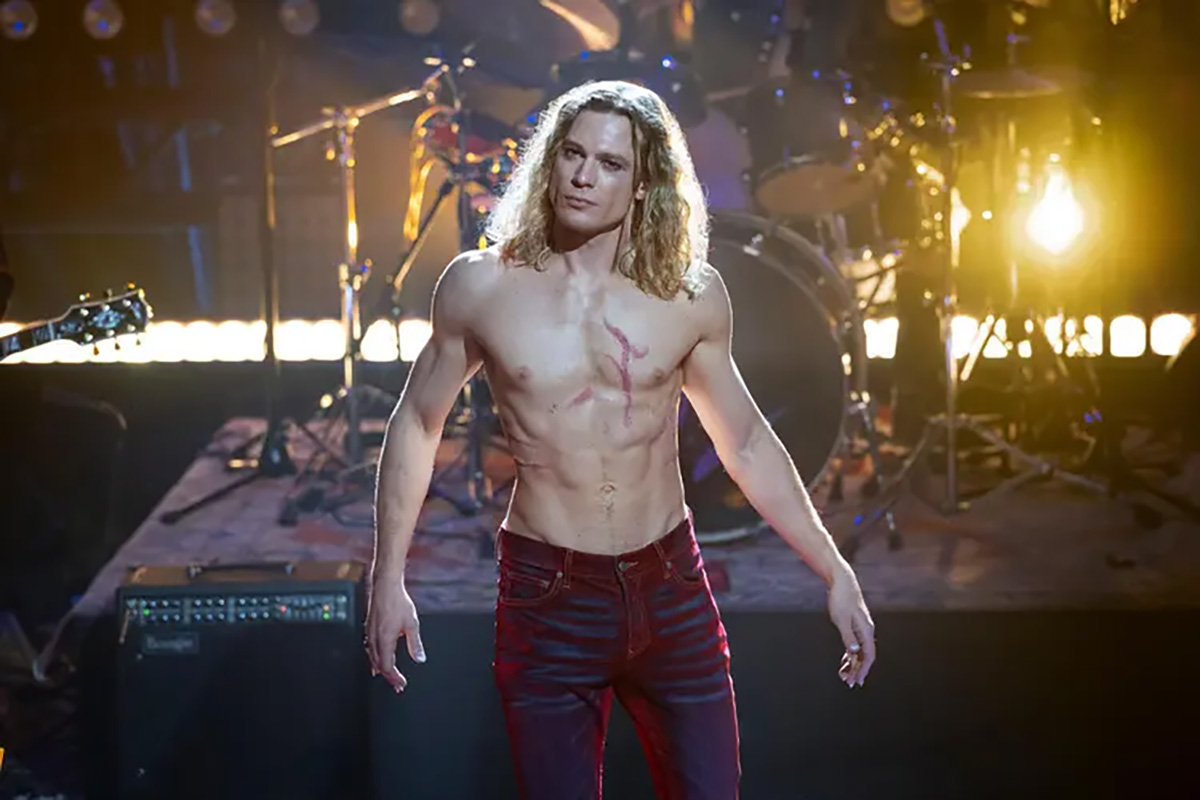
Whether you’re mourning the end of Euphoria, The Boys, or Hacks, you’re dying for another hit of Heated Rivalry or just need something new to watch, The Vampire Lestat has you covered. Whether it’s the cutting witty dialogue, supernatural action, or the maudlin adventures of problematic queer relationships, this is the show for you. This new season brings literal sex, drugs, and rock-n-roll as Lestat (Sam Reid), a multi-centennial vampire, decides to process his beef with his sexy ex Louis (Jacob Anderson) for giving the Interview With The Vampire by starting a rock band.
In 1976, Anne Rice wrote a book to process the death of her young daughter. It was the story of two vampire “roommates” and their centuries-long relationship drama. What followed was a series of 13 books and a whole world filled with vampires, witches, and more. This launched the 1994 film where Brad Pitt, Antonio Banderas, and Tom Cruise played “totally not gay” vampires who almost kissed a few times, despite having all of the hottest actors of the era, it was sanitized of all queer subplots. R&B diva Aaliyah’s last role was as Akasha, the eponymous Queen of the Damned (2002), the unoffical follow up to the first film covering Rice’s second and third book.
The AMC series version of Interview with the Vampire took all this source material and made it more gay, more current, and more PC. They shifted the story to the present day, having Louis live in a luxurious Dubai compound, and his interviewer, Daniel Molloy (Eric Bogosian), being a former addict hawking his masterclass, armed with a ton of evidence. The choice to race-swap Louis from a misanthropic emo plantation owner to a black brothel owner in New Orleans adds so much more nuance, history and richness to his character. Exploring the abusive nature of the relationship and casting the amazing Delainey Hayles as Claudia have all elevated the story to your next television obsession. The choice to turn the book into two seasons allowed the creators to take their time, play with storytelling and explore Louis as an unreliable narrator and tease at many of the storylines of later books. This was a smart choice considering these characters are all centuries old, and over the course of 13 books, all have complex backstories and inner worlds.
Sam Reid was always a standout and captured the egomania and charm of Lestat, the self-proclaimed Brat Prince. He gets to play an over-the-top bitch about everything we’ve seen and heard in Seasons 1 and 2, while even skewering the world of today, commenting on the state of fame, life, and politics.
Like in the book, he reclaims the narrative as he takes the helm of the story. Rather than write his own book, he’s nabbed the newly vamped-up Daniel Molloy as his documentarian. Also, without giving too much away, this series begins in an unnamed future. Armand (Assad Zaman) and Louis are still as hot as ever, and they’re at an auction for the complete works of the Vampire Lestat. It’s teased that some sort of world-altering event has transpired, and Lestat is missing in action. Could that be the events of The Queen of the Damned or even the sum of all of the books? Only time will tell.
The worldbuilding is really solid as we get to see the past, present and future of these characters. Prime example, Akasha, The Queen of the Damned, was name-checked in earlier seasons. Whether you’re a fan of the original source material or not, this series has something for everyone. It has action, including an epic vampire fight scene in the premiere. It has a complex world and mysteries that unfold over the course of each season. Plus, it has hotties of all genders with Reid, Anderson and Zaman holding it down from earlier seasons. Schitt’s Creek dreamboat Noah Reid joins the cast as Lestat’s band’s frontman.
The show has everything: sex, violence, drama, all with a queer and racially inclusive lens. It doesn’t pull punches in storytelling and examining history, all while maintaining a level of levity and fun. It unfolds with dramatic soap operatic reveals and confrontations while also grounding all of the fantasy in our world.
The series is poised to continue with the same characters from the first two seasons while shifting the focus to allow in a new cast of characters who will play out the events of multiple books and major arcs that are part of AMC’s new Anne Rice cinematic universe.
The series airs on AMC Plus, while the first two seasons are available on Netflix. A note to people streaming it may appear on Season 2, as the series name change might be confusing for those who haven’t seen the show.

PHOTOS: Miss Gay Maryland America

Ahead of the midterms, Meta has paid at least 29 anti-LGBTQ accounts for their posts

Acclaimed U.S. Justice Dept. attorney William Corcoran dies at 83

JD Vance suggests James Talarico is gay during Texas rally

Hungarian lawmakers approve bill to remove anti-LGBTQ provisions from ‘child protection’ law

Physician: addiction doesn’t always look the way you think it does

Solidarity beyond the parade: the actual cost of Pride

Essential queer horror classics for Halloween

Center for Black Equity honors leaders, activists at BE. Gala

In ‘The Lost Brontë,’ a complicated lie can lead to danger
-

 District of Columbia5 days ago
Physician: addiction doesn’t always look the way you think it does
-
Opinions4 days ago
Solidarity beyond the parade: the actual cost of Pride
-
Movies4 days ago
Essential queer horror classics for Halloween
-
Photos3 days ago
Center for Black Equity honors leaders, activists at BE. Gala