Maryland
Gay former College Park mayor sentenced to 30 years in child porn case
Family, friends testify at emotional sentencing hearing in P.G. County
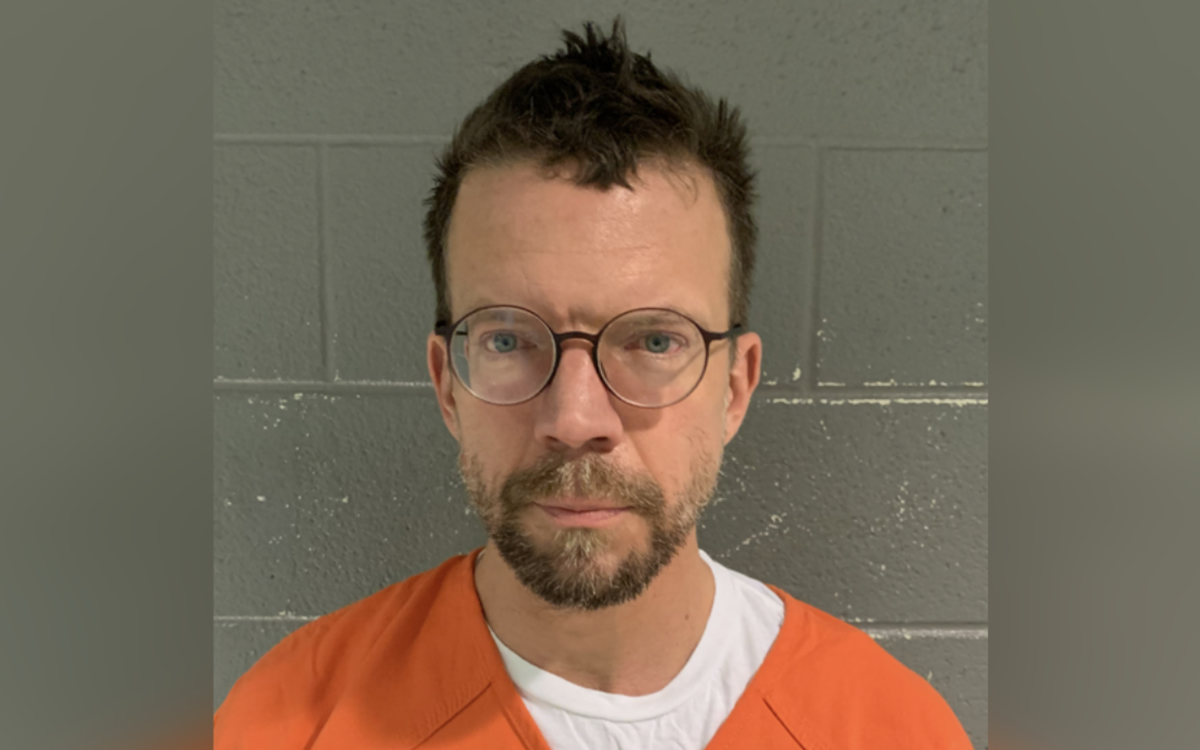
A Prince George’s County Circuit Court judge on Monday, Nov. 20, sentenced gay former College Park Mayor Patrick Wojahn to 30 years of incarceration at an emotional three-and-a-half-hour long sentencing hearing that took place more than three months after Wojahn pleaded guilty to 140 counts of child pornography-related charges as part of a plea agreement with prosecutors.
In agreeing to carry out the plea agreement, Judge Karen Mason sentenced Wojahn to 150 years in prison, with 120 years suspended, requiring that he serve 30 years.
The judge and prosecutors pointed out that under Maryland’s sentencing rules Wojahn will be eligible to apply for release on parole after serving 25 percent of the 30-year sentence, which could result in his release after seven and a half years.
The sentencing followed news that surfaced in March of this year, which shocked Wojahn’s friends and longtime political supporters, that he had been arrested after police raided his College Park home and confiscated multiple cell phones, a tablet, computer, and a storage device containing video and still images, leading to two indictments alleging possession and distribution of child pornography.
The 140 counts to which he pleaded guilty include 60 counts of distribution of child porn, 40 counts of possession of child porn, and 40 counts of possession of child pornography with intent to distribute it.
He announced his resignation as mayor, a position he held since 2015, shortly before his arrest.
Wojahn’s husband, mother, sister, and 13 friends testified at the sentencing hearing. Most told the judge they understood the seriousness of the charges against their loved one and friend but called on the judge to take into consideration the good that Wojahn has done as a family member, friend, and elected official over his lifetime. Several of the friends said mental health issues and an addiction problem had played a role in Wojahn’s actions and urged the judge to arrange for him to receive mental health related services.
Among those who testified were Sister Jeannine Gramick, a Roman Catholic nun who co-founded the LGBT Catholic support organization New Ways Ministry, and Francis DeBernardo, the current executive director of New Ways Ministry. Also testifying was Thomas Bower, an official with the LGBT Catholic organization Dignity Washington, of which Wojahn has been a participant.
Judge Mason said she would refer Wojahn, who has been held without bond since the time of his arrest in March of this year, to the Patuxent Institution, a maximum-security correctional facility located in Jessup, Md., that specializes in providing mental health services for its male and female inmates.
Mason also included in her sentencing a requirement that Wojahn serve five years of supervised probation upon his release from incarceration, register as a sex offender, and have no unsupervised contact with minors.
The testimony from family members and friends came after P.G. County Assistant State’s Attorneys Jessica Garth and Monica Meyers argued that those who possess and distribute child pornography are responsible for the suffering of victims of child sex abuse who are forced to take part in the production of child porn video and still images, even though, as in Wojahn’s case, the perpetrators do not produce the images and don’t directly come into contact with the children depicted in the images.
Police and prosecutors have alleged in charging documents that Wojahn had uploaded and/or shared dozens of videos or still images on the social media app Kik depicting explicit sexual acts between adult men and prepubescent boys, depicting prepubescent boys engaging in sex with each other, or engaging in masturbation.
In a development that surprised some attending the sentencing hearing, the two prosecutors disclosed that with the help of law enforcement officials and the National Center for Missing and Exploited Children, they identified 52 of the juveniles who were depicted in the video or still photo images that police had confiscated from Wojahn’s home. At a press conference following the sentencing hearing, prosecutor Meyers said the 52 then children who were identified, most of whom are now adults, were from the U.S., Canada, Mexico, and several European countries, including Germany, Russia, Portugal, and the United Kingdom.
Through information obtained from law enforcement officials in the U.S. and internationally, the two P.G. County prosecutors said they obtained statements from or case reports for about 42 of the individuals listed as victims and presented those statements at the sentencing hearing by projecting them on two large screens in the courtroom. Meyers read each of the statements as they were projected, with most of the victims saying they suffered long-lasting harmful effects from being forced as children to take part in the production of pornographic images.
Meyers said while prosecutors presented victim impact statements for about 40 of the juveniles who were identified in the porn videos and still images, Wojahn had possession and helped to distribute images of “hundreds more on his devices” who were not identified.
In an effort to highlight the large numbers of sexually abused juveniles in the videos or still images in Wojahn’s possession, Meyers pointed to a photo that the prosecutors displayed on the large video screen in the courtroom during Monday’s sentencing hearing of a junior high school in College Park located near where Wojahn lived.
“That his own elementary school a half a mile from his house has less than 500 students who attended, he had more victims than that on his telephone,” Meyers said at the press conference. “And on his device, he had memorialized more than 500 victims who were sexually abused, raped, and tortured,” she said.
“These are not victimless crimes, even though the victim is separated from the person who’s abusing them by a computer screen,” Assistant State’s Attorney Garth said at the press conference. “They are real people. They experience real damage, psychological and physical damage,” she said. “And they have to live with what happened to them for the rest of their lives.”
P.G. County State’s Attorney Aisha Braveboy, who called the press conference, thanked the team of prosecutors and police investigators who worked on the Wojahn case.
“No child deserves to be sexually abused,” Braveboy said. “No child deserves their images to be displayed on the internet or any platform for hundreds of thousands and possibly millions of people to view,” she said. “And so, in accepting this plea agreement, we are satisfied that Mayor Wojahn understood the seriousness of his actions and wanted to take responsibility.”
Wojahn, who was dressed in an orange prison jumpsuit, was the last to speak at the hearing before Mason issued her sentence. Due to the fact that Wojahn and many of the others who spoke at the hearing were not using microphones, much of what was said could not be heard clearly.
“I want to give an apology,” he could be heard saying. “I don’t know what happened. I can’t explain what changed me,” he continued, weeping while speaking. “I want to apologize to all my friends. I apologize to my family,” he said. He then turned to look at his husband, Dave Kolesar, and expressed his love for his husband. Both were crying as Wojahn spoke.
“I hope what I went through will help others who need help, get help,” he said. “I do hope I will be able to recover fully myself. I hope others will know recovery is possible.”
Wojahn’s attorney, David Moyse, pointed out that Wojahn had cooperated fully with the investigation into his actions as soon as P.G. County police entered his house with a search warrant in March. Much of what Moyse said couldn’t be heard due to the faulty sound system in the courtroom, but he urged the judge to take into consideration all the positive aspects of Wojahn’s life.




Maryland
Baltimore Heritage wants Md. LGBTQ historical sites added to National Registry
Mary Elizabeth Garrett’s Mount Vernon home among historical sites
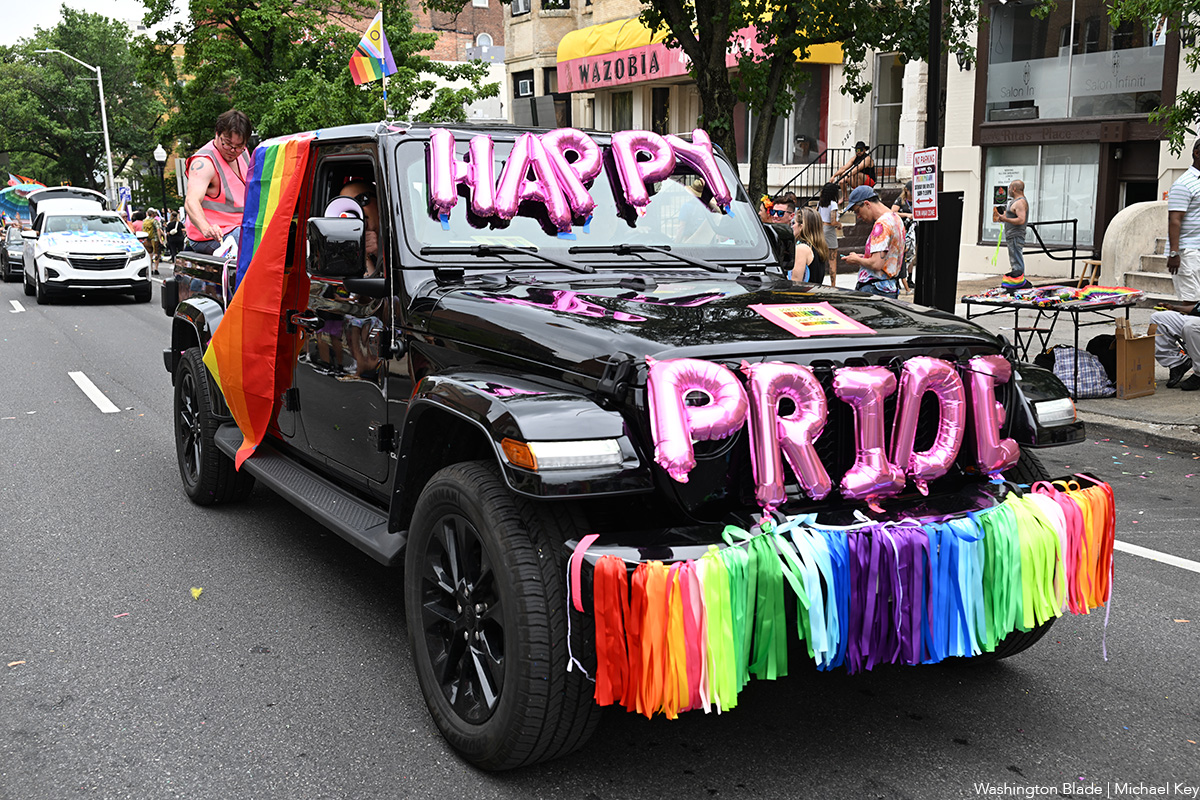
Baltimore Heritage is continuing its mission to preserve Maryland’s LGBTQ history.
The group, using documentation, is attempting to get statewide LGBTQ historical sites listed on the National Registry of Historic Places. Kentucky was the first state to make this effort, using a similar study to Maryland, which outlined a comprehensive list of LGBTQ heritage sites.
Baltimore Heritage, a local non-profit, 15 years ago began its efforts to promote LGBTQ heritage within the local community, mainly with walking tours to sites important to LGBTQ history. Preservation Maryland in 2018 received a grant, and Susan Ferentinos spent two years compiling a comprehensive list of LGBTQ historical sites, later published in 2022.
Suffragist Mary Elizabeth Garrett’s Mount Vernon home is one of the examples of the LGBTQ historical sites.
Although Garrett never labeled herself, she was involved in same-sex relationships, was a leader in the feminist movement, and played a large role in advancing education for women.
Although the effort has been ongoing, Baltimore Heritage Executive Director Johns Hopkins explained that Baltimore Heritage and its partners’ goal is to add Maryland to the public conversation on LGBTQ history.
“Bringing a little bit of a spotlight to some of the sites that are important, locally and nationally, would be meeting a goal of trying to have a broader, more in-depth public discussion around LGBTQ history, so we all know where we’re coming from,” said Hopkins.
Maryland
Evan Glass is leaning on his record. Is that enough for Montgomery County’s top job?
Gay county executive candidate pushing for equitable pay, safer streets, and cleaner environment
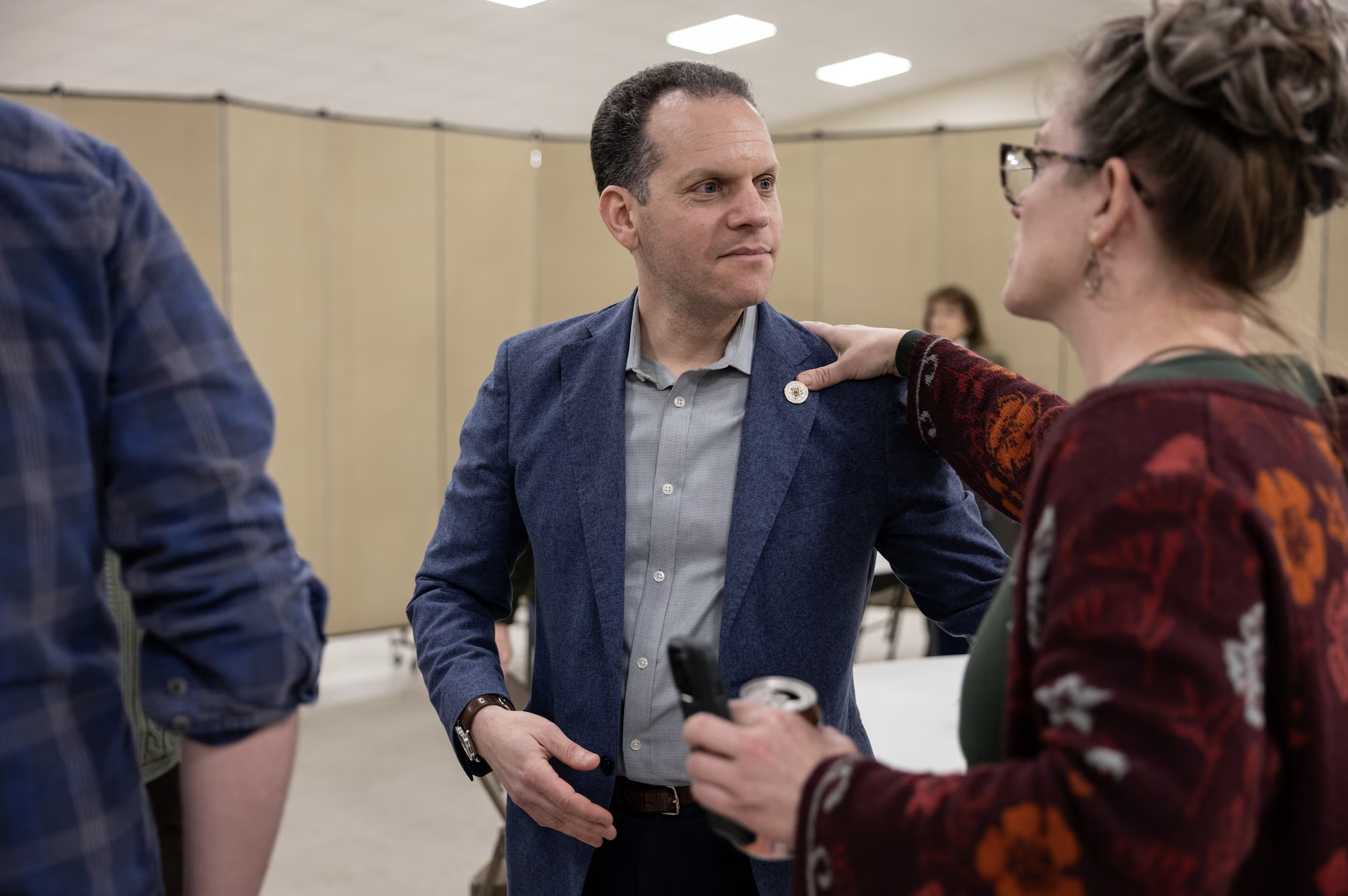
By TALIA RICHMAN | During a meet-and-greet at Poolesville Memorial United Methodist Church, Evan Glass got his loudest applause of the night with a plan he acknowledged was decidedly unsexy.
“Day one, I’ll hire a director of permitting services,” the county executive candidate said.
Doing so, he added, is a step toward easing the regulatory burdens that can stifle small businesses in Montgomery County.
The only problem? At least one of his fiercest competitors is making a similar pledge.
The rest of this article can be read on the Baltimore Banner’s website.
Maryland
Supreme Court ruling against conversion therapy bans could affect Md. law
Then-Gov. Larry Hogan signed statute in 2018
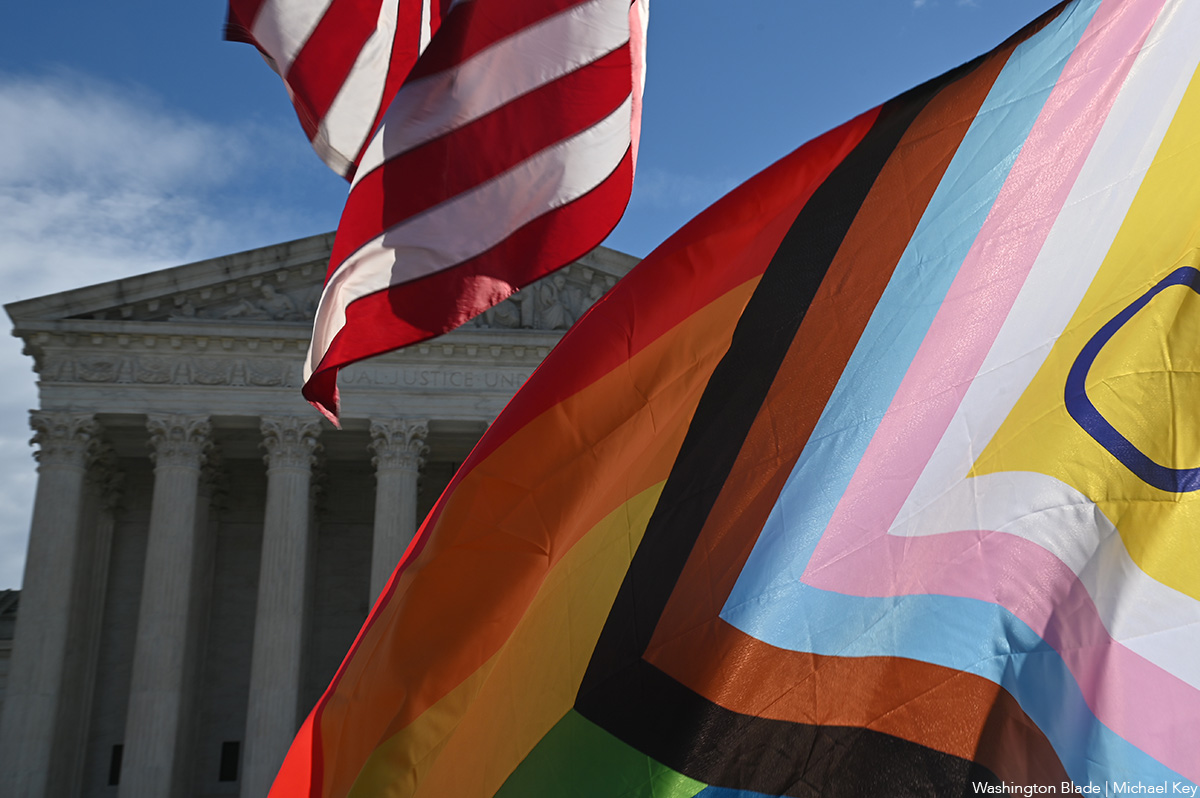
By PAMELA WOOD, JOHN-JOHN WILLIAMS IV, and MADELEINE O’NEILL | The U.S. Supreme Court on Tuesday ruled against a law banning “conversion therapy” for LGBTQ kids in Colorado, a ruling that also could apply to Maryland’s ban on the discredited practice.
An 8-1 high court majority sided with a Christian counselor who argues the law banning talk therapy violates the First Amendment. The justices agreed that the law raises free speech concerns and sent it back to a lower court to decide whether it meets a legal standard that few laws pass.
Justice Neil Gorsuch, writing for the court’s majority, said the law “censors speech based on viewpoint.” The First Amendment, he wrote, “stands as a shield against any effort to enforce orthodoxy in thought or speech in this country.”
The rest of this article can be read on the Baltimore Banner’s website.

Gay ICE detainee freed after 150 days in detention

How do you vote a child out of their future?

Under new extremism laws, LGBTQ Russians must fight to survive

Diverse cast tackles ‘Aguardiente’ at GALA Hispanic Theatre

New books reveal style trends for a more enlightened century

European Parliament backs EU-wide conversion therapy ban

Republicans attach five anti-LGBTQ riders to State Department funding bill

The felon’s gang can’t get their story straight

Both sides propose revised orders in Capital Pride stalking case

Tennessee’s trans data bill a frightening omen
-

 European Union5 days ago
European Parliament backs EU-wide conversion therapy ban
-
Federal Government3 days ago
Republicans attach five anti-LGBTQ riders to State Department funding bill
-
Opinions5 days ago
The felon’s gang can’t get their story straight
-
District of Columbia4 days ago
Both sides propose revised orders in Capital Pride stalking case