Theater
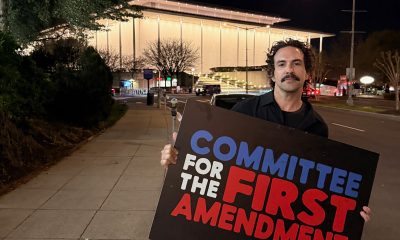
Actor finds fulfillment raising money for queer non-profits
Aidan Wharton’s latest beneficiary is D.C.’s Rainbow History Project

‘Girl From the North Country’
Dec. 12-31
The Kennedy Center
$49-$179
Kennedy-center.org
Last summer while travelling with his fiancé to San Francisco and parts of Europe, out actor Aidan Wharton faithfully reported on the queer history of each destination in his newsletter Gay Buffet (Gaybuffet.substack.com).
When autumn rolled around and Wharton went back to work touring with the Broadway hit musical “Girl From the North Country,” he decided not only to continue writing about queer history but also to raise money for a LGBTQ non-profit in each tour stop.
He’s rather brilliantly devised a way to combine showbiz with his new interests.
Throughout November in Cleveland, Wharton focused on Margie’s Hope, an organization dedicated to providing resources and services for transgender, non-binary, and gender expansive people in Northeast Ohio. And when the show soon lands at the Kennedy Center’s Eisenhower Theatre (Dec. 12-31), he plans to fundraise for the Rainbow History Project whose mission is to collect, preserve, and promote the history and culture of D.C.’s queer communities.
Using social media, Wharton, with the help of like-minded influencers, creates awareness while asking supportive folks to give just $5 to the designated organization.
During a recent chat via phone from chilly Des Moines, he explains that his bourgeoning project stems from a desire to help those doing selfless and often thankless nonprofit work related to enriching the lives of LGBTQ people during this wave of anti-LGBTQ sentiment. And, he adds, “the pandemic hasn’t made it any easier…a lot of the funding has dried up.”
Written and directed by Irish theater maker/screenwriter Conor McPherson, Tony Award-winning “Girl From the North” is built around 20 songs by iconic troubadour and Civil Rights activist Bob Dylan. Set in a rundown guesthouse in 1934 Duluth, Minn., (Dylan’s hometown), the action unfolds over a week around Thanksgiving, chronicling the triumphs and tragedies that take place in residents’ little microcosm.
Wharton plays Elias, who along with his parents, is staying in the guesthouse. His song is “Duquesne Whistle,” a train inspired “chug song” somewhat reinterpreted. “It’s a sort of surreal moment and my favorite part of the show. To say anything else would be a spoiler,” he says.
The energetic actor has been on tour since it kicked off in October in Minneapolis at the Orpheum Theatre, an historic venue once owned by Dylan. On Broadway he was a swing, covering Elias as well as five other parts. He knows the show well.
Before playing Elias, Wharton, 28, knew Dylan’s music mostly from repurposed takes on film and TV, and he always liked what he heard. Since joining the show, he’s listened to the original recordings in large part to know just how they’ve been re-imagined for the show.
“It’s a folky musical that still lives in the world of Dylan,” he says. “While a lot of the songs are taken out of his style, audiences seem pleasantly surprised. Not long ago a couple stopped me on the street. They’d been Dylan fans since the ‘60s. They said hearing this show made feel like they were hearing his words for the first time.”
“Some juke box musicals try to shoehorn the plot around songs, but ‘Girl From the North Country’ doesn’t. It feels like a play with a soundtrack. The songs don’t necessarily progress the plot but they accentuate what’s happening on stage; both the script and the music seem to benefit from each other.”
At 17, Wharton left Hawaii where he was raised in a yurt in the middle of the jungle to attend Pace University in New York for a year followed by Penn State where he finished up a degree in theater and then back to New York City. He’s currently based in Astoria Queens where he lives with his intended.
In addition to a lot of musical theater, he’s done some film including back-to-back parts in queer flicks “Fire Island” and “Bros.”
“When the tour ends next October,” says Wharton, “whatever this nonprofit venture becomes will become a bigger part of my life, possibly my career. I’ll always love acting and that’s ending for me, but there’s something about this new project in particular that’s made me feel fulfilled in a different way.”





Theater
Immersive ‘Nation-State’ imagines a society free of authoritarianism
Queer duo brings unique theater experience to Dupont Underground
‘Nation-State: A Live Experiment’
Sept. 2-13
La Pluma Theatre
Dupont Underground
19 Dupont Circle, N.W.
$25-40
Dupontunderground.org
Industry Night: September 7. Free for all theater makers
A relevant piece replete with borders and passports, La Pluma Theatre’s “Nation-State: A Live Experiment”is immersive, site-specific, and testimonial.
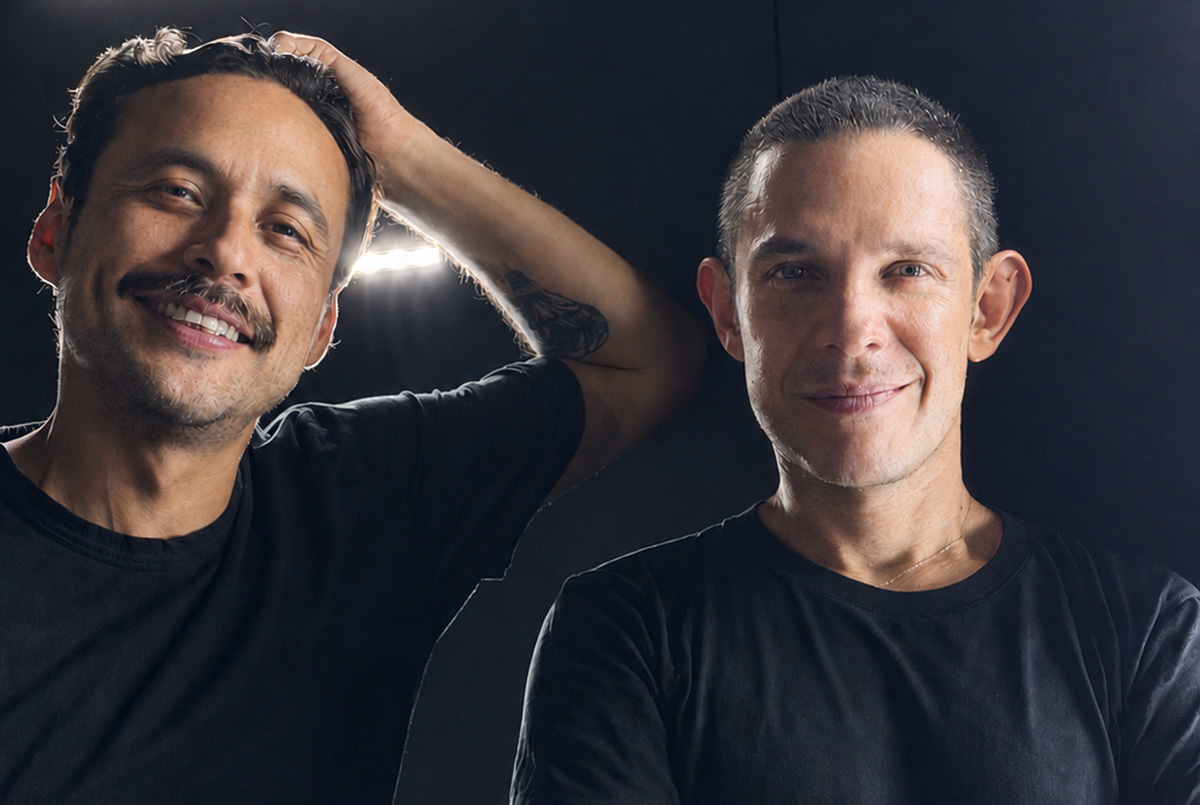
With the production, the company’s queer co-founders Victor Salinas and Gabriel de la Cruz pose unique situations and experiences. In lieu of tickets, audience members get passports. What follows are questions and tests, and whether they gain entrance into a nation built to protect its citizens from authoritarianism, resource theft, and colonization remains to be seen.
Originally from Mexico and Peru, respectively, Salinas and de la Cruz met at a birthday party in D.C. and instantly clicked as theater makers, sharing outlook and ambition. Reluctant to go it alone, both had been searching for artistic and producing collaboration. That all changed.
And while their enterprise is primarily Latino and queer, these professional partners refused to be confined to a box, choosing rather to amplify the voices of all of D.C.’s diverse communities. In line with their plans, “Nation-State” is open to serving many points of view.
As director of “Nation-State,” de la Cruz mostly guides the questioning. He’s the right man for the job. Since arriving in the U.S. six years ago, he has been consistently curious about certain things. Who belongs here? How do you make this your home? And who is creating the rules?
“But the writing process is shared,” de la Cruz corrects. “I come up with questions. I provide Victor the topic and he goes from there. We’re both writing what happens next.”
He adds, “the most exciting moment for people is when they share something unique. As a questioner, you need to find the confidence and the right moment to ask the question. If you provide the space for that, the actor or audience member will give you something singular.”
Since before La Pluma opened in November 2025, its creators have agreed that “the most beautiful thing is when you use theater to fashion something innovative. Theater is the place where you can create new frameworks and rehearse new ways to live.”
At just an hour, “Nation-State” is performed in English at Dupont Underground – the company’s historic residence, a once subterranean street car barn located beneath Dupont Circle. For the production, the tunnels serve as boundaries, and its different curved spaces make up a micro nation and welcome different guest actors who will come to share their stories.
At certain times, Salinas plays Officer Salinas, Director of N.I.C.E. (Non-Discriminatory, Inclusive Customs Enforcement), a humorous social critic of the system and border patrol. Other times, it’s Salinas as himself telling his real-life stories. He says, “it’s a level of vulnerability that I’ve never experienced. The script is my personal life with zero censorship. But I think, if not now in a play that we are pouring our souls into, then when?
“As a kid I dreamed of being TV show host and now I am. I will sing and tell my stories. I feel comfortable and ready to do it.”
In Spanish, “pluma” means both pen and feather. For the company, it’s the latter, and comes with lively associations. Salinas explains. In mysticism, feathers serve as a portal between the real and spiritual worlds, like that between fact and fiction. And in Spanish and Latin American slang “showing feathers” (in other words, showing queerness). La Pluma encourages a good display of authenticity.
And specifically for Salinas, there’s a personal story involving his beloved grandmother with whom he was extremely close. After she died, he has regularly found feathers as if she’s making contact. “A bit romantic, I know. But I think if you’re open you can see these things,” he says.
“Nation-State” is challenging but fun. It’s unmistakably La Pluma. In the end, the company wants to build a world where everyone feels safe to tell their own stories, as individuals and performers.
Theater
New GALA show about WWII spy full of conflict, intrigue
‘GARBO: The Actor Who Saved the World’ an inspired true story
‘Garbo: The Actor Who Saved the World’
Sept. 3-27
GALA Hispanic Theatre
3333 14th St., NW
$25-$50
galatheatre.org
Conflict, intrigue, and abundant imagination – all the elements for an extraordinary story. Add real-life Spanish spy Juan Pujol García who worked as a double agent loyal to the United Kingdom against Nazi Germany during World War II to the mix and it’s truly inspired.
Code-named “Garbo” by the British (a nod to his acting prowess), the anti-fascist’s mission took him from Madrid to Lisbon and later a London suburb where he created fictitious reports while unassumingly blending in with middle-class commuters.
By inventing a phony spy network of 27 agents with intricate backstories and tales of espionage worthy of Balzac’s pen, Garbo convinced Hitler’s generals that the D-Day invasion would hit Calais instead of Normandy, saving thousands of lives along the way.
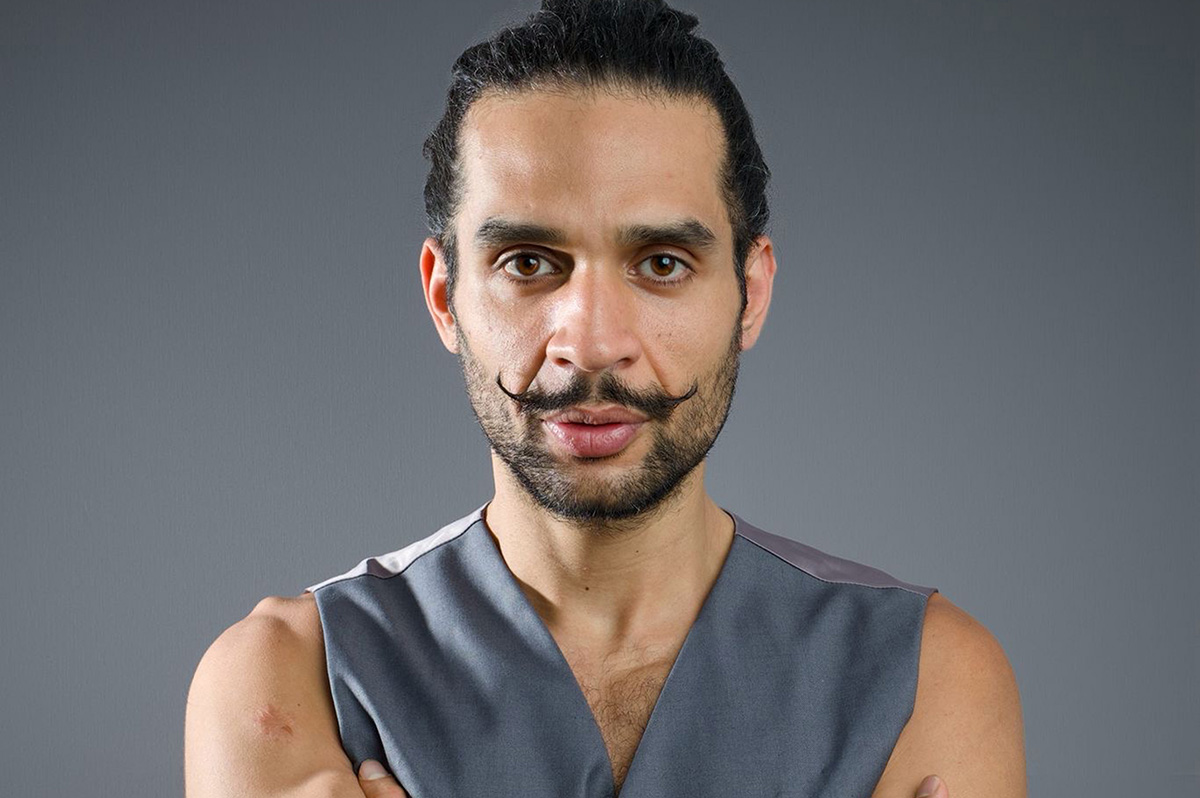
And now the tale unfolds on stage in “GARBO: The Actor Who Saved the World,” a premiere thriller at GALA Hispanic penned by GALA artistic director Gustavo Ott, staged by Cuban director Carlos Celdrán, and starring out actor Kevin Jorges in the title role.
When Jorges was tapped to play Garbo, he (like the rest of the cast) was utterly unfamiliar with the play’s cunning protagonist.
But that changed quickly. Jorges, 37, has immersed himself in the biography and become increasingly interested and somewhat enamored with the character.
Charismatic with an easy smile and rich, warm voice, Jorges says he had to put aside his sensibility as a gay man in order to portray Garbo, who was a straight, patriarchal figure. But he also embraced similarities with the spy, like their shared aversion to physical violence.
And Jorges cites what he finds a pivotal moment: Garbo says to his British MI5 case officer and handler Thomas Harris (played by gay GALA veteran Carlos Castillo) that after what they’ve been through, neither will be what they once wanted to be. They are changed. They’ll never be the same.
Performed at 90 minutes in Spanish with user friendly English surtitles, “Garbo” is about imagination as resistance. “It’s also about a theatrical vocation that went unfulfilled,” says Ott. “That is perhaps the greatest disappointment of modernity: the insurmountable obstacles a vocation faces.
“Through his imagination, Garbo attempts to reclaim his lost calling—that of being an artist—and in his new trade as a spy, he uses it as a lifeline.”
Ott adds, “Walt Whitman viewed imagination as a traveling companion. He could rely on it when he was alone, when he lost hope, and when life slammed every door shut.”
Jorges was was attracted to acting at an early age, but the murder of his father in Caracas in 1999, made it more than an interest, theater became a refuge that saved him from tragedy. Today, he believes that theater is a refuge for many Venezuelan artists, it’s a way for them to contribute to society despite difficult circumstances.
Despite enjoying a successful early career in Caracas with many roles and accolades, Jorges had no choice but to seek new horizons. Political turmoil and economic collapse prompted him to leave Caracas in 2019 for Spain where he worked outside of his profession for a few years.
The actor credits “migrant persistence” for his return to the stage. On New Year’s Eve in 2022, Jorges made a pilgrimage to the famous monument to Cervantes at Plaza de España in Madrid where he made a heartfelt wish to act again.
Soon after, Jorges was collaborating with playwright and director Elio Palencia on “Timón Of(f) Caracas,” a personal one-man adaptation of Shakespeare’s “Timon of Athens, reframing the universal themes of betrayal, excess, and misanthropy to mirror the sociopolitical realities of Venezuela. To much success and acclaim, the production toured important cities throughout Spain.
It was Palencia who suggested to GALA’s Ott that Jorges hop the pond to play Garbo in D.C.
While he once viewed each acting job as an opportunity, Jorges now sees them as gifts. And, he says, the part of Garbo is a gift filled with possibilities: “It’s wonderful performing in Spanish with English translation. I love the interaction of culture. I really enjoy seeing the way things are done at GALA. Maybe sometime I’ll be performing in English too.”
Theater
National tour of ‘The Notebook’ retains its tearjerking power
Talented queer actor Grace Rundberg joins cast fresh out of college

‘The Notebook’
Aug. 18-30
National Theatre
1321 Pennsylvania Ave., N.W.
$89-$197
Broadwayatthenational.com
When Grace Ohwensadeyo Rundberg first imagined a career in musical theater, she wasn’t sure exactly how she’d fit in. As a gay actor would she play queer characters? Outside of “Rent” and a few other shows, would there be lesbian parts coming her way?
Rundberg, 23, remembers an acting class in college. “I was doing a romantic scene opposite a male actor when the professor interrupted to say it was ‘unconvincing.’ Well, I’d never had the experience of what it’s like to be with a man, so I’m not surprised it looked a little awkward.”
But for Rundberg, being in the national tour of “The Notebook” has quelled those misgivings. Of course, booking the show straight out of college bolstered her confidence, and playing a woman whose love interests are men has put Rundberg in a place where she’s fine playing straight or gay.
Opening this week in D.C.’s National Theatre (Aug. 18-30), “The Notebook” is a genuine tearjerker (the book, the film, and the musical). It’s the decades long love story of Noah and Allie who despite vast differences, fall in love as teenagers. Over the years, their romance faces separation, societal pressures, the challenges of Alzheimer’s disease, yet somehow prevails.
Shortly after graduating from Pace University’s musical theater program in 2025, the upfront and buoyant Rundberg was signed to play ensemble member Georgie and understudy for Middle Allie (a young woman caught between youthful passion and reflective memory).
A mezze soprano mixed belter experienced with folk, pop, contemporary styles, she proves an ideal performer to sing Ingrid Michaelson score and act Bekah Brunstetter’s romantic libretto.
And when she understudies the role of Middle Allie, whether by scheduled design or insanely short notice, she sings the familiar tune “My Days,” a standout track from the musical that serves as the show-stopping “11 o’clock number.” Here, she captures the emotional climax when Middle Allie chooses the life and loves she desires.
During a musical childhood spent in Pittsford, N.Y, just seven miles outside of Rochester, Rundberg began music classes at four; she learned piano and belonged to choirs. And though, she says, the family was not really into theater, her mom was a Cher impersonator for a while.
Significantly, Rundberg (whose middle name Ohwensadeyo translates from Cayuga as “Beautiful Earth”) is a citizen of the Cayuga Nation, an Indigenous nation native to New York state.
Recently, she began learning the Cayuga language, a very important part of the culture, particularly since it’s almost exclusively a spoken language. Rundberg’s cousin, a professor at Cornell University where he teaches Cayuga language and culture, has been a great help. She feels fortunate: “Not everyone has access to their ancestry I’m blessed in this way.”
The Brooklyn-based actor’s ambitions are bold and varied. While landing a national tour was high on her bucket list, she longs to work on Broadway and auditions for TV and film. Being the first to create a character in a new work, especially a lesbian character, is a big goal. “That would tie a lot of things together,” she says. “That’s the ultimate dream.”
In the meantime, Rundberg is working professionally and seeing the country. But touring isn’t without its drawbacks. “I miss New York a lot,” she says. “My girlfriend is there; long distance is a challenge for sure. I’m always in a different place often with different time zones. Still, she has come to see me in San Francisco, Miami, Cleveland, and a few other stops. And I fly to New York when I can. We make it work.”
As a kid, Rundberg watched and rewatched the movie version of ‘The Notebook.’ She says, “It’s one of my favorites. It’s kind of a cliché, I know, but I’m a hopeless romantic.”
The show touches a lot of people; it’s evident at every performance. From the stage, the cast sees audience members crying. In fact, “The Notebook” sells branded souvenir tissue boxes at its merchandise stands for five dollars a pop.
“Beyond elements of sadness there’s also joy,” she adds. “There’s the never-ending devotion and getting through hard times together too. We do our best to send the audience home with hope and love.”

Gloria Steinem dies at 92

The mastery of love

Trans people need a politics of ordinary life

Enlarging the Supreme Court keeps making more sense

Markey’s primary win deemed success for LGBTQ activists

Immersive ‘Nation-State’ imagines a society free of authoritarianism

Poland begins to legally recognize same-sex marriages from other countries

HRC president campaigns for Chris Pappas in NH

We’re getting married but our parents object

Michael Smith could make history as Delaware’s first LGBTQ treasurer
-

 Theater4 days ago
Immersive ‘Nation-State’ imagines a society free of authoritarianism
-
Poland4 days ago
Poland begins to legally recognize same-sex marriages from other countries
-
Congress3 days ago
HRC president campaigns for Chris Pappas in NH
-
Advice4 days ago
We’re getting married but our parents object