a&e features
Subjects matter: an interview with author Martin Duberman
New book ‘The Line of Dissent’ debuts Jan. 8
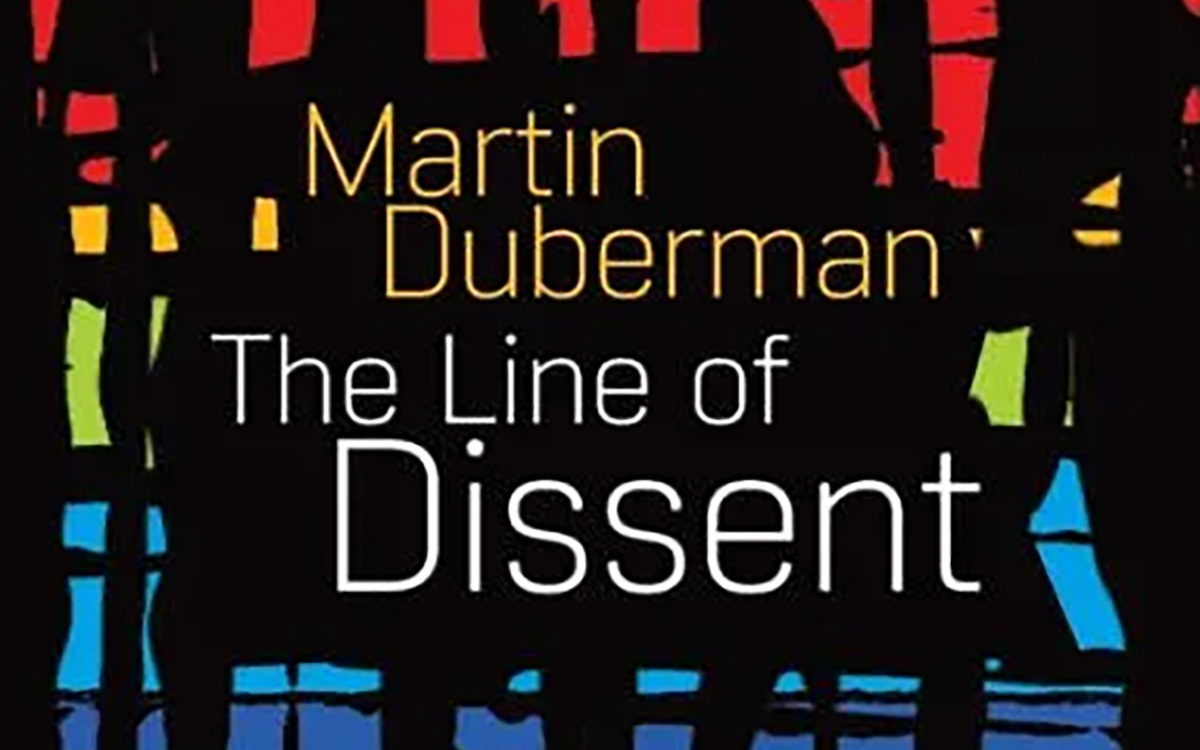
Gay writer and historian Martin Duberman is the very definition of a living legend. At the age of 93, with nearly 40 books to his credit, Duberman shows no signs of slowing down. His latest book, “The Line of Dissent: Gay Outsiders and the Shaping of History” (G&LR Books, 2023), out Jan. 8, compiles a dozen essays (many of which were previously published in “Gay & Lesbian Review Worldwide”), along with a pair of codas. Some of the names, including W.H. Auden, Alfred Kinsey, and Sylvia Rivera, will be familiar to many readers, while others are sure to be revelations. Duberman was gracious enough to make time for an interview in advance of the book’s publication.
BLADE: In the introduction to “The Line of Dissent,” you write that the book is “opinionated” and “contains no demolition jobs,” and you note “appraisals are mostly appreciative.” Is this in response to something you’d seen other historians doing?
MARTIN DUBERMAN: Historians, being human, have a wide range of responses to the individuals they choose to write about. In my earlier books (“Charles Francis Adams, 1807-1886” and “James Russell Lowell”), I felt personally more distant from the subjects. But my recent work follows the trajectory of my politics — that is, moving steadily leftward.
BLADE: Most of the essays in “The Line of Dissent” previously appeared in “Gay & Lesbian Review Worldwide.” Was the idea to compile the essays into a book your idea or G&LR publisher Richard Schneider’s?
DUBERMAN: The idea for the book was mine though Richard was immediately enthusiastic.
BLADE: Were there any essays of yours from “Gay & Lesbian Review Worldwide” that didn’t make the cut for the book?
DUBERMAN: There are 12 essays in the book, and I’ve probably written some 20 (my memory’s a little shaky here), which, if accurate, would mean some seven to eight didn’t make the cut. David McReynolds would be one example.
BLADE: In many ways, “Gay & Lesbian Review” fills a void left by the loss of “Christopher Street,” as well as the death of several regional LGBTQ newspapers. What does it mean to you that a publication such as “Gay & Lesbian Review” exists?
DUBERMAN: I think the role “Gay & Lesbian Review” plays in the community is significant. No other publication reaches an educated, but not academic, audience.
BLADE: 2023 turned out to be a year in which historically significant LGBTQ people — including Bayard Rustin, Diana Nyad, and Leonard Bernstein — are the subjects of high-profile biopics. Are there one or two people about whom you wrote in “The Line of Dissent” that you think would make a good subject for a movie?
DUBERMAN: Lord, yes! Offhand, I couldn’t name even one who wouldn’t qualify for a film, and who wouldn’t find an audience. Every one of their lives was dramatic and rich. As were dozens of other LGBTQ+ people not in the book. Check out the lists in “Outwords” (theoutwordsarchive.org) as one source for candidates. It’s an invaluable resource for candidates to write about and to honor.
BLADE: Essay subjects Essex Hemphill, Andrew Dworkin, and Lincoln Kirstein are people about whom you also wrote the full-length books “Hold Tight Gently,” “The Feminist as Revolutionary,” and “The Worlds of Lincoln Kirstein,” respectively. What makes a person a fascinating subject worthy of a book-length project to you?
DUBERMAN: Using “drama” as a guideline, I’d say that Sylvia Rivera’s life was especially full of vivid and sometimes hair-raising episodes. Ditto Essex Hemphill and Andrea Dworkin. A film on Andrea was recently completed, but I haven’t seen any release date for it.
BLADE: When you write a revelatory essay such as “Edward Sagarin: ‘Father’ of the Homophile Movement,” are you as excited about sharing your knowledge and/or the results of your research as you hope the reader will be when they receive the information?
DUBERMAN: My level of excitement varies with the subject. The three you cite are among the most important. In a semi-conscious way, I tend to respond to “second rank” figures — that is, people who in their own day made a substantial political contribution but the general public has forgotten.
BLADE: “The Line of Dissent” opens with the dedication: “To the current generation of queer radicals. Please hurry!” I live in South Florida, which is suffering greatly under anti-LGBTQ Gov. DeSantis and his cronies. However, we are seeing young LGBTQ people in the state taking action and becoming activists in response. That’s not just happening in Florida, but in other places, as well. Does that give you a sense of hope for the future?
DUBERMAN: Yes! I see lots of evidence of activity emerging from the latest generation. Alas, I also see Young Republicans who are equally outspoken. It could come down to a dogfight, with damn near everything at stake. For now, I’m still sticking with my optimistic prediction.




a&e features
Memorial for groundbreaking bisexual activist set for May 2
Loraine Hutchins remembered as a ‘force of nature’
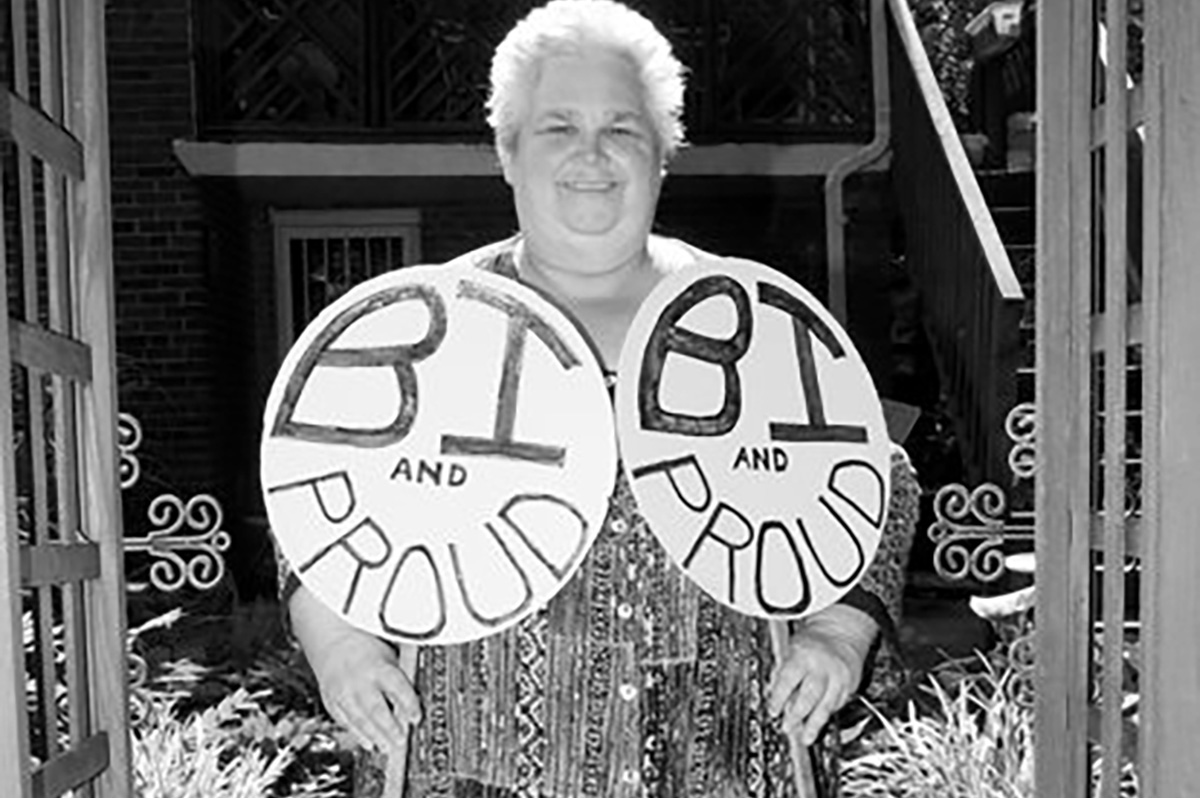
The Montgomery County Pride Center will host a celebration honoring the life and legacy of Loraine Hutchins, Ph.D., on May 2. People are invited to attend the onsite memorial or a livestream event. The on-site event will begin at 10 a.m. with a meet-and-greet mixer before moving into a memorial service around the theme “Loraine a Force of Nature!” at 11 a.m., a panel talk at 12 p.m., break out sessions for artists, academics, and activists to build on her legacy at 1 p.m. and a closing reception at 2 p.m.
Attendees are encouraged to register for the on-site memorial gathering or the livestreamed memorial. The goal of this event is also to collect stories and memories of Loraine. Attendees and others can share their stories at padlet.com.
An obituary for Hutchins was published in the Bladelast Nov. 24, where people can learn more about her activism in the bisexual community. A private service for friends and family was held in December but this memorial service is open to all.
Alongside her groundbreaking work organizing for U.S. bisexual rights and liberation including co-editing “Bi Any Other Name: BIsexual People Speak Out” (1991), she also integrated faith into her sexual education and advocacy work. Her 2001 doctoral dissertation, “Erotic Rites: A Cultural Analysis of Contemporary U.S. Sacred Sexuality Traditions and Trends,” offered a pointed queer and feminist analysis to sex-neutral and sex-positive spiritual traditions in the United States. Her thesis was also groundbreaking in exploring the intersections between sex workers and those in caregiving professionals, including spiritual ones.
In an oral history interview conducted by Michelle Mueller back in August 2023, Hutchins described herself as a “priestess without a congregation.” While she has occasionally had a sense of community and feels part of a group of loving people, she admitted that “I don’t feel like we have the shape or the purpose that we need.”
“I’ve often experienced being the Cassandra in the room, the Cassandra in the community. Somebody who’s kind of way out there ahead, thinking through the strategic action points that my community hasn’t gotten to yet, and getting a lot of resistance and hostile responses from people who are frightened by dissent and conflict and not ready for the changes we have to make to survive,” she said.
“For somebody who’s bisexual in an out political way and who’s been a spokesperson for the polyamory movement in an out political way, it’s very exposing. And it’s very important to me to be able to try to explain and help other people understand the connection between spirituality and sexuality,” she explained citing how even as a graduate student she was “exploring how to feel erotic and spiritual, and not feel them in conflict with each other in my own spiritual contemplative life and my own sensual body awareness of being alive in the world.”
“Every religion has a sense of sacred sexuality. It’s just they put a lot of boundaries and regulations on it, and if we have a spiritual practice that is totally affirming of women’s priesthood and of gay people, queer people’s ability to minister to everyone and to be ministered to be everyone, what does that do to the gender of God, or our understanding of how we practice our spirituality and our sexuality in community and privately?”
“There’s no easy answer,” she concludes, and she continued to grapple with these questions throughout her life, co-editing another seminal text, “Sexuality, Religion and the Sacred: Bisexual, Pansexual, and Polysexual Perspectives,” published in 2012. Her work blending spiritual and queer liberation remains groundbreaking to this day.
Rev. Eric Eldritch, a local community organizer and ordained Pagan minister with Circle Sanctuary who has worked for decades with the DC Center’s Center Faith to organize the Pride Interfaith Service, is eager to highlight this element of her legacy at the memorial service next month.
a&e features
Queery: Meet artist, performer John Levengood
Modern creative talks nightlife, coming out, and his personal queer heroes
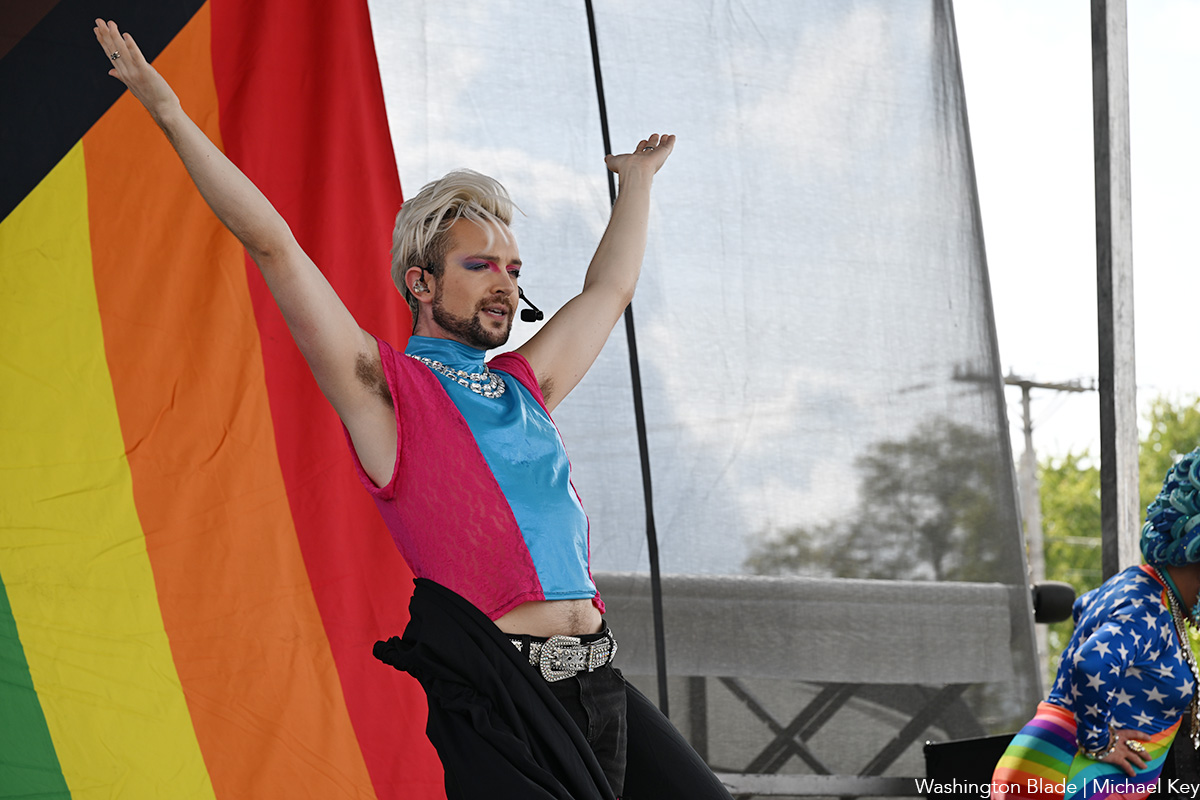
John Levengood (he/him) describes himself as a modern creative with a wide‑ranging toolkit. He blends music, technology, civic duty, and a sharp sense of wit into a cohesive artistic identity. Known primarily as a recording artist and performer, he’s also a self‑taught music producer and software engineer who embodies a generation of creators who build their own lanes rather than wait for one to appear.
Levengood, 32, who is single and identifies as gay and queer, is best known as a recording artist who has performed at Pride festivals across the country, including the main stages of World Pride DC, Central Arkansas Pride, and Charlotte Pride.
“Locally in the DMV, I’m known for turning heads at nightlife venues with my eye-catching sense of style. When I go out, I don’t try to blend in. I hope I inspire people to be themselves and have the courage to stand out,” he says.
He’s also known for hosting karaoke at Freddie’s Beach Bar in Arlington, Va., on Thursday nights. “I like to create a space where people feel comfortable expressing themselves, building community, and showcasing their talents.”
He also creates social media content from my performances and do interviews at LGBTQ+ bars and theatres in the DMV. Follow the Arlington resident @johnlevengood.
How long have you been out and who was the hardest person to tell?
I have been fully out of the closet since 2019. My parents were the hardest people to tell because my family has always been my rock and at the time I couldn’t imagine a world without them. Their reactions were extremely positive and supportive so I had nothing to fear all along.
I remember sitting on the couch with my mom, dad, and sister in our hotel room in New Orleans during our winter vacation and being so nervous to tell them. After I finally mustered up the nerve and made the proclamation, I realized my dad had already fallen asleep on the couch. My mom promised to tell him when he woke up.
Who’s your LGBTQ hero?
My LGBTQ heroes are Harvey Milk for paving the way for gays in politics and Elton John for being a pioneer for the fabulous and authentic. My local heroes in the DMV are Howard Hicks, manager of Green Lantern, and Tony Rivenbark, manager of Freddie’s Beach Bar. Both of them are essential to creating spaces where I’ve felt welcome and safe since moving to the DMV.
What’s Washington’s best nightspot, past or present?
Trade tops the list for me because of the dance floor and outdoor space. It’s so nice to get a break from the music every once and a while to be able to have a conversation.
We live in challenging times. How do you cope?
I’m still figuring this out. What is working right now is writing music and spending time with family and friends. I’ve also been spending less time on social media going to the gym at least three times a week.
What streaming show are you binging?
After “Traitors” Season 4 ended, I was in a bit of a show hole, but “Stumble” has me in a laughing loop right now. The writing is so witty.
What do you wish you’d known at 18?
At 18, I wish I would have known how liberating it is to come out of the closet. It would have been nice to know some winning lottery numbers as well.
What are your friends messaging about in your most recent group chat?
We are planning our next trip to New York City. If you can believe it, I visited NYC for the first time in 2025 for Pride and I’ve been back every quarter since. Growing up in the country, I was subconsciously primed to be scared of the city. But my mind has been blown. I can’t wait to go back.
Why Washington?
It’s the closest metropolitan area to my family, but not too close. I love the museums, the diversity, the history, and the proximity to the beach and mountains. It’s also nice to live in a city with public transportation.
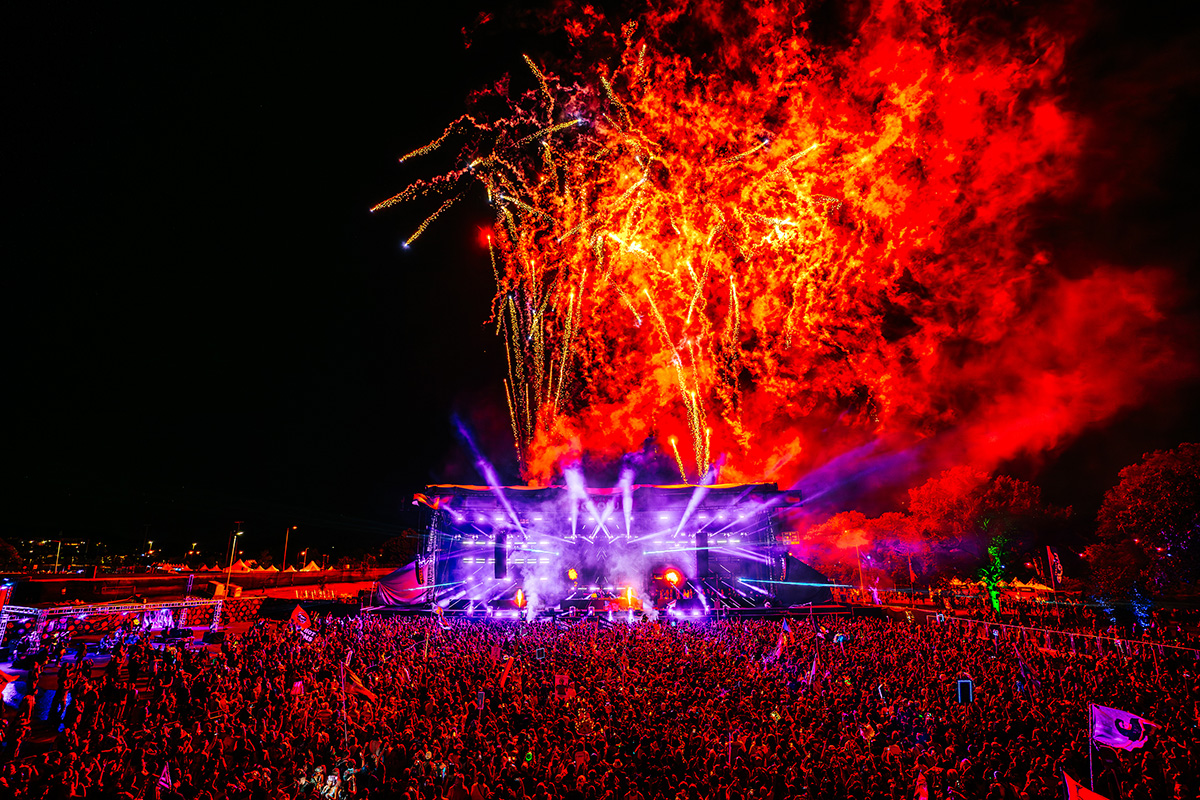
Aging RFK Stadium has come down, but the RFK grounds are still getting lit up. Welcome back to the stage Project GLOW, D.C.’s homegrown electronic festival, on May 30-31. Back for its fifth year on these musically inclined acres, Project GLOW returns with an even more diverse lineup, and one that continues to celebrate LGBTQ antecedents, attendees, and acts.
Project GLOW 2026 headliners include house and techno star Mau P, progressive house legend Eric Prydz, hard-techno favorite Sara Landry, and bass acts Excision b2b Sullivan King, among the lineup of trance, bass, house, techno, dubstep, and others for the fifth anniversary year.
President & CEO Pete Kalamoutsos — born and raised in D.C. — founded Club GLOW in 1999. In 2020, GLOW entered into a partnership with global entertainment company Insomniac Events to produce live events like Project GLOW, which kicked off in 2022.
As in past years, Project GLOW not only makes space, but is intentionally inclusive of the LGBTQ community, one of its most dedicated fan bases. The festival’s LGBTQ-focused Secret Garden stage blooms again — a more intimate dance area that stands on the strength of DJs and musicians who draw from the LGBTQ community. D.C.’s LGBTQ nightlife mastermind Ed Bailey is the creative mind behind Secret Garden again. He joined Project GLOW in 2023.
“Kalamoustos says that “he’s proud of his partnership with Ed Bailey, along with Capital Pride and [nightlife producer] Jake Resnikow. It’s amazing to collaborate with Bailey at the Secret Garden stage, especially after the curated lineup we worked on at Pride last year.”
The Secret Garden will be a bit different from other stages: Eternal (“At the Eternal stage, time stands still. Lose yourself in the dance of past, present, and future, surrendering to the eternal rhythm of the universe”) and Pulse (“Feel the rhythm of the beat pulse through your veins as the heartbeat of the crowd synchronizes into one. Here, every moment vibrates with life as it guides you through a new dimension of euphoria”). The Secret Garden stage is in the round, surrounded by 16 shipping containers. The containers play canvas to muralists from around the world, who are coming in to paint them in a vibrant garden-style vibe. “We gave this stage some extra love with this layout,” K says, “ we finally cracked the code.”
K says that this will be the biggest lineup yet for the Secret Garden, featuring Nicole Moudaber b2b Chasewest, Riordan b2b Bullet Tooth, Ranger Trucco, Cassian, Eli & Fur, Cosmic Gate and Hayla. The stage is also the largest yet, featuring an expanded dance floor and 360-degree viewing.
Across all stages, K says that his goal for the fifth anniversary is “More art and fan interactive experience, more like a festival, strive to be like a Tomorrowland, as budget grows to add more experience.” Last year’s Project GLOW alone drew 40,000 attendees over two days.
K, however, was not satisfied with one festival this spring. GLOW recently announced a “pop-up” one-day event. Teaming up with Black Book Records, GLOW is set to throw a first-of-its-kind dance-music takeover of Pennsylvania Avenue, N.W., headlined by electronic music star Chris Lake. Set for April 18, this euphoric block party will feature bass and vibes blocks from the White House. Organizers expect as many as 10,000 fans to attend. Beyond music, there will be food, activations, and plenty of other activities taking place around 6th St and Pennsylvania Ave NW – a location familiar to many in the LGBTQ community, as this sits squarely inside the blocks of the Capital Pride party that takes place in DC every June.
Over the past two decades, Club GLOW has produced thousands of events, from club nights to large-scale festivals including Project GLOW, Moonrise Festival, and more. Club GLOW also operates Echostage.

Protection should mean protection

LGBTQ people, weed, and mental health: what you need to know

Repression, toxic masculinity fuel intense queer drama ‘Half Man’

Barney Frank, a hero of mine

Your guide to D.C. region’s many Pride celebrations

Diverse cast tackles ‘Aguardiente’ at GALA Hispanic Theatre

Under new extremism laws, LGBTQ Russians must fight to survive

New books reveal style trends for a more enlightened century

How do you vote a child out of their future?

Gay ICE detainee freed after 150 days in detention
-

 Theater4 days ago
Diverse cast tackles ‘Aguardiente’ at GALA Hispanic Theatre
-
Russia4 days ago
Under new extremism laws, LGBTQ Russians must fight to survive
-
Books4 days ago
New books reveal style trends for a more enlightened century
-
Commentary3 days ago
How do you vote a child out of their future?