State Department
State Department hosts meeting on LGBTQ rights and foreign policy
Event took place before Pride Month reception

Secretary of State Antony Blinken on Thursday hosted a group of LGBTQ activists and politicians from around the world at the State Department.
The event — described as a “Convening on U.S. Foreign Policy: National Security, Inclusive Development, and the Human Rights of LGBTQI+ Persons” — took place before the State Department’s annual Pride Month reception. Participants included:
• Jessica Stern, the special U.S. envoy for the promotion of LGBTQ and intersex rights
• U.S. Ambassador to the U.N. Linda Thomas-Greenfield
• U.S. Trade Representative Katherine Tai
• U.S. Ambassador to India Eric Garcetti
• Suzanne Goldberg, senior advisor to the Under Secretary of State for Civil Security, Democracy, and Human Rights
• Under Secretary of State for Civilian Security, Democracy, and Human Rights Uzra Zeya
• U.S. Agency for International Development Senior LGBTQI+ Coordinator Jay Gilliam
• USAID Counselor Clinton D. White
• National Security Council Senior Director for Democracy and Human Rights Kelly Razzouk
• Assistant U.S. Secretary of Health Adm. Rachel Levine
• National Security Council Human Rights Director Jess Huber
• U.N. Assistant Secretary General for Human Rights Ilze Brandt Kehris
• Icelandic Ambassador to the U.S. Bergdís Ellertsdóttir
• Council for Global Equality Co-Executive Director Mark Bromley
• Outright International Senior Advisor for Global Intersex Rights Kimberly Zieselman
• Essy Adhiambo, executive director of the Institute for Equality and Non Discrimination in Kenya
• Pau González, co-chair of Hombres Trans Panamá and PFLAG-Panamá
“Forty-five years ago, thousands gathered in D.C. in what became the first national march for LGBTQI+, demanding their voices be heard,” said Thomas-Greenfield in a post to her X account that showed her speaking at the event. “We must continue to carry forward the spirit of these pioneers and fight for equal rights and dignity for all.”
Forty-five years ago, thousands gathered in DC in what became the first national march for LGBTQI+, demanding their voices be heard.
We must continue to carry forward the spirit of these pioneers and fight for equal rights and dignity for all. 🏳️🌈🏳️⚧️ pic.twitter.com/oph2Ahmfhq
— Ambassador Linda Thomas-Greenfield (@USAmbUN) June 28, 2024
President Joe Biden in 2021 signed a memo that committed the U.S. to promoting LGBTQ and intersex rights abroad as part of his administration’s overall foreign policy.
“LGBTQI+ rights are human rights,” said Blinken. “Our government has a responsibility to defend them, to promote them — here and everywhere.”
Blinken noted consensual same-sex sexual relations remain criminalized in 64 countries, with the death penalty in 11 of them.
He specifically highlighted Uganda’s Anti-Homosexuality Act and Hungarian Prime Minister Viktor Orbán’s government’s “smearing scapegoating, stigmatizing LGBTQI+ persons — vilifying them with degrading labels, denying them equal rights, normalizing violence against them.” (Gay U.S. Ambassador to Hungary David Pressman this month marched in the annual Budapest Pride parade.)
Blinken noted Iraqi MPs earlier this year “passed legislation that punishes same-sex relations with up to 15 years in prison.” He also pointed out that Indonesian lawmakers approved a new criminal code banning extramarital sex.
“In a nation where same-sex couples cannot marry, these laws effectively make all same-sex conduct illegal and they undermine privacy for all Indonesians,” said Blinken.
“We’re defending and promoting LGBTQI+ rights around the world,” he said.
Blinken noted seven countries — Barbados, St. Kitts and Nevis, Antigua and Barbuda, Dominica, Namibia, Singapore, the Cook Islands — have decriminalized consensual same-sex sexual relations over the last two years. He also highlighted Greece, Liechtenstein, and Thailand this year extended marriage rights to same-sex couples, and other countries are banning so-called “conversion therapy.”
“These achievements are possible because of incredibly courageous human rights defenders and government partners on the ground, but I believe America’s support is indispensable,” said Blinken. “When we engage — sometimes publicly, sometimes privately, sometimes both — when we share our own knowledge and experience, we can and we do achieve change.”
Blinken also announced the U.S. now considers sexual orientation and gender identity are part of the International Covenant on Civil and Political Rights that took effect in 1976.
“This is one of the key treaties committing nations to upholding universal rights,” he said.
“In our regular reporting to the council on human rights, we will continue to include incidents of discrimination or abuse committed against LGBTQI+ persons, now with the clear framework of this well-supported interpretation,” added Blinken. “That will further empower our efforts.”
Blinken reiterated this point and the Biden-Harris administration’s commitment to the promotion of LGBTQ and intersex rights abroad when he spoke at the State Department’s Pride Month event.
“Defending, promoting LGBTQI+ rights globally is the right thing to do, but beyond that, it’s the smart and necessary thing to do for our country, for our national security, for our well-being,” he said.




State Department
Report: US to withhold HIV aid to Zambia unless mineral access expanded
New York Times obtained Secretary of State Marco Rubio memo
The State Department is reportedly considering withholding assistance for Zambians with HIV unless the country’s government allows the U.S. to access more of its minerals.
The New York Times on Monday reported Secretary of State Marco Rubio in a memo to State Department’s Bureau of African Affairs staffers wrote the U.S. “will only secure our priorities by demonstrating willingness to publicly take support away from Zambia on a massive scale.” The newspaper said it obtained a copy of the letter.
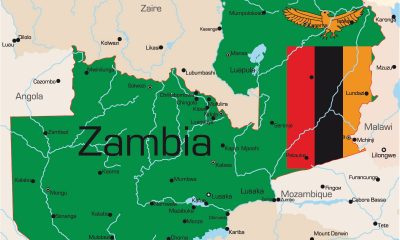
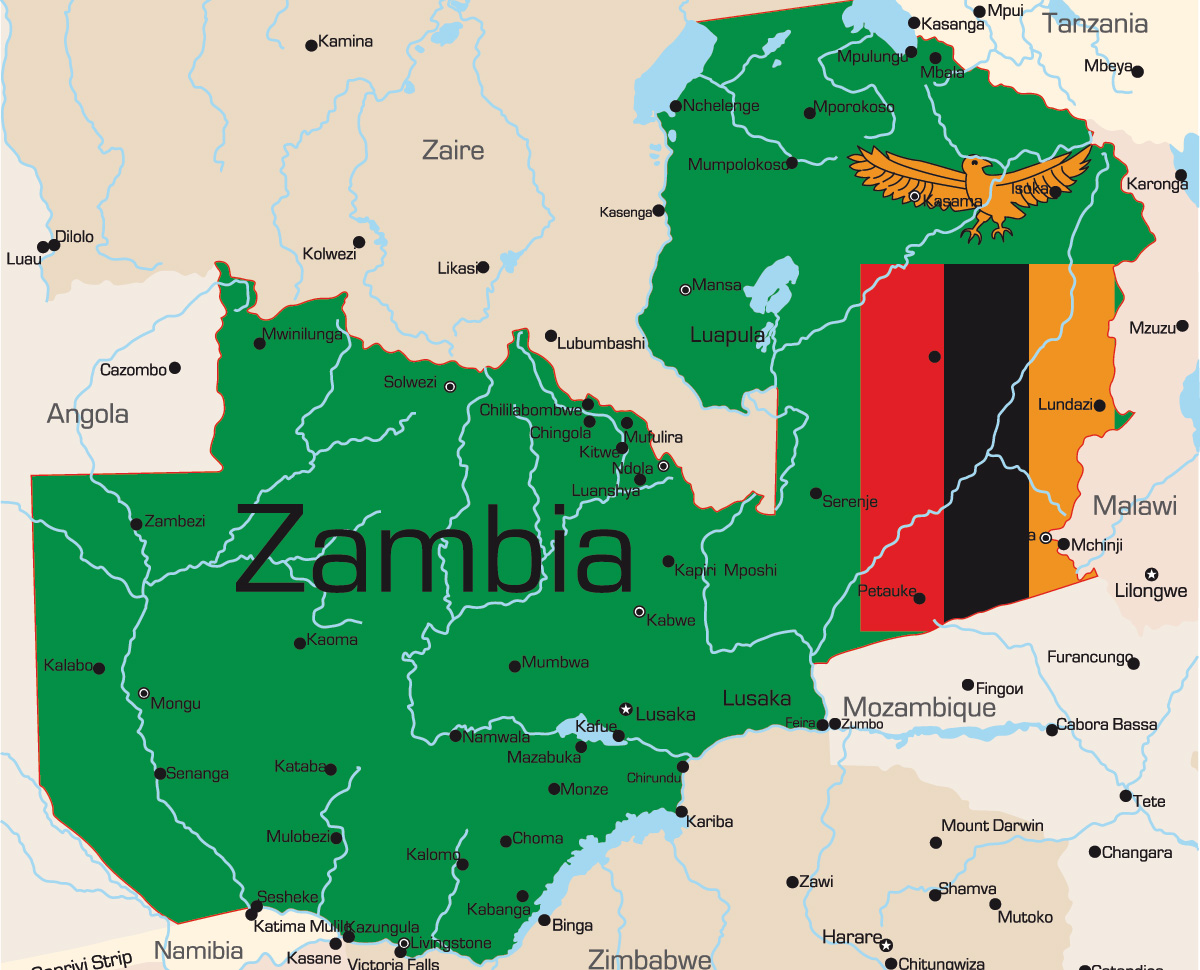
Zambia is a country in southern Africa that borders Tanzania, Malawi, Mozambique, Zimbabwe, Botswana, Namibia, Angola, and the Democratic Republic of Congo.
The Times notes upwards of 1.3 million Zambians receive daily HIV medications through PEPFAR. The newspaper reported Rubio in his memo said the Trump-Vance administration could “significantly cut assistance” as soon as May.
“Reports of (the) State Department withholding lifesaving HIV treatment in return for mining concessions in Zambia does not make us safer, stronger, or more prosperous,” said U.S. Sen. Jeanne Shaheen (D-N.H.), the ranking member of the Senate Foreign Relations Committee, on Tuesday. “Monetizing innocent people’s lives further undermines U.S. global leadership and is just plain wrong.”
The Washington Blade has reached out to the State Department for comment.
Zambia received breakthrough HIV prevention drug through PEPFAR
Rubio on Jan. 28, 2025, issued a waiver that allowed PEPFAR and other “life-saving humanitarian assistance” programs to continue to operate during a freeze on nearly all U.S. foreign aid spending. HIV/AIDS service providers around the world with whom the Blade has spoken say PEPFAR cuts and the loss of funding from the U.S. Agency for International Development, which officially closed on July 1, 2025, has severely impacted their work.
The State Department last September announced PEPFAR will distribute lenacapavir in countries with high prevalence rates. Zambia two months later received the first doses of the breakthrough HIV prevention drug.
Kenya and Uganda are among the African countries have signed health agreements with the U.S. since the Trump-Vance administration took office.
The Times notes the countries that signed these agreements pledged to increase health spending. The Blade last month reported LGBTQ rights groups have questioned whether these agreements will lead to further exclusion and government-sanctioned discrimination based on sexual orientation and gender identity.
State Department
FOIA lawsuit filed against State Department for PEPFAR records
Council for Global Equality, Physicians for Human Rights seeking data, documents

The Council for Global Equality and Physicians for Human Rights have filed a Freedom of Information Act lawsuit against the State Department for PEPFAR-related data and documents.
The groups, which Democracy Forward represents, filed the lawsuit in U.S. District Court for the Southern District of New York on Wednesday.
Then-President George W. Bush in 2003 signed legislation that created PEPFAR. UNAIDS Executive Director Winnie Byanyima last March said PEPFAR has saved 26 million lives around the world.
The Trump-Vance administration in January 2025 froze nearly all U.S. foreign aid spending for at least 90 days. Secretary of State Marco Rubio later issued a waiver that allowed PEPFAR and other “life-saving humanitarian assistance” programs to continue to operate during the freeze.
The Washington Blade has previously reported PEPFAR-funded programs in Kenya and other African countries have been forced to suspend services and even shut down because of gaps in U.S. funding. HIV/AIDS activists have also sharply criticized the Trump-Vance administration over reported plans it will not fully fund PEPFAR in the current fiscal year.
The lawsuit notes the Council for Global Equality and Physicians for Human Rights have “filed several FOIA requests” with the State Department for PEPFAR-related data and documents. The groups filed their most recent request on Jan. 30.
“On Jan. 30, 2026, plaintiffs, through counsel, sent State a letter asking it to commit to prompt production of the requested records,” reads the lawsuit. “State responded that the request was being processed but did not commit to any timeline for production.”
“Plaintiffs have received no subsequent communication from State regarding this FOIA request,” it notes.
“Transparency and inclusion have been hallmarks of PEPFAR’s success in the last decade,” said Beirne Roose-Snyder, a senior policy fellow at the Council for Global Equality, in a press release that announced the lawsuit. “This unprecedented withholding of data, and concurrent ideological misdirection of foreign assistance to exclude LGBTQI+ people and others who need inclusive programming, has potentially devastating and asymmetrical impacts on already marginalized communities.”
“This data is vital to understanding who’s getting access to care and who’s being left behind,” added Roose-Snyder.
“We filed this lawsuit to seek transparency: the administration’s PEPFAR data blackout withholds information the public, health providers, and affected communities need to track the HIV epidemic and prevent avoidable illness and death, obscuring the true human cost of these policy decisions,” said Physicians for Human Rights Research, Legal, and Advocacy Director Payal Shah.
The State Department has yet to respond to the Blade’s request for comment on the lawsuit.
Eswatini
PEPFAR delivers first doses of groundbreaking HIV prevention drug to two African countries
Lenacapavir now available in Eswatini and Zambia.
The State Department on Tuesday announced PEPFAR has delivered the first doses of a groundbreaking HIV prevention drug to two African countries.
The lenacapavir doses arrived in Eswatini and Zambia.
The State Department in September unveiled an initiative with Gilead Sciences to bring lenacapavir “to market in high-burden HIV countries.”
Lenacapavir users inject the drug twice a year.
The State Department in its September announcement noted everyone who participated in Gilead’s clinical trials remained HIV negative. It also said lenacapavir “has the potential to be particularly helpful for pregnant and breastfeeding mothers, as it safely protects them during and after pregnancy to prevent mother-to-child transmission.”
“In our new America First Global Health Strategy, the Department of State is establishing a first-of-its-kind innovation fund to support American-led research, market-shaping, and other dynamic advancements in global health,” said PEPFAR on Tuesday in a press release.
“The arrivals of the first doses of lenacapavir in Eswatini and Zambia mark an important milestone in HIV prevention and reflect our commitment to supporting communities with the greatest need,” added Gilead CEO Daniel O’Day. “For the first time, a new HIV medicine is reaching communities in sub-Saharan Africa in the same year as its U.S. approval.”
The September announcement came against the backdrop of widespread criticism over the Trump-Vance administration’s reported plans to not fully fund PEPFAR and to cut domestic HIV/AIDS funding. The Washington Blade has previously reported PEPFAR-funded programs in Kenya and other African countries have been forced to curtail services or even close because of U.S. funding cuts.

LGBTQ community plays integral role in autism advocacy

Kristi Noem ‘devastated’ as husband’s alleged fetish spending surfaces

Colo. activists condemn SCOTUS conversion therapy ruling

Is Ghana’s selective justice a human rights contradiction?

Supreme Court ruling against conversion therapy bans could affect Md. law

‘Out for McDuffie’ event held at D.C. gay bar

The Oscar-losing performance that’s too good to miss

‘Jonah’ an undeniably compelling but unusual memory play

PHOTOS: ‘No Kings’ rally and march