State Department
State Department honors Ghanaian LGBTQ activist
Ebenezer Peegan among Secretary of State’s Human Rights Defender Award recipients
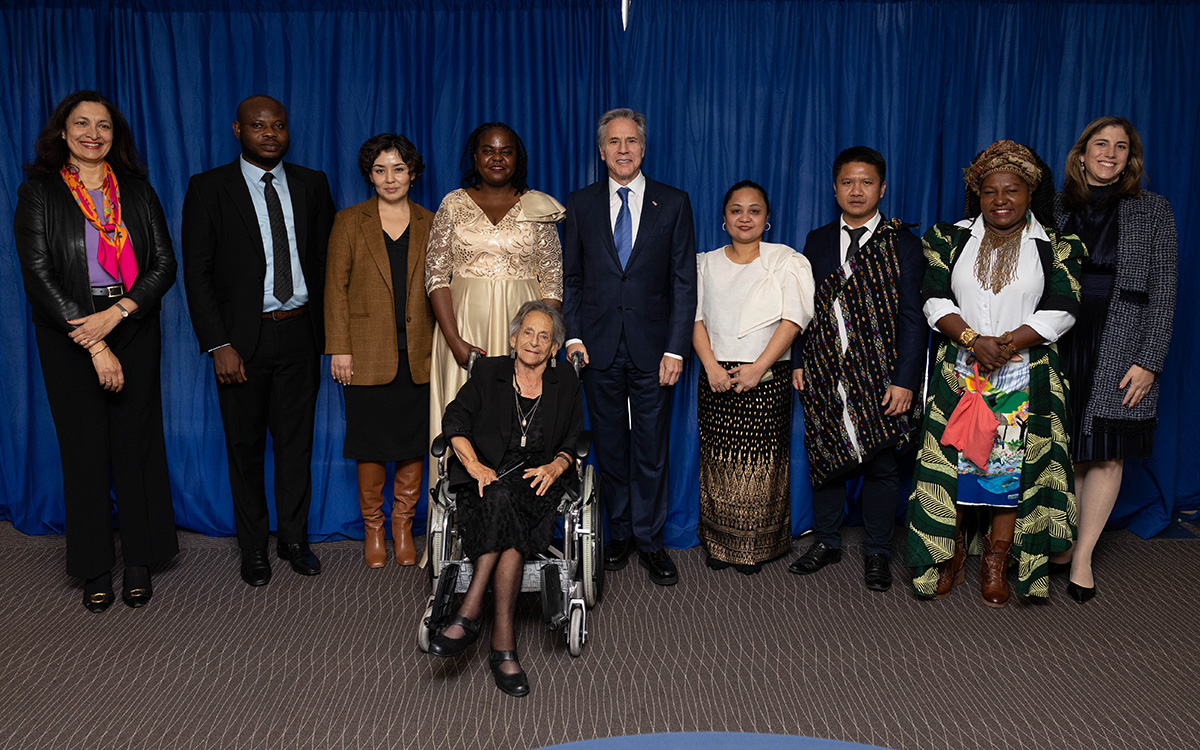
The State Department on Tuesday honored a Ghanaian LGBTQ activist and seven other human rights advocates from around the world.
Secretary of State Antony Blinken presented Rightify Ghana Executive Director Ebenezer Peegah with the Secretary of State’s Human Rights Defender Award during a ceremony at the State Department.
“He’s been a prominent figure advocating for equality and justice,” Deputy Assistant Secretary of State in the Bureau of Democracy, Human Rights, and Labor Enrique Roig told the Washington Blade on Tuesday during an interview.
The other human rights activists who received the award include:
• Mary Ann Abunda, a migrant workers advocate in Kuwait
• Permanent Human Rights Assembly of Bolivia President Amparo Carvajal
• Aida Dzhumanazarova, country director for the International Center for Not-for-Profit Law in Kyrgyzstan
• Mang Hre Lian, founder of the Chin Media Network in Myanmar
• Juana Ruiz of Asociación Asvidas, an organization that advocates for survivors of gender-based violence in Colombia
• Rufat Sararov, a former prosecutor who runs Defense Line in Azerbaijan
The State Department posthumously honored Thulani Maseko, a prominent human rights activist from Eswatini who was killed in 2023. His wife, Tanele Maseko, accepted the award on his behalf.
The ceremony took place on International Human Rights Day, which commemorates the U.N. General Assembly’s ratification of the Universal Declaration of Human Rights on Dec. 10, 1948. Sararov did not attend because Azeri authorities arrested him before he could obtain a visa that would have allowed him to travel to the U.S.
Ghanaian Supreme Court to rule on anti-LGBTQ law on Dec. 18
Ghanaian lawmakers on Feb. 28 approved the Promotion of Proper Human Sexual Rights and Ghanaian Family Values Bill that would, among other things, criminalize allyship. President Nana Akufo-Addo has said he will not sign the bill until the Supreme Court rules on whether it is constitutional or not.
The Supreme Court is expected to rule on the law on Dec. 18. John Dramani Mahama, the country’s president-elect, will take office on Jan. 7.
Ruig applauded Peegah’s efforts to highlight the Promotion of Proper Human Sexual Rights and Ghanaian Family Values Bill.
“For us in the U.S. government, the work that he’s done on this issue has also been instrumental in our own discussions with the current government as well as the incoming administration around the concerns that we’ve expressed with regards to this legislation,” Roig told the Washington Blade “He’s been an important partner in all this as well.”
Peegah on Aug. 14 met with Pope Francis at the Vatican.





State Department
Democracy Forward files FOIA request for State Department bathroom policy records
April 20 memo outlined anti-transgender rule
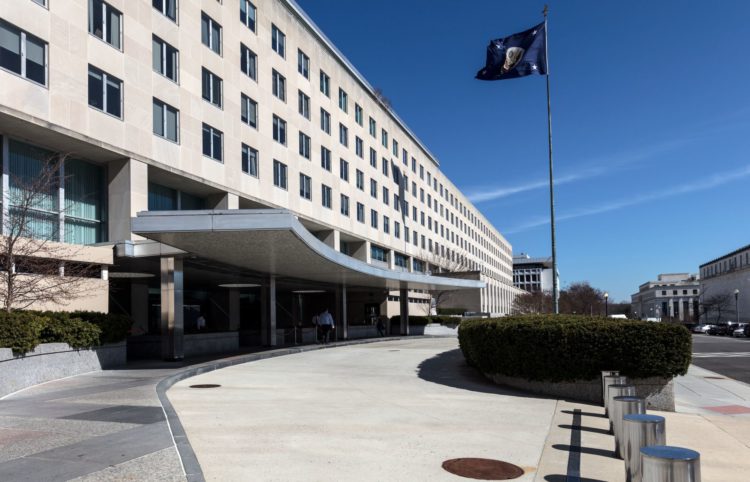
Democracy Forward on Tuesday filed a Freedom of Information Act request for records on the State Department’s new bathroom policy.
A memo titled “Updates Regarding Biological Sex and Intimate Spaces, Including Restrooms” that the State Department issued on April 20 notes employees can no longer use bathrooms that correspond with their gender identity.
“The administration affirms that there are two sexes — male and female — and that federal facilities should operate on this objective and longstanding basis to ensure consistency, privacy, and safety in shared spaces,” State Department spokesperson Tommy Piggot told the Daily Signal, a conservative news website that first reported on the memo. “In line with President Trump’s executive order this provides clear, uniform guidance to the department by grounding policy in biological sex as determined at birth.”
President Donald Trump shortly after he took office in January 2025 issued an executive order that directed the federal government to only recognize two genders: male and female. The sweeping directive also ordered federal government agencies to “effectuate this policy by taking appropriate action to ensure that intimate spaces designated for women, girls, or females (or for men, boys, or males) are designated by sex and not identity.”
Democracy Forward’s FOIA request that the Washington Blade exclusively obtained on Tuesday is specifically seeking a copy of the memo that details the State Department’s new bathroom policy. Democracy Forward has also requested “all” memo-specific communications between the State Department’s Bureau of Global Public Affairs and the Daily Signal from April 1-21.
State Department
State Department implements anti-trans bathroom policy
Memo notes directive corresponds with White House executive order
The State Department on April 20 announced employees cannot use bathrooms that correspond with their gender identity.
The Daily Signal, a conservative news website, reported the State Department announced the new policy in a memo titled “Updates Regarding Biological Sex and Intimate Spaces, Including Restrooms.”
The State Department has not responded to the Washington Blade’s request for comment on the directive.
“The administration affirms that there are two sexes — male and female — and that federal facilities should operate on this objective and longstanding basis to ensure consistency, privacy, and safety in shared spaces,” State Department spokesperson Tommy Piggot told the Daily Signal. “In line with President Trump’s executive order this provides clear, uniform guidance to the department by grounding policy in biological sex as determined at birth.”
President Donald Trump shortly after he took office in January 2025 issued an executive order that directed the federal government to only recognize two genders: male and female. The sweeping directive also ordered federal government agencies to “effectuate this policy by taking appropriate action to ensure that intimate spaces designated for women, girls, or females (or for men, boys, or males) are designated by sex and not identity.”
The Daily Signal notes the new State Department policy “does not prohibit single-occupancy restrooms.”
State Department
Report: US to withhold HIV aid to Zambia unless mineral access expanded
New York Times obtained Secretary of State Marco Rubio memo
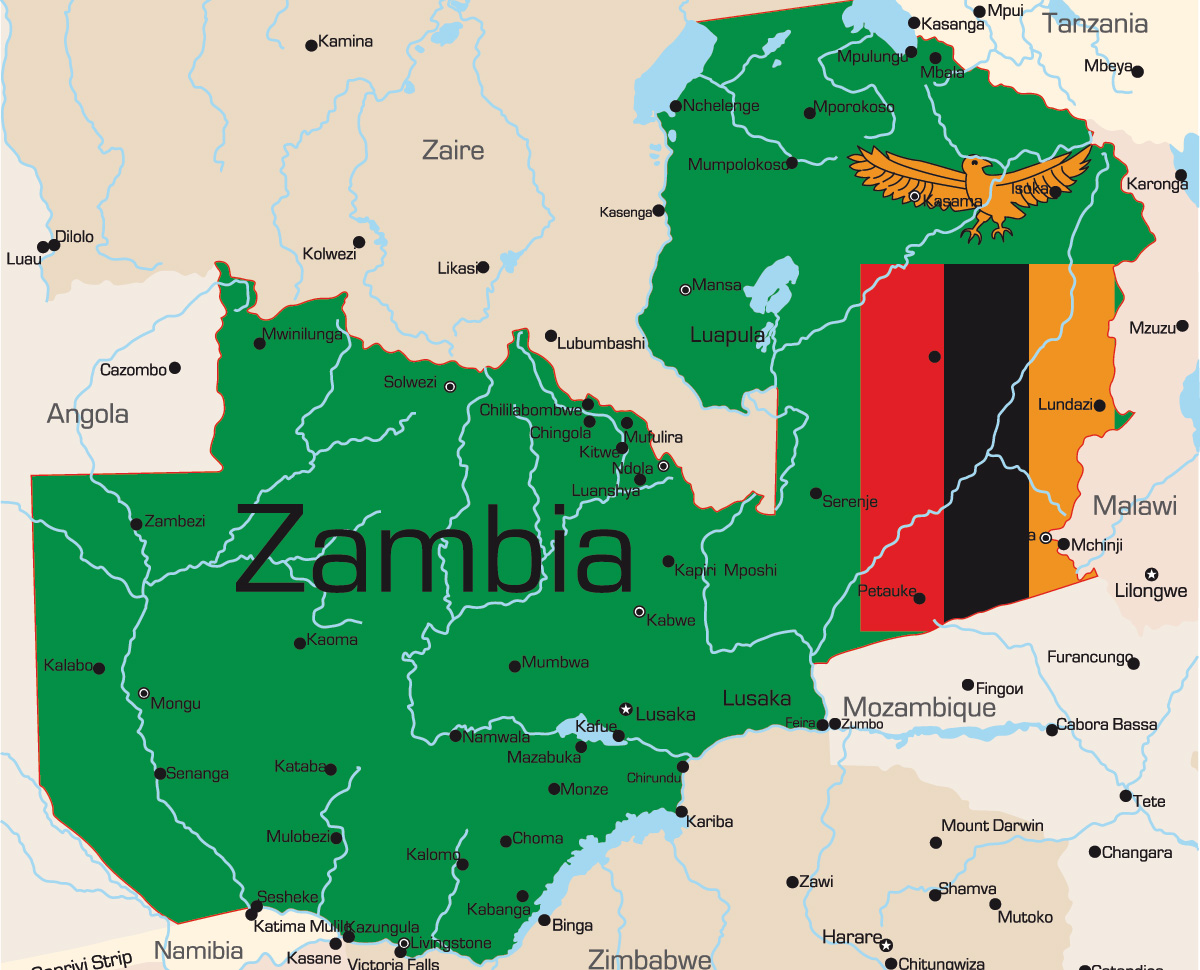
The State Department is reportedly considering withholding assistance for Zambians with HIV unless the country’s government allows the U.S. to access more of its minerals.
The New York Times on Monday reported Secretary of State Marco Rubio in a memo to State Department’s Bureau of African Affairs staffers wrote the U.S. “will only secure our priorities by demonstrating willingness to publicly take support away from Zambia on a massive scale.” The newspaper said it obtained a copy of the letter.
Zambia is a country in southern Africa that borders Tanzania, Malawi, Mozambique, Zimbabwe, Botswana, Namibia, Angola, and the Democratic Republic of Congo.
The Times notes upwards of 1.3 million Zambians receive daily HIV medications through PEPFAR. The newspaper reported Rubio in his memo said the Trump-Vance administration could “significantly cut assistance” as soon as May.
“Reports of (the) State Department withholding lifesaving HIV treatment in return for mining concessions in Zambia does not make us safer, stronger, or more prosperous,” said U.S. Sen. Jeanne Shaheen (D-N.H.), the ranking member of the Senate Foreign Relations Committee, on Tuesday. “Monetizing innocent people’s lives further undermines U.S. global leadership and is just plain wrong.”
The Washington Blade has reached out to the State Department for comment.
Zambia received breakthrough HIV prevention drug through PEPFAR
Rubio on Jan. 28, 2025, issued a waiver that allowed PEPFAR and other “life-saving humanitarian assistance” programs to continue to operate during a freeze on nearly all U.S. foreign aid spending. HIV/AIDS service providers around the world with whom the Blade has spoken say PEPFAR cuts and the loss of funding from the U.S. Agency for International Development, which officially closed on July 1, 2025, has severely impacted their work.
The State Department last September announced PEPFAR will distribute lenacapavir in countries with high prevalence rates. Zambia two months later received the first doses of the breakthrough HIV prevention drug.
Kenya and Uganda are among the African countries have signed health agreements with the U.S. since the Trump-Vance administration took office.
The Times notes the countries that signed these agreements pledged to increase health spending. The Blade last month reported LGBTQ rights groups have questioned whether these agreements will lead to further exclusion and government-sanctioned discrimination based on sexual orientation and gender identity.

PHOTOS: Petal Release Party

Madonna headlines World Pride Music Festival in Amsterdam

Reggie White relishing first season as artistic director of Woolly Mammoth

PHOTOS: Amsterdam Pride Canal Parade

Amsterdam Pride Canal Parade draws hundreds of thousands

Madonna to perform at World Pride in Amsterdam

BLADE ENDORSEMENT: Susan Stewart for mayor of Rehoboth Beach

PHOTOS: Lambda Legal in the Pines

Calendar: July 31-August 6