District of Columbia
Recall efforts targeting two D.C. Council members fail
Activists disagree over extent of support for plan targeting Allen, Nadeau
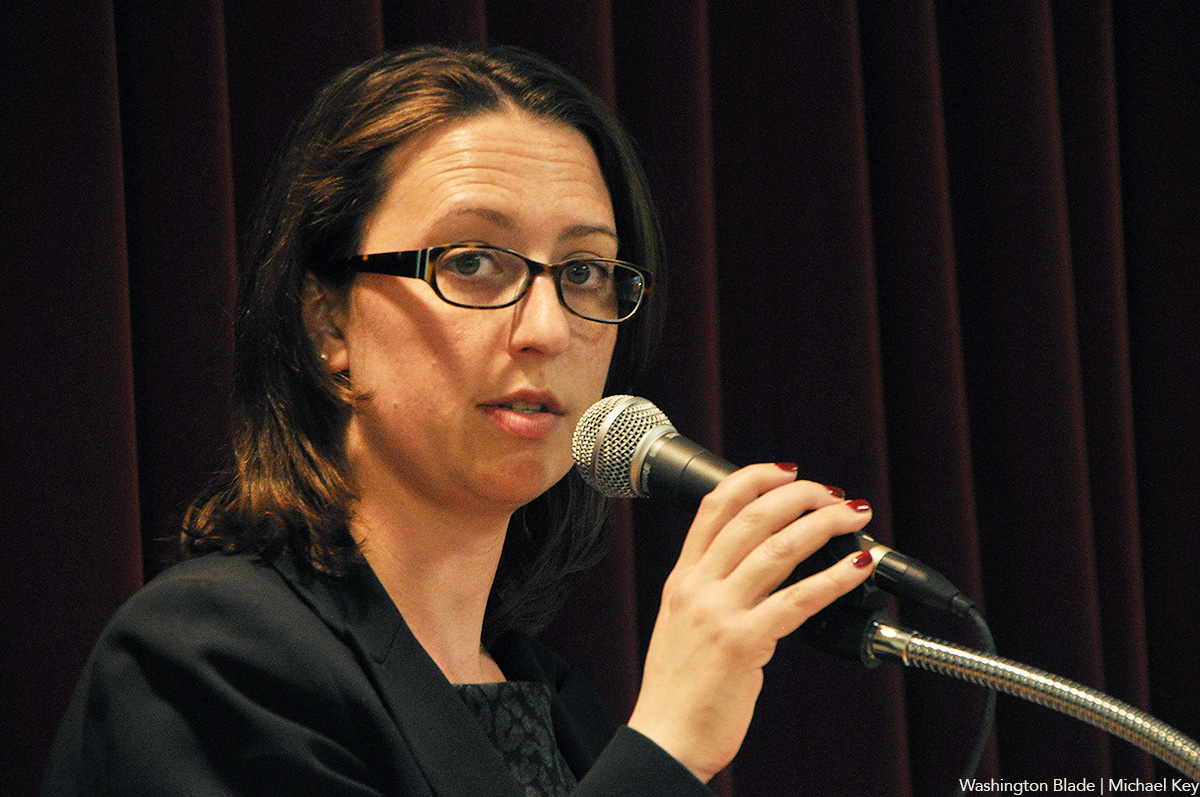
The D.C. Board of Elections confirmed this week that the campaign to recall D.C. Council member Charles Allen (D-Ward 6) failed to obtain the required 6,427 petition signatures needed to place the Allen recall on the November election ballot in time for an Aug. 12 deadline.
And the chairperson of the campaign to recall Council member Brianne Nadeau (D-Ward 1), Diana Alvarez, told the Washington Blade on Tuesday in a telephone interview that she and her campaign team do not believe they will be able to collect the required number of 5,448 petition signatures in time for their Oct. 1 deadline.
“We unfortunately have not collected the number of signatures we hoped for, and at this point I don’t think we will be able to collect all of them,” she said. “So, it’s been a challenge, you know, especially with everyone having their own personal lives going on. Many of us are small business owners.”
Under the D.C. election law, organizers of recall campaigns are given 180 days from the time they officially file papers for the recall to obtain the required number of signatures.
News that the effort to recall Allen had failed and that the effort to recall Nadeau was on its way to failing drew attention to a sharp disagreement among LGBTQ activists over the extent of support for or opposition to the two recall campaigns within the D.C. LGBTQ community.
Many of the city’s LGBTQ Democratic Party activists, led by the Capital Stonewall Democrats, the city’s largest local LGBTQ political group, have argued that the LGBTQ community overwhelmingly opposed the two recall campaigns in part on grounds that Allen and Nadeau have been longtime strong supporters of the LGBTQ community and have championed LGBTQ supportive legislation before the D.C. Council.
But LGBTQ community supporters of the recall campaigns, including Ward 1 gay Democratic activist and Advisory Neighborhood Commissioner Jamie Sycamore, have argued that the “rank-and-file” members of the LGBTQ community support the recall efforts for the same reason as their straight counterparts. Sycamore and other LGBTQ recall backers say they blame Nadeau and Allen for the alarming rise in violent crime in the city in 2023 due to their support for policies to defund the police department and put in place lenient sentencing rules for those convicted of committing violent crimes, including carjackings and armed robberies.
Sycamore said he officially withdrew as a member of the Nadeau recall campaign in June after becoming convinced that the other leaders of the campaign failed to do the “legwork” needed to gather the required number of petition signatures. But he told the Blade this week that he still supports the recall of Nadeau and Allen on grounds that their actions on the Council have led to a public safety crisis in the city that impacts LGBTQ residents as well as everyone else.
David Perruzza, owner of the Adams Morgan gay bar Pitchers and its attached lesbian bar League Her Own, said he too supports the recall of Nadeau because of what he calls her “refusal” to properly address crime in Ward 1 where his bars are located.
“I think every LGBT person I know is supporting it,” he said of the Nadeau recall campaign. “The crime is terrible and people aren’t going out as much because of the crime,” which he said is hurting businesses in Ward 1, including nightlife businesses like his.
Michael Haresign, president of the Capital Stonewall Democrats, disputes Sycamore’s argument, saying he believes the large majority of LGBTQ D.C. residents agree with Nadeau and Allen and their supporters that the two lawmakers should not be blamed for the rise in crime. Both Allen and Nadeau have argued that public safety is their highest priority, and they have pushed for legislation to curtail crime by, among other things, addressing the root cause of crime such as mental health issues and substance abuse to prevent crime before it happens.
Haresign points out that Capital Stonewall Democrats urged its members and others in the LGBTQ community not to sign the petitions being circulated for the two recall campaigns. He noted the organization endorsed Allen and Nadeau in their most recent primary election campaigns in 2022 because of their strong support for the LGBTQ community.
He also points out that he believes members of the LGBTQ community, like their straight allies, think a recall effort is appropriate for ethical violations by elected officials such as violating a law but is not appropriate for a disagreement over public policy issues.
In noting that the recall efforts have failed, Haresign added, “I think it shows there really wasn’t that much of a push for any recall efforts from the community. It was sort of a few people with bones to pick with the Council members who were pushing these recalls forward. But the community at large wasn’t really lining up to sign the petitions.”
Among those who disagree with Haresign is Andrew Minik, president of the D.C. chapter of the national LGBTQ GOP group Log Cabin Republicans.
“I absolutely support both of the recall efforts,” Minik told the Blade at the start of the recall campaigns in March. “In our D.C. Chapter of Log Cabin, we have members in all eight wards of D.C.,” he said. “You do not need to go very far to ask any of our members if he or she has been a victim of crime themselves or just knowing someone who has,” according to Minik. “People like Charles Allen and Brianne Nadeau are uniquely responsible for the conditions that have allowed crime to spiral out of control here.”
D.C. gay Democratic activists John Klenert of Ward 2 and David Meadows of Ward 8 said many in the LGBTQ community have joined or given financial support to the official Allen and Nadeau campaigns opposing the recall efforts.
“I oppose these recall efforts,” Meadows said. “The recall people raise some good issues, but you have to weigh the good over the bad,” he said, adding that Allen’s and Nadeau’s positive actions far outweigh the crime-related allegations made by supporters of the recalls, which Allen and Nadeau have said are mostly mischaracterizations of their actual positions and actions.
On Aug. 12, the day the Board of Elections announced the Allen recall campaign had failed to obtain the required number of petition signatures from registered voters in Ward 6, the campaign announced that although it obtained 5,500 signatures instead of the required number of 6,427, it was asking the election board to place the recall measure on the ballot anyway.
In a statement, the campaign said the reason it wasn’t able to obtain the needed signatures was because the Board of Elections violated a D.C. law that requires the board to provide a mobile app to help gather signatures in addition to gathering signatures on paper petitions. Board of Elections Executive Director Monica Holman Evans said the mobile petition app was discontinued in 2022 when a third-party vendor stopped providing it, according to a report by the Washington Post
But Evans told the Post that use of the app would not have made a difference in the Allen recall campaign’s ability to gather signatures because petition circulators would have had to approach each potential signer of the petition while holding an iPad instead of a paper petition, with the two taking the same amount of time.



District of Columbia
Maren Morris to headline Capital Pride Concert
Grammy award-winning singer/songwriter came out as bisexual in 2024
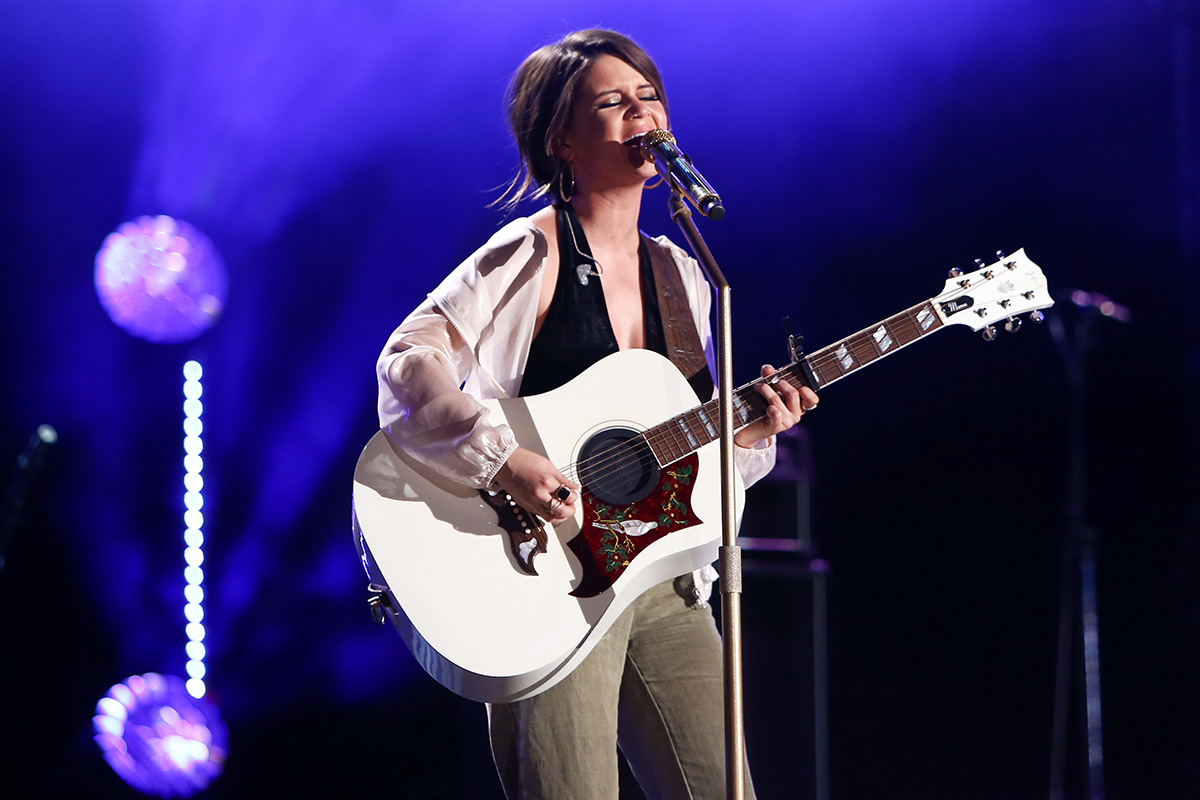
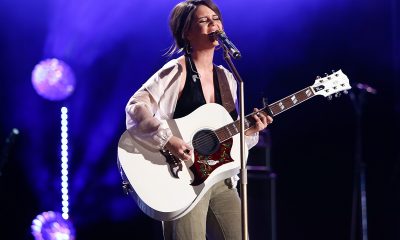
Capital Pride Alliance, the group that organizes D.C.’s annual LGBTQ Pride events, announced on May 7 that nationally acclaimed singer-songwriter Maren Morris, who identifies as bisexual, will be the headline performer at this year’s Capital Pride Concert scheduled for June 21.
The concert takes place as part of the annual Capital Pride Festival held on Pennsylvania Avenue, N.W., usually between 3rd Street near the U.S. Capitol and 9th Street.
“Morris, known for her genre-blending sound and outspoken support of LGBTQ+ rights, will be joined by a standout lineup, including acclaimed queer rapper Leikeli47, pop icon Lisa Lisa, Juno-nominated producer and DJ from the ‘Heated Rivalry’ soundtrack, Harrison, and ‘RuPaul’s Drag Race’ Season 18 winner Myki Meeks,” according to a statement released by Capital Pride.
“In a moment when LGBTQ+ people are being challenged across the country, the Capital Pride Concert is a space where our community is fully seen and heard,” Ryan Bos, the Capital Pride Alliance CEO and president, said in the statement. “Bringing Maren Morris to the stage reflects this year’s theme: Exist, Resist, Have the Audacity,” Bos said.
The statement notes that the concert takes place as part of the annual D.C. Pride Festival, which is open to the public free of charge, with tickets available for purchase for specific areas listed as the Capital Stage Pit Zone and the VIP Concert Zone.
It says the festival takes place from 12 –10 p.m. and points out that in addition to the music performed by multiple other performers on several stages, festival attendees “can explore hundreds of exhibitors, community organizations, and artisans, along with multiple food courts and beverage gardens throughout the festival footprint.”
Information on the Capital Pride Alliance website shows that the festival takes place one day after the annual Capital Pride Parade, scheduled for June 20 and which is expected to travel from 14th and T Streets, N.W., to Pennsylvania Ave., N.W., where it is expected to end at 9th Street.
The statement adds that following the stage performances during the June 21 festival, which are expected to conclude around 8 p.m., “the celebration will continue with the Capitol Sunset Dance Party, closing out the evening against the backdrop of the U.S. Capitol.”
The online publication Today, which is part of the NBC “Today” television show, reported that Morris came out as bisexual in a 2024 during Pride. It reports Morris “shared several images of herself holding a Pride flag to mark the occasion, writing, ‘Happy to be the B in LGBTQ+’”
District of Columbia
Your guide to D.C. region’s many Pride celebrations
From cities to small towns, a busy season ahead
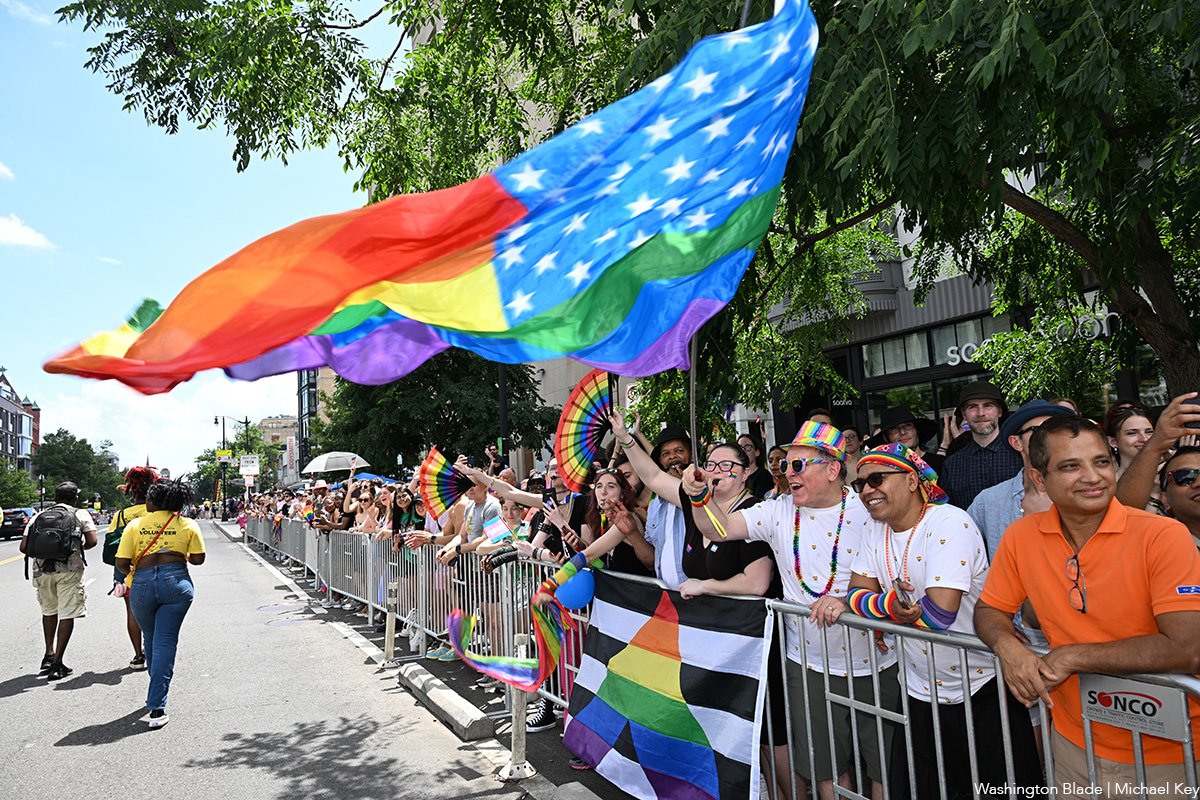
LGBTQ Pride festivals and marches are planned in cities and towns across the region. D.C.’s annual Capital Pride is expected to draw huge crowds with several events planned over many days. Other D.C.-based Pride events include D.C. Black Pride, D.C. Trans Pride and more. Other large-scale Pride festivals in the region are planned for Baltimore, Richmond, and Annapolis. Several smaller cities and suburban communities are planning LGBTQ Pride events throughout the summer and into the fall.
DC Black Pride

A staggering array of events are planned for DC Black Pride 2026, “New Black Renaissance,” from May 22-25. The host hotel is the Westin Downtown (999 9th St., N.W.). For complete descriptions of events and to purchase tickets, visit dcblackpride.org. Partner events are scheduled in venues around the city.
The Welcome to DC Black Pride Rooftop Happy Hour, Brown Sugar, is scheduled for 5-10 p.m. on Thursday, May 21 at Decades DC Rooftop (1219 Connecticut Ave., N.W.). Advance general admission tickets are $18.50 available at eventbee.com.
The Mr. and Miss DC Black Pride Pageant is scheduled for Thursday, May 21 from 6-9 p.m. at the Westin DC Downtown.
Comedian Anthony Oakes performs at the All Gays Go to Prison Comedy Show on Thursday, May 21 from 7-9 p.m. at Thrive DC (528 H St., N.E.)
The DC Black Pride Kickoff Rooftop Party is scheduled for Thursday, May 21 from 8:30 p.m.-2 a.m. at Nellie’s Sports Bar (900 U St., N.W.).
The 10th annual DC Black Pride Unity Ball is scheduled for Thursday, May 21 from 9 p.m.-1 a.m. at the Westin DC Downtown. The event is free, but registration is required.
Daryl Wilson Promotions presents The Pre Game [Wet Dreamz] at Icon DC (2001 11th St., N.W.) on Thursday, May 21 from 10 p.m.-2 a.m.
There will be a Rainbow Row organization and vendor expo at the Westin DC Downtown on the ballroom level. It will be open from 5-9 p.m. on Friday; 10 a.m.-8 p.m. on Saturday.
Daryl Wilson Promotions presents Welcome Reception [Wet Dreamz] at the Westin DC Downtown on Friday, May 22 from 3-9 p.m.
Bounce Friday! A Quinchfest Event will be at Thurst Lounge (2204 14th St., N.W.) on Friday, May 22. Doors open at 5 p.m.
The DC Black Pride Opening Reception will be at the Westin DC Downtown on Friday, May 22. Doors open at 5 p.m. Comedian Anthony Oakes is the host, Durand Bernarr is the headliner, and there will be special performances by Bang Garcon, Jay Columbus, Akeem Woods, Rue Pratt, Be Steadwell and Bennu Byrd. ASL interpreters will be available. The event is sold out.
Xavier Entertainment and Daryl Wilson Promotions present 3000 Men Block Party at Karma DC (2221 Adams Pl., N.E.). Passes for Xavier Entertainment events for the weekend are available from xavierpartydc.com. General admission all-access passes will not exceed $160.
A party for women who love women, Bliss presents “Dipped: All Nude Party” (dress in nude tones), is scheduled for Friday, May 22 from 10 p.m.-3 a.m. at Strand (1400 I St., N.W.). Advance tickets are $23.50. VIP bottle service is available. Tickets are available at eventbee.com.
The DC Black Pride Fun Run is scheduled for Saturday, May 23 from 8 a.m. until noon. The 5K fun run and walk starts at the Navy Yard at the Frederick Douglass Bridge (355 Water St. S.E.). All are welcome at all paces, whether running for fitness or fellowship. It is $20 and register to run at runsignup.com.
The House and Ballroom Leadership Community of Practice Summit is being held at the Westin DC Downtown on May 21-23. More information is on dcblackpride.org.
A number of workshops are scheduled throughout the weekend at the Westin DC Downtown for DC Black Pride, including workshops on such topics as religious trauma, attraction and identity, system navigation, aging, body image, parenting, Black LGBTQIA+ history, and more. A full list of workshops is available at dcblackpride.org.
Black Trans Pride is scheduled for Saturday, May 23 from 1-6 p.m. at the Westin DC Downtown. Register for the event at dcblackpride.org.
The DC Black Pride Mary Bowman Poetry Slam and Open Mic is scheduled for Saturday, May 23 from 6-8 p.m. at the Westin DC Downtown. The event is free.
Desire Without Definition, an “after dark sapphic conversation where connection, desire, and identity take center stage” will be held at Spark Social (2009 14th St., N.W.) on Saturday, May 23 from 7-10 p.m.
Several DC Black Pride parties are scheduled for Saturday, May 23. Tickets for the parties are available from the “Schedule” tab on dcblackpride.org.
The seventh annual Brunch & Babes drag event presented by the Capitol Ballroom Council is scheduled to begin seating at 11 a.m. on Sunday, May 24 at Hook Hall (3400 Georgia Ave., N.W.). Seated tickets (starting at $60) include a brunch buffet, bottomless mimosas and drag performances. Standing room tickets are $20. Tickets can be purchased at givebutter.com/brunch-babes26.
The Official DC Black Pride Funky Dance Day Party for Mature Women, “Do You Want To Get Funky With Me?,” presented by Women in the Life Association and the National LGBTQ Task Force is scheduled for Sunday, May 24 from 12-6 p.m. at The Continent DC (100 Vermont Ave., N.W.). The free event is 21+. Food and beverage are for purchase. Reserve a spot on Eventbrite.
African-American Collective Theater (ACT) presents original LGBTQ+ short play readings at OUT/spoken scheduled for Sunday, May 24 from 5-8 p.m. at Undercroft Theatre, Mt. Vernon Pl. UMC, lower level (900 Massachusetts Ave., N.W.). Tickets are available at a-act.org.
The Pride comedy day party Comedy & Cocktails: Pride Edition is scheduled for Sunday, May 24 from 4:30-9:30 p.m. at Pure Lounge (1326 U St., N.W.). Early bird ticket sales at $23.18 per ticket end on May 16. Tickets can be purchased on Eventbrite.
A number of parties are scheduled for Sunday, May 24. The Sweet Like Brown Sugar brunch is scheduled for 1-5 p.m. at Selva DC (1223 Connecticut Ave., N.W.). A green-themed G-Spot: The Ultimate Day Party is scheduled from 3-9 p.m. at Bravo Bravo (1001 Connecticut Ave., N.W.). SWEET ESCAPE: Rooftop Finale Day Party is scheduled for 4-10 p.m. at Twelve After Twelve (1212 18th St. N.W.). The Sunday Funday Rooftop Party is scheduled for 4 p.m.-4 a.m. at Nellie’s Sports Bar (900 U St., N.W.). The Block Is Hot Day Party is scheduled for 5-11 p.m. at The Bullpen (1201 Half St., S.E.). The R&B vs. House Party “for the big boys, the admirers, the allies and whoever ready to catch a real vibe” is scheduled for 10 p.m.-3 a.m. at Johnny Pistolas (2333 18th St., N.W.). The Daryl Wilson Sunday Night Super Party is scheduled for 10 p.m.- 4 a.m. at The Park at 14th (920 14th St., N.W.). Tickets and further information for the parties are available at dcblackpride.org/schedule.htm.
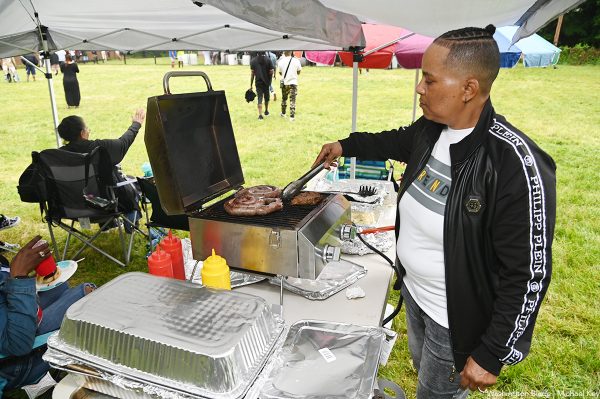
The annual Pride In The Park at Fort Dupont Park (3600 F St., S.E.) is presented this year by Xavier Entertainment. The free event is planned for Monday, May 25 from 12-7 p.m.
DC Black Pride parties on Monday, May 25 include the QuenchFest finale: Monday Monday at Thurst Lounge (2204 14th St., N.W.) from 5 p.m.-2 a.m.; the Pride in the Park Rooftop After Party at Nellie’s Sports Bar (900 U St., N.W.) from 6-11 p.m.; Meatloaf Man Hunt Rooftop Party at Ivy City Smokehouse (1356 Okie St., N.E.) from 10 p.m.-2 a.m.; and Thirst Trap at Icon DC (2001 11th St., N.W.) from 11 p.m.-4 a.m.
Community Pride events
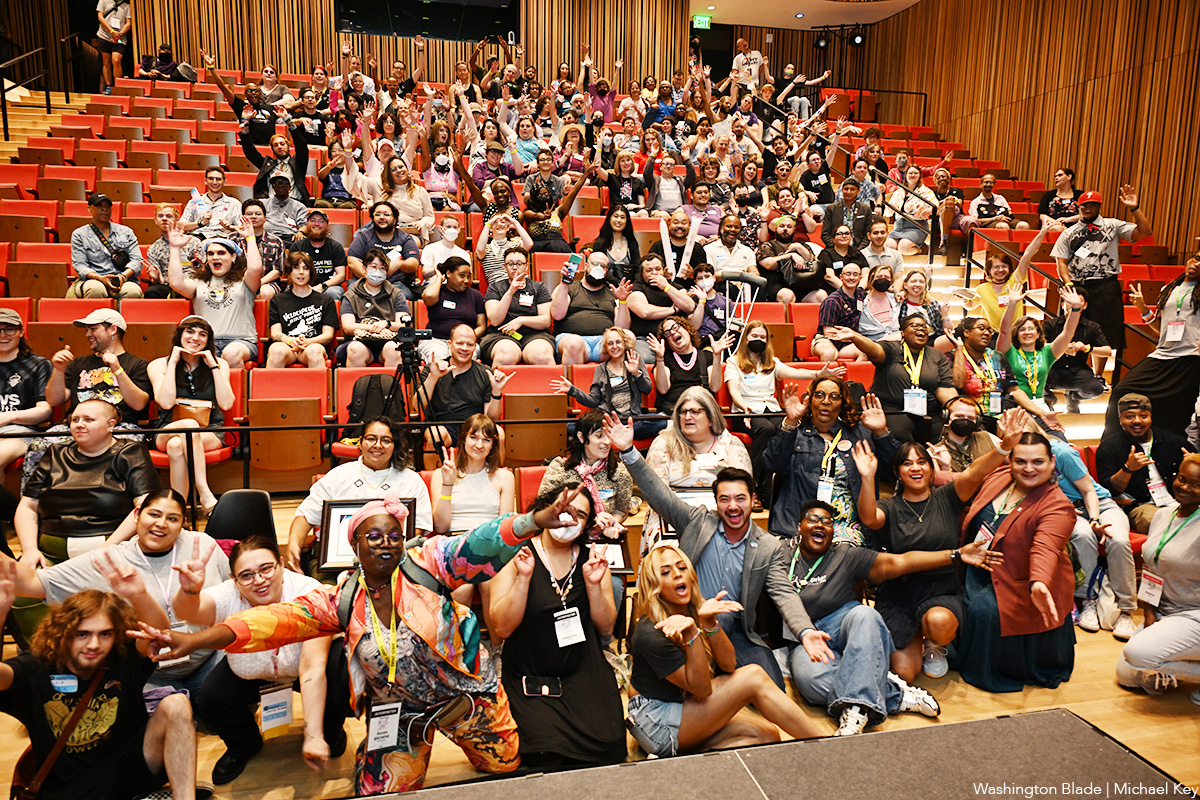
Trans Pride Washington, D.C. is scheduled for Saturday, May 16 from 9 a.m.-5 p.m. The conference and celebration will include a community fair, the Engendered Spirits awards ceremony, workshops, panel discussions, performances and more. Find more information and instructions on registration on Instagram @transpridewashingtondc. The location of the event will be given to attendees after registration.
There will also be a Trans Pride White, Blue & Pink After Party on Saturday, May 16 from 7:30 p.m. to midnight. The location for the party will be given following registration.
The PrideCon Youth Pride Fest is scheduled for Saturday, June 20 from 11 a.m.-4 p.m. for youth ages 6-18 and their families. The event is free, but registration is required. The location of the event will be revealed to participants after registration. Register on Eventbrite.
No information has been released for Latinx Pride events yet, but follow the Latinx History Project on Facebook for announcements.
Silver Pride and API Pride events have yet to be announced, but there have been events in previous years.
Capital Pride
The 51st annual Capital Pride in Washington, D.C. will be later in June this year than in years past due to the upcoming “America 250” celebrations. There are events scheduled throughout the month, however. In addition to the number of official events produced by the Capital Pride Alliance, several restaurants, bars, clubs and organizations have planned Pride parties and gatherings to mark the occasion.
The Capital Pride Honors is scheduled for Sunday, June 7. The ticketed event will honor members of the community and allies for their commitment to LGBTQ equality. The location of the event and further information has yet to be released, but check back at capitalpride.org for updates.
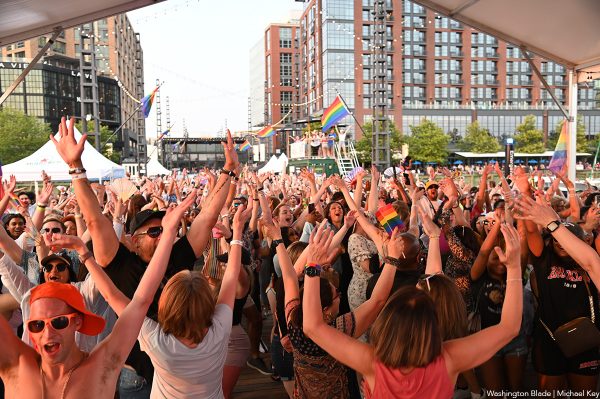
The Washington Blade is holding the annual Pride on the Pier at The Wharf DC on Saturday, June 13 from 4-9 p.m. The event is free, but VIP tickets are available at prideonthepierdc.com.
The seventh annual District of PRIDE Showcase will be held at the Lincoln Theatre (1215 U St., N.W.) on Wednesday, June 17 at 7 p.m. The talent showcase will feature live performances from members of the LGBTQ community. The event is free. To register and to get more information, visit Eventbrite.
The Capital Pride Rooftop Pool Party is scheduled for Thursday, June 18 from 7-11 p.m. at the Penthouse Pool and Lounge (1212 4th Street, S.E.). Tickets run from $30-$40 and the event is 21+. Tickets are available on capitalpride.org
The RIOT! Official Capital Pride Opening Party is scheduled for Friday, June 19 from 9 p.m.-3:30 a.m. at Echostage (2135 Queens Chapel Rd., N.E.). Bob the Drag Queen will be running a DJ set and Myki Meeks scheduled as the headlining performer. Advance tickets run from $39-$59 and will be $69 at the door. Capital Pride General and VIP pass packages also include admission and can be purchased on capitalpride.org. The event is 18+.
The Crack of Noon Parade Brunch is scheduled for Saturday, June 20 from noon until 3 p.m. at Viceroy Washington DC (1430 Rhode Island Ave., N.W.). It is an all-you-can-eat gourmet brunch with mimosas. Tickets for the event are limited and range from $75-$90 or as a part of the VIP package available on capitalpride.org. The event is 21+.
The Capital Pride Parade is one of the largest in the region and is expected to draw tens of thousands of participants and spectators. The annual parade is scheduled for Saturday, June 20 from 3-7:30 p.m. and will move through the Shaw, Logan Circle, Downtown and Penn Quarter neighborhoods. The parade is anticipated to begin at 14th Street and T Street, N.W. and end at Pennsylvania Avenue and 9th Street, N.W., though organizers state that the route is subject to change. The event is free to spectate and open to people of all ages.
EXLIX-Her: Official Capital Pride Women’s Party is scheduled for Saturday, June 20 from 10 p.m. to 3 a.m. at Decades DC (1219 Connecticut Ave., N.W.). The event is 21+. Tickets may be purchased on capitalpride.org/event/womens-party.
The Capital Pride Festival is scheduled for Sunday, June 21 from 12-10 p.m. on Pennsylvania Avenue, N.W. The event will include food courts, multiple beverage gardens, vendors, community organizations, games, art, performances, dancing and more. Donations are appreciated by organizers, but the event is free. There are designated beverage garden areas for attendees 21+, but the majority of the festival is open to people of all ages. VIP passes for an area near the stage will be available on capitalpride.org in the coming days.
The event promoters at KINETIC Presents have four large parties planned for venues across D.C. during Pride. The kickoff event, Lust, is planned for Thursday, June 18 from 10 p.m.-3 a.m. The event is 21+ with music by Dan Slater and TOMI. The opening party, UNCUT XXL: Heavy Load, is scheduled for Friday, June 19 from 10 p.m.-4 a.m. and is 21+. KINETIC partners with Capital Pride to produce the Official Main Event party, Toy Land, on Saturday, June 20 from 10 p.m.-4 a.m. Toy Land is 18+ and features music by GSP and Matt Suave. Finally, the closing party, discoVERS, is scheduled for Sunday, June 21 from 10 p.m.-3 a.m. discoVERS is a 21+ event with music provided by Alexis Tucci and Clinton Foster. There will be four venues, but they have not yet been publicly announced. Tickets are available on Eventbrite and start at $198.20 for an individual with a cheaper rate for purchasing two tickets at a time, as well as VIP ticket options.
Baltimore Pride

A number of events are planned for the 51st annual Baltimore Pride from June 8-14. More information for each event can be found on baltimorepride.org.
A Pride Week Kickoff event is scheduled for Monday, June 8 from 3-8 p.m. at The Ynot Lot (101 W. North Ave., Baltimore, Md.) The event will include a press conference and awards ceremony with a mural unveiling.
The Twilight on the Terrace Gala is scheduled for Friday, June 12 from 7 p.m. to midnight at the M&T Bank Exchange (401 W. Fayette St., Baltimore, Md.). The signature Pride evening will feature dinner, performances, awards, and dancing.
The Mt. Vernon Block Party is scheduled for Friday, June 12 from 3-8 p.m. on Charles Street (699 Washington Pl., Baltimore, Md.). It promises to be a lively street festival with DJs, vendors and food.
One of the largest Pride parades in the region, the Baltimore Pride Parade is planned for Saturday, June 13 from 12-3 p.m. at Druid Hill Park. There will be floats, marching bands, community groups, and special guests.
The Baltimore Pride Festival is scheduled for Sunday, June 14 from 12=8 p.m. at Druid Hill park. The closing day is packed with performances, workshops, and celebration.
Regional Prides

The fifth annual Equality Prince William Pride in Manassas, Va. is scheduled for Saturday, May 16 in historic downtown Manassas at the Harris Pavilion (9201 Center St.) from noon until 4 p.m. The free event features live music, DJ sets, vendors, arts and crafts, prizes and performances. For more information, visit equalityprincewilliam.org.
The Charles County Department of Health sponsors the fourth annual PrEP for Pride in White Plains, Md. on Saturday, May 30 from 12-5 p.m. The event will be held on the campus of the health department (4545 Crain Highway, White Plains, Md.) and will feature community resources, music, art, food trucks, vendors, as well as health and wellness information. For more details, visit Instagram @mdwellness_org and RSVP to the free event on Eventbrite.
The Hagerstown Pride Festival will be held in the parking lot of Hub City Brewery (25 W. Church Street, Hagerstown, Md.) on Saturday, May 30 from 12-5 p.m. Visit the Facebook event page for more information. There will be an afterparty at The Lodge (21614 National Pike, Boonsboro, Md.) featuring the best of regional drag with doors opening at 8 p.m. The afterparty cover is $15. More information for the afterparty is available on Instagram @thelodgemd.
Fauquier Pride will hold a 2026 Pride Kickoff Party at Cast Ron Craft House (11 South 2nd Street, Warrenton, Va.) on Saturday, May 30 from 7-11 p.m. The event is 18+ and has an entry fee of $17.85. There will be performances, food, drink, an auction, and an exciting time with headliner Anja Dick. Tickets and information is available on Eventbrite.
The Hampton Roads Black Gay Pride Festival is scheduled for Sunday, May 31 at Mount Trashmore Park Road in Virginia Beach, Va. from 11 a.m. to 5 p.m. The event is free, but VIP tickets are available for $33.85 on Eventbrite.
The second annual Shepherdstown Gay Pride Parade will begin at 141 W. German Street in Shepherdstown, W.Va. on Monday, June 1 at 6 p.m. More information is available on the Facebook event page.
The fifth annual Fairfax City Pride will be held at The Sherwood Center (3740 Blenheim Boulevard, Fairfax, Va.) on Saturday, June 6 from 11 a.m. until 1 p.m. More information is available in the events directory on fairfaxva.gov.
The fifth annual Pride at Mosaic will be held at the popular Mosaic District shopping area (2905 District Ave., Fairfax, Va.) in Fairfax, Va. from 3-6 p.m. on Saturday, June 6. For more information, visit mosaicdistrict.com.
The Suffolk Pride Festival is scheduled for Saturday, June 6 from 12-7 p.m. at 3000 Bennetts Creek Park Road in Suffolk, Va. The free festival will feature live entertainment, community resources, local vendors and a welcoming space. More information can be found on eventeny.com.
Delaware Pride is scheduled for Saturday, June 6 from 10 a.m. until 5 p.m. at Dover Legislative Green in Dover, Del. The free, all-ages event will feature vendors, drag artists, a beer garden, live music, food trucks and panels. More information is available at delawarepride.org.
Arlington County, Equality Arlington and Freddie’s Beach Bar are planning a 23rd Street Pride Block Party on Saturday, June 6 from 3-7 p.m. to be held outside Freddie’s Beach Bar (555 23rd St. S, Arlington, Va.). More information can be found on equalityarlington.org.
The sixth annual Old Ellicott City Pride is announced to be held in downtown Ellicott City, Md. on Saturday, June 6. The venue for the event has not yet been confirmed, but check back at howardcountypride.org/events for updates.
The fifth annual Loudoun Pride Festival is scheduled for Saturday, June 6 from 12-6 p.m. at Ida Lee Park in Leesburg, Va. Tickets are available on loudounpride.org for $5.
The fifth annual Pride on High Street in Portsmouth, Va., is scheduled for Saturday, June 6 from 12-6 p.m. More information is available on portsmouthprideva.com.
The fourth annual Culpeper Pride is scheduled for Sunday, June 7 from 12-8 p.m. at Mountain Run Winery (10753 Mountain Run Lake Road, Culpeper, Va.). There will be live entertainment, local vendors, community organizations, and food. For more information, visit the Culpeper Pride Facebook events page.
Takoma Pride will be on Sunday, June 7 from 10 a.m.-2 p.m. The parade begins at 10 a.m. at 201 Ethan Allen Avenue, Takoma Park, Md. A street festival will be held at 6929 Laurel Ave., Takoma Park, Md. from 10 a.m.-2 p.m. For more information, visit mainstreettakoma.org.
The Human Rights Commission of Rockville will hold the 10th annual Rockville Pride at Rockville Town Center Park at The Square (131 Gibbs St., Rockville, Md.) on Sunday, June 7 from 2-5 p.m. The event is free, open to all ages and is wheelchair accessible. More information is available on rockvillemd.gov.
The fifth annual Delmarva Pride is scheduled for Saturday, June 13 from 11 a.m.-4 p.m. on S. Harrison Street in Easton, Md. The event is free and open to people of all ages. More information can be found at delmarvapridecenter.com.
The Lost River Pride Festival is scheduled for Saturday, June 13 from 12-4 at the local farmers market (1089 Mill Gap Road, Lost River, W.V.), with events scheduled for Lost River Pride Weekend from June 12-14. Find more information at lostriverpride.com.
The sixth annual Catonsville Pride is scheduled for June 13 at The Children’s Home (205 Bloomsbury Ave., Catonsville, Md.) A “save the date” message has been posted to sites.google.com/view/catonsvillepride/home, but no further information is available at this time.
Hampton Roads Pride has events scheduled from June 26-28. The 13th annual Pride Block Party is scheduled for Friday, June 26. The event is 18+. The 38th annual PrideFest is scheduled for Saturday, June 27 from 12-8 p.m. at 113 Waterside Drive, Norfolk, Va. and will include a boat parade and a full day of live performances. On June 28, the 757 Pride March is planned to end at Neptune’s Park for the 6th annual Pride at the Beach for an evening of live performances, food and community. More information for these events and more can be found at hamptonroadspride.org.
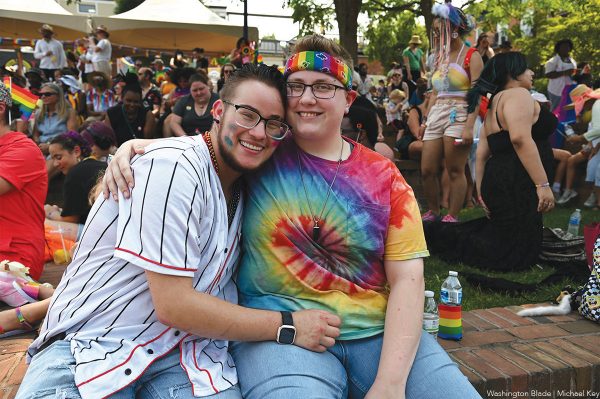
A few events are scheduled in Frederick, Md. for Frederick Pride. The second annual Frederick Pride Parade is planned for Friday, June 26 at 7 p.m. A save the date page has been created, but check back at thefrederickcenter.org for specific details. The 14th annual Frederick Pride Festival is planned for Saturday, June 27 from 11 a.m.-6 p.m. at Carroll Creek Linear Park in downtown Frederick.
The third annual Herndon Pride is scheduled for Saturday, June 27 from 12-5 p.m. at Arts Herndon (750 Center St., Herndon, Va.). There will be music, local vendors, new activities, theater and a “Hands on Art” children’s arts space. More information is available on Herndon Pride’s Facebook events page.
The ninth annual Alexandria Pride is scheduled for Saturday, June 27 from 2-6 p.m. at John Carlyle Square Park (825 John Carlyle St., Alexandria, Va.). Organizers say to expect 100 exhibitors, drag story hours, live music, health services, a mobile art lab, dancing and more. Find more information at alexandriava.gov/LGBTQ.
The sixth annual FXBG Pride is scheduled for Saturday, June 27 from 11 a.m.-4 p.m. at Riverfront Park in downtown Fredericksburg, Va. (701 Sophia Street). Organizers have not yet released details for the schedule of events, but check back at fxbgpride.org for further information.
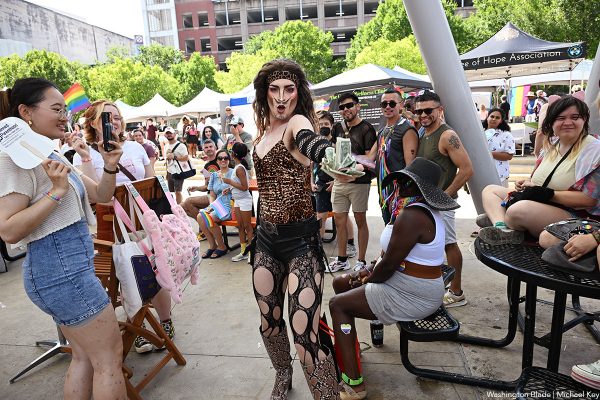
The Montgomery County Pride in the Plaza is scheduled for Sunday, June 28 from 12-8 p.m. at Veterans Plaza in Silver Spring, Md. For more information, visit liveinyourtruth.org/pride-in-the-plaza.
The eighth annual Westminster Pride Festival is scheduled for Saturday, July 11 from 12-5 p.m. at Westminster City Park (Westminster, Md.). For more information, visit westminsterpride.org.
Sussex Pride is hosting Rehoboth Beach Pride from July 15-19 in Rehoboth Beach, Del. Events include an interfaith service, a Dine and Donate with the Rehoboth Beach Bears, workshops, the festival, meetups, workshops, an evening show and a book signing. The Rehoboth Beach Pride Festival will be held on Saturday, July 18 from 9 a.m.-3 p.m. at the Rehoboth Beach Convention Center. Blade editor Kevin Naff will moderate a panel discussion at 2 p.m. on Saturday at the Rehoboth Beach Convention Center addressing the increase in HIV/AIDS and sexually transmitted infections in the past few years amid funding setbacks. Information detailing the full event schedule, meetup instructions and workshop topics can be found at sussexpride.org/rehobothbeach.
The eighth annual Black Pride RVA Weekend Festival presented by UGRC is scheduled for July 17-20 in Richmond, Va. Events include an Official Kick-Off Party at Godfrey’s (308 E. Grace Street) on Thursday, July 17 from 9 p.m.-1 a.m.; the ticketed Queer Talk/Root Awards at the Black History Museum (122 W. Leigh Street, Richmond, Va.) on Friday, July 18; The free Day of Purpose Festival at Diversity (1407 Sherwood Ave., Richmond, Va.) on Saturday, July 19 from 11 a.m.-4 p.m.; the ticketed Blacktopia Ball at Diversity on Saturday from 7 p.m.-1 a.m.; and the free Pride in the Park event on Sunday, June 20 from 3-7 p.m. at a location yet to be determined. More information can be found at ugrcrva.org.
The third annual Front Royal Pride is planned for Saturday, July 25 from 10 a.m.-4 p.m. on Main Street in Front Royal (414 E. Main St., Front Royal, Va.). For more information, visit frpride.com.
Richmond’s Virginia Pride Fest is scheduled for Sept. 12 on the Midtown Green in Richmond, Va. from 12-8 p.m. For more information, visit diversityrichmond.org.
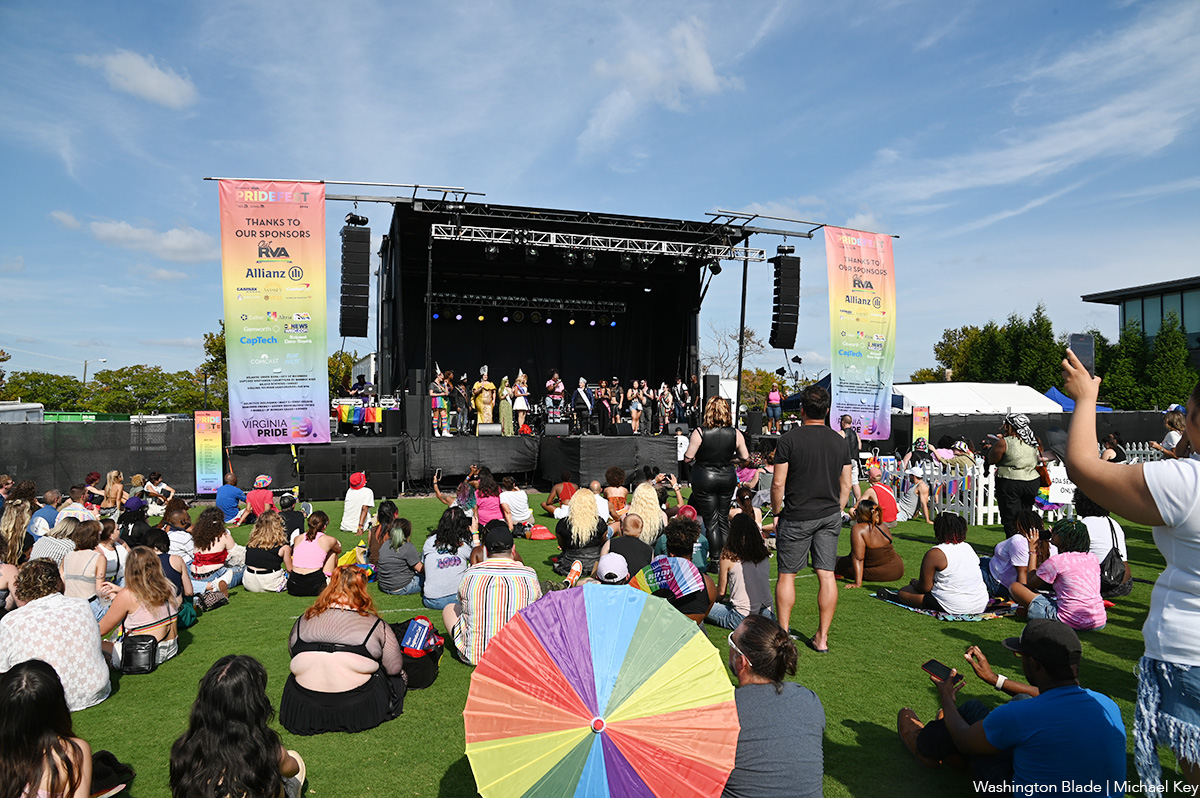
The Shenandoah Valley Pride Alliance presents the Shenandoah Valley Pride Festival on Sunday, September 20 from 12:30-6 p.m. at the Turner Pavilion (409 South Main St.) in downtown Harrisonburg, Va. For more information, visit shenandoahvalleypride.org or @shenvalleypride on Instagram.
C’ville Pride is scheduled for Saturday, Sept. 26 from 12:30-7:30 p.m. in Charlottesville, Va. at the Ting Pavilion (700 E. Main St.). Find more information on Instagram @charlottesvillepride.
One of the larger regional Pride celebrations is held in Annapolis, Md. Annapolis Pride is scheduled for Oct. 3 with a parade at noon and a festival from 1-6 p.m. Further details have not yet been released to the public, but check back at annapolispride.org for more information.
Other Pride festivals have been scheduled for October in Cumberland, Md. and Howard County, Md.
Outside the region, Pride celebrations are scheduled in cities and towns all over the world. Highlights include the Los Angeles Pride Parade on June 14 (lapride.org), New York City Pride on June 28 (nycpride.org), Chicago Pride Fest on June 20 and the Chicago Pride Parade on June 28 (pridechicago.org), Atlanta Pride on Oct. 11-12 (atlantapride.org) and WorldPride 2026 in Amsterdam, The Netherlands from July 25 – Aug. 8 (pride.amsterdam/en/worldpride).
District of Columbia
Memorial service for trans rights advocate SaVanna Wanzer set for May 17
Beloved activist was founder of D.C. Trans Pride, Black Trans Pride events
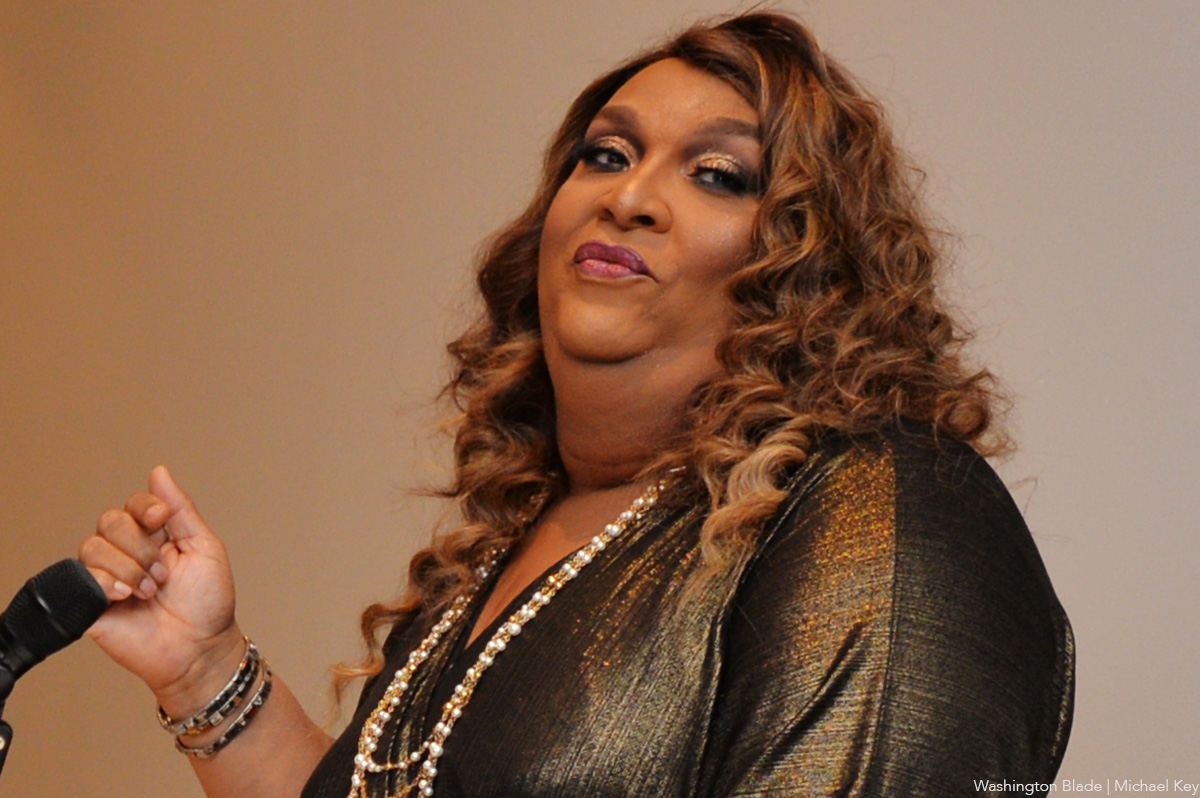
A celebration of life for D.C. transgender rights advocate SaVanna Wanzer has been scheduled for 1 p.m. on Sunday, May 17, at D.C.’s Westminster Presbyterian Church, according to statements released by her brother, Lee Livingston Perine and Whitman-Walker Health, the local LGBTQ supportive medical center where Wanzer served as a volunteer for many years.
Wanzer, 63, a lifelong D.C. resident, died April 23 of natural causes, Perine told the Washington Blade.
“Join us as we gather to honor SaVanna Wanzer, a woman whose leadership, vision, and care deeply shaped communities in Washington, D.C. and beyond,” the Whitman-Walker statement says.
“SaVanna created spaces where transgender people, especially Black and Brown transgender individuals could gather, be affirmed, and lead,” the statement adds. “From D.C. Trans Pride to D.C. Black Trans Pride and May Is All About Trans, her impact continues to be felt,” it says in referring to events that Wanzer played a lead role in organizing.
“A longtime member of Westminster Presbyterian Church, home of D.C.’s first Trans Pride, this celebration reflects both her spiritual home and the community she nurtured and serves as a meaningful conclusion to Trans Pride Weekend,” according to the statement.
It says the service will include American Sign Language interpretation and will be livestreamed on the Westminster DC Facebook page.
It also says a celebratory vigil for Wanzer was being planned for Saturday night, May 16, also at Westminster Presbyterian Church to provide an opportunity “for SaVanna’s friends to gather and share their stories, memories, and love for her.”
Perine said the Saturday event will take place from 6:30-8 p.m. and will be led by longtime D.C. LGBTQ rights advocate and event organizer Rayceen Pendarvis. In his statement he describes the Saturday event as an “evening of reflection and fellowship as we honor the life, legacy, and unstoppable spirit of SaVanna Wanzer.”
His statement adds, “Community members are invited to share stories, memories, and testimonies in celebration of SaVanna’s life.
Whitman-Walker spokesperson Lisa Amore said Whitman-Walker is extending support for the memorial events by helping to put out an announcement, but it is not the organizer of the events.
The Whitman-Walker statement says live music will begin at 12:15 p.m. prior to the May 17 memorial service at Westminster Presbyterian Church located at 400 I St., S.W.
It says if Westminster becomes filled to capacity, nearby Riverside Baptist Church at 699 Maine Ave., S.W. has offered to open its doors to host additional guests who will be able to view the service via a livestream arrangement,
It says a “Meal Of Love” will follow the Sunday service at Westminster.

New Hungarian prime minister takes office

Comings & Goings

Learn more about queer love

Calendar: May 8-14

Va. Supreme Court invalidates Democrat-backed redistricting plan

A reign defined by commitment and human impact

Ukrainian MPs advance new Civil Code without protections for same-sex couples

DOE investigates Smith College’s trans-inclusive policy

Key West Pride’s state funding pulled

PHOTOS: Miss Gay Western Maryland
-

 Arts & Entertainment4 days ago
A reign defined by commitment and human impact
-
Ukraine5 days ago
Ukrainian MPs advance new Civil Code without protections for same-sex couples
-
Federal Government4 days ago
DOE investigates Smith College’s trans-inclusive policy
-
Florida4 days ago
Key West Pride’s state funding pulled