Hungary
New Hungarian law bans Pride marches
Viktor Orbán’s government has cracked down on LGBTQ rights
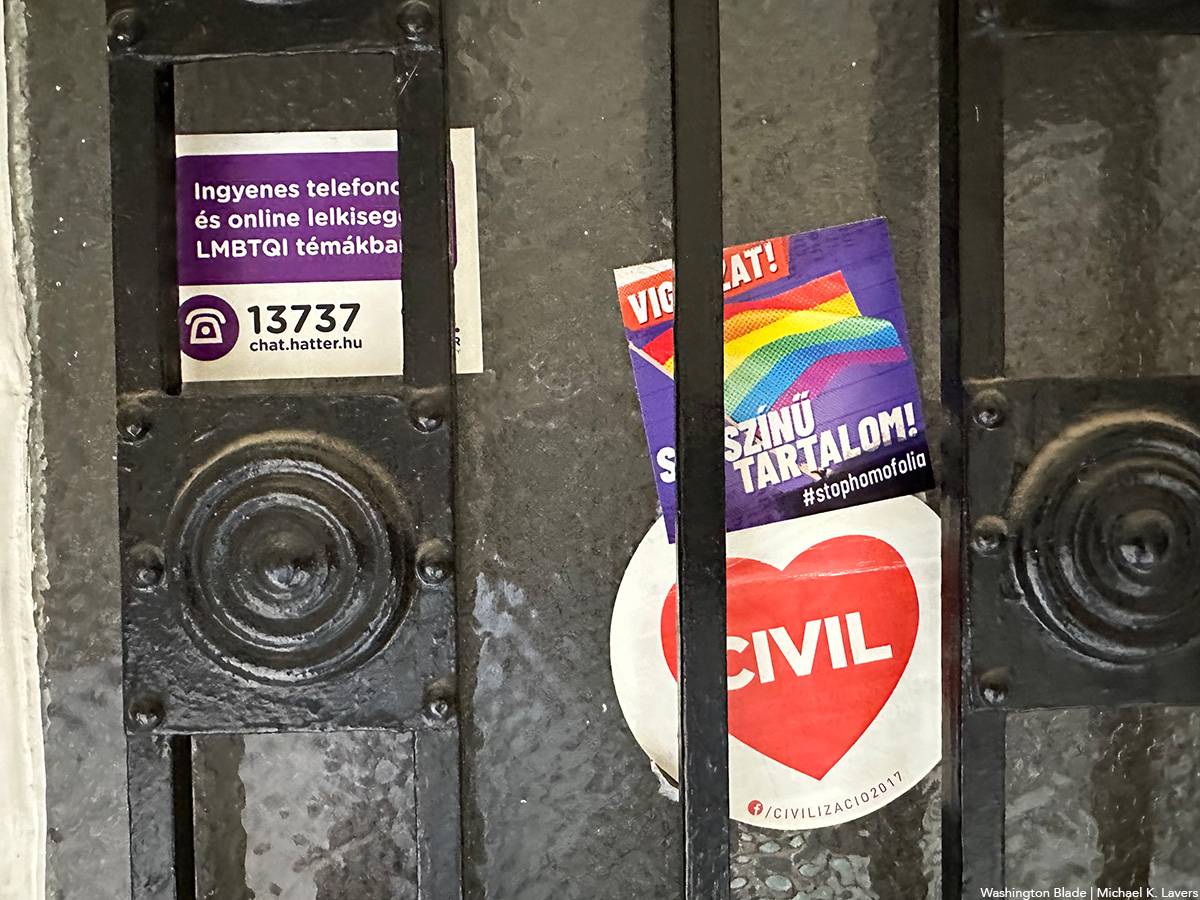
Hungarian lawmakers on Tuesday passed a bill that would ban Pride events and allow authorities to use facial recognition technology to identify those who participate in them.
The Associated Press reported thousands of protesters gathered outside the Hungarian parliament in Budapest, the country’s capital, after MPs approved the measure by a 136-27 vote margin. The protesters later blocked traffic on the nearby Margaret Bridge over the Danube River.
“Not only does this law introduce discriminatory and simply evil restrictions on freedom of assembly, but it was also adopted in a highly undemocratic manner, through an extraordinary procedure that did not allow for any real debate,” said Tamás Dombos of the Háttér Society, a Hungarian LGBTQ and intersex rights group, in a statement that Outright International released after the vote. “They proposed it yesterday, and the parliament adopted it today.”
Amnesty International Hungary Director Dávid Vig also criticized the vote.
“This law is a full-frontal attack on the LGBTI community and a blatant violation of Hungary’s obligations to prohibit discrimination and guarantee freedom of expression and peaceful assembly,” said Vig.
Prime Minister Viktor Orbán and members of his government in recent weeks said they would ban public Pride marches in Budapest. The 30th Budapest Pride is scheduled to take place on June 28.
“The Hungarian government is trying to restrict peaceful protests with a critical voice by targeting a minority,” said Budapest Pride on Tuesday in a statement the Washington Blade published. “Therefore, as a movement, we will fight for the freedom of all Hungarians to protest!”
Orbán and members of his ruling Fidesz party over the last decade have moved to curtail LGBTQ and intersex rights in Hungary.
A law that bans legal recognition of transgender and intersex people took effect in 2020. Hungarian MPs that year also effectively banned same-sex couples from adopting children and defined marriage in the constitution as between a man and a woman.
An anti-LGBTQ propaganda law took effect in 2021. The European Commission sued Hungary, which is a member of the European Union, over it.
MPs in 2023 approved the “snitch on your gay neighbor” bill that would have allowed Hungarians to anonymously report same-sex couples who are raising children. The Budapest Metropolitan Government Office in 2023 fined Lira Konyv, the country’s second-largest bookstore chain, 12 million forints ($33,001.94), for selling copies of British author Alice Oseman’s “Heartstopper.”
Former U.S. Ambassador to Hungary David Pressman, who is gay, participated in the Budapest Pride march in 2024 and 2023. Pressman was also a vocal critic of Hungary’s anti-LGBTQ crackdown.
“We will not be intimidated, we will not give in to bullying,” said Dombos. “We are celebrating Pride for the 30th time in Budapest this year.”
“There was Pride before the Orbán governments, and there will be Pride after,” he added.
Elections will take place in Hungary in 2026.
Budapest Pride spokesperson Johanna Majercsik earlier this month said the Hungarian Helsinki Committee, a Budapest-based human rights NGO, has offered their organization legal advice.




Hungary
New Hungarian government to scrap anti-LGBTQ adoption law
Prime Minister Peter Maygar ousted Viktor Orbán in April
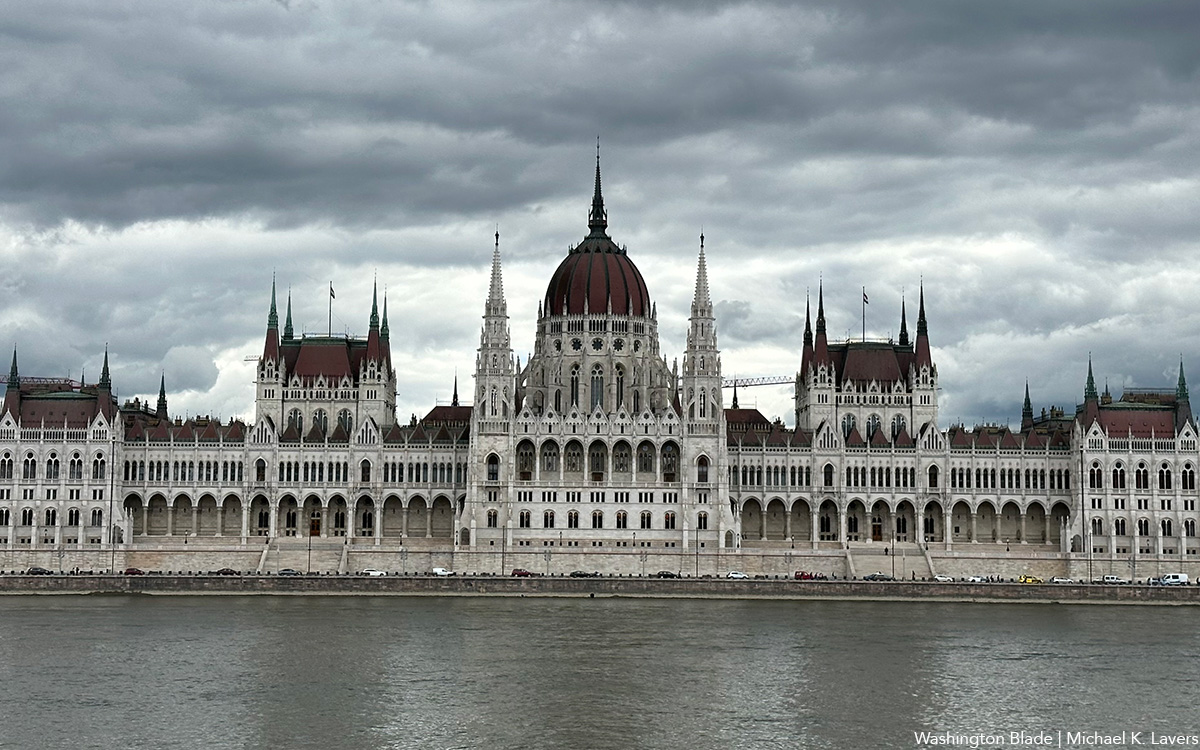
Hungarian Prime Minister Peter Maygar has said his government will amend a law that essentially bans same-sex couples from adopting children.
Lawmakers approved the effective adoption ban in 2020, when then-Prime Minister Viktor Orbán’s government was in power. Maygar announced plans to amend the law on Saturday when he was speaking to supporters in Budapest, the Hungarian capital.
Orbán and his government faced widespread criticism over its anti-LGBTQ crackdown that also included laws banning Pride events.
Maygar in April ousted Orbán in Hungary’s elections.
Hungary
Tens of thousands participate in post-Orbán Budapest Pride march
New government allowed event to take place without restrictions
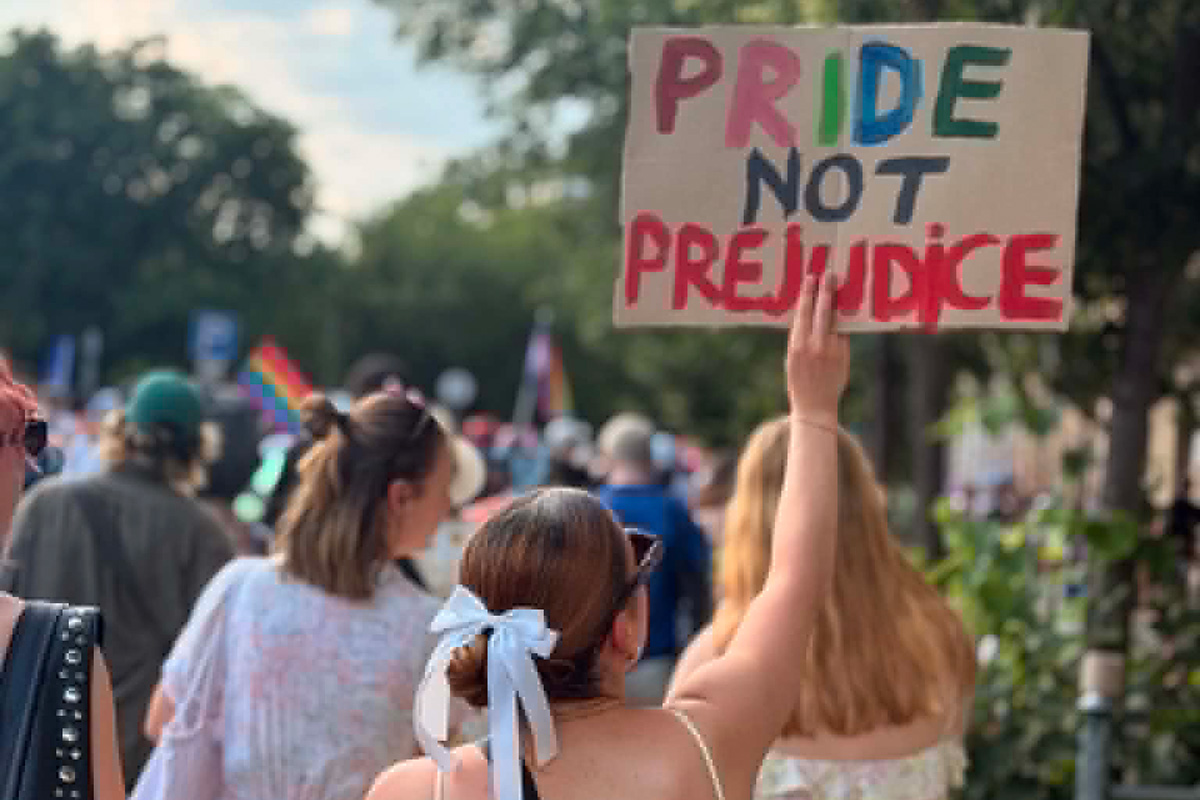
Tens of thousands of people on Saturday took part in the annual Budapest Pride march in the Hungarian capital.
The march took place less than two months after new Prime Minister Péter Maygar took office.
Hungarian lawmakers in 2025 passed a bill that banned Pride events and allowed authorities to use facial recognition technology to identify participants. MPs later amended the Hungarian constitution to ban public LGBTQ events.
More than 100,000 people defied the ban and participated in last year’s Budapest Pride parade. The event became one of the largest protests against then-Prime Minister Viktor Orbán and his government since he took office in 2010.
Magyar’s center-right Tisza party ousted Orbán’s Fidesz-KDNP coalition in elections that took place on April 12. The European Union’s top court, the EU Court of Justice, days after Orbán’s ouster struck down Hungary’s anti-LGBTQ propaganda law that MPs approved in 2021.
Hungarian police last month announced they would allow the Budapest Pride march to take place without restrictions.
Authorities subsequently dropped charges against Budapest Mayor Gergely Karácsony over his role in organizing the city’s 2025 Pride march. Officials in Pécs, a city near Hungary’s border with Croatia, have also dropped charges against Géza Buzás-Hábel, who organized a 2025 Pride event.
Hungary
Charges against Budapest mayor for organizing Pride march dropped
Country’s new government took office last month
Hungarian authorities on Thursday dropped charges against Budapest Mayor Gergely Karácsony over his role in organizing the city’s 2025 Pride march.
Karácsony spoke at the event, even though then-Prime Minister Viktor Orbán’s government banned it.
More than 100,000 people defied the ban and participated in the march that took place on June 28, 2025. The Associated Press notes the Budapest Chief Prosecutor’s Office in January charged Karácsony with “organizing the unlawful assembly despite a prohibition order.”
Karácsony, who has been Budapest’s mayor since 2019, described himself as a “proud defendant” after his indictment.
“It seems that in this country, this is the price you pay if you stand up for your own freedom and the freedom of others,” he said in a statement, according to the AP. “If anyone thinks they can ban me, deter me, or prevent me and my city from doing so, they are gravely mistaken.”
Budapest is Hungary’s capital and largest city.
Prime Minister Péter Magyar took office last month after his center-right Tisza party ousted Orbán’s Fidesz-KDNP coalition in elections that took place on April 12.
Hungarian police on May 29 announced they will allow the Budapest Pride march to take place this year.
The European Union’s top court, the EU Court of Justice, days after Orbán’s ouster struck down Hungary’s anti-LGBTQ propaganda law that MPs approved in 2021. The BBC notes Hungarian authorities cited the decision in their decision to drop the charges against Karácsony.
Authorities in Pécs, a city near Hungary’s border with Croatia, have also dropped charges against Géza Buzás-Hábel, who organized a 2025 Pride event.

Vote now! Best Of LGBTQ DC readers’ choice awards

Meet the LGBTQ candidates running for U.S. House, Senate

Ana Brnabić becomes world’s first openly lesbian head of state

529 openly LGBTQ candidates running in Brazilian election