Kenya
Kenyan LGBTQ group launches online legal aid clinic
CMRSL platform incorporates lessons learned during COVID-19 platform
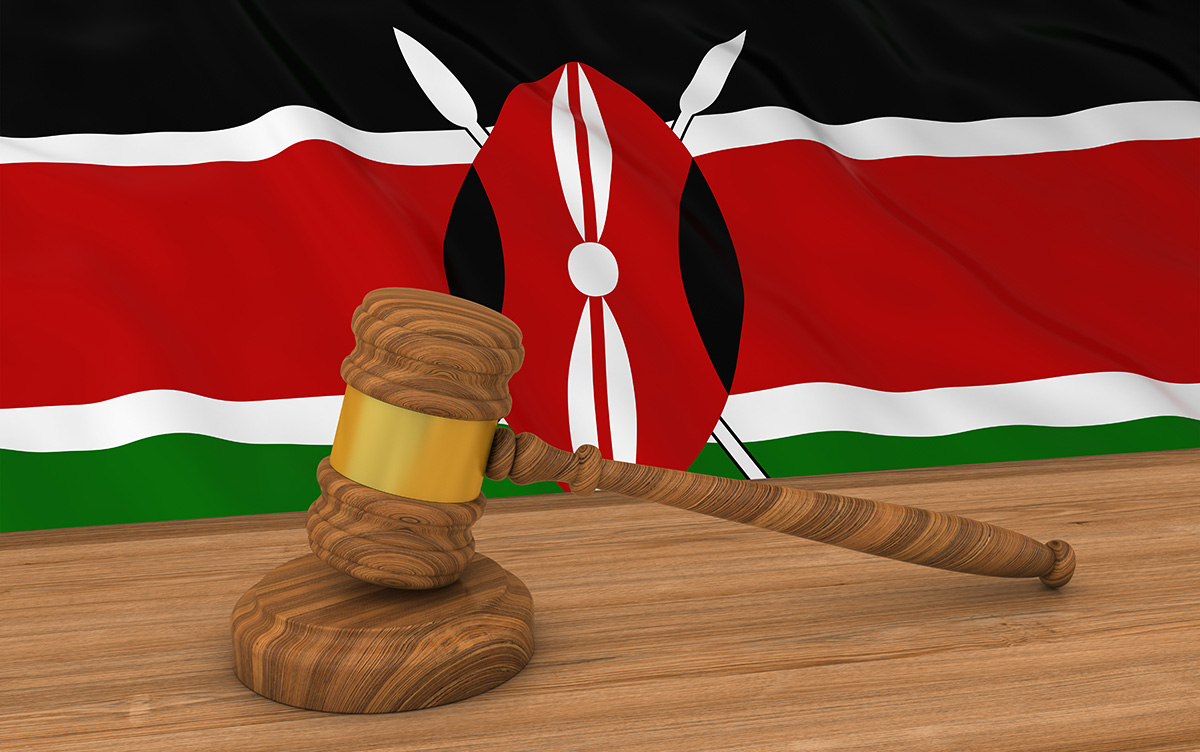
A Kenyan LGBTQ rights organization has adopted a virtual legal aid platform that allows its lawyers to offer free services to queer people remotely.
The Center for Minority Rights and Strategic Litigation, which unveiled the online LGBTQ+ Legal Aid Clinic platform, attributes the move to lessons learned from the COVID-19 pandemic, including the wide use of online meetings.
“The LGBTQ+ Online Legal Aid Clinic is, we believe, the first of its kind in Kenya providing pro bono legal advice services directly to the LGBTQ community,” CMRSL states.
The online legal aid clinic connecting CMRSL advocates and queer people via Zoom, Google, and other virtual platforms is an extension of the organization’s physical legal aid clinic launched in 2020 to consolidate the volunteer lawyers’ free legal services it has been offering since 2007.
The organization recognizes the Canadian government’s financial support in setting up the two legal aid clinics.
Michael Kioko, a CMRSL advocate, told the Washington Blade the organization first thought about adopting an online legal aid clinic for the queer community during the COVID-19 period during which officials limited movement to combat the virus.
“We noted that we could reach people far across the country like Kakuma Refugee Camp where we have attended to LGBTQ refugees and also realized that we could work with more volunteer advocates across the nation,” Kioko said.
The organization has about 20 volunteer advocates who are trained on LGBTQ issues in order to be sensitive to queer clients.
Both the CMRSL’s physical and online legal aid clinics have offered services to more than 1,000 queer clients since 2020. Kioko noted CMRSL receives more than 40 cases a month through the online platform.
“The cases we receive include house evictions from homophobic discrimination as the most common, especially in Mombasa and Lamu, physical assault, and verbal abuse,” Kioko stated.
Other cases CMRSL advocates handle for the queer community are name changes for transgender women, child custody cases for bisexual women, disputes between lesbian or bisexual partners, and work to ensure a witness to a queer person’s assault stands with them until the perpetrator is convicted.
“We are also handling criminal defense cases where LGBTQ persons have been charged in court and they are two for transgender women (one case in Lamu was acquitted), we have four cases for four gay men (two cases have been withdrawn), and under civil cases in the children’s court we have four cases by bisexual women,” Kioko said.
The LGBTQ rights organization also has filed two petitions in the Court of Appeal that challenged the country’s anti-homosexuality laws.
“We are also planning to set up a legal desk by this year to deal with cases that require long-term commitment,” Kioko said.
The organization has been conducting public forums to enlighten the LGBTQ community on accessing justice through free legal help through its physical and virtual clinics.
CMRSL, however, demands any LGBTQ person seeking its services by filling a legal aid form not to be under 18-years-old. It takes at least three days for the lawyer to have a virtual consultation with a potential client, and, if necessary, would then refer them to a nearby legal clinic for physical assistance.
The organization also limits its legal assistance to individual matters that include criminal, family, employment, blackmail, assault, and discrimination cases based on sexual and gender identity or expression.
“We will not provide advice to businesses or in respect of business dealings unless the advice sought is on an issue that arises out of one’s SOGIE,” states CMRSL.
CMRSL also does not offer legal advice on financial matters, such as investment, sale, or purchase of property or other assets unless the help sought is on an issue that relates to one’s LGBTQ identity.
Kioko noted that adopting the online legal aid clinic has been impactful in helping CMRSL handle many issues almost at once and asked the LGBTQ community to embrace the virtual platform.
“The platform is more flexible and convenient both for the advocate and the client,” he said. “It is also more private and safe for the client compared to the physical legal clinic which has some privacy risks like homophobic stigma.”
CMRSL under its values and strict data protection policy assures its LGBTQ clients of treating all information submitted or collected with utmost confidentiality.
Kioko noted that the lack of smartphones to access the internet and sometimes network connection for LGBTQ people in remote areas remains a big challenge for some queer persons to use the virtual legal clinic. Lawyers and queer people can consult with CMRSL via phone calls when their clients don’t have smartphones.





Kenya
Kenyan advocacy groups launch LGBTQ voter mobilization campaign
As Kenya prepares for next year’s August general election, local queer rights groups have joined Gen Zers in also mobilizing their members to register as voters.
The groups’ drive began ahead of the electoral commission’s official launch of a one-month nationwide mass voter registration on March 30, targeting 6.5 million new voters to bring the total to more than 28 million.
The groups — led by the Initiative for Equality and Non-Discrimination (INEND) and Galck+ — note that politics is not optional, but rather it is “our responsibility” to use the ballot to put an end to bad leadership and discriminatory laws against them.
“Voting is one of the most powerful ways we exercise our autonomy and remind the State that our human rights are not ‘Western imports’; our struggles for housing, employment, safety, and dignity are fundamentally Kenyan issues,” INEND states.
It reminds queer individuals that the nation entrusts them with an identity card at age 18 as a recognition of their ability to make decisions, follow laws, and take responsibility for the country’s future.
INEND also notes that despite this honor, LGBTQ people get kicked out of their homes due to homophobia, are discriminated against at work, and face violence in public places due to the punitive laws that the same State legislates.
“As queer Kenyans, our vote matters,” INEND states. “Our voice belongs in the democratic and governance conversations, and true democracy includes everyone.”
Some voter mobilization initiatives the queer lobby groups have been using include ‘Queering the Ballot’ Podcasts on civic participation, dubbed ‘Your Vote is Your Future’. The topics explored include how laws shape their lives, the relationship between lived experiences of common citizens, discrimination fatigue, distrust in government systems, and voter apathy.
The groups through the mobilization drive hope to create a queer voting bloc to actively participate in restructuring and reconstructing the existing governance system they argue has been a problem for them. They maintain the queer community navigates a system that was not built for them from its questioning of their right to exist, yet the Kenyan Constitution clearly states that no citizen should be discriminated against based on sexual orientation or gender identity.
The Court of Appeal next month will hear a case challenging the constitutionality of provisions in Kenya’s Penal Code that criminalize consensual same-sex relationships among adults. The appeals court postponed the case after adjourning on Feb. 4, its first substantive hearing since the High Court judgement in 2019.
“Change requires more than pointing fingers. It requires reflection, action, and showing up, especially at the ballot box as LGBTQ Kenyan citizens and declaring that this is our country, our business, and we can no longer watch from the sidelines,” INEND states.
The group notes that they want a governance system that embraces queer people as they go about their daily lives without any form of homophobic discrimination, harassment, or arrests. Queer people are therefore urged to pick the right leaders who listen to them in Kenya’s six elective positions, from the president down to the local government representatives, as their decisions while in power affect them.
“It is very irresponsible for any human being, even around the world, to assume that they don’t have political responsibility. It is easy and sounds fancy to say ‘I don’t like politics,’ but it does not make one good as it makes one abandon their political responsibility as a citizen,” INEND states.
The groups are also concerned with the existing homophobia among Kenyans, especially whenever they join them in street protests against the government’s punitive measures or advocating for change. However, they maintain that the LGBTQ community won’t be left behind despite being marginalized in society, yet they are the most affected group when the government raids people’s pockets for taxes.
“Now we are moving from the margins to the centre of this political conversation early enough to ensure that our community sees the sense because if we live in a country that doesn’t work, we will be the most affected,” INEND states.
INEND, with the National Gay and Lesbian Human Rights Commission and Galck+, last November launched the second Queering the Ballot Campaign and the 2024 Situation Report on queer participation in Kenya’s democracy.
The report surveyed 14 of the country’s 47 local governments, whose key findings affirm that queer Kenyans are not outsiders to democracy but its heartbeat.
“The title ‘Our Vote, Our Future: LGBTQ+ Inclusion in Democratic and Governance Processes’ in Kenya is an ode to the spirit of the queer movement in Kenya; unshaken in the face of adversity, determined in its pursuit of justice, and unrelenting in demand to be seen, heard and counted in democratic and political processes,” reads the report forwarded by former Chief Justice Willy Mutunga.
The report calls on Parliament, the Independent Electoral and Boundaries Commission, the County Assemblies, and every Kenyan to make inclusion not symbolic but systemic.
Kenya
Kenyan judge rules government must legally recognize transgender people
Trans athlete challenged arrest, detention, forced medical examination
A Kenyan judge has directed the government to legally recognize transgender people and to guarantee their constitutional rights are protected.
Justice Reuben Nyakundi of the Eldoret High Court in western Kenya in his Aug. 20 judgment holds trans people have the right to determine their “self-identified gender” and the government’s legal system should recognize it.
Nyakundi made the directive after a years-long case of a trans athlete and government agencies over an unwarranted arrest, detention, and forced medical examination to determine her gender in 2019.
Government officials sued the director of Public Prosecutions, attorney general, commissioner general of prisons, and the Moi Teaching and Referral Hospital, which conducted the medical examination following her arrest in Eldoret. The petitioner, only identified as S.C. in the case, was arrested at the same health facility for allegedly impersonating a woman.
“That it is proposed the State consider undertaking appropriate legislative measures to address the rights and protections of individuals within its borders, in line with Article 27(4) of the constitution, which prohibits discrimination on any grounds, including race, sex, social origin, gender, birth, or other status,”Nyakundi ruled. “In this regard, the enactment of a Transgender Protection Rights Act is recommended as a potential mechanism to ensure equal protection and recognition for transgender persons.”
The 34-year-old plaintiff, who is also a board member of Jinsiangu, a local trans rights organization, (“My gender” in Swahili), told the court about the mistreatment to which she was subjected while in custody and demanded compensation for the violation of her rights.
For instance, S.C., who said she realized she was a woman when she was 5-years-old, told the court that police officers forced her to remove her clothes when she was in their custody and ridiculed her for “pretending” to be a woman after they saw male genitals.
She was transferred to a men’s ward before being escorted to her home.
S.C. said officers ransacked it in search of doping drugs they said she used while mocking her female clothes. The plaintiff also stated officers repeatedly slapped her to coerce her to produce her birth certificates and national identity cards. She described the experience as “humiliating and traumatizing.”
The plaintiff also noted that while in the men’s ward, inmates abused and slapped her while some attempted to remove her clothes. They backed off when she screamed to attract officers’ attention before they transferred her to an isolated hallway for her safety.
Nyakundi in his ruling awarded her $10,000 in damages over violation of her privacy and dignity. The court also directed the government to undertake policy reforms to protect the rights of detained trans people in prisons.
“That a declaration be and is hereby made that there is a compelling sense of urgency for the state in the interim to make provision of the physical and structural facilities at the police stations and the prison facilities for these ‘third gender’ who may be in conflict with the law because of their gender identity with a view to guarantee their constitutional rights as envisioned in this judgment,” Nyakundi stated.
He further directed parliament to enact the law that protects and recognizes trans people while also directing the proposed Intersex Persons Bill 2024 be another alternative to identify the rights of the trans community in the country. Intersex people in Kenya are legally recognized as a third gender with an “I” marker, and the community has an intersex representative in the country’s human rights body to champion their interests.
Transgender Education and Advocacy, Jinsiangu, Amka Africa Justice Initiative, and the Kenya Human Rights Commission are among the human rights NGOs that represented S.C. in the case.
Jinsiangu, which works closely with the intersex group, welcomed the decision as one of the “landmark” rulings marking a growing judicial recognition of trans rights in Kenya’s constitutional framework.
“This is the first time a Kenyan court has explicitly ordered the state to create legislation on transgender rights, and a first in the African continent,” Jinsiangu said in a statement. “If implemented, it could address decades of legal invisibility and discrimination faced by transgender persons by establishing clear legal recognition of gender identity, protection against discrimination in employment, housing, healthcare, and education, and access to public services without bias or harassment.”
The trans rights group has committed to monitoring the state’s compliance with the ruling to ensure the legal framework to protect the group is put in place.
“We commit to working hand-in-hand with lawmakers, civil society, and the public to ensure the legislation is inclusive, evidence-based, and enforceable,” Jinsiangu affirmed.
Kenya
Kenyan queer groups want MPs to dismiss anti-LGBTQ petition
Activists claim motion lacks evidence
Kenyan queer rights groups want MPs to dismiss a petition by anti-LGBTQ activists and religious organizations seeking a crackdown on what they describe as a proliferation of homosexuality in the country.
The groups in their written submissions to the National Assembly’s Public Petitions Committee argue the petition presented to parliament in February last year lacks evidence to back up the claims.
“The raft of allegations is presented on their own strength and have no documents to substantiate the said claims,” reads part of the submissions led by KELIN, a coalition of health and human rights bodies. “They claim diseases attributed to the community without any medical proof of the same. The community requests parliament not to be swayed by opinions, preferences, and biases in considering the petition.”
Mohamed Ali, an MP from Kenya’s ruling party that fiercely opposes LGBTQ rights, is the representative of the petitioners as one who presented the measure in the House for probe. The petitioners comprise a group of more than 70 Kenyans from anti-LGBTQ lobby groups and religious bodies under the Kenya Christians Professional Forum and the Muslim Council of Imams and Preachers of Kenya.
The parliamentary committee on Aug. 5 had invited queer rights groups, including KELIN, GALCK+, the Center for Minority Rights and Strategic Litigation, and Initiative for Equality and Non-Discrimination for a hearing.
“We arrived with partners prepared to make submissions opposing the petition by Hon. Mohamed Ali on the so-called ‘proliferation of LGBTQ persons in the country.’ The committee was not ready to proceed and rescheduled to Aug. 7,” CMRSL Legal Manager Michael Kioko said.
The rescheduled meeting was again postponed indefinitely to an unclear date because the Public Petitions Committee was “illegally constituted” and the queer rights groups were told to wait until members elect its leadership to be duly composed.
The prolonged delay by the committee to inquire into the petition, while the groups wait to appear before it, has been further extended after the parliament on Aug. 20 proceeded on a long break of one month.
The LGBTQ rights groups’ submissions the Washington Blade has seen acknowledge the petitioners’ constitutional right to engage parliament on legislative matters as the people’s representatives, while noting the House should not be used as a platform to discriminate against the queer community.
“The community points out that the petitioners, while relying on the Constitution to approach parliament, are deliberately orchestrating unconstitutional actions against the community,” the queer rights groups state.
They also argue that the petitioners’ bid to have the queer rights curtailed violates national laws under the Bill of Rights forbidding any form of discrimination and the international conventions like the Universal Declaration on Human Rights, which Kenya has ratified.
The respondents, while challenging the petitioners over the accusation that the Supreme Court overstretched its mandates in an attempt to legalize homosexuality from its recent rulings in favor of the queer community, argued that the anti-LGBTQ lobby groups were simply “fear-mongering” on the effects of the judges’ decisions. They accuse the petitioners of spreading misinformation and note that the court only granted the queer community their constitutional freedom of association by allowing the registration of their LGBTQ organization blocked by the NGOs’ regulator.
“The community prays that parliament, in considering the petition, is guided by the same ruling as actually summarized and with regard to the right of association and all other rights of the community as members and simply as human beings,” the submissions read.
On the petitioners’ plea for MPs to probe what they describe as an infiltration of the LGBTQ agenda into the Kenyan school books for children to “confuse and mislead them,” the queer rights groups term the claim “far-fetched” for not being backed by evidence from the body overseeing the school curriculum.
The respondents also note the petitioners did not provide any proof of having shared their concerns with the Kenya Institute of Curriculum Development on the alleged LGBTQ materials in school books.
While asking MPs to reject the petition “in toto” over lack of proof, the queer rights groups note that LGBTQ people have faced harassment and systemic derogation of their rights guaranteed under the constitution and various international laws.
“The petitioners have now resorted to parliament to pass their discriminatory agenda against the LGBTQ community,” the submissions read.
The parliamentary committee, when fully constituted to inquire into the petition, will also hear from several government ministers, including Education, Health, Foreign Affairs, Labor and Social Protection, and the Police Inspector General.

How Pepper the courthouse dog helps victims of abuse

Women’s FEST returns to Rehoboth Beach next week

Belarusian lawmakers approve bill to crackdown on LGBTQ rights

Calendar: April 3-9

How new barriers to health care coverage are hitting D.C.

‘Out for McDuffie’ event held at D.C. gay bar

Thousands attend ‘No Kings’ protests in D.C.

Ghanaian president welcomed to Philadelphia amid backlash over anti-LGBTQ bill

PHOTOS: ‘No Kings’ rally and march