Movies
Jacob Elordi rides high in ‘On Swift Horses’
Sony Pictures’ promotions avoid referencing queer sexuality of main characters
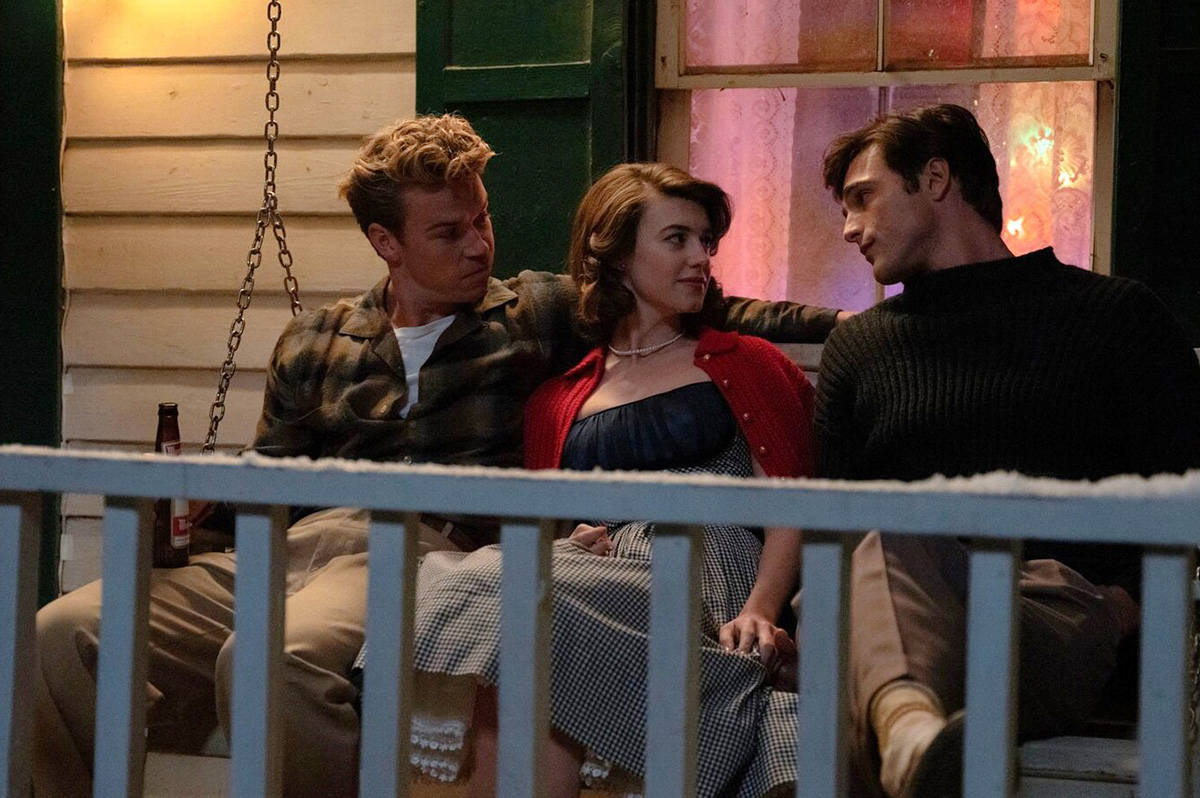
You might not know it from the publicity campaign, but the latest big-screen project for breakout “Euphoria” actor and sex symbol Jacob Elordi is 100% a gay love story.
Alright, perhaps that’s not entirely accurate. “On Swift Horses” – adapted from the novel by Shannon Pufahl and directed by Daniel Minahan from a screenplay by Bryce Kass – actually splits its focus between two characters, the other of which is played by “Normal People” star Daisy Edgar-Jones; but since that story arc is centered around her own journey toward lesbian self-acceptance, it’s unequivocally a “Queer Movie” anyway.
Set in 1950s America, at the end of the Korean War, it’s an unmistakably allegorical saga that stems from the marriage between Muriel (Edgar-Jones) and Lee (Will Poulter), a newly discharged serviceman with dreams of building a new life in California. His plans for the future include his brother Julius (Elordi), a fellow war vet whose restlessly adventurous spirit sparks a kindred connection and friendship with his sister-in-law despite a nebulously strained dynamic with Lee. Though the newlyweds follow through with the plan, Julius opts out in favor of the thrill of a hustler’s life in Las Vegas, where his skills as a card shark gain him employment in a casino. Nevertheless, he and Muriel maintain their friendship through correspondence, as he meets and falls in love with co-worker Henry (Diego Calva) and struggles to embrace the sexual identity he has long kept secret. Meanwhile, Muriel embarks on a secret life of her own, amassing a secret fortune by gambling on horse races and exploring a parallel path of self-acceptance with her boldly butch new neighbor, Sandra (Sasha Calle), as Lee clings obliviously to his dreams of building a suburban family life in the golden era of all-American post-war prosperity.
Leisurely, pensive, and deeply infused with a sense of impossible yearning, it’s the kind of movie that might easily, on the surface, be viewed as a nostalgia-tinged romantic triangle – albeit one with a distinctively queer twist. While it certainly functions on that level, one can’t help but be aware of a larger scope, a metaphoric conceit in which its three central characters serve as representatives of three conflicting experiences of the mid-century “American Dream” that still looms large in our national identity. With steadfast, good-hearted Lee as an anchor, sold on a vision of creating a better life for himself and his family than the one he grew up with, and the divergent threads of unfulfilled longing that thwart his fantasy with their irresistible pull on the wife and brother with whom he hoped to share it, it becomes a clear commentary on the bitter reality behind a past that doesn’t quite gel with the rose-colored memories still fetishized in the imagination of so many Americans.
Fortunately, it counterbalances that candidly expressed disharmony with an empathetic perspective in which none of its characters is framed as an antagonist; rather, each of them are presented in a way with which we can readily identify, each following a still-unsatisfied longing that draws them all inexorably apart despite the bonds – tenuous but emotionally genuine – they have formed with each other. To put it in a more politically-centered way, the staunch-but-naive conformity of Lee, in all his patriarchal tunnel vision, does not make him a villainous oppressor any more than the repressed queerness of Muriel and Julius make them idealized champions of freedom; all of them are simply following an inner call, and each can be forgiven – if not entirely excused – for the missteps they take in response to it
That’s not to say that Minahan’s movie doesn’t play into a tried-and-true formula; there’s a kind of “stock character” familiarity around those in the orbit of the three main players, leading to an inevitably trope-ish feel to their involvement – despite the finely layered performances of Calva and Calle, which elevate their roles as lovers to the film’s two queer explorers and allow them both to contribute their own emotional textures – and occasionally pulls the movie into the territory of melodrama.
Yet that larger-than-life treatment, far from cheapening “On Swift Horses,” is a big part of its stylish appeal. Unapologetically lush in its gloriously photographed recreation of saturated 1950s cinema (courtesy of Director of Photography Luc Montpellier), it takes us willingly into its dream landscape of mid-century America – be it through the golden suburbs of still-uncrowded Southern California or the neon-lit flash of high-rolling Las Vegas, or even the macabre (but historically accurate) depiction of nuclear-age thrill-seekers convening for a party in the Nevada desert to watch an atom bomb detonate just a few short miles away. It’s a world remembered by most of us now only through the memories and artifacts of a former generation, rendered with an artful blend of romance and irony, and inhabited by people in whom we can see ourselves reflected while marveling at their beauty and charisma.
As lovely as the movie is to look at, and as effective as it is in evoking the mix of idealism and disillusionment that defines the America of our grandparents for many of us at the start of the second quarter of the 21st century, it’s that last factor that gives Minahan’s film the true “Hollywood” touch. His camera lovingly embraces the beauty of his stars. Edgar-Jones burns with an intelligence and self-determination that underscores the feminist struggle of the era, and the director makes sure to capture the journey she charts with full commitment; Poulter, who could have come off as something of a dumb brute, is allowed to emphasize the character’s nobility over his emotional cluelessness; Calle is a fiery presence, and Minahan lets her burn in a way that feels radical even today; Calva is both alluring and compelling, providing an unexpected depth of emotion that the film embraces as a chord of hope.
But it is Elordi who emerges to truly light up the screen. Handsome, charismatic, and palpably self-confident, he’s an actor who frankly needs to do little more than walk into the scene to grab our attention – but here he is given, perhaps for the first time, the chance to reveal an even greater depth of sensitivity and truth, making his Julius into the film’s beating heart and undisputed star. It’s an authenticity he brings into his much-touted love scenes with Calva, lighting up a chemistry that is ultimately as joyously queer-affirming as they are steamy.
Which is why Sony Pictures’ promotions for the film – which avoid directly referencing the sexuality of its two main characters, instead hinting at “secret desires” and implying a romantic connection between Elordi and Edgar-Jones – feels not just like a miscalculation, but a slap in the face. Though it’s an eloquent, quietly insightful look back at American cultural history, it incorporates those observations into a wistful, bittersweet, but somehow impossibly hopeful story that emphasizes the validity of queer love.
That’s something to be celebrated, not buried – which makes “On Swift Horses” a sure bet for your must-see movie list.






Movies
10 years later, we still can’t shake Barry Jenkins’s ‘Moonlight’
Landmark queer film returned to theaters this past weekend
It all started back at the Telluride Film Festival, where “Moonlight” had its world premiere in 2016, kicking off a successful awards season run. It instantly became the year’s critical darling, and it wound up winning three Academy Awards, including Best Picture, Best Adapted Screenplay (for Jenkins), and Best Supporting Actor (for Mahershala Ali.)
But there’s a world where an independently made film like “Moonlight,” featuring an all-Black cast with mostly unknown actors, and a story exploring how queerness intersects with toxic masculinity and race, gets easily overlooked. The fact that the film won Best Picture on Hollywood’s biggest stage not only cemented its place in film history, but helped the story reach more Black and queer people.
Adapted from Tarell Alvin McCraney’s unproduced, autobiographical play “In Moonlight Black Boys Look Blue,” Jenkins follows a boy named Chiron, introduced to the audience as Little, over the course of three pivotal moments in his upbringing. Set in Miami, the film tracks Chiron’s days as an outcast struggling to make it through elementary school, to his first sexual encounter with another boy, to his adult days making a living as a drug dealer. Chiron suffocates while living with his abusive, drug-addicted mother (Naomie Harris) and eventually finds refuge and safety in the home of surrogate parents Juan (Ali) and Teresa (Janelle Monáe) as he struggles to reckon with his queerness.
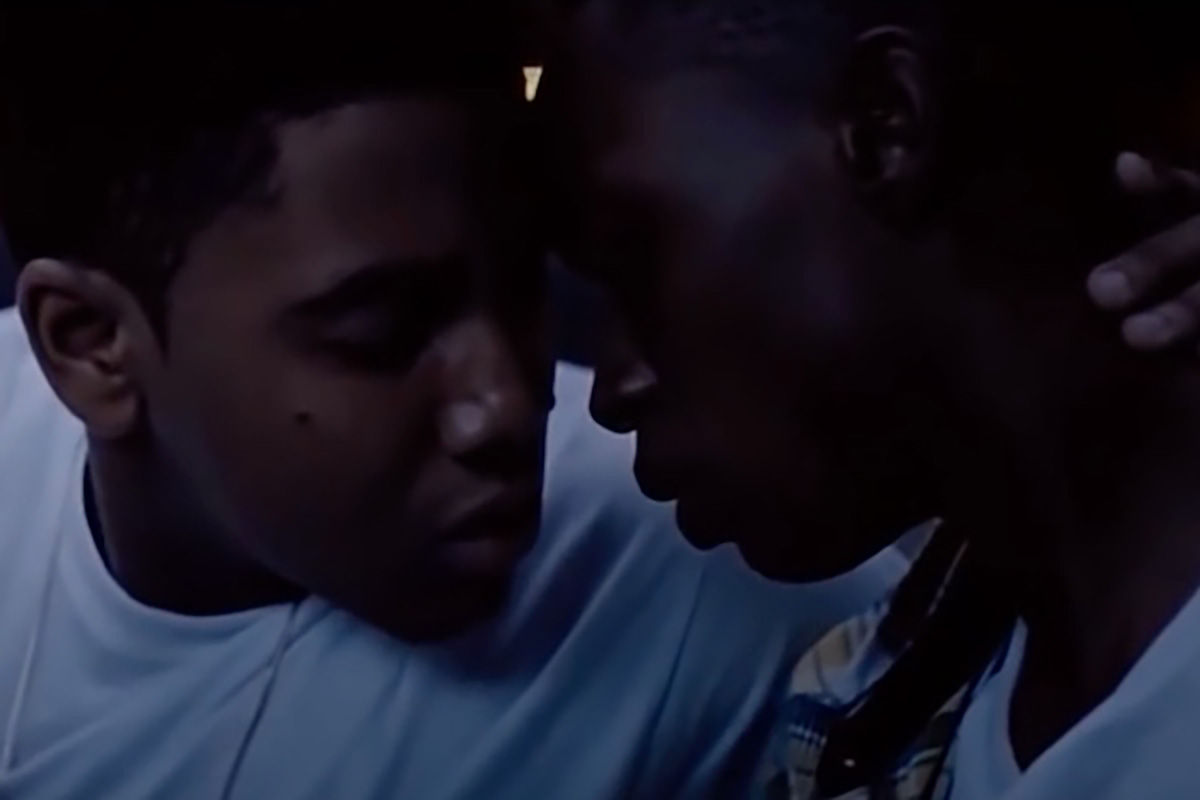
Jenkins’s images instantly became iconic: Juan holding Little in the ocean, a moment reminiscent of a young boy’s baptism; Chiron resting his head on Kevin’s (André Holland) shoulder as the two reconcile their love for one another; Little looking back at the audience as the waves crash.
The film mainly features locals from Miami. One of the smartest choices Jenkins and his casting director, Yesi Ramirez, made when shaping out Chiron’s journey was casting three different actors (Alex Hibbert, Ashton Sanders, and Trevante Rhodes) to play the character as he physically comes of age. Jenkins deliberately never had the three actors meet despite portraying the same character — quite the atypical approach to casting.
“I wanted [that decision] to be a comment on the way of the world we live in, and how society has this effect on these young men who grow up in a community like the one depicted in the film,” Jenkins said in a Creative Screenwriting interview in February 2017. “To me, the best way to show that was to illustrate this change in the character, and what happens to the people who are playing him at each stage.”
In the decade since “Moonlight”’s release, dozens of filmmakers cite Jenkins as one of their biggest influences, including Joe Talbot (“The Last Black Man in San Francisco”). And you can see his film’s footprints all over “Nickel Boys, If I Go Will They Miss Me” and “Waves,” all films that use evocative imagery to tell grounded, Black-led stories.
To date, “Moonlight” remains the lowest-budget film to ever win Best Picture, made for a mere $1.5 million dollars. It was also the first film that A24, the indie distributor that was still building a name for itself back in 2016, fully financed and produced itself. “Moonlight” went on to gross over $60 million at the global box office, largely thanks to the Oscars platform.
In our current political and media landscape under the Trump-Vance administration, “Moonlight” has the potential to save even more lives. In the early days depicted in Chiron’s upbringing, he is taught to live with shame, to keep his head down at school. It’s all about survival. But by the end of the film, Chiron reconnects with Kevin and finds himself remembering all the emotions he felt after being touched by a man for the first time. It’s a small step, a small embrace, but a crucial one for Chiron to start coming to terms with himself.
Jenkins still gets emotional when watching scenes back from the film now. Speaking with Vanity Fair at this year’s Telluride Film Festival, where “Moonlight” screened for its 10th anniversary, Jenkins admitted he was a “crying mess” when revisiting the last 15 minutes of the film earlier in the year.
“Maybe over the next few months I’ll get some more understanding of it, but I think it was just how meaningful it was that we created this thing,” Jenkins said. “It’s not about the film itself, but just how meaningful it was that we actually did it.
In the decade since “Moonlight”’s release, Jenkins went on to direct another acclaimed film, “If Beale Street Could Talk,” and recently made “Mufasa: The Lion King.” He’s set to return to his more independent roots with “Be My Baby” starring Zendaya, which will also be distributed by A24, and an Alvin Ailey biopic. The Oscar winner continues to mentor emerging filmmakers and writers through the Sundance Labs, visiting colleges around the country to teach what he learned from making his breakout film.
Now that “Moonlight” is back in theaters, it’s the perfect opportunity for queer and Black people to experience this tender, intimate, nuanced film on the big screen. It’s a modern classic with the potential to continue making people feel seen and embraced for every aspect of their identity.
Movies
‘Thelma and Louise’ remains landmark of unspoken queer rebellion
Celebrating iconic film 35 years after its release
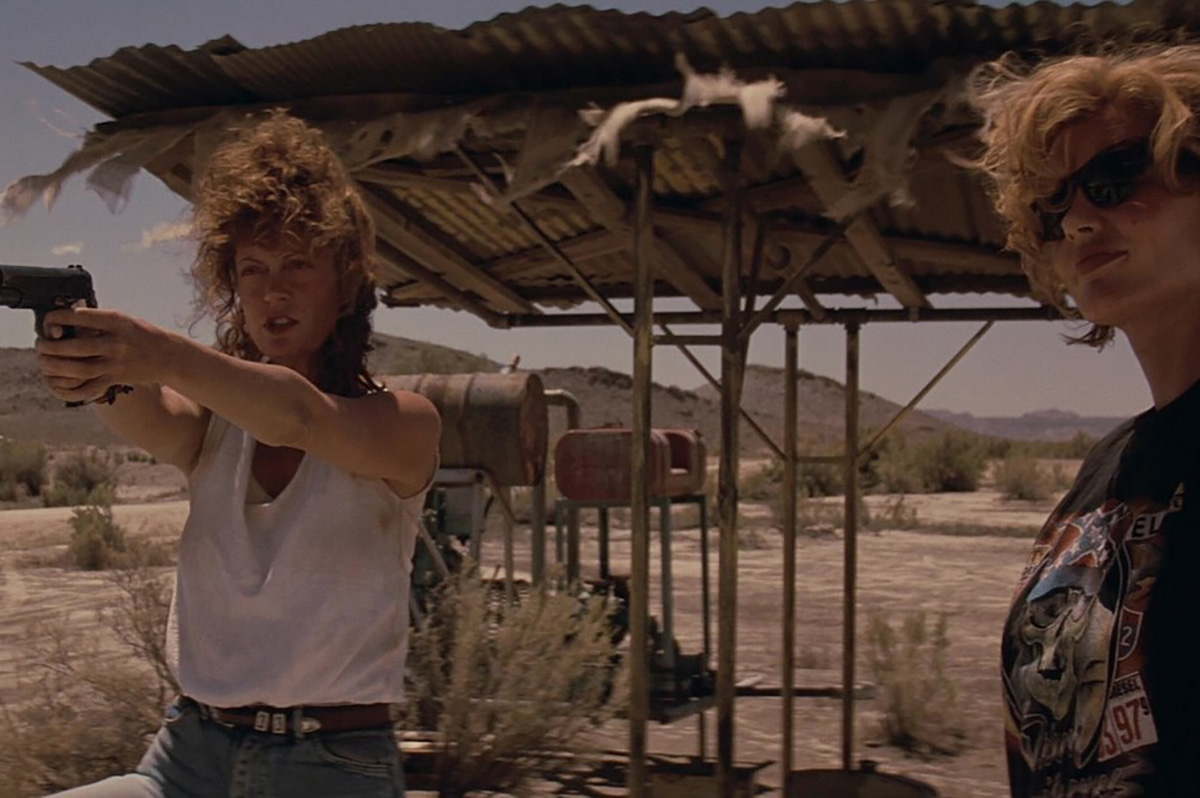
Hard as it is to believe for those who were around when it happened, “Thelma and Louise” celebrates the 35th anniversary of its release this year.
Deeply popular with both critics and audiences at the time, its reputation continues to ride high; it’s a movie that manages to exist within a nexus of intersecting genres – the “buddy picture”, the “crime thriller,” the “action adventure,” the” “western,” the “neo-noir” – by blending them seamlessly into a crowd-pleasing wild ride of a story, all while delivering a powerful feminist message of outrage, defiance, and empowerment.
And no, “Thelma and Louise” is not a “queer movie” – but it feels like one.
That’s partly because It exists within another genre, too: “lesbian noir,” which blossomed in its wake with films like “Bound” (1996) and has re-emerged in recent films like “Love Lies Bleeding” (2024) and “Honey, Don’t” (2025) – but that also stretches back across decades into the days of old Hollywood, when coded queer characters were a regular fixture in the seedy film noir classics of their time, never overtly identified as such but obvious to spot for anyone savvy enough to read the subtext. That’s why “Thelma and Louise” resonated (and continues to resonate) with lesbian and bisexual audiences who see themselves reflected in its two lead characters, even if there is nothing queer about their relationship — on the surface at least.
Of course, that can be a sore subject; subtext might seem like a “cop-out” for those who long for more open representation for LGBTQ people on the screen – but it’s everything when it comes to recognizing the queerness of older movies (and a lot of newer ones, too), and just because something is not explicitly stated, that doesn’t mean it’s being hidden. After all, most good stories rely on the transcendent power of nuance, which always relies on subtext to shine through. And if any movie relies upon subtext, “Thelma and Louise” is certainly one of them. In its masterfully crafted narrative of a weekend “girl’s trip” that goes horribly wrong, a lot of the most important information is left unspoken.
Take Thelma (Geena Davis), to start with: a naive young housewife whose husband Darryl (Christopher McDonald) treats her like a possession, she blithely ignores his mediocrity and disregards – or at least, pretends to – his repressive tactics to control her, choosing instead to live in a tenuous illusion of “traditional” marriage dynamics; yet when her bestie Louise (Susan Sarandon) offers her a chance to escape for a weekend, she jumps at it – even if she has to skip the part where she asks his permission.
Louise (Susan Sarandon), a bit older and a lot more worldly, is a waitress who spends her days fending off the insults and advances of her male customers at the diner where she works; she sees Thelma’s situation clearly, and hopes that a temporary respite from Darryl will help her recognize the dead-end reality of her marriage. We understand this immediately, even though a direct word is never said about it, and she’s right, of course. They’ve barely even gotten on the road before Thelma’s longing for attention from someone other than her inadequate husband – a honky-tonk Lothario (Timothy Carhart) she meets in a roadhouse where they stop for drinks on the way out of town – leads to an attempted rape that is only prevented when Louise shoots the predator dead in the parking lot.
That killing is the catalyst that turns them into fugitives; as Louise rightly understands, there’s no evidence of sexual assault, just a dead body and a pair of runaway women, and the letter of the law is not on their side. But in truth, that fatal shot is fired not to save Thelma, who has already been freed from her would-be rapist’s clutches when it happens, but because Louise has traumatic memories – and a chip on her shoulder – over something that “happened in Texas,” years before. We never find out what it was that happened, and we don’t need to; our imaginations tell us all we need to know, just as we know that the killing, while it may have been cold-blooded murder, is a justifiable homicide all the same.
There’s more of that subtextual nuance throughout, from the perversely inspiring motivations of hitchhiking hustler J.D. (Brad Pitt, in the sex-on-a-stick performance that launched him on his trajectory to stardom), who takes advantage of Thelma’s gullibility to rob the heroines even as he teaches her the tactics that will soon sustain them on their fateful ride-or-die fugitive adventure; to the self-serving “chivalry” of Louise’s erstwhile boyfriend (Michael Madsen) when he casts himself as the “martyr” for letting her go. And yes, even to the benignly sublimated patriarchal programming that drives police investigator Hal Slocumb (Harvey Keitel in an uncharacteristically empathetic role) to act as would-be savior to these two “fallen” women, though they want no part of his well-meaning attempts to “rescue” them from the consequences of their choices. And when the two fugitives terrorize a piggish trucker (Marco St. John) before blowing up his big-rig tanker, nobody says – or needs to say – why it feels like the right thing to do; it simply IS the right thing, and we, as the audience, know it. What we have seen up to that point has placed us firmly on Thelma and Louise’s side, and we’re as ready to watch the puerile patriarchy burn as they are.
None of this is spoken aloud, nor is it even alluded to, but it comes through, nonetheless. Chalk it up to the power of Callie Khouri’s Oscar-winning screenplay, which expertly lays this inner narrative as the foundation for everything that happens, and leaves director Ridley Scott to supply the stylish, action-packed visuals.
Thelma and Louise may not be “a couple,” but we can’t help notice as their clothing evolves from frilly-femme to “butch” utilitarianism along the way, nor how their connection to the men in their lives easily dissolves without fanfare. And by the time we reach the movie’s thrilling denouement, when all they have left is their commitment to simply stand up against the things that have kept them feeling incomplete, unfulfilled, and unacceptable, it’s an achingly familiar feeling for any queer viewer who has experienced the same – and let’s face it, that’s probably almost all of us.
We all know what happens, so it’s no spoiler to say that, when they drive off to oblivion in the Grand Canyon, they choose freedom over life itself – and when they head over that cliff, fully embracing their fate as a feminist iteration of the Bonnie and Clyde brand of “noble” outlaws, they seal their fate with a kiss.
At that point, any further explanation would feel like an insult. Their love for each other transcends anything they’ve felt with the inadequate men in their lives, it’s as simple as that, and their triumph is perfectly captured in that final freeze-frame moment, when they drive off the cliff and begin their plunge toward certain death and it feels like joy.
Yet still, we like to think that their car – like Danny Zuko’s at the end of “Grease” – simply flies away with them instead, into the bliss of an endless summer, and you can’t get any queerer than that!
Movies
‘Here the Whole Time’ delivers queer coming-of-age comedy
A feel-good journey toward self-discovery

There are a lot of queer coming-of-age movies about how hard coming of age can be when you’re queer – and that’s because, for far too many queer young people, coming of age is a very difficult experience.
Yet as difficult as it may be, imagine how much more so it is for queer kids who are also struggling with other factors that make them a potential target for bullying and social stigma. When your awakening sexuality is complicated by fears and self-esteem issues that can cause you to feel ostracized even by the other queer kids, it’s pretty hard to find a place where you fit in. Unfortunately, there are far fewer movies that address that kind of “double whammy” scenario, and even fewer whose leading characters don’t look like model-perfect “influencers,” complete with chiseled abs, perfect hair, and flawless skin – which makes it all the more welcome when a movie like that actually does come along.
That’s why the arrival on Netflix of “Here the Whole Time” – a Brazilian teen romcom from director Daniel Lieff – feels a bit like a surprise gift.
Its central character – Felipe (Miguel Lallo), a teenager who lives with his single mom Rita (Débora Falabella) – is already out as gay, but that’s not the only reason that his life at school is torturous; as he informs us through his own narration, he’s always been the butt of cruel jokes and public bullying because he’s always been (in his own words) “fat.” He’s teased in the classroom, humiliated in the hallways, and victimized at dodgeball in his gym class; so when his eagerly awaited summer break arrives, he’s looking forward to weeks of freedom in which he never has to interact with anyone except his mother.
His blissful dreams of isolating himself in his room are shattered, however, by a rude awakening in the form of Caio (Diego Lira), a neighbor boy and former childhood friend, whose mother and father have left him to stay with Rita while they are away on a trip. Athletic, handsome, and popular, he’s everything Felipe is not, and despite any previous bond of companionship they may have had, Felipe has no intention of playing the gracious host.
Yet as the days go by, the two boys begin to resuscitate their friendship; rather than being the bully Felipe expects, Caio is mostly respectful and exceedingly polite in trying to negotiate their temporary co-habitation. Forced to spend time together, the two gradually warm to each other, opening the door to a renewed friendship; they begin to “hang out” together, expanding the usually isolated Felipe’s social circle to include Caio’s BFF Beca (Mika Soiero) and her girlfriend Melissa (Bel Moreira) — leading to a revelation that turns his newfound friendly feelings for Caio into something more of a crush.
Is the feeling mutual? Can Felipe set aside his insecurities enough to even find out? We did describe the movie as a “romcom, so you can draw your own conclusions from that, but it’s a wild ride of a story, and half the fun is watching it unfold through each new development, so we won’t give any of those surprises away.
It won’t be a spoiler, however, to discuss the way “Here the Whole Time” undercuts the sentiment of its predictably “sweet” formula with its presentation of Felipe as something of an anti-hero, a strident “rebel with a cause” who disdains and distrusts everyone around him except for his mother and sees his therapy (or at least pretends to) as just an extension of school — complete with the unwanted inconvenience of homework.
He’s also, ironically, something of a bully himself, initially responding to the presence of Caio — who is no happier about their temporary living arrangement than he is — with willful and deliberate contempt, and levying his position as host (or as son of the hostess, at least) to assert his circumstantial power and dominance over an unwanted guest. Of course, we can see all along where it comes from, the habitual offense-as-defense tactic that has helped him survive and gain what little self-confidence he has, but that doesn’t make it any less rude.
Still, we don’t dislike him for it; a lifetime of body-shaming can do that to a person. Besides, it makes the transformation that comes in him — after learning to stand up for others like he stands up for himself, and other valuable life lessons he undergoes along the way — feel much more like an uplift. And if his insecurities win out once in a while (as they do, to dramatic effect, in the film’s penultimate chapters), who can blame him?
Caio, too, is portrayed against expectation. His self-assured swagger, like Felipe’s misanthropic hostility, comes from a young lifetime of self-protective compensation, but it’s just as easy for us to see through, and as the tenderness inside is revealed, he’s a far cry from “popular jock” stereotype that Felipe — and the audience — assume him to be,
It’s the dynamic between these two eminently likable characters that makes the film work, granting each of them their own dovetailing journeys toward self-discovery and allowing the feel-good sentiment of the story to emerge as something authentic, rather than just another trope-driven fantasy.
Much of this is thanks to the two young leads, who fully commit to their roles and strike a winning chemistry that makes us want them both to find their way through the amusing — but no less traumatic — growing pains they experience, both together and apart. They succeed in building an onscreen world in which we can believe, with them, in the possibility of rising above the obstacles thrown in their path, and it leaves us feeling not just uplifted, but maybe even a little joyful.
Kudos also go out to Falabella, whose performance as the quintessential “cool mom” makes her stand out as the film’s adult MVP; likewise, director Leiff handles the material with a superb sense of balance between over-the-top absurdity and quietly joyful moments of truth. In the end, though, it’s screenwriters Ray Tavares and Victor Brandt — adapting from a book by Vitor Martins — that’s truly responsible for crafting a charming coming-of-age story that allows itself to reach for the unlikely happy ending instead of sticking with the tried-and-true bittersweetness that usually arrives to provide an extra dash of unrequited yearning.
Of course, more jaded viewers — especially if they’re adults — might find the overall effect of “Here the Whole Time” less of than convincing. But for most of us — and hopefully it’s target audience, especially — it’s a charming reminder that “coming of age” isn’t just about sex or compromising with disillusionment. More than anything else, it’s about learning to let go of our disappointed assumptions to blossom into the life we truly deserve.
As a refreshingly upbeat entry into a genre that somehow holds a key position in our compromised adult lives, it’s definitely a ride worth taking,

Bet Mishpachah participates in D.C. Oct. 7 commemoration ceremony

Man charged in Mall of America shooting plot inspired by Pulse massacre: report

Bar Betsie, inviting and intimate, marks one-year anniversary

Trump, Netanyahu, and Putin are all war criminals

Center Arts Gallery celebrates 10 years with reception, auction

Eliot Glazer’s new book an engaging collection of essays

Equality Chamber hosts Pride in Business Expo and Profits & Pours

Learn more about Virginia’s queer history

The financial realities facing LGBTQ+ first-time buyers

Lula, Flávio Bolsonaro to face off in second round of Brazilian presidential election
-

 Books4 days ago
Eliot Glazer’s new book an engaging collection of essays
-
Out & About4 days ago
Equality Chamber hosts Pride in Business Expo and Profits & Pours
-
Out & About4 days ago
Learn more about Virginia’s queer history
-
Real Estate4 days ago
The financial realities facing LGBTQ+ first-time buyers