Chile
Chilean lawmakers back report that calls for suspension of program for trans children
Country’s first transgender congresswoman condemned May 15 vote
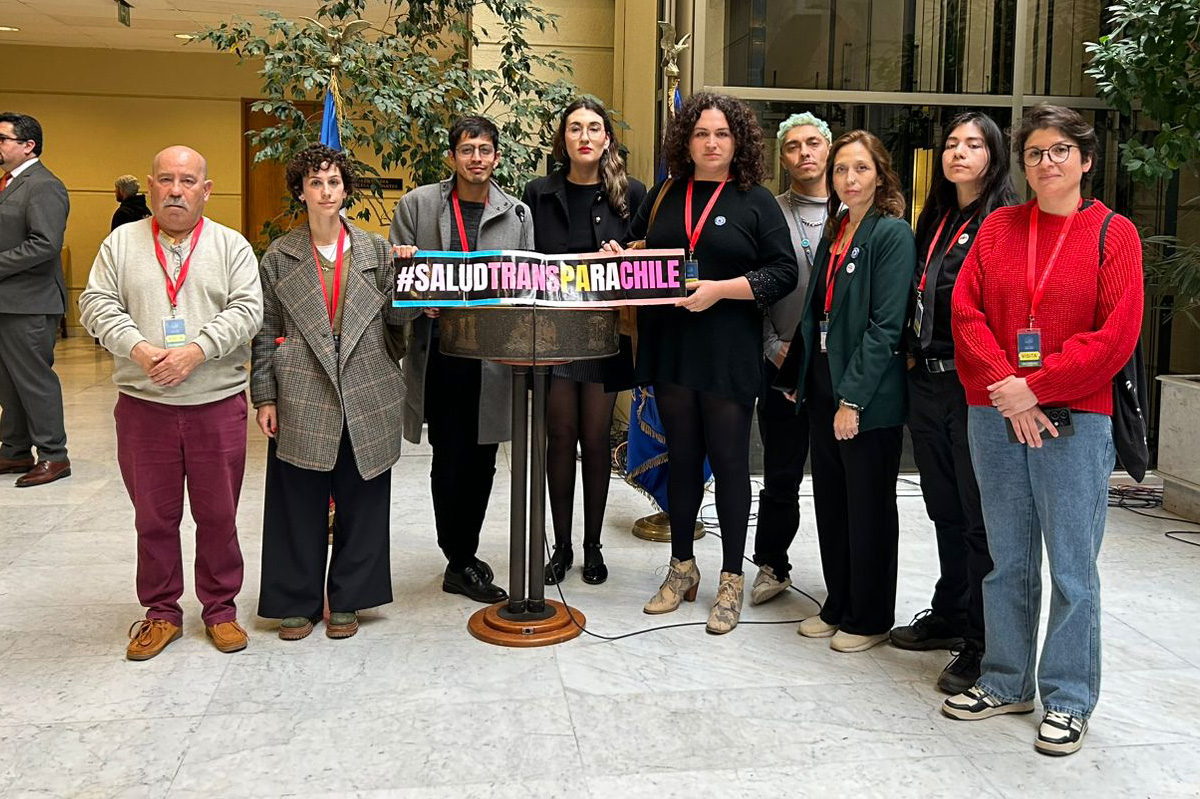
The Chilean Chamber of Deputies on May 15 approved a report that recommends the immediate suspension of a program that provides psychosocial support to transgender and gender non-conforming children and adolescents and their parents.
The 56-31 vote in favor of the Investigation Commission No. 57’s recommendations for the Gender Identity Support Program sparked outrage among activists in Chile and around the world. Six lawmakers abstained.
The report proposes the Health Ministry issue a resolution against puberty blockers, cross-hormonalization, and other hormonal treatments for minors, regardless of whether they have been diagnosed with gender dysphoria. The report also suggests Chilean educational institutions should not respect trans students’ chosen names.
The report, among other recommendations, calls for a review of the background of all minors who are currently receiving hormone treatments. The report also calls for the reformulation of hormone therapy guidelines and sending this background information to the comptroller general.
Report ‘sets an ominous precedent’
Frente Amplio Congresswoman Emilia Schneider, the first trans woman elected to the Chilean Congress and a member of the commission, sharply criticized her colleagues who voted for the report.
“Today in the Chamber of Deputies the report of hatred against trans people was approved; a report that seeks to roll back programs so relevant for children, for youth, such as the Gender Identity Support Program; a program that, in addition, comes from the government of (the late-President) Sebastián Piñera,” Schneider told the Washington Blade. ”This is unacceptable because the right-wing yields to the pressures of the ultra-right and leaves the trans community in a very complex position.”
Schneider noted “this report is not binding; that is, its recommendations do not necessarily have to be taken into account, but it sets an ominous precedent.”
“We are going backwards on such basic issues as the recognition of the social name of trans students in educational establishments,” she said.
Ignacia Oyarzún, president of Organizing Trans Diversities, a Chilean trans rights group, echoed Schneider’s criticisms. commented to the Blade.
“We regret today’s shameful action in the Chamber of Deputies, where the CEI-57 report issued by the Republican Party was approved in a context of lies, misinformation and misrepresentation of reality,” Oyarzún told the Blade. “This only promotes the regression of public policies and conquered rights that have managed to save the lives of thousands of children in the last time.”
Oyarzún added the “slogan ‘children first’ proves to be an empty phrase without content used by those who today promote measures that push to suicide a significant number of children for the fact of being trans.”
The Movement for Homosexual Integration and Liberation, a Chilean LGBTQ rights group known by the acronym Movilh also condemned the approval of the report, calling it “transphobic” and accusing the commission of omitting the opinions of organizations and families that support the current policies.
Movilh notes lawmakers approved both the Gender Identity Law and Circular 812, which promotes respect for trans students’ rights, within the framework of an agreement with the Inter-American Commission on Human Rights.
“The text of the approved report is scandalous, because it seeks to take away the access to health to trans minors, including denying them the psychosocial accompaniment that also includes their respective families,” said María José Cumplido, executive director of Fundación Iguales, another Chilean LGBTQ advocacy group. “Likewise, it attempts against school inclusion, since it intends to eliminate something as essential as the use of the social name in educational spaces. In short, it takes away rights and freedoms to trans people, especially to minors.”
Cumplido, like Schneider, pointed out that “although its content is not binding, we will be alert to the political and legislative consequences that it may produce and we will continue working to avoid setbacks with respect to the rights of trans people.”
The report’s approval reflects a global trend that has seen neighboring Argentina, the U.S., and other countries reserve policies for trans and nonbinary young people. The Peruvian Health Ministry recently classified gender identity as a mental illness, and lawmakers have passed a law that prevents trans people from using public restrooms based on their identity.

photo by Michael K. Lavers)
Experts and human rights activists warn the suspension of Chile’s Gender Identity Support Program and other programs could adversely impact the mental health of trans and nonbinary children who already face high levels of discrimination and are at heightened risk to die by suicide.
“We will defend the Gender Identity Support Program and the right to exist of trans children and youth across the country,” said Schneider. “I want to reassure the trans families of our country that we will not rest until our rights are respected and that we can continue advancing because there is still much to be conquered.”





Chile
Santiago Pride march doubles as protest against new Chilean president
José Antonio Kast took office in March

More than 100,000 people participated in the 26th Pride March in Santiago, Chile, one of the largest demonstrations by the LGBTQ movement in the South American country, on June 27.
The event, organized by the Movement for Homosexual Integration and Liberation and Fundación Iguales, proceeded along the Alameda, the capital’s main avenue, with flags, signs, and slogans in support of equality, against a backdrop of concern among organizations regarding the direction of President José Antonio Kast’s administration.
The march was preceded by speeches in Plaza Baquedano and included the participation of human rights organizations, families, activists, victims of discrimination, and representatives from various embassies. This year, the parade was also led by LGBTQ seniors from the group Años Rosados, part of Acción Gay, as a gesture of historical remembrance for those who lived through decades when publicly expressing one’s sexual orientation or gender identity could mean persecution, imprisonment, or social exclusion.
“This march demonstrates that the fight for equality is still alive and will not be pushed back into the closet,” said Movilh spokesperson Javiera Zúñiga. “We march with remembrance, with pride, and with the conviction that Chile cannot roll back the rights we have won.”
During the event, the organizations called upon the Chilean government to move forward with a comprehensive reform of the Zamudio Law — the anti-discrimination law in effect since 2012 — as well as to introduce penalties for hate speech and strengthen protections for LGBTQ people in education, health care, the workplace, and public spaces.
Movilh founder Rolando Jiménez noted that Chile between 1991 and 2022 made significant strides toward equality and nondiscrimination. He warned, however, that this progress has begun to lose momentum in recent years and that, under the current administration, the signs have become increasingly concerning.
“For decades, Chile forged a path of progress, with laws and public policies that expanded rights. Today we are marching because there are attacks aimed at weakening those protections and preventing further progress,” Jiménez stated.
The march took place place in a country that, in recent years, has established a robust legal framework for sexual and gender diversity. Chile has had a Civil Union Agreement since 2015, a transgender rights law since 2018, and marriage equality since 2022. For these organizations, this legal framework explains why recent decisions by the executive branch and Congress are viewed as signs of regression, not merely as administrative debates.
One of the main points of concern arose in March, when the Kast administration shortly after the new president took office decided not to endorse an Organization of American States’ LGBTQ rights declaration. The decision marked a departure from the stance taken by previous administrations and was interpreted by civil society organizations as a sign of a weakening of Chile’s foreign policy on human rights.
The Foreign Affairs Ministry, however, has maintained that Chile remains committed to promoting and protecting human rights without discrimination, and that the decision stemmed from differences regarding the document’s wording. That explanation has not fully dispelled the doubts of these organizations, which, during the march, demanded that the executive branch take a clear and consistent public stance.
One hundred days into the Kast administration, Fundación Iguales also presented the findings of its LGBTQ+ Radar, an ongoing monitoring initiative of government, legislative, and administrative measures that impact the rights of LGBTQ people in Chile.
According to the organization, of the nine measures recorded so far, five have been rated as unfavorable, three remain under evaluation, and only one has been considered favorable.
Among the adverse measures, Fundación Iguales identifies actions that, in its view, involve hostility, restriction, or elimination of previously existing public policies or safeguards. In this category, it includes the repeal of Circular 781, which protected LGBTQ students in educational institutions; Chile’s decision to abstain from the OAS LGBTQ declaration; the elimination of the section on diversity from the national household survey; the discontinuation of the inclusion training program for public officials; and alignment with the U.S. to restrict the definition of gender at the U.N.
The monitoring also includes three measures currently under evaluation whose final impact has not yet been determined: the National Human Rights Plan, the regulations on access to justice, and the regulations for the Adoption Law. In contrast, the only favorable measure identified so far is the enactment of the School Coexistence Law, which the foundation considers an action that expands or protects rights.
Fundación Iguales states that the LGBTQ+ Radar is updated in real time and that each measure includes its source, date, and the responsible institution. For the organization, the assessment of Kast’s first 100 days confirms that the signals from the executive branch are not isolated incidents but part of a pattern that must be monitored by civil society and the international community.
Another controversial move took place in the education sector. The Superintendency of Education repealed circulars related to school coexistence and internal regulations, including provisions addressing gender identity and nondiscrimination. However, a few days before the march, the Comptroller General’s Office upheld the legality of Circular 812, which protects the rights of trans students in the school system, rejecting the attempt to declare that regulation illegal.
For Fundación Iguales, this ruling was a significant signal amid an adverse political climate.
“The fact that organized groups have tried to eliminate this circular speaks volumes about the times we are living in. We celebrate that the Comptroller’s Office has clarified the matter, and we will remain vigilant to prevent setbacks,” said María José Cumplido, the organization’s executive director.
The debate also reached Congress.
The Chamber of Deputies amid Pride month approved a draft resolution calling on Kast to eliminate the use of inclusive language in public services. The initiative, backed by right-wing sectors, called for the repeal of administrative acts promoting these forms of communication and for a ban on what it defined as “grammatical distortions” based on gender, ethnicity, or other identity classifications.
For LGBTQ organizations, the measure is ideological in nature and fails to recognize that inclusive language has not been a widespread imposition, but rather a tool used in certain contexts to name historically excluded groups. At the march, this point was one of the most frequently cited examples of the new political climate that has taken hold under the Kast administration.
Despite this situation, the organizations also highlighted a positive institutional development: Senate President Paulina Núñez of Renovación Nacional, a more moderate right-wing ruling party, pledged in May to push for reform of the Zamudio Law and to serve as a bridge with the executive branch to advance the modernization of anti-discrimination legislation. The reform is currently stalled in Congress, despite years of criticism from human rights organizations regarding its limited effectiveness.
“The commitment to move forward with reforming the Zamudio Law is good news, because Chile needs effective anti-discrimination legislation, with real tools to protect victims and combat hate speech,” Movilh representatives stated.
The march culminated with a cultural event in Plaza Los Héroes, but the political message was clear from the start: the organizations not only celebrated the progress made but also warned that these rights require constant defense.
For the organizing groups, the country continues to have a strong legal foundation regarding sexual and gender diversity, but it faces a period of uncertainty under a conservative government that, in its first months, has sent mixed signals about the continuity of those commitments.
Chile already has legislation in place regarding gender identity, civil unions, and marriage equality. For this reason, the organizations believe that the setbacks they have observed are not merely symbolic but could undermine the safeguards that form part of the democratic framework the country has built over the past decades.
Chile
Far-right Chilean President José Antonio Kast takes office
Former congressman opposes LGBTQ rights

Chilean President José Antonio Kast took office on Wednesday.
Kast — the far-right leader of the Republican Party who was a member of the country’s House of Deputies from 2002-2018 — defeated Jeannette Jara — a member of the Communist Party of Chile who was the former labor and social welfare minister in former President Gabriel Boric’s government — in last year’s presidential election.
The Chilean constitution prevented Boric from running for a second consecutive term.
The Washington Blade has previously reported Kast has expressed his opposition to gender-specific policies, comprehensive sex education, and reforms to Chile’s anti-discrimination laws. Kast has also publicly opposed the country’s marriage equality law that took effect on March 10, 2022, the day before Boric took office.
The Movement for Homosexual Integration and Liberation, a Chilean LGBTQ and intersex rights group known by the acronym Movilh, declared a “state of alert” after Kast’s election, “given this leader’s (Kast’s) public and political trajectory, characterized for decades by systematic opposition to laws and policies aimed at equality and nondiscrimination of LGBTIQ+ individuals.”
Argentine President Javier Milei, Deputy U.S. Secretary of State Christopher Landau, and Venezuelan opposition leader María Corina Machado are among those who attended Kast’s inauguration that took place in the Chilean Congress in Valparaíso.
Chile
Far-right José Antonio Kast elected Chile’s next president
Advocacy group declares ‘state of alert’ over president-elect’s opposition to LGBTQ rights

José Antonio Kast on Sunday won the second round of Chile’s presidential election.
Kast is the far-right leader of the Republican Party who was a member of the country’s House of Deputies from 2002-2018. He defeated Jeannette Jara, a member of the Communist Party of Chile who was former labor and social welfare minister in outgoing President Gabriel Boric’s government, by a 58.2-41.8 percent margin.
The election’s first round took place on Nov. 16.
Kast and Jara faced each other in the runoff after no candidate received at least 50 percent of the vote in the first round. Kast will take office on March 11.
“Under his leadership, we are confident Chile will advance shared priorities to include strengthening public security, ending illegal immigration, and revitalizing our commercial relationship,” said U.S. Secretary of State Marco Rubio on Sunday in a statement. “The United States looks forward to working closely with his administration to deepen our partnership and promote shared prosperity in our hemisphere.”
The Washington Blade has previously reported Kast has expressed his opposition to gender-specific policies, comprehensive sex education, and reforms to Chile’s anti-discrimination laws. The president-elect has also publicly opposed the country’s marriage equality law that took effect in 2022.
The Movement for Homosexual Integration and Liberation, a Chilean LGBTQ and intersex rights group known by the acronym Movilh, in a statement acknowledged the election result. Movilh also declared a “state of alert, given this leader’s (Kast’s) public and political trajectory, characterized for decades by systematic opposition to laws and policies aimed at equality and nondiscrimination of LGBTIQ+ individuals.”
“We urge the president-elect and far-right sectors that follow him to understand and internalize (the fact) that the rights of LGBTIQ+ people are inscribed in the universality of human rights, and they are not built upon an ideology or a political trend,” said Movilh in its statement. “This is not, and never has been, a left-wing or right-wing issue, although some on both sides have gone to great lengths to suggest otherwise, without any basis other than their own partisan or electoral aspirations.”
Organizado Trans Diversidades, a group that advocates on behalf of trans and nonbinary Chileans, on social media said it will “continue the fight for our community’s human rights.”

Annapolis Pride arrives this weekend

Calendar: October 2-8

Renee Good’s family files two federal lawsuits

House Democrats urge White House to confront Turkish government over anti-LGBTQ crackdown

988 restores crisis services for LGBTQ youth

Lesbian Bar Project co-founder: purity politics could destroy our remaining spaces

529 openly LGBTQ candidates running in Brazilian election

Meet the LGBTQ candidates running for U.S. House, Senate

Ana Brnabić becomes world’s first openly lesbian head of state

Vote now! Best Of LGBTQ DC readers’ choice awards
-

 Bars & Parties5 days ago
Lesbian Bar Project co-founder: purity politics could destroy our remaining spaces
-
Brazil5 days ago
529 openly LGBTQ candidates running in Brazilian election
-
2026 Midterm Elections4 days ago
Meet the LGBTQ candidates running for U.S. House, Senate
-
Serbia4 days ago
Ana Brnabić becomes world’s first openly lesbian head of state