Iran
Underground queer network challenges Iranian regime
Homosexuality remains punishable by death in country
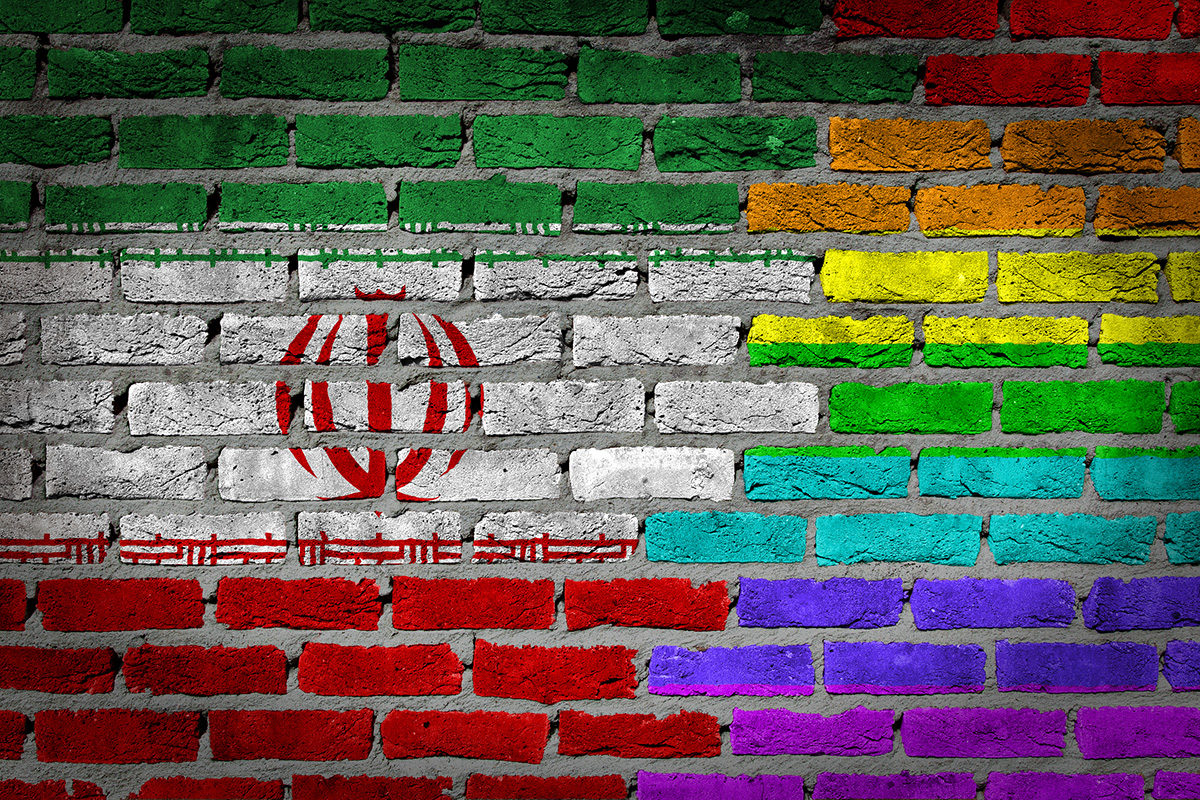
While global powers negotiate with Iran’s regime under Ayatollah Ali Khamenei to curb its advancing nuclear program, the oppressed LGBTQ community is building and operating a secret underground network to resist state-coerced sex reassignment surgeries.
These surgeries, mandated for gay and lesbian people as a state-sanctioned alternative to execution for homosexuality, are part of Iran’s penal code that criminalizes consensual same-sex sexual relations. The network provides safe houses, forged identification documents, and covert communication channels to protect members from government raids and imprisonment.
Precise data on LGBTQ people prosecuted in Iran for resisting state-coerced sex reassignment surgeries over the past decade remains elusive, as the regime’s opaque judicial system obscures such cases under vague charges like “corruption on earth” or “sodomy.” NGOs, including 6Rang, report that thousands of gay and lesbian Iranians face pressure to undergo surgeries to avoid execution for same-sex conduct, with resistance often leading to arrests or harassment for violating gender norms.
Zahra Seddiqi Hamedani and Elham Choubdar, two prominent activists, in 2022 were sentenced to death for their social media advocacy, charged with “corruption” and “human trafficking,” though their convictions were overturned in 2023. Similarly, Rezvaneh Mohammadi in 2019 received a five-year sentence for promoting “homosexual relations,” a charge hinting at resistance to the regime’s heteronormative mandates.
Arsham Parsi in 2003 escalated his clandestine fight for Iran’s LGBTQ community by launching Voice Celebration, a secret Yahoo chat group where 50 queer Iranians, using aliases, exchanged coded messages to evade the regime’s surveillance. Operating like operatives in a shadow network, participants shared text messages about human rights and survival tactics, knowing a single breach could lead to torture or execution. Parsi, then 23, orchestrated the group’s encrypted communications, building a virtual lifeline that connected isolated individuals across the country until his cover was nearly blown, forcing a desperate escape in early 2005.
Parsi in an exchange with the Washington Blade revealed a defiant undercurrent in Iran, a movement too elusive to be called traditional resistance yet pulsing with covert rebellion against the regime.
The state’s relentless push to force gay men into coerced surgeries — marketed as a “solution” to their sexuality — seeks to erase their identities through enforced conformity. Parsi, steering the International Railroad for Queer Refugees, disclosed how queer Iranians fight back with clandestine measures: Underground education to counter state propaganda, discreet psychological support to fortify resilience, and encrypted networks to forge secret alliances. These efforts, veiled to evade regime detection, dismantle the state’s narrative with every hidden signal and guarded connection.
“We are working to create a true grassroots resistance by empowering people to understand their identity, seek safe alternatives, and reclaim their agency despite the oppressive context,” said Parsi. “The Iranian regime’s policies are built on denial of sexual orientation and a forced alignment with a binary gender model.”
“Rather than recognizing gay, lesbian, or bisexual individuals, the system pressures them — particularly gay men — to undergo irreversible surgeries in order to be legally tolerated,” he added. “This systemic violence creates deep psychological harm and compels many to resist, even quietly, to protect their truth. The lack of legal recognition and the threat of arrest, harassment, or blackmail fuels the underground defiance we see today. It’s not only resistance for survival — it’s a rejection of state-imposed identity suppression.”
IRQR, guided by Parsi, for nearly two decades has operated as a lifeline, orchestrating daring escapes and running a covert network for Iran’s hunted queer community.
Parsi said his work relies on secret, encrypted channels — meticulously managed to avoid detection — to funnel at-risk individuals to safety, smuggle life-saving information, secure hidden safe houses, and deliver emotional support. Every operation faces threats not only from the regime’s security forces but also from Basij militia operatives who masquerade as queer individuals to infiltrate networks, heightening the peril for those marked by their identities.
Black-clad Basij militia members respond at the first signs of defiance; tearing through crowds on motorcycles with batons and guns at the ready, poised to crush any challenge to Iran’s regime. These paramilitary volunteers, bound by fierce loyalty to the Islamic Republic, serve as the state’s enforcers, their plainclothes operatives slipping into dissident networks to root out the defiant.
The Basij fill queer Iranians with dread; their so-called morality patrols and digital traps stalking those who dare to exist outside the regime’s rigid norms.
“Their goal is not only to gather intelligence but to undermine, divide, and cancel the work of activists and organizations like ours,” said Parsi. “This divide-and-conquer strategy is designed to break solidarity and generate mistrust.”
“We have seen numerous cases where trusted circles were compromised by these informants, and it has made our work — and survival — even more complex,” he further noted. “Despite this, we persist. Through our underground connections, we have helped thousands of queer Iranians seek safety, community, and ultimately, freedom.”
Parsi told the Blade that international support — through funding, advocacy, policy pressure, or amplifying his stories — can significantly strengthen his work to protect Iran’s persecuted queer community. He emphasized IRQR operates with limited resources, making global solidarity essential to improve outreach, enhance safety measures, and respond swiftly to those in need. Parsi underscored such support brings visibility to the crisis in Iran, reminding those at risk they are not forgotten while exerting pressure on a regime that thrives on silence and fear.
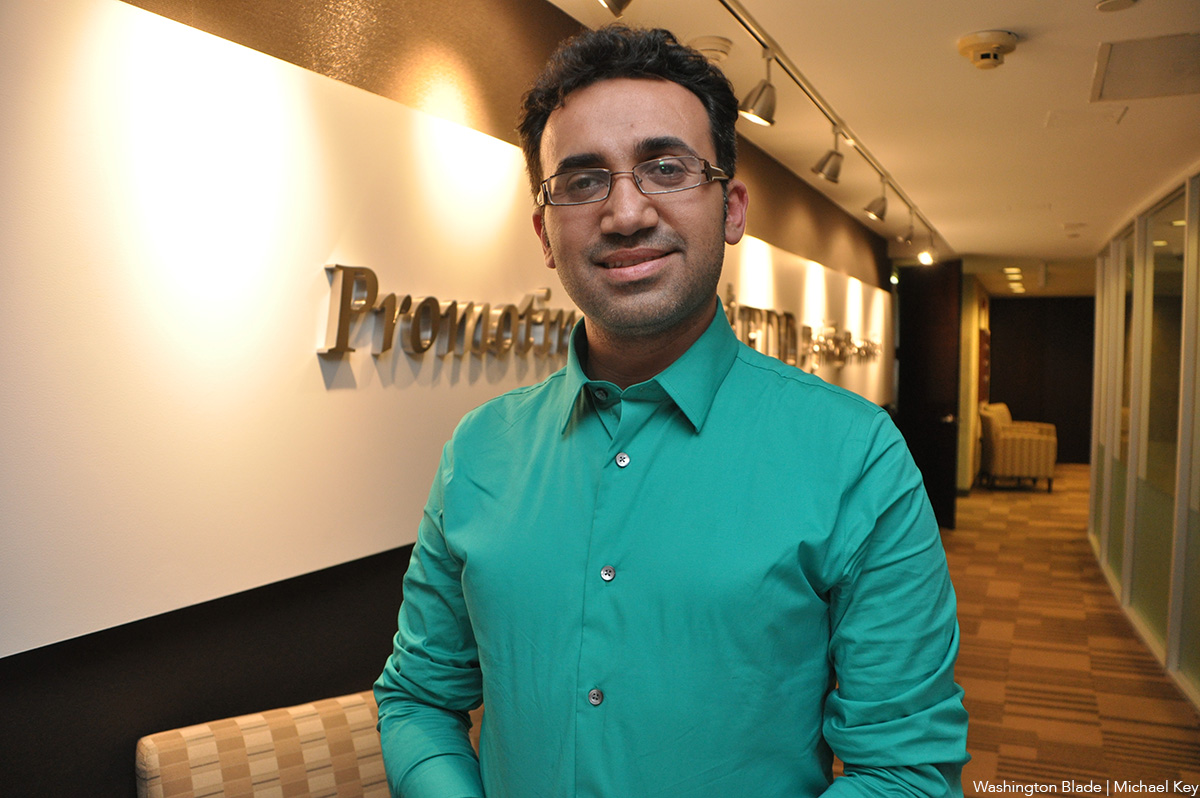
One of the things that Parsi’s underground network offers is online workshops that educate queer Iranians about how they can remain beyond the regime’s reach.
He said these sessions, designed for safety and accessibility, encompass peer support, mental health education, digital security training, and guidance on refugee pathways. Parsi explained the workshops give vulnerable Iranians the tools to navigate persecution, defy state surveillance, and pursue escape, exposing the resilience of a community under relentless scrutiny.
“Due to the high risk of persecution in Iran, traditional protests are not feasible,” said Parsi. “Instead, acts of resistance take quieter forms — like anonymous storytelling which are just as powerful in building awareness and connection within the community. While discreet, these activities help create a sense of solidarity and empowerment among queer Iranians.”
Parsi, undeterred by Iran’s unyielding regime, asserted with measured confidence that while underground acts of defiance — living authentically, supporting one another, resisting forced medicalisation — may not shift policy overnight, they are already improving lives. He stressed these quiet rebellions that queer Iranians stage challenge the regime’s narrative of shame and invisibility, forging a resilient foundation for future change. Each act, Parsi emphasized, dismantles the regime’s grip, offering hope to those navigating a landscape of relentless oppression.
“At IRQR, we view each life saved, each network built, and each truth spoken as a small but powerful act of resistance,” said Parsi. “These are the seeds of future liberation. Over time, as they multiply and gain visibility — locally and internationally — they will help reshape the landscape for queer Iranians.”
ILGA Asia Executive Director Henry Koh said queer Iranians’ underground resistance is a powerful assertion of bodily autonomy and self-determination. He described it as a deeply courageous act in a regime where visibility invites immense personal risk, from arrest to execution.
When asked by the Blade if the Iranian regime’s punitive measures against openly queer people fuel underground resistance, Koh responded unequivocally.
“Absolutely,” he said. “The climate of criminalization and repression leaves little safe space for queer people to live openly. This forces many into secrecy or underground networks as a means of survival, resistance, and mutual support. Such conditions are not only unjust but also profoundly harmful to the well-being of LGBTIQ+ individuals.”
“It is important to distinguish between affirming gender-affirming care and any form of coercive medical intervention,” he added. “When states or authorities mandate medical procedures as a condition for recognition or safety, it constitutes a grave violation of human rights. Gender identity is deeply personal, and no institution should override an individual’s self-defined identity.”






Iran and Egypt on Friday faced off during the World Cup’s “Pride Match” in Seattle.
Iran is among the handful of countries in which consensual same-sex sexual relations remain punishable by death. Discrimination and persecution based on sexual orientation and gender identity is commonplace in Egypt.
Friday’s match coincided with Pride weekend in Seattle. The Egyptian Football Association and the Football Federation Islamic Republic of Iran both objected to playing in the “Pride Match.”
Egypt and Iran tied 1-1.
FIFA, for its part, allowed Pride flags inside the stadium during the match.
“The FIFA World Cup 2026 is an inclusive event that welcomes people from all backgrounds,” a FIFA spokesperson told the Washington Blade in a statement. “Fans of all sexual orientations and gender identities are welcome at matches and events. General statements of human rights, including rainbow flags and other flags representing sexual orientation and gender identity, are permitted under the FIFA World Cup 2026™ Stadium Code of Conduct and may be displayed inside stadiums provided they are used in a manner consistent with the code.”
Human Rights Watch welcomed FIFA’s decision to allow Pride flags inside the stadium. Outright International, a global LGBTQ and intersex rights group, distributed Pride flags in Seattle on Friday, which was Pride Match Day.
“Visibility matters,” said Outright International Executive Director Maria Sjödin. “Pride is now being celebrated in more than 100 countries, including this weekend in Seattle. For many LGBTIQ people, seeing a Pride flag in public is a reminder that they are not alone, and that their rights and dignity are recognized.”
FIFA President Gianni Infantino earlier this year told Die Weltwoche, a Swiss magazine, that “there will be no ‘Pride Match’ at the (FIFA) World Cup.”
“There will be a FIFA World Cup match in Seattle, and on the same day, events organized by external organizations will be taking place in the city,” said Infantino. “But that has nothing to do with the match itself.”
Peter Tatchell, a long-time LGBTQ activist from the U.K. who is director of the Peter Tatchell Foundation, was among those who traveled to Seattle for Friday’s match. Tatchell accused FIFA of not vetting World Cup teams — specifically Iran, Egypt, Saudi Arabia, Ghana, Senegal, Qatar, Tunisia, Morocco, Iraq, Uzbekistan, and Algeria — over whether they would allow gay players.
“FIFA is protecting LGBT+ visibility in the stands while failing to protect LGBT+ players on the pitch,” said Tatchell.
Iran
LGBTQ groups condemn Trump’s threat to destroy Iranian civilization
Ceasefire announced less than two hours before Tuesday deadline

The Council for Global Equality is among the groups that condemned President Donald Trump on Tuesday over his latest threats against Iran.
Trump in a Truth Social post said “a whole civilization will die tonight” if Tehran did not reach an agreement with the U.S. by 8 p.m. ET on Tuesday.
Iran is among the handful of countries in which consensual same-sex sexual relations remain punishable by death.
Israel and the U.S. on Feb. 28 launched airstrikes against Iran.
One of them killed Supreme Leader Ayatollah Ali Khamenei. Iran in response launched missiles and drones against Israel and other countries that include Kuwait, Bahrain, Qatar, the United Arab Emirates, Jordan, Saudi Arabia, Azerbaijan, and Cyprus.
Gas prices in the U.S. and around the world continue to increase because the war has essentially closed the Strait of Hormuz, a strategic waterway that connects the Persian Gulf and the Gulf of Oman through which roughly 20 percent of the world’s crude oil passes.
Trump less than 90 minutes before his deadline announced a two-week ceasefire with Iran that Pakistan helped broker.
“We the undersigned human rights, humanitarian, civil liberties, faith-based and environmental organizations, think tanks and experts are deeply alarmed by President Trump’s threat regarding Iran that ‘a whole civilization will die tonight’ if his demands are not met. Such language describes a grave atrocity if carried out,” reads the statement that the Council for Global Equality more than 200 other organizations and human rights experts signed. “A threat to wipe out ‘a whole civilization’ may amount to a threat of genocide. Genocide is a crime defined by the Genocide Convention and by the Rome Statute of the International Criminal Court as committing one or more of several acts ‘with intent to destroy in whole or in part a national, racial or religious groups as such.'”
The statement states “the law is clear that civilians must not be targeted, and they must also be protected from indiscriminate or disproportionate attacks.”
“Strikes on civilian infrastructure — such as the recent attack on a bridge and the attacks President Trump is repeatedly threatening to carry out to destroy power plants — have devastating consequences for the civilian population and environment,” it reads.
“We urge all parties to respect international law,” adds the statement. “Those responsible for atrocities, including crimes against humanity and war crimes, can and must be held accountable.”
The Alliance for Diplomacy and Justice, Amnesty International USA, Human Rights Watch, the American Civil Liberties Union, the NAACP, MADRE, and the Robert and Ethel Kennedy Human Rights Center are among the other groups that signed the letter.
Iran
Man stuck in Lebanon as Iran war escalates
Mario was traveling to India when conflict began on Feb. 28
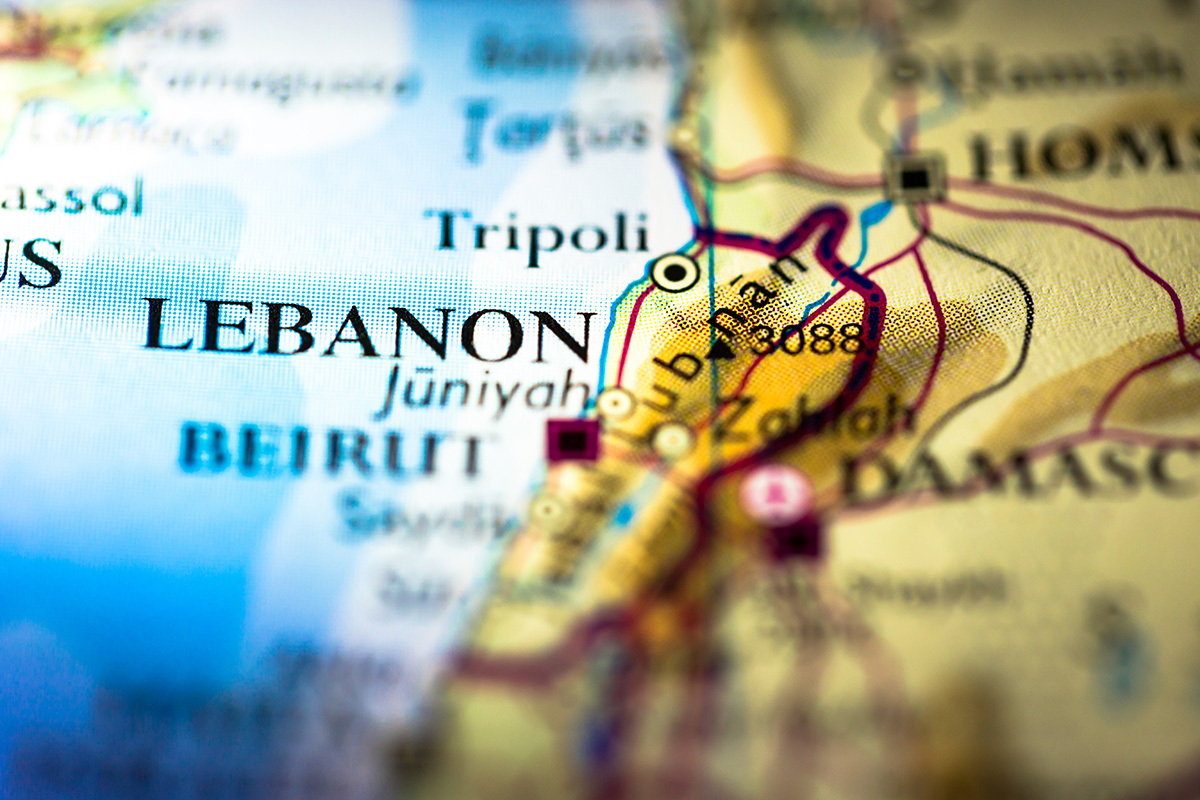
The Washington Blade on March 6 spoke with a man who remains stuck in Lebanon because of the escalating Iran war.
Mario, who asked the Blade not to publish his last name, lives in the U.S., but was born in Lebanon. He decided to stop in the country to see his doctor before traveling to India for work.
Mario was about to board a flight at Rafic Hariri International Airport in Beirut, the Lebanese capital, on Feb. 28 when airline personnel announced “we cannot fly anymore” because authorities had closed the country’s airspace.
The U.S. and Israel earlier that day launched airstrikes against Iran.
One of them killed Supreme Leader Ayatollah Ali Khamenei. Iran in response launched missiles and drones against Israel and Kuwait, Bahrain, Qatar, the United Arab Emirates, Jordan, Azerbaijan, Cyprus, and other countries.
An Iranian drone that hit a command center in Kuwait on March 1 killed six U.S. soldiers: Sgt. Declan Coady, Sgt. 1st Class Nicole Amor, Capt. Cody Khork, Sgt. 1st Class Noah Tietjens, Chief Warrant Officer 3 Robert Marzan, and Maj. Jeffrey O’Brien. Another American servicemember, Sgt. Benjamin Pennington, died on Sunday, a week after Iranian drones and missiles targeted the Prince Sultan Air Base in Saudi Arabia.
Iranian drones and missiles have also damaged civilian infrastructure, including hotels and airports in Dubai in the United Arab Emirates and Kuwait. An Iranian missile on March 1 killed nine people and injured 27 others in Beit Shemesh, Israel.
The war has left Mario and hundreds of thousands of others stranded in the Middle East.
“I had to come back home,” Mario told the Blade.
“Luckily, I’m with family,” he added.
‘War is between Israel and Hezbollah’
Hezbollah, an Iran-backed Shia militant group the U.S. and Israel have designated a terrorist organization, after Khamenei’s death launched rockets at Israel. The Jewish State in response has carried out airstrikes against Hezbollah targets across Lebanon.
Hamas militants on Oct. 7, 2023, killed upwards of 1,200 people when they launched a surprise attack against Israel from the Gaza Strip. Hezbollah the following day began to launch rockets into Israel.
An Israeli airstrike in Beirut on Sept. 27, 2024, killed Hassan Nasrallah, Hezbollah’s long-time leader. Iran four days later launched upwards of 200 ballistic missiles at Israel.
The U.S. helped broker a ceasefire between Israel and Lebanon that took effect on Nov. 27, 2024. Israel nevertheless continued to carry out airstrikes in Lebanon.
Israel on June 13, 2025, launched airstrikes against Iran that targeted the country’s nuclear and military facilities. The subsequent war, which lasted 12 days, prompted the cancellation of the annual Tel Aviv Pride parade.
Mario noted the Israeli airstrikes have targeted Hezbollah infrastructure in Dahiyah, a Beirut suburb that is predominantly Shia, and in southern Lebanon.
His family’s home is about five miles from downtown Beirut. Mario said there is a mountain “that separates me from the area that is being bombed, so I don’t even hear the sounds.”
“Lebanon is such an interesting juxtaposition, because depending on which area you are in, your quality of life can be different during these times,” he said. “Right now, the war is not between Israel and Lebanon as a government. The war is between Israel and Hezbollah.”
“If you are in the areas where Hezbollah is concentrated, then you are severely impacted,” added Mario. “If you are in other areas, even if they are Shia or … Muslims that usually align themselves with Hezbollah, you’re still relatively in a safe place, in a safe location.”
Israeli evacuation orders have prompted hundreds of thousands of people to flee their homes in Dahiyah and in southern Lebanon.
Mario said many of the evacuees are sleeping in their cars, or on the street. He also noted a video that showed a shepherd with his sheep and goats on a highway in downtown Beirut.
“He took his animals with him because he had to vacate where he was living,” said Mario. “That’s the first time you see in downtown Beirut maybe 100 goats walking the streets with two people sitting on jackasses and herding them.”
“It is very absurd,” he added.
The Lebanese government has opened schools and public shelters for people who have been displaced, but Mario said many of them do not have enough food. He also said gas prices have increased, and people are afraid to drive.
“It really saddens me seeing the kids affected by it,” said Mario. “Hezbollah made this decision, and it was a unilateral decision.”
“I doubt that the Shia people support them,” he added, referring to Hezbollah. “They cannot say it out loud that they do not support them, but I doubt people are happy within less than two years, for the second time in a row, to have to leave their homes and try to find a place to stay.”
Lebanese government urged to develop LGBTQ-inclusive plan for displaced people
Article 534 of Lebanon’s Penal Code states “any sexual intercourse contrary to the order of nature is punishable” by up to a year in prison. Several judges in recent years have opted not to use the statute to prosecute LGBTQ people who have been charged under it.
Helem, a Lebanese LGBTQ and intersex rights group, on March 4 called upon the Lebanese government and international NGOs to develop a response to the Israeli airstrikes that is “comprehensive, fair, and inclusive of all groups, without exception or discrimination.
“The experience of the previous war demonstrated that state response plans were not sufficiently inclusive of displaced LGBTQ+ individuals,” said Helem. “Many faced compounded challenges, including the inability to access state collective shelters, exposure to harassment or violence, difficulty accessing health and psychosocial services, and fear of disclosing their gender identity or sexual orientation due to stigma and discrimination.”
“Any emergency plan that fails to take the most vulnerable groups into account exposes their lives and dignity to additional risks,” added the group.
Helem also made the following requests:
• Integrating a rights-based and nondiscrimination approach in all stages of planning and implementation, ensuring safe and equal access to assistance and services.
• Training staff working in shelters and emergency response on principles of protection from gender-based violence and discrimination, including issues related to gender identity and sexual orientation.
• Reassessment of the currently adopted shelter model, which relies exclusively on the concept of the “traditional family” aligned with a specific social structure. In practice, this leads to the systematic exclusion of non-traditional families and individuals who do not belong to conventional family units, including LGBTQ+ individuals, survivors of domestic violence, migrant workers, and people without supportive family networks.
• Involving civil society organizations specialized in gender issues and LGBTQ+ rights in the design, implementation, and monitoring of the emergency response plan.
• Establishing clear monitoring and accountability standards to ensure that violations or discriminatory practices do not occur during the implementation of the emergency plan.
“Disasters and conflicts do not justify the suspension of rights or the neglect of marginalized groups. On the contrary, the need for a humanitarian approach grounded in dignity and equality becomes even more urgent in times of crisis.”
“Helem places its expertise and experience at the disposal of relevant authorities and affirms its readiness to cooperate to ensure that the emergency plan is more just, effective, and inclusive,” said Helem. “Dignity is indivisible, and protection must include everyone without exception.”

Lula, Flávio Bolsonaro to face off in second round of Brazilian presidential election

The financial realities facing LGBTQ+ first-time buyers

‘Merrily’ is for Sondheim super fans, the uninitiated, and anyone in between

Engrossing ‘Tip Toe’ delivers tension and an ominous warning

Eliot Glazer’s new book an engaging collection of essays

Meet the LGBTQ candidates running for U.S. House, Senate

Ana Brnabić becomes world’s first openly lesbian head of state

Vote now! Best Of LGBTQ DC readers’ choice awards

Gay Va. couple hopeful voters will enshrine marriage equality in state constitution

Victory Fund board investigates former staffers’ allegations against CEO Evan Low
-

 2026 Midterm Elections4 days ago
Meet the LGBTQ candidates running for U.S. House, Senate
-
Serbia4 days ago
Ana Brnabić becomes world’s first openly lesbian head of state
-
Arts & Entertainment4 days ago
Vote now! Best Of LGBTQ DC readers’ choice awards
-
Virginia4 days ago
Gay Va. couple hopeful voters will enshrine marriage equality in state constitution