Uganda
Activists urge the World Bank not to resume lending to Uganda
Country’s Anti-Homosexuality Act signed in 2023

A group of activists who organized a protest outside Uganda’s Permanent Mission to the U.N. in New York on Thursday demanded the World Bank Group not resume loans to the country.
The World Bank in August 2023 suspended new lending to Uganda in response to the country’s Anti-Homosexuality Act that President Yoweri Museveni signed.
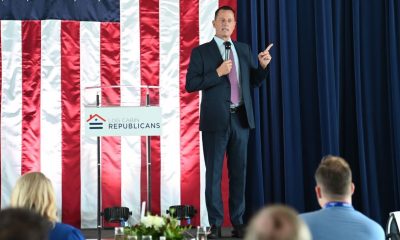
“The law needs to be struck down and repealed. Hard stop,” acting U.S. World Bank Executive Director L. Felice Gorordo told the Washington Blade during a March 27, 2024, interview at his office in Washington. “We continue to advocate for that.”
Thursday’s protest coincided with the U.N. General Assembly that began earlier in the week in New York.
A press release the activists issued before the protest notes the World Bank “recently started testing a package of ‘mitigation measures’ to determine if discrimination is taking place.” The Council for Global Equality, the Human Rights Campaign, Immigration Equality, Outright International, Sexual Minorities Uganda, and Health GAP are among the more than 100 LGBTQ rights organizations from around the world that urged World Bank President Ajay Banga in a Sept. 16 letter not to restart lending to Uganda.
“We are writing to you from Uganda and around the world now because we are alarmed by the World Bank’s plan for mitigation measures in Uganda,” reads the letter. “The World Bank has announced that it will be testing the effectiveness of ‘mitigation measures’ from July-September 2024 and that the World Bank will restart lending if they decide the measures are effective in protecting LGBTQ+ people from discrimination.”
Richard Lusimbo, director general of the Uganda Key Population Consortium, in the press release said the World Bank’s “so-called ‘mitigation measures’ are a façade, designed to provide the illusion of protection.”
“They rely on perpetrators of discrimination — the government of Uganda — to implement the measures fairly,” he said. “How can they be taken seriously?”

A World Bank spokesperson on Friday responded to the Washington Blade’s request for comment about the protest.
“The World Bank cannot deliver on its mission to end poverty and boost shared prosperity on a livable planet unless all people can participate in, and benefit from, the projects we finance,” said the spokesperson.
The spokesperson referred the Blade to an Aug. 8, 2023, statement that announced the suspension of new loans to Uganda.
“Immediately after the law was enacted, the World Bank deployed a team to Uganda to review our portfolio in the context of the new legislation,” reads the statement. “That review determined additional measures are necessary to ensure projects are implemented in alignment with our environmental and social standards. Our goal is to protect sexual and gender minorities from discrimination and exclusion in the projects we finance. These measures are currently under discussion with the authorities.”
“We will not propose any new public financing for Uganda to our board until we are satisfied that additional mitigation measures are in place,” the spokesperson told the Blade on Friday. “These mitigation measures have been designed to ensure beneficiaries of bank-financed projects are not discriminated against and receive equal access to services.”
One such mitigation measure is “stakeholder engagement” that, among other things, seeks to strengthen “consultations to detect instances of exclusion or discrimination (do-no harm safety.)” Another specifically highlights “labor and working conditions” and focuses on the need for “training on inclusion and non-discrimination for borrowers (e.g., contractors and sub-contractors) and mobilization of communities” and including “provisions of non-discrimination in contracts.”
The World Bank has said the Ugandan government has agreed to the mitigation measures.
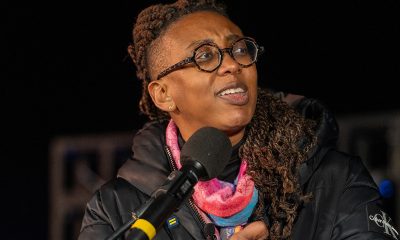
Clare Byarugaba of Chapter 4 Uganda said there “can be no business as usual between the World Bank and the government of Uganda while this law remains in force.”
“We are gravely concerned that President Banga is turning his back on us, and breaking his commitments to ensuring non-discrimination,” she said.



Uganda
Ugandan activist named Charles F. Kettering Foundation fellow
Clare Byarugaba founded PFLAG-Uganda
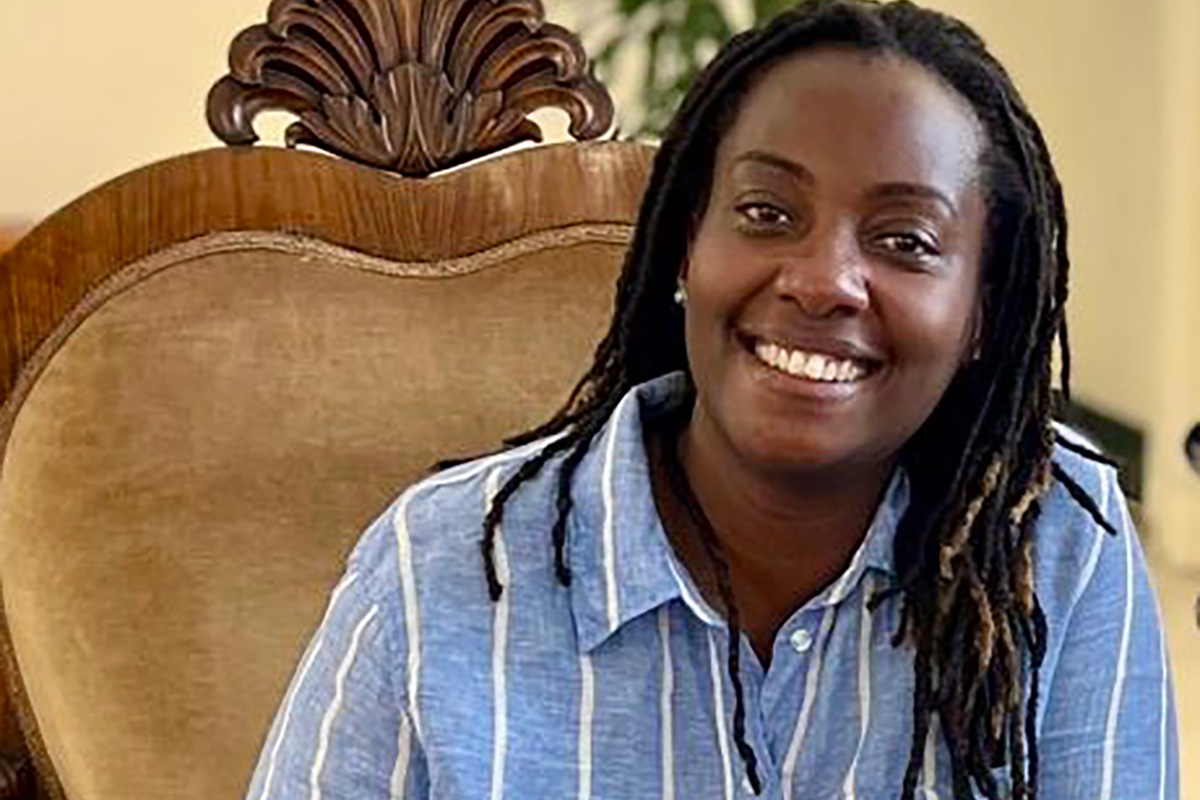
The Charles F. Kettering Foundation has named a prominent Ugandan LGBTQ activist as one of its 2026 fellows.
Clare Byarugaba, founder of PFLAG-Uganda, is one of the foundation’s five 2026 Global Fellows.
Byarugaba, among other things, has been a vocal critic of Uganda’s Anti-Homosexuality Act. Byarugaba in 2024 met with Pope Francis — who criticized criminalization laws during his papacy — at the Vatican.
The foundation on its website says it “is dedicated to bringing research and people together to make the promise of democracy real for everyone, everywhere.”
“Clare is the kind of hero who rushes toward the emergency to help,” said PFLAG CEO Brian K. Bond in a Feb. 27 statement to the Washington Blade. “She founded PFLAG-Uganda as the country pushed to criminalize homosexuality and those who support LGBTQ+ people. Yet, she never hesitated in her courage, telling us that families wanted to organize to keep their LGBTQ+ loved ones safe, and PFLAG was the way to do it. Clare Byarugaba not only deserves this honor, but she will use her compassion and experience to teach the world about LGBTQ+ advocacy as a Kettering Global Fellow.”
Uganda
LGBTQ Ugandans targeted ahead of country’s elections
President Yoweri Museveni won 7th term in disputed Jan. 15 vote
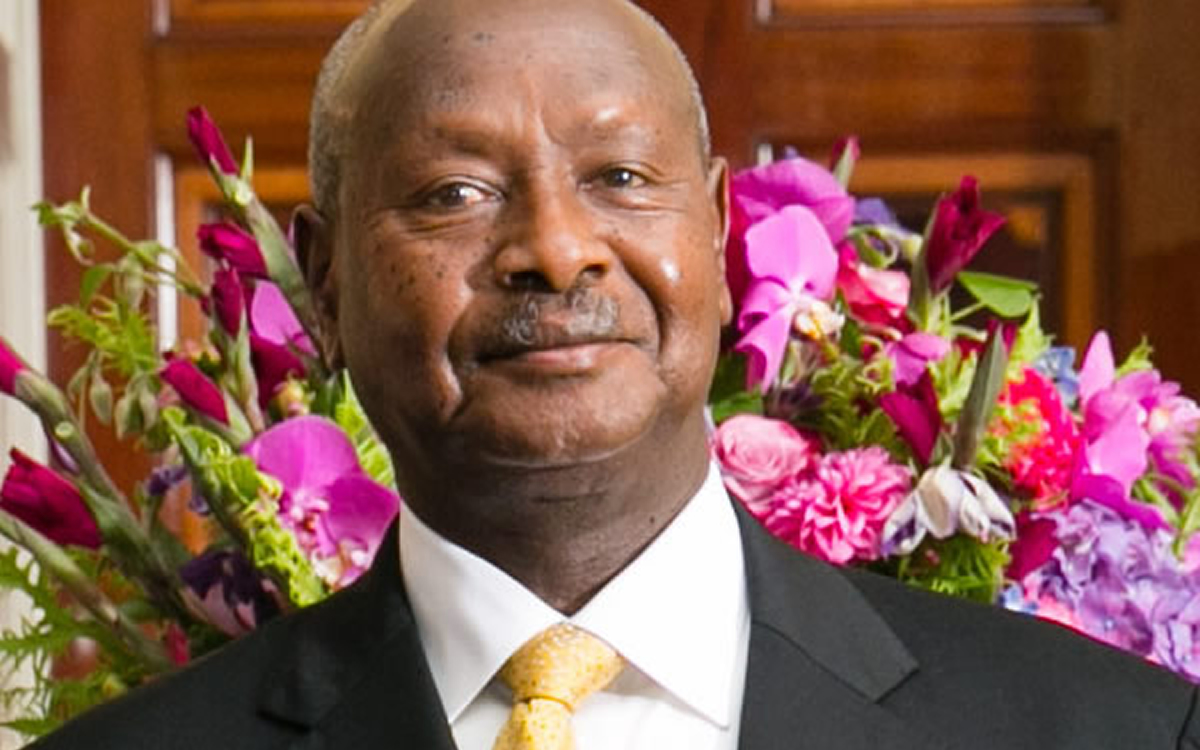
Barely a week after Ugandan President Yoweri Museveni secured a 7th term in an election marred by state violence, intimidation, and allegations of fraud, the country’s queer community spoke about how the election environment impacted it.
The LGBTQ lobby groups who spoke with the Washington Blade noted that, besides government institutions’ failure to create a safe and inclusive environment for civic participation by all Ugandans, authorities weaponized the Anti-Homosexuality Act to silence dissent and discourage queer voter engagement.
The rights groups note that candidates aligned with Museveni’s ruling National Resistance Movement — including Parliament Speaker Anita Among — during the campaigns accused their rivals of “promoting homosexuality” to discredit them while wooing conservative voters.
Queer people and LGBTQ rights organizations as a result were largely excluded from the formal political processes for the election as voters, mobilizers, or civic actors due to fear of exposure, stigma, violence, and legal reprisals.
“This homophobic rhetoric fueled public hostility and emboldened vigilante violence, forcing many queer Ugandans into deeper hiding during the election period,” Uganda Minority Shelters Consortium Coordinator John Grace stated.
Some queer people had expressed an interest in running for local council seats, but none of them formally registered as candidates or campaigned openly because of safety concerns and local electoral bodies’ discriminatory vetting of candidates.
“UMSC documented at least three incidents of election-related violence or intimidation targeting LGBTQ+ individuals and activists,” Grace noted. “These included harassment, arbitrary detentions, extortions by state and non-state actors, digital cat-fishing, and threats of outing.”
Amid such a militarized and repressive election environment, Let’s Walk Uganda Executive Director Edward Mutebi noted queer-led and allied organizations engaged in the election process through restricted informal voter education, community discussions, and documenting human rights violations.
“Fear of backlash limited visibility and direct participation throughout the election cycle,” Mutebi said. “But despite the hostile environment of work, Let’s Walk Uganda was able to organize a successful transgender and gender diverse youth training on electoral security and safety.”
Museveni’s government escalated its repressive actions during the Jan. 15 elections by shutting down the internet and suspending nine civil society organizations, including Chapter Four Uganda and the National Coalition of Human Rights Defenders, for allegedly engaging in activities that are prejudicial to the security and laws of the country.
The suspension of the rights organizations remains in force, an action both Mutebi and Grace condemn. They say it prevents queer Ugandans from accessing urgent services from the affected groups.
“For the LGBTQ community, the impact has been immediate and deeply harmful. Many of the suspended organizations, like Chapter Four Uganda, were critical partners in providing legal representation, emergency response, and documentation of rights violations,” Grace said.
This has compelled UMSC and its other partners to handle increased caseloads with limited resources, while navigating heightened scrutiny and operational risk.
“The suspension has disrupted referral pathways, delayed urgent interventions, and weakened collective advocacy for marginalized groups and minority rights defenders, which calls for urgent international solidarity, flexible funding, and protection mechanisms to safeguard the work of grassroots organizations operating under threat,” Grace stated.
Mutebi warned that such repressive actions are tyrannical and are indicative of shrinking civic space, which undermines democratic accountability as the promotion and protection of human rights is ignored.
With Museveni, 81, extending his tenure at State House from a landslide win of 72 percent, UMSC and LWU consider a bleak future in the protection of rights for queer Ugandans and other minority groups.
“Without significant political and legal shifts, LGBTQ persons will face continued criminalization, reduced civic space, and heightened insecurity, making sustained advocacy and international solidarity more critical than ever,” Mutebi said. “ It is unimaginable how it feels to live in a country with no hope.”
Grace, however, affirmed the resistance by local queer lobby groups will continue through underground networks, regional solidarity, and digital organizing.
The duo noted that a win by Museveni’s main challenger and rapper, Bobi Wine, who only managed 24 percent of the total votes cast, could have enabled the opening up of civil space and human rights protections in Uganda.
Wine, for his part, spoke in favor of the respect for the rule of law and human rights during his campaign.
“While Bobi Wine’s past stance on LGBTQ rights was inconsistent, his recent shift toward more inclusive rhetoric and international engagement suggested a potential opening for dialogue,” Grace said. “A win might have created space for policy reform or at least reduced state-sponsored homophobia, though structural change would still require sustained pressure and coalition-building.”
Mutebi stated that a change in Uganda’s leadership to a youthful leader like Wine could have offered an opening, but not a guarantee for progress on inclusion and human rights. Mutebi added existing institutionalized and societal homophobia remain in place.
The White House
Ugandan government agrees to accept migrants deported from US
Anti-Homosexuality Act signed in 2023; White House mum on sanctioned officials
A White House spokesperson on Thursday did not say whether the Trump-Vance administration plans to lift sanctions against Ugandan officials responsible for human rights abuses against LGBTQ people and other groups as part of an agreement to accept migrants deported from the U.S.
Ugandan Foreign Affairs Ministry Permanent Secretary Bagiire Vincent Waiswa in a statement said the agreement between his country and the U.S. “is in respect of third country nationals who may not be granted asylum in the United States, but are reluctant to or may have concerns about returning to their countries of origin.”
Waiswa described the agreement as “a temporary arrangement with conditions, including that individuals with criminal records and unaccompanied minors will not be accepted.”
“Uganda also prefers that individuals from African countries shall be the ones transferred to Uganda,” added Waiswa. “The two parties are working out the detailed modalities on how the agreement shall be implemented.”
STATEMENT CONCERNING AGREEMENT ON MIGRATION ISSUES WITH THE GOVERNMENT OF THE UNITED STATES
As part of the bilateral cooperation between Uganda and the United States, an Agreement for cooperation in the examination of protection requests was concluded.
The Agreement is in… pic.twitter.com/dStdBSXtBN
— Ministry of Foreign Affairs – Uganda 🇺🇬 (@UgandaMFA) August 21, 2025
Ugandan President Yoweri Museveni in May 2023 signed the Anti-Homosexuality Act, which contains a death penalty provision for “aggravated homosexuality.”
The Biden-Harris administration imposed visa restrictions on Ugandan officials and removed the country from a program that allows sub-Saharan African countries to trade duty-free with the U.S. The World Bank Group in June resumed lending to Uganda after it suspended new loans in response to the Anti-Homosexuality Act.
The State Department’s 2024 human rights report that advocacy groups say “erased” LGBTQ people does not specifically mention the Anti-Homosexuality Act or the impact it has had on LGBTQ Ugandans. The report, however, does note Ugandan government officials “reportedly committed acts of sexual violence.”
“NGOs reported police medical staff subjected at least 15 persons to forced anal examinations following their arrests,” it reads. “Opposition protesters stated security forces used or threatened to use forced anal examinations during interrogations.”
“The Trump administration is committed to fulfilling President Trump’s promise to carry out the largest mass deportation operation of criminal illegal aliens in history, using all the tools at our disposal,” said White House spokesperson Abigail Jackson in response to the Washington Blade’s request for comment on the agreement.
Secretary of State Marco Rubio on Thursday spoke with Museveni.
“Secretary of State Marco Rubio spoke with Ugandan President Yoweri Museveni to discuss opportunities to deepen U.S.-Uganda cooperation on migration, reciprocal trade, and commercial ties,” said State Department spokesperson Tommy Pigott in a statement. “The secretary also thanked Uganda for providing a model of regional stability including its valuable contributions to peacekeeping in East Africa.”
A State Department spokesperson told the Blade the State Department does not “comment on the content of private diplomatic negotiations.”
“However, we would note that for decades, Uganda has hosted refugees from across Africa and has one of the world’s most comprehensive protection regimes for refugees,” added the spokesperson.

Minimal version of ‘Streetcar Named Desire’ heading to Dupont Underground

Comings & Goings

An effort to increase the number of psychiatrists of color

Calendar: April 10-16

BLUF leather social set for April 10 in Rehoboth
Tenn. lawmakers pass transgender “watch list” bill

Vance speaks at Orbán rally in Hungary

LGBTQ groups condemn Trump’s threat to destroy Iranian civilization

Report: Grenell wants Russian ambassadorship