Local
Top 10 local LGBTQ news stories of 2024
World Pride preparations, notable deaths, hate crimes, and more
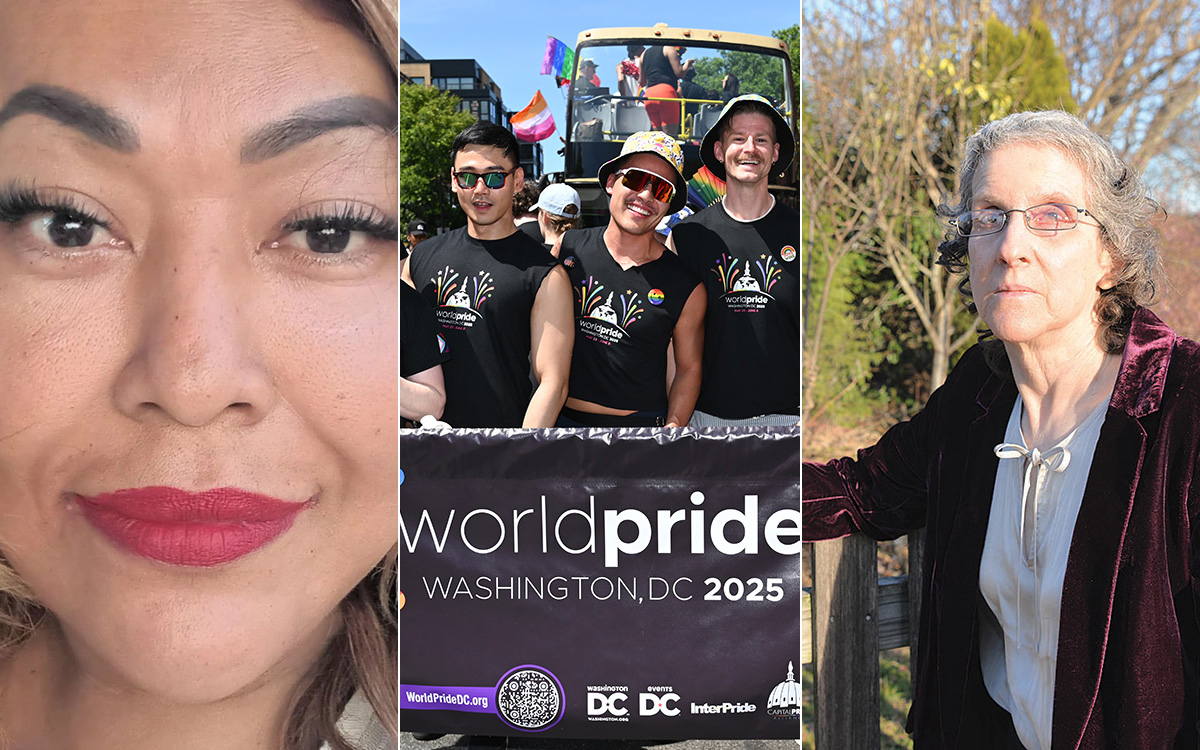
It was another busy year in local queer news, with everything from a string of brutal hate crimes to the impending sentencing of one-time local advocate Ruby Corado making news. Here then are the Blade’s picks for the top 10 local stories of 2024.
#10 Gay Episcopal minister reinstated 40 years after being defrocked
In a development he calls a miracle, the Rev. Harry Stock, who was defrocked from his position as an Episcopal priest 40 years ago by church officials in West Virginia after they learned he was gay and entered a holy union with his male partner, was officially reinstated as an Episcopal priest at an Oct. 26 ceremony at an Episcopal church in Alexandria, Va.
In an invitation to the ceremony that Stock sent to friends and associates, he said the ceremony would take place 43 years after he was ordained as an Episcopal priest by a bishop in Charleston, W.Va., and 40 years after the same bishop defrocked him from the priesthood because he “declared his love for another man at the altar” in a holy union ceremony.
#9 D.C. Council approves budget with $8.5 million in LGBTQ provisions
The D.C. Council on June 12 gave final approval for a $21 billion fiscal year 2025 budget for the District of Columbia that includes more than $8.5 million in funding for LGBTQ-related programs, including $5.25 million in support of the June 2025 World Pride celebration that D.C. will host.
Also included in the budget is $1.7 million in funds for the Mayor’s Office of LGBTQ Affairs, which includes an increase of $132,000 over the office’s funding for the current fiscal year, and a one-time funding of $1 million for the completion of the renovation of the D.C. Center for the LGBTQ Community’s new building in the city’s Shaw neighborhood.
#8 Judge seals case of gay D.C. gym owner charged with distributing child porn
In a surprise development, a judge with the U.S. District Court for the District of Columbia on Oct. 23 agreed to a request by a defense attorney to close and seal all court records from that date forward in the case of gay D.C. gym owner Michael Everts, who was arrested Nov. 29, 2023, on a charge of distribution of child pornography.
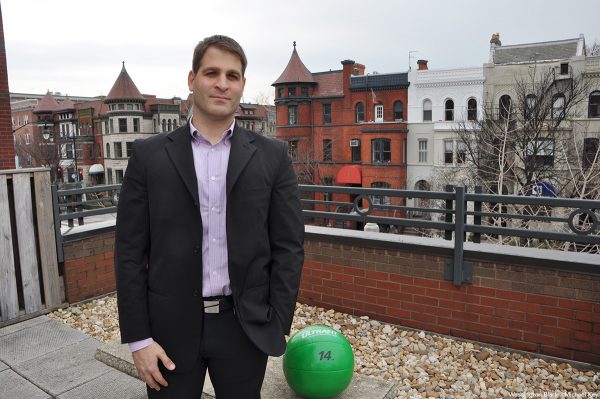
Before the case was sealed, court records showed that prosecutors offered Everts the option of pleading guilty, possibly to a lesser charge, and his decision on whether to accept that offer was expected to be disclosed at the Oct. 23, 2024, court hearing in which the judge sealed the case.
Neither the defense nor the prosecutors disclosed the reason for sealing the case. Court observers say one possible reason for sealing a case like this is the defendant is cooperating with police and prosecutors in another investigation into other people believed to have engaged in similar criminal conduct.
#7 Trans employee awarded $930,000 in lawsuit against D.C. McDonald’s
A D.C. Superior Court jury on Aug. 15 ordered a company that owned and operated a McDonald’s restaurant franchise in Northwest Washington to pay $930,000 in damages to a transgender employee who charged in a lawsuit that she was subjected to discrimination, harassment, and retaliation because of her gender identity in violation of the D.C. Human Rights Act.
The lawsuit, which was filed in January 2021 by attorneys representing Diana Portillo Medrano, says Medrano was first hired to work at the McDonald’s at 5948 Georgia Ave., N.W. in 2011 as a customer service representative and was recognized and promoted for good work until she began to transition as a trans woman two years later.
It says from that point forward her supervisors and co-workers “subjected her to a barrage of taunts, laughter, ridicule, and harassment because she is a transgender woman.” The lawsuit alleges she was illegally fired after filing a complaint with the D.C. Office of Human Rights.
#6 In D.C., 28 percent of homeless youth identify as LGBTQ
The annual 2024 count of homeless people in the District of Columbia conducted in January shows that 12 percent of the homeless adults and 28 percent of homeless youth between the ages of 18 and 24 identify as LGBTQ.
The Point In Time or PIT count shows an overall 14 percent increase in homelessness in the city compared to 2023. And this year’s count of a total of 527 LGBTQ homeless people marks an increase over the 349 LGBTQ homeless people counted in 2023 in D.C. and 347 LGBTQ homeless counted in 2022.
#5 Notable local deaths: Bernie Delia, Kathi Wolfe, Cornelius Baker
The local LGBTQ community in 2024 mourned the loss of several prominent community members while celebrating their lives and accomplishments.
Bernie Delia, a founding member of the Capital Pride Alliance, the group that organizes most D.C. LGBTQ Pride events, and who served most recently as co-chair of World Pride 2025, while working for many years as one of the first openly gay attorneys for the U.S. Department of Justice, died unexpectedly of natural causes on June 21. He was 68.
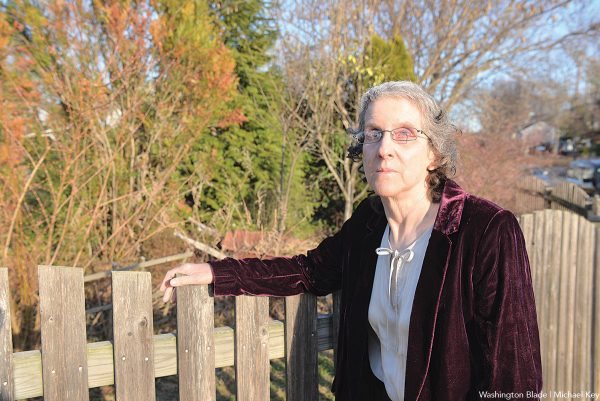
Longtime Washington Blade contributor Kathi Wolfe, an award-winning journalist and nationally recognized poet, died June 22 after a short battle with cancer. She was 71. Wolfe was also legally blind, and her disability motivated her to use her platforms to highlight the important contributions of disabled LGBTQ people.
A. Cornelius Baker, whose extensive career in public health included service as special adviser to the Office of AIDS Research at the National Institutes of Health and as executive director of D.C.’s Whitman-Walker Health and the National Association of People With AIDS, died unexpectedly at his home of natural causes on Nov. 9. He was 63.
#4 Ruby Corado pleads guilty to wire fraud
Ruby Corado, the founder and executive director of the now-defunct D.C. LGBTQ community services organization Casa Ruby, pleaded guilty July 17, to a single charge of wire fraud as part of a plea bargain deal offered by prosecutors.
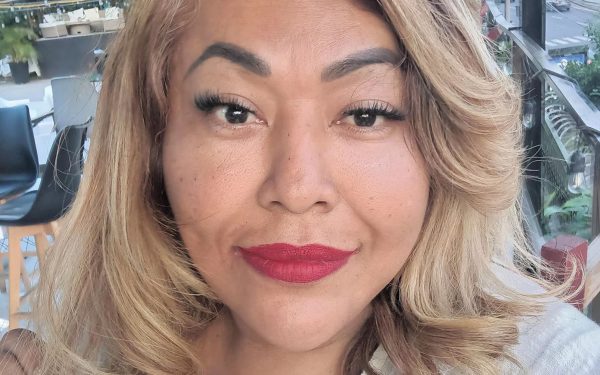
The charge to which she pleaded guilty in U.S. District Court for D.C. says she diverted at least $150,000 “in taxpayer-backed emergency COVID relief funds to private offshore bank accounts for her personal use,” according to a statement released by the U.S. Attorney’s office. A statement by prosecutors says that in 2022, “when financial irregularities at Casa Ruby became public, Corado sold her home in Prince George’s County and fled to El Salvador.”
It says FBI agents arrested her at a hotel in Laurel, Md. on March 5, 2024, “after she unexpectedly returned to the United States.” Court records show she is scheduled to be sentenced on Jan. 10, 2025.
#3 Accidental deaths of two beloved D.C. gay men triggers ‘powerful response’
The unexpected deaths of Brandon Roman, 38, and Robert ‘Robbie’ Barletta, 28, two widely known and beloved D.C. gay men, on Dec. 27, 2023, from an accidental drug overdose triggered an outcry for the city and the community to become more aggressive in addressing the opioid overdose problem and how it is impacting the LGBTQ community.
Following the completion of an autopsy and toxicology tests, the D.C. Office of the Chief Medical Examiner confirmed in April 2024, that the cause of death of the two men was an accidental consumption of several drugs that created a fatal “toxic” effect. Among the drugs found in the two men’s bodies was fentanyl, which D.C. public health officials have said is the leading cause of accidental drug overdose deaths in the city.
In June, two months after the Medical Examiner’s report, federal prosecutors obtained an indictment against an alleged drug dealer on a charge of “distributing cocaine and fentanyl” on Dec. 26, 2023, that resulted in the deaths of Roman and Barletta.
#2 String of anti-gay attacks rattles community
D.C. police continue to investigate separate incidents in which two gay men were attacked and assaulted on Oct. 27 in the U Street, N.W. entertainment section of D.C, one of whom died from his injuries. Police announced in November that they have arrested two juvenile males charged with robbing gay DJ and hairstylist Bryan Smith, 39, who was found unconscious on the 500 block of T St., N.W. suffering from a head injury. He died 11 days later, but police so far have only charged the two juveniles with robbery.
The assault and robbery of Smith took place about four hours after a 22-year-old gay man, Sebastian Thomas Robles Lascarro, was assaulted by as many as 15 men and women while some of them shouted anti-gay slurs at the McDonald’s restaurant at 14th and U Streets, N.W., according to a police report. D.C. police announced they have arrested a 16-year-old male in connection with that case, which remains under investigation.
In that same month of October, 15 students at Maryland’s Salisbury University were charged with a hate crime related assault against a 40-year-old gay man who police say they lured into an off-campus apartment by placing a message on Grindr posing as a 16-year-old male seeking a sexual encounter. According to police, when the man arrived at the apartment the students assaulted him while he was sitting in a chair.
Two months after the arrests, prosecutors in Wicomico County disclosed they were dropping felony assault and hate crime charges against at least 12 of the 15 charged in the attack due to a lack of sufficient evidence to retain those charges. The prosecutors left in place false imprisonment and second-degree assault charges against most of the arrested students, with trials expected to take place in late January.
#1 City prepares for World Pride 2025
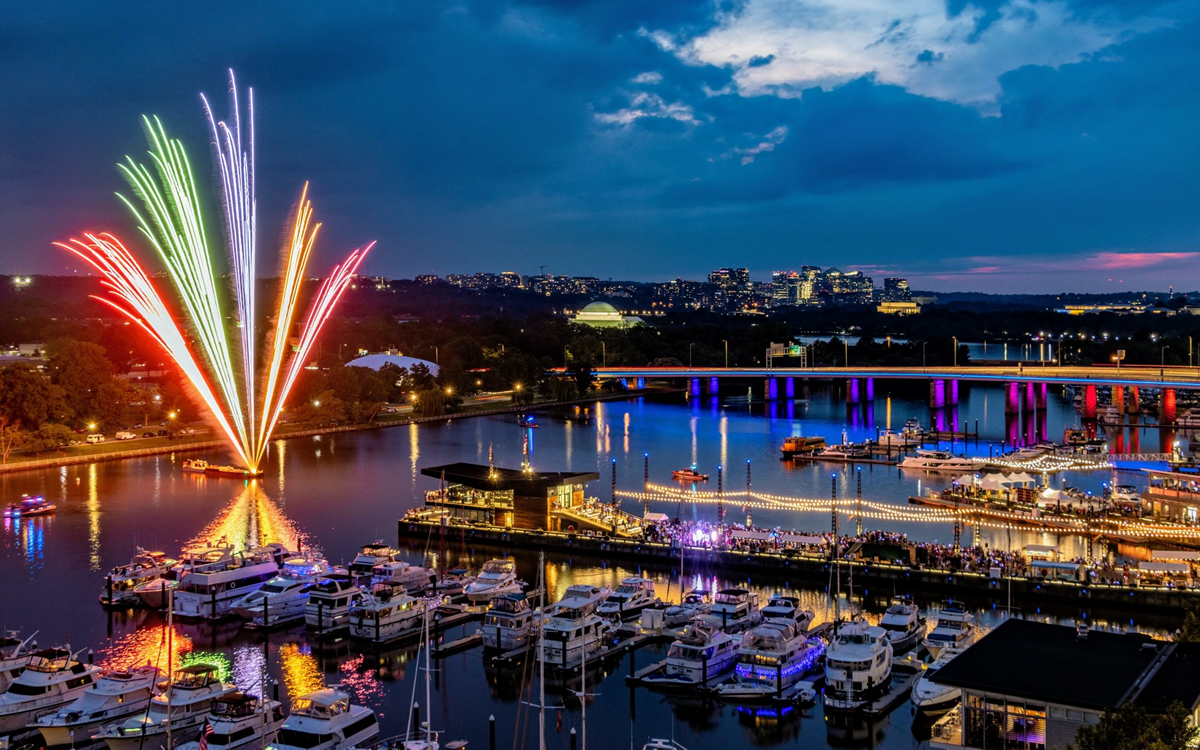
Well over 600,000 people, many from across the country, turned out for D.C.’s annual Capital Pride weekend events, including the Pride Parade on Saturday, June 8, and the Pride Festival and Concert on Sunday, June 9. Officials with the Capital Pride Alliance, the group that organizes most D.C. Pride events, said the June 2024 events were planned to some degree as preparation for World Pride 2025, which D.C. will host May 17-June 8, 2025.
As in past years, dozens of contingents from a wide range of organizations and local and federal government agencies marched in the June 8 parade or rode in vehicles or floats. Among those who joined the parade were D.C. Mayor Muriel Bowser and members of the D.C. City Council. Also taking place on the day of the parade was the annual Pride On The Pier party organized by the Washington Blade and held at The Wharf section of the city’s Southwest waterfront.


Rehoboth Beach
HISTORIC: Susan Stewart elected Rehoboth’s first out mayor
Thanks LGBTQ supporters and vows to protect city’s small town charm
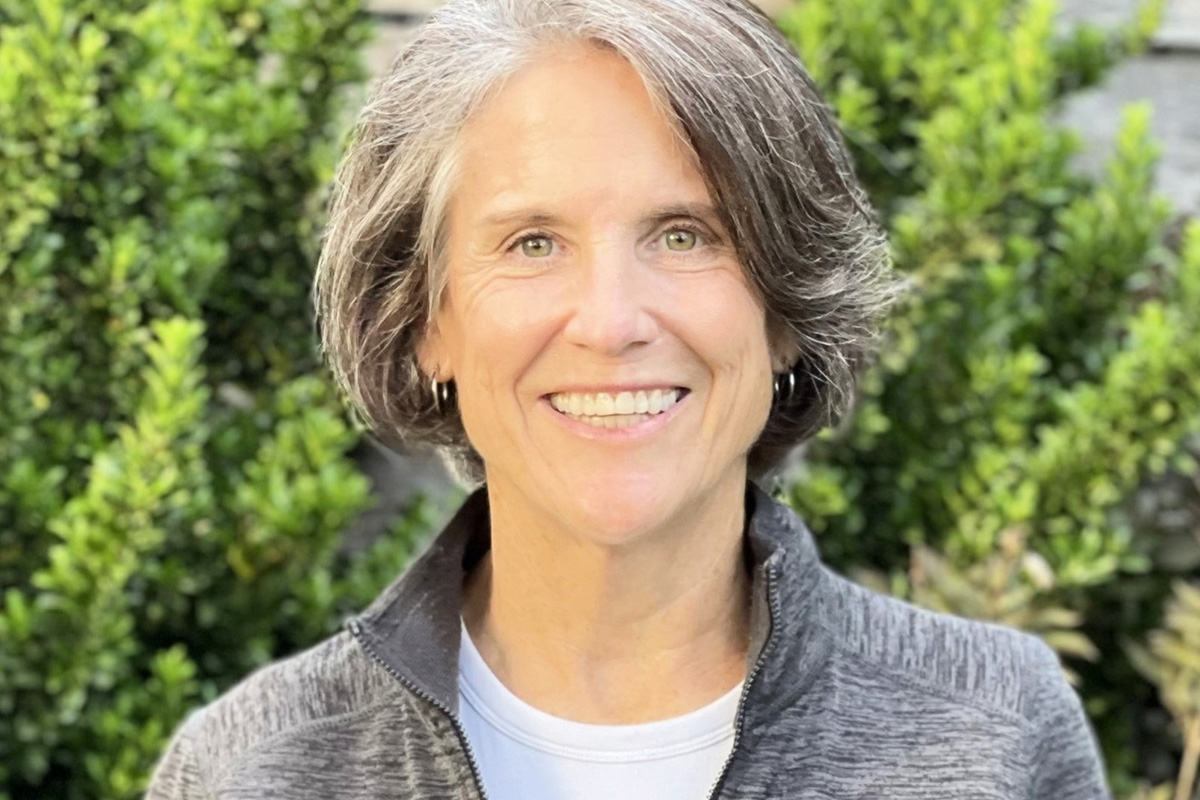
Residents of Rehoboth Beach elected City Commissioner Susan Stewart with 61% of the vote on Aug. 8, making her the city’s first openly gay mayor.
Stewart beat fellow commissioners Craig Their and Suzanne Goode in the race, as well as newcomer Jake Raak.
The final mayoral vote results were:
- Susan Stewart: 632
- Craig Their: 203
- Suzanne Goode: 177
- William “Jake” Raak: 23
“I’m very grateful because the LGBTQ+ community not only voted for me, but also supported me,” said Stewart.
Stewart said that she is particularly grateful for the support she received on social media from members of the LGBTQ+ community.
“I’ve had incredible support,” said Stewart.
Stewart said that her campaign showed her just how much residents of Rehoboth are engaged and care about the city.
“They really want to see what’s best for the community,” said Stewart.
Stewart spoke about the master planning initiative she has been working on as a commissioner, which she plans to continue as mayor.
“We’ve undertaken rewriting the commercial zoning code, and that’s foundational to the next step of the initiative,” said Stewart.
She said that she was proud of the results of charette week that was held last month where residents and business owners had the opportunity to speak with hired urban planners to give feedback for a zoning code update.
Stewart said that Rehoboth is at a tipping point as the city must find a way to balance the growth of the commercial district while improving the quality of life for residents.
“I don’t believe there needs to be tension between the business community and the residential experience,” said Stewart.
“I’m excited about a new master plan because we have a couple hotels coming, and we also have Clear Space Theatre looking for a new home, and we’re working with them,” said Stewart. “We want businesses to stay here.”
Stewart also said that she aims to embrace the concept of a ‘15-minute city,’ making the city much more accessible in terms of transportation in the downtown area for residents.
“The goal is to protect the small town charm and natural beauty of Rehoboth,” said Stewart. “I want to keep the momentum going.”
The Blade asked Stewart about any concerns she might have working with Commissioner Goode, whom she has criticized for sending inappropriate and offensive emails to city staff. Goode finished a distant third in the mayoral race and her husband fell short in his bid for a Commissioner’s seat. In that race, Jeffrey Goode received 239 votes; Patrick Gossett, who’s gay, received 813 votes and Mark Saunders 852. Saunders and Gossett will be sworn in next month.
“I’m really eager to move past this issue with Commissioner Goode,” said Stewart.
She said that she’s heard ‘loud and clear’ from the city that they want to move past this situation as best as they can while Goode remains in her seat as commissioner.
“There are no mechanisms for us to remove a sitting commissioner. Our laws don’t allow it,” said Stewart.
Stewart clarified that she has always focused on Goode’s behavior toward city staff.
“One thing I feel really passionate about is that the city employees have to know that they are heard. They are real people with real jobs, real professional reputations, and they’ve been harmed,” said Stewart.
The Blade also asked if Stewart had made a final decision on whom she plans to nominate to fill her Commissioner seat.
“I’m considering who to appoint and I have not made any final decisions,” said Stewart.
She noted that, as mayor, she only has the power to nominate a candidate and that the board of commissioners will have the final vote on whom to appoint to the board.
Stewart shared that she has received interest from a number of people and finds that to be a good sign.
“I think that’s a great sign because people want to serve. I’m eager to have someone in that seat who’s smart and has the best interests of the city,” said Stewart.
Stewart will be sworn in during the Board of Commissioners meeting on Sept. 18.
District of Columbia
D.C.’s Mary’s House For Older Adults names new executive director
Charlene Leach to succeed Imani Woody as leader of LGBTQ-supportive seniors home
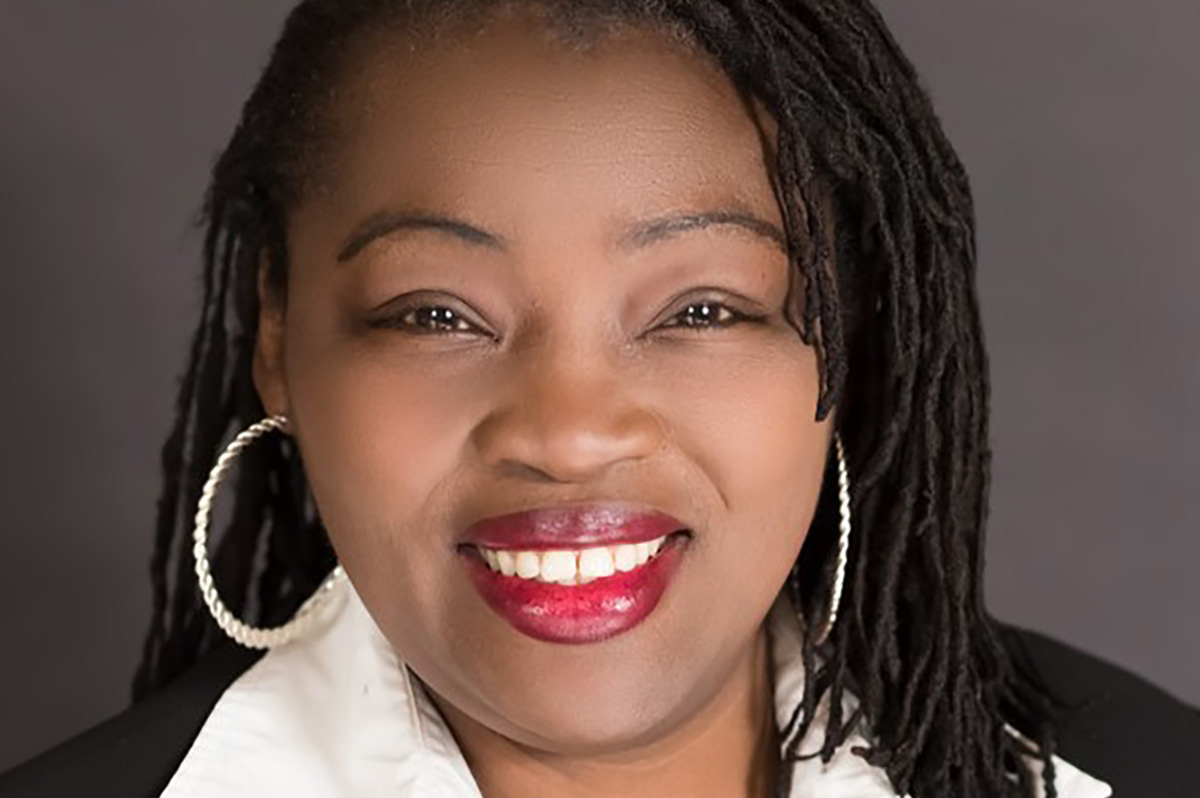
The board of directors of Mary’s House for Older Adults, the D.C.-based home dedicated to providing affordable housing for LGBTQ seniors, has announced it has named longtime nonprofit organization leader A. Charlene Leach as its new executive director.
Leach, who is now serving in the executive director’s position, is succeeding Dr. Imani Woody, the Mary’s House founding president and CEO, who announced her retirement from her official leadership role at Mary’s House on July 7.
Woody, who holds a PhD in Human Services, is credited with playing the lead role over many years in arranging both city and private funding needed to construct and operate the Mary’s House three-story building located at 401 Anacostia Road, S.E., in the city’s Fort DuPont neighborhood.
“With over three decades of nonprofit experience and 15 years serving as an executive director, Charlene brings a wealth of knowledge in organizational leadership, program development, and community engagement,” the Mary’s House board says in a statement.
“Her proven track record of building impactful programs and leading mission-driven organizations makes her uniquely suited to guide Mary’s House into its next phase of growth,” the statement continues. “Charlene is deeply aligned with the mission of Mary’s House and is committed to advancing its work to provide safe, inclusive housing and supportive services for LGBTQ+ older adults,” it says. “Under her leadership, the organization will continue to expand its impact while remaining grounded in the values that define our community.”
Leach’s LinkedIn page shows she has most recently served since 2022 as executive director of the African American AIDS Task Force in Minneapolis. Prior to that, it shows she served as executive director of the Fredericksburg Area Health and Support Services organization in Fredericksburg, Va., and before that as director of development for the D.C.-Baltimore area Women’s Collective.
Her LinkedIn page says she has been involved with Mary’s House as a volunteer and grant writer since 2016.
The newly built and enlarged Mary’s House, which opened in March 2025, with a grand opening ceremony held in May 2025 attended by D.C. Mayor Muriel Bowser, includes 15 single-occupancy residential apartments and more than 5,000 square feet of shared communal living space.
An earlier statement released by the Mary’s House board announcing Woody’s retirement said Woody would continue to be involved with the organization as a member of the board. The earlier statement and board’s more recent statement on July 29 announcing Leach’s appointment as executive director did not say whether the board plans to name someone else as president and CEO, the title that Woody held before her retirement. But the latest statement says Leach will be running Mary’s House’s day-to-day operations as Woody did.
Virginia
Doug Ollivant to face Eugene Vindman in Va. 7th Congressional District
Republican defeated challengers in Tuesday’s primary
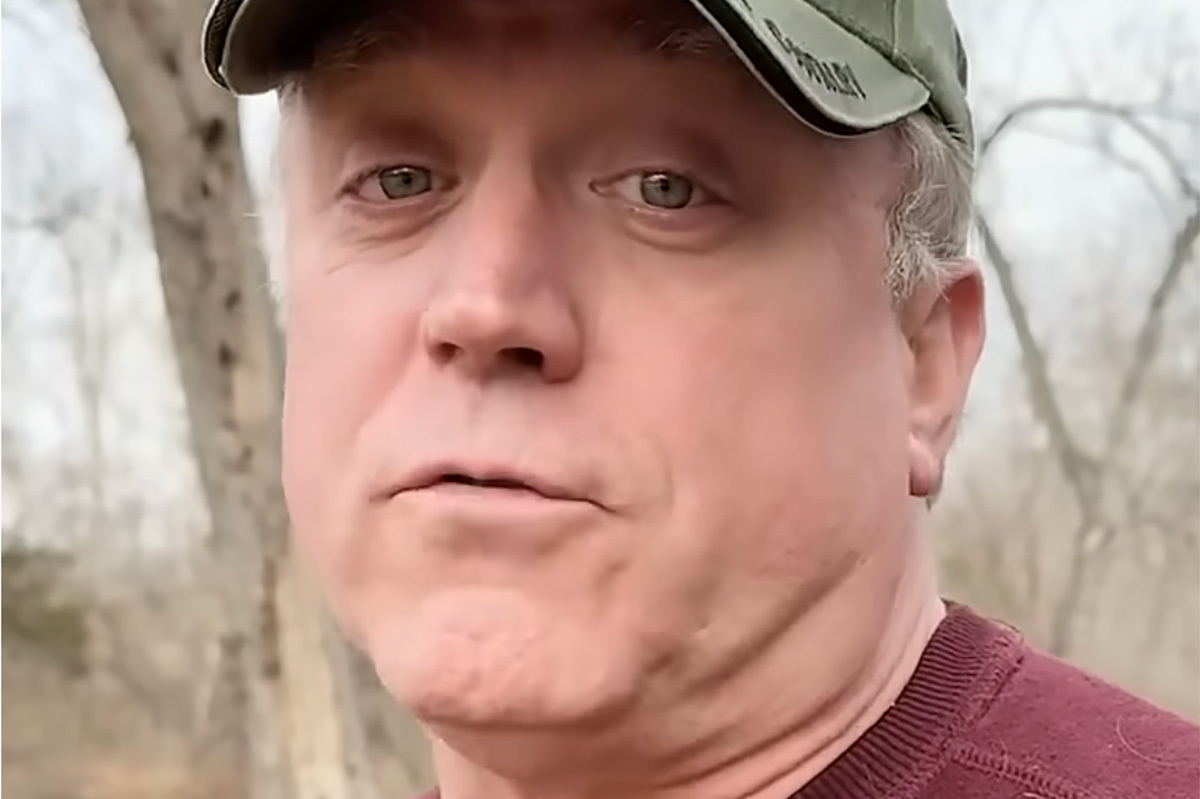
Republican Doug Ollivant will face off against incumbent U.S. Rep. Eugene Vindman (D-Va.) in Virginia’s 7th Congressional District.
Ollivant defeated his Republican opponents in Tuesday’s primary. Vindman ran unopposed.
Vindman in 2024 ran to succeed then-Congresswoman Abigail Spanberger in the U.S. House of Representatives after she ran for governor. Spanberger succeeded Republican Gov. Glenn Youngkin in 2025.
U.S. Sen. Mark Warner (D-Va.) on Tuesday easily won his primary. All other Democratic incumbent members of Congress from Northern Virginia also won their respective primaries.

2 former NBA players launch cheap anti-trans stunt to exploit WNBA rules

Same-sex couples challenges India income tax law

HISTORIC: Susan Stewart elected Rehoboth’s first out mayor

Todd Blanche’s record on LGBTQ issues comes under scrutiny as he takes over DOJ

Don’t miss summer productions at Clear Space in Rehoboth Beach

Calendar: August 7-13

Insured on paper, excluded in practice

Greg Araki still wants your sex

Mr. Henry’s to host 60th anniversary party