India
Indian state proposes sweeping LGBTQ policy
Judge calls for one set of Tamil Nadu guidelines
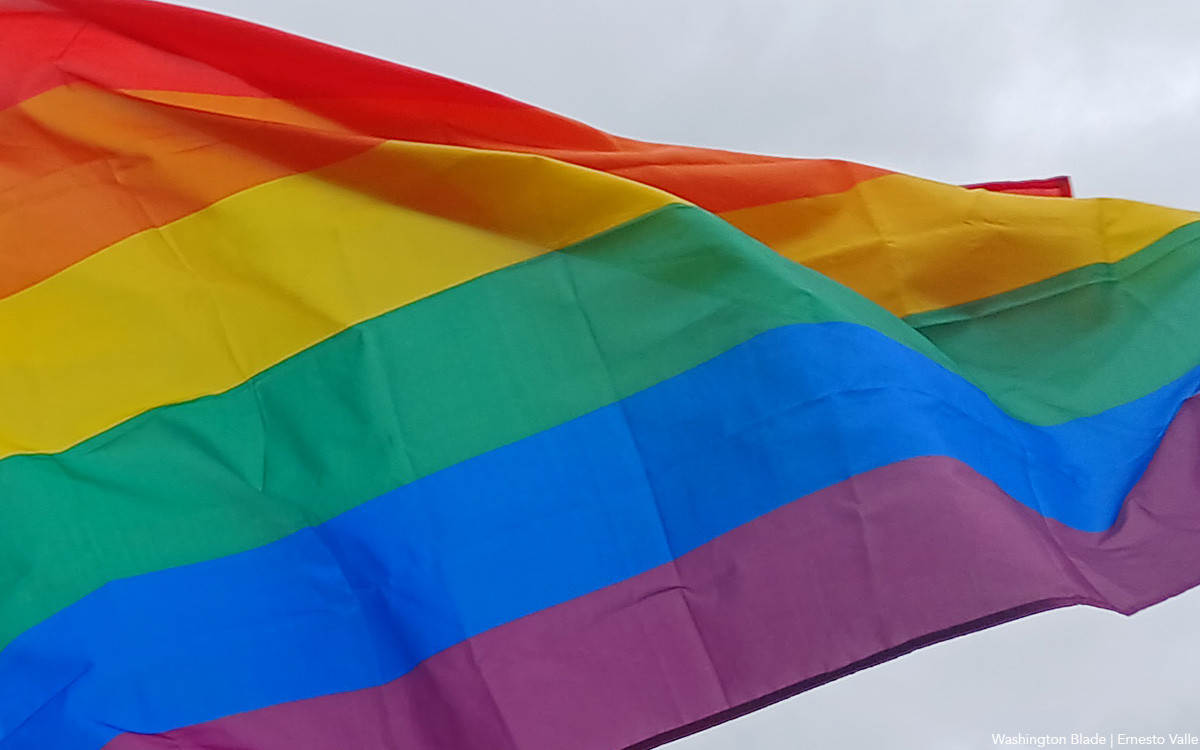
The government of Tamil Nadu in southern India has proposed a policy that is designed to improve the lives of LGBTQ and intersex people in the state.
The Tamil Nadu State Planning Commission introduced the “Draft Policy for the Welfare of LGBTQIA+ Persons” in July 2023. Key provisions include a 1 percent quota for transgender and intersex people in education and employment. Progress to implement the policy has been hindered because of the government’s fragmented approach of developing separate policies for different groups within the community.
The Madras High Court in January 2024 acknowledged Tamil Nadu’s proposed policy and commended the state’s efforts.
The court highlighted key recommendations, such as establishing a State Commission for Sexual and Gender Minorities and introducing quotas, while stressing the need to combat discrimination and violence. The court this month, however, raised concerns about the government’s separate policies for trans people and the broader LGBTQ community.
Justice N. Anand Venkatesh stressed the need for a single, unified policy to effectively address the challenges the LGBTQ community faces. He directed the Social Welfare and Women Empowerment Department to submit a separate proposal for trans people and a consolidated LGBTQ one by Feb. 17 that would allow stakeholder input and improvements.
The Madras High Court has been actively guiding the Tamil Nadu government towards formulating a unified and comprehensive policy for the LGBTQ community, rather than separate policies for different groups within the community.
Tamil Nadu’s proposal offers several advantages aimed at promoting inclusivity and equality. It would provide healthcare inclusion, recommending the extension of the Chief Minister’s Health Insurance Scheme to cover trans-specific medical procedures, such as gender-affirming surgeries, to ensure essential healthcare is accessible. The proposal calls for nondiscrimination policies in all government departments and public authorities that seek to protect LGBTQ people from bias and violence.
The proposal calls for educational institutions to adopt policies that raise awareness and address issues of violence, abuse, and discrimination against students with diverse gender identities and sexual orientations. It also suggests the creation of bodies like the Tamil Nadu Council for LGBTQ Persons and District Level LGBTQ Welfare and Justice Committees to coordinate efforts across government departments.
“Tamil Nadu is the first state in India to develop a unified policy covering sexual orientation, gender identity and sex characteristics, based on a recent Madras High Court directive,” said L. Ramakrishnan from SAATHII, an organization that works to create an inclusive healthcare system, and a member of the policy drafting committee. “This is important because critical sensitization interventions for inclusive education, healthcare and employment require understanding of sexual, sexuality, and gender diversity,”
“At the same time, recognizing the added vulnerabilities of trans and intersex individuals, provisions such as horizontal reservations and free land allocation are proposed only for transgender and intersex individuals,” added Ramakrishnan.
The proposal, among other things, calls for gender-neutral bathrooms and hostels. It also seeks to protect LGBTQ people from family violence and from corrective rape and so-called conversion therapy that medical providers and faith healers carry out.
The proposed policy would also acknowledge and support relationships outside the traditional marriage framework. It proposes a Deed of Familial Association that would legally recognize queer relationships as the Madras High Court ruled in a case of a lesbian couple who sought protection from harassment. While the deed would offer protection from family and societal harassment, it would not extend legal status or rights associated with marriage or civil unions.
The Indian Supreme Court on Oct. 17, 2023, ruled against marriage rights for same-sex couples.
“We have long been working and sensitizing the government for a policy,” said Kalki Subramaniam, a trans activist and artist who founded the Sahodari Foundation, an organization that supports trans people in India. “It seems to be happening. We, the trans community, demand a separate policy for us because we are the most marginalized and poorest community in the entire LGBTQI spectrum.”
“I insist on two different policies: One for us, trans and intersex persons, and the other for the LGB community. Practically, it is very much possible,” added Subramaniam. “The state government, months ago, held public meetings with the trans community in all districts, and the community’s overall demand is a separate policy. I welcome the commission and insist it should have representatives from trans women, trans men, and intersex communities.”
She told the Washington Blade the proposed policy is something for which the community has been waiting for years, and is happy to see it on the table. Subramaniam noted the quota, in particular, will ensure equal opportunities in jobs and education.
“Tamil Nadu government’s laudable efforts in building equity for the LGBTQIA+ community stands as a magnificent beacon of hope,” said Harish Iyer, an Indian LGBTQ activist. “In times of absolute disregard across the world, this effort puts not just the queer community, but India in the forefront of humanitarian efforts.”


India
Amendments to India’s transgender rights law criticized
Lawmakers approved changes that narrow definition of trans person
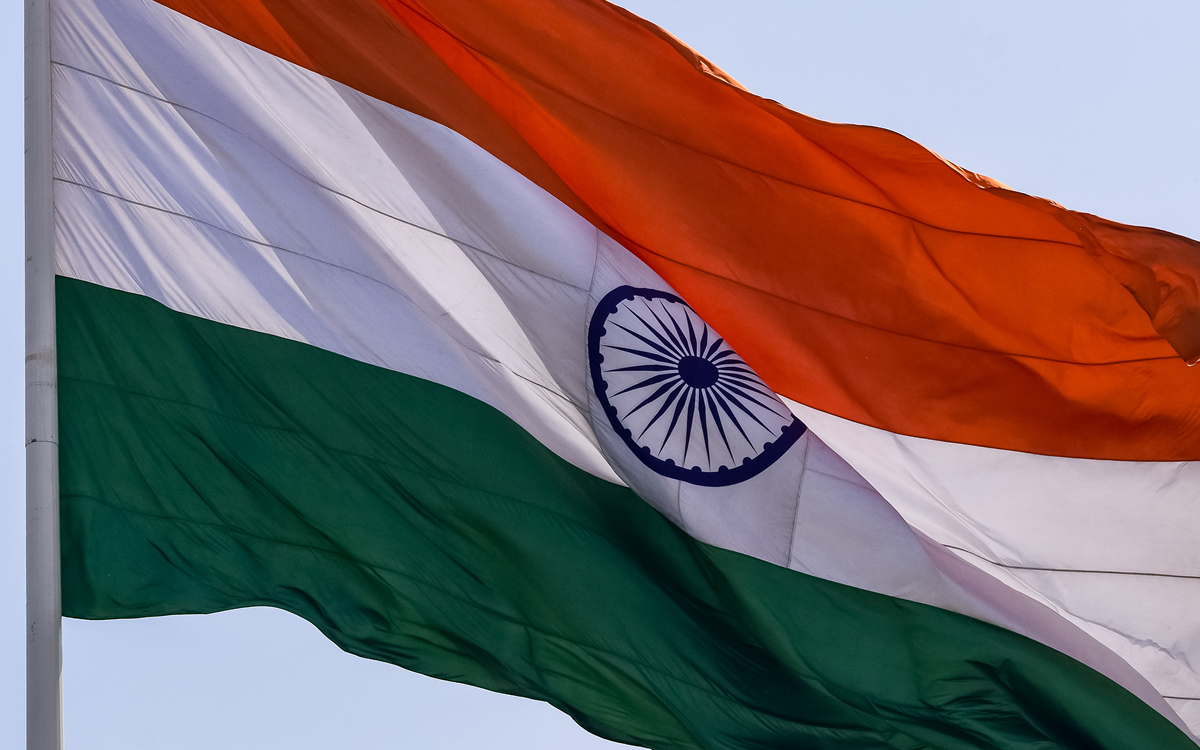
India has enacted the Transgender Persons (Protection of Rights) Amendment Act, 2026, that will reshape the country’s legal approach to gender identity.
Both houses of parliament approved the legislation last month, and it received presidential approval on March 28.
The Transgender Persons (Protection of Rights) Amendment Act, 2026, narrows the definition of a trans person, removes the provision for self-perceived gender identity, and requires medical certification for legal recognition. These changes mark a shift from the framework established under a 2019 law.
The Transgender Persons (Protection of Rights) Amendment Act, 2026, replaces the earlier definition of a trans person — previously framed as someone whose gender does not align with the gender assigned at birth — with a set of specified categories. It further provides that the term does not include, and is deemed never to have included, people defined solely by their sexual orientation or by self-perceived gender identity.
The bill retains certain categories within its definition, including people with socio-cultural identities such as kinner, hijra, aravani, or jogta. It also includes people with variations in sex characteristics at birth, such as differences in primary sexual characteristics, external genitalia, chromosomes or hormones from the normative standards of male or female bodies.
The Transgender Persons (Protection of Rights) Amendment Act, 2026, removes certain categories from the definition, including a trans man or trans woman, irrespective of whether such a person has undergone sex reassignment surgery, hormone therapy, laser procedures, or other forms of medical intervention. It also excludes genderqueer people — a category that had been recognized under the earlier framework. The Transgender Persons (Protection of Rights) Amendment Act, 2026, however, includes eunuchs, as well as people compelled to assume a trans identity through mutilation, emasculation, castration, or other surgical, chemical or hormonal interventions.
The Transgender Persons (Protection of Rights) Amendment Act, 2026, also revises the process for legal recognition, requiring a trans person to apply to a district magistrate for a certificate of identity, which can now be issued only after the recommendation of a designated medical board. The law specifies that the board will be headed by a senior medical officer and may include other experts. It further provides that individuals issued such a certificate will be entitled to change their first name in official documents, including birth records and other government-issued identification.
The Transgender Persons (Protection of Rights) Amendment Act, 2026, also introduces stricter penalties for certain offences, including cases in which a person is forced to assume a trans identity through kidnapping, coercion or physical harm. Such offenses may attract imprisonment ranging from 10 years to life in prison, along with fines, depending on the severity and whether the victim is an adult or a child. The Transgender Persons (Protection of Rights) Amendment Act, 2026, further requires medical institutions to report gender-affirming surgeries to the district magistrate, and mandates that individuals obtain a revised certificate of identity following such procedures.
India’s 2011 Census recorded 487,803 trans persons, yet only 5.6 percent had applied for a trans identity card, according to the Washington Blade’s previous reporting. These identity cards, required to access government welfare programs, have remained difficult to obtain, with delays and administrative barriers limiting uptake.
The Transgender Persons (Protection of Rights) Amendment Act, 2026, revised the certification process, which introduces additional requirements for legal recognition. This change is against this backdrop of uneven access to identity documentation.
India’s Election Commission in 2009 directed states to modify voter registration forms to include an “other” category, allowing individuals who did not identify as male or female to register accordingly. The Supreme Court in National Legal Services Authority v. Union of India in 2014 recognized trans persons as a “third gender” and affirmed their right to self-identification.
Justice Kalavamkodath Sivasankara Radhakrishna Panicker said that “recognition of transgenders as a third gender is not a social or medical issue, but a human rights issue.” Parliament in 2019 approved the Transgender Persons (Protection of Rights) Bill, 2019.
An advisory committee the Supreme Court created that former Delhi High Court Justice Asha Menon has urged the government to withdraw the Transgender Persons (Protection of Rights) Amendment Act, 2026. The panel said the proposal to deny self-identification of gender is inconsistent with theNational Legal Services Authority v. Union of India ruling.
Menon on March 25 wrote to Social Justice Minister Virendra Kumar conveying the panel’s resolution. According to the Hindu newspaper, the committee described the amendment as a “great shock” and a “tremendous setback” to efforts to mainstream trans communities.
The Queer Hindu Alliance, an advocacy group that seeks to uphold the dignity of LGBTQ people within India’s cultural and constitutional framework, expressed concern over the Transgender Persons (Protection of Rights) Amendment Bill, 2026.
“We write not in the spirit of opposition, but in the spirit of samvad — dialogue — and with a sincere call for community consultation before this legislation proceeds further,” the group said in a statement. “The Supreme Court of India recognized the concerns of the transgender community in 2014. The National Legal Services Authority v. Union of India judgment affirmed that a person knows who they are. This bill seeks to reverse that. The Queer Hindu Alliance finds this troubling as a question of basic human dignity.”
The Queer Hindu Alliance added that India “is not a young civilization fumbling for answers on how to understand human identity.”
“This culture has contemplated the nature of the self more deeply, and for longer, than any legal system that has existed. This is not a foreign conversation imported from the West. It is a conversation Bharat (India) has always been capable of having, on its own terms,” the Queer Hindu Alliance said.
Harish Iyer, an LGBTQ rights activist who was among those who fought for marriage equality in the Supreme Court, told the Blade that the amendment is “not just a rollback, but a blatant, arrogant insult” to the Supreme Court.
“The NALSA judgment gave us the fundamental dignity of self-determination — the right to look in the mirror and say, ‘This is who I am.’ This amendment drags us right back into the dark ages, handing over our bodily autonomy to a bunch of sarkari babus (government officers) and medical boards,” said Iyer. “But here is the most absurd part: you simply cannot define if someone is trans through any physical test. How exactly are you going to diagnose a human mind? Are they only going to regard those who have had gender affirmation surgery as trans? Because that is fundamentally not the definition of being transgender; transition is a choice and a privilege, not a prerequisite for identity. Or are they going to look at someone born with ambiguous genitalia and label them trans? Because that is intersex, which is a completely different reality.”
“Forcing a trans person to undergo degrading physical scrutiny based on the government’s spectacular ignorance of basic gender science isn’t a legal process; it’s state-sponsored trauma,” he added. “We fought too hard for our dignity to let a bureaucratic tribunal demand that we strip down to prove our humanity.”
Iyer said the Transgender Persons (Protection of Rights) Amendment Act, 2026, goes beyond protection and instead imposes control.
“You don’t ‘protect’ a community by criminalizing the chosen families and allies who offer safe haven to trans youth fleeing abusive homes,” he said, referring to provisions in the law. “This bill is about regulation, policing and control. By gatekeeping who gets to be trans and punishing those who support us, the government isn’t acting as a guardian — it’s acting as a warden. It is a calculated attack on our existence.”
Iyer said the revised definition could exclude individuals who do not fall within the listed categories.
“It effectively writes them out of existence,” he said.
Iyer added the Transgender Persons (Protection of Rights) Amendment Act, 2026, could create an administrative “black hole” for gender-fluid individuals and nonbinary people who do not fit into the government’s rigid categories.
“If you are legally invisible, you don’t get access to gender-affirming healthcare, you don’t get legal protection, and you are entirely cut off from participating in society,” said Iyer. “They are trying to legislate us into non-existence because they are too lazy to understand us.”
India
Menaka Guruswamy celebrated as India’s first openly LGBTQ MP
Constitutional lawyer elected to Rajya Sabha on March 9
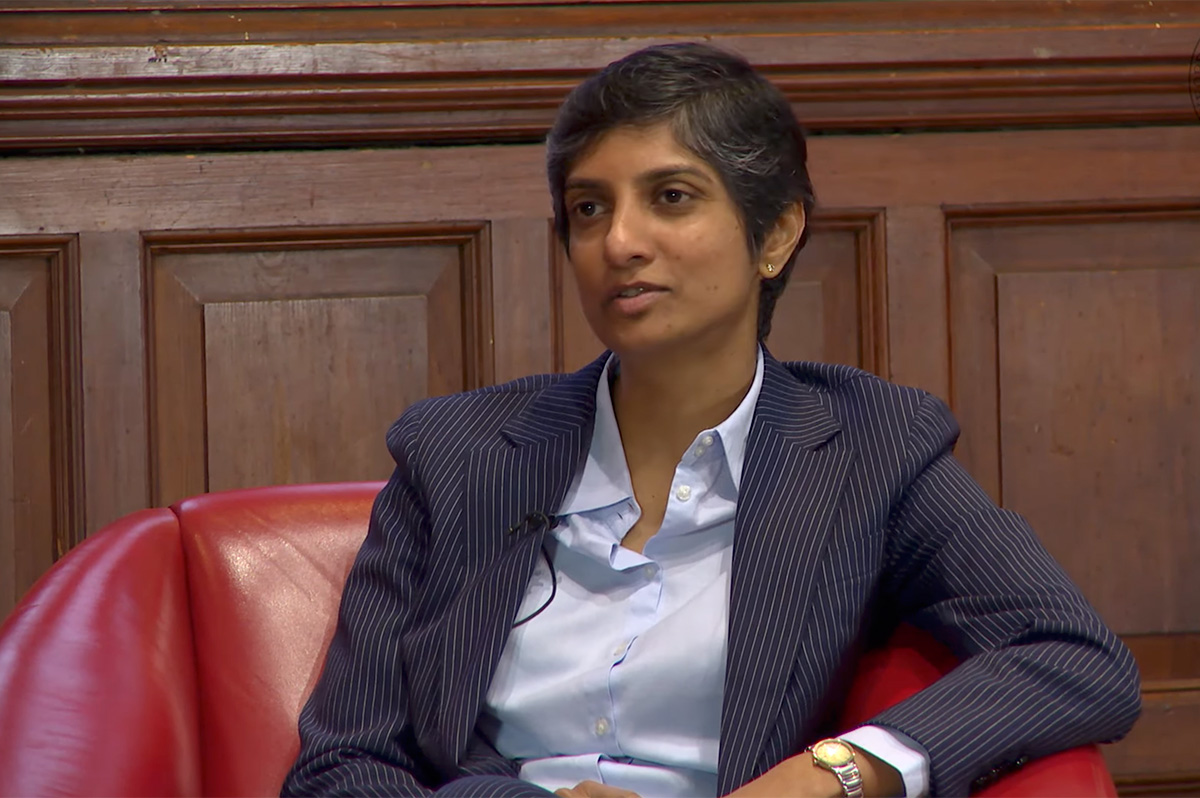
India’s LGBTQ community has found renewed hope in the election of Menaka Guruswamy, a lawyer who has argued before the Supreme Court, as the country’s first openly LGBTQ MP.
Guruswamy was declared elected unopposed to the Rajya Sabha, the upper house of Parliament, on March 9, representing West Bengal. The All India Trinamool Congress, the regional party that governs the state, nominated her.
Guruswamy is a constitutional lawyer who studied at Oxford University, Harvard Law School, and the National Law School of India University. She has argued several significant cases before the Supreme Court and is widely known for her work on constitutional law, civil liberties, and LGBTQ rights.
Guruswamy was part of the legal team that successfully challenged Section 377 of the Indian Penal Code, a colonial-era law that criminalized consensual same-sex sexual relations, which the Supreme Court struck down in 2018. She has also written and spoken extensively on issues of democracy, rights and institutional accountability.
Ankit Bhupatani, a global diversity, equity and inclusion leader and LGBTQ activist, welcomed Guruswamy’s election.
“This is significant not because Parliament needed a queer person, but because a queer person needed Parliament,” Bhupatani told the Washington Blade.
India has seen LGBTQ representation in elected office at the state and local levels, though it has remained limited.
In 1998, Shabnam Mausi was elected to the Madhya Pradesh Legislative Assembly from the Sohagpur constituency, becoming one of the first openly transgender people to hold public office in India. Mausi’s election marked a rare moment of visibility for trans people in the country’s political system, where representation has historically been sparse. Since then, a small number of openly trans candidates have contested and, in some cases, won local and state elections, but no openly LGBTQ person had been elected to Parliament before Guruswamy.
Guruswamy and her partner, Arundhati Katju, who is also a lawyer, were part of the legal team that played a central role in the Section 377 decision.
Representing one of the plaintiffs, the two lawyers helped frame the case around constitutional guarantees of equality, dignity, and privacy. The Navtej Singh Johar v. Union of India ruling marked a watershed moment for LGBTQ rights in India.
“For too long, we have fought our battles only in courtrooms and on streets. Now, there is a seat at the table where laws are written,” said Bhupatani. “Whether that seat produces change depends entirely on how it is used. Representation without substance is decoration. But as a beginning, yes. This matters.”
Guruswamy later represented the plaintiffs in the Supreme Court’s 2023 marriage equality case, Supriyo v. Union of India, which a 5-judge panel heard in the spring of 2023.
Along with other lawyers representing same-sex couples, she advanced arguments rooted in constitutional guarantees of equality, dignity, and personal liberty. The Supreme Court in a 3-2 decision on Oct. 17, 2023, declined to recognize same-sex marriage — holding that such a change falls within Parliament’s domain — but did acknowledge LGBTQ people face discrimination. The Blade previously reported the ruling underscored the court’s view that it could interpret the law, but could not create a new legal framework for marriage rights.
Bhupatani said Guruswamy’s election should not be seen as an immediate shift toward legislative action on LGBTQ rights, cautioning that such expectations may not align with political realities. He said her presence in Parliament could help sustain the issue in a way it has not been before, even as broader legal change is likely to take time.
“What she can do is keep the question alive inside Parliament in a way that it hasn’t been before,” Bhupatani said. “Legislative change in India on social questions usually takes longer than advocates want and shorter than skeptics predict. The 377 decriminalization seemed impossible until it wasn’t. Partnership rights will follow the same pattern eventually.”
Bhupatani added that while Guruswamy’s election may influence the pace of change, it does not, on its own, constitute a broader political movement.
“One person in Parliament, however extraordinary, is not a movement. She is an opening,” he said. “The 2023 ruling created a responsibility. Guruswamy’s election creates an opportunity to fulfill it from inside. Whether opportunity becomes outcome is entirely a question of human will.”
Guruswamy has served as a visiting faculty member at leading American institutions that include Yale Law School, Columbia Law School, and New York University School of Law. She has also worked with international organizations, advising the U.N. Development Fund for Women in New York and the U.N. Children’s Fund in both New York and South Sudan.
According to her professional profile, Guruswamy has been involved in a range of significant cases before the Indian Supreme Court that include matters related to bureaucratic reform and accountability.
One case is connected to the AgustaWestland helicopter deal, an investigation into alleged bribery in a multimillion-dollar defense procurement contract; litigation arising from the Salwa Judum case, in which the court examined the state-backed use of civilian militias in counterinsurgency operations in central India; and cases involving the implementation of the Right to Education Act, a law guaranteeing free and compulsory education for children between the ages of six and 14.
More recently, Guruswamy represented the All India Trinamool Congress in legal proceedings challenging searches conducted by India’s Enforcement Directorate, a federal agency responsible for investigating financial crimes, including money laundering and violations of foreign exchange laws. The searches were carried out at the offices of the Indian Political Action Committee, or I-PAC, a political consulting firm that provides data-driven campaign strategy and election management services to political parties. The case raised questions about the scope of investigative powers and the use of federal agencies in politically sensitive matters.
Guruswamy’s engagement with LGBTQ rights has extended beyond courtroom advocacy into public constitutional discourse.
On July 11, 2018, during hearings in the Section 377 case, she argued the criminalization law could not be justified on the basis of “social morality,” describing it as subjective and incompatible with constitutional guarantees, and framing the case as one fundamentally about “our humanity.” The Thomas Jefferson Foundation Medal in Law at the University of Virginia in February 2023 recognized Guruswamy and Katju for their work on LGBTQ rights.
Guruswamy has not responded to the Blade’s multiple requests for comment about her election.
India
Activists push for better counting of transgender Indians in 2026 Census
2011 count noted 488,000 trans people in country
India is preparing to conduct a nationwide Census in April, the first since 2011.
Interim projections based on the previous Census placed India ahead of China as the world’s most populous country. A Technical Group on Population Projections projection in July 2020, chaired by the Registrar General of India, estimated the country’s population in 2023 was 1.388 billion. Transgender Indians are now raising concerns about the data collectors and their sensitization.
Activists have raised concerns about whether data collectors are adequately sensitive to the community ahead of the Census. Government training material emphasizes household engagement, data privacy and sensitivity while asking personal questions, but publicly available flyers do not outline specific guidance or training related to recording trans identity during enumeration.
Concerns around the counting of trans people in India are not new.
The 2011 Census recorded around 488,000 trans people, a figure activists and researchers have described as a likely undercount due to stigma, misclassification, and a reluctance to self-identify. Subsequent surveys and field reports have pointed to inconsistencies in how gender identity is recorded and the absence of uniform sensitivity among Census data collectors. Rights groups and policy researchers have also warned that gaps in official data affect access to welfare schemes, legal recognition, and targeted public policy, making accurate counting central to future Census exercises.
A decade after the 2011 Census formally recorded trans people as a distinct category, multiple studies have continued to document entrenched socio-economic disparities. Research has pointed to lower literacy rates, limited workforce participation and barriers to healthcare access within the community.
A National Human Rights Commission-supported study cited in subsequent reporting found a significant proportion of trans respondents reported employment discrimination, underscoring the gap between formal recognition and lived economic inclusion.
Educational exclusion has remained a persistent concern within the trans community. Studies have documented higher dropout rates, lower literacy levels and barriers to continuing education, often linked to stigma, discrimination and limited institutional support. Policy researchers note that despite formal recognition in official data after 2011, targeted interventions addressing school retention and access for trans people have remained uneven.
Access to housing schemes has reflected similar gaps.
The Washington Blade in December reported only a small number of trans people have benefited from India’s flagship low-income housing program, despite its nationwide rollout and eligibility provisions. The findings underscored continuing barriers to inclusion in welfare delivery systems.
The Social Justice and Empowerment Ministry and the Office of the Registrar General and Census Commissioner did not respond to the Blade’s multiple requests for comment regarding sensitization measures for Census data collectors and the recording of trans identity in the upcoming Census.
Karnataka state in southern India last September conducted its first statewide baseline survey of gender minorities. The Department of Women and Child Development, in collaboration with the Karnataka State Women’s Development Corporation, launched the initiative to document the lives of trans people across 31 administrative districts.
When the results were released, the survey identified 10,365 trans people. The country’s 2011 Census, by comparison, recorded 20,266 trans people in Karnataka, nearly double the 2025 figure. The discrepancy raised questions about how the state’s recorded trans population appeared to decline over 14 years.
The discrepancy in Karnataka’s survey has intensified scrutiny over how gender minorities are counted. Reports questioned the methodology used in the 2025 exercise, which was conducted over 45 days beginning in mid-September. Instead of door-to-door enumeration, trans people were required to report to designated registration sites — primarily district-level public hospitals and sub-district government health facilities. The approach presented barriers for potential participants, particularly those in rural areas, those without reliable transportation, those wary of institutional settings due to prior discrimination, or those who did not know about the count, raising the possibility of exclusion.
Bihar state in eastern India in January 2023 conducted a caste-based survey that included trans respondents.
The final report identified 825 trans people in the state, compared with 40,827 recorded in the 2011 Census. Activists disputed the figure, calling it inaccurate and pointing to community estimates that suggested higher numbers, including in Patna, the state capital, raising concerns about significant undercounting.
The 2011 Census marked the first attempt to enumerate trans people at the national level, but researchers and activists have described the exercise as limited in scope.
It recorded 487,803 people under the “other” category, a classification used for respondents who did not identify as male or female. Analysts have argued that the figure likely underestimated the community’s size.
The Census questionnaire provided three sex categories — “male,” “female,” and “other” — a framework that critics said did not fully capture the diversity of gender identity and may have affected how some respondents chose to identify.
During the 2011 Census, enumeration practices varied across regions.
In states such as Tamil Nadu, local reporting indicated estimates were at times derived from existing administrative records, including state-issued trans identity cards, rather than solely through door-to-door identification. Such approaches risked excluding individuals who did not possess identity documentation or were not registered with welfare boards, raising concerns about gaps in coverage.
Official data from the Social Justice and Empowerment Ministry shows only a few hundred trans people as of early 2025 have been issued identity cards through the national portal, despite nearly 2,000 applications being submitted. Many are still pending or have been rejected.
Critics of the 2011 Census said many Census data collectors were not adequately trained or sensitized to engage with gender identity beyond traditional binary classifications. Similar, detailed guidelines specific to trans sensitization have not been publicly made available for the 2026 Census, according to an examination of training materials and official circulars.
Akkai Padmashali, a trans rights activist, told the Blade that Census data collectors in earlier exercises were often not sensitized and lacked awareness of intersex people and gender-diverse communities. She said trans people and other gender and sexual minorities continue to face social exclusion and require careful handling during door-to-door data collection. Padmashali called for targeted training of data counting officers and said the government should treat the issue as a priority, adding the trans population is likely to be higher than what was recorded in 2011 and efforts to make officials more sensitive to the community are necessary.
“We will definitely join our hands with this move the government of India has taken,” said Padmashali. “I think there should be proper guidance from the main in-charge people who are conducting this enumeration, and if no such proper information is given to these Census data collectors, it is difficult to gather any sort of information concerned.”
“This whole issue of self-identification — I think India, in its current situation, is not in such a way that it openly accepts people’s identities,” she added. “It will be challenging, it will be difficult, it will be a struggle to offer people the opportunity to express their identities as concerned. But to make sure those who are part of the sexual minority community are counted, I think we also take responsibility for educating people to be part of the enumeration.”
Padmashali said many people are not accustomed to using mobile devices and only a limited number are familiar with them. She said technology should not mislead or misguide the collection of information. Padmashali added she and other trans people plan to engage with Census data collectors and officials who organize the Census.
“Government should have local meetings,” said Padmashali. “Government should hold regional consultations on why the national enumeration is important, because we also know that from 2011 to 2026 is almost 15 years, and now we are here.”
“The government should hold local meetings, especially in their constituencies,” she added. “If the government meets with non-government organizations and civil society groups, this could become a more inclusive exercise across the country. India has a population of more than 1.4 billion, and I think this is the appropriate time to bring accurate statistics to help draft policies in the context of the larger community concerned.”

Report: Grenell wants Russian ambassadorship
Log Cabin Republicans to honor Scott Presler

Cuba bajo presión y sin respuestas
Tenn. lawmakers pass transgender “watch list” bill

LGBTQ groups condemn Trump’s threat to destroy Iranian civilization

How Pepper the courthouse dog helps victims of abuse

Iconic Eddie Izzard takes on 23 characters in ‘Hamlet’

Surviving spring cleaning

Risking it all for love during World War II